REVIEW · MUSEUM OF ILLUSIONS SPLIT
Split: Museum of Illusions Entrance Ticket
Book on GetYourGuide →Operated by Museum of Illusions Split · Bookable on GetYourGuide
A hard hat for your eyes sounds silly, right. At Split’s Museum of Illusions, you’ll pay $14 for a full day of hands-on optical tricks that test what you think you’re seeing. I like the fact that it’s interactive, not just a walk-past exhibit. I also like the mix of photo-ready illusions and playroom puzzles that keep things moving for both kids and adults.
One thing to consider: explanations can vary by language. One recent French visitor felt the lack of French help was a drawback, but the museum provides captions in several languages, including English, German, Italian, and Croatian.
In This Review
- Key Highlights You’ll Notice Fast
- Split’s Museum of Illusions Ticket: What You’re Really Paying For
- Getting In at the Main Entrance (and Why Timing Still Matters)
- The Illusion Rooms: How They Play With Gravity, Scale, and Mirrors
- The Gravity Trick (Where Water Goes the Wrong Way)
- The Growing/Shrinking Room (When Friends Change Size)
- The Maze of Mirrors (Where Space Loses Its Edges)
- Serving Somebody’s Head on a Tray (Oddly Memorable Humor)
- Climb Up onto the Ceiling (A Setup for Your Inner Doubter)
- Photo Moments That Make the Science Stick
- Playrooms With Games and Puzzles: Not Just for Kids
- Price and Value: Is $14 for One Day a Good Deal?
- What to Bring, Language Expectations, and Basic Rules
- Who This Museum Ticket Suits Best
- Should You Book Split’s Museum of Illusions?
- FAQ
- How much is the Split Museum of Illusions entrance ticket?
- How long can I spend at the museum?
- Where do I show my voucher?
- What’s included with the ticket?
- What should I bring?
- Is the museum accessible for wheelchairs?
- Are unaccompanied minors allowed?
- What languages are available at the museum?
- Are service animals allowed?
- What’s the cancellation policy?
Key Highlights You’ll Notice Fast
- Pre-book entrance ticket so you’re not guessing at availability in Split
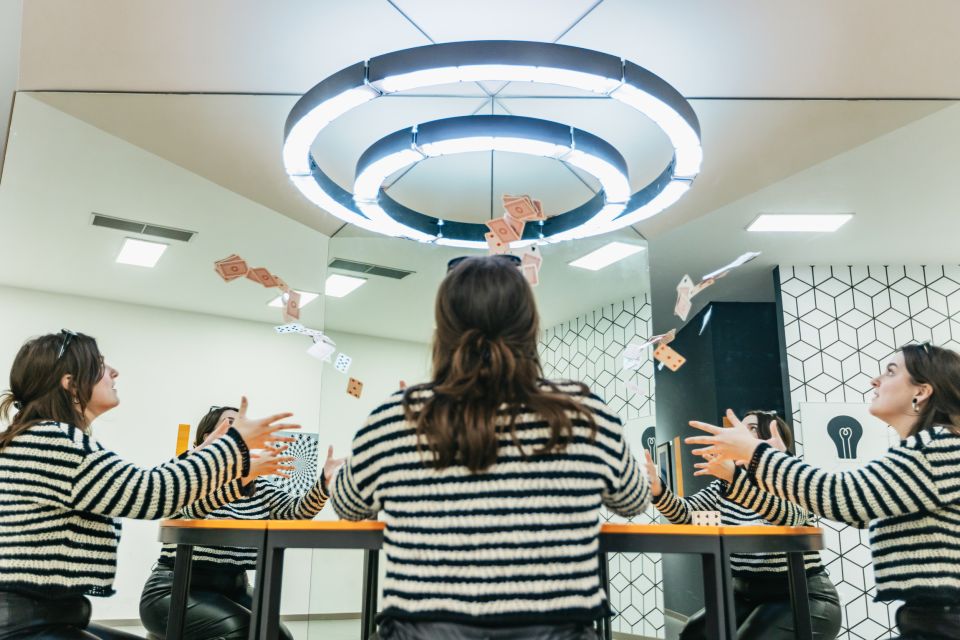
- Optical illusion rooms built to mess with scale, gravity, mirrors, and perspective
- Big-and-small photo opportunities that make the science feel personal
- Playrooms with puzzles and games that give your brain something to do
- Captions in multiple languages to follow along while you experiment
- Camera-friendly setups designed for the moment you realize your eyes were fooled
Split’s Museum of Illusions Ticket: What You’re Really Paying For
You’re not buying a guided tour. You’re buying admission to an experience where the museum hands you the controls. That’s a big difference, and it’s why this ticket works so well for most visitors: you can go at your own speed, linger where an illusion hooks you, and skip what doesn’t.
The museum is in Dalmatia, Croatia, and the entry ticket is valid for one day. The price is $14 per person, which is a fair “activity” price for something you can’t fully replicate at home. Optical illusions are one of those categories where the real value is in the physical setup—light, angle, reflections, and your own body position.
And yes, you’ll see classic “how did that happen?” setups. The point isn’t magic. It’s the human brain doing what it always does: making fast guesses, then filling gaps. The museum is basically a science lesson you can’t unsee.
Getting In at the Main Entrance (and Why Timing Still Matters)
You’ll show your voucher at the museum’s main entrance. That’s straightforward, but it’s still worth being smart with timing. The ticket is valid 1 day, and you’ll have starting times based on availability, so you don’t want to arrive late and then feel rushed.
I recommend picking a time when you’re ready to spend real attention. These rooms reward slow looking. If you’re also trying to squeeze in a bunch of other Split stops, you might end up skating through, and then the illusions feel like party tricks instead of mind-benders.
Language support is also part of timing, in a way. The museum offers captions in English, German, Italian, and Croatian, and the host/greeter is listed as English and Croatian. If you rely on captions to understand what you’re seeing, give yourself enough time to read.
The Illusion Rooms: How They Play With Gravity, Scale, and Mirrors
The best way to describe this place is simple: it turns your body into a measuring tool. You walk in, move slightly, look again, and then the experience changes. That’s why these installations feel so personal.
Here are the kinds of setups you should expect to spend time with:
The Gravity Trick (Where Water Goes the Wrong Way)
One of the highlighted experiences is a room where you can defy gravity, with water flowing uphill. This isn’t just a cool visual. It forces you to question your internal physics model. Your eyes try to interpret motion normally, then the setup contradicts it.
Practical tip: give yourself a moment to observe from different spots. If the illusion is angle-sensitive, moving even a little can change what your brain thinks is happening.
The Growing/Shrinking Room (When Friends Change Size)
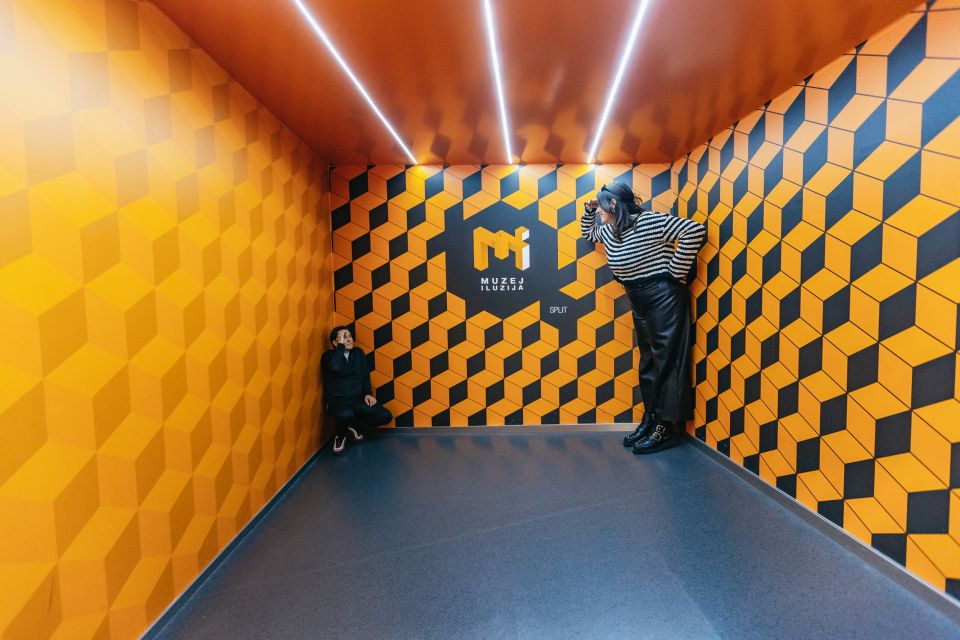
Another featured installation makes people grow or shrink right before your eyes. That’s catnip for photos, but it’s also the core lesson: your perception of size is not a fixed truth. It’s a guess based on context, reference points, and the brain’s assumptions.
Practical tip: bring your group close together and compare positions. If you’re the one filming, switch roles. It makes the illusion clearer because you’re not stuck in one viewpoint.
The Maze of Mirrors (Where Space Loses Its Edges)
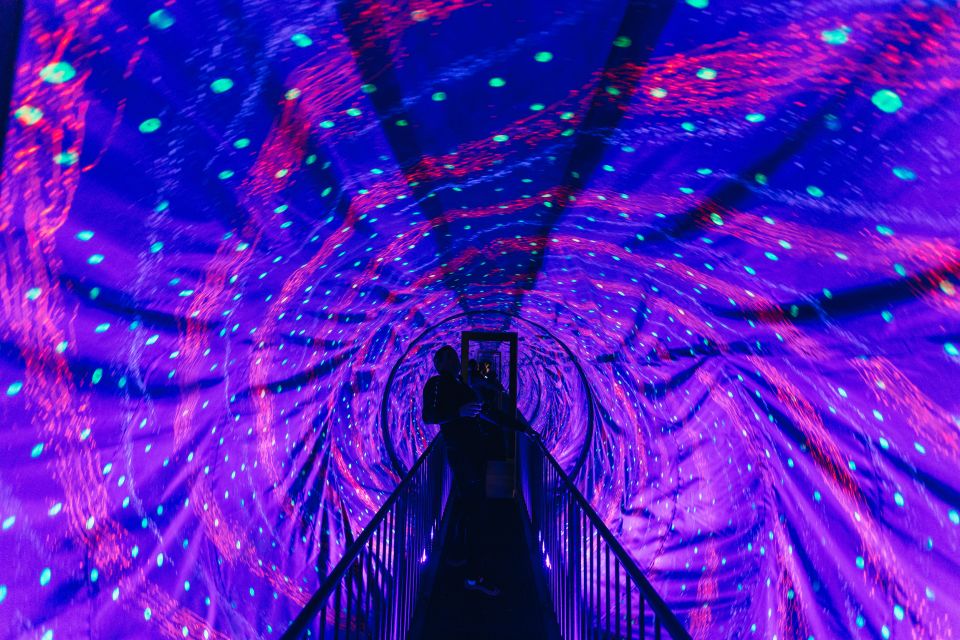
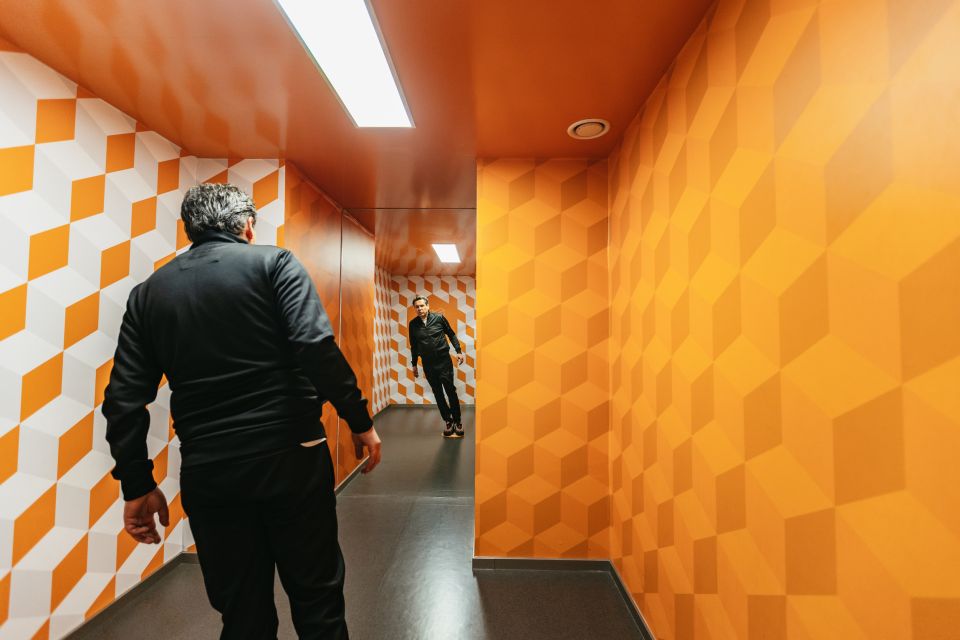
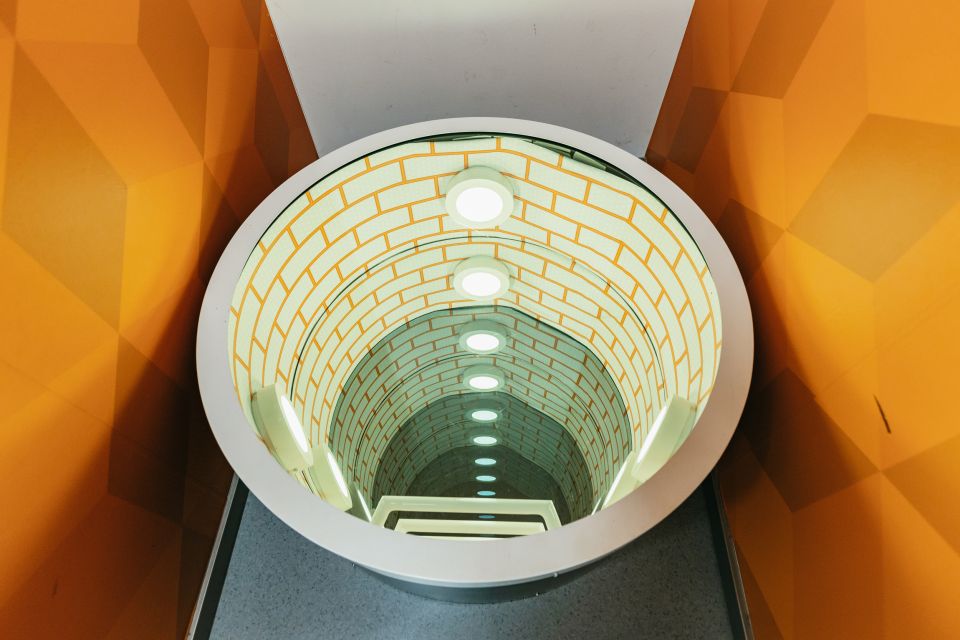
You can also expect a maze of mirrors. Mirrors are the illusion engine of the world: they multiply your sense of depth, create fake distances, and confuse where “straight” really is.
A good way to enjoy this is to treat it like a puzzle. Try to predict where you’ll end up, then walk it out. The fun comes from the mismatch between expectation and reality.
Serving Somebody’s Head on a Tray (Oddly Memorable Humor)
Yes, there’s an installation where you can serve somebody’s head on a tray. It’s theatrical, and it breaks the tension that sometimes happens in science-focused spaces. Even if you don’t care about the science, the humor helps you lean in and try the shot.
If you get easily uncomfortable with props, this is the one you might want to approach at a safe distance first, then decide.
Climb Up onto the Ceiling (A Setup for Your Inner Doubter)
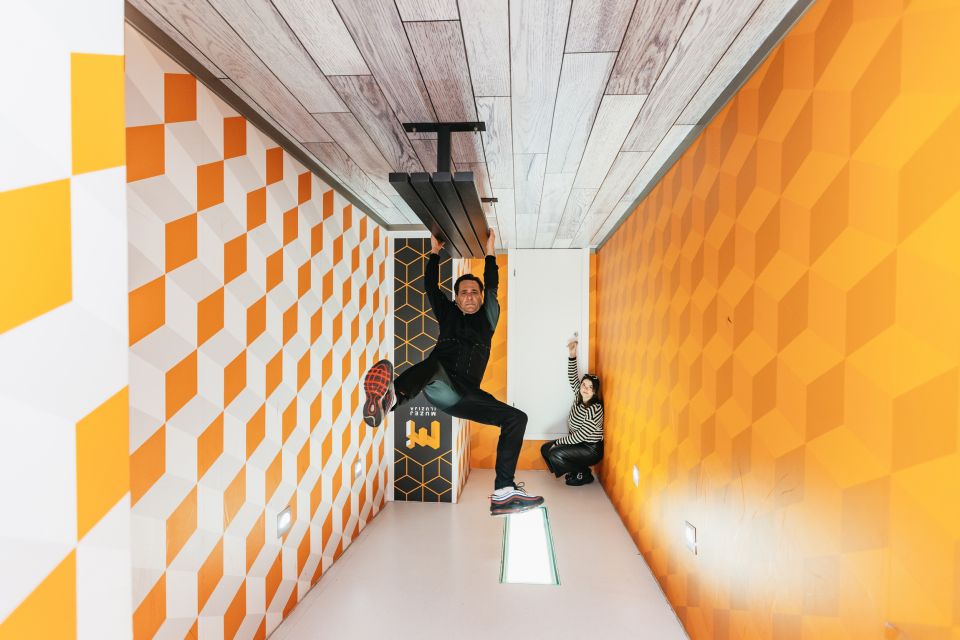
You’ll also find an experience that lets you climb up onto the ceiling. This kind of illusion hits differently because it involves your whole posture. It’s one thing to see something wrong. It’s another thing to feel your body accept it.
Practical tip: if you’re cautious with heights or balance, take your time and use steady pacing. The museum’s whole goal is to get you to trust your eyes less, but you still need to feel physically comfortable.
Photo Moments That Make the Science Stick
If you’re going to this museum partly for fun pictures, you’re in the right place. One verified booking review from Aurelie (France) singled out the photo room where you look big and small, and I get why. These rooms are designed for the moment the scale shift becomes obvious on camera.
Here’s how to make your photos better without turning it into work:
- Keep your camera steady and let the illusion do the movement.
- Take at least one shot from farther away and one closer.
- Try one angle where you include a reference point (like a friend, a marker, or the edge of the installation).
Also, remember the captions: if you’re curious about what makes the trick work, use the text as your cheat sheet. You’ll get more satisfaction when you can explain the illusion to yourself.
Playrooms With Games and Puzzles: Not Just for Kids
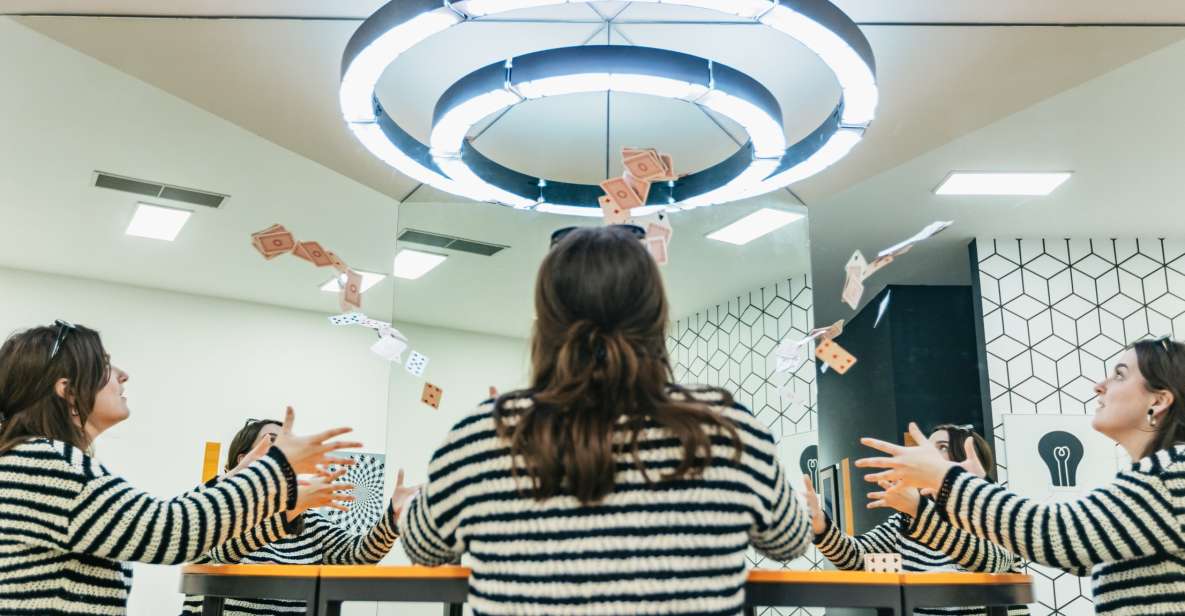
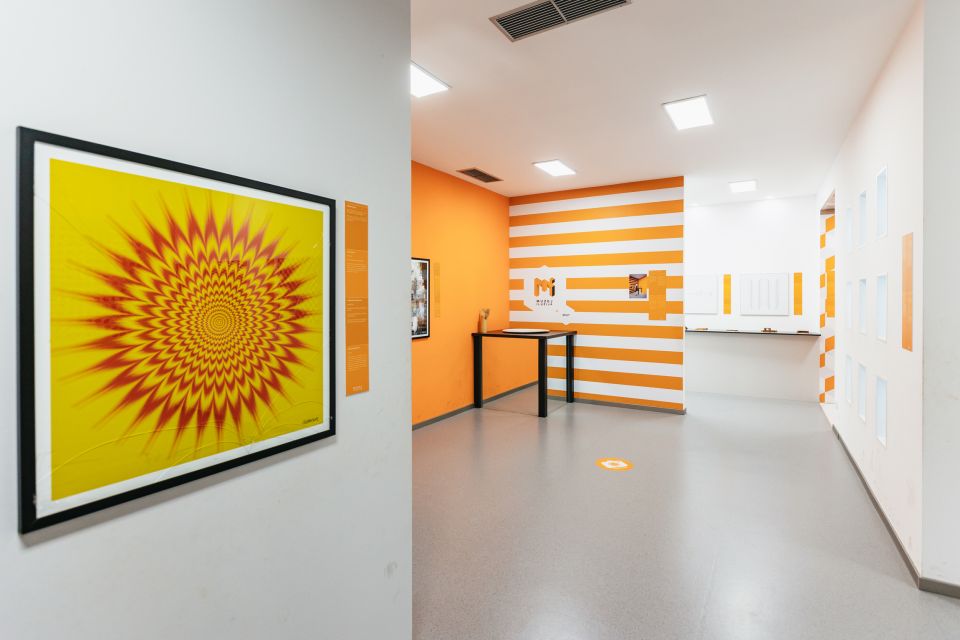
This museum isn’t only about optical tricks. It also has playrooms with intriguing and educational games and puzzles. The reason I like this setup is that it prevents the common “we did the main rooms, now what?” problem.
The play areas matter because illusions can be mentally tiring. They ask you to question your instincts. A puzzle space lets you switch gears: from perception tricks to active problem-solving.
It’s a nice match for mixed groups too. If someone in your group wants to keep experimenting with light and angle, they can. If someone else needs more hands-on interaction, the games give them that outlet.
And for families: this is where the museum earns its keep. A kid can burn energy and learn without it feeling like school.
Price and Value: Is $14 for One Day a Good Deal?
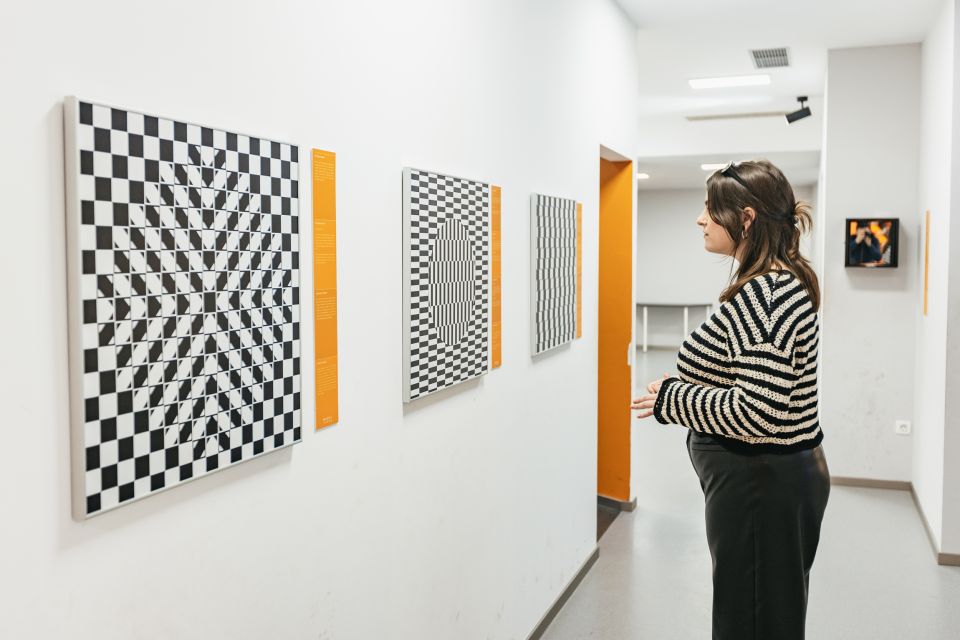
At $14 per person for a 1-day ticket, you’re paying for access to multiple installations—visual illusions, mirror setups, gravity/scale experiences, and playroom activities—plus the opportunity to try the setups multiple times if you want better photos.
Is it “cheap”? Not in the sense of a free street festival. But it’s not overpriced either for what you actually get: a concentrated day of interactive, non-screen entertainment in a famous tourist city.
The value gets even better if:
- You enjoy taking your time in exhibits
- You’re visiting as a family or with friends who like goofy photo moments
- You want something different from Split’s typical old-stone sightseeing
The main value risk is if you rush. If you walk through in five minutes, you’ll feel like you paid for doors. If you slow down and experiment with your position, it turns into the kind of experience you remember.
What to Bring, Language Expectations, and Basic Rules
You only need one clear “bring” item listed: a camera. Most illusions are built around visual impact, and having a camera helps you capture the exact moment your brain catches up to your eyes.
A few other practical notes:
- Captions are available in English, German, Italian, and Croatian.
- The host/greeter is English and Croatian.
- Service animals are permitted.
- Unaccompanied minors are not allowed. If you’re traveling with kids, plan on staying with them.
- The museum is wheelchair accessible, so you should be able to plan your day comfortably around your mobility needs.
If you want to avoid the “we missed the explanation” feeling, keep an eye on captions as you move. Even when the illusion is obvious, understanding the setup turns it from fun into real learning.
Who This Museum Ticket Suits Best
This is a great fit if you want a day that isn’t purely sightseeing, and you like experiences that encourage curiosity.
You’ll probably enjoy Split’s Museum of Illusions most if you:
- Like interactive exhibits more than lecture-style museums
- Want a group activity with lots of photo chances
- Travel with kids who need movement and short attention-friendly activities
- Enjoy science when it’s presented through play and perception
It’s also useful if you’re tired. Optical illusions don’t require physical hiking, and the setup format lets you rest between rooms without losing your momentum.
Should You Book Split’s Museum of Illusions?
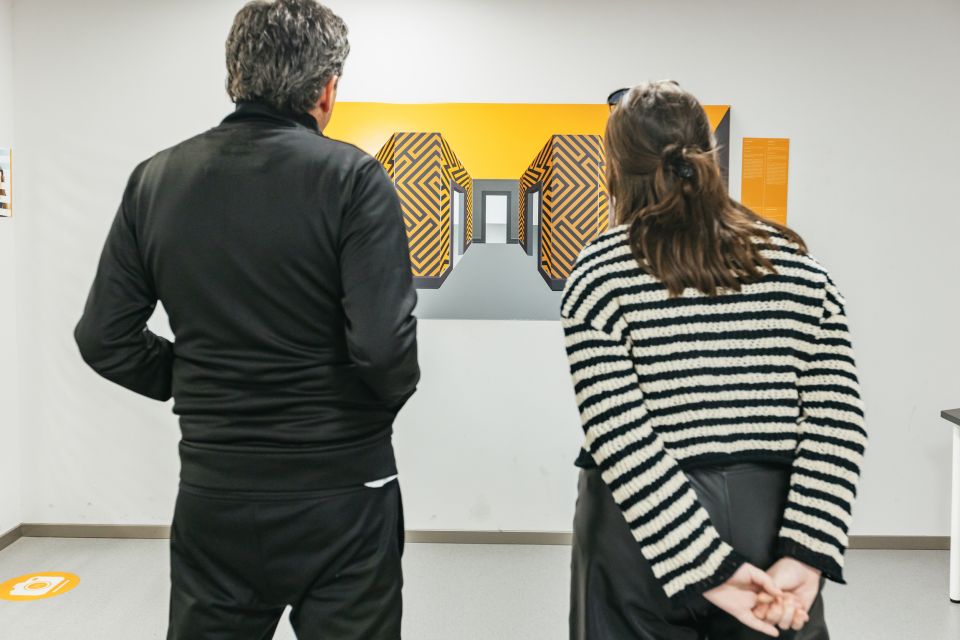
I’d book it if you want a one-day activity that mixes mind-bending perception with hands-on fun. The ticket price is reasonable for the number of installations you can experience in a single visit, and the fact that there are playrooms with puzzles makes it work for mixed ages.
I’d pause before booking if your plan depends heavily on high-quality explanations in a specific language. Captions cover several languages, but based on at least one review, French explanations weren’t available in the way that visitor expected. If you read captions well in English or one of the other supported languages, you’ll be fine.
If you’re in Split and you have even half a day free, this is one of those experiences that makes you look at your own senses a little differently afterward. And you’ll walk out with photos that prove your brain was tricked—against its will.
FAQ
How much is the Split Museum of Illusions entrance ticket?
The ticket price is listed as $14 per person.
How long can I spend at the museum?
The ticket is valid for one day.
Where do I show my voucher?
Show your voucher at the museum’s main entrance.
What’s included with the ticket?
Your entrance ticket is included.
What should I bring?
The activity lists a camera as something to bring.
Is the museum accessible for wheelchairs?
Yes, the museum is wheelchair accessible.
Are unaccompanied minors allowed?
No. Unaccompanied minors are not allowed.
What languages are available at the museum?
The museum offers English and Croatian for the host/greeter, and captions are available in English, German, Italian, and Croatian.
Are service animals allowed?
Yes, service animals are permitted.
What’s the cancellation policy?
Free cancellation is available up to 24 hours in advance for a full refund.