REVIEW · SPLIT
Split: Historical & Gastro Treasures Tour with Green Market
Book on GetYourGuide →Operated by Aroma Delmatica j.d.o.o. · Bookable on GetYourGuide
History and lunch in one walk. That’s what makes this Split tour work. You’ll pair Diocletian’s Palace sights with Green Market tastings, plus generous samples of Dalmatian classics, guided by friendly locals like Hani and Ana.
The best part is the flow: you eat first, then history clicks into place as you move through key palace spaces. One thing to consider: this tour is built for big appetites, and alcohol is part of the tastings (so flag food allergies or diet needs upfront).
In This Review
- Key highlights that matter
- Split’s Green Market First: Why this route hits better
- Hrvojeva 1 and the Green Market brunch that builds your appetite
- Inside Diocletian’s Palace: From Peristil to Golden Gate
- Konoba lunch: Seafood starter, pasta variety, and black risotto
- The sweet finish: gelato or dessert by season
- Afternoon option: what changes when Green Market is off
- Price and value: does $135 make sense?
- Who should book this Split history and gastro tour
- Should you book it or skip it?
- FAQ
- How long is the tour?
- What’s the starting point for the tour?
- Is hotel pickup included?
- What’s included in the price?
- What language is the tour in?
- Does the tour visit Diocletian’s Palace?
- What do you taste at the Green Market?
- What’s different about the afternoon option?
- Do you get alcohol during the tastings?
- Can you accommodate allergies or diet restrictions?
Key highlights that matter
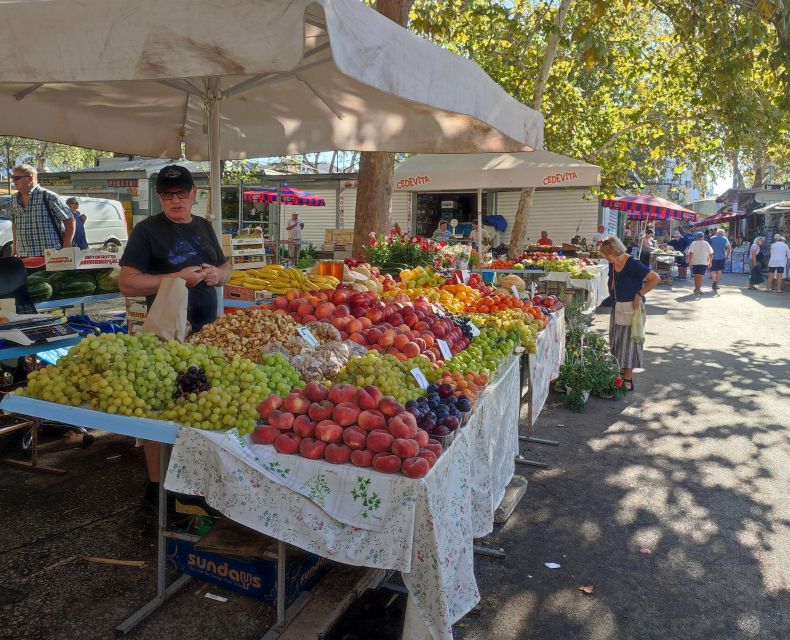
- Green Market brunch with real local staples like prosciutto, cheese, peka bread, soparnik pie, and grappa
- Diocletian’s Palace stops you’ll remember including Peristil square, Golden Gate, and Pjaca
- Konoba-style lunch with multiple courses plus wine, including black risotto and Brač island red wine
- Seasonal finish with gelato or a traditional dessert depending on the time of year
- Guides who explain the how and why with humor and practical context, not just dates
Split’s Green Market First: Why this route hits better
This tour makes a smart bet: start with food before you start decoding the stones. In Split, the old city can feel like a maze. But tasting your way through the morning helps you understand the rhythm of local life. You’re not just looking at history. You’re learning the tastes, ingredients, and habits that surround it.
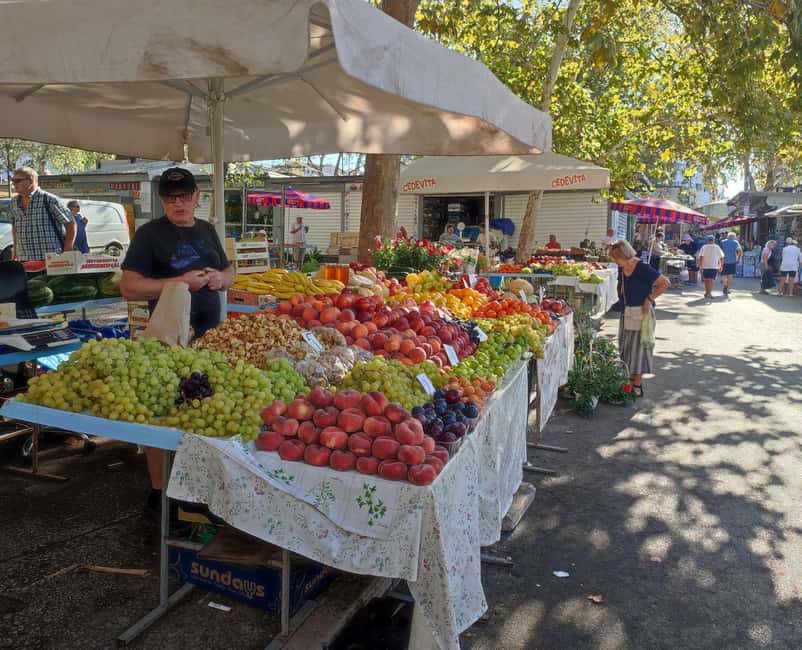
You also get a true market moment. The Green Market isn’t a museum. It’s where locals show up, browse, and plan meals. That’s why the tastings feel more than snack stops. They give you a baseline for what to look for later when you’re eating on your own.
And yes, the food portion is part of the value. You’re not paying for a quick sample and a photo op. The tour is set up as a sequence of generous tastings and courses, so you finish with a very full, very clear picture of Dalmatian dining.
You can also read our reviews of more historical tours in Split


Hrvojeva 1 and the Green Market brunch that builds your appetite
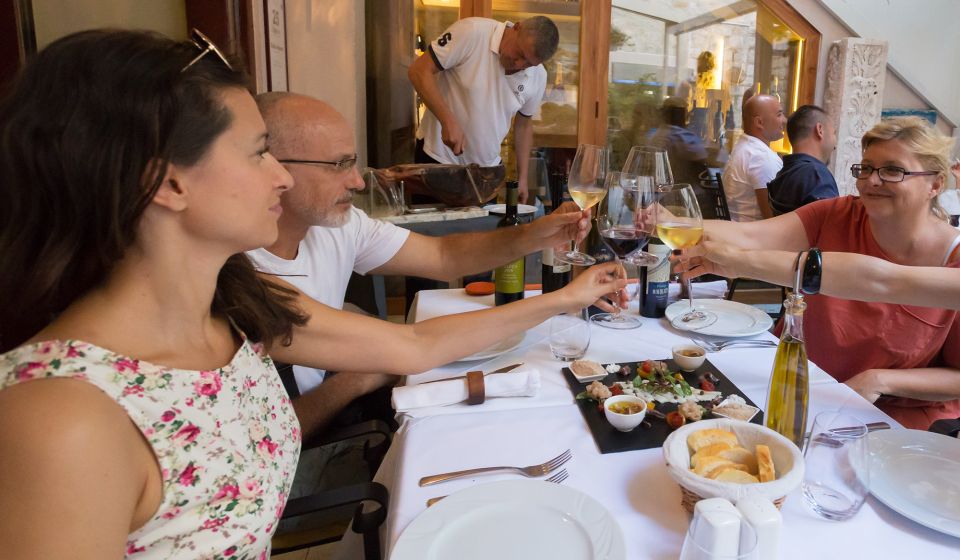
You meet your guide at the start point (the exact meeting location can vary by option), with Hrvojeva 1 Street mentioned as a common meet spot. From there, your first stretch is about getting oriented fast, while you try the kind of foods that locals actually order.
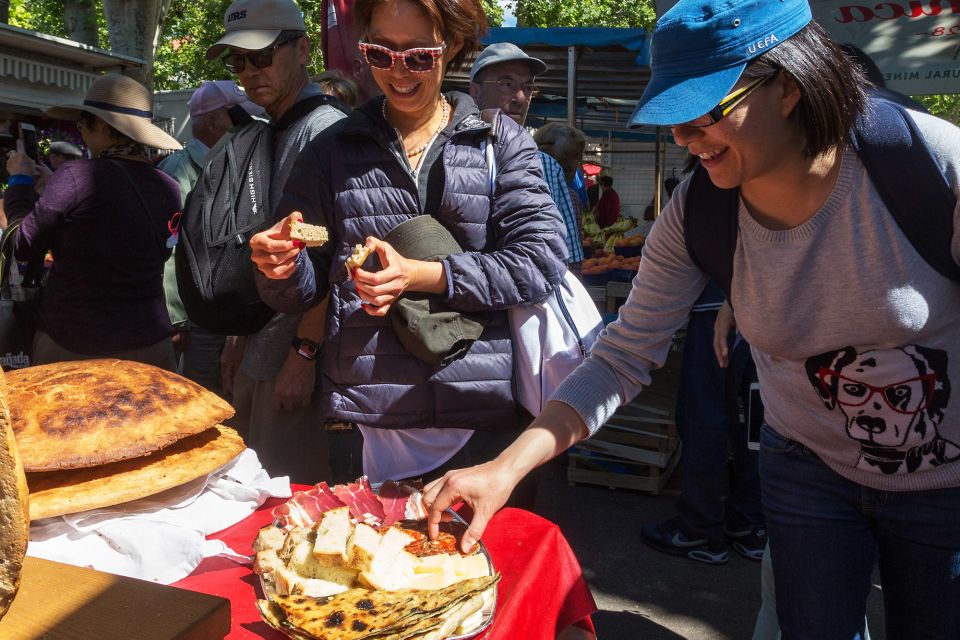
The Green Market brunch includes a lineup designed to represent Split and Dalmatia in a compact way. You’ll get:
- prosciutto
- cheese
- traditional peka bread
- soparnik pie
- grappa
This mix is practical. It covers salty, savory, and spirit in a way that feels like a real local snack-to-lunch step. You’ll also understand why things taste the way they do once you hear the guide’s explanations of local habits and choices.
A key detail: this start sets the pacing for the rest of the day. If you come hungry, you’ll enjoy the walk through Diocletian’s Palace more, because you’re not constantly thinking about your next meal. If you don’t, you might find the later courses feel like a lot.
Inside Diocletian’s Palace: From Peristil to Golden Gate
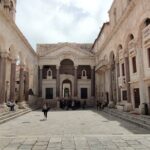
After the market, the tour shifts into the stone-world of Split’s UNESCO-listed Diocletian’s Palace. This is where the history gets less abstract and more usable. The guide connects what you’re seeing to how the palace has been used and changed over time.
You’ll cover major stops, including:
- Peristil square
- Golden Gate
- Pjaca, often described as the medieval Venetian square
Peristil square is the kind of place where your brain goes quiet for a second. It’s open, dramatic, and made for lingering. That’s the moment to pay attention to how the space works and why it’s so central to the palace layout.
Golden Gate is the next mental anchor. You’re not just passing it. The guide’s job is to explain the palace origins and what happened as centuries rolled in. One reason this tour rates so well is that guides like Hani and Christian tend to keep the story straight and easy to follow, without turning it into a lecture.
Pjaca ties it all to the lived-in side of Split. You’re moving from Roman-era structure into later layers of the city, and the transition feels smoother because you already tasted the local food and learned how locals think about meals and community.
Konoba lunch: Seafood starter, pasta variety, and black risotto
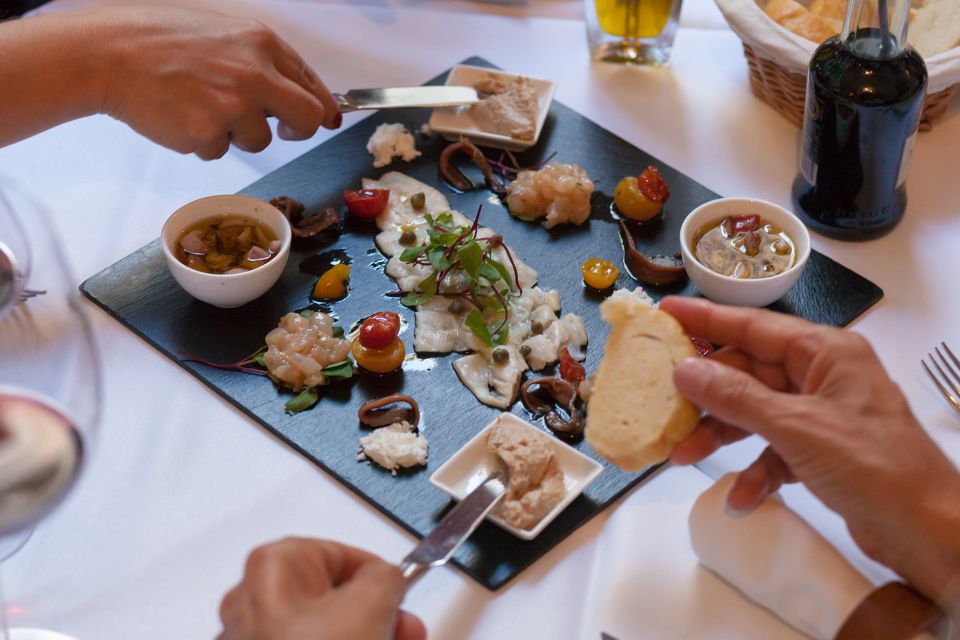
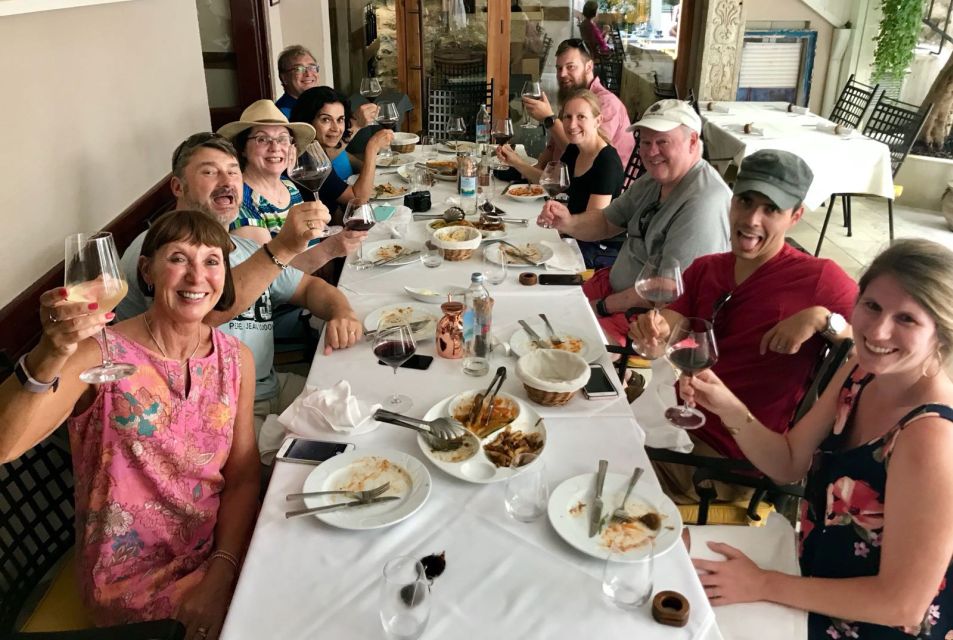
By the time you reach the konoba tavern-style restaurant, you’ll be ready for the kind of sitting-down meal that makes a food tour feel worth it. This is not rushed. The setup is designed so you can eat, talk, and listen while still enjoying the pacing.
Course-wise, the meal runs like this:
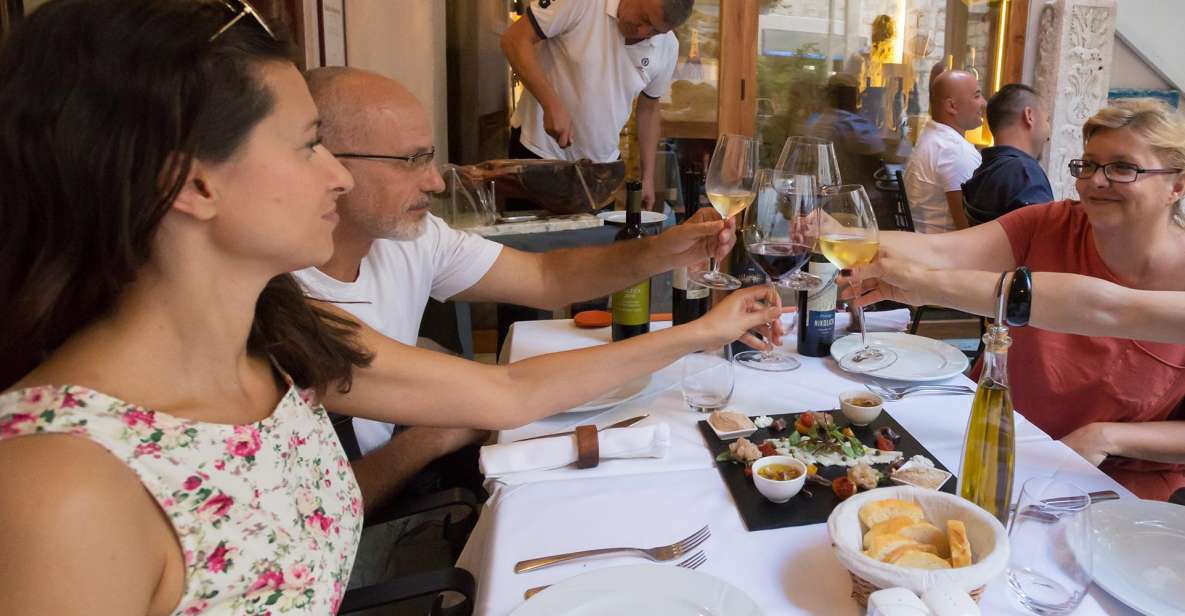
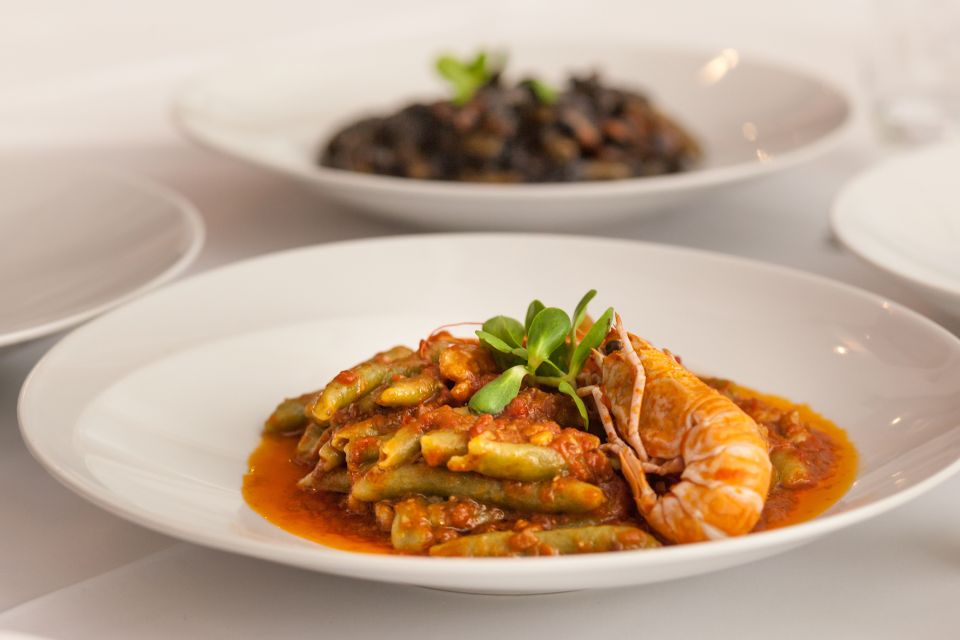
- a traditional seafood starter with white wine
- a second course with two types of traditional pasta
- black risotto with local red wine from Brač island
That black risotto is one of those dishes you’re likely to remember, if only because it’s so distinctive on the plate. The tour also gives you comparison points via pasta variety, so you get a sense of how Dalmatian cooking handles different textures and styles, all in one meal.
Wine pairing is part of the experience. In practice, it means each stage feels planned, not random. You’ll taste white with the seafood starter and move into a local red (from Brač island) with the heartier course. If you don’t drink, I’d still consider the meal value carefully, since alcohol is included in the tastings. If you’re usually a non-drinker, the tour may feel more like a food package with added wine than a low-cost way to learn local cooking.
The sweet finish: gelato or dessert by season
You end the tour with a light sweet finish: either gelato or a traditional dessert depending on the spring, summer, or autumn season. This is smart planning. After a full brunch and multi-course lunch, you want a finish that’s enjoyable but not too heavy.
This is also where you can take control of your appetite. If you’ve been pacing well, gelato can feel refreshing. If you’re still full, you can treat the dessert as a take-it-easy moment, because the tour ends shortly after.
One small practical note: if you have strong preferences about specific desserts, this seasonal swap is something to plan around. You’ll know what’s offered when your tour runs, since the tour doesn’t promise the same exact sweet year-round.
You can also read our reviews of more shopping tours in Split

Afternoon option: what changes when Green Market is off
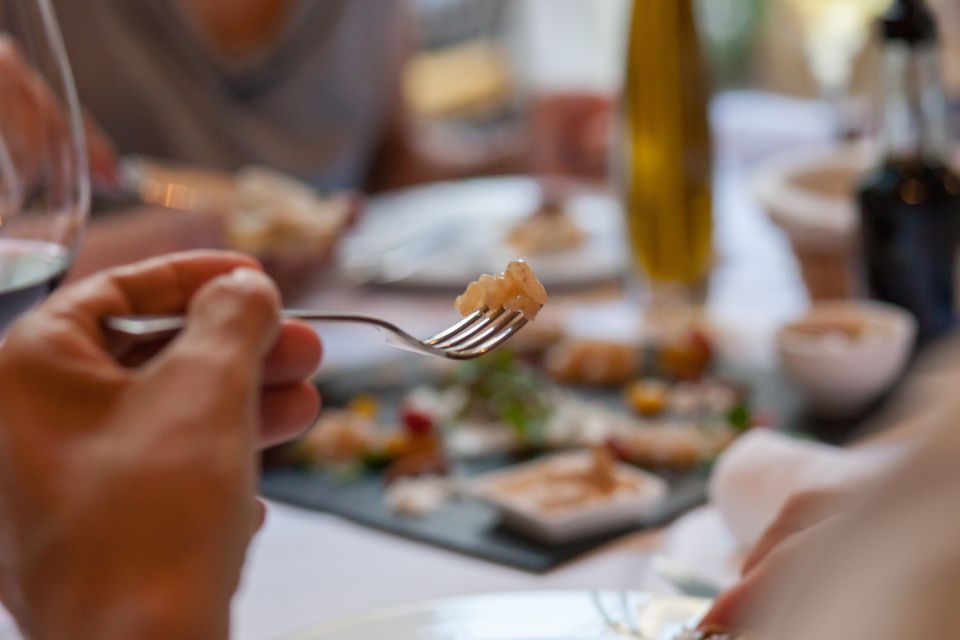
There’s an afternoon option that does not cover the Green Market, since it doesn’t work in the afternoon hours. You’ll still taste similar foods, just in a local tavern setup instead.
This matters because the Green Market portion is one of the tour’s strongest identity pieces: the market atmosphere, the flow of local produce, and the brunch lineup. If seeing the market is a big reason you booked, you’ll want the morning timing.
If your schedule pushes you to the afternoon, don’t panic. The core structure still focuses on history and traditional eating. Just understand that the first step becomes a different kind of food experience, more restaurant-based and less open-market.
Price and value: does $135 make sense?
At $135 per person for about 3 hours, you’re paying for a guided history walk plus a real food-and-wine sequence. That’s the key: you’re not choosing between history or gastronomy. You’re getting both, tied together with multiple tasting moments.
Here’s what you’re actually getting included:
- the cost of all food and wine
- a licensed local guide
Not included is hotel pickup and drop-off, so you’ll start and end back at the meeting point. That’s normal for city walking tours, but it does mean you should plan to be self-sufficient on transport to the start.
Why it can be good value: Split can get expensive if you try to replicate this on your own with separate restaurant meals, wine, and a guide. This tour packages the meal structure and the explanations, so your time doesn’t get wasted hunting down what to try next.
The only caution I’d give is the alcohol component. Since wine and grappa are part of the tastings, the experience can feel pricier for someone who doesn’t drink at all. If you’re strict about that, still go for the food and history, but weigh the price against what you’d normally spend on a standalone market-and-lunch plan.
Who should book this Split history and gastro tour
This is a great match if you want:
- an easy first-day orientation to old Split
- a food-centered way to learn Diocletian’s Palace
- a relaxed pace where you eat enough to feel satisfied, not just “sampled”
It’s also ideal if you like learning from local people who can explain daily customs alongside the monuments. Many guides described in the experience tend to bring humor and quick explanations at each stop, which is perfect if you don’t want a history marathon.
You might especially enjoy it if you’ve never eaten Dalmatian food in this format. The tour’s tastings cover a spread: market bites, palace walking, then a multi-course konoba lunch. That makes it easier to understand what you like and then order smartly later.
If you’re short on time, 3 hours is a very usable window. And if you’re planning your first full visit to Split, starting early helps you carry the taste and context into the rest of your stay.
Should you book it or skip it?

Book it if you want Split to feel practical and local. This tour ties together Green Market flavors, palace landmarks, and a wine-and-meal sequence in a way that helps you learn faster and eat better.
Skip it only if you know you hate structured food tastings or you need a very low-food, low-alcohol experience. In that case, you’ll likely prefer a shorter palace walk or a meal-focused plan that’s easier to customize.
FAQ
How long is the tour?
It lasts about 3 hours.
What’s the starting point for the tour?
The meeting point may vary depending on the option booked. Hrvojeva 1 Street is mentioned as a common meeting location.
Is hotel pickup included?
No. Hotel pickup and drop-off are not included.
What’s included in the price?
Food and wine are included, along with a licensed local guide.
What language is the tour in?
The tour is available in English.
Does the tour visit Diocletian’s Palace?
Yes. You’ll visit UNESCO-listed Diocletian’s Palace, including Peristil square, Golden Gate, and Pjaca.
What do you taste at the Green Market?
You’ll have a local Mediterranean brunch with prosciutto, cheese, traditional peka bread, soparnik pie, and grappa.
What’s different about the afternoon option?
The afternoon option does not cover the Green Market, since it doesn’t work in the afternoon hours. Similar foods are tasted in a local tavern instead.
Do you get alcohol during the tastings?
Yes. The tastings include wines and grappa as part of the meal sequence.
Can you accommodate allergies or diet restrictions?
You should indicate any food allergies or diet restrictions when booking, so the guide can adjust appropriately.