REVIEW · SPLIT
Split: History and Heritage Walking Tour
Book on GetYourGuide →Operated by Ancient Tours Split · Bookable on GetYourGuide
Split’s Roman sights come with real stories. This History and Heritage Walking Tour threads through Diocletian’s Palace and the surrounding old town, mixing Roman architecture with Romanesque churches, medieval fortifications, and Gothic palaces. You also get bonus Game of Thrones location pointers along the way.
I like how the tour is built around a single, powerful idea: how one man helped shape a whole city. You’ll get the big picture of Diocletian’s rise, plus the practical sense of what’s still standing after roughly 1,700 years. If you like history that feels usable, not just memorized, this is an easy win.
The main trade-off is simple: you’re walking in a busy historic core, so the pace depends on crowd flow. Even in a small-group format, you might wait briefly at busier corners to keep everyone together.
In This Review
- Key highlights you should care about
- Why Diocletian’s Palace Still Feels Like the Main Character
- Peristil Square to Old Town: Finding the Meeting Point Without Stress
- What You’ll Actually See Inside Diocletian’s Palace Area
- Romanesque Churches and Medieval Fortifications: Spotting the City’s Middle Age
- How the Tour Keeps History Fun (Not Just Facts on Repeat)
- Game of Thrones Stops: Bonus Fun for Fans Who Still Want Real Context
- Price, Value, and What You Still Need to Budget For
- Weather, Comfort, and Small Rules That Matter
- When This Is the Right Tour for You (and When It Isn’t)
- My booking advice: should you reserve this Split history walk?
- FAQ
- Where is the meeting point for the Split History and Heritage Walking Tour?
- How much does the tour cost?
- What is included in the price?
- What languages are available for the tour?
- What should I bring?
- Does the tour run in bad weather?
- Is the tour suitable for all ages?
- Who should consider avoiding this tour?
- Can I cancel for a refund?
Key highlights you should care about
- UNESCO-protected Roman palace sites in the center of Split, not a distant stop
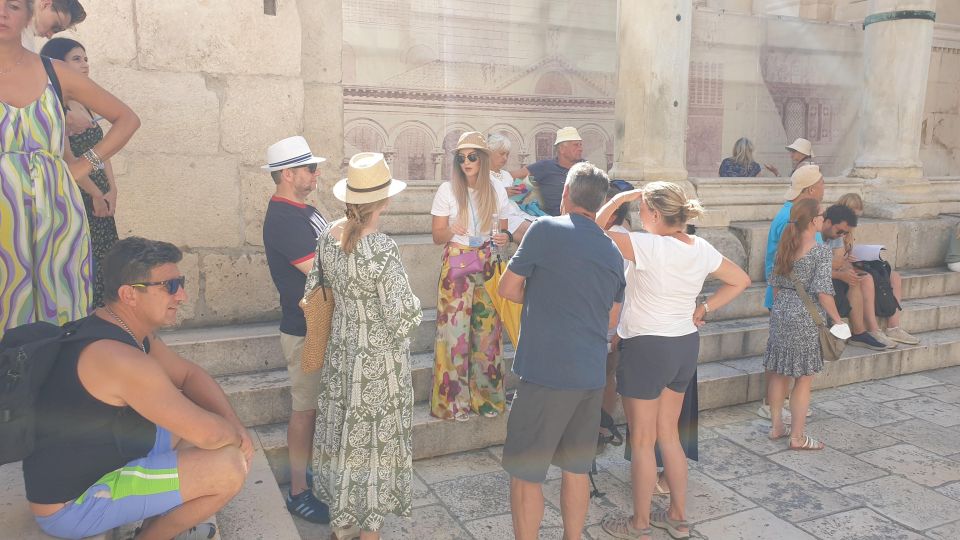
- A guide who explains the city from Roman rule to modern life, with clear context
- Diocletian’s Palace as it was versus what’s left today
- Romanesque, medieval, and Gothic layers you can actually see in one compact walk
- Bonus Game of Thrones nods for show fans, without losing the history
- Weather-flexible tour style, so you can plan around Split’s shifting skies
Why Diocletian’s Palace Still Feels Like the Main Character
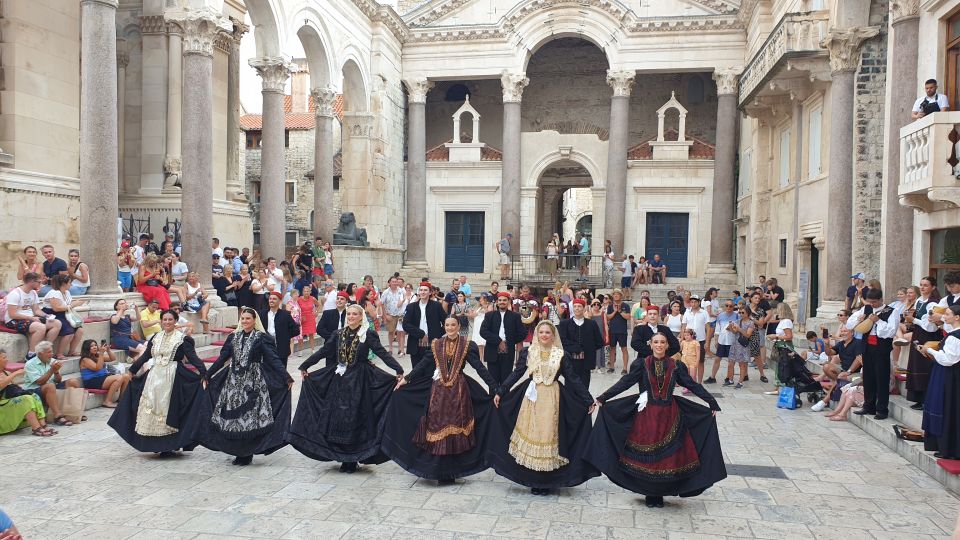
Diocletian’s Palace is one of those rare sites where “ancient ruins” don’t feel dead. It still has city energy. You walk through streets that grew around the palace, and that matters, because it turns history from a lecture into a place you can read with your eyes.
I like starting here because it gives you a map for the whole town. Split isn’t just Roman, and it isn’t just medieval either. It’s a stack of eras that share space. The palace is the anchor, and once you understand what it was built to do, later buildings make more sense.
And at UNESCO-protected scale, you can trust you’re looking at the real thing: a major Roman complex that has survived long enough to be reused, reshaped, and reinterpreted by generations who lived here.
You can also read our reviews of more walking tours in Split


Peristil Square to Old Town: Finding the Meeting Point Without Stress
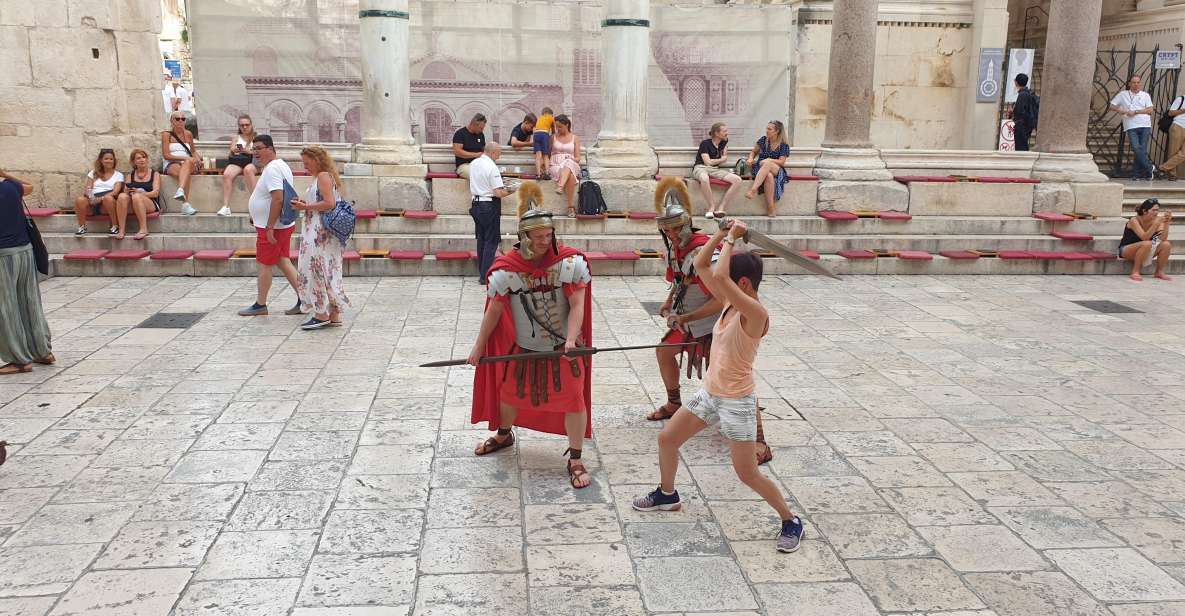
You meet at Peristil Square, under the old Roman arch on the north part of Peristyle Square, next to the Tourist Information Office. The team is easy to spot: look for a yellow T-shirt or a yellow umbrella.
The tour ends back at the same meeting point, which is helpful in Split. It means you don’t have to worry about getting yourself across town after the walk. You can go right from the palace core to cafés, viewpoints, or a self-guided wander.
A practical note: this is a walking tour, and old-town paths can be uneven. Comfortable shoes are non-negotiable, especially if you want to enjoy the stops instead of bracing yourself the whole time.
What You’ll Actually See Inside Diocletian’s Palace Area
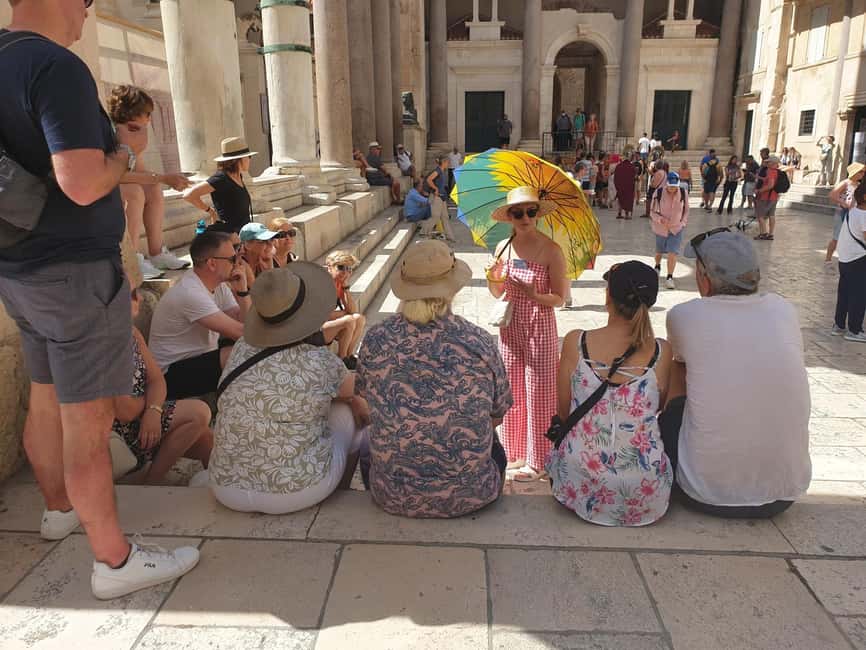
The centerpiece is the Roman palace complex. On this tour, expect to learn your way around the 1700-years-old structure and what survives of it now. The best part is how the guide connects physical features to the story of power and everyday life.
You’ll also learn how Diocletian went from obscurity to the most powerful man in the world. That storyline matters because it changes how you look at stone. When you know what a ruler was trying to protect, command, and display, the layout feels less random.
Here’s what this kind of palace tour does for you: it helps you stop treating Split as a collection of pretty buildings. Instead, you start seeing a plan. Even if you only catch some key architectural details, the guide’s explanation gives you a mental model you’ll carry for the rest of your trip.
Romanesque Churches and Medieval Fortifications: Spotting the City’s Middle Age
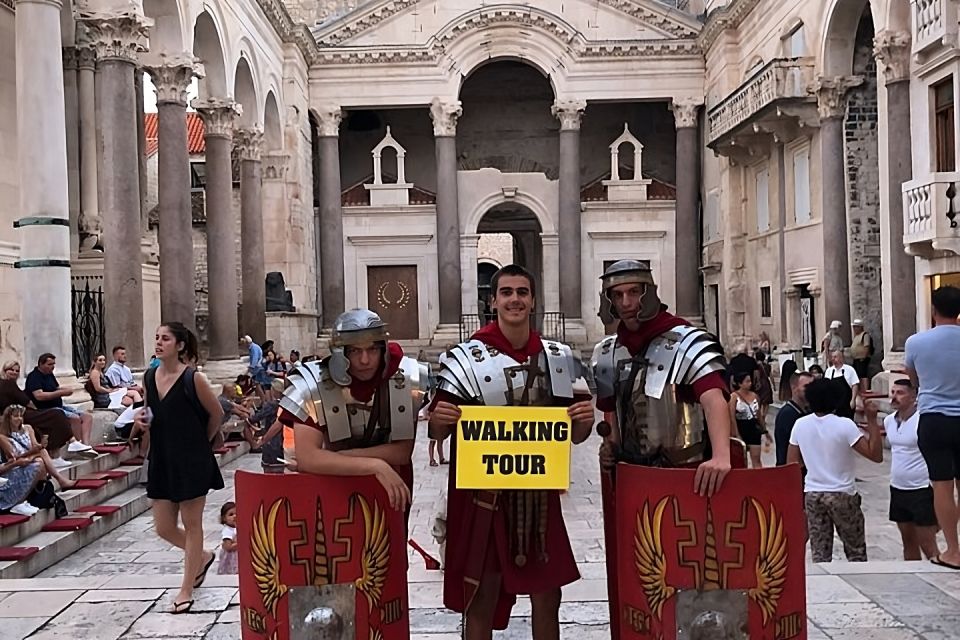
Split’s center doesn’t flatten time into one big “old” blur. It moves forward. That’s where the tour’s mix really earns its keep.
You’ll see Romanesque churches and learn how the city’s religious and civic life evolved after the Roman era. You’ll also move through areas tied to medieval fortifications. These weren’t built to impress emperors; they were built to defend, control movement, and protect people in a changing political world.
Then come Gothic palaces, which add a different mood. Gothic architecture tends to feel more upward, more detailed, more “urban” in its attitude. Seeing those alongside Roman structures gives you a strong sense of continuity: the palace zone didn’t stop being important after Rome. It kept being used.
The value here is the sequencing. Without a guide, it’s easy to treat each building as a separate photo opportunity. With a guide, the walk becomes a timeline you can follow on foot.
How the Tour Keeps History Fun (Not Just Facts on Repeat)

The tour is designed around story and pace. The guide isn’t only listing dates; they’re turning the past into something you can follow without effort.
That shows up in the way the tour is repeatedly described as entertaining and never boring. Some of the named guides stand out in the tone people report. For example, Antonela and Antonella are highlighted for their enthusiasm and how they explain complex eras in clear language. Nikolas is specifically noted for connecting the history and influences that shaped the city. Doris is mentioned for helpful care during rain, including providing an umbrella.
Even if your guide isn’t one of those names, the pattern is the same: you’ll get educated, licensed guidance and a sense that the guide actually likes teaching Split.
If you’re not a “history person,” this is still a smart choice because you’ll get context for why each era matters. And the tour format helps you stay engaged since you’re constantly moving to the next visible clue.
You can also read our reviews of more historical tours in Split






Game of Thrones Stops: Bonus Fun for Fans Who Still Want Real Context
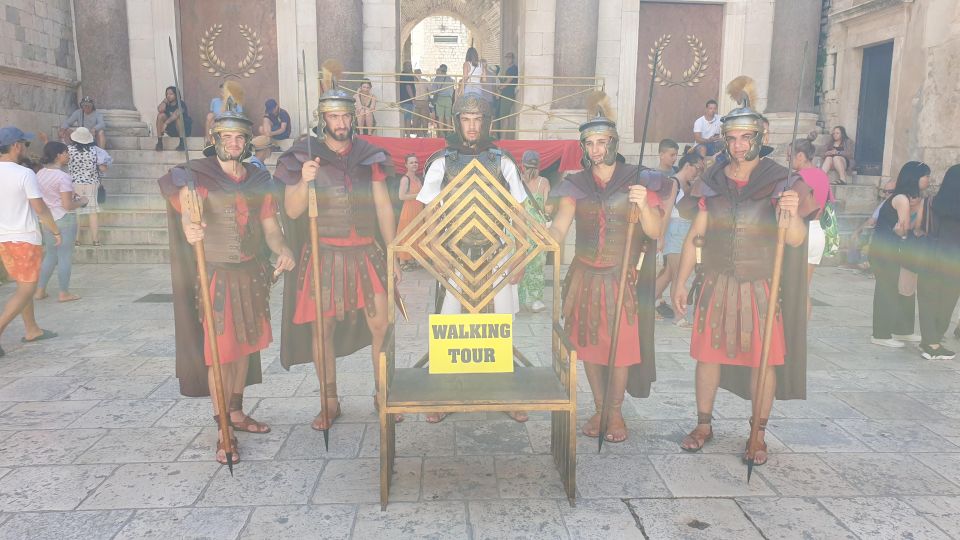
If you’re a Game of Thrones fan, you’ll appreciate the tour’s bonus nods to filming locations in the Split area. It’s a nice add-on because it gives modern pop culture a place inside older architecture.
The key is that it’s not supposed to replace the historical story. Think of it as a low-effort way to make the walk feel fresh, especially if you’ve been staring at ancient stones for hours. You’ll hear how the show made use of existing locations, which is fun, and it also encourages you to look more carefully at what’s actually on the street.
If you’re not into the show, you can still enjoy those moments as extra trivia without losing the main theme: Roman-to-medieval Split.
Price, Value, and What You Still Need to Budget For
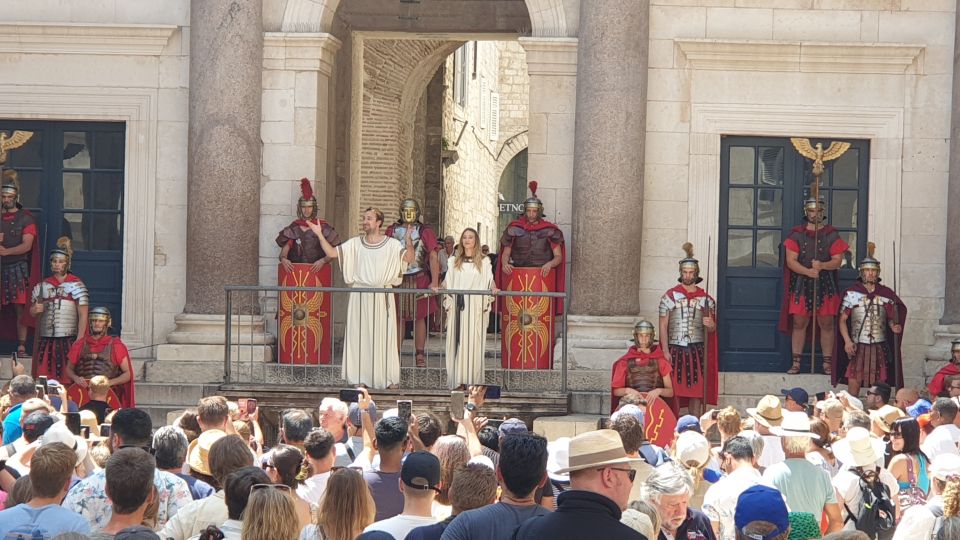
The price is $18 per person, which is a reasonable amount for a guided walk that focuses on a UNESCO Roman palace core. The value comes from what’s included: a small-group walking tour and a tour guide.
You should plan for the fact that admission tickets are not included. Depending on what you want to do afterward, you might still spend separately on entries or museum-type stops. But the tour itself is positioned so you’ll get plenty just by walking and learning in the outdoor-and-core-area spaces.
Think of it this way: $18 buys you an explanation that turns a complicated city into something coherent. If you’ve got limited time in Split, paying for a guide can save you the frustration of trying to piece together Diocletian’s palace layout on your own.
Weather, Comfort, and Small Rules That Matter
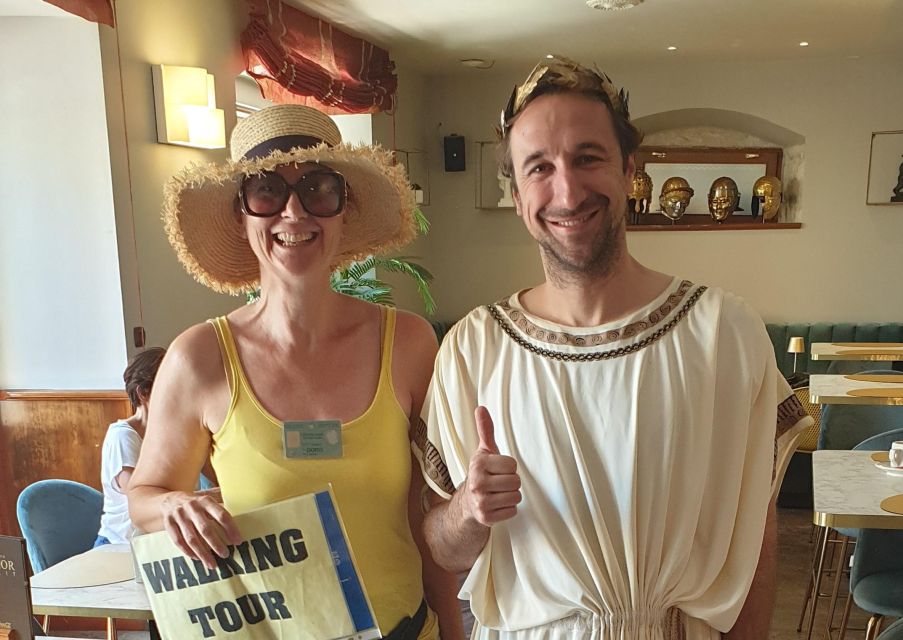
This tour runs in rain or sun. So if you’re packing light, bring a hat and dress for changing weather. Comfortable clothes help more than you’d expect, because you’ll be moving continuously.
The tour also has a straightforward no-costume rule: wearing a costume is not allowed. That’s normal for walking tours, especially in busy historic areas.
One more practical point: the tour is appropriate for all ages, but it’s not suitable for people with high blood pressure and not suitable for hearing-impaired people based on the tour’s stated limitations. If either applies to you, it’s worth considering alternatives or confirming details directly with the operator.
When This Is the Right Tour for You (and When It Isn’t)
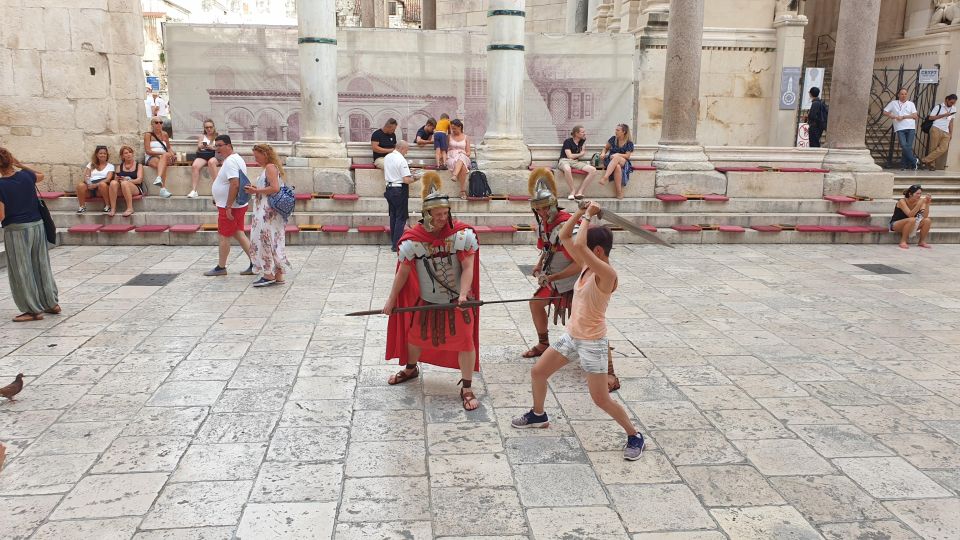
This tour is a great match if you want:
- A compact way to understand Split’s central timeline
- Roman architecture that you can interpret instead of just look at
- A guide-led explanation of the palace complex and what’s left today
- A fun add-on for show fans via Game of Thrones locations
It may be less ideal if you:
- Strongly dislike crowding and want long uninterrupted stretches in quiet spaces
- Need highly accessible formats beyond standard walking-tour conditions
The good news is that the tour keeps things family-friendly and focused on clear highlights rather than turning into a long, technical grind.
My booking advice: should you reserve this Split history walk?
If you have even a short stay in Split, I’d book this. For $18, you get a guided way into the most important historic layer of the city: Diocletian’s Palace. The payoff is not just seeing old stones; it’s understanding how those stones relate to how Split became the modern city you’ll walk through afterward.
If you’re on the fence, use this quick checklist:
- You want history told in story form, with context you can carry.
- You want to cover a lot of eras without jumping between unrelated attractions.
- You’re curious about how pop culture points connect to real-world locations.
If that’s you, this is an efficient, genuinely enjoyable way to start seeing Split in full detail.
FAQ
Where is the meeting point for the Split History and Heritage Walking Tour?
The tour starts on Peristil Square, under the old Roman arch at the north part of Peristyle square next to the Tourist Information Office. Look for a yellow T-shirt or a yellow umbrella.
How much does the tour cost?
The price is $18 per person.
What is included in the price?
It includes a small-group walking tour and a tour guide.
What languages are available for the tour?
The tour languages listed are Russian, English, German, and French.
What should I bring?
Bring comfortable shoes, a hat, and comfortable clothes.
Does the tour run in bad weather?
Yes. The tour will take place no matter the weather (rain, sun, etc.).
Is the tour suitable for all ages?
Yes. It is stated as appropriate for all ages.
Who should consider avoiding this tour?
It is not suitable for people with high blood pressure and not suitable for hearing-impaired people.
Can I cancel for a refund?
Yes. You can cancel up to 24 hours in advance for a full refund.