REVIEW · SPLIT
Walking Tour of Split with a ‘Magister’ of History
Book on Viator →Operated by DiocleSpot Tours · Bookable on Viator
Split tells its story in stone. This walking tour with Toni Šare (DiocleSpot Tours) turns Diocletian’s Palace into a clear timeline you can follow on foot, with 3D reconstructions that help you picture what you are actually standing on.
I love how Toni connects Roman architecture to the later medieval, Renaissance, and early modern layers you see while wandering Split. I also like the small-group setup, with a max of 18 people, which keeps the pace human and makes it easier to ask questions when something catches your eye.
One trade-off: the tour focuses on outside views and courtyard stops, so you do not enter the cathedral, the Temple of Jupiter, or any museums. If you want interior rooms and ticketed exhibits, you will need a separate plan for that.
In This Review
- Key moments you will really remember
- Start at Porta Aenea, Finish at Narodni trg
- Riva Harbor: the Riviera view and the palace preview
- Peristyle Square: where the Roman plan becomes readable
- Cathedral of Saint Domnius: the mausoleum turned church
- Temple of Jupiter: seeing Roman construction errors from the street
- Eastern (Silver) Gate: best views and the preserved road line
- Grgur Ninski Statue: language, culture, and identity
- Vestibulum and private residence remains: the palace as a lived space
- Noble palaces and a quick Game of Thrones detour
- Golden Gate: preserved design and the defense story
- City Museum courtyard and Venetian/Renaissance layers
- Ending at Old Town Hall on Piazza Square
- Price, group size, and why it feels fair at $34.83
- When this tour is the best fit
- Should you book the Walking Tour of Split with Toni Šare?
- FAQ
- How long is the Walking Tour of Split with a Magister of History?
- Is the tour in English?
- Where do I meet the guide, and where do I end?
- Will I enter the Cathedral of Saint Domnius or the Temple of Jupiter?
- Are museums included in the tour?
- How big is the group?
- What is the cancellation policy?
- Does the tour run in bad weather?
Key moments you will really remember
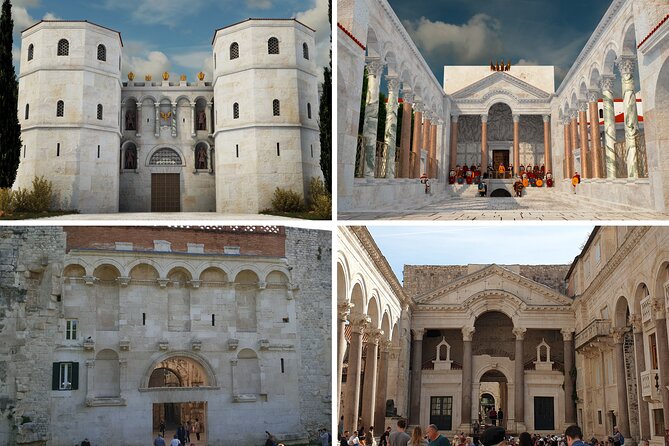
- 3D reconstructions that turn ruins into an easy-to-imagine original palace
- Outside-only views of the Cathedral of Saint Domnius and Temple of Jupiter
- Best photo/view axes like the Silver Gate corridor and the Golden Gate wall line
- A pace designed for questions, not a fast march-through
- Optional Game of Thrones filming stops plus a pass by the fan shop
- A local-style ending at Piazza Square (Narodni trg) where everything is easy to reach next
Start at Porta Aenea, Finish at Narodni trg
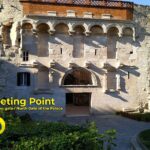
The tour begins at Brass Gate (Porta Aenea) on Obala Hrvatskog narodnog preporoda 22, Split. Getting there is straightforward, and Toni is set up to give you the kind of orientation that makes old streets stop feeling random.
You end at Narodni trg, also called Piazza Square (Pjaca). That matters more than you might think: the final stop is central, so after the walk you can keep exploring without playing map-juggling games.
The total time is about 1 hour 40 minutes to 1 hour 50 minutes, which is a sweet spot. Long enough to make Split’s core make sense, short enough to still have a full afternoon (or evening) to enjoy.
You can also read our reviews of more walking tours in Split
Riva Harbor: the Riviera view and the palace preview
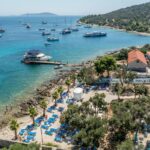
Stop 1 is Riva Harbor, the Riviera area locals care about. From here, Toni sets the stage with graphic and model representations, essentially giving you a primer before you enter the Diocletian Palace zone on foot.
You also get a key visual: the southern wall of Diocletian’s Palace is beautifully visible from this spot. It helps you understand the palace not as an isolated monument, but as part of how the city grew around it.
Because Riva Harbor is a public area, you can usually take a moment to look around even before the group moves on. It is a good start if you tend to need a minute to lock in directions.
Peristyle Square: where the Roman plan becomes readable
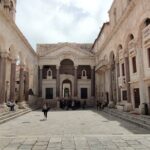
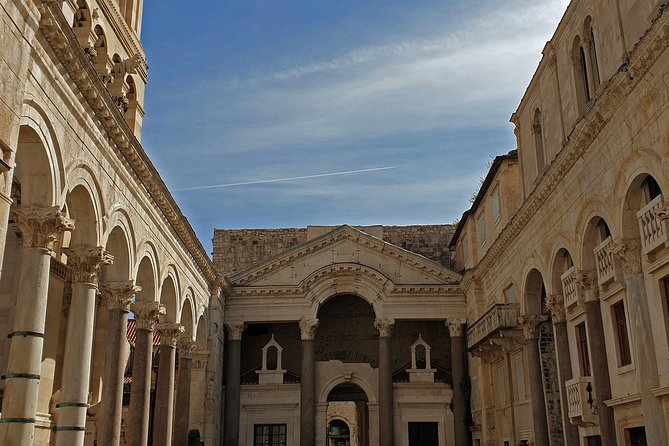
Next comes the Peristyle of Diocletian’s Palace, the central square and one of the most important civic spaces in modern-day Split. This is where ruins start behaving like a map instead of scattered stones.
Toni points out exceptionally preserved Roman structures, and he uses his 3D reconstructions to show what you are seeing compared with earlier decoration and layout. That “before and after” effect is one of the biggest reasons this walk feels different from a basic sightseeing loop.
A realistic drawback here: if you expect a museum-style, room-by-room tour, you will not get it. This is street-level interpretation, so you get the big ideas fast and keep moving.
Cathedral of Saint Domnius: the mausoleum turned church
Stop 3 is the Cathedral of Saint Domnius, which is also Diocletian’s mausoleum. Toni explains what you are looking at, including how the structure shifted from a grave site into a working cathedral used by Christians.
You will not enter the cathedral. Still, the outside discussion is designed to make the building’s purpose click, including the role of the bell tower and how the transition changed meaning over time.
If you like history that explains why places changed, this stop is a strong one. It is also ideal if you want to avoid time lost to lines or ticket procedures.
Temple of Jupiter: seeing Roman construction errors from the street
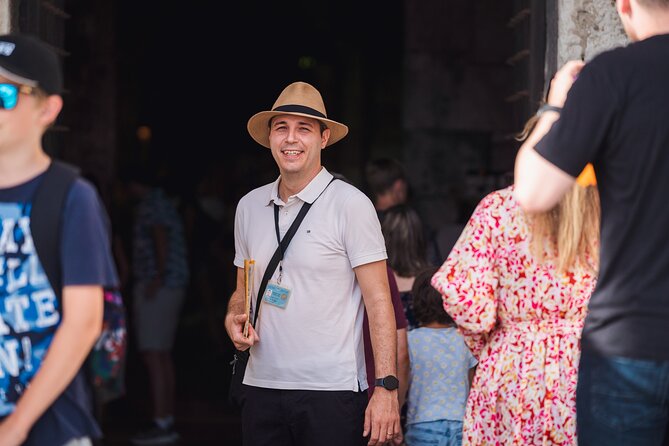
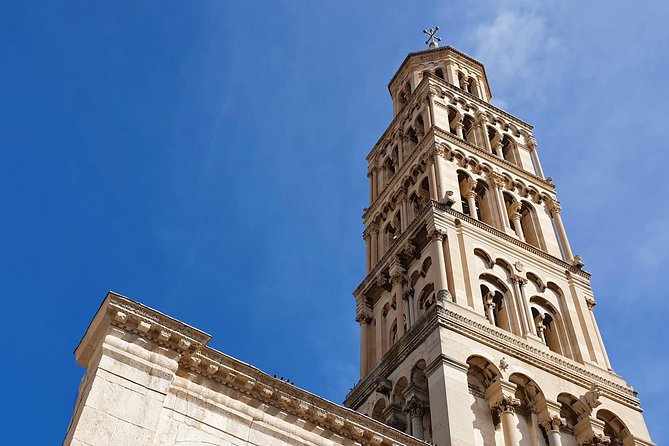
Then you reach the Temple of Jupiter, known as one of the best-preserved late-Roman temples in the world. Toni keeps it practical by focusing on what you can spot from outside—especially the oddities and inconsistencies he calls out as Roman construction anomalies.
Even without entry, it is the kind of stop that rewards close looking. Toni’s approach encourages you to read the building like a text: not just what it is, but how it was built and what that tells you.
If you are someone who prefers perfectly smooth stories with no “imperfections,” you might find this style more opinionated than a textbook. But for most people, the honest details make the monument feel more real.
You can also read our reviews of more historical tours in Split

Eastern (Silver) Gate: best views and the preserved road line
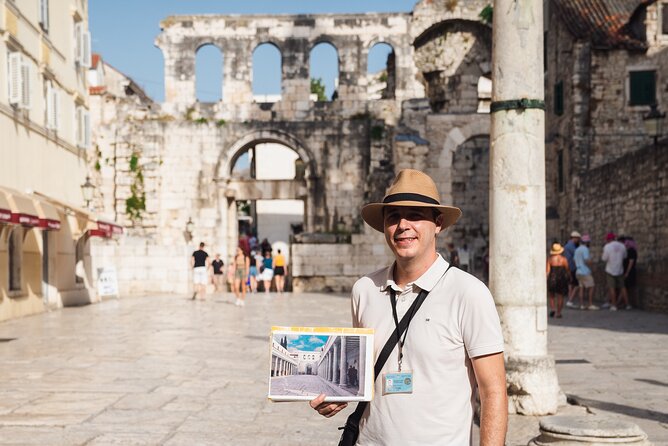
Stop 5 is the Eastern (Silver) Gate, and the main payoff is the view. From here, you can line up the Cathedral (Mausoleum) on one side, the Silver Gate on the other, and understand the space between the palace and the street systems.
Toni also points out beneath you the only preserved part of the original road. That tiny detail is the kind of thing that makes a walking tour worth paying for, because it gives you a clue about how movement and daily life worked in Roman Split.
A small consideration: this area is short and view-focused, so if you are the type who wants to linger for 20 minutes, you may feel a bit time-boxed. The good news is the whole route is built around short, meaningful stops.
Grgur Ninski Statue: language, culture, and identity
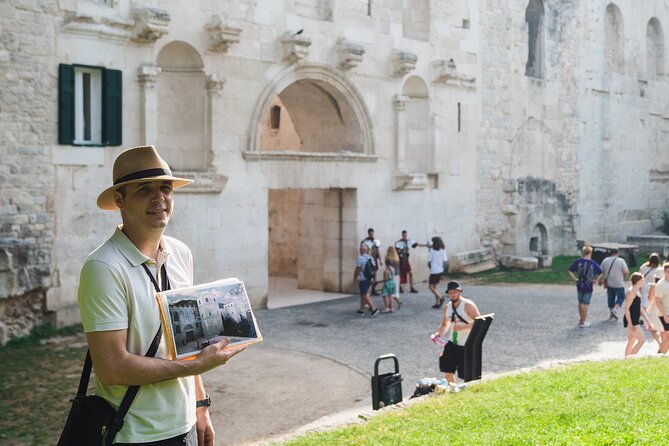
At Stop 6 you meet the Grgur Ninski statue, one of Split’s most recognizable landmarks. Toni explains what it represents and, importantly, why it matters for Croatian language and early medieval culture.
This stop is a reminder that Split is not only Roman stones and Christian churches. It also has an early medieval identity layer, where language and cultural symbols show up in public art.
If you are only coming for Roman ruins, this moment helps broaden your understanding without turning the tour into random cultural trivia. It stays connected to what you are seeing nearby.
Vestibulum and private residence remains: the palace as a lived space
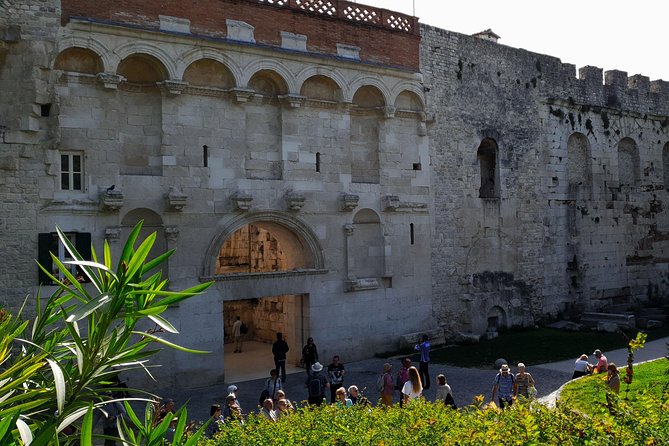
Stop 7 is the Vestibulum of Diocletian’s Palace, the ancient entrance to Diocletian’s private residence. Toni then takes you around the remains connected to the emperor’s private areas.
This is where the tour starts to feel less like sightseeing and more like walking inside a historical argument. You begin to understand the palace not only as an empire-era construction, but as a place with boundaries, movement, and private/public differences.
You will still stay outdoors and on the move, so the “see it, understand it, keep going” rhythm continues. For many people, that pacing is the best part: you do not get bored, but you also do not get overwhelmed.
Noble palaces and a quick Game of Thrones detour
As you move through the palace area, Toni also points out various noble family palaces you pass along the way. These are the later layers—medieval, Renaissance, and early modern—that show how the city kept reusing Roman bones.
If your group is interested, Toni may also guide you toward Game of Thrones filming locations in Split, with the added fun of passing by the fan shop. This part is optional in spirit, but it often works well because the filming spots overlap with the most photogenic streets and corners.
A practical tip: if you are not into the show, you can still enjoy the architecture and street logic. Toni’s core value is connecting the later city to the original palace footprint.
Golden Gate: preserved design and the defense story
Stop 8 is the Golden Gate, the main entrance to the palace. Toni highlights why it stands apart from the other entrances: it is the most preserved, the most decorated, and the most memorable.
From here, you get a strong view of the palace’s northern wall. It also makes a clear defense story: you can see how the medieval city used Roman-made structures for protection, and what parts were removed because they were no longer useful.
This is one of those “you can see the logic” viewpoints. If you like when history has a visual reason behind it, plan to slow down here and actually look along the wall line.
City Museum courtyard and Venetian/Renaissance layers
After the Golden Gate, Toni takes you to the City Museum of Split courtyard, set inside one of the best-preserved Renaissance noble palaces. You do not enter the museum itself, but you do get to see the palace presence from within its courtyard.
Toni also connects these palace styles to Venetian history, since that is when these kinds of palaces became more common. It is a nice bridge between Roman Split and later Mediterranean influence, and it helps explain why the old town looks the way it does.
If you are hoping for indoor exhibits, again, this is outside and courtyard-based. But if you like architecture and spatial sense, the courtyard stop can be surprisingly satisfying.
Ending at Old Town Hall on Piazza Square
The tour ends at Old Town Hall on Piazza Square (Narodni trg / Pjaca). This square has been the main hub since medieval times, and you can see the 14th-century town hall plus other important structures around the open space.
It is a practical ending spot for one simple reason: it is easy to orient from here. After a history-heavy walk, you want somewhere you can reset without losing time finding your next direction.
Price, group size, and why it feels fair at $34.83
The price is $34.83 per person for about 1 hour 40 minutes to 1 hour 50 minutes. On paper, that is reasonable for a licensed local guide, and what makes it feel like good value is that it includes a teaching method (the 3D reconstructions) rather than just narration while you walk.
Also, the group size max of 18 matters. Smaller groups generally mean more questions get answered on the spot, and you spend more time looking closely instead of letting everyone follow a single-file line.
You will also appreciate what the tour does not require. There is no plan built around entering museums or paid sites, so you are not forced into extra spending just to get the core experience.
If you want a private tour, there is an option to upgrade. You would likely choose that if you are traveling as a pair or family and want a more tailored pace or focus on specific interests.
When this tour is the best fit
This is ideal if you want:
- a clear introduction to Split’s layers, with Roman architecture explained in plain terms
- lots of short, meaningful stops with outside viewing
- a guide who uses visual tools like 3D reconstructions
- a manageable walking commitment under two hours
It is also a good pick if you like history that connects religion, politics, and urban change. The mausoleum-to-cathedral story and the Roman-to-medieval defense angle are both handled in a way that helps you build a mental timeline.
If you hate walking in heat, aim for a time that feels cooler. One review specifically called out an evening departure as a way to beat the summer heat, which is the kind of practical thinking you can copy even if your schedule differs.
Finally, the tour notes that service animals are allowed and that most people can participate. If you have mobility needs, you should still consider whether your walking pace and the cobbled old town streets will work for you.
Should you book the Walking Tour of Split with Toni Šare?
Book it if you want Split to make sense quickly. The combination of Diocletian’s Palace viewing angles, the outside-only monument explanations, and Toni’s 3D reconstructions is a strong “first old town” plan.
Skip it or plan to supplement it if your priority is interior access. Since the cathedral and Temple of Jupiter are discussed from outside and museums are not entered, you will likely want additional time later for any inside stops you care about.
If you are trying to choose between a generic walking loop and a guided historical read of what you are seeing, this tour is the one that turns the city into a story you can actually follow on the ground.
FAQ
How long is the Walking Tour of Split with a Magister of History?
It runs about 1 hour 40 minutes to 1 hour 50 minutes.
Is the tour in English?
Yes, it is offered in English.
Where do I meet the guide, and where do I end?
You meet at Brass Gate (Porta Aenea) and end at Narodni trg (Piazza Square / Pjaca).
Will I enter the Cathedral of Saint Domnius or the Temple of Jupiter?
No. The tour provides explanations about both, but you will not be entering inside.
Are museums included in the tour?
No museums are entered. You only visit a courtyard area tied to the City Museum of Split.
How big is the group?
The tour has a maximum of 18 travelers.
What is the cancellation policy?
You can cancel for a full refund up to 24 hours before the start time. If you cancel less than 24 hours before, the amount is not refunded.
Does the tour run in bad weather?
The experience requires good weather. If it is canceled due to poor weather, you will be offered another date or a full refund.