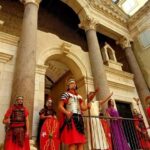
REVIEW · SPLIT
Split: Old Town and Diocletian’s Palace Walking Tour
Book on GetYourGuide →Operated by popular tours · Bookable on GetYourGuide
Split’s palace feels like a whole city underground. You’ll walk the streets of Split’s Old Town and into Diocletian’s Palace, a UNESCO World Heritage Site, with an English guide.
I love the stop-by-stop route through Peristyle Square and the underground cellars. I also like the tight timing: one hour gives you Roman context without taking over your day.
The main drawback to note: one review mentioned a guide missing the meeting time. Arrive early, confirm you’re in the right spot, and keep an eye on the sign at the port.
In This Review
- Key things I’d watch for before you go
- A 1-hour walk through Split’s Roman city layers
- Split port start: finding the tour in the right place
- Diocletian’s Palace: what you’re really seeing
- Peristyle Square: the palace’s main stage
- Underground cellars: the part most people skip
- Temple of St. Jupiter: reading the Roman-to-Christian shift
- Cathedral stops: St. Duje/Domnius and St Francis church
- What you learn in the palace walk (and why it’s worth it)
- Price and value: is $18 a fair deal?
- The reality check: mixed reviews and what to do about it
- Who this walking tour is best for
- Should you book this Split Old Town & Diocletian’s Palace tour?
Key things I’d watch for before you go
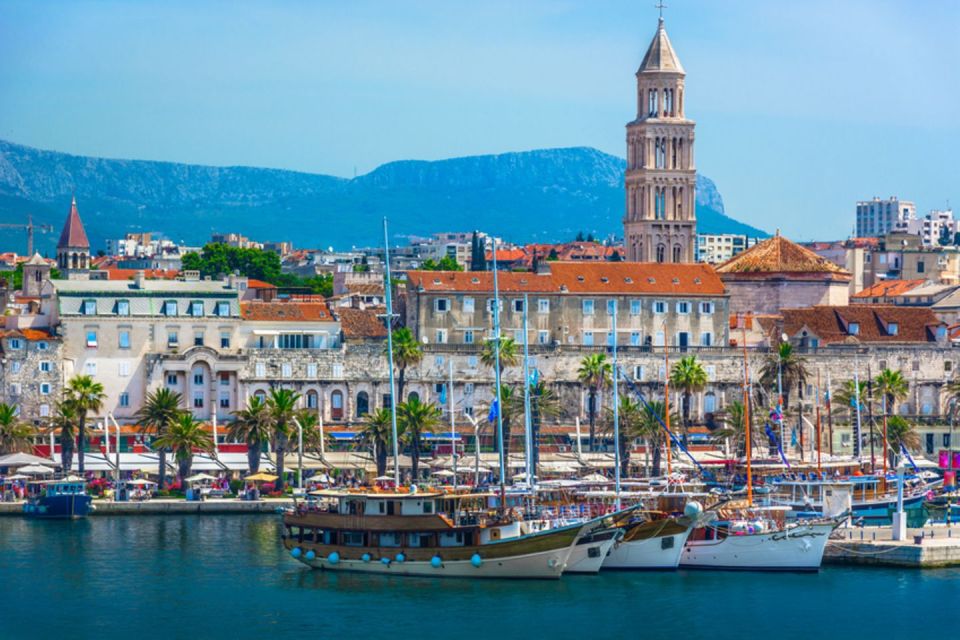
- UNESCO access inside Diocletian’s Palace: You’ll move through the palace spaces that became part of daily Split life.
- A quick, 1-hour format: Great if you want orientation, not a half-day commitment.
- Big-ticket stops: Peristyle Square, underground cellars, the Temple of St. Jupiter, and cathedral areas.
- English-only tour: Simple choice if you’re not traveling in another language.
- Meeting-point matters: The start is at Split port with clear signage, but you’ll still want to show up early.
- Small review sample: The overall rating is mixed, so plan smart and stay flexible.
A 1-hour walk through Split’s Roman city layers
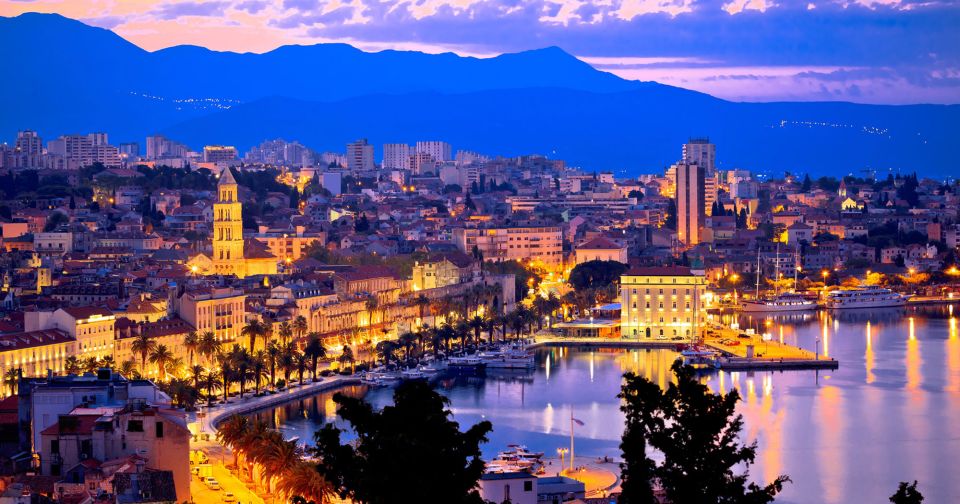
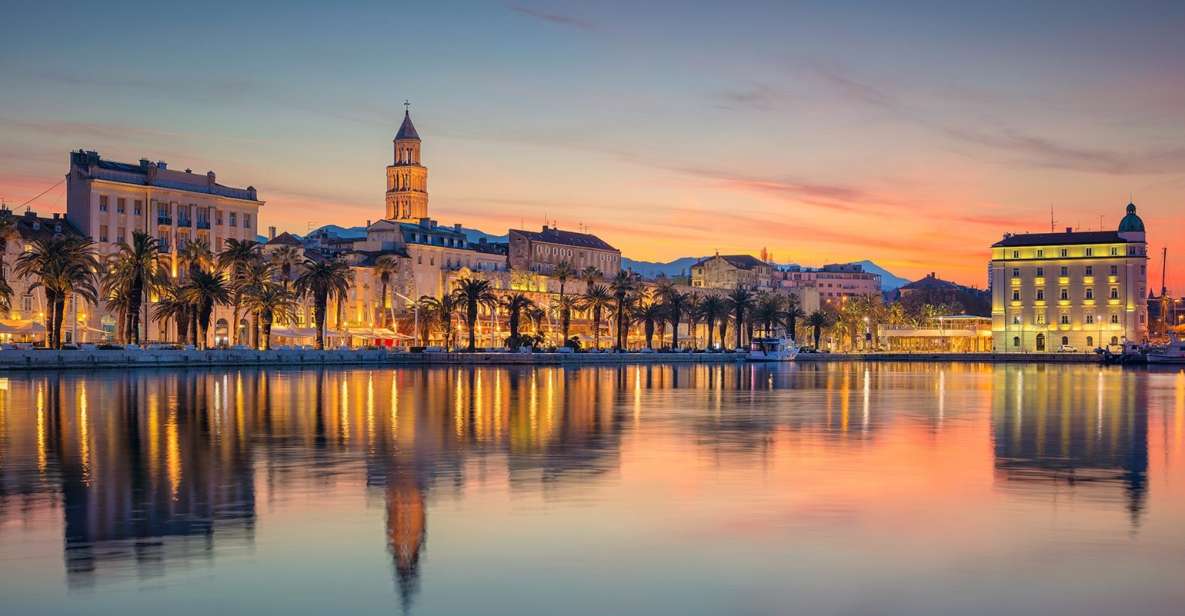
This is a short walking tour that targets the heart of Split: its Old Town streets and the Diocletian’s Palace complex. The palace is about 1,700 years old and now functions like a neighborhood, so the experience doesn’t feel like a museum you visit and leave. It feels like you’re learning to read the city you’re already standing in.
The structure is simple: you meet at Split port, then your guide leads you through the palace and nearby sacred sites. Expect a paced walk with explanations, focused stops, and enough time to get your bearings without feeling rushed off the pavement.
If you like history that you can see with your own eyes—stone passages, street-corner “big names,” and the way Roman architecture shaped later Christian sites—you’ll likely get a lot from this hour.
You can also read our reviews of more walking tours in Split
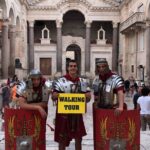

Split port start: finding the tour in the right place
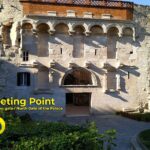
You start at Split port, at Trg Braće Radić. Look for the large red sign that reads SPLIT. Your guide will be holding a sign that says My Special Tour.
That’s more helpful than it sounds. Ports are busy, signage can be chaotic, and tour groups can split without much warning. If you want a smooth start, I’d do two things:
- Arrive a few minutes early so you’re not scanning faces while the clock runs out.
- Take a quick look at the red SPLIT sign first, then locate the My Special Tour sign.
The tour ends back at the meeting point. So even if your feet hate you by the end, you won’t have to figure out transit or directions to “go somewhere else.”
Diocletian’s Palace: what you’re really seeing

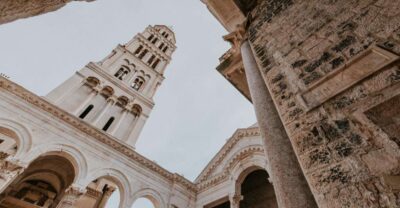
Diocletian’s Palace isn’t just a building. It’s an entire walled Roman world that eventually got absorbed by the city around it. During this tour, you’ll travel through the palace spaces and watch how the layout creates a story you can follow: ceremonial squares, religious spaces, and utilitarian passages.
The palace route includes multiple headline areas. You won’t just glance at them from the outside. Your guide brings you through the palace to key points so you can connect the architecture to the time when it was built.
If you’re new to Split, this is a very practical way to start. Instead of randomly wandering and guessing what each doorway or square used to be, you get an order: you walk the city’s “Roman spine” and then see where later landmarks slot in.
Peristyle Square: the palace’s main stage
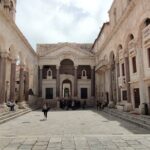
One of the first big moments on the route is Peristyle Square. This is the kind of place where the scale hits you. Standing there makes it easier to understand why Roman spaces were designed for movement, ceremony, and visibility—people were meant to see where they were and what mattered.
During your tour, Peristyle Square functions like a reference point. After you’ve been there, other stops feel connected. You can better imagine the palace as a functioning space rather than a pile of old stones.
What I like about including this square is that it anchors the hour. Even if you only remember a few details from the tour, Peristyle Square usually becomes the “center” in your mental map of the palace.
Underground cellars: the part most people skip
Next up are the underground cellars. These spaces are less about grand view and more about function. You’re moving into a different mood: darker, enclosed, and designed for practical storage or palace needs.
This stop is valuable because it balances the dramatic surfaces you’ll see elsewhere in the palace. It also helps you understand the palace as infrastructure. Roman power wasn’t just pageantry—it was systems: movement of goods, management of space, and design that made daily life work even within heavy walls.
Even with only a 1-hour schedule, cellars add variety. You’re not stuck in just one “look at the stones” mode.




Temple of St. Jupiter: reading the Roman-to-Christian shift
Another featured stop is the Temple of St. Jupiter. The tour frames it as part of your walk through the palace’s major sites, which matters because this area isn’t just a single landmark—it’s part of how the palace’s Roman identity shaped what came later.
This stop is a good reminder of something practical: Split’s main sights aren’t always separated by time the way we expect. Roman areas can still influence how later religious and public spaces were used.
If you’re the type who likes to connect dots—what gets reused, what changes function, and how later visitors built on older structures—this is one of the more interesting “bridge” points on the route.
Cathedral stops: St. Duje/Domnius and St Francis church
You also visit cathedral territory, including the Cathedral of St. Duje (and you’ll see it referenced as the Cathedral of Domnius in the tour description) plus St Francis church.
These are important for two reasons. First, they add the Christian layer to the Roman foundation you’re already walking through in Diocletian’s Palace. Second, they help you understand why Split’s Old Town doesn’t feel like an isolated “Roman exhibit.” The city kept living, building, and adapting.
One caution: cathedral areas can involve crowds, lighting changes, and areas where you may need to slow down or pause more often. That’s normal, and it’s also why a 1-hour tour is helpful—it keeps your schedule realistic even when sacred sites have their own tempo.
What you learn in the palace walk (and why it’s worth it)

The tour’s promise is clear: you’ll walk through the UNESCO palace with an English-speaking local guide and get explanations that help you place what you’re seeing in context. You spend about one hour with your guide strolling through ancient Split streets and palace spaces.
Here’s the practical value: Roman ruins can be impressive, but they’re also easy to misread if you don’t know what you’re looking at. A guided route helps you connect place names to real spatial logic—why Peristyle Square matters, what underground areas were for, and how religious sites fit into the same overall environment.
The tour is short, so you’re not collecting 50 facts. Instead, you’re getting a framework that makes independent exploring easier after the tour. I like that. It’s the difference between sightseeing and understanding.
Price and value: is $18 a fair deal?
The price is $18 per person for a 1-hour English tour. Hotel pickup and drop-off aren’t included, so you’ll need to reach Split port on your own.
For value, I look at three things:
- Time: One hour is efficient. You’re not sacrificing a full morning or afternoon.
- Scale of the site: Diocletian’s Palace is big, and the most important parts are scattered across key areas. A guide helps you hit the major points without guessing.
- Language and focus: English-only is straightforward, and the route is designed for an overview of palace and cathedral highlights.
At $18, this feels like a reasonable “orientation ticket” for Split—especially if your schedule is tight. If you want deep, slow study of architecture, history, and art, you might feel one hour is too short. But if you want to walk away with a map in your head and confidence about what you’re seeing, the price matches the format.
The reality check: mixed reviews and what to do about it
The overall rating shows 3.3 across 3 reviews, which is a small sample and not enough to draw broad conclusions. One review described a serious issue: a guide did not show up at the appointed time, and the reviewer reported no compensation.
I can’t ignore that. But I also don’t want you to assume this is normal. The smart approach is simple:
- Show up early at the exact meeting location described (SPLIT sign, My Special Tour sign).
- Take a screenshot of the meeting details on your phone.
- If you do not see your guide on time, don’t wait forever while you’re watching other tours move on. Ask on-site or use the contact method your booking gives you.
This is the kind of tour that depends on punctual meeting points. Your best protection is preparation.
Who this walking tour is best for
This tour fits best if you:
- Want a fast orientation to Split’s Old Town and Diocletian’s Palace.
- Like seeing major landmarks in an organized route rather than wandering blindly.
- Are traveling with limited time and still want the UNESCO context.
- Prefer a guided walk in English.
You might want a longer or different style of tour if you:
- Want extended time inside multiple buildings without pacing.
- Prefer more in-depth stops or longer museum-style explanations.
- Are sensitive to tight walking schedules and shifting site conditions around cathedral areas.
Should you book this Split Old Town & Diocletian’s Palace tour?
I’d say yes if you’re using Split as a “learn fast, explore next” kind of trip. The combination of Old Town walking and targeted palace stops—Peristyle Square, underground cellars, Temple of St. Jupiter, and cathedral areas—gives you a strong backbone for understanding the city.
But book it smart. Arrive early at Split port, Trg Braće Radić, stand in front of the big red SPLIT sign, and wait for the guide holding My Special Tour. And because one review flagged a no-show problem, keep your expectations practical: this is a walking tour with a specific meeting time, so your punctuality matters.
If you want a concise, high-impact way to get your bearings in one of Croatia’s most iconic UNESCO settings, this one-hour format is a solid bet.