REVIEW · SPLIT
Split & Diocletian’s Palace Walking Tour
Book on Viator →Operated by Redono d.o.o. · Bookable on Viator
Split’s Roman walls are still teaching. In about 90 minutes, this walk turns Diocletian’s Palace into something you can actually picture, not just read about, and it works because your guide keeps the story moving street by street. I especially love how the palace feels like a living part of modern Split, and how guides (I’ve heard styles ranging from Mia to Slavko, Ivan to Ivana) make the history easy to follow in clear English without lecturing. One drawback to plan for: it’s a walking tour with no hotel pickup, and the meeting area can take extra effort to find if there’s local construction or crowds.
You’ll start and finish at the Golden Gate (Dioklecijanova 7), so you won’t lose your bearings. The pace is built for a quick hit: Narodni Trg (Pjaca), the City Clock, and then Riva Harbor—three small stops that add real context for how the old and the everyday share the same streets. You should also know this experience is weather-dependent, so if conditions are rough, expect it to be adjusted or refunded.
In This Review
- Key highlights worth showing up for
- Golden Gate start: a simple plan for a short, high-impact walk
- Inside Diocletian’s Palace: the Roman complex that became Split
- Narodni Trg (Pjaca): where the city’s everyday life meets its big moments
- The City Clock: a 24-hour sun you’ll actually spot again
- Riva Harbor: finish with Split’s main promenade energy
- How the guide shapes the whole 90 minutes
- Price and value: what you’re really paying for
- Weather matters: when Split’s streets change the plan
- Is this tour for you? My practical yes-or-no
- FAQ
- How long is the Split & Diocletian’s Palace Walking Tour?
- Where does the tour start and end?
- Is the tour offered in English?
- Are admission tickets included for the main sights?
- Is food included?
- What if the weather is bad?
Key highlights worth showing up for
- Diocletian’s Palace, explained in context: You get the why behind the walls, not just a photo stop.
- A tight 90-minute route: Built for first-time orientation when you don’t have many hours.
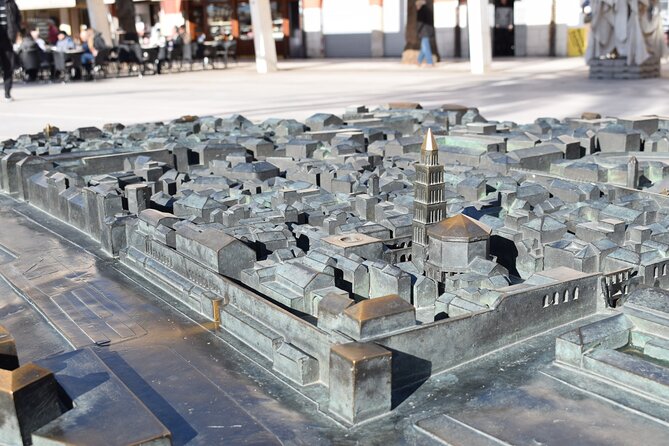
- Narodni Trg (Pjaca) in miniature: A short stop that explains why the square mattered.
- The 24-hour City Clock: A distinctive clock you’ll recognize even if you’ve never heard of it before.
- Riva Harbor, the main-street feel: You see the part of Split people actually walk every day.
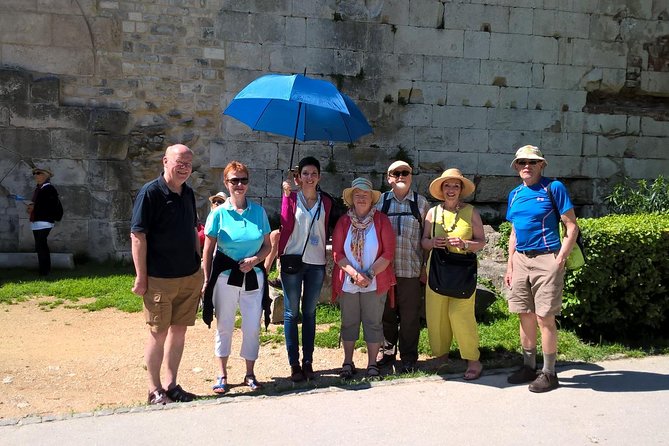
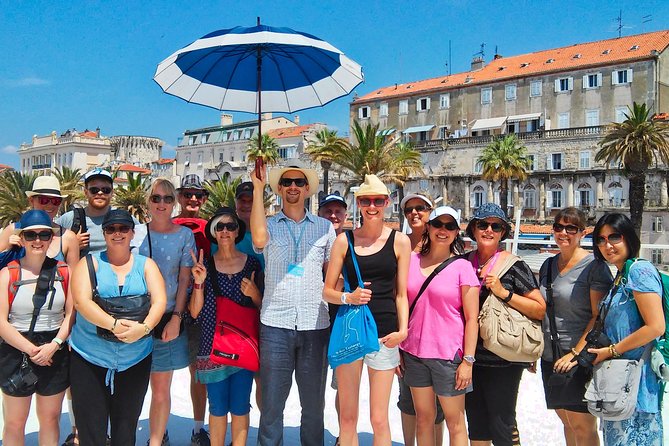
- Small-group experience (max 49): Big enough to meet other people, small enough to keep the tour flowing.
Golden Gate start: a simple plan for a short, high-impact walk
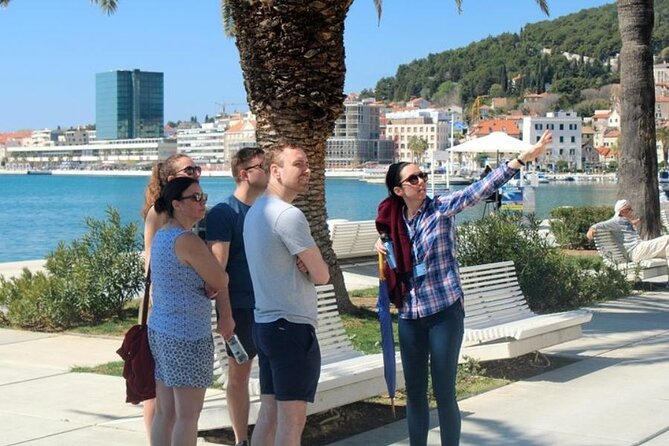
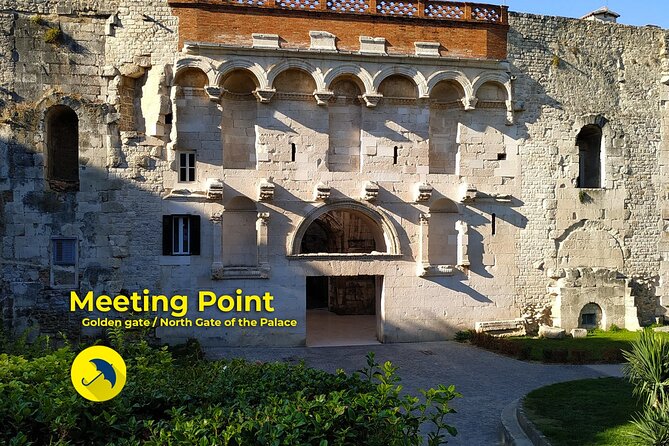
The tour begins at the Golden Gate on Dioklecijanova 7. That matters more than it sounds. When you start at a major entrance, you can stitch the rest of Split together in your head after the walk. And because it ends back at the same point, you’re not stuck figuring out how to get back while your legs are negotiating with your brain.
Timing is also clean. It’s listed at about 1 hour 30 minutes, with quick segments that don’t drag. Most of the stops are around 10 minutes, so you’re not trapped waiting for the group to reassemble at every corner. You’ll still get enough time to look up, notice details, and ask questions—especially during the main palace segment.
A couple practical notes:
- There’s no hotel pickup. You’ll want to arrive early enough to locate the exact spot confidently.
- This is near public transportation, so you can plug it into a bus, ferry, or walk-based day without stress.
- The group size can be up to 49 people, so bring a mindset of “structured walking” rather than one-on-one intimacy.
Finally, this experience runs in English. That’s a plus for most visitors, but it also means the guide has to keep the story clear and audible—so you’ll generally get a well-paced explanation instead of a slow, lost-in-translation walk.
You can also read our reviews of more walking tours in Split

Inside Diocletian’s Palace: the Roman complex that became Split
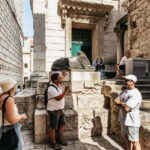
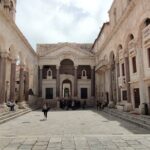
The main focus is the palace area—often described as massive—and that’s exactly what you’ll feel as you move through it. You’re not just sightseeing “ruins.” This is a 1700-year-old complex that’s part of the modern city. The walls, the layout, and the sheer scale explain why Split grew up the way it did.
What I like about the tour’s approach is that it gives you a mental map while you’re still close to everything. When a guide links the big picture to what you can see in front of you, you stop treating the palace like a museum and start treating it like a neighborhood with a Roman backbone. That’s when the place clicks.
During this portion, expect:
- A guided walk through the palace area with time for questions.
- Explanations of how the palace shaped the streets and space around it.
- The kind of context that helps you understand later what you’re looking at on your own.
From the variety of guide styles people mention—Mia, Slavko, Ivan, Franke, Tino, Maria, Marta, Jane, Antonia, Ivana, and Antonio—there’s a consistent thread: they keep the group moving and they tie details back to the larger story. You’ll often hear extra pointers about what to notice next if you return on your own.
One practical consideration: this is still a walking tour on uneven historic stone. Wear shoes you don’t mind getting a little dusty. If you’re traveling with someone who walks slowly, go early in your day so fatigue doesn’t make the palace portion harder than it needs to be.
Narodni Trg (Pjaca): where the city’s everyday life meets its big moments
After the palace, you shift to Narodni Trg, often known as Pjaca. This stop is brief—around 10 minutes—but it’s one of those quick windows that changes how you interpret the rest of your visit.
Here’s the value of a stop like this: when you hear why a square mattered, the buildings around it stop looking random. You start noticing the “why this location worked” details—where people would gather, why foot traffic would concentrate, and how civic life unfolded in the heart of Split.
During this segment, your guide explains the importance of the square. It’s an efficient reset. You go from Roman-scale space to civic-scale space, and you can feel the city’s rhythm shift.
What to do in 10 minutes:
- Look around the open area and try to imagine crowds from different eras.
- If something feels confusing, ask a direct question. This is the kind of stop where good answers connect street geometry to history.
The City Clock: a 24-hour sun you’ll actually spot again
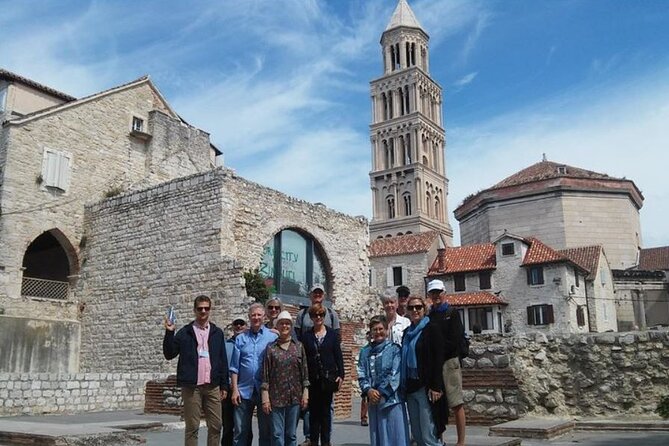
Next up is the City Clock, set at the City Square. This one is famous for its 24-hour “sun” design. Even if you only catch it for about 10 minutes, it’s memorable because it’s visually distinctive.
This stop works best if you treat it like more than a photo. Ask your guide what makes the clock special and how it fits the square’s identity. When you understand it in context, you’re more likely to notice it later while you wander.
The bigger benefit: you’re training your eyes to read everyday objects like clues. Split is full of small markers—clocks, gates, squares—that tell you how the city organized time, movement, and daily life.
Riva Harbor: finish with Split’s main promenade energy
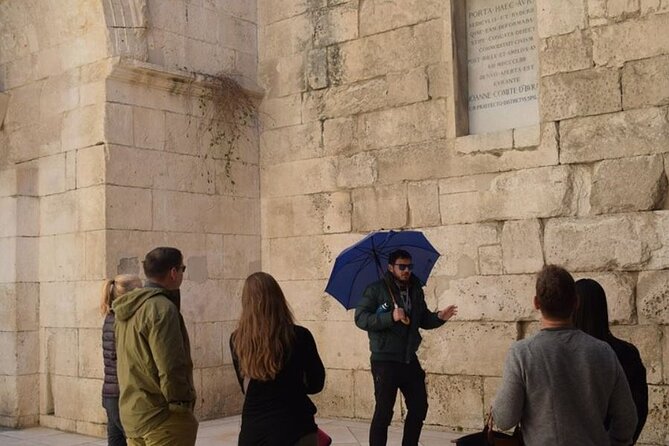
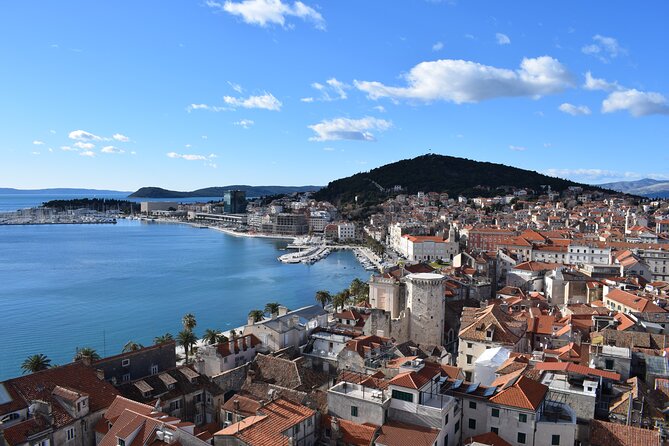
Riva Harbor is the last listed stop, and it’s described as the busiest street in Split. That’s exactly why I like ending the tour here. You shift from “historic explanation” to “real-life scene.”
This final stretch is short (around 10 minutes), but it helps you connect the palace area to modern strolling. You see where people actually walk when they’re not looking at a map. And if you’re planning the rest of your day, this stop is useful for figuring out which direction your energy should go next.
Tip: after the tour, linger a bit longer than the guide’s timing. Use it as your moment to re-center. If you’re tired, grab a drink or snack nearby (food and drinks are not included in the tour), and then decide how you want to explore the rest of Split.



How the guide shapes the whole 90 minutes
In a good group tour, the guide is the difference between facts and understanding. Here, that’s very clear. The names people associate with top experiences—Mia, Slavko, Ivan, Franke, Tino, Antonia, Maria, Marta, Jane, Ivana, and Antonio—show a range in personality, but the common elements are consistent: energetic delivery, clear English, and answers that go beyond the script.
The best guides also do two helpful things:
- They keep the group moving, so you don’t lose attention during transitions.
- They translate history into everyday clues, like how spaces were used and why certain squares became central.
Several guides are also known for sharing practical add-ons—like restaurant or coffee recommendations at the end, and gentle warnings about common tourist traps. That’s not guaranteed with every guide, but if you ask, you’ll often get useful suggestions that save you time later.
If you want to get extra value from your guide, come with a micro-goal:
- Are you here mainly for Roman sites, or more for how Croatia’s story shaped the city?
- Do you want quick orientation, or do you plan to spend hours wandering afterward?
When you ask one good question early, you’ll usually get a better tour from there.
Price and value: what you’re really paying for
The price is listed at $21.77 per person for about 1 hour 30 minutes. That sounds simple, but the value equation is more interesting than the number.
You’re paying for:
- A professional local guide.
- A structured walk through the 1700-year-old Diocletian’s Palace.
- Stops at Narodni Trg, the City Clock, and Riva Harbor.
- Included sightseeing at the palace area, with admission noted as free for the listed stops.
You’re not paying for food, because it’s not included (so budget for a snack or meal separately). There’s also no hotel pickup or drop-off, which you should factor into your day planning.
When a tour like this stays popular—booked on average about 26 days in advance—it usually means people find it efficient. You get a “first map” of Split fast, then you can spend the rest of your time exploring the places that actually catch your interest.
Who gets the best value?
- First-time visitors who want orientation before wandering.
- People with limited time between other plans.
- Travelers who like history but don’t want a long, slow lecture.
- Anyone visiting in shoulder season or winter. One reason this tour remains appealing off-season is that you still get the core streets and palace context even when other businesses may be closed.
Main downside on value: if you’re the type who hates crowds or prefers to roam solo with no structure, a group walk may feel limiting. But if you want a guide to help you interpret the city quickly, the price-to-time ratio is solid.
Weather matters: when Split’s streets change the plan
This experience requires good weather. That’s not just a fine-print detail. Historic areas can get slick, and rain can make it harder to keep a group together.
What I’d do:
- Check the forecast the day of.
- If you’re traveling in months with frequent rain, build a bit of buffer in your schedule so a reschedule doesn’t wreck your whole day.
If weather forces adjustments, the company offers either a different date or a refund. That’s the kind of policy you want for an outdoor walking tour—especially in a city where your day might otherwise be split between “walk and see” and “wait and hope.”
Is this tour for you? My practical yes-or-no
I’d recommend this tour if you want to get oriented fast and understand what you’re looking at inside Diocletian’s Palace. The route hits the big hitters—palace area, Pjaca square, the 24-hour City Clock, and Riva Harbor—without turning your afternoon into a marathon. At this price, it’s also a low-risk way to learn which parts of Split you’ll want to revisit.
I’d skip it (or choose a more flexible option) if:
- You’re not comfortable walking on uneven stone.
- You want a fully self-paced experience with zero group coordination.
- You’ll be arriving late and can’t manage a simple meet-at-Golden-Gate plan.
If you can show up ready to walk, bring decent shoes, and ask at least one question, this is the kind of tour that makes your later wandering better.
FAQ
How long is the Split & Diocletian’s Palace Walking Tour?
It’s listed at about 1 hour 30 minutes.
Where does the tour start and end?
The tour starts at Golden Gate, Dioklecijanova 7, 21000 Split, and it ends back at the same meeting point.
Is the tour offered in English?
Yes, the tour operates in English.
Are admission tickets included for the main sights?
Admission is listed as free for the Diocletian’s Palace stop, and the other listed stops also show free admission.
Is food included?
No. Food and drinks are not included unless specifically stated.
What if the weather is bad?
The tour requires good weather. If it’s canceled due to poor weather, you’ll be offered a different date or a full refund.