REVIEW · SPLIT
Split: Diocletian Palace & Old Town Guided Walking Tour
Book on GetYourGuide →Operated by APODOS TRAVEL AGENCY · Bookable on GetYourGuide
A 50-minute walk through ancient Split. I love how this tour turns Diocletian’s Palace from ruins into a lived-in place, and I also love that it includes key access like the Peristyle courtyard and major gate stops. The only catch: it’s short, so you’ll want a little extra time in Split right after to wander on your own.
You’ll meet on the waterfront side near Apodos Travel Agency, then get guided into the heart of the UNESCO Old Town—fast, focused, and built for people who want the big picture without losing the plot. Guides offered include English, Spanish, and Italian, and in my mind that matters here because the palace layout can feel like a maze if you’re going solo.
In This Review
- Key highlights worth knowing
- Why Diocletian’s Palace feels different from a museum tour
- Finding the red bus at Apodos Travel Agency
- Diocletian’s Palace in 50 minutes: gates, Peristyle, cellars
- St. Domnius (Sv. Duje): cathedral + bell tower panoramas
- Old Town surprises: Town Hall, Benedictine corner, Fruit Square
- Guides like Ina, Nataša, Darko, Tin, and Doge
- Comfort, walking surfaces, and what to pack
- Price value: how $17 works for what you actually get
- Who this tour suits best
- Should you book this tour of Diocletian’s Palace?
- FAQ
- How long is the Diocletian Palace & Old Town guided walking tour?
- Where does the tour start?
- What’s included in the tour?
- Which languages are available?
- Is the tour wheelchair accessible?
- What should I bring?
Key highlights worth knowing

- Bronze, Silver, Golden, and Iron Gates: the original entrances that still structure the walk
- Peristyle courtyard access: a core space inside the palace you don’t just pass by
- Diocletian’s private observatory area: you get a rare sense of how the emperor used the space
- St. Domnius bell tower views: climb for city and harbor panoramas
- Fruit Square baroque monuments: a quick shot of later art and architecture
- Guides with real storytelling range: names like Ina, Nataša, Darko, Tin, and Doge show up in English tours
Why Diocletian’s Palace feels different from a museum tour
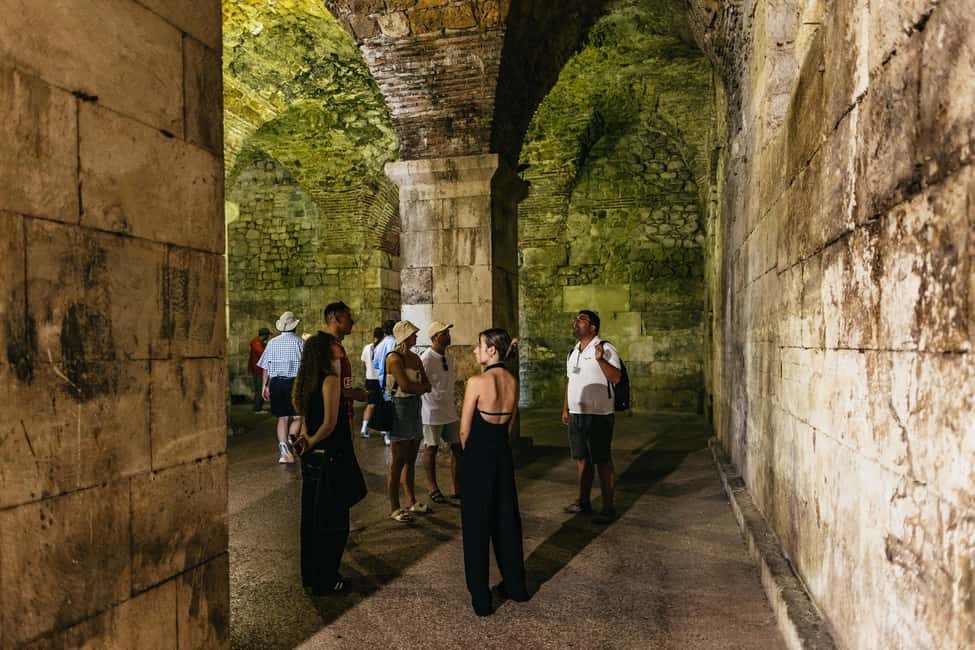
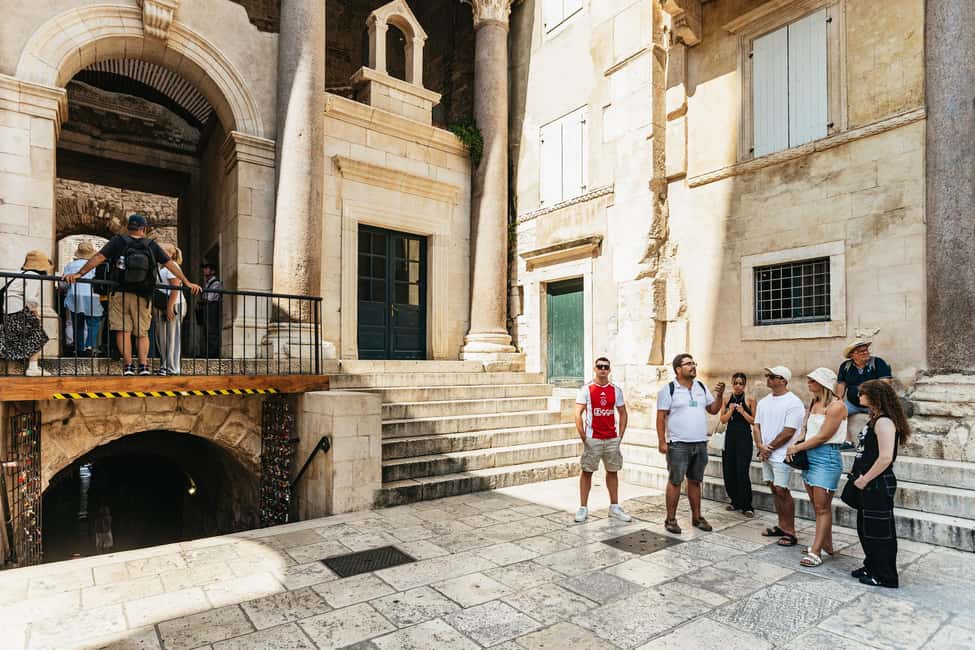
This isn’t a stop-and-stare museum route. Inside Diocletian’s Palace, you walk through spaces that still read like architecture made for real life—corridors, thresholds, courtyards, and rooms that once served a powerful person and then became a town. Even if you only have an hour, you get a framework for understanding how Roman buildings kept getting reused as centuries turned.
That matters in Split because the city isn’t stuck in one time period. Roman foundations meet medieval change, then later influences show up as you move through the Old Town streets. With a guide, you don’t just see structures—you start to connect them.
You can also read our reviews of more walking tours in Split

Finding the red bus at Apodos Travel Agency
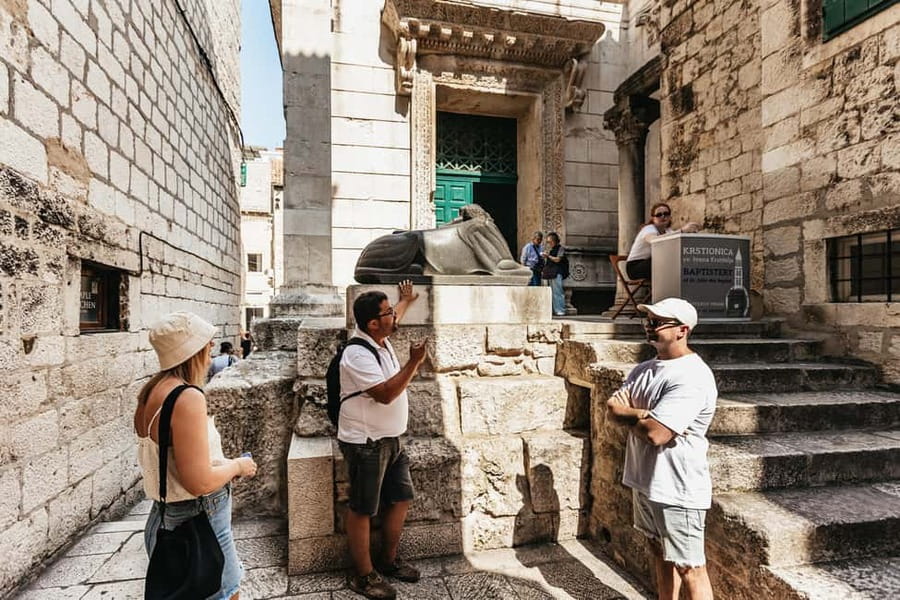
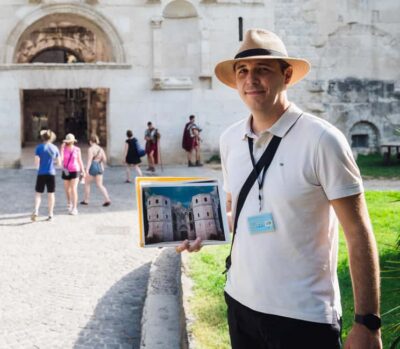
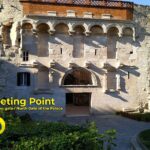
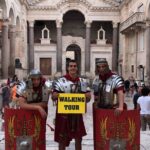
Your meeting point is at Apodos Travel Agency. Look for an open-top red bus nearby and staff wearing red or white shirts. If you’re aiming to arrive calmly, give yourself a few minutes buffer; the tour is only about 50 minutes, and you don’t want to spend that time hunting.
Once you spot the team, they connect you with your guide. From there, the walk moves quickly but not in a chaotic way—think efficient pacing, with the guide guiding you through the palace logic.
Diocletian’s Palace in 50 minutes: gates, Peristyle, cellars

The walk starts by easing you in with context, then shifts into the palace core. You’ll step inside the palace complex that Diocletian had built in the 4th century AD for the Roman emperor—today it effectively forms the skeleton of Old Town Split. If you’ve ever felt that big landmarks can be too much without direction, this format helps you absorb it fast.
Expect these kinds of stops as you move through the palace area:
Gates that still control the story
You’ll walk through the Bronze, Silver, Golden, and Iron Gates—the original entrances to the imperial complex. It’s a clever way to orient yourself because each gate signals a shift in how the palace was meant to protect and organize movement.
Peristyle courtyard access
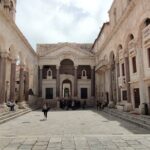
You’ll reach the Peristyle courtyard, a majestic space that pulls you out of the narrow feeling of passages. This is one of the best places to see the palace as a designed space rather than a pile of old stone.
Cellars and former private chambers
You’ll also explore the palace cellars and Diocletian’s former private chambers. Even without going room-by-room like a long tour, the guide’s explanation helps you picture what life inside these spaces might have meant—especially the difference between public and private areas in an emperor’s residence.
The emperor’s observatory area
The tour includes exploration of Diocletian’s private observatory. That’s a standout inclusion because it pushes the experience beyond pure sightseeing and into how the emperor interacted with his world—light, visibility, and location mattered.
Quick note on pace: the tour is designed for a concentrated route. If you’re the type who wants to linger for photos at every doorway, you’ll still love it—but you may feel slightly rushed at a couple of photo moments.
St. Domnius (Sv. Duje): cathedral + bell tower panoramas
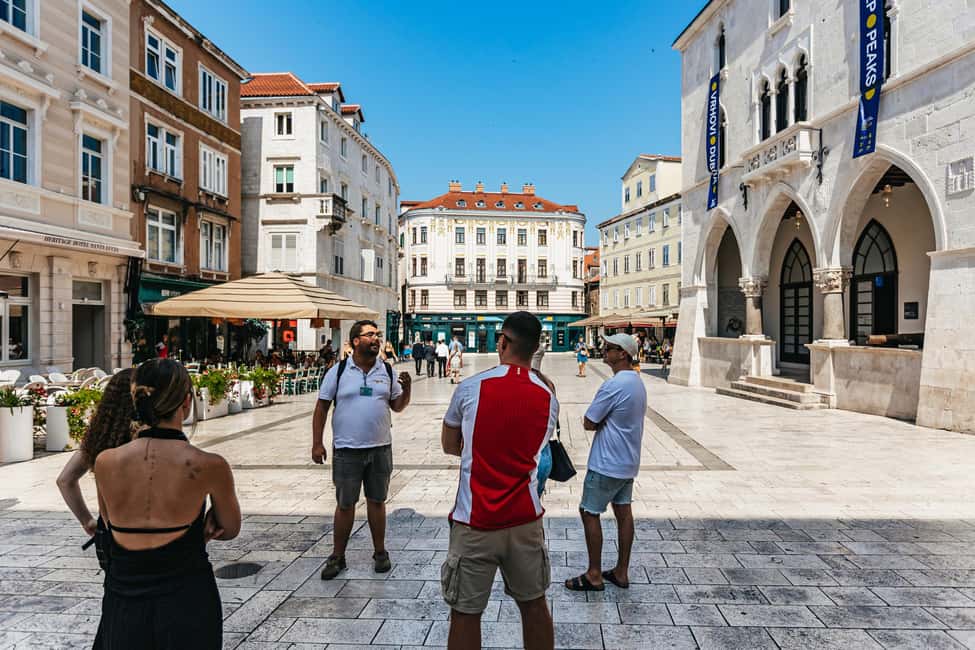
One of the most impressive stops is St. Domnius (Sv. Duje). The cathedral is closely tied to Diocletian’s legacy—it was once the emperor’s mausoleum—and it’s still recognized as one of the world’s oldest cathedrals.
What makes this stop more than a quick landmark photo is the bell tower climb. You’ll go up for panoramic views of the city and the harbor, which is exactly what you want after walking through tight palace passages. From above, the scale of Split clicks into place.
If you’re worried about heights, plan for a careful climb. The walk does involve steps, and the overall tour also expects you to handle uneven surfaces.
Old Town surprises: Town Hall, Benedictine corner, Fruit Square

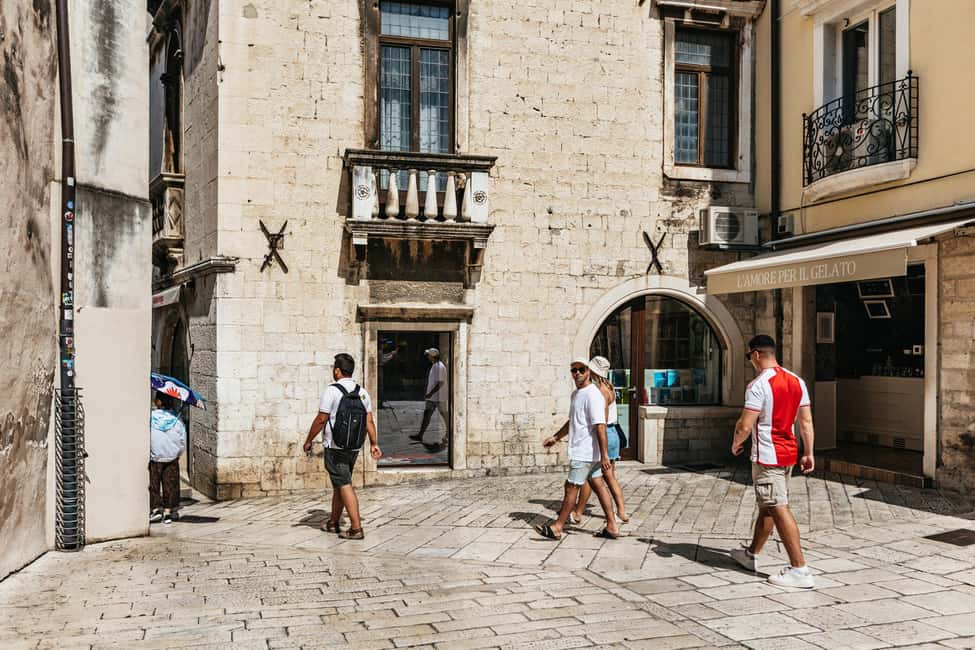
After you’ve built your mental map inside the palace, the tour shifts into Split Old Town’s layers. You’ll hear how Roman foundations, medieval life, and later Venetian influence shaped the city you’re walking today.
Three stops in this zone tend to be the most memorable:
- The 15th-century Town Hall stop, which helps you jump from Roman imperial power to later civic life.
- A Benedictine stop, offering a different kind of historic footprint than the palace does.
- Fruit Square, known here for its baroque monuments—perfect for a visual change of pace before you head back out.
The value of these Old Town moments is that they prevent the tour from feeling like a single-site lecture. You come away seeing Split as a city built on reuse and adaptation, not just one era’s leftovers.
You can also read our reviews of more guided tours in Split





Guides like Ina, Nataša, Darko, Tin, and Doge
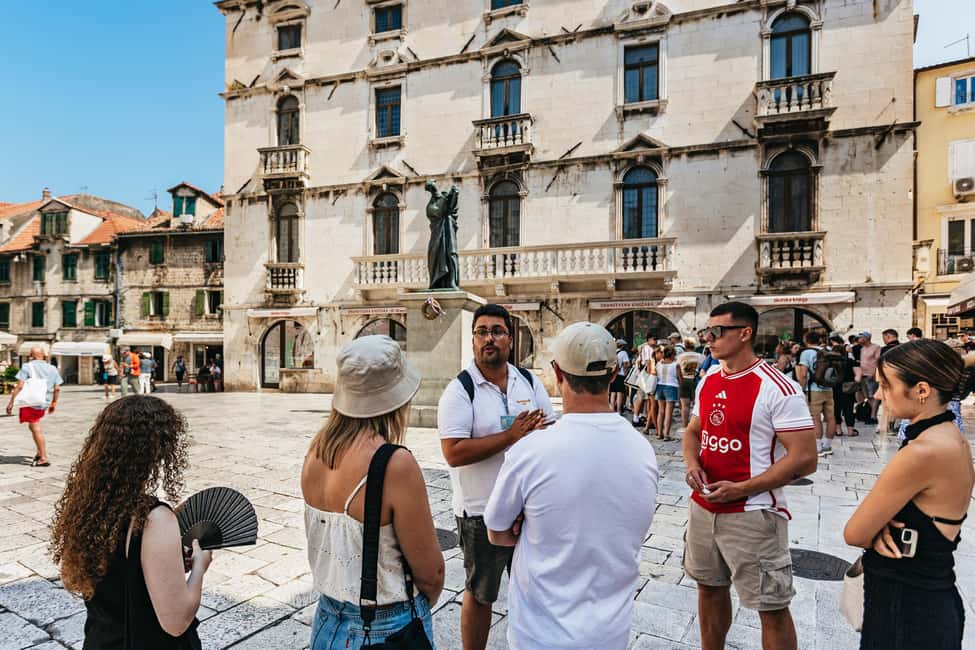
The guide can make or break a short tour, and this one leans heavily on storytelling. In the tour feedback I’ve seen, guides like Ina and Nataša get praised for explaining the palace clearly and keeping people engaged, including answering questions without making you feel rushed. Other guides you might encounter include Darko, Tin, and Doge, who are also described as engaging and funny.
A few patterns show up in the way these guides work:
- They focus on the most important parts of Diocletian’s Palace instead of drowning you in details.
- They keep the group moving while still making space for questions.
- They help connect what you’re seeing to how Split works today.
One practical perk: for people with mobility needs or strollers, the guide may help with routing around areas with many steps. That doesn’t mean the whole route is step-free, but it can make a difference in whether the experience feels doable.
Comfort, walking surfaces, and what to pack
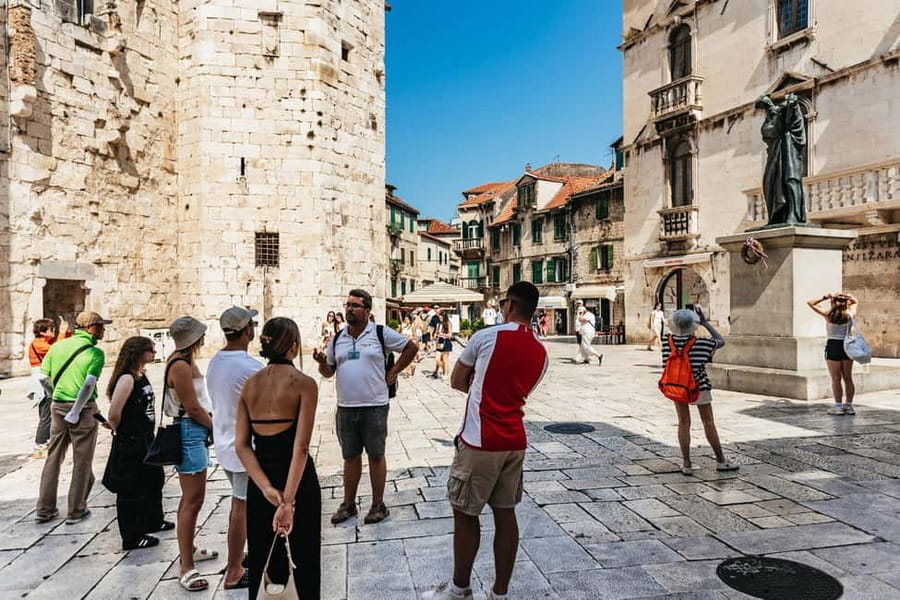
This tour is walk-based, and Split’s Old Town is known for cobblestones and uneven ground. The tour expects you to handle 15 to 30 steps, and comfortable shoes are non-negotiable.
Bring:
- Comfortable shoes
- Water
- A camera
On the day itself, conditions matter. Wear long sleeves on windy days, and if the sun is strong, sunglasses and a hat help a lot. Also, if you’re sensitive to crowds or tight spaces, remember you’ll be moving through historic corridors and courtyards where passing can be slower.
Price value: how $17 works for what you actually get
At $17 per person, this is priced like a quick, high-impact orientation. What you’re paying for isn’t just access to old stone—it’s guidance that makes the route make sense, plus included entry/access points.
You also get:
- A guided tour of the palace and Old Town
- Access to the Peristyle courtyard
- Exploration of the emperor’s private observatory area
- Visits to the Bronze, Silver, Golden, and Iron Gates
- Stops including the 15th-century Town Hall and Fruit Square monuments
- Skip-the-ticket-line support
- Expert local storytelling across the walk
In plain terms: if you’re paying for the short format, you’re buying time efficiency and clarity. If you had to do this route yourself, you’d spend more energy figuring out where to stand, what matters, and how the palace spaces connect.
Who this tour suits best
This is ideal if:
- You have limited time in Split and want the highlights without committing to a long tour
- You’re visiting for the first time and need a strong orientation inside the UNESCO Old Town
- You like your history told with a practical layout in mind, not just facts dumped in order
- You want a walking experience that still pauses at the right points for understanding and photos
It’s also a solid pick if you’re traveling with kids, because the tour length is short enough for some families with toddlers (and some guides have helped with navigation around steps). Still, anyone with mobility concerns should plan on uneven surfaces and some stair climbing.
Should you book this tour of Diocletian’s Palace?
Yes—if your goal is to get your bearings fast and understand why Split looks the way it does. The combination of major gate stops, Peristyle courtyard access, St. Domnius, and a short Old Town loop is a strong use of time for the price.
Hold off or pair it with your own wandering time if you’re the kind of person who wants long, slow photo sessions in every corner. This tour is designed to be a guided hit, not a full-day deep study.
If you book, do yourself a favor: after the tour ends, take 30 to 60 minutes to re-walk the streets on your own. With the guide’s map in your head, the Old Town starts to feel far more navigable—and a lot more fun.
FAQ
How long is the Diocletian Palace & Old Town guided walking tour?
The tour duration is 50 minutes.
Where does the tour start?
You start at Apodos Travel Agency. Look for an open-top red bus next to the team and staff wearing red or white shirts.
What’s included in the tour?
It includes a guided tour of Diocletian’s Palace and Split Old Town, access to the Peristyle courtyard, exploration of the emperor’s private observatory, visits to the Bronze, Silver, Golden, and Iron Gates, insights about the 15th-century Town Hall, and a stroll through Fruit Square baroque monuments.
Which languages are available?
The live tour guide is available in English, Spanish, and Italian.
Is the tour wheelchair accessible?
Yes, it is listed as wheelchair accessible. The tour still includes uneven cobblestone surfaces and 15 to 30 steps, so it helps to be prepared for some walking and steps.
What should I bring?
Bring comfortable shoes, a camera, and water. Long sleeves are recommended on windy days, and sunglasses and a hat are recommended on sunny days.