REVIEW · SPLIT
Private History Split Walking Tour in English
Book on Viator →Operated by Ancient Tours · Bookable on Viator
Split clicks in 90 minutes.
This private English walking tour turns the maze of Split’s Old Town into a clear story, starting inside Diocletian’s Palace and moving outward to landmarks like the Golden Gate, Gregory of Nin, and the Riva promenade. I especially like how the route is built around the palace’s spaces—Peristyle, Vestibulum, and the substructures—so you understand what you’re looking at, not just that it exists. I also like the guide setup: it’s only your group, led by an educated local who can connect the architecture to language, faith, and everyday life.
One thing to consider: it’s a walking tour, and it’s not recommended if you have issues with high steps.
In This Review
- Key highlights to know before you go
- Why Diocletian’s Palace is the best starting point in Split
- Price and timing: is $66.54 worth it?
- Meeting point at Peristil and how the walk stays focused
- Stop 1: the Peristyle of Diocletian’s Palace (your navigation cheat code)
- Stop 2: the Vestibulum (where palace life gets human)
- Stop 3: Diocletian’s Palace substructures (what they were for, and what you skip)
- Stop 4: the Golden Gate and Gregory of Nin (symbols with meaning)
- Stop 5: Riva Harbor and the bronze palace model
- Stop 6: Fruit’s Square (Trg Brace Radic) and Marko Marulić
- Stop 7: the Split Synagogue area (context without an indoor stop)
- What you’ll learn that helps you after the tour
- Practical tips so you enjoy it more
- Should you book this Private History Split Walking Tour?
- FAQ
- Is this tour private or shared?
- How long is the Private History Split Walking Tour?
- What language is the tour offered in?
- Where do we meet, and does it end nearby?
- Are entrance tickets included?
- Will we visit the museum part of the palace substructures?
- Is the Split Synagogue included inside the visit?
- Is this tour wheelchair-friendly or step-heavy?
- Can I cancel and get a refund?
Key highlights to know before you go
- Private, English-led tour with only your group
- Diocletian’s Palace focus first, using the Peristyle as your navigation anchor
- Golden Gate + Gregory of Nin, tied to language and identity
- Riva Harbor story, including a bronze model of the palace
- Venetian layer at Fruit’s Square, plus Marko Marulić’s connection to Croatian literature
- Short stop at the Split Synagogue area, with context but not the full admission stop
Why Diocletian’s Palace is the best starting point in Split
Split can feel like a set of great photos stitched together with no order. This tour solves that problem by beginning in the palace core, then walking outward in a logical way. You don’t just pass by famous spots—you learn how the spaces connect.
The first payoff is orientation. When you start at the Peristyle—the central square that links to most other palace areas—you can “read” Split while you walk. After that, every turn makes more sense: you’ll know what part of the palace you’re in and why that area matters.
The second payoff is how people and ideas get woven into the stones. You’ll hear why Gregory of Nin is more than a statue photo and why later cultural layers shaped what Split became. That’s the kind of context that makes the whole Old Town feel less random.
You can also read our reviews of more walking tours in Split

Price and timing: is $66.54 worth it?
At $66.54 per person for about 1 hour 30 minutes, this is not the cheapest thing in Split—but it’s also not trying to be. The value comes from two practical choices: a tight route through the palace and surrounding Old Town, and a guide who can tailor your pace and questions to your group.
Also, it’s easy to compare this to doing it solo. If you’re aiming for the palace highlights plus real context, you’d usually need a guide anyway—or a lot of reading and guesswork. Here, you get a structured walk where admission is clearly handled by stop (and some parts are intentionally left for later).
Timing is another reason it feels good. Ninety minutes is long enough to learn, but short enough to still enjoy the rest of your day in Split after you’re done.
Meeting point at Peristil and how the walk stays focused
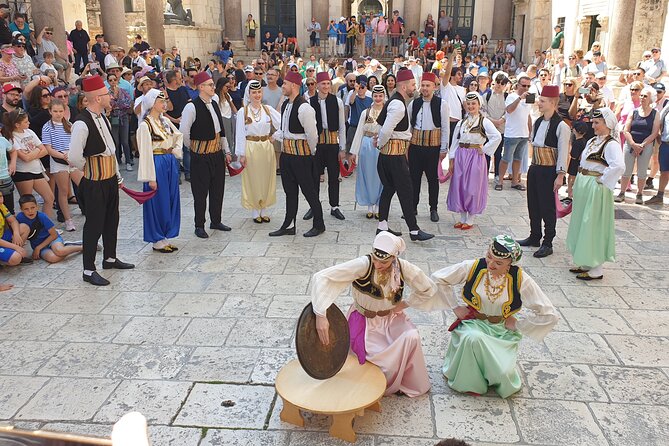
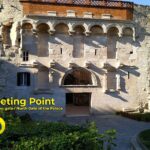
You meet at Peristil ul. in Split, and the tour ends back at the meeting point. That “loop” matters because it keeps you from being dropped somewhere else in the Old Town maze.
The route is designed to keep you moving between meaningful nodes rather than wandering. You’ll start with the main palace areas, then hit the Golden Gate, move to the Riva side, and finish with culturally important stops like Fruit’s Square and the synagogue area.
Because this is private, you’re not fighting a slow person in a big group. You’ll typically get a calmer pace, plus room for questions. If you like asking practical things—What am I seeing? What changed over time?—a private format helps a lot.
Stop 1: the Peristyle of Diocletian’s Palace (your navigation cheat code)
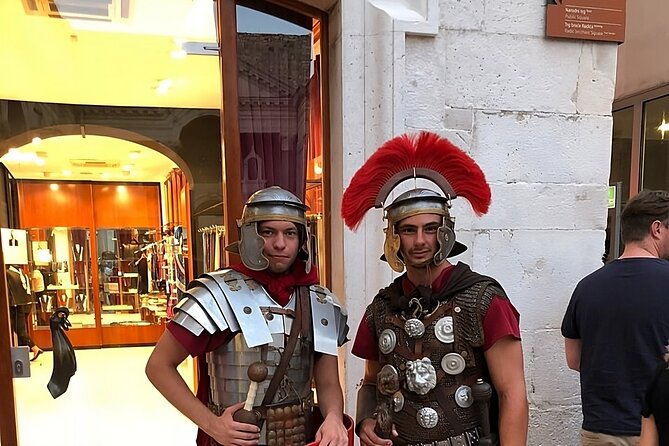
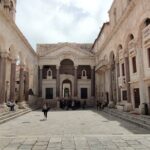
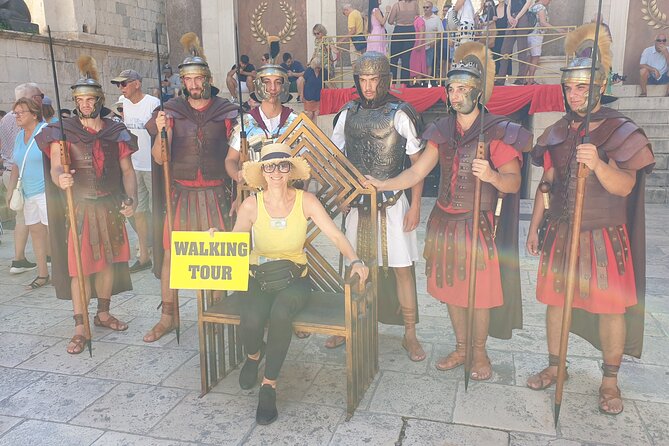
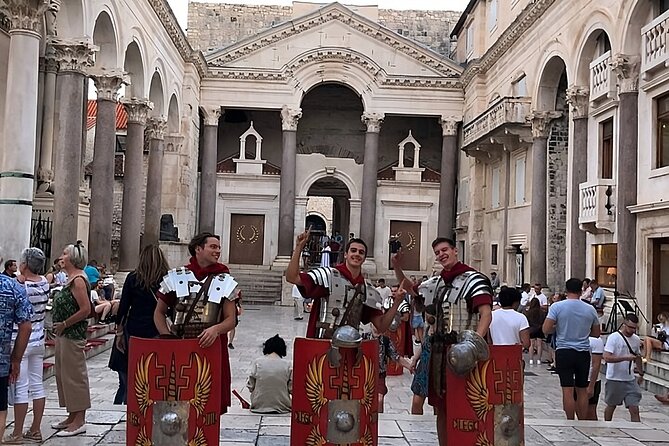
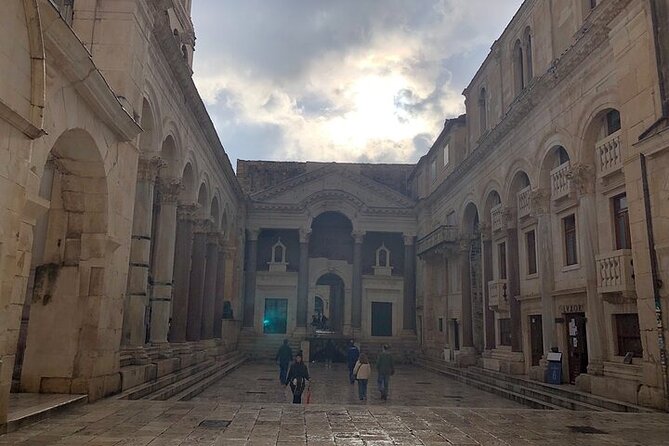
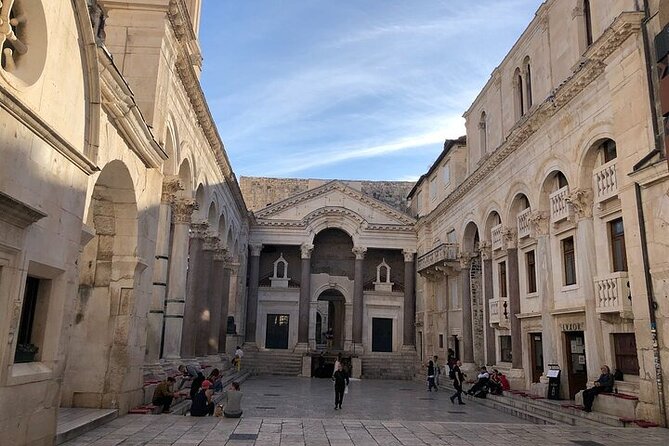
The Peristyle is the central square of Diocletian’s palace. It’s also your mental map. From here, you can reach many other palace locations, and your guide uses that fact to anchor the whole tour.
This is where the palace becomes real instead of abstract. The Peristyle isn’t just a pretty courtyard; it’s the hub that explains how the palace was organized. When you understand the logic of the center, the rest of the walk feels less like random sightseeing and more like following a plan.
A quick heads-up: if you want photos, this is a good place to pause. The space works well for getting your bearings before you move deeper into the palace story.
Stop 2: the Vestibulum (where palace life gets human)
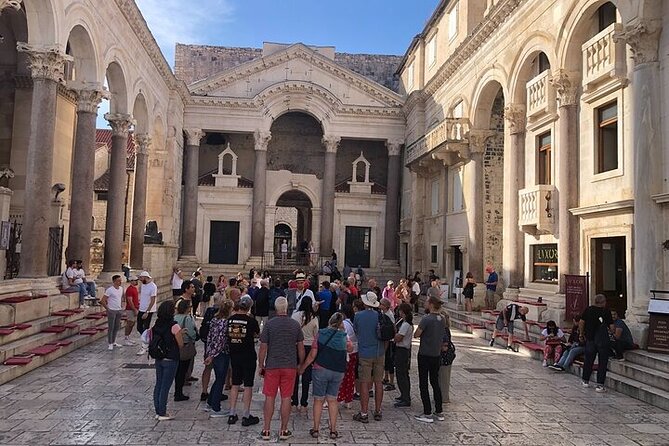
Next is the Vestibulum, the emperor’s vestibule area. This stop is short, but it’s the kind of “in-between” space that helps you feel how the palace functioned beyond the headline monuments.
This is also where the tour can bring in local color. You might even hear traditional Dalmatian singing during this stop. Even if it doesn’t happen, your guide’s job here is to translate the architecture into human behavior: movement, access, and ceremony.
For me, stops like this are the difference between a photo tour and a story tour. The Vestibulum helps you understand the palace as a lived space, not just a museum set.
You can also read our reviews of more private tours in Split
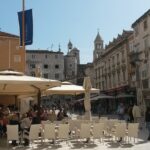




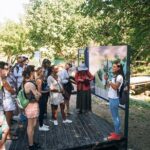
Stop 3: Diocletian’s Palace substructures (what they were for, and what you skip)
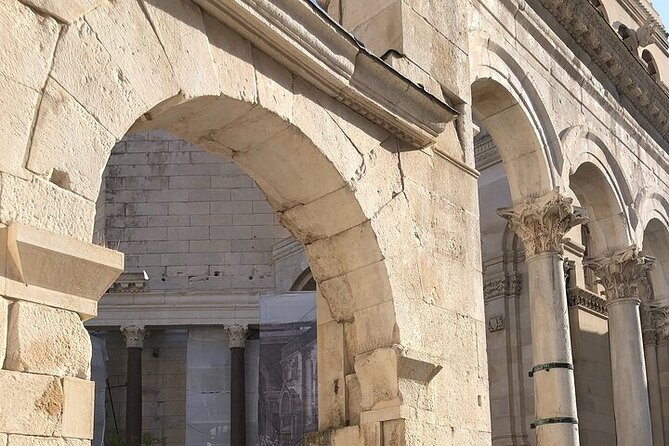
Then you move into the substructures of Diocletian’s Palace. These areas are all about function—how the palace was built and how spaces were used across different eras.
Important detail: you’ll go through the substructures, but you won’t visit the museum portion during the tour. That museum part is left for you to do on your own afterward if you want it. This choice keeps the walking tour moving, and it prevents the guide time from getting swallowed by indoor ticket lines.
If you’re the type who loves hands-on interpretation and more artifacts, you may want to plan extra time after the tour to explore the museum. If you’re mostly after architecture and context, this approach is a good balance.
Stop 4: the Golden Gate and Gregory of Nin (symbols with meaning)
The Golden Gate is the main entrance of Diocletian’s Palace, and it’s a headline stop for a reason. It’s dramatic, but it’s also explanatory because your guide connects it to Split’s identity.
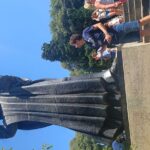
Right here you’ll see the statue of Gregory of Nin and learn why Gregory matters to history and language. That link is worth more than it sounds. In this part of Split, religious and cultural identity aren’t separate topics—they overlap, and the stone reminders make it easier to grasp.
This stop is also useful for your self-guided wandering afterward. When you see the Golden Gate, you start recognizing where the palace ends and the city begins.
Stop 5: Riva Harbor and the bronze palace model
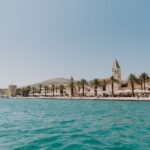
Next comes the Riva Harbor area. This is where the palace story meets the waterfront life you’ll feel in Split today.
One neat detail here: you’ll see a bronze model of Diocletian’s Palace. It’s the kind of visual aid that helps you instantly connect what you walked through with how it all fit together. Models can feel touristy in some places, but here it’s genuinely helpful because the palace layout can be confusing when you’re inside real walls.
From there, you’ll also learn about the history of the Riva promenade itself. That’s a smart pairing—palace foundations first, then the city’s later public spaces.
Stop 6: Fruit’s Square (Trg Brace Radic) and Marko Marulić
At Fruit’s Square, the tour shifts from Roman-era palace logic into later layers of civic identity. You’ll learn about a 15th-century Venetian citadel and how that period shaped what you see.
You’ll also hear about Marko Marulić, described as the father of Croatian literature. Whether or not you already know his name, the way the tour connects him to place matters. It gives you a reason to notice the square beyond the views and the café stops nearby.
For practical planning: Fruit’s Square is a good spot to take a breath. You’re still in the Old Town, but the energy here is more open-air city life than palace stone corridors.
Stop 7: the Split Synagogue area (context without an indoor stop)
Finally, the tour passes by the Split Synagogue, a 16th-century building. This is the one stop where the tour notes that admission is not included.
So here’s what that means for you: you’re not doing a full-ticket, inside-the-building visit as part of this walking tour. You’ll still get the historical context about the Jewish people in Split, but if you want to go deeper into the interior, you’ll need to arrange that separately.
This “pass by with explanation” style is actually efficient. It keeps the tour from turning into a schedule-heavy ticket marathon, while still respecting the importance of the site.
What you’ll learn that helps you after the tour
The best part of this tour isn’t memorizing facts. It’s learning how to interpret what you see.
By moving from the Peristyle hub to the palace entrances and then out to the city squares and waterfront, you start understanding Split as a layered place. You’ll connect Roman power, later Venetian presence, and modern cultural identity in a way that feels logical while you walk.
You’ll also walk away with concrete “next steps.” For example, once you’ve seen what the substructures are and why the museum piece is separate, it becomes easier to decide if you want more indoor time later.
One thing that stands out from guide feedback: the delivery can be so clear that the tour feels like a crash course you can reuse immediately. One guest described the experience like a time machine, and another said the guide’s storytelling made them feel they understood far more than they expected.
And yes, you might get a guide like Antonella, who was praised for bringing the palace alive with easy, thoughtful understanding of the history of the town. Even if you don’t have her, the goal is similar: stories that make the buildings speak.
Practical tips so you enjoy it more
This is an Old Town walking experience. That means good shoes beat perfect outfits. You’ll be on streets and stone surfaces, and the pace is meant for viewing and learning, not sightseeing while standing still.
If you have concerns about steps, keep them front and center. The tour is not recommended for travelers who have issues with high steps, even though it says most people can participate.
If you’re traveling in an English-first group, this is a straight win: the tour is offered in English. It’s also designed for private-group comfort, so it tends to work well when you want the guide to slow down for questions.
One more detail that helps: you get a mobile ticket, so you’re not fumbling with paper tickets while you’re trying to find the starting point.
Should you book this Private History Split Walking Tour?
Book it if you want a structured, palace-centered orientation to Split with a guide who can explain what you’re seeing in plain language. This is especially smart for first-timers who want the Golden Gate, Gregory of Nin, the Riva side, and the key squares—but also want the why behind them.
Skip it (or think twice) if walking on uneven stone and higher steps is a problem for you. Also consider doing a more flexible plan if you’re the type who wants to spend a lot of time inside museums, because the substructures tour intentionally skips the museum portion and the synagogue stop isn’t presented as an admission-inclusive visit.
If your goal is clarity—so Split feels like a place with a story rather than a list of landmarks—this one is a strong bet for your day in town.
FAQ
Is this tour private or shared?
It’s a private tour/activity, meaning only your group participates.
How long is the Private History Split Walking Tour?
The duration is about 1 hour 30 minutes.
What language is the tour offered in?
The tour is offered in English.
Where do we meet, and does it end nearby?
You start at Peristil ul., 21000, Split, Croatia, and the tour ends back at the meeting point.
Are entrance tickets included?
Some stops are free, while others are not included. The substructures stop notes admission is not included for the museum portion, and the synagogue stop also notes admission is not included.
Will we visit the museum part of the palace substructures?
No. The tour goes through the substructures but does not visit the museum part. You can visit the museum afterward.
Is the Split Synagogue included inside the visit?
The tour passes by the synagogue area, and admission is not included for that stop.
Is this tour wheelchair-friendly or step-heavy?
It’s not recommended for travelers who have issues with high steps. It does say most travelers can participate, but steps are a key limitation.
Can I cancel and get a refund?
Yes. Free cancellation is available up to 24 hours in advance for a full refund.