REVIEW · SPLIT
SPLIT-PRIVATE Walking Tour of Diocletian’s Palace & Old Town
Book on Viator →Operated by Walking Tour of SPLIT · Bookable on Viator
Two hours in Split can feel like a time machine. This private walking tour strings together Diocletian’s Palace (UNESCO) and Old Town so you see how Roman power turned into everyday streets. I love the guide style here: history with humor and lots of patient answering, even if you ask oddball questions. I also like how the route mixes big landmarks with smaller details, like the 500-year-old 24-hour clock and the Roman temple areas. One consideration: you may spend a surprising amount of the time underground or inside the palace substructures, so comfy shoes and cool-weather clothing matter.
If you’re looking for an easy way to orient yourself on day one, this works. The pace is built for questions, not a nonstop sprint, and it’s priced for a group (up to 12) rather than per person, which can make it good value if you’re traveling with family or friends. If you want a purely outdoor “pretty postcard” stroll, you might want to pair it with a later self-guided wander.
In This Review
- Key highlights you’ll feel fast
- Why Diocletian’s Palace feels different from other ruins
- Price and value for a private group up to 12
- Meeting at Obala Hrvatskog narodnog preporoda 22 and the start-to-finish flow
- Palazzo di Diocleziano: walking into the AD 305 story
- The Golden Gate, Peristyle, and the Emperor’s Square moments
- The underground substructures stop: what to expect and why it’s worth it
- Old Split squares: Marul, People’s Square, and those quick learning moments
- Cathedral of Saint Domnius and the optional inside fees
- Riva Harbor and the Roman-age-to-seaside reality check
- Jupiter Temple and the City Clock: two tiny stops with big payoff
- What I’d do differently before you go
- Who this tour suits best (and who should skip it)
- Should you book the Split private walk through Diocletian’s Palace?
- FAQ
- How long is the Split private walking tour?
- Is it really private, and how large is the group?
- What language is the tour offered in?
- Is there an admission fee included for everything?
- Does the tour include Diocletian’s Cellars?
- Where do you meet and where does it end?
- Do you get a mobile ticket?
- Is it weather dependent?
- What’s the cancellation policy?
Key highlights you’ll feel fast
- Private group format (up to 12): more back-and-forth and a calmer pace.
- Diocletian’s Palace built in AD 305: you get the story behind the walls and spaces you’re standing in.
- Underground palace substructures: plan on seeing the best-preserved parts, not just surface views.
- Old Town squares in bite-sized chunks: People’s Square, Fruit’s Square, and more without feeling rushed.
- Roman-to-medieval contrasts: Golden Gate, Jupiter Temple area, and Cathedral viewpoints tie eras together.
- A 500-year-old 24-hour clock stop: one quick scene that sparks bigger context.
Why Diocletian’s Palace feels different from other ruins
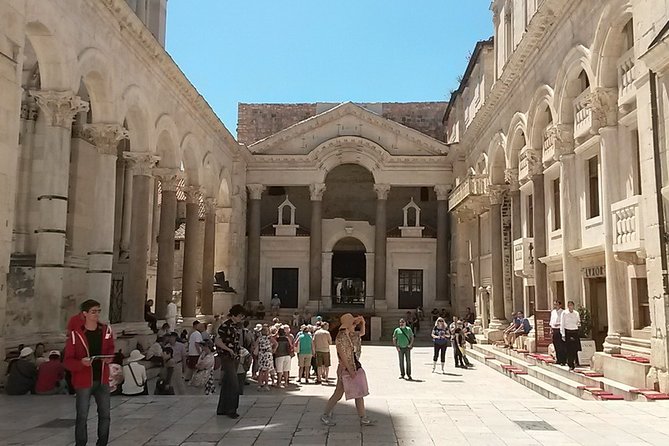
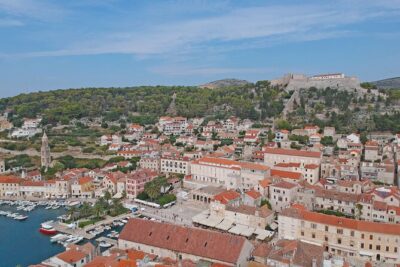
Diocletian’s Palace in Split isn’t “just” an archaeological site. It’s still shaping how people move through the city. You walk through passages and chambers where ancient rules of Roman design collide with later medieval life—and that’s the point. The palace layout isn’t some dead museum floor. It’s the skeleton under a living neighborhood.
What makes this tour work is how it explains the logic. You’re not only hearing dates and names. You’re learning why certain areas were built where they were, and how those choices show up centuries later. That’s why the experience sticks. You start spotting connections yourself after the tour ends.
And yes, the setting is iconic: the palace is UNESCO-protected, and the Old Town around it feels like it grew around the palace walls. That mix is what you paid for—more than “seeing stuff,” you’re understanding why Split looks the way it does.
You can also read our reviews of more walking tours in Split

Price and value for a private group up to 12
This tour costs $240 per group for up to 12 people. That’s not cheap if you’re traveling solo, but it can be a strong deal if your group splits the cost.
Here’s the practical way to think about it:
- You’re paying for a private licensed resident guide, plus a custom-designed itinerary and organization.
- In 2 hours, you’re covering a dense cluster: major palace areas and multiple Old Town landmarks.
- Several optional interior visits add small fees, but the core stops are free.
If you’re a couple, the math depends on your tolerance for paying for “one guide, two people.” If you’re a family, a group of friends, or even a small history-minded crew, it’s much easier to justify. You also get the benefit of a private format—time for questions and a pace that doesn’t force you to keep up with strangers.
Meeting at Obala Hrvatskog narodnog preporoda 22 and the start-to-finish flow
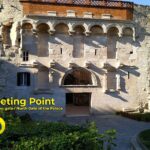
The meeting point is Obala Hrvatskog narodnog preporoda 22, Split. From there, the tour runs through the Old Town core and returns back to the same area.
This matters because Split’s streets can feel like a puzzle on your first day. You don’t need to study maps for the next two hours—you follow a planned route and stop often enough to reset your bearings. Also, the start is near public transportation, so it’s easy to connect it with the rest of your day.
The duration is about 2 hours, and that’s a sweet spot. You get real coverage without turning your afternoon into a tired blur.
Palazzo di Diocleziano: walking into the AD 305 story
Your first big stop is the palace itself, often described as built in AD 305. You’re guided through Diocletian’s Palace as a UNESCO World Heritage site—so the framing is historical from the start. Instead of treating it like a checklist, the guide helps you understand what you’re seeing and what it was meant to do.
This is where you should pay attention to the “shape” of the place. The palace isn’t random. Roman planning shows up in the layout, and once you know what you’re looking at, the walls and passages start feeling purposeful rather than just ancient.
One practical note: the tour’s focus leans toward explaining the palace and its functions, not just giving a quick visual tour. Some guests pick up that a lot of the experience happens inside palace areas like the substructures. So if you dislike standing in enclosed stone spaces, plan for that.
The Golden Gate, Peristyle, and the Emperor’s Square moments
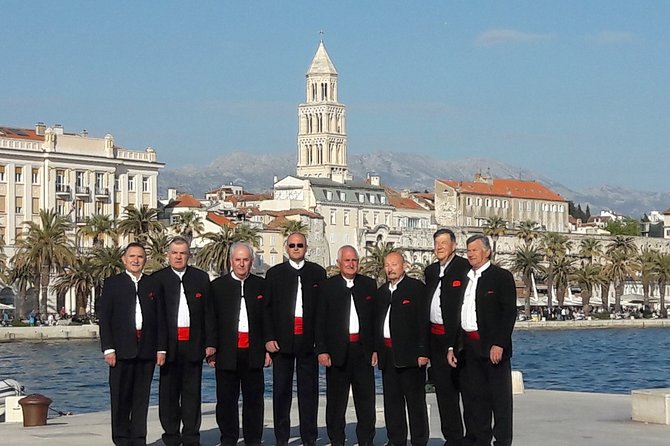
After the initial palace orientation, the route highlights the spaces people remember from postcards—especially the entrance and the grand open areas.
The Golden Gate is the main and most beautiful entrance into the palace. Seeing it with context changes it. It stops being a pretty arch and becomes a statement of power and control—why that entrance mattered, and how you’re meant to move once you’re inside.
Then you hit the Peristyle, also called the palace’s heart and soul in the way the tour frames it. This is the “big open space” beat of the walk, where the scale suddenly clicks. If you’ve ever wondered why Split’s architecture feels theatrical even when you’re in a small alley, it’s because Roman city-design loved dramatic transitions.
These short stops are only about minutes each, but they’re the kind of minutes that help you connect the palace to Old Town street life.
You can also read our reviews of more private tours in Split





The underground substructures stop: what to expect and why it’s worth it
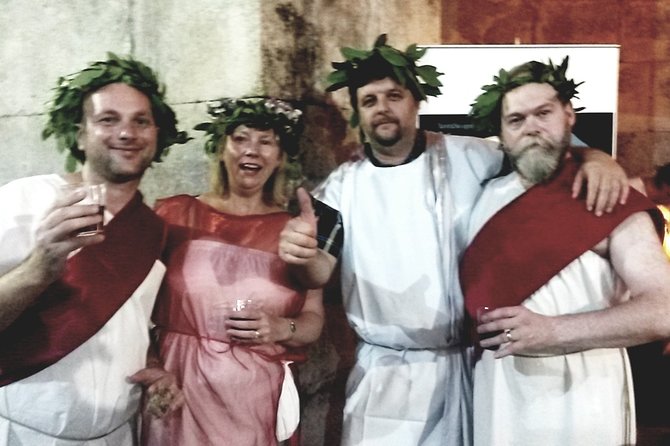
One of the most praised parts of this tour is the section people often describe as taking place in the cellars and substructures under/within the palace complex. The tour includes time for the Diocletian Palace substructures, framed as the best-preserved part of the palace.
If you’re expecting “sunlight ruins only,” adjust your mental image now. This stop is about the bones of the palace—areas that weren’t built to impress visitors with views so much as to serve functions behind the scenes.
Why I like this for you: it gives perspective. When you understand the hidden workings, the palace as a whole stops feeling like a façade. It feels engineered. It feels complete.
Also, it’s a good reminder that ancient sites don’t always reward you just by looking. Sometimes they reward you by understanding.
Old Split squares: Marul, People’s Square, and those quick learning moments
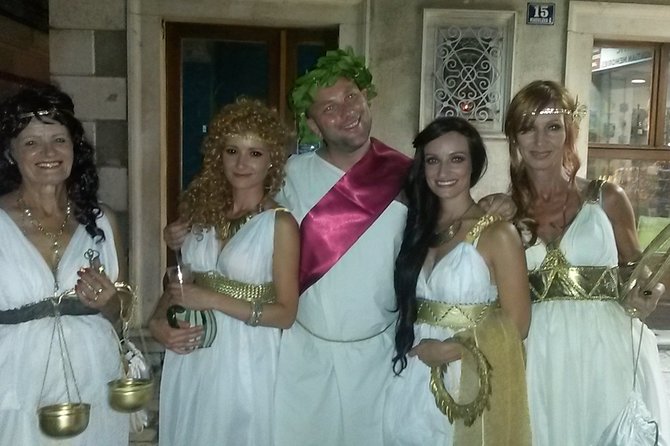
A big part of the tour is the Old Town walking circuit—fast, focused stops that help you build a mental map without getting lost.
You’ll visit:
- Fruit’s Square (Trg Brace Radic): tied to a former green market and the statue of Marul, described here as the father of Croatian literature.
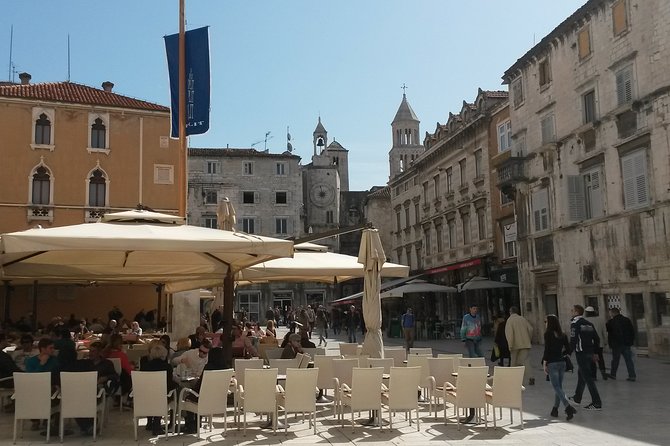
- Narodni Trg (People’s Square): the biggest and liveliest piazza in Old Town in the way the tour frames it.
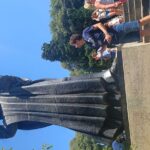
- Grgur Ninski statue: a quick education moment about one of the important historical figures in Croatia.
These stops are short, but they serve a purpose. They show you how culture and public life occupy the spaces left behind by older systems. You’re not only learning Rome. You’re learning how Split’s identity got layered over time.
If you’re the type who tends to skip squares because you think they’re just “pretty places,” this part flips that. Squares are where the story becomes human-scale.
Cathedral of Saint Domnius and the optional inside fees
The route includes a viewpoint of the Cathedral of Saint Domnius from outside, with an optional interior visit. The interior admission is listed as €3.5 per person, so you can decide on the spot.
My advice: if you’ve been inside churches before and don’t care, skip the fee and enjoy the exterior viewpoint the guide sets up for you. If you do like seeing how older structures get used and adapted, the inside visit is often the satisfying payoff.
Either way, this stop is useful because it ties the palace-era world to later religious life in the same physical city.
Riva Harbor and the Roman-age-to-seaside reality check
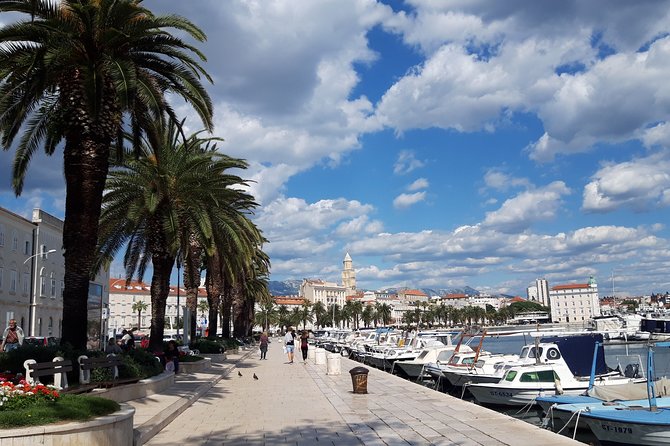
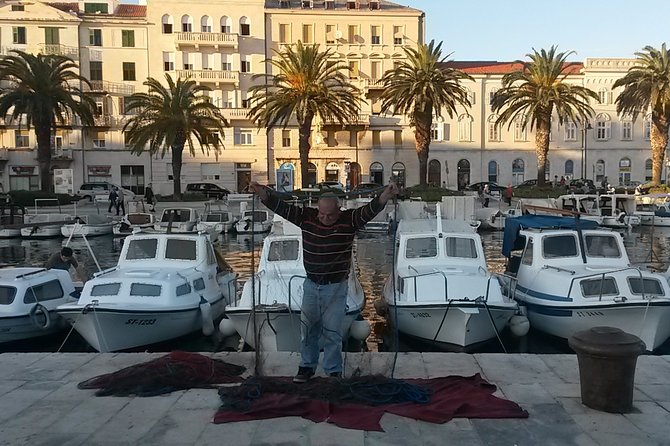
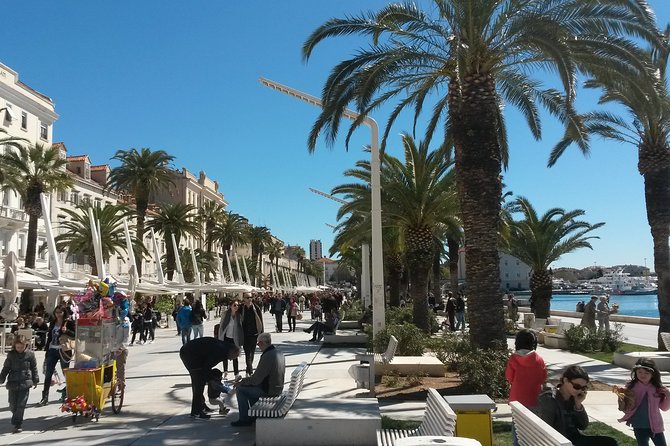
The tour includes a stop around Riva Harbor and it starts/finishes near the main Riva promenade. This gives you a quick reset. You’ve been thinking in stones and centuries; now you look out at water, boats, and the pace of modern Split.
It also helps with orientation. When you can name the “big outside anchor” (the harbor promenade), the Old Town turns from a maze into a walkable area with logic.
It’s a practical ending too. After a guided hour of facts, you often want one place where you can pause without rushing.
Jupiter Temple and the City Clock: two tiny stops with big payoff
Two quick highlights that many people remember are the:
- Temple of Jupiter area: seen from outside with an optional inside visit for €1.5 per person.
- City Clock: described as a 500-year-old 24-hour clock.
The best part about these stops is their role as “story triggers.” The guide uses them to explain how older Roman and later civic life survived in physical details—sometimes in ways you’d never notice on your own.
If you’re the sort of traveler who loves one perfect photo but also wants context, these are that mix: small enough to fit into a short schedule, with enough meaning to feel like more than sightseeing.
What I’d do differently before you go
A couple of practical tips based on how this tour plays out in real life:
- Wear shoes you can trust. Even though each segment is brief, you’re walking through Old Town streets and moving between palace areas.
- Plan for inside/outside balance. You’ll spend time where it’s not all open-air views, especially around palace substructures.
- Decide early on optional interior stops. Cathedral interior (€3.5) and Temple of Jupiter interior (€1.5) are small add-ons, but they can change your comfort level and timing.
- Bring patience for stone explanations. The tour is designed as an historical narrative. If you want movement only, you may feel like you’re “stopping too much.” If you want understanding, you’ll appreciate the pauses.
Also, it’s worth booking ahead. On average, this one tends to sell out about 39 days in advance, so waiting until the last week can limit your options.
Who this tour suits best (and who should skip it)
This is a great fit if:
- You want a strong introduction to Split’s palace-centered layout.
- You like your history with humor and clear storytelling.
- Your group includes kids or teens who need a guide to keep things interesting—this tour’s pacing is designed for engagement.
You might want to choose a different style if:
- You only want outdoor photo spots and minimal time indoors/underground.
- You don’t enjoy guided interpretation and would rather wander without structure.
Should you book the Split private walk through Diocletian’s Palace?
Yes, if your goal is to understand Split fast. The price becomes reasonable when you’re in a group, and the payoff is big: you get palace architecture context, Old Town squares, and a couple of memorable detail stops like the 500-year-old 24-hour clock.
If your vacation time is tight and you want one smart first move, this is that move. You’ll walk away with a mental map and a sense of why Diocletian’s Palace is still the heartbeat of the city.
If your idea of a perfect tour is pure open-air strolling, consider pairing this with a later self-guided afternoon. But for most first-timers, the guided “Roman logic + local streets” combo is exactly what you need.
FAQ
How long is the Split private walking tour?
It runs about 2 hours (approx.).
Is it really private, and how large is the group?
Yes. It’s a private tour, with only your group participating, up to 12 people.
What language is the tour offered in?
The tour is offered in English.
Is there an admission fee included for everything?
Some parts are free, but optional interior visits cost extra: Saint Domnius Cathedral (inside) is €3.5 per person, Temple of Jupiter (inside) is €1.5 per person, and Museum of Diocletian’s Cellars is not included at €10.00 per person.
Does the tour include Diocletian’s Cellars?
It includes substructures, but entry to the Museum of Diocletian’s Cellars is not included (additional €10.00 per person).
Where do you meet and where does it end?
You meet at Obala Hrvatskog narodnog preporoda 22, 21000, Split, Croatia, and the tour ends back at the same meeting point.
Do you get a mobile ticket?
Yes, the tour uses a mobile ticket.
Is it weather dependent?
Yes. It requires good weather. If canceled due to poor weather, you’ll be offered a different date or a full refund.
What’s the cancellation policy?
Free cancellation is available. You can cancel up to 24 hours in advance for a full refund. If you cancel less than 24 hours before the start time, the amount paid is not refunded.