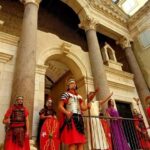
REVIEW · SPLIT
SPLIT-PREMIUM Emperor’s Walking Tour for History Lovers + Museum
Book on Viator →Operated by Walking Tour of SPLIT · Bookable on Viator
Split’s Roman streets still surprise you. This 2-hour walk around Diocletian’s Palace and Old Split turns ruins into a clear story, with resident guides like Joško and Daniela using local details to make 305 AD feel surprisingly readable. I love how the tour starts inside the palace, then keeps snapping the big picture into focus as you move through the city’s later layers.
I also like the small-group setup, capped at 15 people, which helps you actually ask questions and get explanations at a human pace (and not fight for attention near the Golden Gate). You get a sequence of stops that feels like learning the map of Split by walking it: squares, statues, gates, and the clock that still keeps time.
One drawback to keep in mind: the Diocletian’s Cellars museum ticket costs extra (it’s not included), so if you want everything inside, budget the add-on. Also, several major sights are viewed from outside, not as full “walk in and wander freely” stops.
In This Review
- Key highlights at a glance
- Why Diocletian’s Palace is the best starting point in Split
- The Riva promenade meeting point: a walk that doesn’t feel like a chore
- Stop-by-stop: Emperor’s Square to People’s Square
- Palazzo di Diocleziano: the UNESCO palace core
- Old Split medieval lanes
- Cathedral of Saint Domnius: seen from outside, still worth it
- Peristyle of Diocletian’s Palace: the emotional center
- Grgur Ninski statue: Croatian identity after the Romans
- Fruit’s Square (Trg Brace Radic) and Marul’s legacy
- Narodni Trg: the big square where life gathers
- Temple of Jupiter: outside first, optional interior
- City Clock: a 24-hour clock that’s still a clock
- Golden Gate: the main entrance that still feels grand
- Diocletian Palace substructures: the best preserved area
- Vestibulum: the emperor’s private entrance
- How the best guides make the palace feel like a story, not a textbook
- Diocletian’s Cellars museum add-on: when it’s worth paying extra
- Practical tips so you enjoy the walk more
- Who should book this Emperor’s Walking Tour in Split
- Should you book the Emperor’s Walking Tour for History Lovers + Museum?
- FAQ
- FAQ
- How long is the Emperor’s Walking Tour in Split?
- How much does the tour cost?
- Is the tour offered in English?
- What’s included in the tour price?
- Does the Museum of Diocletian’s Cellars cost extra?
- Is the group tour adults only?
- How many people are in the group?
- Where does the tour start and end?
- Does the tour run in bad weather?
Key highlights at a glance
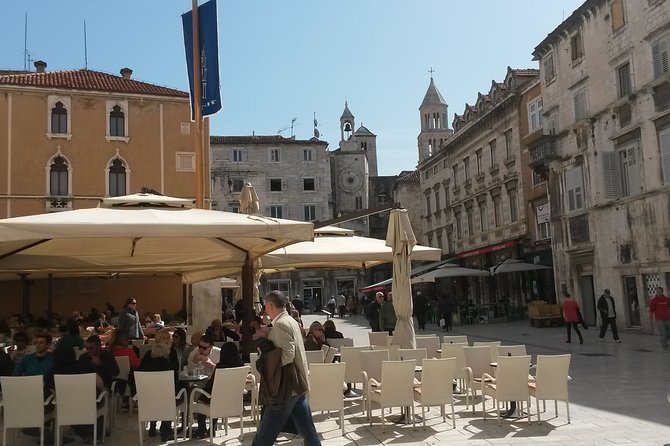
- UNESCO Diocletian’s Palace (built 305 AD) explained with street-level context you can actually use
- Small group size (max 15) so the guide can keep the pace and answer questions
- Old Split medieval lanes layered on top of the Roman plan, step by step
- Photo-friendly landmarks like the Golden Gate and the 500-year-old 24-hour city clock
- Croatia after Rome shows up in statues and square names, not just in archaeology
- Diocletian’s Cellars museum as an optional add-on for under-palace context
Why Diocletian’s Palace is the best starting point in Split
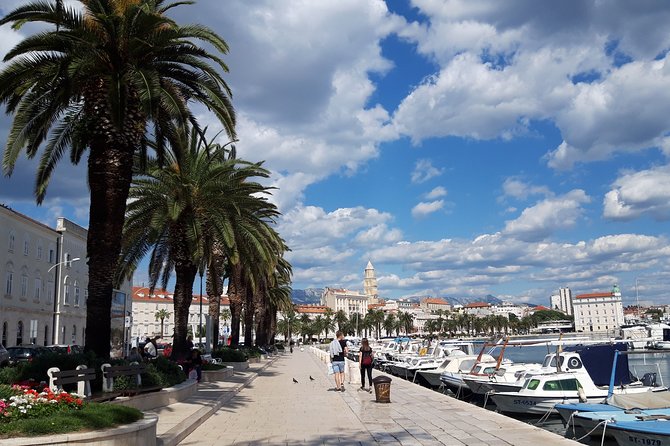
If Split feels confusing at first, that’s normal. Roman walls, medieval streets, and later civic squares all overlap in the same small area. This tour fixes that by starting with Diocletian’s Palace, the UNESCO World Heritage site from 305 AD, so you get the “logic” of the city early.
You’ll get a focused tour through the palace area (about 25 minutes), and the guide’s job is not to dump facts. It’s to help you see how an emperor’s retirement residence became a neighborhood, then a town, then part of a living city. That matters because many visitors see the palace as “cool ruins you walk past.” Here, you learn how the spaces were meant to work, and why today’s streets and passages still follow the Roman bones.
Even if you’ve seen palace photos before, the tour’s pacing helps the details land. You’re not wandering aimlessly—you’re learning why the Golden Gate matters, what the Peristyle is doing in the center of everything, and where the emperor’s private entrance fits into the bigger picture of power.
You can also read our reviews of more walking tours in Split

The Riva promenade meeting point: a walk that doesn’t feel like a chore
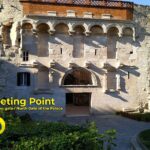
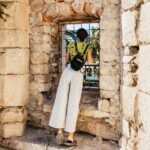
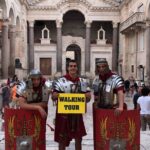
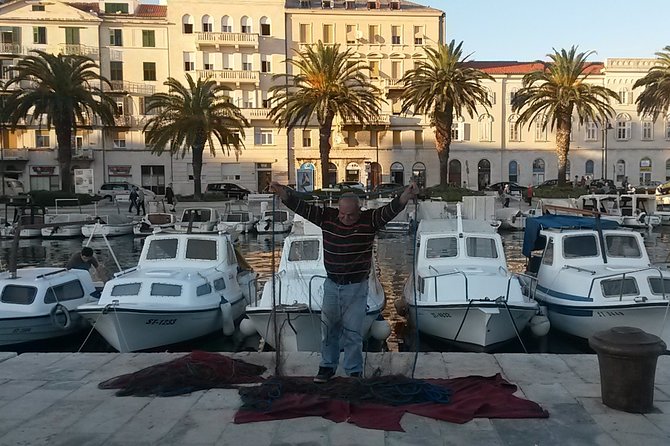
The tour meets at Obala Hrvatskog narodnog preporoda 22, then the walk starts and finishes on the Main Stage of the Riva promenade by the waterfront. That’s a smart setup. It’s easy to find, easy to orient yourself, and it keeps you close to the “human scale” of the city—benches, sea views, and the sense that Split is a port town, not an open-air museum.
The route is designed to be doable in about 2 hours. That timing is a big deal in Split, because the Old Town can feel like it expands the moment you start walking. A guided loop like this helps you leave with the feeling that you’ve learned the layout, not just “seen a bunch of spots.”
The tour is offered in English, and it’s a small-group experience with a maximum of 15 travelers. There’s also an adults-only group policy, with the group tour not recommended for people under age 18. If you’re traveling with teens or mixed ages, you’ll want the private option instead.
Stop-by-stop: Emperor’s Square to People’s Square
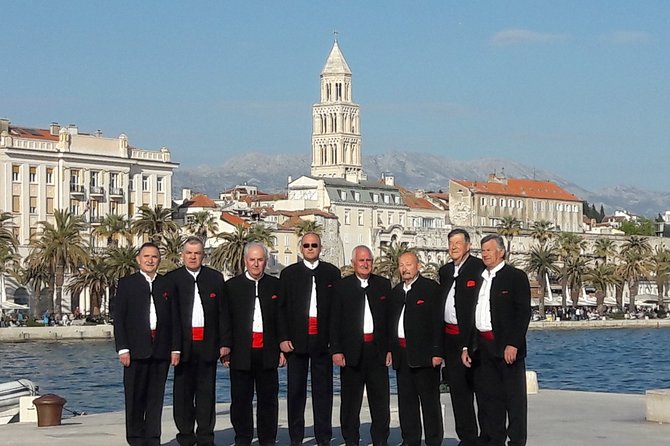
Here’s how the walk reads, from palace heart to Old Town identity.
Palazzo di Diocleziano: the UNESCO palace core
You begin with the palace tour itself, around 25 minutes. This is where you set your mental compass. The guide points out how the emperor’s complex was built, then shows how later life moved into those same spaces. If you think you only need a quick look at Roman stone, don’t. This is the part that makes the rest of the walk click.
Old Split medieval lanes
Next comes Old Split, about 25 minutes of medieval town fabric. The value here is comparison. You’ll see how the Roman plan shaped later settlement, and how the city’s street life grew around it. It’s one of the easiest ways to understand why Split still feels like one place instead of separate “attractions.”
You can also read our reviews of more historical tours in Split


Cathedral of Saint Domnius: seen from outside, still worth it
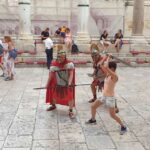
You’ll see the Cathedral of Saint Domnius from the outside (about 5 minutes). Not going inside is not a deal-breaker, because it keeps the pace moving. And even from outside, it anchors the city’s longer timeline—Rome, then centuries of local faith and authority.
Peristyle of Diocletian’s Palace: the emotional center
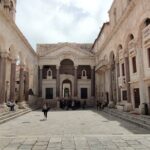
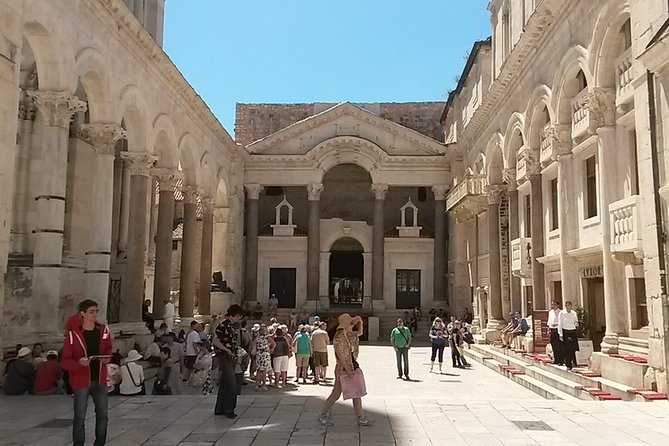
The Peristyle (about 5 minutes) is often the moment you start feeling the palace as a public space rather than a remote monument. The tour frames it as Emperor’s Square, the heart and soul of Split. You’re not just looking at columns; you’re getting an explanation for why this central area mattered, and how it connects to the daily life that followed.
Grgur Ninski statue: Croatian identity after the Romans
At the Grgur Ninski statue (about 5 minutes), the guide brings in a different story: one rooted in Croatian cultural and historical identity. This is a quick stop, but it helps balance the Roman-heavy focus. You leave knowing that Split’s history didn’t freeze with the empire.
Fruit’s Square (Trg Brace Radic) and Marul’s legacy
Fruit’s Square is another short stop (about 5 minutes), and it’s memorable because of what’s attached to it: the statue of Marul, often noted as the father of Croatian literature. It’s a nice reminder that civic pride and language history belong on a walking tour, not only marble and mosaics.
Narodni Trg: the big square where life gathers
Narodni Trg, also about 5 minutes, is described as the biggest and liveliest piazza in the Old Town. It’s a useful pause in the route. Squares like this are where cities show their “modern pulse,” and you’ll feel how the palace world transitions into everyday public space.
Temple of Jupiter: outside first, optional interior
You’ll see the Temple of Jupiter from outside (about 5 minutes), with optional interior access where noted. This is a good example of how the tour balances big picture with choice. If you want more time inside, you can lean in; if you’re keeping momentum, you won’t feel stuck.
City Clock: a 24-hour clock that’s still a clock
The City Clock (about 5 minutes) is one of those details that makes you look twice. The tour highlights that it’s a 500-year-old 24-hour clock. Even without stepping inside anything, you’ll get the sense that timekeeping in Split has a long local memory.
Golden Gate: the main entrance that still feels grand
The Golden Gate (about 5 minutes) is described as the most beautiful main entrance into Diocletian’s Palace. In practice, this stop is about sightlines. The guide helps you see why this gateway sits where it does and what it meant when it was the formal face of imperial space. It’s also an excellent photo spot because the building structure frames you.
Diocletian Palace substructures: the best preserved area
You’ll visit the Diocletian Palace substructures for about 20 minutes. This is the “bones” section of the palace—where preservation and architecture matter most. The time here is longer than many stops, which signals what it’s meant to do: make you understand how the palace functioned behind the visible show of the upper levels.
Vestibulum: the emperor’s private entrance
The Vestibulum (about 5 minutes) is the main entrance to the emperor’s private residence. Even in a short stop, it adds emotional weight. You start to connect architecture to rank and routine—who moved where, and what the palace was built to control.
How the best guides make the palace feel like a story, not a textbook
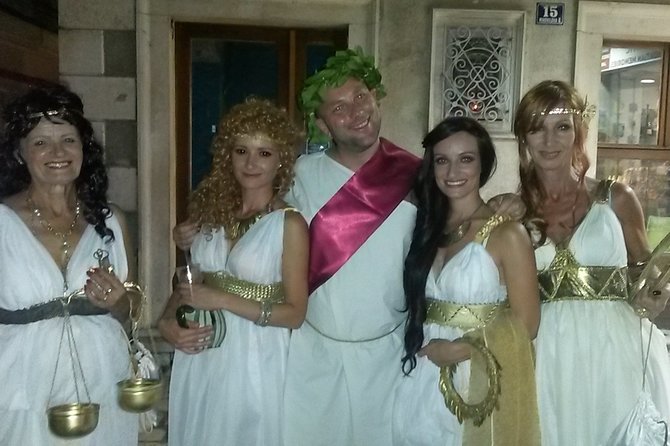
This tour rises or falls on the guide. The consistent pattern in the experience is guides with a local voice and a sense of humor, not dry lectures. People mention Joško and Daniela by name, and they credit the same strengths: clear explanations, humor that keeps the energy up, and a real love for Split.
There’s also a practical side to great guiding. One person noted that the guide adapted sensitively when someone in the group had mobility issues, and that the walk could run longer when needed. Another mentioned that the guide helped fit more into the timeframe when they had to get back on a tight schedule. That’s a useful hint for you: even with fixed stops, a good guide pays attention to the group in front of them.
One more note: this is a history-forward tour. It’s not built around chasing TV scenes. That can be a plus if you want real context, but it’s worth knowing if you’re hoping for a pop-culture scavenger hunt. You’ll see locations connected to film interest in passing, but the focus stays on how Split actually grew.
Diocletian’s Cellars museum add-on: when it’s worth paying extra

The tour includes the walking portion and key palace stops, but the admission fee for the Museum of Diocletian’s Cellars is not included. The listed add-on is €10 per person.
Is that worth it? For most history lovers, yes—because the palace story is only half the story. The cellsars and lower spaces help explain how the palace supported daily life, storage, movement, and the less-visible “working” parts of the complex. One review specifically mentions walking into the cellars together, which suggests the guide treats this as a meaningful part of the experience rather than a quick line item.
The tradeoff is timing and cost. The walking tour is about 2 hours, so if you add the museum, plan for a slightly heavier schedule. If you hate paying extra or you only want exterior views, you might prefer skipping that portion and keeping the day simple.
Practical tips so you enjoy the walk more
A few things will make your experience smoother.
- Bring water. Even a well-planned route can feel long in summer sun.
- Wear shoes you trust on old stone. The tour is mostly walking, and the palace/substructures areas often involve uneven footing.
- Have your camera ready for the Golden Gate and the city clock. Those are quick stops, so you’ll want to be ready instead of digging around.
- If you have a special interest—Roman architecture, medieval Split, or the Croatian side of the story—tell the guide early. The tour is built around a custom-designed itinerary, and a good guide can steer the explanations toward what you care about.
Also, if you’re using public transportation, this tour is described as near public transportation. That’s helpful when you’re planning a day that includes beaches, ferry rides, or a lunch stop on the waterfront.
Who should book this Emperor’s Walking Tour in Split
Book it if you want a guided way to understand why Split is different. You’ll enjoy it most if you like:
- Roman architecture that comes with context (not just dates)
- A paced walk with short, high-impact stops
- A guide who uses humor to keep you paying attention
- Small-group energy (max 15) so you can ask questions
Consider the private tour if:
- You’re traveling with mixed ages or people under 18, since the group tour is adults only.
- You want more flexibility in pace or focus.
Skip or adjust your expectations if:
- You want a movie-location tour first and history second.
- You don’t want to pay the extra €10 museum admission.
Should you book the Emperor’s Walking Tour for History Lovers + Museum?
I’d book this tour if your goal is to understand Split fast—especially the Roman layer of Diocletian’s Palace and how it shaped medieval and modern life. The combination of palace core, key squares, and quick outside views (cathedral, temple) gives you a balanced overview without dragging you all day.
If you’re on the fence about the museum ticket, think about what you like. If you enjoy going beyond the visible and learning how spaces worked, the Diocletian’s Cellars add-on is probably worth the €10. If you only want quick exterior highlights, you can still get plenty from the walking portion.
FAQ
FAQ
How long is the Emperor’s Walking Tour in Split?
It’s approximately 2 hours.
How much does the tour cost?
The price is $30.00 per person.
Is the tour offered in English?
Yes, the tour is offered in English.
What’s included in the tour price?
The tour includes a licensed resident guide and the walking tour organization. The Diocletian’s Cellars museum admission fee is not included.
Does the Museum of Diocletian’s Cellars cost extra?
Yes. Admission is €10.00 per person and is not included.
Is the group tour adults only?
Yes. The group tour is adults only, and it’s not recommended for guests under age 18. The private tour is for all ages.
How many people are in the group?
It’s a small-group tour with a maximum of 15 travelers.
Where does the tour start and end?
It starts and ends back at the meeting point on Obala Hrvatskog narodnog preporoda 22, Split.
Does the tour run in bad weather?
It requires good weather. If it’s canceled due to poor weather, you’ll be offered a different date or a full refund.