REVIEW · SPLIT
Split highlights – Evening walking tour
Book on Viator →Operated by TEMPER TRAVEL · Bookable on Viator
Diocletian’s palace looks different at night. This Split evening walking tour strings together the palace gates, the cathedral area, and the harbor promenade so you can see how the city feels after sunset. It runs with a small group size, which makes it easier to ask questions and keep the pace friendly through busy streets.
I love how the route guides you to the most important spots first, so Diocletian’s Palace stops being confusing and starts feeling obvious. I also love the finishing moment: the plan is to end with a big overlook toward Split, so you leave with a picture in your head that helps with everything after.
One thing to consider: the palace area can get crowded at night, and you’ll still be walking on uneven stone. Also, the Cathedral of Saint Domnius bell tower entry isn’t included, so you’ll decide on the spot if you want to pay extra for that part.
In This Review
- Key highlights worth planning around
- Why a 7:00 pm palace walk changes everything
- Meeting at the Golden Gate: Diocletian’s entrance, plus a lucky statue
- The Peristyle of Diocletian’s Palace: the “center” you can feel
- Saint Domnius Cathedral: a mausoleum turned church (and the bell tower choice)
- Vestibulum and Diocletian’s chambers: listen for klapa in the round hallway
- Pjaca, Prokurative, and the Riva: Split’s everyday theater after dark
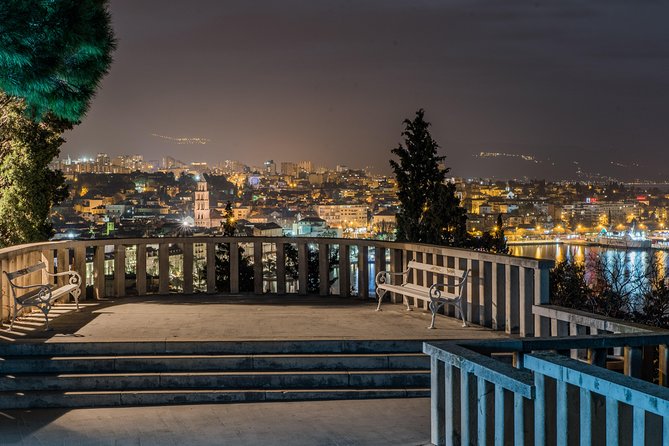
- Finishing with the Marjan viewpoint: the overlook that helps you plan next
- Price and value: why $39.74 can feel like a bargain
- Guides that make the city feel personal
- What to wear, how to pace yourself, and how to handle the crowds
- Who should book this Split evening walking tour
- Should you book it? My call
- FAQ
- What time does the tour start?
- How long is the Split evening walking tour?
- Where do I meet the guide, and where does it end?
- Is the cathedral bell tower included in the ticket price?
- Does the tour use mobile tickets, and what language is it in?
- Is this tour affected by weather?
Key highlights worth planning around
- A tight 7:00 pm start that catches palace atmosphere without frying in the midday heat
- Max 8 people so your English-speaking licensed guide can actually answer your questions
- Most stops are free (and the big exception is the Saint Domnius bell tower)
- Diocletian’s layout is explained clearly, from the Golden Gate to the Peristyle core
- A klapa-singing moment in the palace that you’re meant to hear in place, not just read about
- Ending viewpoint energy that helps you get your bearings fast in Split
Why a 7:00 pm palace walk changes everything
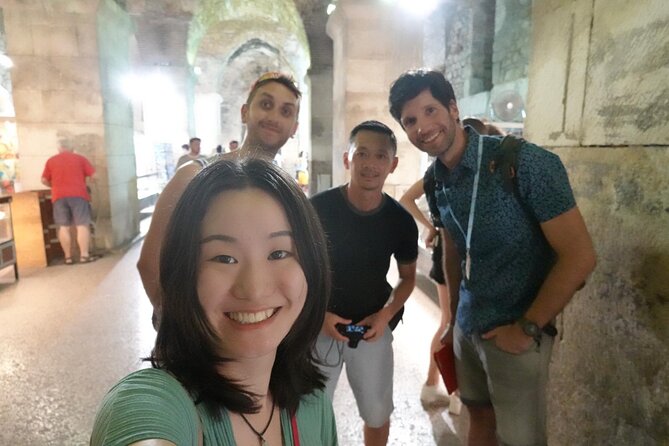
Split has a way of pulling you in, but the palace area can feel like a maze if you arrive with no route in your head. This tour is designed to fix that fast. Starting at 7:00 pm means you’ll often be moving through cooler streets with softer light—great for photos and better for long looks.
It also makes the whole city feel more connected. You begin at the palace entrance and gradually work your way outward to the public squares and the Riva promenade, so you see how power, religion, and everyday life sit side by side in the same compact area.
You can also read our reviews of more walking tours in Split

Meeting at the Golden Gate: Diocletian’s entrance, plus a lucky statue
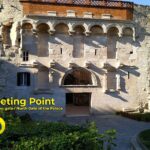
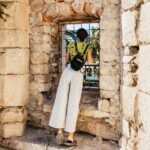
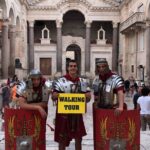
You kick off right at the Golden Gate on Dioklecijanova 7. The guide frames it as the main gate of the palace, tied to Emperor Diocletian’s retirement story—why he entered, and why he never looked back.
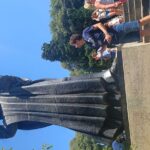
The fun detail here is the statue of Croatian bishop Grgur overlooking the gates. It’s the kind of thing you’d normally miss in a quick photo stop. With someone explaining it, you understand why locals treat this spot like a good luck moment, especially for travelers passing through.
This is a short start (about 15 minutes), so don’t plan to linger too long. Use it to set context, then keep moving.
The Peristyle of Diocletian’s Palace: the “center” you can feel
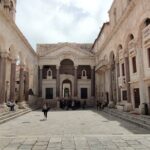
Next you step into the palace’s core: the Peristyle. This square is described as both a geographical and spiritual center, and it shows. Surrounded by monumental palace walls and key landmarks, it’s the point where the whole complex starts to make sense.
One highlight is the 3500-year-old sphinx guarding the area. Even if you’ve seen statues before, this one lands because of the way the guide connects it to the idea that ancient elements were kept, reused, or carried forward. It’s not just a decoration stop—it’s a “look at how old ideas survive” stop.
Expect about 20 minutes here. This is a good place to slow down for real looking: notice sightlines, arches, and how people flow through the space.
Saint Domnius Cathedral: a mausoleum turned church (and the bell tower choice)
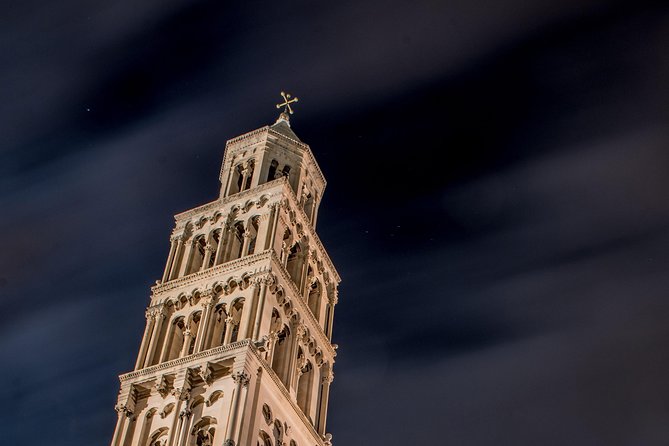
Then you reach Cathedral of Saint Domnius, which used to be the Roman Emperor Diocletian’s mausoleum. The tour explanation matters here because it’s not an abstract timeline. The building’s layers are visible in how the space is used and how it sits in the surrounding palace structure.
The cathedral is also promoted as the oldest building in the world that has a cathedral inside it. That’s a big claim, but the practical takeaway for you is simple: this is one of those places where you stop thinking of Split as a seaside town and start seeing it as a long-running crossroads of eras.
In front is the Romanesque bell tower, and here’s the practical note: admission to the bell tower is not included. If you’re the type who loves views from towers, you’ll likely want to add it later with your own ticket. If you just want the main cathedral area, you can skip that extra spend and still get the main point of the stop.
Plan around 10 minutes in this area on the walk. If there’s any line or crowd, your guide keeps it efficient.
Vestibulum and Diocletian’s chambers: listen for klapa in the round hallway
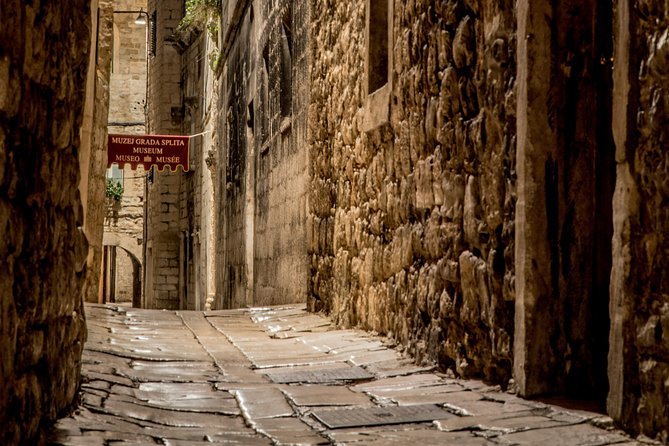
After the main cathedral zone, the tour goes into the Vestibulum of Diocletian’s Palace. This is the part I like for a different reason: it’s sensory. You’re meant to hear local klapa singing in the space.
The vestibule is a striking round hallway, and the acoustics help the singing land. It turns a typical “look at a corridor” moment into something alive. Even if you’re not a big choir fan, it’s the kind of local sound that makes the palace feel less like a museum and more like a place with current-day roots.
This stop is about 10 minutes, so it’s not a long performance. Think of it as a short cultural interruption—exactly the right length on a walking tour.
You can also read our reviews of more evening experiences in Split






Pjaca, Prokurative, and the Riva: Split’s everyday theater after dark
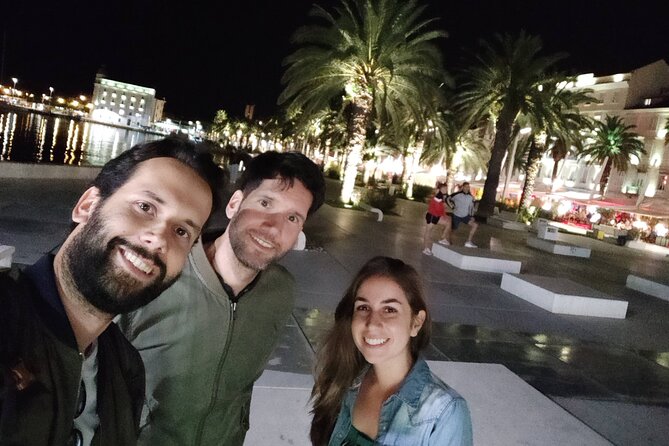
From the palace you head outward into the city’s social rhythm, and the tour does this in a smart sequence. You go from the emperor’s world to the citizens’ hangout spaces, so the transition feels natural instead of jarring.
First comes Pjaca, the central square where you can see how locals live in public. It’s described as a place to rest, meet, and talk about what matters. One detail that makes it charming is the mention of football—this is the sort of square where that conversation always seems nearby.
Then you reach Prokurative, also known as Republic Square, often compared to Venice’s St. Mark’s Square. Here the focus is on the open south side and the harbor view. You’ll see how this square works as a people-watching platform, not just a “point of interest.”
Finally, you arrive at the Riva Harbor promenade—Split’s living room and one of its most important public places. Your guide keeps the vibe practical: the Riva isn’t only for sightseeing. It’s the daily stage for everything from strolling to big moments you’ll hear about later in the city’s stories.
These stops are each around 10 minutes. That’s enough time to orient yourself and feel the place, without dragging you through a long checklist.
Finishing with the Marjan viewpoint: the overlook that helps you plan next
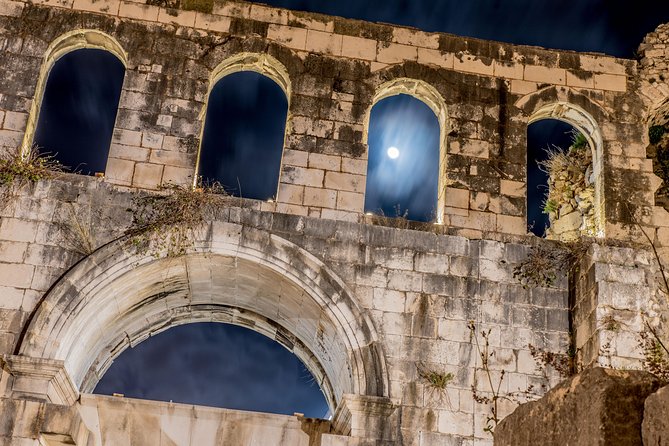
The tour closes with the best kind of souvenir: a view. The plan includes a final stretch toward a terrace with an expansive look over Split, described as about 15 minutes on foot from the old town.
This matters for you because the palace area can be visually overwhelming at first. After the view, the city starts to click into place. Streets, waterfront, and neighborhoods stop feeling random, and you’re better prepared to wander on your own afterward.
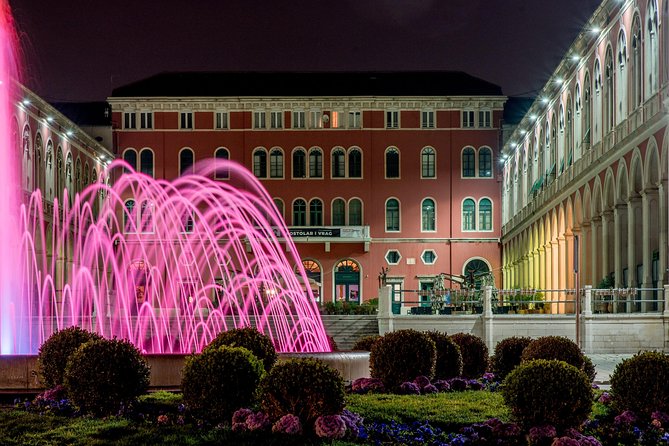
There’s also a nice payoff logic here. You end near the Vodoskok fountain area by the start of the Riva promenade, which is a convenient anchor for post-tour plans. From there, you’re positioned to eat well without spending time backtracking across old streets.
Price and value: why $39.74 can feel like a bargain
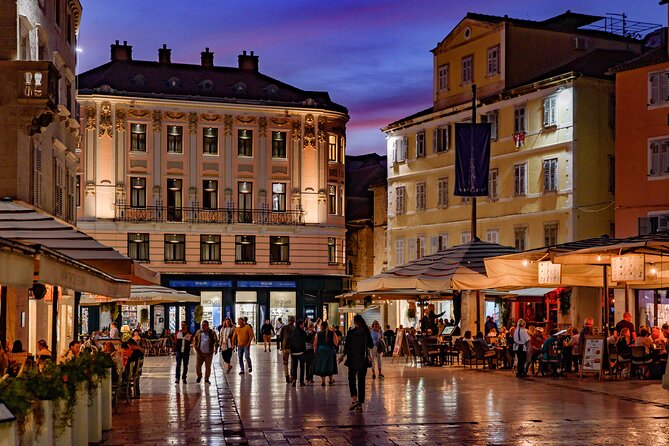
At $39.74 per person for about 1.5 to 2 hours, this isn’t priced like a “big attraction ticket.” It’s priced like what you’re actually buying: a licensed local guide in English plus a route that saves you time.
The value improves because most of the tour’s core stops are free. That includes the Golden Gate, the Peristyle area, the vestibule, the major squares, and the promenade segments. The main exception called out is that Saint Domnius bell tower admission is not included, so you’re not forced into extra spending.
The small group limit—no more than 8 travelers—also matters. With a bigger group, palace corridors and squares become a traffic jam. With this size, it’s easier to stand where you can see, and it’s easier to ask questions without waiting your turn.
Add in that you get a mobile ticket, which keeps you from worrying about printing or losing paper, and the tour starts to look like a low-stress way to get your bearings fast.
Guides that make the city feel personal
The reviews point to something you should pay attention to when booking: the guides are not just reciters. You’ll likely get a guide with real local ties, and names like Bosko Papic, Pavle, and Luka have shown up in past experiences.
What I like about this kind of guiding is that you get more than dates. The best parts are the practical bits: how to connect what you see in the palace to how people live in Split today, plus quick restaurant tips and guidance that helps you move through the city after the tour ends.
If you’re visiting for a short time, that local translation is often worth as much as the monuments.
What to wear, how to pace yourself, and how to handle the crowds
This tour is listed as manageable for most people, but you should still come ready for a walking evening. Expect stone steps, uneven surfaces, and areas that can get crowded—especially around the palace at night.
Bring comfortable shoes. If you’re hoping for crystal-clear photos, know that you’ll be sharing space with others. Your best move is to listen first when your guide points out what to look for, then take photos when the group shifts.
Also, keep your energy in check for the finale. The Marjan-area viewpoint finish includes a short walk, and it’s timed so you can still enjoy it at the end without rushing.
Who should book this Split evening walking tour
This is a great match if you:
- Are a first-timer and want to understand Diocletian’s Palace without getting lost
- Want a night tour that feels more alive than a daytime museum stop
- Like history explained in plain language, tied to what you can see around you
- Want a short plan that still leaves you free to explore on your own afterward
It might be less ideal if you:
- Want a long, deep museum-style visit inside buildings for extended periods
- Dislike crowds enough that you’d rather choose a quieter time of day
- Have trouble with walking uneven stone during an evening route
Should you book it? My call
If you want the easiest path to falling for Split, this tour is a smart booking. The route is compact, the focus stays on the places that matter, and the pacing works well for an evening start at 7:00 pm. With most stops free and only one clear paid add-on (the bell tower), it’s also a good value for your time.
Book it if you’re new to town and you want your bearings fast. Skip it only if you strongly prefer quiet, private pacing, or you’d rather spend your time in fewer places for longer.
FAQ
What time does the tour start?
The tour starts at 7:00 pm.
How long is the Split evening walking tour?
It runs about 1 hour 30 minutes to 2 hours.
Where do I meet the guide, and where does it end?
You meet at the Golden Gate (Dioklecijanova 7, 21000, Split). The tour ends at Vodoskok, at Trg Franje Tuđmana, near the beginning of the Riva promenade.
Is the cathedral bell tower included in the ticket price?
No. The Cathedral of Saint Domnius area is part of the route, but admission to the bell tower is not included.
Does the tour use mobile tickets, and what language is it in?
You get a mobile ticket, and the tour is offered in English.
Is this tour affected by weather?
Yes. It’s listed as requiring good weather. If it’s canceled due to poor weather, you’ll be offered a different date or a full refund.