REVIEW · SPLIT
Semi-Private Balkans Tour; Split to Athens or Corfu in 14 Days
Book on Viator →Operated by Choose Balkans · Bookable on Viator
Fortresses, bridges, and bus rides with a plan.
This semi-private Balkans route starts with hassle-free pickup in Split at 7:30 am, then your guide and driver handle the getting-around so you can focus on the places. I like how the trip moves from city to city without feeling chaotic, especially on that first push toward Mostar.
Guide-led walks through UNESCO towns are the other big reason I’d do this again. You get organized time at major sights plus enough breathing room to wander on your own, and entrance tickets are built in for the stops that matter most.
One possible drawback: you’re on the road a lot, and lunches and dinners are not included, so you’ll want to budget for meals and keep your patience for long driving days.
In This Review
- Key Highlights Worth Your Time
- Split to the Border: A 7:30 am Start That Actually Helps
- Mostar Old Bridge and Blagaj: The Bosnia-That-You-Remember
- Sarajevo’s Old Town: Bullet Holes, Latin Bridge, and the Stories That Linger
- Kotor and Budva: UNESCO Cities That Mix Medieval Streets With Sea Air
- Rozafa and Shkoder: Fortresses Over Rivers and the Venetian Thread
- Slow Food at Mrizi i Zanave and Kosovo Culture in Prizren
- Gjakova Bazaar, Decan Monastery, and Rahovec Wine Country
- Kruja and Tirana: Albanian Resistance, Ottoman Streets, and Real Food Stops
- Ohrid, St Naum, and Berat’s 1001 Windows
- Gjirokaster Stone City to Meteora Sunset: Ending With Big Views
- Athens or Corfu: How the Ending Works and Why It Matters
- Price and Logistics: Does It Feel Worth $5,153.85?
- Who This Tour Fits Best (and Who Might Want Something Else)
- Should You Book This Split-to-Athens-or-Corfu Journey?
- FAQ
- What city does the tour start in?
- What time is pickup in Split?
- How long is the tour?
- What is the maximum group size?
- Where does the tour end if I choose Athens?
- How does the Corfu ending work?
- What type of accommodation is included?
- Are breakfasts included?
- Are entrance tickets included?
- Are lunch and dinner included?
- Is there a refund if I cancel?
- Do I need travel or health insurance?
Key Highlights Worth Your Time
- Split pickup at 7:30 am so you don’t waste your first day figuring out logistics
- Max 10 travelers with private transportation for a calmer pace
- UNESCO hits including Mostar, Kotor, Ohrid, Berat, Gjirokaster, and Meteora
- Included ferry to Corfu if you choose the Corfu ending option
- Local accommodation with breakfast every night for an easier start each morning
- Museum and fortress stops that mix stories, not just photos
Split to the Border: A 7:30 am Start That Actually Helps
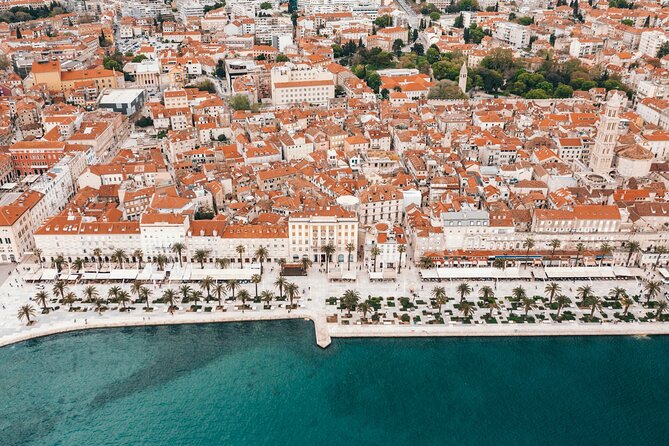
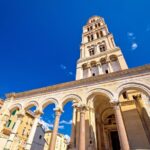
This trip begins in Split, with a hotel pickup at 7:30 am. That early departure matters because it turns the day from sightseeing-into-the-wind to sightseeing-with-focus. From there, your driver shuttles you to the border to meet your tour leader, which is a nice way to avoid the usual paperwork stress.
You’ll be in a small group (max 10), so it feels semi-private rather than like you’re squeezed into a big bus day. And because transportation is private and included, you’re not doing the awkward thing where you hunt down transit between cities while everyone else is already checked in.
The other thing I appreciate here is the rhythm: you start with iconic places right away, then you layer in smaller stops that feel more personal as the days go on.
You can also read our reviews of more private tours in Split

Mostar Old Bridge and Blagaj: The Bosnia-That-You-Remember
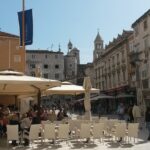
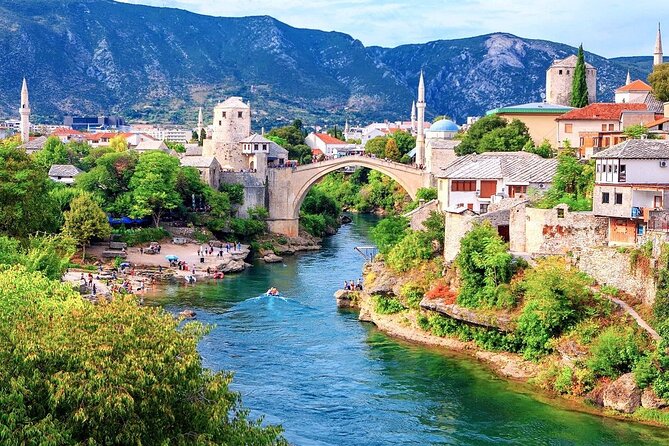
Day 1 is built around Mostar and the river Buna area near Blagaj. You get to see the Mostar Old Bridge (Stari Most), the UNESCO-listed bridge that was built in the 1500s in an Islamic architectural style. The point of this stop is not just the view—it’s that you’re getting an anchor for understanding the region’s Ottoman-era influences, right at the start.
After that, you walk the Old Bazaar area around the bridge. This is where Mostar’s mix shows up: cobbled alleyways, old mosques nearby, and Turkish bazaar energy in a compact setting. There are also memorial-style stones with Don’t Forget messages around town, which gives the place an emotional undertone beyond the postcard look.
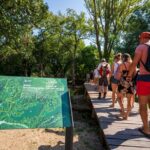
Then comes Blagaj tekija, outside Mostar on the cliffside, with the spring of the river Buna and blue waters in front. The timing works because you’re leaving the city texture for something more still and scenic. One practical note: this is a walking-focused day, so wear shoes that handle uneven streets and changes in elevation.
Sarajevo’s Old Town: Bullet Holes, Latin Bridge, and the Stories That Linger
In Sarajevo, the tour leans into walking on uneven terrain and connecting landmarks to the bigger narrative. You’ll see reminders of the Yugoslav War, like bullet holes and cannon marks across town. That’s heavy, but it’s also exactly why a guided stop matters—you’re not just looking at damage; you’re learning what shaped the city.
Your tour moves through Ottoman and Austria-Hungarian parts of Sarajevo. That mix is visible in the streets, markets, bazaars, and houses of worship, including mosques, churches, and synagogues. The goal is for you to understand Sarajevo as a crossroads, not a single-style city.
You’ll also visit the Latin Bridge, tied to the story of how World War I was triggered. The bridge’s name comes from the way it connected the Catholic quarter called Latinluk to another part of town. And then there’s a food break built in with free time in the old town, so you can try local meat dishes and desserts without feeling rushed.
Kotor and Budva: UNESCO Cities That Mix Medieval Streets With Sea Air
Day 3 heads toward Kotor in Montenegro, another UNESCO stop. Kotor’s streets feel intentionally confusing—your route through the maze of narrow cobblestones is part of the town’s defensive history, designed to confuse intruders. Even if you’re not a history nerd, the layout makes sense once your guide explains the logic.
You’ll visit Saint Luke’s church, which is meaningful for locals because it represents unity. Then you get time to explore Kotor’s UNESCO old town at your own pace, plus an overnight near the Montenegrin Riviera.
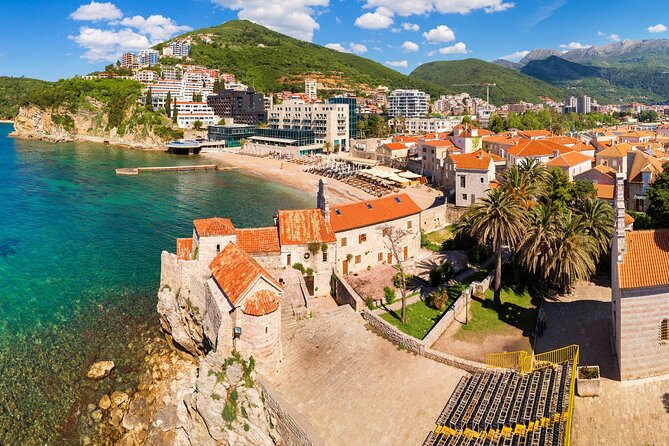
Budva follows on Day 4. Budva is split between New Budva (modern buildings, malls, restaurants) and Old Budva (historic center and older churches). You’ll focus on the medieval part, including churches like St. Ivan and St. Mary. The benefit here is variety: you get old-world streets one day and a sea-side mood the next.
There’s also a viewpoint stop near Sveti Stefan. You can’t visit the island resort area anymore, but you still get a strong coastal photo moment. Just treat it as a quick scenic breather before the Albania leg.
Rozafa and Shkoder: Fortresses Over Rivers and the Venetian Thread
From the Montenegrin coast, the trip shifts inland and north in Albania toward Rozafa Castle and Shkoder. Rozafa gives you views over the lake and the three rivers meeting in the Adriatic Sea. Fortresses are often impressive because they make geography make sense—Rozafa is one of those stops where the view does half the explaining.
Then you continue to Shkoder, one of Albania’s oldest cities. You’ll visit Rozafa Castle again on this day’s structure, while also learning how the area’s architecture reflects Venetian influence. Your time here is designed to connect what you’re seeing now to what’s been layered over centuries, from Illyrian times to Roman references.
This part is also a good reality check: the tour’s style is not one long museum day. It’s short, guided chunks plus time for photos and wandering, with plenty of driving between.
Slow Food at Mrizi i Zanave and Kosovo Culture in Prizren
One of the more distinctive days is Day 5 with Mrizi i Zanave in the slow food agrotourism tradition. You’ll get a farm tour and hear how the business shaped jobs for more than 400 people in the area. It also focuses on how regional bio products are collected, processed, and preserved. If you care about food as culture (not just lunch as fuel), this is a strong stop.
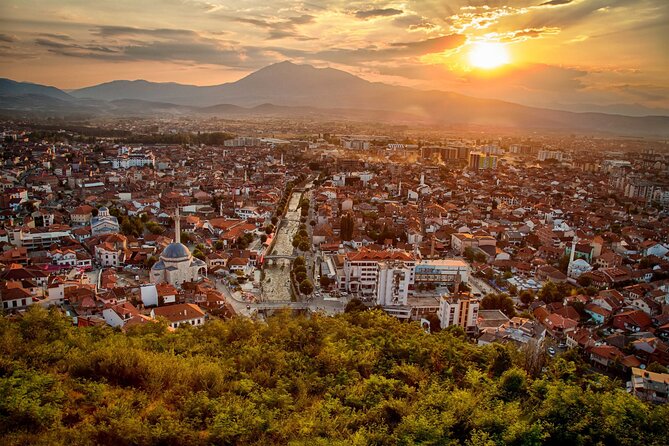
The day then moves into Prizren in Kosovo, described as a cultural capital with religious tolerance and a mix of influences. Prizren has that river-through-town setup with bridges cutting across the old area. The tour suggests it’s especially lively during August for Dokufest, but even outside that season the layout gives you plenty to walk through.
You’ll also visit Sinan Pasha Mosque, known for its arabesque color and patterns. That kind of detail is exactly what you want on a guided day—so you notice more than just the big silhouette.
Gjakova Bazaar, Decan Monastery, and Rahovec Wine Country
Day 6 is about Kosovo’s crafts, faith, and landscape around villages and valley regions. You’ll pass through Gjakova, where the bazaar is described as the oldest and largest in Kosovo. Even after destruction across multiple wars, the bazaar was rebuilt, and it becomes a place to browse handmade crafts and eat.
Next is the Monastery of Decan. It’s known for its white look, but what makes it a key stop is that Orthodox monks still inhabit it and produce organic foods like cheese. It’s also UNESCO-listed due to frescoes from the 14th century, plus the Palaeologan renaissance influence on Byzantine painting.
Then comes Rahovec Valley, with viticulture going back around 2000 years. The area is positioned at altitude for wine production, and there’s an annual festival in September. This is one of the quieter, slower-feeling blocks in the itinerary: you’re not racing from one fortress to another, you’re taking in a place where crops shape the day.
Kruja and Tirana: Albanian Resistance, Ottoman Streets, and Real Food Stops
Day 7 moves to Kruja, famous for its role as an Albanian resistance symbol against Ottoman expansion in the 15th century. You’ll walk through Kruja’s Medieval Old Bazaar with narrow streets and wooden houses. The bazaar is also practical: it’s one of the best spots on the route to shop for souvenirs and handmade items like carpets and jewelry.
Then you go up to Kruja Castle, built on a rocky hill. The guide takes you through hidden paths used by locals to leave the castle without being noticed during enemy periods. That kind of detail turns a photo stop into a story stop.
Day 8 is Tirana, and this is where the tour gets more food-forward. You’ll start with a local place where you can try byrek for breakfast like a local, plus time around Çam bazaar founded by the Çam community. In other words: you’re not just watching Tirana from a main street. You’re sampling how people actually eat and trade.
You’ll also do a broader walking portion with stops for coffee culture, then a visit to Pazari i Ri, including the bicycle bazaar and the New Bazaar food area. The lunch-style meal is a traditional mix with qoftë and bread, plus options for vegetarians. You’ll also taste Albanian raki there.
To cap it off, you’ll visit BUNKART 2, a museum in a former nuclear bunker built for Enver Hoxha during the Cold War. It was hidden to the public until 2014, when it opened as a museum. That’s a unique cultural stop because it explains power in a very physical way.
Ohrid, St Naum, and Berat’s 1001 Windows
Day 9 brings North Macedonia, starting with Struga near the Drini River. It’s a short, easy start—quick drink and a chance to reset before you get to the big UNESCO cities.
Ohrid is the highlight on this stretch. You’ll visit St. John’s viewpoint church, St. Nicolas, and the Halveti Hayati Tekke mosque. Ohrid and Ohrid Lake are UNESCO-listed since 1980, and the tour places the story in Illyrian and Roman naming traditions, plus Ohrid’s Orthodox importance through Byzantine times. It’s a lot of layered meaning for a city that still feels walkable and human-sized.
Day 10 moves to St Naum, at the source area of the Crni Drim River and near protected National Park Galicica. The monastery sits in a crystal-clear water setting with greenery and mountain peaks behind. Then you cross back toward Albania with a stop at Tushemisht, described as a hidden spot with hospitality and scenery.
Before you reach Berat, you visit Drilon National Park, with water springs forming a small lake surrounded by greenery and weeping willows. It’s a breather stop that keeps the trip from turning into only fortresses and churches.
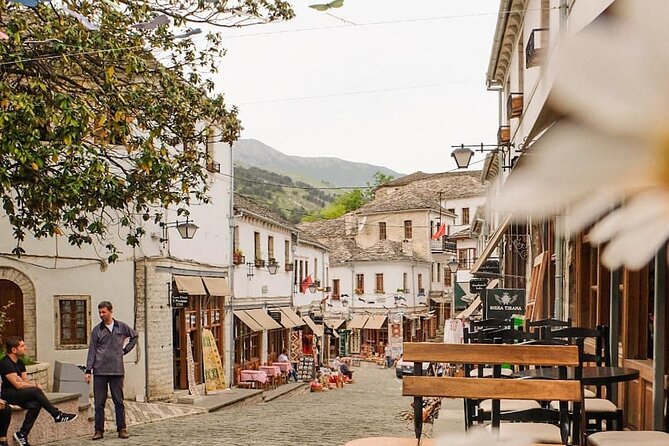
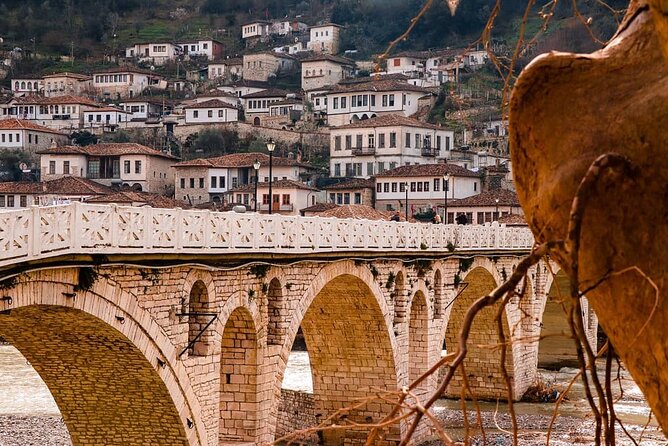
Day 11 is Berat, the town of 1001 windows and another UNESCO highlight. You’ll walk the stone streets with stacked-window views, plus see the castle area. Berat is also tied to painter Onufri, and the tour includes the Onufri iconographic museum. You’ll finish with the Gorica neighborhood and its bridge stop.
Gjirokaster Stone City to Meteora Sunset: Ending With Big Views
Day 12 brings Gjirokaster, also UNESCO-listed and often called the stone city. Every house is described like a small fortress, giving you a fortified-city feel even when you’re just walking streets. You’ll visit Gjirokaster Castle, described as one of the best-preserved medieval towns in the Balkans, then stop by the bazaar and a preserved house.
Day 13 shifts toward Greece with Ioannina and then Meteora. Ioannina offers old town cobbled streets with Byzantine and Ottoman architectural traces, plus Ioannina Castle with its labyrinthine streets inside. You’ll have time to enjoy Greek cuisine during the wandering portion.
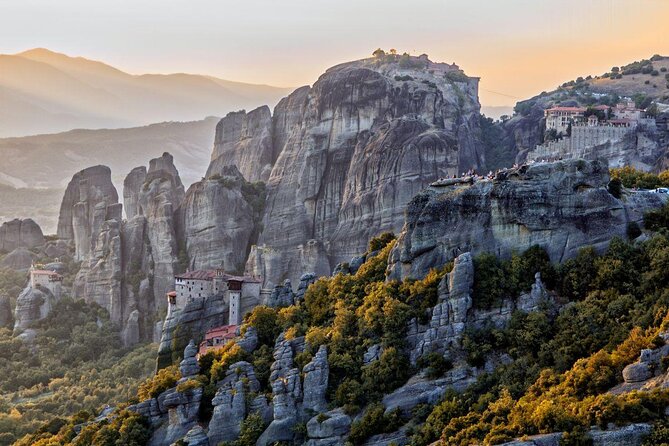
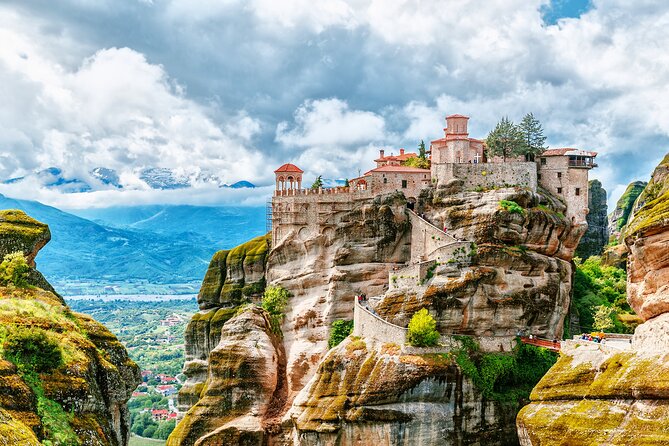
Then comes Meteora, UNESCO-listed, with monasteries built on spectacular rock formations. The tour explicitly calls out the sunset potential, and that’s the right way to do Meteora. You don’t want to rush it like a checklist. You want time for the light change.
Athens or Corfu: How the Ending Works and Why It Matters
Day 14 is the finish. If you choose Athens, you’ll get transferred toward Athens to end the journey.
If you choose Corfu, you’ll be transferred to Igoumenitsa Port, then take the ferry to Corfu port with ferry tickets included. This is one of those details that can save you real money and hassle at the end of a long trip. After two weeks of border crossings and old towns, the ferry is a clean reset.
Either way, the tour ends in a different location than it started, which is a big part of the value. You get a full route without having to backtrack to Split.
Price and Logistics: Does It Feel Worth $5,153.85?
At $5,153.85 per person, you’re paying for a lot that would cost time and planning on your own: private transport, a professional tour leader, hotel pickup in Split, drop-off to Athens or the ferry port, and breakfasts each morning. Entrance tickets for the sights are also included where the itinerary lists paid access, and tourist taxes plus road and insurance costs are covered.
So the value equation depends on your travel style. If you like doing things with a guide, don’t want to coordinate trains and buses across multiple countries, and prefer that the key sights are handled for you, this price starts to make sense fast.
The trade-off is budget for meals. Lunches and dinners are not included, and you’ll want to plan around that every day. Also, since the route is packed with stops, this is not a sit-by-the-pool vacation. It’s a see-and-walk trip, with plenty of driving between regions.
Who This Tour Fits Best (and Who Might Want Something Else)
This tour is a good fit if you want a structured route across the Balkans and adjacent regions with maximum 10 travelers and private transportation. It also suits you if you like a mix of major UNESCO sights and smaller meaningful stops like mosques, monasteries, and viewpoint pauses.
You might want a different option if you hate long travel days or you prefer to decide everything on the fly. Even though there are free exploration windows, the schedule still moves forward daily.
Because “most travelers can participate,” the big need is practical readiness: comfy shoes, realistic expectations about walking on uneven old streets, and a willingness to be flexible when conditions change.
Should You Book This Split-to-Athens-or-Corfu Journey?
I’d book it if you want your Balkans trip to feel like a plan, not a puzzle. The combination of hotel pickup, guide-led stops at UNESCO sites, included entrances, and an ending that can route you to Athens or Corfu by ferry is the kind of convenience that pays off after day three.
I’d pause and double-check if you don’t want to manage meals yourself, or if you prefer slower travel with fewer border-to-border transitions. At this price, you’re buying organization and coverage, not free time.
If that sounds like your style, this is a strong way to see a huge slice of the region in two weeks—without feeling like you’re doing all the work.
FAQ
What city does the tour start in?
The tour starts in Split, Croatia, with a hotel pickup.
What time is pickup in Split?
Pickup starts at 7:30 am.
How long is the tour?
The duration is about 14 days.
What is the maximum group size?
The tour has a maximum of 10 travelers.
Where does the tour end if I choose Athens?
You’ll be transferred toward Athens to end the experience.
How does the Corfu ending work?
You’ll be transferred to Igoumenitsa Port, then take the ferry to Corfu port with ferry tickets included.
What type of accommodation is included?
You get accommodation for all overnights in 3-star hotels.
Are breakfasts included?
Yes. Breakfast is included for all overnights (13 breakfasts listed).
Are entrance tickets included?
Entry tickets for the sights that are listed as will be visited are included.
Are lunch and dinner included?
No. Lunches, dinners, drinks, and snacks are not included.
Is there a refund if I cancel?
This experience is non-refundable and cannot be changed for any reason.
Do I need travel or health insurance?
All participants are responsible for having their own health or travel insurance.