REVIEW · TROGIR
Nocturnal Tours Trogir & Split – Myths and Legends of Old Trogir Tour
Book on Viator →Operated by Nocturnal Tours Trogir & Split · Bookable on Viator
Trogir’s legends sound better after dark. This lantern-led night walk uses real streets and real stone to tell stories of Greek and Roman Trogir, plus the medieval fears that clung to the town for centuries. I like the way the night atmosphere does half the work, so the myths feel grounded instead of read from a brochure.
Two things I really appreciate: first, the guide storytelling is acted out, not just recited. You may even catch the character shift that people rave about, and names like Doris and Jelena/Jelana come up in the guide praise I see. Second, you get a small-group feel (the tour is sold as a maximum of 8, with a stated maximum of 10), so it stays easy to hear, follow, and ask quick questions.
The one thing to keep in mind is that it depends on good weather, and it’s about an hour long. If you’re hoping for a long, stop-everything sightseeing day, this works best as a focused add-on after you’ve already looked at the big sights in daylight.
In This Review
- Key things to know before you go
- Trogir by lantern: why this style of tour works
- Meeting points and the walk route through old Trogir
- Stop 1: Historic City of Trogir and the lantern-lit “stone whispering”
- North Gate at night: Black Death, witchcraft, and “follow my light”
- Kula Karmelengo fortress: love, despair, and a dramatic medieval setting
- Saint Nikola Monastery and the Kairos relief: the most surprising part
- Central Square and the Marin Kjudis plague story
- Loggia doorway and the Pillar of Shame: medieval justice up close
- Price, time, and value at about $28.83 for roughly one hour
- Who should book this Trogir myths and legends night walk
- Should you book Nocturnal Tours Trogir and Split?
- FAQ
- Where does the tour start?
- Where does the tour end?
- How long is the tour?
- What language is the tour offered in?
- How big is the group?
- Do I need a ticket before I go?
- Is the tour dependent on weather?
Key things to know before you go
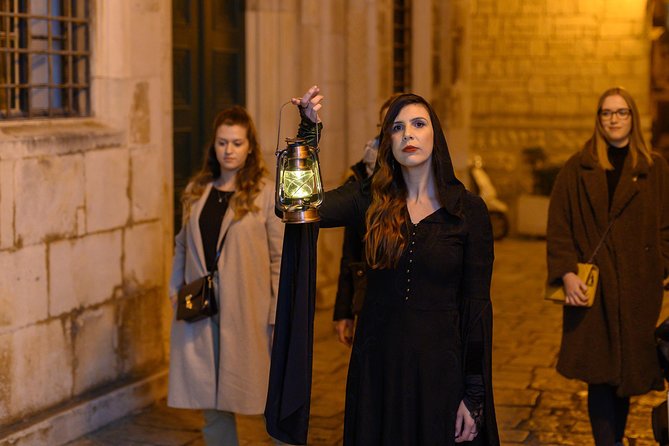
- Lantern guidance helps you stay oriented through narrow lanes and darker corners of old town
- Small-group cap (up to 8 in the pitch; up to 10 listed) keeps the pace friendly and voice levels manageable
- Acting-style storytelling turns medieval superstition, scandal, and justice into walking drama
- Historic stops tie myths to specific places: gates, a fortress, a monastery, and central squares
- Good-weather requirement matters, since the tour is built for a night walk in the old streets
Trogir by lantern: why this style of tour works
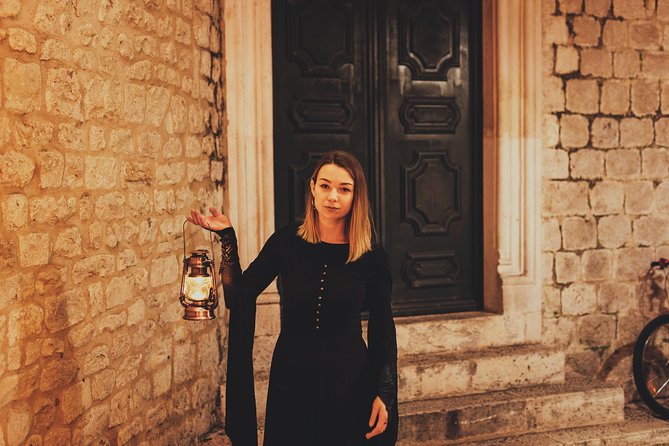
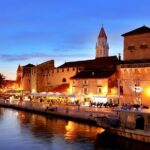
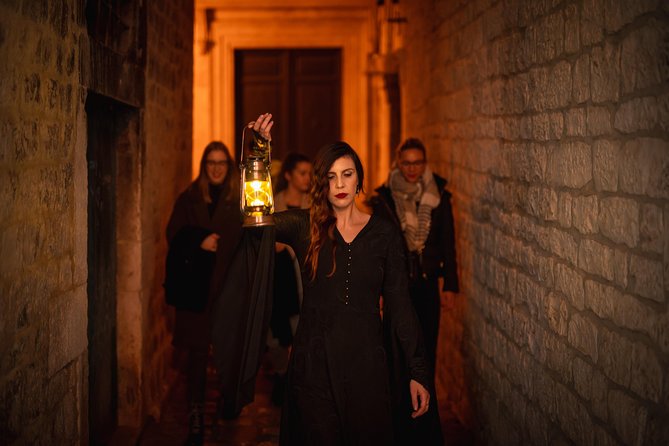
Trogir is the kind of town where the architecture already looks like a storybook. At night, that effect goes up a notch. The lanterns aren’t just for mood—they also guide you through the narrow lanes and the darker stretches where it’s easier to lose your bearings.
This tour leans into “myths and legends,” but it doesn’t stay vague. You’re shown how older layers of the city connect to later medieval fears and dramatic tales. The pace is casual walking with short stops, so you’re not stuck standing still for long. And because it’s a night walk, you naturally slow down and pay attention to details you’d miss in daylight.
I also like the tone: spooky without being grim for the sake of it. The storytelling includes murders, revenge, plague rumors, and the kind of superstition that makes you look at stone walls differently. Then it pulls you back toward the human scale of a town—families, choices, and consequences.
You can also read our reviews of more tours and experiences in Trogir.



Meeting points and the walk route through old Trogir
The tour starts at Ul. Gradska vrata 6, 21220, Trogir. You’ll end at St. Lawrence’s Cathedral, Trg Ivana Pavla II, 21220, Trogir. That’s a helpful setup: you’re not doing a back-and-forth loop, and ending near a major landmark makes it easier to continue your evening.
The tour is offered in English and uses a mobile ticket. It’s also described as near public transportation, which matters if you’re staying outside the historic center. Service animals are allowed too, so if you rely on one, you can plan without stress.
Group size is part of the experience here. With a cap at 8 (and a stated maximum of 10), the guide can manage turning a corner, keeping everyone together, and still delivering the story beats at each stop.
Stop 1: Historic City of Trogir and the lantern-lit “stone whispering”
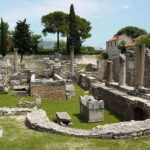
Your first real taste of the tour is the Historic City of Trogir, where you’re guided through the old streets by lantern light. This is where the tour sets its theme: Hellenistic and Roman foundations you can still feel in the layout, plus Greek colonist history dating back to the 3rd century BC.
You’ll also hear the medieval drama layered on top of those older stones—noblemen, intrigue, broken hearts, murders, and revenge. The point is not to turn this into a textbook lecture. It’s to connect the mood of the city to the kinds of stories people used to tell when darkness meant unknown danger.
What makes this stop work well is the structure. The tour begins with enough orientation that later stops make sense. If you ever felt lost in old towns during standard walking tours, this one’s designed to prevent that problem by giving you landmarks and a story frame at the same time.
A practical consideration: because this is the main storytelling stretch, arrive ready to listen. If your head is in photo mode the entire time, you might miss the connections the guide builds between architecture and legend.
North Gate at night: Black Death, witchcraft, and “follow my light”
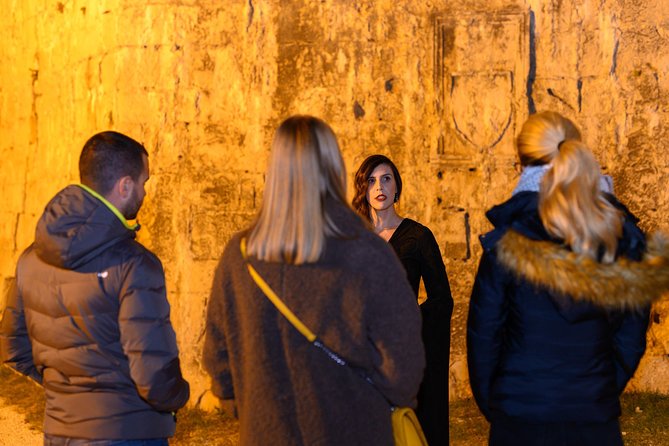
Next comes the North Gate, where the story shifts into medieval territory. Here, the tour describes the medieval town experience—references to the Black Death, accusations around witchcraft and dangerous sin, plus the superstitions that people used as explanations when life turned frightening.
This is also a navigation moment. The guide’s instructions are clear: follow the light so you won’t get lost. In a town with tight streets, that matters. It means you get the fun of moving through darker corners without the frustration of guessing which turn is correct.
The real value of this stop is how it reframes the gates. In daylight, a gate is just a piece of stone history. At night, with the right story pacing, it becomes a boundary between safety and fear—between what people thought they understood and what they could not control.
If you’re not into darker legends, this is the area where your preferences matter most. It’s not horror for horror’s sake, but it does lean into the fear-based worldview people lived with.
Kula Karmelengo fortress: love, despair, and a dramatic medieval setting
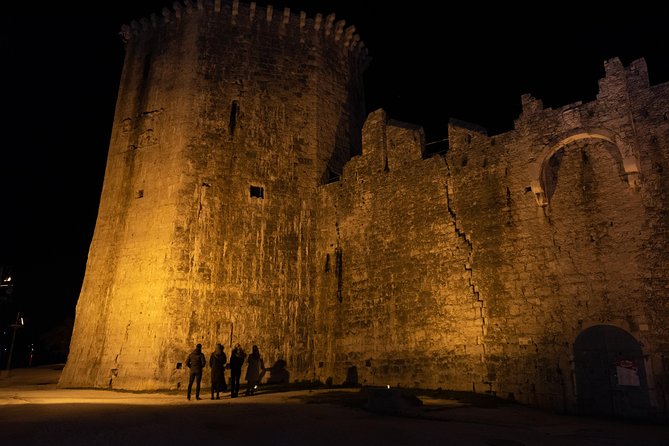
At Kula Karmelengo, you get a change in scenery and a shift in story tone. This stop is about a “great love and even greater despair” happening in a fortress setting. That’s a good match for the location: the stronger the walls and the higher the feel of the building, the more your imagination fills in the emotional stakes.
You’ll be hearing a specific legend rather than a general overview, and that’s one of the reasons this tour feels memorable. It doesn’t try to cover everything about Trogir. Instead, it picks story moments that fit the architecture.
One drawback to note: this isn’t a museum-style stop. You’re not there for long factual exhibits. You’re there to hear the story the place suggests. If you prefer deep informational explanations over narrative, you might want to pair this with daytime sightseeing where you can read plaques at your own speed.

Saint Nikola Monastery and the Kairos relief: the most surprising part
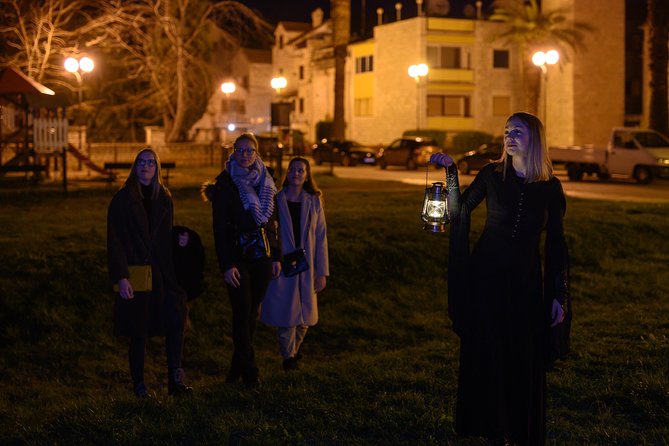
The Benedictine Monastery of Saint Nikola is next, described as the oldest monastery of that kind still active. The tour story here focuses on the Koludrice of Trogir, nuns who spend their lives behind these walls and, in the tour framing, rarely leave.
This stop also highlights an important object: a sculptural relief called Kairos, dating to the 3rd century BC, tied to the city’s very foundation. Even if you’ve never heard the name, this is the kind of detail that makes a night tour feel worthwhile. It’s not just mood. There’s an actual artifact referenced with a time period that anchors the legend.
If you like the intersection of art, religion, and myth, this is the stop that tends to linger in your memory. Night tours sometimes skip the “real-world anchor,” but here you get a specific symbol tied to the city’s story.
A consideration: because this is about a live active monastery, your expectations should stay respectful. The tour is designed for storytelling at the exterior/areas you can access, not as a full monastery visit.
Central Square and the Marin Kjudis plague story
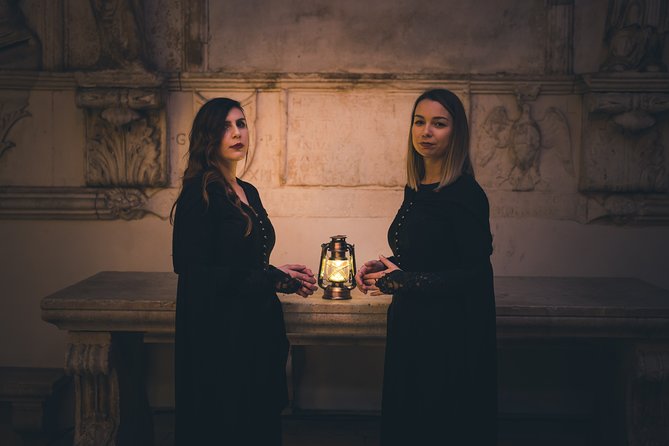
In Central Square, the tour turns to a story of Marin Kjudis, described as a hero and the unintentional cause of a plague outbreak in Trogir. That’s a great theme choice for a night walk because it captures a medieval logic people used: the idea that catastrophe can come from the very actions meant to help.
This stop balances the earlier fear-driven material. Instead of only talking about supernatural suspicion, it points toward consequences—how choices ripple through a community. It also gives you a human scale for the big events like plague, which can otherwise feel like distant history.
This is also where you might find yourself connecting the dots: earlier, you heard how people interpreted danger. Now you’re hearing how a single person’s role can become legend. That’s the tour’s core trick—turning old streets into a map of how stories formed.
Loggia doorway and the Pillar of Shame: medieval justice up close
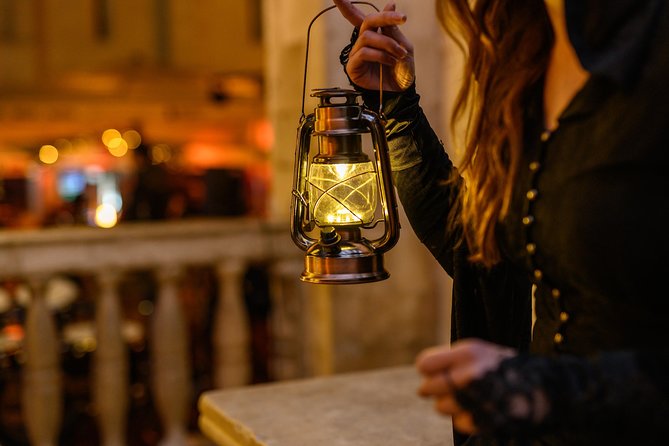
The final stop is the Loggia – Doorway area, where the tour turns toward medieval punishment. A felon, a thief, a pyromancer, killer, or traitor is described as facing public humiliation—especially through something called the Pillar of Shame, where the convict was displayed.
This isn’t just dark color. It’s a way of understanding how medieval towns ran on visibility. People learned what was acceptable and unacceptable by watching. At night, in a narrow doorway area, that concept lands harder. Stone walls become more than background; they become witnesses.
One drawback for some people: if you don’t enjoy grim storytelling, this last stop is the most severe in theme. It’s still part of the tour’s structure, but you should know what you’re walking into.
If you do enjoy darker tales, this stop is a strong closer. It brings the “myths and legends” theme full circle: the stories aren’t only about spirits and witchcraft. They also explain social order through punishment and fear.
Price, time, and value at about $28.83 for roughly one hour
At $28.83 per person for about 1 hour, this is priced like a short evening experience rather than a half-day tour. That can be a plus in Trogir, where you’ll want time after the walk for your own wandering and photos.
The small-group format matters for value. A characterful guide doing story pacing works better when you’re not squeezed into a crowd. With a cap listed as up to 8 (and a maximum of 10), you get a better chance of hearing the details that make the legends click.
Booking in advance is smart too. The tour averages being booked about 22 days ahead, which suggests popular times fill up. If you’re traveling in peak season or on a weekend night, lock it in early.
English is another practical value point. If you don’t want to battle translations or generic narration, this is designed to be easy to follow.
Who should book this Trogir myths and legends night walk
This is a great fit if you:
- like storytelling that uses specific locations, not just general “history talk”
- enjoy a guide who acts the role, with a friendly-to-spooky tone shift
- want a memorable evening plan that doesn’t eat your whole day
- travel with teens and want something more engaging than a standard city walk
It’s also a solid choice if you’re short on time. Because it’s about an hour, you can slot it in on a travel day without losing your day’s momentum.
If you prefer quiet sightseeing, this might feel too theatrical. And if you’re sensitive to plague-era references or public punishment themes, keep that in mind before you commit. The tour is meant to be chilling and atmospheric, not neutral and bland.
Should you book Nocturnal Tours Trogir and Split?
If you want a fun, story-driven way to see Trogir’s old center at night, I’d book it. The price is reasonable for what you get: guided lantern walking, a strong narrative arc, and a guide who brings places to life instead of listing facts.
I would hesitate only if you dislike spooky medieval themes, or if the idea of a weather-dependent night walk stresses you out. Otherwise, it’s a smart way to turn Trogir from a pretty town into a place with voices—Greek, Roman, medieval, and all the legends in between.
FAQ
Where does the tour start?
It starts at Ul. Gradska vrata 6, 21220, Trogir, Croatia.
Where does the tour end?
It ends at St. Lawrence’s Cathedral, Trg Ivana Pavla II, 21220, Trogir.
How long is the tour?
The duration is about 1 hour.
What language is the tour offered in?
The tour is offered in English.
How big is the group?
The tour is described as a small-group experience with a maximum of 8 travelers, and it also lists a maximum of 10 travelers.
Do I need a ticket before I go?
You’ll use a mobile ticket.
Is the tour dependent on weather?
Yes. The tour requires good weather, and if it’s canceled due to poor weather, you’ll be offered a different date or a full refund.