REVIEW · TROGIR
Trogir; Private walking tour of higlights of Trogir
Book on GetYourGuide →Operated by Kaius · Bookable on GetYourGuide
One old town street turns into a story machine. This private walking tour threads you through Trogir’s key sights with a licensed local guide, from palace façades to the big cathedral portal. I love that you start at the North City Gate, then keep moving on foot through the historic core without wasting time. The tour also mixes art, legends, and city-life details, not just stone sightseeing.
Two things I particularly like: you see architectural highlights like the Cipiko Palaces and the Cathedral of Saint Lawrence, and you also get explanations tied to noble families and what they built and collected. One thing to consider is weather: the plan is outdoors, and the guide may adjust timing if conditions hit hard, as happened when an unexpected storm forced a 3-hour shift.
In This Review
- Key things that make this Trogir walk worth your time
- Entering Trogir at the North City Gate
- Cipiko Palaces: the noble families and their architecture
- St. Lawrence Cathedral and its masterpiece portal
- City Loggia and City Hall: how civic Trogir worked
- The Kairos story: a Greek myth tied to the city mood
- The Riva promenade: sea views, palm trees, and anchored ships
- Fortress Kamerlengo: finishing with a strong, memorable viewpoint
- Price and value: what $129 per group up to 8 really buys you
- Language, pace, and the practical comfort of a licensed guide
- Who this Trogir highlights tour suits best
- Should you book this private walking tour of Trogir highlights?
- FAQ
- Where does the tour start?
- Where does the tour end?
- What is included in the price?
- How many people are in a group?
- What languages are available?
- What if the weather is bad?
Key things that make this Trogir walk worth your time
- North City Gate start: a clean orientation point before you enter the medieval core.
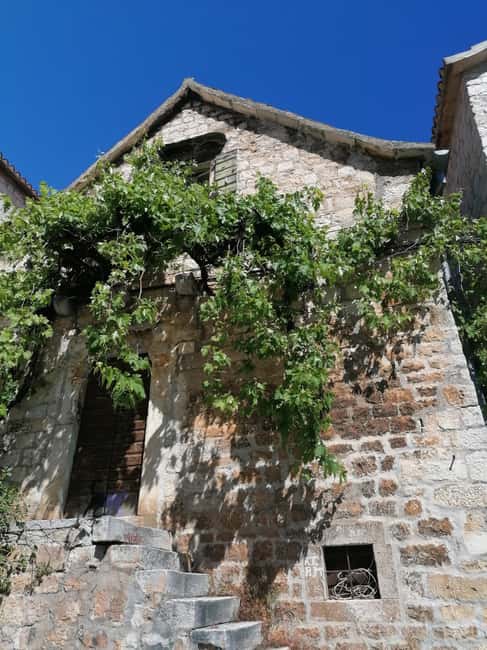
- Cipiko Palaces: standout palace architecture tied to noble influence.
- St. Lawrence Cathedral portal: the cathedral isn’t just a stop, it’s a focal point for viewing art details.
- City Loggia and City Hall: you’ll connect civic buildings to how Trogir functioned.
- Kairos story: the Greek god of the happy moment adds a surprising human thread.
- Fortress Kamerlengo: a strong finish with big views over the old town area.
Entering Trogir at the North City Gate
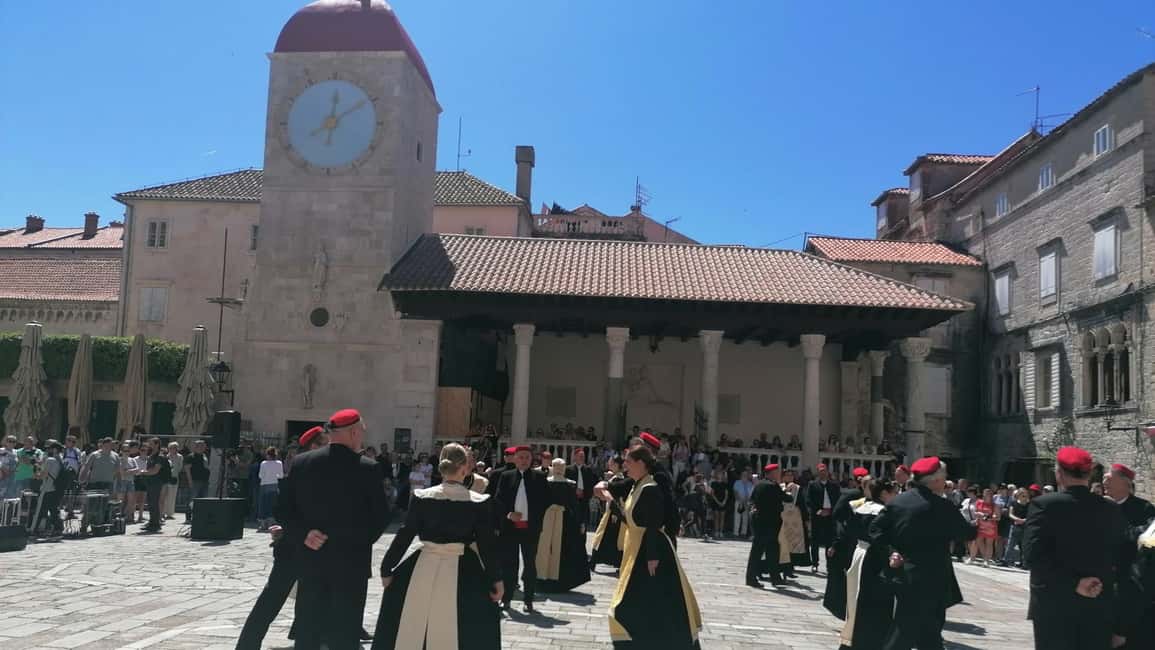
Your tour begins in front of the north city gate, the main entrance to the city. That matters more than you might think, because it gives you a starting reference point for the whole historic layout. Once you’re inside, you’re not just wandering. You’re walking the medieval streets with someone reading the city back to you.
I like that the meeting point is concrete and easy to find: the north gate, right where the old town starts showing its age. You also have a built-in “end back where we met” option, which is helpful if you’re trying to time dinner, a bus, or a ferry back to where you’re staying.
As a private tour priced per group (up to 8), you should expect a more personal pace than the big group shuffle. The tradeoff is that it’s still a walking experience, so if you’re tired quickly, plan shorter sightseeing days around it.
You can also read our reviews of more walking tours in Trogir

Cipiko Palaces: the noble families and their architecture
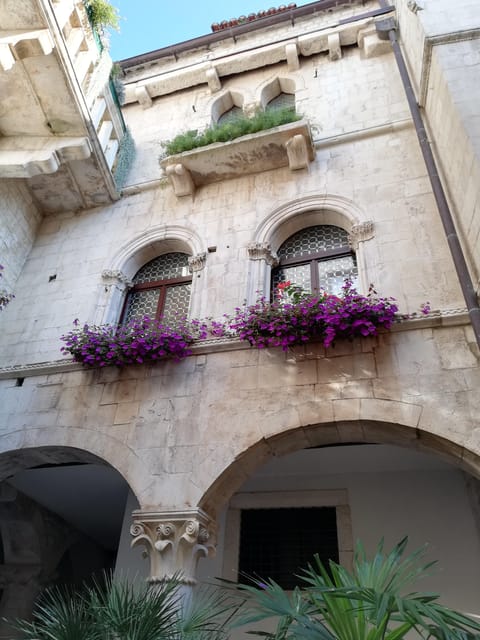
Next up are the Cipiko Palaces, which are the kind of sight you understand faster when someone explains why they exist. These palaces were part of the story of Trogir’s noble families, and the tour frames them as more than pretty façades. You get context about how power showed up in stone.
One detail I found especially useful is the connection to collections of stone fragments. The tour links this to how past generations displayed respect for what came before. That kind of explanation turns “look at this building” into “understand why this building matters.”
If you’re the type who enjoys architecture but gets lost in vague descriptions, this is a good fit. The goal here isn’t only to point; it’s to give you a way to see patterns: where wealth was placed, how families presented themselves, and how design tells you who built the rules of the city.
A small caution: palaces can be visually dense. If you’re visiting midday, bring a hat and expect you’ll want a few moments to look slowly instead of rushing.
St. Lawrence Cathedral and its masterpiece portal
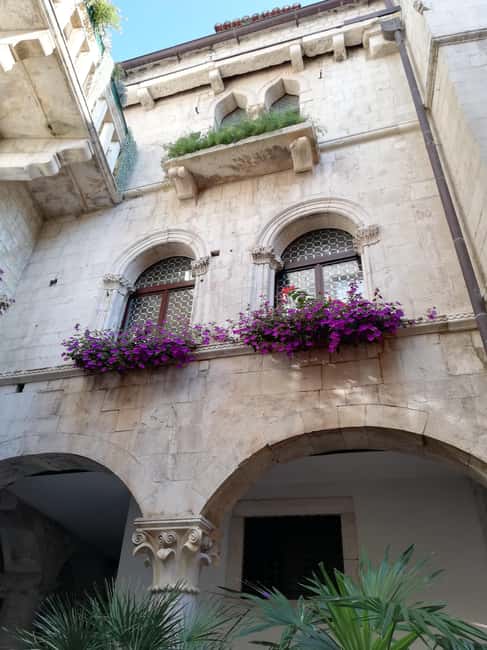
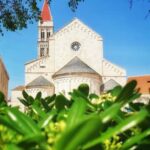
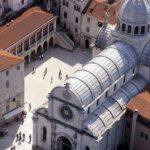
The tour then centers on the Cathedral of Saint Lawrence, including its masterpiece portal. This is one of those stops where your guide’s focus makes the difference. Instead of treating the cathedral like a quick photo break, you’re directed toward what’s special about the entry artwork.
A cathedral portal is basically a visual handshake from the past. It’s where sculpture, symbolism, and design aim to communicate meaning before you even step inside a building. Even if you only view it from the street, you can still catch the idea: whoever made this expected you to pause.
What I like about this stop in particular is that it’s specific. Many tours say cathedral, but this one highlights the portal as the moment. For you, that means you’ll leave with a sharper memory, not just the vague impression of a big church.
If you’re sensitive to crowds or prefer quieter moments, aim to give yourself a few slow minutes here. Cathedrals tend to draw people, and the best way to enjoy portals is to stand still long enough to notice details.
City Loggia and City Hall: how civic Trogir worked
After the cathedral, you’ll move into the civic side of Trogir at the City Loggia and City Hall. This is where the tour expands from personal patronage (noble palaces) into how the city organized itself.
The loggia and hall matter because they show how public decisions happened in stone settings. You’re not just learning names; you’re connecting where authority sat and where people would gather. That makes the old town feel less like an open-air museum and more like a living place with routines and roles.
I also appreciate that these stops keep the pace varied. After churches and palaces, civic buildings add a different scale of meaning. You’ll start to see Trogir as a network: aristocrats with their estates, and institutions with their public face.
One consideration for you: if you’re expecting only artistic highlights, this part may feel more interpretive than visual. But it’s valuable for understanding why the city’s street pattern and major buildings align the way they do.
The Kairos story: a Greek myth tied to the city mood
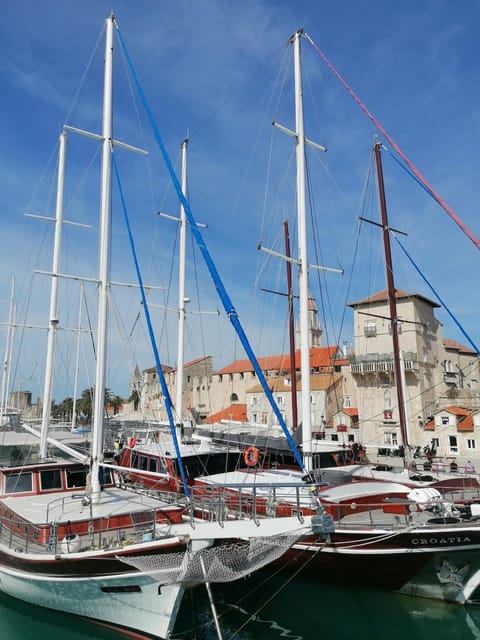
The tour includes a stop for the story of Kairos, the Greek god of the happy moment. This detail is genuinely fun because it shifts your attention from architecture to atmosphere. You’re hearing how Greek influence and local identity connect through legend.
Kairos is one of those ideas that sounds abstract until it’s placed in context. In a city like Trogir, where layers of Mediterranean cultures show up over centuries, the myth gives you a human lens: moments matter, and the city’s creators likely wanted people to remember that.
For you, this is a good brain break between heavier stone stops. You’ll likely find yourself thinking differently as you look around afterward, noticing details with more meaning and less just “ancient = interesting.”
If you’re the kind of traveler who loves stories but fears they’ll replace facts, this is balanced. The myth sits inside a walking sequence tied to specific landmarks, so you don’t lose the sense of place.
You can also read our reviews of more private tours in Trogir





The Riva promenade: sea views, palm trees, and anchored ships
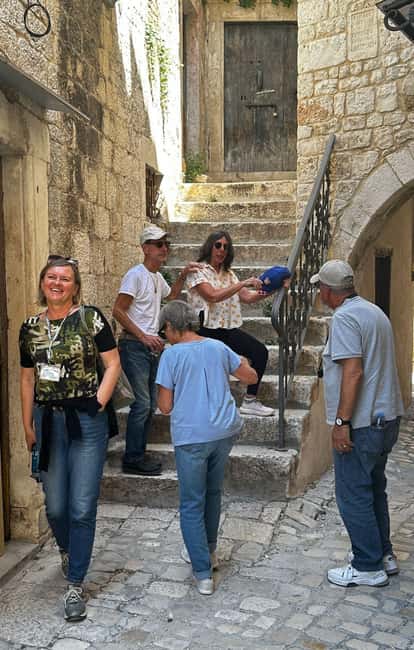
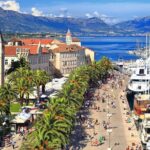
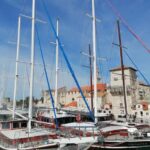
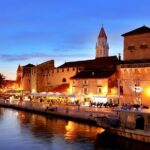
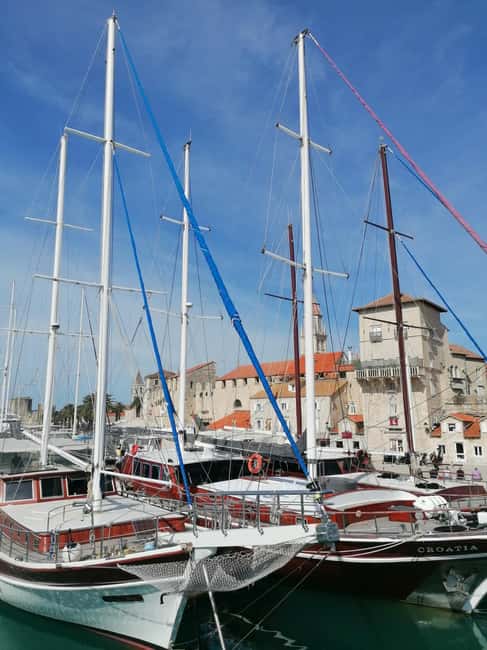
Next comes the contrast: the tour includes the typical Mediterranean view of the sea, palm trees, and anchored ships from the Riva promenade. This is more than scenery; it’s a reset for your body and your eyes. After time in old stone, you get a wider horizon.
I like this section because it reminds you that Trogir wasn’t built only for land. The coastline, ships, and daily waterfront life are part of how the city functioned. Even if you only spend a short stretch at the promenade, the change in light and perspective helps you connect what you saw earlier to where the city faced outward.
For practical planning, this is also a good spot to hydrate and slow down. If you’ve been walking continuously, take a moment here before you head to the final fortress viewpoint.
Just note: seafront views can mean more wind. Bring something light you can layer on if the weather flips.
Fortress Kamerlengo: finishing with a strong, memorable viewpoint
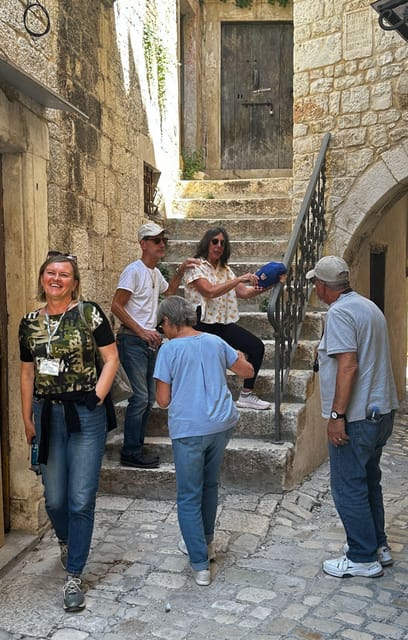
You’ll conclude at the impressive Fortress Kamerlengo. Ending at a fortress works because it turns your final minutes into an overview. From a higher or more strategic viewpoint (exact vantage depends on where you stop), you can start sorting everything in your mind: gate, palaces, cathedral, and the civic core.
Fortress stops are also a good way to feel the “why” behind the city’s layout. Walls and strongpoints were built to control access and protect what mattered. In Trogir, that means you’ll understand the old center as a place worth defending, not just visiting.
I find endings like this useful. You don’t want to finish a tour feeling like you saw a list. You want a final image you can anchor in your memory, and Fortress Kamerlengo gives you that.
One flexibility point: the tour can end back at the starting point or at another point that suits customers best. If you have dinner reservations or a ferry schedule, this is where you can ask for an end location that makes sense for your timing.
Price and value: what $129 per group up to 8 really buys you
The price is $129 per group up to 8, and it includes a licensed tour guide. For a private walking tour, value comes down to two things: how much time you’ll spend getting real explanations, and how efficiently the itinerary covers key sights without forcing you to self-navigate.
Because the focus is Trogir’s historic core highlights, you’re not paying for transport or hopping between far-flung spots. You’re paying for guided interpretation of specific landmarks: Cipiko Palaces, St. Lawrence Cathedral and its portal, City Loggia, City Hall, the Kairos story, the Riva promenade view, and Fortress Kamerlengo.
If you’re traveling with friends or family and can fill a small group, the per-person cost typically makes more sense than a solo private experience. Even at the low end of group size, having a guide can still be a strong value in old towns, where the difference between wandering and understanding is huge.
In terms of format, the tour runs in English and German, which is ideal if you want a guide who can tailor the pace and explanations to your questions.
Language, pace, and the practical comfort of a licensed guide
The tour is guided by a licensed local guide and is offered in German and English. That licensing detail matters because it usually signals someone trained for history interpretation and local context rather than generic directions.
Pacing-wise, you’ll be moving along medieval streets, so expect comfort to depend on your own walking tolerance. The upside is that the itinerary is structured: you always know what the next stop is and why you’re stopping there. That structure helps you stay engaged instead of drifting.
One small but meaningful confidence boost: the guide handled an unexpected storm by adjusting the schedule, shifting the tour by about 3 hours without derailing the experience. Bad weather happens in the Adriatic. What you want is a guide who can adapt instead of canceling the whole day.
Who this Trogir highlights tour suits best
This tour is a great match if you want:
- a focused old-town walk that includes both art and civic life
- meaningful stops like the cathedral portal and the Cipiko Palaces
- a guide who can explain why people built what they built
It’s also smart for travelers who like structure. You get clear landmark order, from the north gate entrance to the fortress finish. And if you’re not trying to juggle multiple tickets or confusing directions, a licensed guide carrying the storyline helps you feel confident quickly.
If you prefer extremely fast sightseeing with minimal explanations, you might find it slower than your ideal. But if you enjoy learning while walking, you’ll probably feel like the city makes more sense by the end.
Should you book this private walking tour of Trogir highlights?
I’d book it if your goal is to understand Trogir’s top sights in one walk, with a guide who connects architecture, civic buildings, and stories like Kairos into a single route. The best reason is the specificity: you’re not only seeing the Cathedral of Saint Lawrence, you’re going for the masterpiece portal. You’re not just hearing Trogir is old, you’re getting the noble-family context behind the palaces and how the city organized itself at City Loggia and City Hall.
I’d skip or think twice if you’re very weather-sensitive or you want long open-ended wandering without structured stops. This is still a walking tour, and the route is built around outdoor viewing points.
If you’re staying in the area and want a high-value way to experience the historic core efficiently, this one is an easy yes.
FAQ
Where does the tour start?
It starts in front of the north city gate, which is the main entrance to Trogir.
Where does the tour end?
It ends back at the meeting point, though the tour can also end at another point that suits customers best.
What is included in the price?
The tour includes a licensed tour guide.
How many people are in a group?
The price is per group up to 8 people.
What languages are available?
The tour is available in German and English.
What if the weather is bad?
The tour is outdoors, and the guide can adjust the schedule if needed. One example provided shows the tour being shifted by about 3 hours when an unexpected storm hit.