REVIEW · TROGIR
Discover Trogir: Guided Walking Tour of a Medieval Gem
Book on GetYourGuide →Operated by Discovery tours · Bookable on GetYourGuide
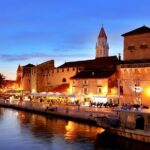
Trogir feels medieval the second you arrive. This guided stroll turns the Old Town into a map you can actually read, with St. Lawrence Cathedral as your architectural anchor and clear local storytelling that keeps the history understandable. I also like that the pace leaves breathing room, so you’re not just marching through pretty streets.
The one real thing to watch is the 90-minute walk itself. Expect cobblestones, a fair amount of turning corners, and time that can feel tight if you stop constantly for photos or like to linger.
In This Review
- Key things that make this Trogir walking tour work
- A 90-minute UNESCO-style walk through Trogir’s medieval core
- St. Lawrence Cathedral: what to look for and why it matters
- The Old Town streets: how a medieval layout becomes an easy story
- Town Gate: a quick stop that changes how you picture the city
- Kamerlengo fortress and Adriatic views: the payoff moment
- Waterfront promenade: easy walking, sea air, and a calmer pace
- What the guide experience feels like (and why it affects your day)
- Price and value: why $17 is a fair trade for 90 minutes
- Who this tour suits best (and who might want something else)
- Booking basics to keep in mind
- Should you book Discover Trogir? My take
- FAQ
- How long is the Trogir walking tour?
- What is the price per person?
- Is the tour guided?
- What language is the tour offered in?
- What stops are included?
- Is the tour wheelchair accessible?
- Can I get a refund if my plans change?
- Is there a reserve & pay later option?
Key things that make this Trogir walking tour work
- UNESCO St. Lawrence Cathedral: you’ll focus on what to notice, not just that it’s impressive
- Old Town lanes: narrow streets, ancient walls, and palaces that connect into a story
- Town Gate passing moment: a simple stop that helps you picture how the city used to work
- Waterfront promenade time: a calmer break with sea views and easier walking
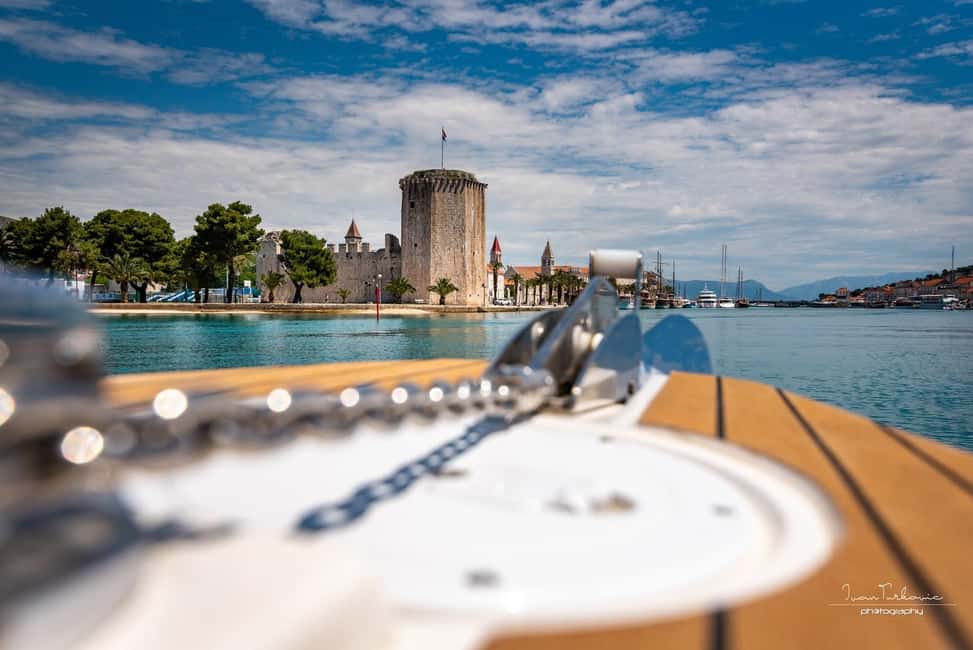
- Kamerlengo fortress viewpoints: panoramic Adriatic sightlines that make the route feel complete
- Guide-led explanations with a human touch: clear answers, plus caring attention to the group
A 90-minute UNESCO-style walk through Trogir’s medieval core
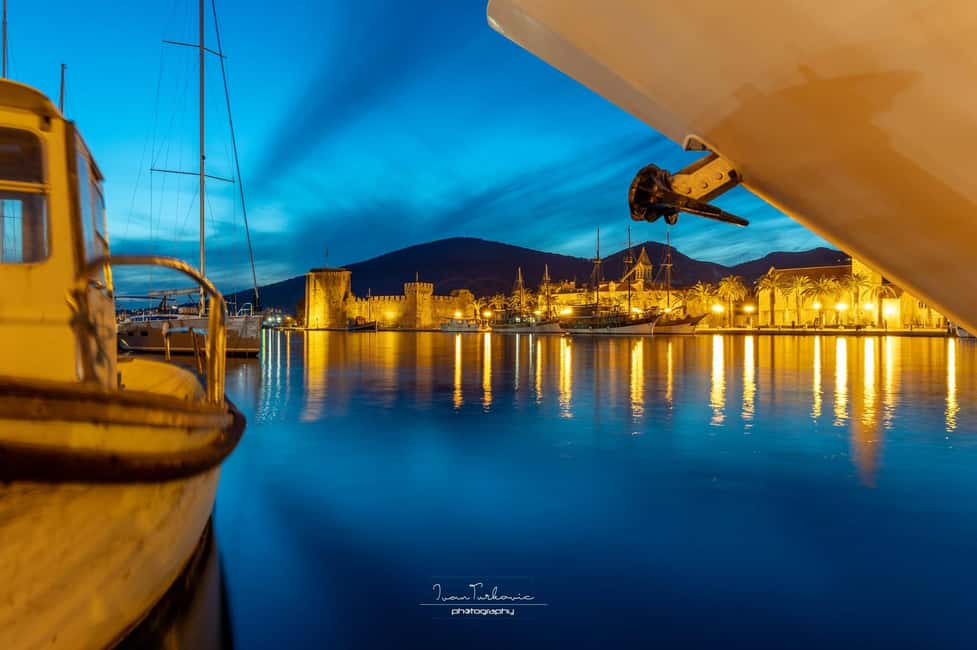
Trogir is one of those places where the buildings do the talking. What I like about this tour is that it doesn’t treat the city like a list of sights. Instead, you move through the Old Town in a way that helps you see connections: Roman beginnings, medieval growth, and the later layers of architecture all start to make sense when you’re walking between them.
At just 90 minutes, the format is simple: you get the highlights—cathedral, old streets, town defenses, and the waterfront—without needing a whole day of planning. And because it’s a live English guide, you’re not stuck trying to interpret everything on your own.
If you like city walks where you learn what you’re looking at (rather than just where to stand), this is a solid fit.
You can also read our reviews of more walking tours in Trogir


St. Lawrence Cathedral: what to look for and why it matters
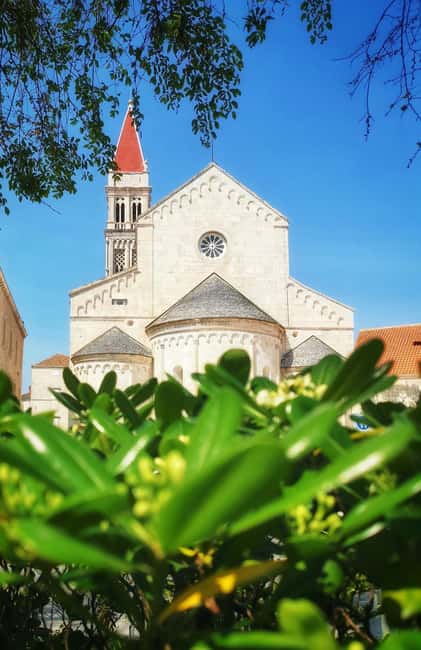
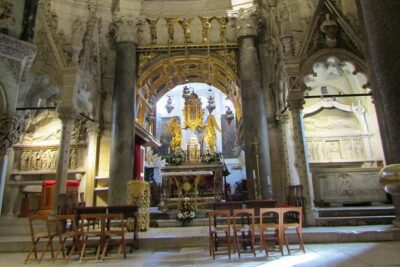
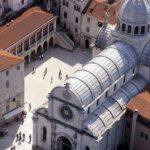
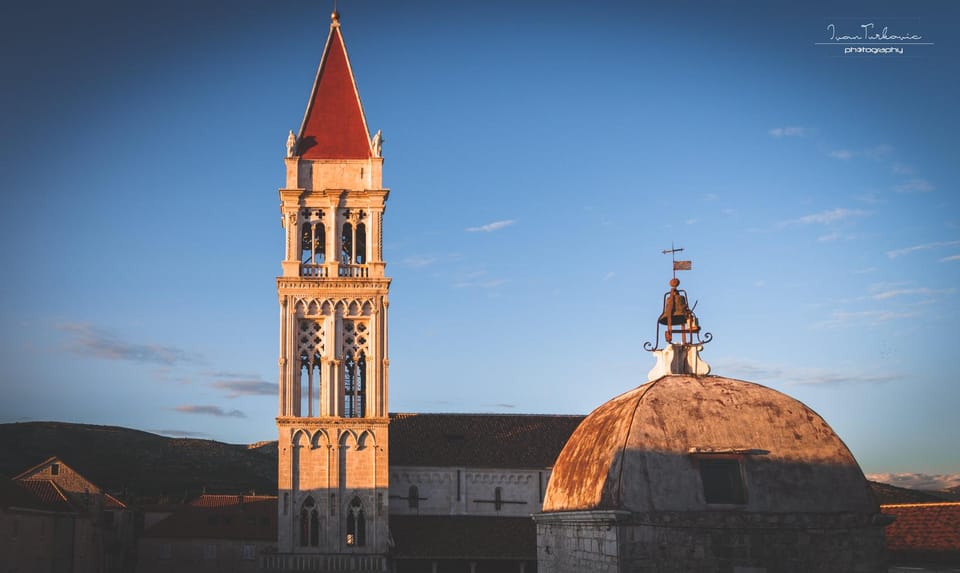
Your biggest architectural moment is St. Lawrence Cathedral, a UNESCO-listed site. The tour frames it as a masterpiece shaped by both Gothic and Renaissance influences, so you’re not just staring at stone—you’re understanding the “why” behind what you see.
When you reach the cathedral, you’ll want to slow down and actually scan details. The point of a guided walk here is that the guide helps you notice the kinds of features that make the building feel layered and purposeful. Think of it like having a translator for architecture: you’ll recognize that different parts don’t just look different; they reflect different chapters of Trogir’s past.
Practical takeaway for you: if you enjoy photo stops, this is the place to do it. It’s also where your learning sticks best, because the cathedral is large enough that you can return to the main view multiple times during the explanation.
The Old Town streets: how a medieval layout becomes an easy story
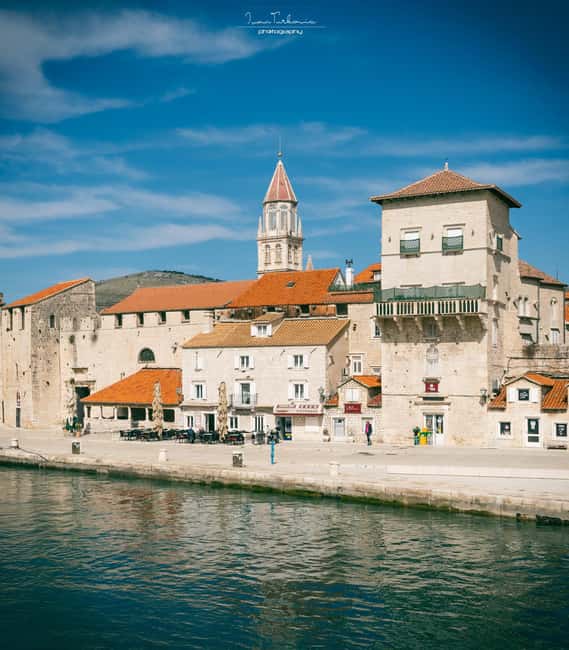
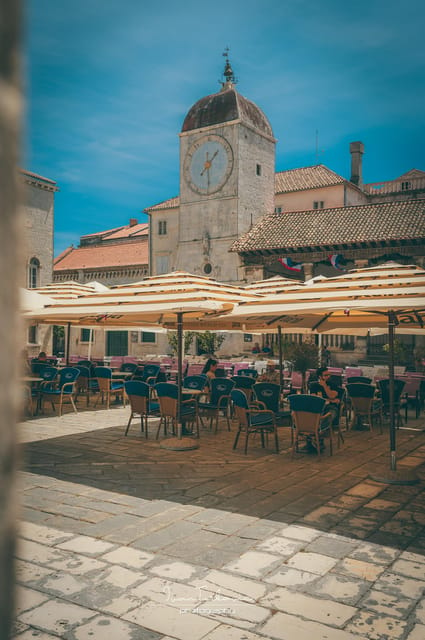
After the cathedral, the route keeps working because it takes you into the Old Town—that maze of narrow streets where everything feels close together. This is where you’ll see ancient walls and majestic palaces referenced as part of a bigger pattern, not random decoration.
Here’s why this segment is valuable: Trogir’s medieval streets can be confusing if you arrive cold. A guide helps you build a mental map quickly—what used to be defensive space, where power seemed to gather, and how the city’s layout nudged life inward. Even if you’ve never visited before, you start walking like you understand the place.
And based on the guide styles described for these tours, you’ll likely get more than facts. For example, guides such as Anna are praised for good historical explanations with a personal touch, and Daniela is highlighted for adding small stories about daily life in the past and how that connects to today. That kind of commentary is what turns old stone into something human.
If you’re the type who gets lost easily, this is a good way to avoid that. You’ll get the city’s logic in a short time.
Town Gate: a quick stop that changes how you picture the city
You’ll pass through the Town Gate, and it’s worth treating it as more than a photo op. City gates are where function shows up in a dramatic way: they’re designed for control, movement, and protection. When the route brings you there, it helps you visualize how people entered and how the city managed risk.
Even on a short walking tour, this stop works because it gives you a point of reference. After you’ve seen cathedral details and traced lanes, the town gate makes the whole area feel structured. It’s one of those moments where you suddenly understand why the Old Town looks the way it does.
Practical tip: plan for a short pause. Don’t rush your way through. Give yourself a few seconds to look back toward the street you came from and forward toward the next bend—gates make the route feel intentional.
Kamerlengo fortress and Adriatic views: the payoff moment
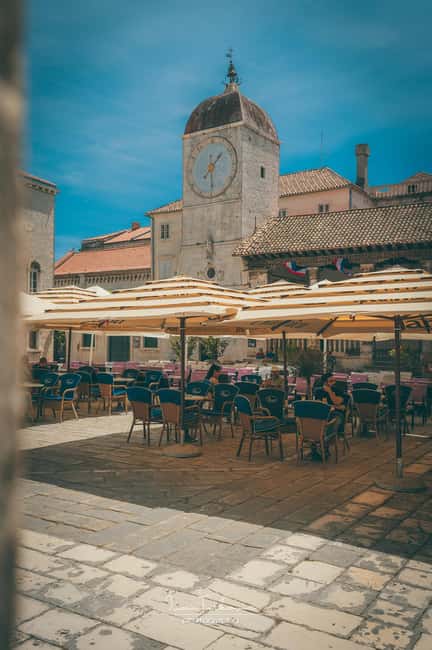
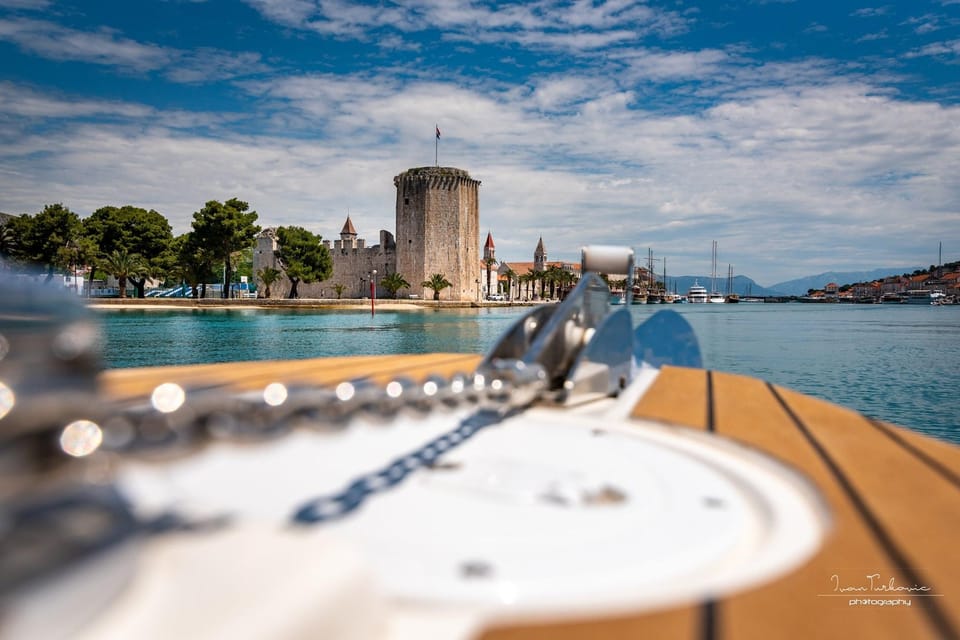
One of the tour’s standout additions is the fortress of Kamerlengo, known for panoramic views of the Adriatic Sea. This part matters because it changes your perspective. Up to this point, you’ve been in close quarters—streets, walls, buildings. Then suddenly you’re looking outward.
That shift does two things for you:
- It helps you orient yourself in space (the sea is your compass).
- It makes the city’s coastal character feel real, not theoretical.
If you like viewpoints, this is where you’ll feel the tour “earned” its time. Also, when a guide brings you here, the commentary often helps connect what you’re seeing from above back to what the city was built for—defense, status, and control.
You can also read our reviews of more guided tours in Trogir




Waterfront promenade: easy walking, sea air, and a calmer pace
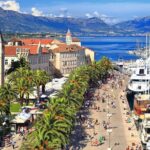
After the fortress viewpoint, the route includes a waterfront promenade. This is a smart move on a 90-minute schedule because the promenade gives you a gentler rhythm. It’s where you can take in the scenery without constantly turning your head to read architectural details.
I especially like this segment for two reasons. First, you get a change of scenery that refreshes your eyes. Second, waterfront time helps you connect the dots between Trogir’s stone-heavy medieval center and the living coastline that kept the town connected to trade and travel.
If your group is moving quickly, the promenade can be your best moment to slow down. It’s also a good place to re-check your photos and videos, since you’ll likely want a few sea-and-town shots.
What the guide experience feels like (and why it affects your day)
The tour’s quality isn’t just about sights; it’s about how the guide manages attention. The best guide traits mentioned for this experience are practical and human: explaining clearly, pacing so people can understand, and caring about the group’s comfort—like checking that everyone is doing alright and has what they need.
You’ll also see praise for guides who connect history to everyday life. When your guide adds little stories about how people lived back then—and what feels similar now—you remember more than dates and names. You start noticing how architecture reflects routines: gathering, defending, working, and moving.
That’s the biggest value you’re paying for at $17 per person. You’re not just buying access to landmarks. You’re buying interpretation for a tight time window, in English, with a live local guide who can answer your follow-up questions on the spot.
Price and value: why $17 is a fair trade for 90 minutes
At $17 per person for a 90-minute guided walk, this sits in the practical-budget lane for Croatia. The value comes from three things:
- You get a live guide (not an audio script).
- The time is organized around major, high-impact stops: cathedral, old streets, gate, fortress views, and waterfront.
- You receive context that helps you look at what you’re seeing instead of just walking past it.
If you’re the kind of traveler who enjoys learning but doesn’t want a half-day lecture, this price makes sense. You’ll leave with a clearer mental picture of Trogir—and you won’t feel like you spent your day only taking notes from a guidebook.
If you’re expecting a long, sit-down experience or deep museum-style coverage, you might find the 90 minutes a bit short. But for a first taste of the city, it’s a sensible way to spend your time.
Who this tour suits best (and who might want something else)
This walk is ideal if you:
- Want a guided orientation for Trogir’s medieval center
- Enjoy architecture and want help noticing details at St. Lawrence Cathedral
- Like sea views but still prefer a city-core route
- Travel with a group and appreciate an organized pace
It may be less ideal if you:
- Need long, unhurried time at every stop (a 90-minute structure limits that)
- Prefer independent exploring only, with no guide narration
- Have very specific interests that require deeper specialization beyond highlights
Booking basics to keep in mind
The tour is live-guided in English and includes a local guide. It’s also described as wheelchair accessible, which matters for planning your day on uneven old-town terrain.
You’ll be able to check starting times based on availability. If your schedule is flexible, you can choose reserve & pay later, which helps you avoid feeling locked into plans too early.
Should you book Discover Trogir? My take
If you want an efficient, high-impact way to understand Trogir, I’d book it. The combination of UNESCO architecture, a guided walk through the Old Town, the Town Gate, and the sea-facing finish at Kamerlengo plus the waterfront promenade gives you a complete “medieval-to-coast” route without dragging on.
Book this tour if your priority is learning what you’re seeing—especially at St. Lawrence Cathedral—with a guide who explains clearly and keeps the group comfortable. Skip it (or pair it with extra time on your own) if you know you want more hours in the streets or more time for deep, stop-by-stop exploration.
If you’re doing Trogir as part of a larger Dalmatia trip, this is one of the easiest ways to make the day feel organized instead of random.
FAQ
How long is the Trogir walking tour?
It lasts 90 minutes.
What is the price per person?
The price is $17 per person.
Is the tour guided?
Yes. It includes a local guide and is a live guided experience.
What language is the tour offered in?
The tour is conducted in English.
What stops are included?
You’ll see St. Lawrence Cathedral, the Old Town, the Town Gate, and the waterfront promenade. The tour also includes time at the fortress of Kamerlengo for panoramic views.
Is the tour wheelchair accessible?
Yes, it is listed as wheelchair accessible.
Can I get a refund if my plans change?
Yes. You can cancel up to 24 hours in advance for a full refund.
Is there a reserve & pay later option?
Yes. You can reserve now and pay later.