REVIEW · TROGIR
Split and Salona Cultural Heritage Day Tour from Trogir
Book on GetYourGuide →Operated by www.south-tours.com · Bookable on GetYourGuide
Roman ruins are a short ride from Split. This tour strings together the classic sights of Split with a visit to Salona, where you’ll see some of Croatia’s best Roman-era remains without having to plan anything yourself.
I especially like the guided walk through Split’s Diocletian Palace and the key monuments that sit right in the city center. I also like that the day doesn’t stop at Split—Salona adds the big-picture feeling of going from lived-in Roman architecture to major archaeological ruins.
One consideration: the schedule can feel tight, and the free time after the main walk may not be as long as you hope for shopping or a relaxed lunch.
In This Review
- Key highlights at a glance
- Split and Salona from Trogir: what this tour really gives you
- The core plan: a guided Split walk, then Salona ruins
- Diocletian Palace: the 4th-century focus that makes Split click
- The landmarks that turn into a story: St. Duje, Peristil, Riva
- Golden Gate to the city clock: small stops that add up
- Free time in Split: use it for lunch, not scrolling
- Salona: why this Roman site feels so different
- Museum moments: marble sarcophagi and the Roman scale lesson
- Tickets, guide, and skip-the-line: how the included stuff helps
- Price and value: is $170 fair for this 4-hour plan?
- Who this tour suits best (and who should rethink it)
- Should you book the Split and Salona tour?
- FAQ
- How long is the Split and Salona Cultural Heritage Day Tour?
- What’s included for Salona?
- Is lunch included?
- Is hotel pickup available from Trogir?
- What language is the tour guide?
- Is transportation provided?
Key highlights at a glance
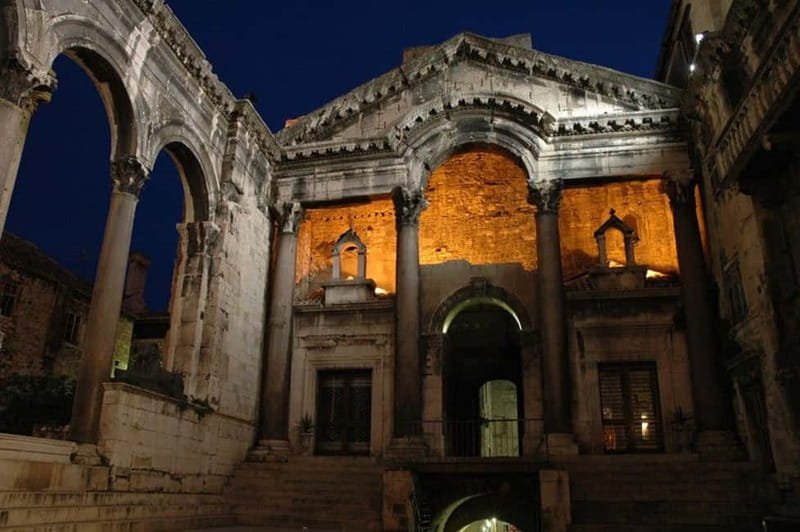
- Diocletian Palace walk with big-name stops like Peristil and the Golden Gate
- Iconic Split landmarks such as St. Duje Cathedral, the Gregory of Nin statue, and Riva
- Salona admission included, plus time to see the Roman basilica and major ruins
- Museum time tied to the Roman era, including marble sarcophagi
- English live guide focused on the sites, with a pace that favors seeing a lot
Split and Salona from Trogir: what this tour really gives you
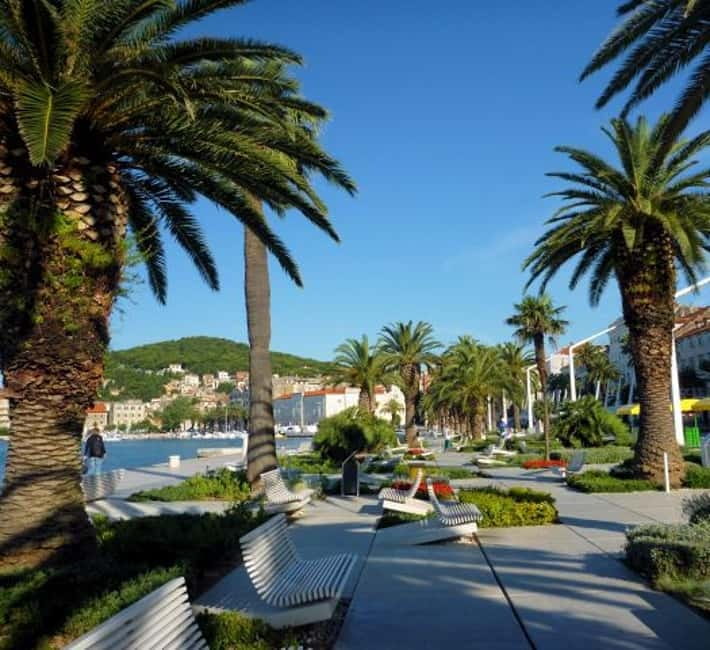
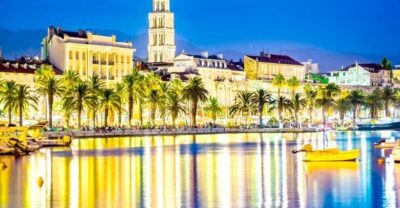
If you’re basing yourself in Trogir, this is a practical way to spend time in Split without turning your day into a transportation puzzle. You get an organized walking tour first, then a ride out to Salona for the Roman “wow” factor.
What makes this one work is the mix of city-walking context and archaeology. Split’s center is basically a lesson you can walk through. Salona then acts like the period proof: the Romans weren’t just good at building—they left behind serious scale.
The tour is listed at 4 hours, and that’s an important clue. This isn’t a slow museum crawl. It’s built to hit the highlights with just enough room to breathe.
You can also read our reviews of more historical tours in Trogir

The core plan: a guided Split walk, then Salona ruins
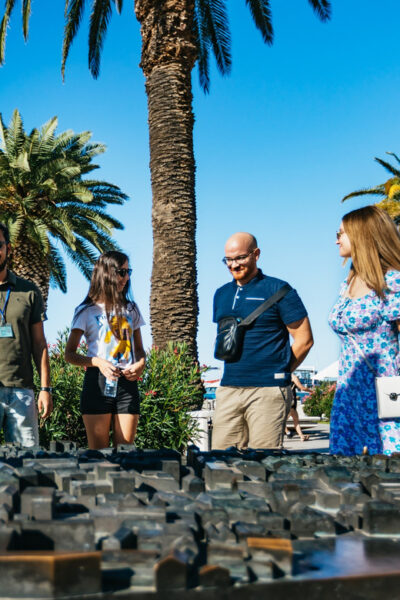
You start in Split with a local guide and a walking route that covers virtually the whole center. The guide takes you through the Diocletian Palace area and beyond, naming and situating major sights as you go.
After the main walk, you’ll have some free time to relax, have lunch, and do some shopping in the old town. Then it’s off to Salona, described as one of the biggest antiquity sites in Croatia—often compared to Pompeii because of how much remains.
Because the tour is a set route, you’ll want to decide what you want most: broader sightseeing in a short window, or extra time lingering in one place. This tour is clearly built for the first option.
Diocletian Palace: the 4th-century focus that makes Split click
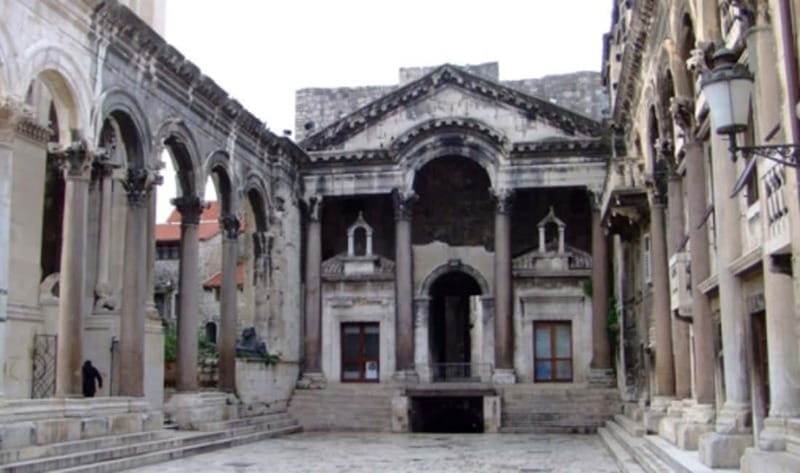
The 4th-century Diocletian Palace is the main event, and it’s the reason Split feels different from many coastal towns. Instead of a “pretty old town” that you wander randomly, you get a built environment with a logic: streets, entrances, and public spaces that still shape how the city works.
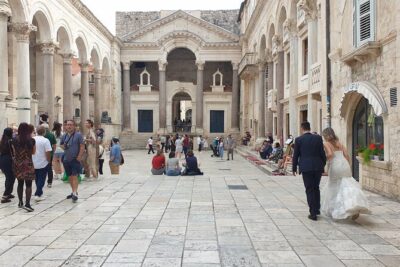
The palace stops you’ll see along the way include Vestibul, Peristil, and the Golden Gate—key points that help you understand what you’re looking at. Even if Roman history isn’t your main hobby, these are the names that unlock the layout fast.
Here’s the practical value: walking through the palace with a guide means you’re not just photographing stones. You’re learning what made these spaces important—so later, when you come back on your own, you can navigate and spot features with more confidence.
The landmarks that turn into a story: St. Duje, Peristil, Riva
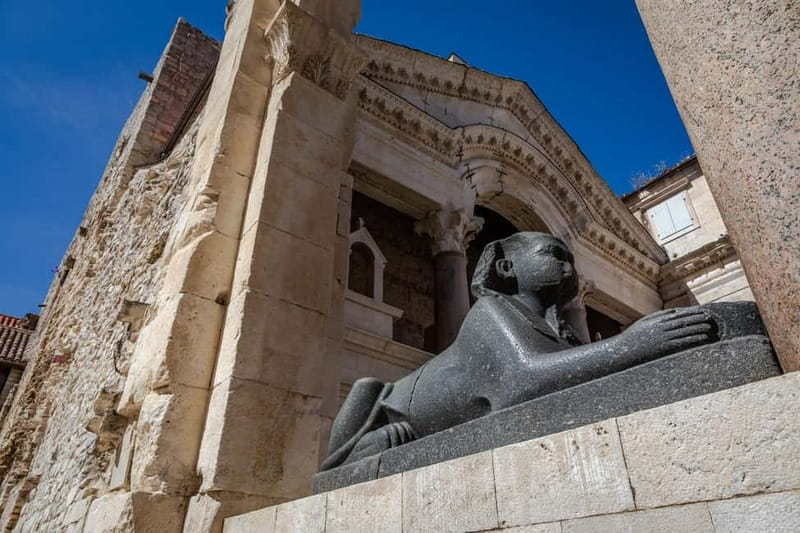
A good walking tour gives you a mental map, and this route is heavy on landmarks that people remember after the fact.
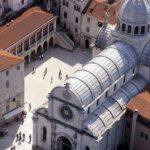
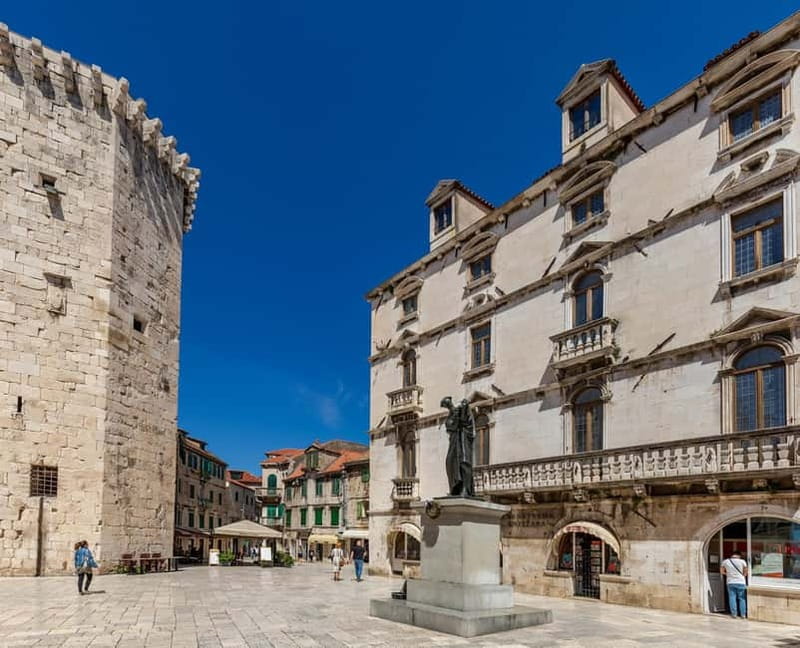
You’ll pass St. Duje Cathedral, which anchors the spiritual and historical layers of the city center. You’ll also see Peristil, the palace’s central public area—one of those places where the Roman design language is still obvious even with later changes.
Then there’s the human-scale side of Split: Riva, where the atmosphere is part of the experience. You also visit the city clock and statues that turn history into something you can point at—like the Gregory of Nin statue and the Marko Marulić statue.
This is a smart pairing for a short tour. Roman architecture is powerful, but Riva and the statues help you remember the city as a real place, not just a timeline.
Golden Gate to the city clock: small stops that add up
Some tours pack in big sites and skip the “in-between.” This one doesn’t fully do that. It includes the gate and vestibule areas, plus smaller but memorable reference points like the city clock.
Why that matters: if you only see the headline buildings, you’ll still be oriented by “main square logic.” But with stops like Golden Gate and the palace entrances, you start to recognize how movement through the city was designed in the first place.
It also makes your free time after the tour easier. When you go back out on your own, you’re not staring at a map wondering where everything fits. You’ve already walked the framework.


Free time in Split: use it for lunch, not scrolling
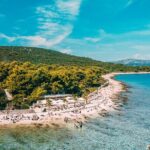
After the guided portion, you get free time to relax, have lunch, and shop in the old town. That’s the right idea in theory, because food and browsing are where you experience the present-day city.
But there’s a key caution: this is still a short tour, and at least some people found the available time didn’t feel long enough for both a proper lunch and real shopping. So I’d treat that free time as a “plan your priorities” window.
Practical approach:
- If you want lunch, pick a place close to where the tour ends so you’re not spending your free time walking.
- If you want shops, keep your browsing focused. Split is fun for little crafts and local goods, but don’t expect hours.
If you want the most out of this part, come hungry and know what kind of meal you’re after—quick Croatian classics, something seafood-based, or a lighter bite. Then you can eat well without cutting the lunch short.
Salona: why this Roman site feels so different
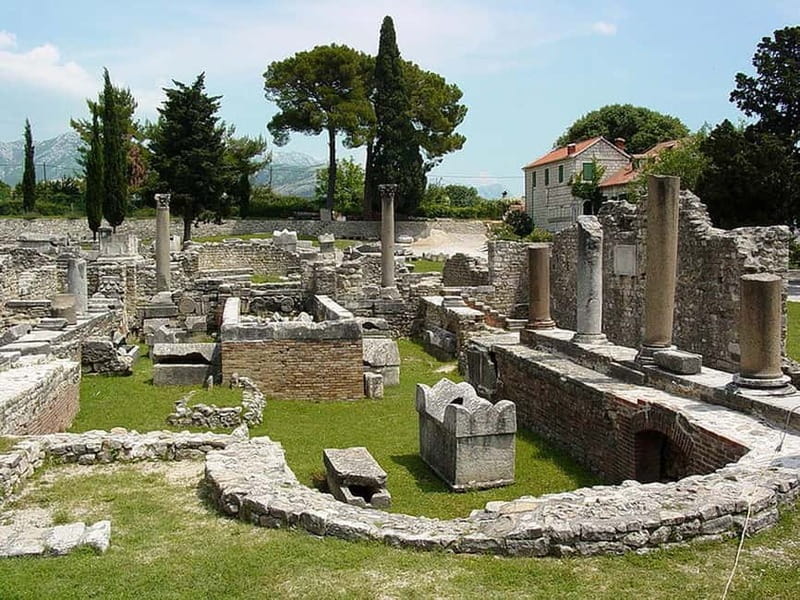
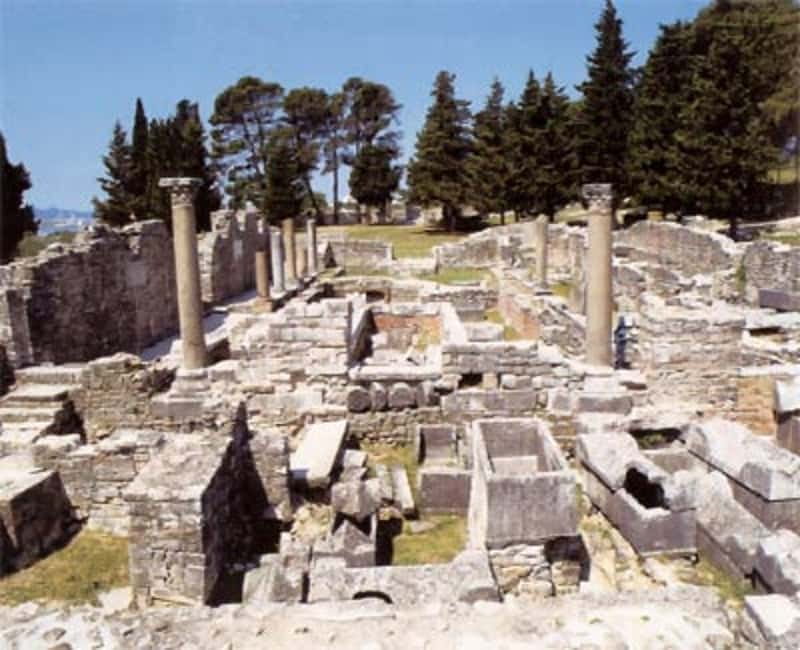
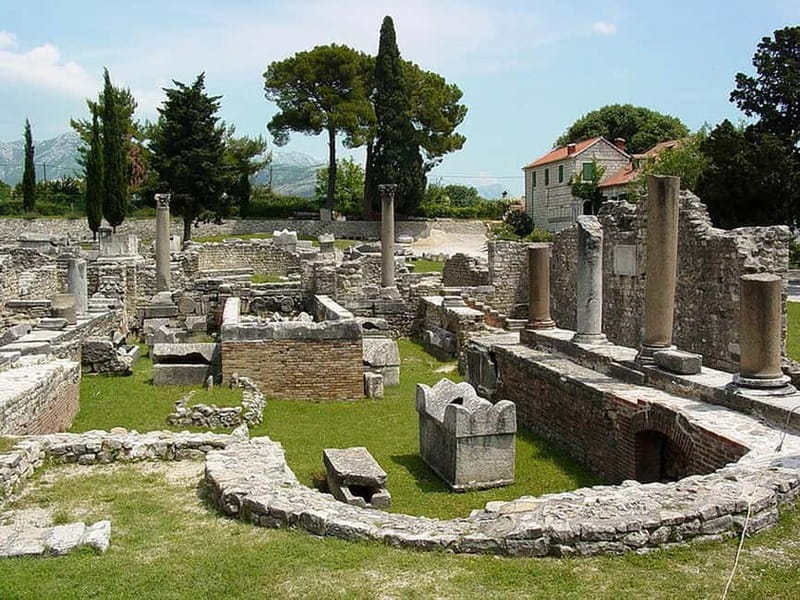
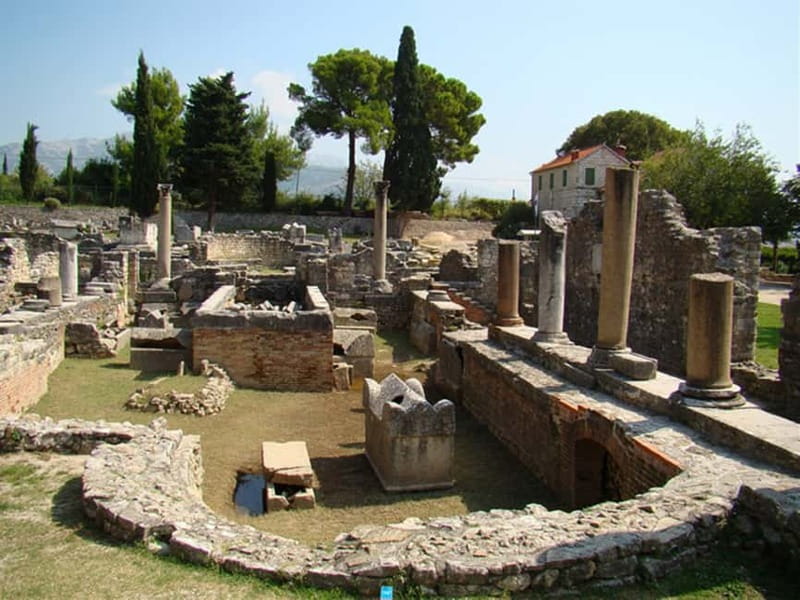
Salona is where the tour changes gear from living city to archaeological scale. The name alone signals “ancient place,” but the details matter: Salona is described as the largest antiquity-era monuments site in Croatia and often compared to Pompeii for the scope of what remains.
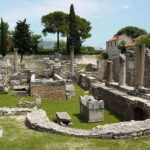
The key ruins you’ll see include the Roman basilica, plus the Roman amphitheater and the coliseum. Those buildings change how you perceive Roman life. A palace tells you about power and administration. An amphitheater and coliseum tell you about public gatherings, entertainment, and the social rhythm of a big city.
You also get a look at the marble sarcophagi connected with the Roman era, tied into the archaeological presentation through the Archaeological Museum (in Split).
This is valuable for two reasons. First, you get “context” for what you’re seeing at Salona. Second, you understand Roman wealth and burial culture in a way that just looking at ruins can’t fully explain.
Museum moments: marble sarcophagi and the Roman scale lesson
The tour includes time to see Roman-era artifacts and presentation, including marble sarcophagi in the Archaeological Museum of Split. You’re not just standing in the field wondering what happened to everything.
Even if you’re not into museum culture, this stop is useful because it gives you the human side of Roman grandeur. Sarcophagi bring the story back from stone slabs to actual bodies, families, and status—so Salona’s scale lands harder.
A small but smart tip: when you’re in museum space, take a slower minute. Outside, speed is normal because you’re walking. Inside, let the details catch up.
Tickets, guide, and skip-the-line: how the included stuff helps
This tour includes admission tickets for Salona and notes skip-the-ticket-line. That matters because delays are the one thing that can ruin a short schedule. Getting past entry friction keeps your time focused on the sights you actually paid to see.
You also get an air-conditioned vehicle with a driver for the transfer, which is a practical comfort in warm months. If you’re coming from Trogir, that ride saves you from arranging transport while you’re trying to meet a walking-group schedule.
And the guide is English live. Two of the strongest signals from the experience feedback were about how the guide communicates—one guide showed real patience when English wasn’t clear, and that sort of attention to understanding is exactly what you want on a history-heavy walk.
Price and value: is $170 fair for this 4-hour plan?
At $170 per person, you’re paying for three things: a live guide, transportation (including air-conditioned comfort), and admission coverage for Salona. In a short day like this, the “value” depends on what you want most: convenience and interpretation, not self-paced roaming.
Here’s how I’d evaluate the value:
- If you want a guided overview that helps you connect names (Diocletian Palace, Golden Gate, Peristil) to what you’re seeing, the guide fee makes sense.
- If you’re mostly happy to wander on your own and you don’t mind doing some reading, you might question whether a guided route just covers what you could cover faster by yourself.
One more reality check: the pace is built for coverage. Some people were disappointed because they felt they didn’t get enough time for lunch and shopping, and they expected the description to align more closely with what was delivered. That doesn’t mean the tour is bad—it means you should match expectations to a compact itinerary.
If you’re the type who likes to ask lots of follow-up questions, consider going private. The tour notes private group available, which usually makes it easier to slow down when you need clarity.
Who this tour suits best (and who should rethink it)
This tour is a good fit if:
- You want to see major Split sights in a structured way, not just by wandering.
- You want Roman highlights that jump from city center architecture to bigger ruins at Salona.
- You like a guide who’s attentive to comprehension, not just reciting dates.
You might skip it if:
- You need long, flexible free time for food and shopping.
- You expect deep Q&A and slow pacing to be central to the experience.
- You prefer self-directed travel where you can choose exactly how long to spend in each spot.
For many people, it’s a sweet-spot “best of both worlds” day: city landmarks plus archaeological scale, all in one outing from Trogir.
Should you book the Split and Salona tour?
Yes—if you want an efficient, guided highlights package and you’ll use the free time after the walk for lunch and a quick browse. The combination of Diocletian Palace landmarks and the Roman ruins at Salona is exactly the kind of pairing that helps you understand Roman influence in Croatia without spending all day on logistics.
Be a little cautious if you’re booking with the expectation of lots of shopping time or long lunch breaks. This tour is designed to cover a lot in a short window, so go in with a focused plan.
If your priority is comfort with language and you’d like more attention to your questions, consider a private group option. When a guide adjusts to your pace, the whole experience improves.
FAQ
How long is the Split and Salona Cultural Heritage Day Tour?
The activity duration is listed as 4 hours. Starting times vary, so check availability for the options.
What’s included for Salona?
Admission tickets for Salona are included, and the tour notes skip-the-ticket-line.
Is lunch included?
Meals and drinks are not included. The tour includes some free time in Split where you can have lunch.
Is hotel pickup available from Trogir?
Pickup is optional. Pick-up at your hotel is possible, depending on the option you book.
What language is the tour guide?
The live tour guide is listed as English.
Is transportation provided?
Yes. The tour includes an air-conditioned vehicle with a driver.