REVIEW · SPLIT
Private History Split Walking Tour in Spanish
Book on Viator →Operated by Ancient Tours · Bookable on Viator
Diocletian’s Palace gets personal fast. This private history walk in Spanish turns the stones of Split into a story you can actually follow, from the palace’s main square to the Golden Gate. I especially liked the way the guide explained the emperor’s rise to power in clear Spanish, and one trade-off is that the tour is not designed for people who need to avoid higher steps.
My second big plus: you get your bearings quickly. The route is built around the palace’s key spaces, so after 90 minutes you’ll know where you are, what you’re looking at, and what’s worth seeing on your own next.
In This Review
- Highlights You’ll Feel (Not Just See)
- Why Diocletian’s Palace Is Perfect for a Walking History Tour
- Private and Spanish-Language Guidance That Keeps Pace Under Control
- Getting Oriented at the Peristyle (Where You’ll Understand Everything Else)
- Jupiter’s Temple and Diocletian’s God-Fueled Power Story
- Through the Palace Substructures (Real Function, Not Museum Time)
- The Golden Gate and Gregory of Nin: Power With Language Attached
- Riva Harbor and the Bronze Model That Makes the Palace Click
- Fruit’s Square (Trg Brace Radic): Venice Meets Croatian Literature
- Split Synagogue: Jewish History in the City (Pass-By Only)
- Vestibulum of Diocletian’s Palace: The Chance for Dalmatian Singing
- What the 90 Minutes Really Gives You (And What It Doesn’t)
- Price and Value: When $63.05 Feels Fair
- Who Should Book This Tour (And Who Might Want a Different One)
- Should You Book This Private History Split Walking Tour in Spanish?
- FAQ
- What language is the tour offered in?
- How long is the private history walking tour?
- How much does it cost?
- Is this tour private?
- Where does the tour start and where does it end?
- What’s included in the tour?
- Are admission tickets included?
- Is the tour suitable for everyone?
- What is the cancellation policy?
Highlights You’ll Feel (Not Just See)
- Peristyle orientation first so the palace stops feeling like a maze
- Diocletian’s “from nobody to ruler” storyline tied to real places
- Golden Gate + Gregory of Nin explained in the context of history and language
- Riva Harbor viewing with a bronze palace model to connect streets to structure
- Synagogue pass-by with Jewish Split context (ticket not included)
Why Diocletian’s Palace Is Perfect for a Walking History Tour
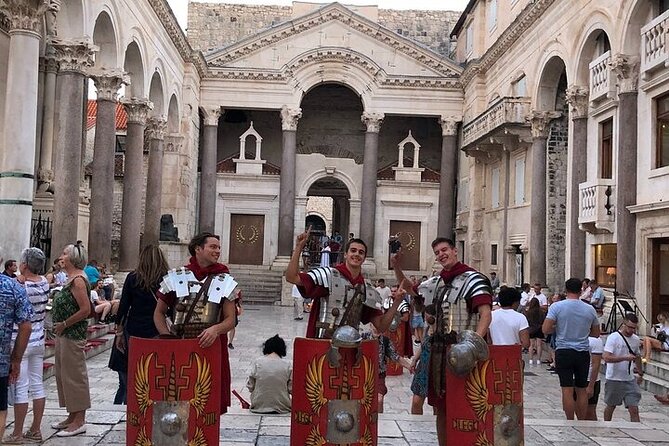
Split’s Diocletian’s Palace isn’t just an impressive ruin. It’s the reason the city exists in its current shape. Walking through it with a guide helps you connect the “where” (specific gates, squares, entrances) with the “why” (what the spaces meant when Diocletian ruled, and what they became afterward).
This tour keeps the focus where it matters: the palace highlight points that give you the most clarity. The best part is that it doesn’t treat history like a lecture from far away. You move, look, and then the story snaps into place.
You can also read our reviews of more walking tours in Split

Private and Spanish-Language Guidance That Keeps Pace Under Control
This is a private tour, meaning only your group is involved. That matters more than you might think, because it lets the guide slow down for questions and adjust the pace to your comfort level.
It’s also specifically in Spanish. If you want the palace story told in a language you can track confidently, that’s a major value point. One review note that really stands out is how attentive the guide was and how well they handled questions, even with Spanish explanations being a strong point.
One practical note: the tour is about 1 hour 30 minutes. That’s a good length for first-time palace visitors, but it also means you won’t linger forever at every detail. If you love museums and long stops, you’ll likely want to add time after the walk.
Getting Oriented at the Peristyle (Where You’ll Understand Everything Else)
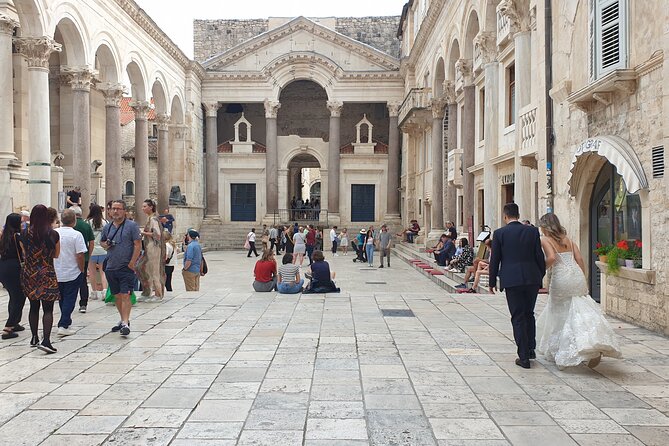
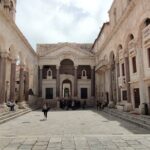
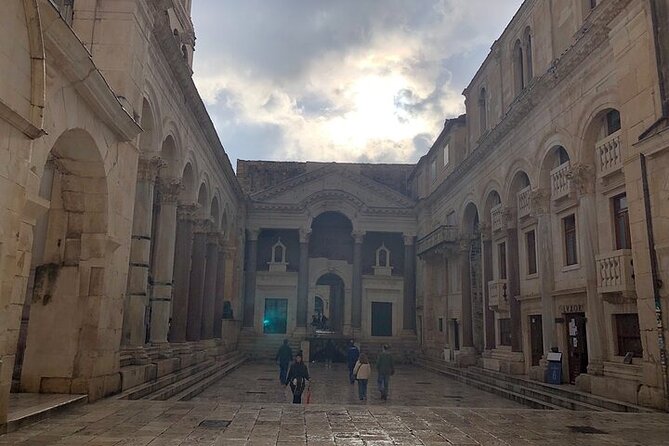
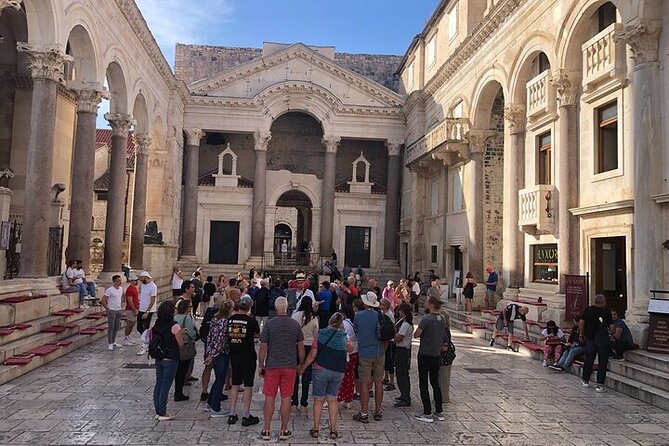
The tour starts at the Peristyle, the central square of Diocletian’s Palace. From here, you can reach many of the other important areas, so the guide starts you with the “map points” that matter.
Why this opening works: once you understand the palace’s central hub, every later gate or corridor feels less random. You’ll know what direction you’re moving and how the palace layout ties together. It’s like learning a city by landmarks instead of getting lost in names.
This first stop is also a morale booster. Instead of just reading a wall and hoping for context, you get a framework immediately—then the rest of the tour builds on it.
Jupiter’s Temple and Diocletian’s God-Fueled Power Story
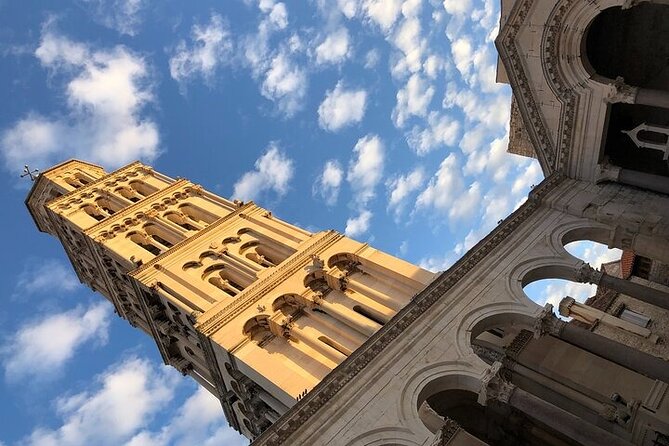
From the Peristyle, the tour moves toward a Roman temple connection: Jupiter, whom Diocletian considered a divine father. This isn’t a random detour. It’s part of the bigger explanation of how Diocletian gained authority.
Here’s what I think you’ll get most out of: the guide connects religion and politics in the way that old Rome actually worked. When the story is told through places like this, you stop thinking of Diocletian as a distant name on a timeline and start seeing how he justified power.
And it helps you anticipate later themes. If you understand how Diocletian framed his legitimacy, then the palace stops feel less like ruins and more like deliberate messaging.
Through the Palace Substructures (Real Function, Not Museum Time)
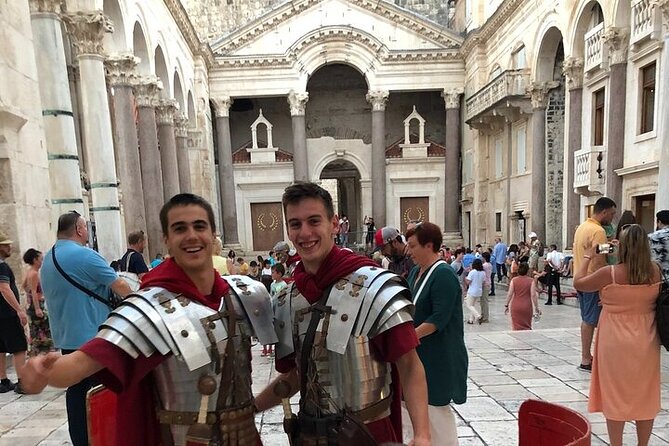
Next you go into the substructures of Diocletian’s Palace—the under-space workings that changed roles over the centuries. This is one of the smartest choices on the route because it’s easy to overlook the “hidden half” of historic buildings.
The tour explains the history of their construction and their function over time. You learn what these spaces were for, and how they stayed useful even as the meaning shifted.
Important detail: the tour does not visit the museum part of the substructures. You can visit that museum separately after the tour. That split is actually helpful. On this walk, you get guided context first, then you can choose how long you want to spend reading at your own speed.
A small consideration: substructures can mean uneven surfaces and stair-like movement. The tour isn’t recommended for travelers with issues with high steps, so if that’s you, you’ll want to plan carefully.
You can also read our reviews of more private tours in Split






The Golden Gate and Gregory of Nin: Power With Language Attached
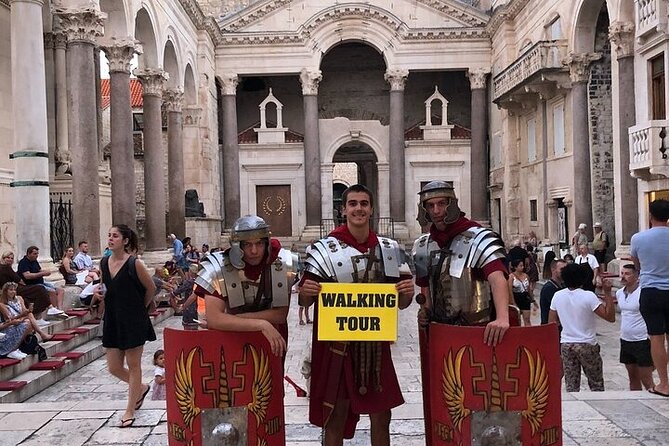
The Golden Gate is the main entrance of Diocletian’s Palace, and it’s also where the guide ties history to something practical: how people’s lives and language evolved.
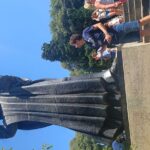
You’ll see the statue of Gregory of Nin, and the guide explains his importance to history and language. That’s the kind of detail I love in a tour like this—because you leave with a reason to remember the name, not just a photo spot.
Drawback to expect: this is one of the busier visual areas in most sightseeing days. Even on a private tour, you’ll still be in a part of the palace that many people pass through. The guide can keep you moving, but if you hate crowds, keep that in mind.
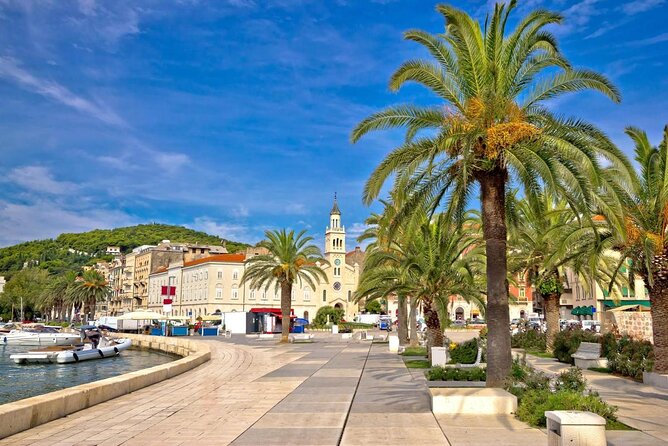
Riva Harbor and the Bronze Model That Makes the Palace Click
Then you head toward Riva Harbor, where you see a bronze model of Diocletian’s Palace. That model is doing more work than it looks like it’s doing. It helps you understand scale and layout fast, especially if you’ve been staring at real stone gates and corridors without a 30,000-foot view.
After the walk through the palace structures, the model gives you that missing piece: how the whole complex likely fits together in the bigger picture. It also anchors the tour to the city outside the palace walls—because Split isn’t just a fortress museum. It’s a living harbor town.
A bonus payoff here: you’ll learn about the history of Split’s beautiful Riva promenade, connecting Roman beginnings to the seaside culture you’ll still see today.
Fruit’s Square (Trg Brace Radic): Venice Meets Croatian Literature
At Fruit’s Square (Trg Brace Radic), the tour focuses on two things: architecture and literature. You’ll learn about a 15th-century Venetian citadel and the importance of Marko Marulić, often described as the father of Croatian literature.
This stop changes the rhythm in a good way. Instead of staying locked into Roman time, you connect to later eras that shaped Split’s identity long after Diocletian. It’s also a reminder that historic cities layer eras, not replace them.
What you might notice on your own right after this stop: the square helps you spot how the city expanded around older structures. If you’re the type who likes to “read” streets, this moment gives you a new way to look.
Split Synagogue: Jewish History in the City (Pass-By Only)
Next is the Split Synagogue, a 16th-century building. The tour passes by it and gives context on the history of the Jewish people in Split.
One key limitation: the synagogue admission is not included, and you’ll mainly get the story from outside. That may be perfect for many people—especially since this tour is only 90 minutes—but if you want to go inside, you’ll need to plan that separately.
Consideration: this is a pass-by stop, so if your priority is interior exploration, adjust expectations. Think of it as a context stop that adds depth to what you’ve already learned about the city.
Vestibulum of Diocletian’s Palace: The Chance for Dalmatian Singing
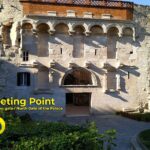
The tour ends with the Vestibulum of Diocletian’s Palace. This area is tied directly to the emperor himself, and the guide explains the vestibule’s history.
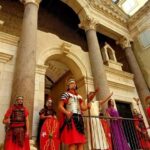
You might also hear traditional Dalmatian singing. The tour data phrases it as a potential moment, so treat it as a bonus rather than a guarantee.
Why I like ending here: it puts the story back into a human-feeling space. After gates, models, and squares, the vestibule is the kind of place where the atmosphere makes you understand the palace as a lived site, not just a set of monuments.
What the 90 Minutes Really Gives You (And What It Doesn’t)
This walk is built around fast learning. You hit the key parts of the palace layout, get the Diocletian narrative explained, and then end near where you started.
You can also ask the guide to take you back to the Peristyle, since the tour ends not far from the meeting area. That’s handy if you’re trying to keep the rest of your day efficient.
What it doesn’t try to be:
- a full-day museum plan
- a deep archaeological dig
- a long indoor viewing session
If your goal is a first-floor understanding of Split’s palace heart, this is a strong fit. If you want to spend hours in the substructures museum, plan extra time afterward, since the tour intentionally skips that museum portion.
Price and Value: When $63.05 Feels Fair
At $63.05 per person, the value depends on how you travel.
You’re paying for:
- a private guide
- Spanish-language storytelling
- a focused route through major Diocletian’s Palace highlights plus nearby city context
That’s not the cheapest option if you’re traveling solo and comparing to group tours. But it can be a smart buy if you care about understanding what you’re seeing, not just collecting a checklist of sites.
Also, the reviews rating is very high: 4.9 with 31 reviews, and 97% of people recommend it. The strongest repeated themes in the positive feedback are the guide’s attentiveness, clear explanation in Spanish, and helpful answers to questions. If that’s what you want from a tour, the price starts to look more like a tool for clarity than an expense.
Who Should Book This Tour (And Who Might Want a Different One)
This tour is a great match if:
- you want a private Spanish guide in Split
- Diocletian’s Palace is your top priority
- you like a route that gets you oriented quickly
- you’re happy to learn from key exterior/major interior-feeling spaces, then explore more later
It may be less ideal if:
- you have trouble with high steps or uneven movement
- you want lots of time in museums (the substructures museum is not visited here)
- you need a full synagogue interior visit (the synagogue stop is pass-by and ticket not included)
If you’re unsure, think about your ideal day: Do you want an organized, story-led walk you can build on? Or do you want long, independent time in indoor exhibits only? This tour leans hard toward the first type.
Should You Book This Private History Split Walking Tour in Spanish?
If you care about context—how Diocletian’s power, Roman religion, and later city layers connect—then yes, I’d book it. The structure is smart: start at the Peristyle for orientation, hit the palace entrances and substructures for meaning, then broaden to Riva Harbor, Fruit’s Square, and the synagogue context so Split feels bigger than one monument.
The main reasons to pass would be physical comfort with steps, or if you’re specifically chasing museum time. For everyone else, this is the kind of 90-minute experience that makes your next hour in Split much more enjoyable, because you’ll actually know what you’re looking at.
FAQ
What language is the tour offered in?
The tour is in Spanish.
How long is the private history walking tour?
It lasts about 1 hour 30 minutes.
How much does it cost?
The price is $63.05 per person.
Is this tour private?
Yes. It’s private, so only your group participates.
Where does the tour start and where does it end?
It starts at Peristil ulica (Peristil ul., 21000, Split) and ends at Diocletian’s Palace in the Grad area of Split. The tour ends not far from where it started, and the guide can take you back to the Peristyle if you ask.
What’s included in the tour?
A guide leads the experience with knowledge of the locations around the palace.
Are admission tickets included?
No admission tickets are included. The tour notes that several stops are free, but the synagogue stop’s admission is not included.
Is the tour suitable for everyone?
Most travelers can participate. It is not recommended for travelers who have issues with high steps.
What is the cancellation policy?
You can cancel for a full refund up to 24 hours in advance of the experience start time. Free cancellation is available as long as you meet that cutoff.