REVIEW · SPLIT
From Split: Plitvice Lakes National Park Guided Tour
Book on GetYourGuide →Operated by BOOKER - Travel Agency · Bookable on GetYourGuide
Sixteen lakes. One long day. This guided Plitvice trip from Split is compelling because you get the park’s big visuals plus the why behind it, from travertine dams to the rush of the biggest Croatian falls. I really like the calcium carbonate story the guides explain, and I also appreciate the way the day is organized with real check-ins and clear “keep up with us” pacing. One thing to factor in: you still have about 9 km of walking over uneven ground, and the park can get very busy in peak months.
The payoff is classic Plitvice—upper lakes that feel calm, then lower lakes where the cascades stack up and the scenery hits harder. Guides like Sanja, Ivana, and Luka (I’ve heard their names again and again) keep the experience flowing, and that makes the long coach ride feel less like a chore. Expect a boat cruise or train ride inside the park to give your legs a breather.
Plan ahead for practical limits too. Swimming is not allowed, so bring shoes for wet rock and expect some areas to be restricted when weather shifts. If you’re traveling with mobility limits, note it’s not suitable for wheelchair users.
In This Review
- Key highlights worth planning for
- The Split-to-Plitvice coach day: long, but managed
- Starting in Split: meeting point nerves, solved
- Entering Plitvice: what your 4.5-hour guided window is really for
- Upper lakes to lower lakes: how the experience changes as you move
- The boat cruise (or train): your planned recovery moment
- Walking realities: 9 km of uneven ground is the real deal
- Lunch and breaks: you’ll need to manage your energy
- Crowds: how to enjoy Plitvice when the buses arrive
- Tickets and real costs: the $76 price isn’t the whole number
- Who should book this day trip from Split
- The vibe: what the guides actually add
- Should you book this Split-to-Plitvice guided tour?
- FAQ
- What’s the duration of the Split to Plitvice Lakes tour?
- How much walking is involved in Plitvice?
- Are Plitvice entrance tickets included in the price?
- Is swimming allowed in Plitvice Lakes National Park?
- What’s included in the tour besides the guided walk?
- How long do you spend inside Plitvice with the guide?
- What should I bring for the day?
- Is the tour suitable for wheelchair users or pregnant women?
- Where is the meeting point, and when should I arrive?
- End of review
Key highlights worth planning for
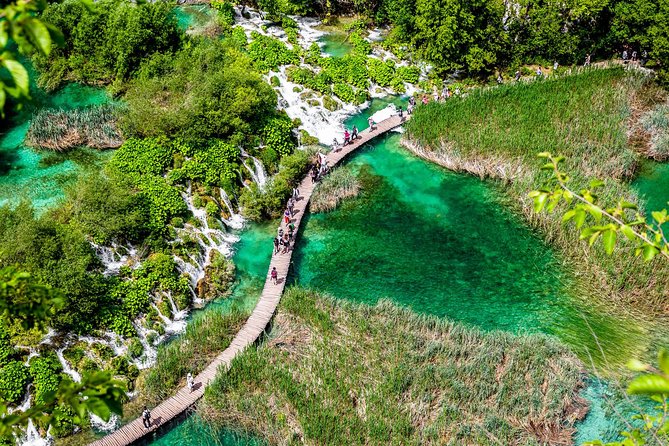
- Top-to-bottom route options: some guides lead a downhill walk that can feel easier than the alternative.
- Boat or train break: short ride time inside the park helps reset your energy.
- Skip-the-line ticket advantage: you don’t waste time sorting paperwork on arrival.
- Geology with real-world meaning: travertine barriers and continuously changing dams explained in plain language.
- Guide-led timing: WhatsApp group use helps the whole group stay together.
- Big waterfall focus: you’re scheduled to experience the park’s most impressive cascade zones.
The Split-to-Plitvice coach day: long, but managed
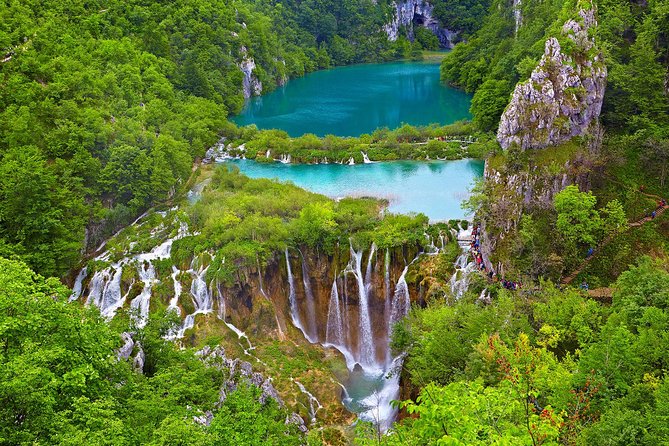
Let’s start with the obvious: you’re trading a full day for one of Croatia’s most famous natural sites. The tour runs about 12 hours total, built around a long coach ride—roughly 3.5 hours each way—so the value comes from what’s included, not from how short it is.
This matters because Plitvice is best experienced with a plan. If you arrive on your own, you spend time figuring out routes, ticket steps, shuttle options, and where the crowds are worst. Here, the day is structured: you leave Split in an air-conditioned vehicle, get at least one organized break (a local café stop), and then you’re shepherded through the park flow with a guide.
You’ll also notice the tour’s “team” feel. Multiple guides and drivers are mentioned by name (Marco/Marko shows up often, and guides like Sanja, Ivana, Luka, Richard), and the consistent theme is smooth coordination. That’s not just comfort—it’s how you avoid losing time the moment the group hits a crowded path.
Practical tip: pack a snack if you can’t easily find something you like on the day. Food and drinks aren’t included, and there are café breaks—but you don’t want to arrive hungry during the park walking window.
You can also read our reviews of more guided tours in Split

Starting in Split: meeting point nerves, solved
You meet your guide at Marulićeva ul. 4 (Booker Travel Agency office). The rule is simple: arrive about 15 minutes early so you can check in without stress. That little buffer matters when you’re starting a day that already has a long drive baked in.
One more small but real factor: you may need a short walk from the meeting point to the bus first thing in the morning (and again at the end). It’s not a “problem,” but it’s part of the day’s total legs-on-ground count.
Entering Plitvice: what your 4.5-hour guided window is really for
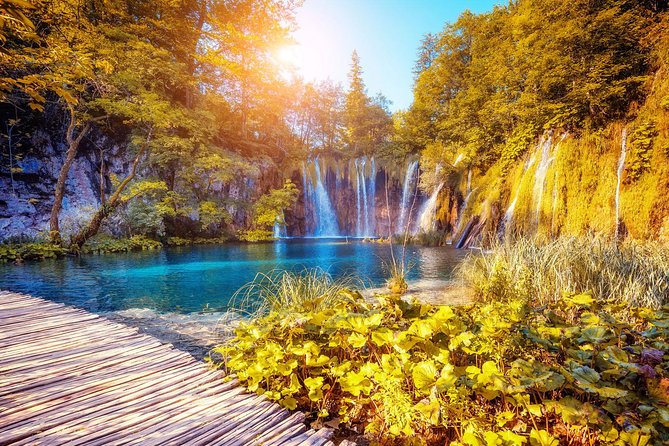
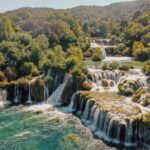
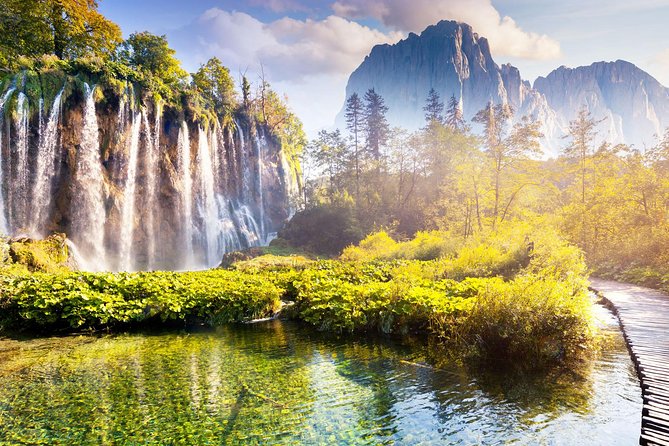
Once you’re inside Plitvice, the guided portion is about 4.5 hours. That time window is the heart of the value. It’s not enough time to wander forever, and that’s the point. You’ll see a major slice of the park’s signature look: 16 lakes with crystal blue-green water, the cascading waterfalls, and the limestone canyon feel at the end of the lake system.
The park’s magic isn’t just “pretty water.” Your guide explains the geology that makes Plitvice keep changing. The lakes form and evolve because of the sedimentation of calcium carbonate, which builds natural dams (often described as travertine or tufa formations). As the water flows and deposits minerals, the barriers create new channels, curtains, and cascades over time.
Why this matters for you: when you understand that the dams are being built and reshaped, the park stops feeling like a fixed postcard. You start noticing patterns—where water is spilling over barriers, where moss and algae thrive on the mineral surfaces, and why some areas look different from others.
You’ll also hear about the park’s caves, including the fact that prehistoric settlement remains were found there. That’s a nice shift from “look at the water” to “this place has layered human and natural time.”
Upper lakes to lower lakes: how the experience changes as you move
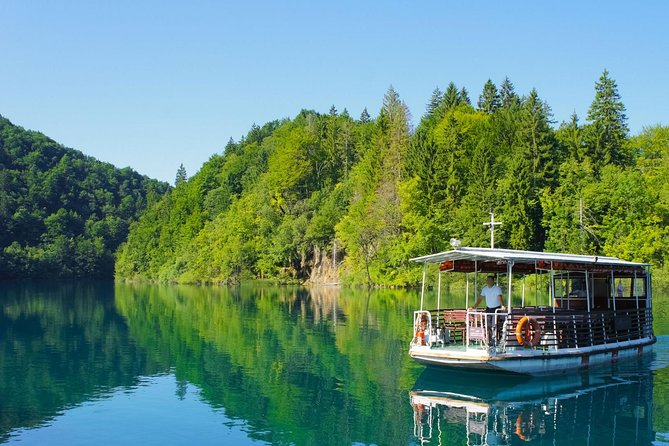
Plitvice has a mood shift as you go. Guides often lead people through a route that starts toward the calmer upper-lake feeling, then transitions into the lower zones where the waterfall intensity ramps up.
In practical terms, that means:
- Early on, the walking and views tend to feel more open and serene.
- Later, the paths funnel closer to cascade areas, so you’ll spend more time hearing and watching water in motion.
A lot depends on how crowds land on your timing. Even with a guided flow, peak season can bring multiple buses at once. That’s where your guide’s job gets real: keeping the group moving, nudging you to better vantage points for photos, and preventing long gaps where people drift apart.
One consideration I’d plan around: if you stop for photos constantly, you can get left behind on the stretch. The tour still tries to keep everyone together, but the park paths don’t wait for lingering.
The boat cruise (or train): your planned recovery moment
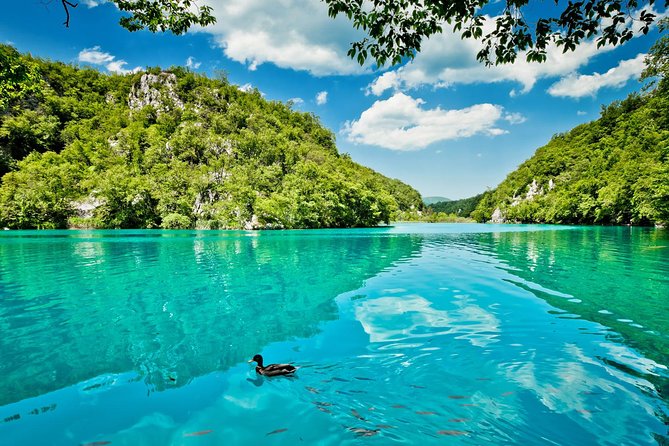
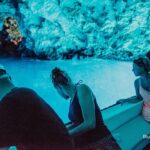
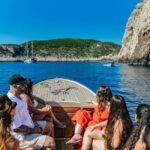
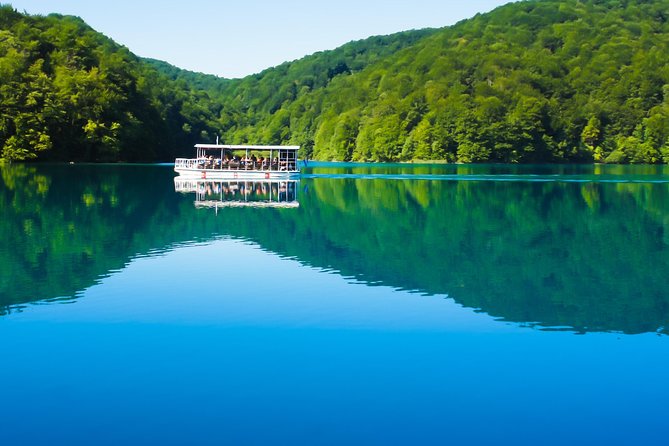
Right in the middle of the park experience, there’s a 20-minute river boat ride (included). Some versions of this same tour also offer a train ride in the park area, and the key point is that you get a ride option that interrupts the walking cycle.
For you, this is more than convenience. It’s a way to change your viewpoint—watching waterfalls and lake edges from a slightly different angle, with less “step-step-step” fatigue. And it keeps the day enjoyable even if your legs were already tired from the uneven 9 km walking portion.
Walking realities: 9 km of uneven ground is the real deal
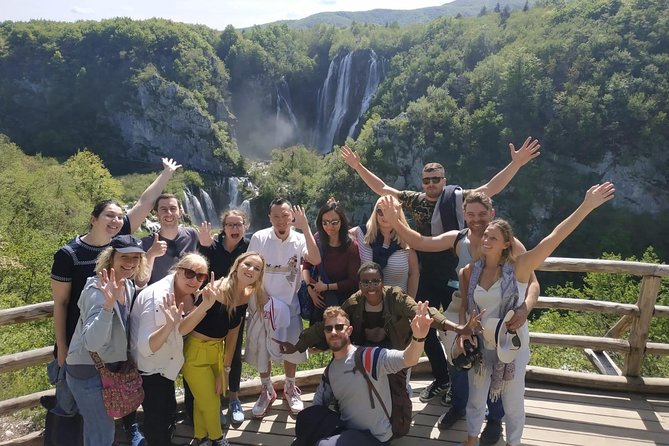
Let’s be honest about what “guided” means here. You’re not in a golf cart loop. You’re walking on uneven surfaces, and you’re doing about 9 km during the park portion of the day.
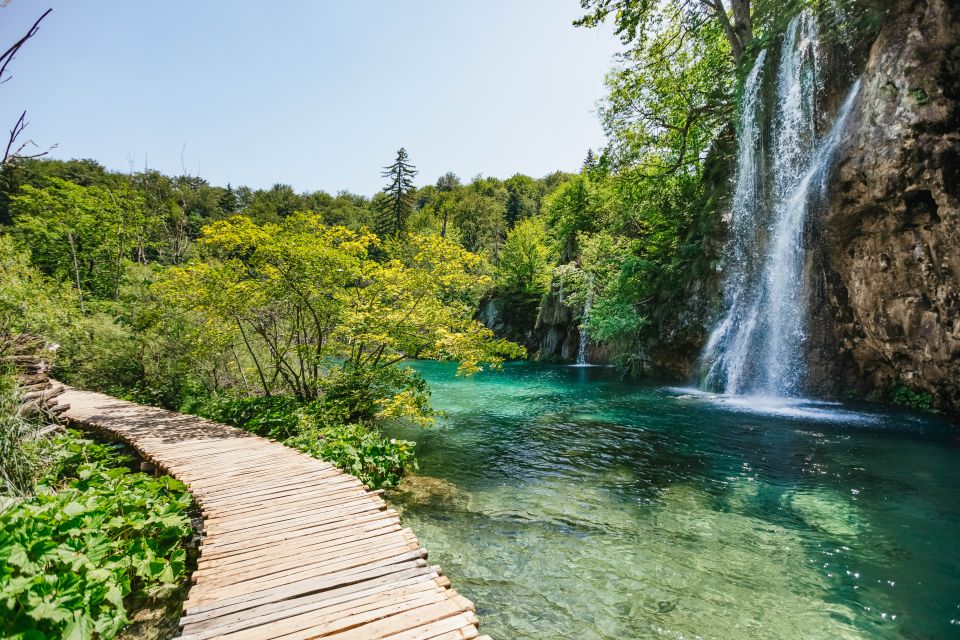
So your shoe choice matters more than you think. Comfortable walking shoes aren’t just a suggestion—they’re what keep you steady on wet rock and crowded paths. Lightweight “fashion sneakers” can turn into ankle regret fast.
Also, there’s a simple rule: swimming is not allowed in the park. You’re there for the views and the sound of the cascades, not a dip.
Weather can change access too. Some parts of the park may be restricted depending on conditions. That’s one reason a guided plan is helpful—you’re less likely to end up stuck at a closed path with no backup.
Lunch and breaks: you’ll need to manage your energy
Food and drinks aren’t included, and the itinerary includes café breaks on both ends of the day. That’s useful, but it’s also why you should pack a flexible approach.
What I like about the structure is that it prevents you from being “hangry on a waterfall.” You get at least one longer break and one shorter one, plus the ability to rest in shade areas inside the park (there’s a picnic area option mentioned for resting).
What you should do: bring water if you can (or plan to buy it during café stops). Also, consider a small snack you can eat quickly during transitions, so you’re not counting minutes once the walking starts.
Crowds: how to enjoy Plitvice when the buses arrive
Even with a guide, Plitvice can feel crowded in certain stretches—especially in the zones where everyone wants the same photos. One of the most repeated themes around the experience is that the scenery is breathtaking, but visitor volume can temporarily get intense.
Here’s how to handle it without losing your mind:
- Let your guide lead the timing through busy bottlenecks.
- Use your photo breaks efficiently. If you want a photo at a key overlook, do it quickly, then move on.
- When you find a calmer stretch, take the time. The best moments often show up just after the crowd shifts.
If you’re traveling in high season, you’ll also want to accept that part of the value is “organization with crowds” rather than “solitude.” That’s still worth it for Plitvice’s scale.
Tickets and real costs: the $76 price isn’t the whole number
The tour price is listed at $76 per person, which sounds straightforward until you notice what’s not included. Entrance tickets to Plitvice Lakes National Park are not included and must be paid for in cash (euro) only on the day of the tour. The good news: the tour is designed to help you skip the ticket line.
So your total day cost depends on when you go. Entrance fees vary by month:
- June–September: Adults 39.80€, Students 26.50€
- April–May and October: Adults 23.50€, Students 14.50€
- January–March, November–December: Adults 10.00€, Students 6.50€
Children have their own pricing too, including free under 7.
What this means for value: if you’re traveling in high summer, you’re paying more in ticket cost, so it’s smart to budget for the full day. If you’re going in shoulder season, the ticket chunk is much smaller, and the $76 plus included transportation/guide/boat ride can feel like an easier deal.
Also note: there’s no food included, so think of this as a “transport + guide + core park experience” ticket, not a meal plan.
Who should book this day trip from Split
This is a good fit if you want:
- a guided day to understand the park’s geology and lake formation logic
- a structured route that hits the big highlights without you having to plan on the fly
- included transportation in an air-conditioned vehicle
- a break in the middle of the park via boat cruise or train ride
You might want to skip it if:
- you don’t do well with long walking on uneven ground
- you need wheelchair access (the tour is noted as not suitable for wheelchair users)
- you’re pregnant (also listed as not suitable)
If you’re a solo traveler, it can work surprisingly well because the guide keeps people together and many guides set up a WhatsApp group for directions and updates.
The vibe: what the guides actually add
Here’s the best part: guides are what turn Plitvice from a walk to an experience you can talk about later. Names come up often—Sanja, Ivana, Luka, Richard—and the common threads are:
- clear explanations of how the lakes form
- practical guidance so you don’t wander into confusion
- an upbeat tone that helps on a long day
There’s also a recurring detail I think you’ll appreciate: guides often share context about Split and Croatia during the coach drive. That means you’re not waiting silently for arrival; you’re getting little story bits as the miles roll by.
Should you book this Split-to-Plitvice guided tour?
Book it if Plitvice is on your “must-see” list and you’d rather pay for structure than spend your day solving logistics. At $76, the value is strongest when you factor in what’s included: air-conditioned transport, a guide, skip-the-line ticket handling, and a boat or train ride inside the park.
Don’t book it if you’re sensitive to crowds, don’t handle about 9 km of uneven walking well, or you were hoping the tour includes meals and a fully low-effort experience. Bring good shoes, plan on cash euros for the entrance ticket, and accept that peak timing can add noise to an otherwise awe-inspiring place.
If you want a day that’s well paced and guided through Plitvice’s geology-heavy highlights, this one is a smart choice.
FAQ
What’s the duration of the Split to Plitvice Lakes tour?
The total experience runs about 12 hours.
How much walking is involved in Plitvice?
The tour includes approximately 9 km of walking on uneven surfaces.
Are Plitvice entrance tickets included in the price?
No. Entrance tickets are not included and must be paid for in cash (euro) on the day of the tour.
Is swimming allowed in Plitvice Lakes National Park?
No, swimming is not allowed.
What’s included in the tour besides the guided walk?
Transportation by air-conditioned vehicle, a live English guide, and a boat cruise or train ride in the park are included.
How long do you spend inside Plitvice with the guide?
You spend about 4.5 hours inside the national park with your tour guide.
What should I bring for the day?
Wear comfortable clothes and comfortable shoes.
Is the tour suitable for wheelchair users or pregnant women?
No. It is not suitable for wheelchair users or pregnant women.
Where is the meeting point, and when should I arrive?
Meet your guide at Marulićeva ul. 4 (Booker Travel Agency office), and you need to arrive about 15 minutes before the start time.