REVIEW · SPLIT
Storytelling World War II in Split Tour
Book on Viator →Operated by Ina Nikolic · Bookable on Viator
World War II lives in Split’s streets. I like the way you get WWII archival photos in context, and I also like Ina Nikolic’s storytelling that makes each corner feel personal. The only catch: there is a lot of stopping and standing, so it’s not a nonstop walking tour.
This is a tight, 2-hour English-language route in the old historical center, limited to 15 people. You can add a pickup near the ferry port, and the tour ends near Prokurative—close to the promenade, easy to continue your evening. If you hate heavy topics, or you prefer gentle, purely scenic walks, this one might feel intense.
In This Review
- Quick hits before you go
- Why this WWII walk fits Split (and not just a history textbook)
- Meet at the Split Riva and get the timeline straight
- Green Market: bombing stories you can actually picture
- Eastern (Silver) Gate: where Diocletian’s Palace meets conflict
- Peristyle of Diocletian’s Palace: what got attacked
- Narodni Trg and Marmontova Ulica: war in the middle of daily life
- Prokurative: prisons and executions where the tour ends
- What you’re really paying for: a guide + archive photos, not just a walk
- The guide’s approach: stories, photos, and connections across time
- How to plan your body for this tour (standing counts)
- English-only experience in a small group
- Who this WWII storytelling tour is best for
- Should you book this WWII tour in Split?
- FAQ
- How long is the WWII storytelling tour in Split?
- What is the meeting point for the tour?
- Where does the tour end?
- Is pickup available?
- What language is the tour offered in?
- Is there a maximum group size?
- Are there any entrance fees mentioned for the stops?
- What’s included in the tour besides the guide?
- What is the cancellation policy?
Quick hits before you go
- Ina Nikolic brings the story to life with local context and clear explanations in English
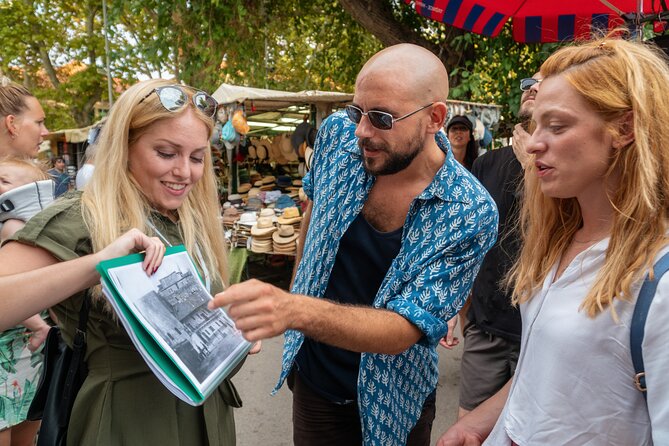
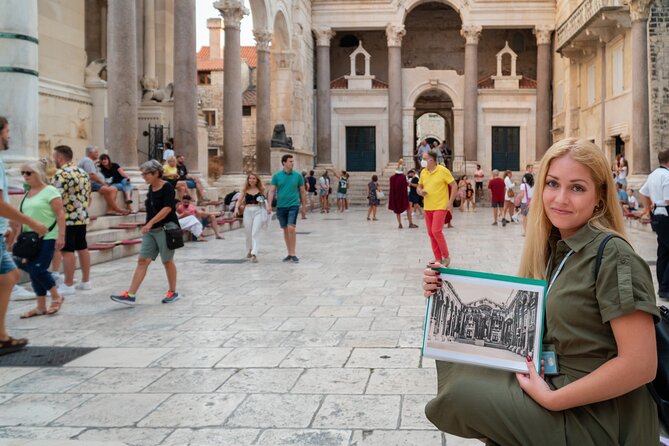
- WWII photos from the City of Split archive are shown on the walk (not just told about)
- Seven focused stops connect Split’s Roman-era spaces to wartime events
- Most stops are short (often about 5–15 minutes) so you can handle the pace
- Small group size (max 15) keeps questions easy
- Ending at Trg Republike (Prokurative square) makes it simple to keep exploring after
Why this WWII walk fits Split (and not just a history textbook)
Split is one of those places where you can look at the present and still feel layers underneath. This tour leans into that idea hard. You’re not just passing sights—you’re learning what happened to them during World War II, and how the city’s geography shaped the story.
The big value here is that the tour mixes three things in a practical way: street-level landmarks, archival imagery, and a guide who connects events to the place you’re standing in. When you hear about bombing, prisons, and executions while you’re looking at the streets and older structures nearby, the history stops being abstract.
And yes, it’s also a good fit for people who want something a little different from the usual “look at the old buildings” tours. Even if you’re not a hardcore WWII buff, the route is built around moments that help you understand why Split felt the war so directly.
You can also read our reviews of more tours and experiences in Split.

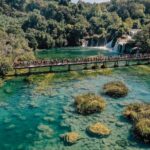

Meet at the Split Riva and get the timeline straight
Your tour starts at Obala Hrvatskog narodnog preporoda 27, in central Split, with a meeting setup that’s flexible enough to match where your group is gathering. If you’re using pickup, it’s tied to the ferry area (Trajektna luka Split, Obala kneza Domagoja). Either way, you’ll be in the right spot early: the old center, close to the water.
Stop one is the Split Riva, where you’ll learn when, where, and why the war in Split began. This is a smart first move. Riva is the kind of place where you naturally understand the city’s “front door.” It’s a good starting point because it sets the frame: where events started, why Split mattered, and how the rest of the walk will map onto the story.
Practical note: the first stop isn’t long (about 15 minutes), but it’s doing heavy lifting. If you come ready with a few questions—about Croatia’s wartime situation, civilian life, or how Split connected to wider events—you’ll get more out of the tour right away.
Green Market: bombing stories you can actually picture
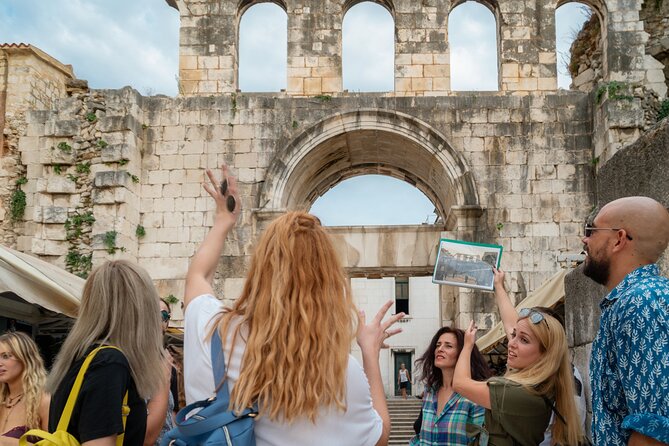
Next comes the Green Market, one of Split’s liveliest everyday places. During the tour, that normal, market-day energy takes a sharp turn. You’ll hear about the most horrific bombing in Split, told through the lens of what happened to real people in real streets.
The short stop here (about 15 minutes) works because the story is specific. You’re not wandering through a generic war narrative. You’re hearing about one of Split’s most brutal events while standing in the area where the city still carries on.
If you’re the type who needs visuals to anchor facts, you’ll appreciate how the guide uses photographs and comparisons to help you place the past alongside today. The goal isn’t to scare you—it’s to make the story understandable without turning it into a vague lecture.
Eastern (Silver) Gate: where Diocletian’s Palace meets conflict
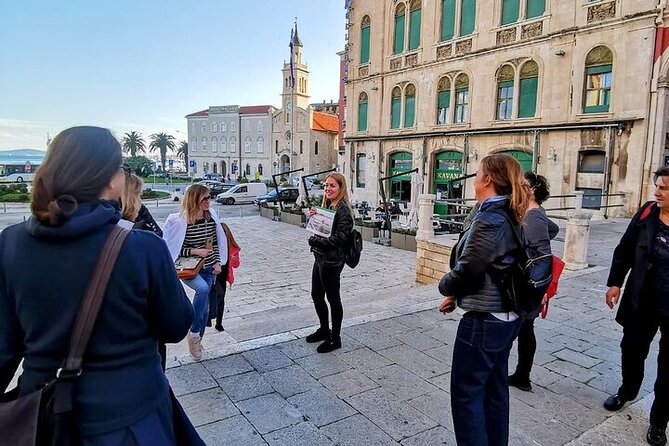
After the market, you move to the Eastern (Silver) Gate, the eastern entrance into Diocletian’s Palace. This stop is brief (about 5 minutes), but it matters because it changes the setting. You go from streets used by daily life into a Roman-era boundary that helps you see how older city walls and structures can become part of a wartime landscape.
The tour point here isn’t that Diocletian’s Palace was “just there.” It’s that the palace’s layout and entrances shaped what could happen during the war and which parts were affected.
Even if you know Diocletian’s Palace as a sightseeing magnet, it’s worth seeing this same space through a different lens. You end up noticing the architecture differently, not as a museum object, but as a backdrop to real events.
Peristyle of Diocletian’s Palace: what got attacked
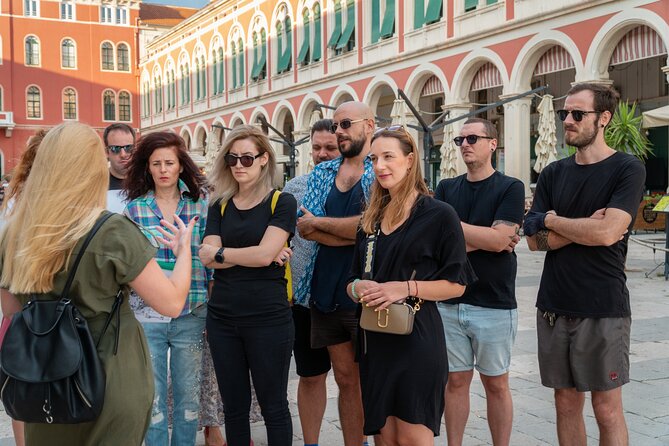
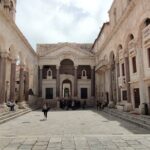
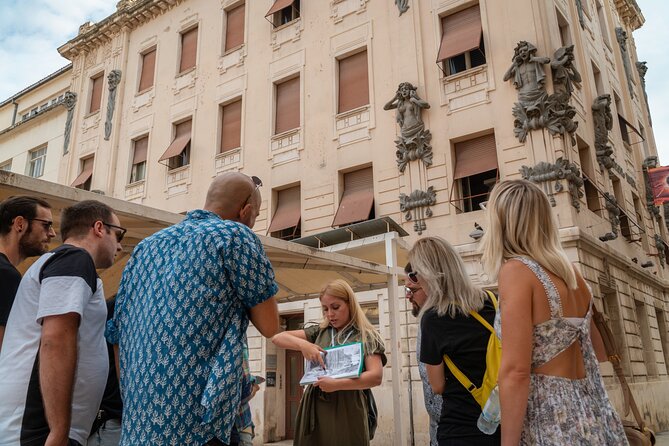
Now you’re in the Peristyle of Diocletian’s Palace, where the tour focuses on which sections of the palace were attacked during the war. This is one of the most dramatic “history-on-the-ground” moments of the route, even if the stop itself stays around 15 minutes.
Here’s what I like about this kind of stop: it forces you to reconcile two time periods. You see the imperial grandeur, and then you hear how violence intersected with it. That contrast helps the information stick.
Also, this is where the guide’s style really shows. Ina Nikolic tells the story with enough structure that you can follow. You’re not just hearing names and dates—you’re hearing how the city’s spaces changed under wartime pressure.


Narodni Trg and Marmontova Ulica: war in the middle of daily life
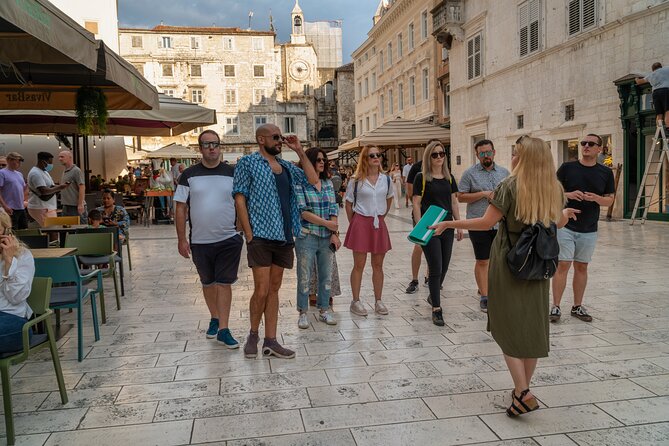
Then the tour heads to Narodni Trg, the main square of the city. You’ll visit it for about 15 minutes and learn what terrible events took place there during the war.
From there, you move along Marmontova Ulica, the main street of town, a quick stop of about 5 minutes. It’s short on purpose. The point is to show you that wartime reality wasn’t limited to a single “danger area.” It touched the main arteries of life, the places people would normally associate with walking, shopping, and gathering.
If you’re worried this tour will feel like a nonstop series of heavy facts, the pacing helps. You get one strong stop, then a quick transition to another location, and the guide keeps tying it back to the bigger story.
And yes, it’s normal to feel a little tense here, because you’re learning about civilian suffering and violence in very public spaces. That discomfort is part of the learning—but the tour doesn’t drag. It’s told in manageable segments.
Prokurative: prisons and executions where the tour ends
The final stop is Prokurative, about 15 minutes, and it’s where you learn about prisons and executions during the war. This is the end point too: the tour finishes at Republic Square (Trg Republike), near the Prokurative square, close to the promenade.
This ending makes practical sense. You can’t really “lightly” leave a conversation about prisons and executions, so giving you a clear end location helps you reset. Once you finish, you can keep exploring the old center at your own pace—or head back toward the water with less mental load than if you were still mid-walk.
Pro tip: bring a mental buffer for the emotional content. This tour doesn’t avoid it, and it shouldn’t. But you’ll get the most out of it if you’re ready to focus and not rush ahead.
What you’re really paying for: a guide + archive photos, not just a walk
At $60.01 per person for about two hours, this isn’t a bargain “free walking tour” kind of deal. So you should ask: what makes it worth it?
Here’s the value calculation as I see it from how the experience is designed:
- You get a licensed local guide (Ina Nikolic) who organizes the story so you don’t get lost in details
- You see WWII-era photos from the City of Split archive, with permission to use them during the tour (so you’re not relying only on narration)
- You cover meaningful locations that connect WWII events to the city you’re actually visiting
- You’re in a small group (max 15), which helps when you want questions answered without waiting
Also, the tour says admissions are free for each listed stop. That matters because you’re not paying extra on the ground for entry fees tied to those pauses.
One more angle: this is booked on average about 35 days in advance. That suggests people plan for it like a “must-do,” not a random add-on. If you’re traveling in a busy season, earlier booking can save you from disappointment.
The guide’s approach: stories, photos, and connections across time
A lot of history tours stop at dates. This one tends to do more than that. Ina Nikolic is described as a passionate historian and storyteller, and the practical result is that you hear the war through the lives of the city—not just through broad events.
A couple of things stand out about her approach:
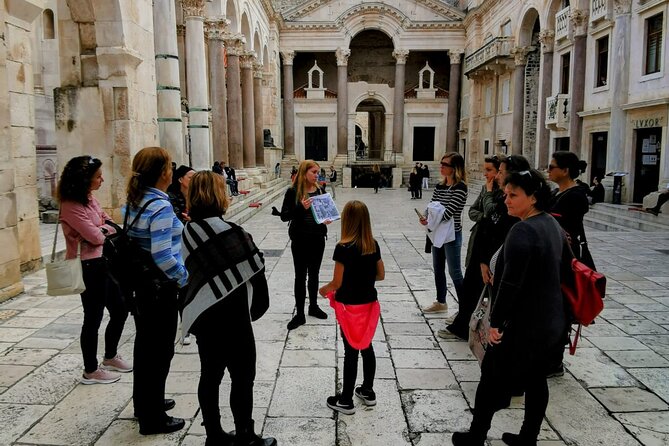
- She uses photographs and aerial maps to help you visualize what the city looked like during WWII and then compare it to the present
- She reportedly brings some context beyond WWII, including the 1990s wars, which can help you understand why this history still matters locally
If you like the feeling of learning from a local who isn’t reading a script, you’ll probably enjoy the cadence. And if you’re curious about different communities connected to the city’s wartime story—Jewish history was specifically mentioned in the experience feedback—this tour may be especially meaningful.
How to plan your body for this tour (standing counts)
One review note that matches the structure of the route: there is a lot of standing. Many stops are short, but you’ll likely pause frequently to listen and look at photos and context.
So plan accordingly:
- Wear comfortable shoes. The route stays in the old center, but your feet will notice the long pauses.
- Bring a light layer if it’s windy near the waterfront, and water if you’re touring in warm weather.
- If you have mobility limits, you should still be able to participate (the tour says most travelers can), but it’s smart to mentally expect stops rather than continuous walking.
English-only experience in a small group
The tour runs in English. The group size is capped at 15, which keeps the dynamic intimate and question-friendly.
If you’re traveling with family, it can work well for teens and adults who like history. The tour is also set up so you can understand it even if you don’t know Split’s WWII background beforehand. You start with “when, where, why,” then move location by location.
Who this WWII storytelling tour is best for
This is a strong match if you:
- Like history that’s tied to where you stand, not just facts on a page
- Enjoy hearing a guide tell a coherent story with photos to anchor your memory
- Want a two-hour activity that feels meaningful without eating your whole day
It may be less ideal if you:
- Prefer long sightseeing walks over frequent stops
- Get overwhelmed by discussions of bombing, prisons, and executions
- Want a more purely archaeological tour focused only on Roman-era details
Should you book this WWII tour in Split?
I’d book it if you want the kind of experience that makes the city feel layered and specific. The combination of WWII-era photo material plus a local guide who can connect events to Split’s real spaces is the core reason this tour earns its reputation.
Choose it when you:
- Have at least one evening or part of a morning free in the old center
- Want an activity that’s compact but emotionally serious
- Like learning that changes how you look at famous streets and buildings
Skip it if you’re looking for a casual sightseeing stroll with minimal heavy content. Otherwise, this is one of those Split experiences that stays with you, because you don’t just see the past—you understand it in the exact places where it happened.
FAQ
How long is the WWII storytelling tour in Split?
It runs for about 2 hours.
What is the meeting point for the tour?
The tour starts at Obala Hrvatskog narodnog preporoda 27, 21000 Split, Croatia.
Where does the tour end?
It ends at Republic Square (Trg Republike), near Prokurative square.
Is pickup available?
Yes. Pickup is offered near Trajektna luka Split, Obala kneza Domagoja.
What language is the tour offered in?
The tour is offered in English.
Is there a maximum group size?
Yes. The tour has a maximum of 15 travelers.
Are there any entrance fees mentioned for the stops?
The tour information lists admission tickets as free for each stop.
What’s included in the tour besides the guide?
You’ll see old WWII photographs from the Museum of the City of Split archive, used with permission, plus you’ll have a local licensed guide.
What is the cancellation policy?
You can cancel for a full refund up to 24 hours before the experience starts. If you cancel less than 24 hours before, the amount paid is not refunded.