REVIEW · SPLIT
Essential Diocletian’s Palace Tour for First-Time Visitors
Book on GetYourGuide →Operated by KUKUVIA, Vl. Jelena Tanjić · Bookable on GetYourGuide
Diocletian’s Palace is the kind of place that feels big. This tour helps you get your bearings fast and turns the ruins into a clear story about Split’s past and daily life. I like the small-group format (limited to 10) because it makes questions feel normal, not rushed. The guided pacing is also built for first-timers, with stops that cover the essentials without making it feel like a checklist. One possible drawback: it does not include access to the Substructures or the bell tower, so plan your expectations if those are your must-sees.
What makes it especially practical is that you’re not only walking through the palace—you’re also leaving with a handy set of recommendations for where to eat, what to see next, and local experiences. The guide (Vl. Jelena Tanjić from Bosnia and Herzegovina, long-time Split resident) connects the palace story to the wider Balkans and mixes historical context with what life in Split looks like today. You’ll also get voucher access in well-known restaurants and bars, which can make your food stops feel less like guesswork.
In This Review
- Key points you’ll notice right away
- Why Diocletian’s Palace is the Split starter pack
- Meet at Gregory of Nin and step into the palace via the Golden Gate
- Golden Gate to People’s Square: getting your bearings quickly
- Jupiter’s Temple and the Peristyle: the palace’s main stage
- Cathedral of Saint Domnius plus the Vestibule selfie moment
- Diocletian’s Cellars and the walk to Split Riva
- Price and logistics: where the $17 value really comes from
- Who should book this tour, and who might want something else
- Should you book this Diocletian’s Palace tour?
- FAQ
- How much does the Diocletian’s Palace tour cost?
- How long is the tour?
- What’s the group size?
- What language is the tour guide?
- Where does the tour start?
- Where does the tour end?
- What’s included in the tour?
- Is this tour suitable for wheelchair users?
- Does the tour include the Substructures or bell tower?
Key points you’ll notice right away
- Licensed, interactive storytelling that keeps the history easy to follow
- Small group of up to 10, built for real conversations and questions
- Golden Gate to Peristil to Cathedral, hitting the landmarks you’ll hear about anyway
- Vestibul Dome selfie time, a fun memory stop inside the palace
- Diocletian’s Cellars included, so you’re not just viewing from the outside
- Restaurant and bar vouchers plus a personalized recommendations list after the tour
Why Diocletian’s Palace is the Split starter pack
Split can feel confusing at first. You arrive expecting a pretty waterfront, and then you hit Diocletian’s Palace—massive walls, towering gates, and spaces that now host everyday life. That’s where this tour earns its keep: it’s designed as a relaxed, first-time orientation that explains not just what you’re looking at, but why it matters.
I like that the format stays easy-to-follow while still being detailed enough to feel satisfying. You move through the palace’s major points—Golden Gate, Peristyle, Jupiter’s Temple, the Cathedral of Saint Domnius, and more—so you’re not stuck wandering and guessing. Even the “daily life” angle is part of the design, not an afterthought. The guide’s background matters here too. Jelena is from Bosnia and Herzegovina and has lived in Split for many years, so you get a broader regional perspective on how Split’s story fits into the wider Balkans.
This is also a tour that respects your time. In about 1.5 hours, you get a framework you can use all day. That’s the real value: after you’ve heard the palace explained in a simple, human way, the city makes more sense as you continue exploring on your own.
You can also read our reviews of more tours and experiences in Split.



Meet at Gregory of Nin and step into the palace via the Golden Gate

The tour starts right where the city begins talking back to you: at the statue of bishop Gregory of Nin, by the north entrance to the palace called the Golden Gate. The meeting point is easy to recognize because you’re told to look for the guide holding a black umbrella—a small detail, but it’s exactly the kind of thing that saves time when you’re traveling.
From this start, you’re not just entering a site. You’re entering the logic of the palace. Gregory of Nin’s statue is a recognizable anchor in Split, and pairing that with the Golden Gate is smart. It places you at a threshold between “Split today” and “Diocletian’s original world.” That transition is the theme of the tour: you go from exterior orientation to interior meaning.
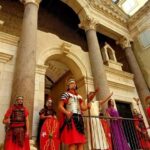
Inside, the guide’s role is active, not passive. You’re guided to the right spots, but you’re also getting context that helps you interpret what you’re seeing. Jelena’s style is described as a fun mix of information and practical tips, and it shows in the way stops are framed: you’re asked to pay attention to what makes each place distinct, not just memorize names.
One more practical detail: the tour is a small group limited to 10 participants. That matters around gates and crowded corners, where larger groups can feel like a wave you can’t steer. Here, you’re more likely to have your own questions heard.
Golden Gate to People’s Square: getting your bearings quickly
The itinerary begins with the Golden Gate, Split, then moves toward People’s Square (also referred to as Pjaca in Split). This part of the tour works because it builds orientation in layers.
First, you learn what the palace entrance means in a defensive and symbolic sense—an emperor’s arrival point made to control movement. Then you shift your attention to the open spaces around the palace that now function as civic life. People’s Square is one of the places that helps you understand Split as more than ruins. It’s where the “old” and “new” share the same stage.
What you’ll appreciate here as a first-timer is how the guide connects the dots. Instead of treating history like separate museum cards, the storytelling links landmarks into one bigger narrative. You also get small, useful takes on how Split works today, which helps you stop thinking of this place as something frozen in time.
A small consideration: if you’re hoping for an exhaustive, every-corner palace marathon, this section may feel too efficient. But that’s not a flaw—it’s the point. This tour is built for starting your visit with clarity, not for replacing a second deep-dive later.
Jupiter’s Temple and the Peristyle: the palace’s main stage
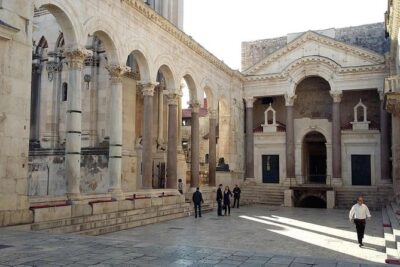
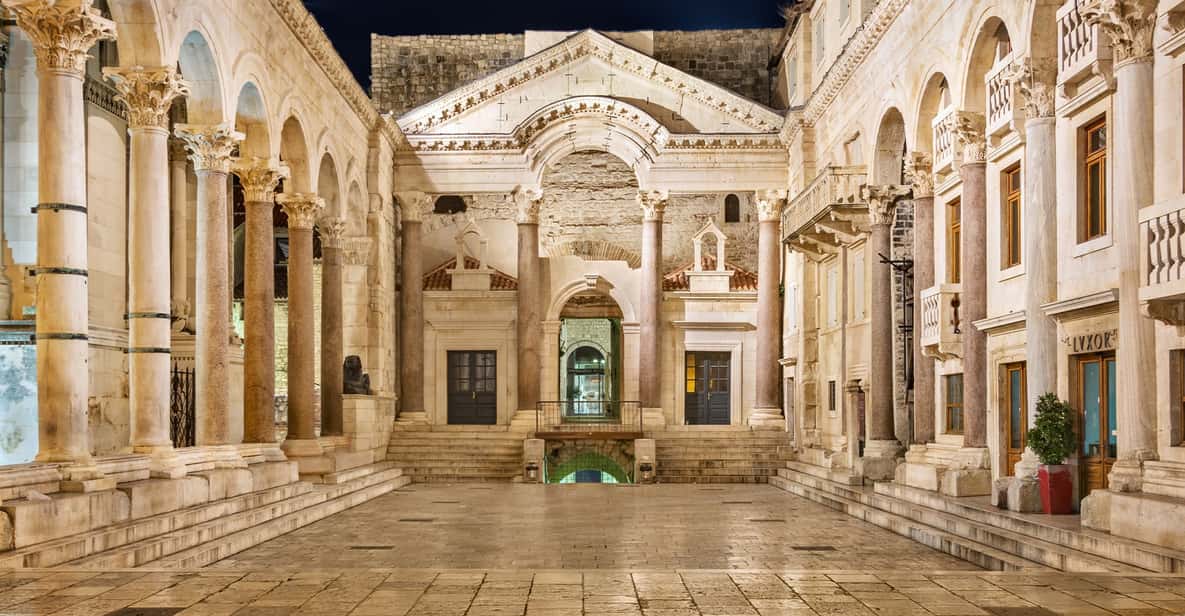
Next comes Jupiter’s Temple and then the Peristil (Peristyle). These are big stops for a reason. They’re the kinds of places where architecture isn’t just decoration—it’s part of how power was displayed.
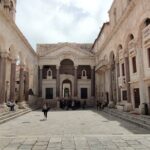
At Jupiter’s Temple, you get context that helps you see the site as an intentional part of the palace complex rather than a random ruin. Then the tour opens up at the Peristil, which is where many palace stories converge. This is also a helpful moment for taking in scale, because Peristyle is where you can visually grasp why Diocletian’s Palace became the backbone of Split’s urban life.
The Peristil portion is where Jelena’s humor and conversational teaching style really fits. The guide is described as circling back for more detail at each stop, so if something goes over your head at first glance, it’s likely addressed again in a clearer way as you move along. That’s a great teaching rhythm for travelers who want to understand, not just hear.
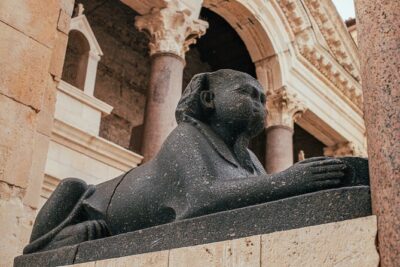
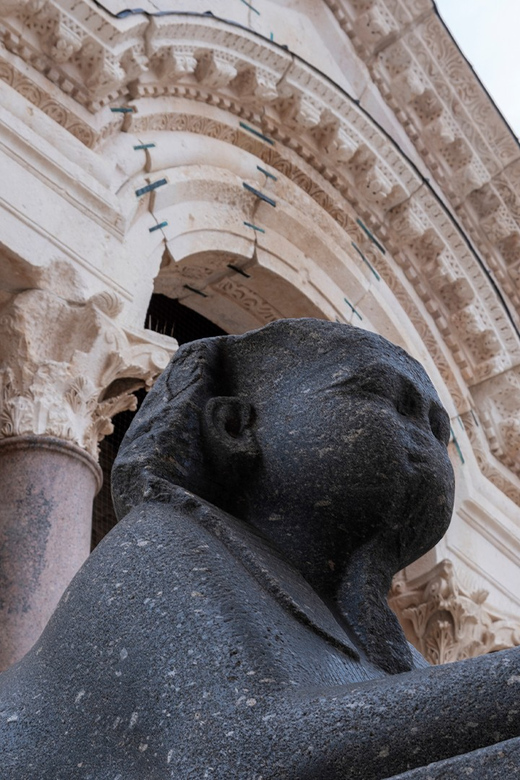
Also, keep your eyes open for iconic palace features mentioned in the experience: the tour includes the Golden Gate and Peristyle plus other famous sights inside the complex. Depending on how the group moves that day, you may also spot major “face” landmarks like the Egyptian Sphinx and other standout points that first-timers usually want photos of.
Cathedral of Saint Domnius plus the Vestibule selfie moment
The next stretch takes you to the Cathedral of Saint Domnius and then the Vestibul. This is where the tour shifts from Roman-era palace power to the layered religious and civic life that came after.
At the Cathedral of Saint Domnius, you’re not just looking at a landmark. You’re seeing how the palace evolved into a space that people continued to use and reshape. That shift is important for first-time visitors because it explains why Diocletian’s Palace doesn’t feel like a dead site. It feels like a living part of town.
Then comes the Vestibul Dome Selfie moment. Yes, it’s a memory stop—but it’s also a smart one. The Vestibul area gives you a distinctive interior backdrop that’s hard to reproduce on your own. This is the kind of playful pause that helps the tour feel lighter after heavier history.
One thing to keep in mind: this experience covers major indoor and outdoor landmarks, but it doesn’t include access to the Substructures or the bell tower. If those are on your personal list, you’ll need a separate plan for that.


Diocletian’s Cellars and the walk to Split Riva
The tour ends with Diocletian’s Cellars, wrapping up on Split Riva. This matters because it transitions you from “inside the palace story” back to the waterfront reality that likely drew you to Split in the first place.
Diocletian’s Cellars are a key interior component of the palace experience. Even if you’re not a history buff, cellars give you a different way to think about the palace: less about public display, more about the practical engine that supported the complex. That practical angle is a theme of the whole tour—history explained with attention to function, not just dates and names.
As you move toward Split Riva and finish back at the meeting area, you’re doing the most important post-tour thing: resetting your mental map. With the palace story explained from the gates to the central spaces and interiors, the waterfront and nearby squares start to look connected instead of random.
And this is where Jelena’s personal touch shows up. The tour includes a recommendations list, plus voucher access in some of the most well-known restaurants and bars so you can try local cuisine at discounted prices. That combo turns the tour from “cool sights” into a real visit upgrade.
Price and logistics: where the $17 value really comes from
At $17 per person, this tour is priced like a smart add-on rather than a big-budget “must.” The value is in what you get for the time: 1.5 hours, a licensed guide, key palace landmarks, selfie time, and follow-up recommendations—plus voucher access for dining and drinks.
The small group size (limited to 10) is part of that value. Around the palace, space is limited and routes can get tight. A larger group tends to flatten the experience into a slow shuffle. Here, it’s easier to hear the guide and to ask questions, which is why conversations are described as meaningful.
Language is also a practical factor: the tour runs in English, which keeps it accessible for many first-time visitors planning their Split days.
If you’re the kind of traveler who hates leaving a city without a plan, the post-tour recommendations are a big deal. You’re not just touring; you’re also being handed next-step ideas for food and sightseeing, shaped for Split rather than generic Croatia tips.
Who should book this tour, and who might want something else
This one fits best if you’re:
- A first-time visitor who wants a clear palace orientation without spending your whole day inside
- Someone who learns best when history is explained through places, not just facts
- A traveler who likes practical tips and wants help deciding where to eat and what to do next
- You prefer small groups where you can actually ask questions
It may be less ideal if:
- Substructures and the bell tower are your top priorities, since access to those is not included
- You need wheelchair access, since the experience is listed as not suitable for wheelchair users
- You want a deep, comprehensive palace excavation route that doesn’t fit into 1.5 hours
Should you book this Diocletian’s Palace tour?
I’d book it if you want Split to make sense early. This tour does a strong job giving you the palace essentials, the storyline, and the practical follow-through—especially with voucher access and personalized recommendations after you’ve finished walking.
If your schedule is tight and you want a first-time-friendly plan inside Diocletian’s Palace, this is a solid choice. If your must-sees include the Substructures or bell tower, then treat this as your orientation tour and plan a separate add-on for those specific access points.
FAQ
How much does the Diocletian’s Palace tour cost?
The price is $17 per person.
How long is the tour?
The tour lasts about 1.5 hours.
What’s the group size?
It’s a small group limited to 10 participants.
What language is the tour guide?
The live tour guide speaks English.
Where does the tour start?
It starts in front of the statue of bishop Gregory of Nin and by the north entrance to the Palace called Golden Gate. The guide is identified by a black umbrella.
Where does the tour end?
The activity finishes back at the meeting point, and the itinerary notes an ending on Split Riva.
What’s included in the tour?
You get an interactive, fun storytelling experience from a licensed guide, extensive history explanations, and Vestibul Dome selfie time. You also receive access to vouchers in some renomed restaurants and bars, plus recommendations after the tour.
Is this tour suitable for wheelchair users?
No, it is not suitable for wheelchair users.
Does the tour include the Substructures or bell tower?
No. Access to the Substructures or the bell tower is not included.