REVIEW · SPLIT
Split Diocletian Palace Highlights – Private walking tour
Book on Viator →Operated by Split Guide · Bookable on Viator
Old stones, real city life. This private walking tour turns Diocletian’s Palace into a quick, story-driven circuit around Split’s most important landmarks. I love how it focuses on the outside details that most people miss, and I also like that you finish back on the Split Riva with the city in full rhythm. One heads-up: if you’re hoping for inside museum-style rooms or paid entry stops, this plan stays strictly outside-only, so you’ll want a different tour for interior tickets.
Another reason it works so well is the pacing: about 1 hour 30 minutes, kept small (built for up to 6, and capped at 10). And the guide approach really matters here—one recent group praised Dana for connecting Roman walls, Christian change, and daily life with clear stories you can actually remember. If you travel with limited time or you want a low-stress, high-impact start to Old Town, this is a smart way to get your bearings.
In This Review
- Key Highlights You’ll Actually Care About
- Split Riva Meets the Roman City: Getting Your Bearings Fast
- Diocletian’s Palace Isn’t a Museum: It’s a Neighborhood
- South Gate + Cellars: Seeing the Scale Without Guesswork
- Peristyle and Jupiter to Christianity: One Square, Two Worlds
- Gates That Lead Somewhere: Markets, Squares, and a Trap Story
- Triclinium and the Private Chambers Feeling
- Green Market Finish and the Riva Loop Back
- Price and Value: What You’re Paying For at $137.80
- Logistics That Matter: Meeting Point, Duration, and Walking Reality
- Who Should Book This Private Palace Highlights Tour
- Should You Book It?
- FAQ
- What’s the duration of the Split Diocletian Palace Highlights private walking tour?
- How much does the tour cost?
- Is this tour offered in English?
- Is it a private tour, and how large are the groups?
- Where does the tour start and end?
- Are there any entrance fees included?
- What ticket type do I receive?
- What’s the cancellation policy?
- Does the tour run in all weather?
Key Highlights You’ll Actually Care About
- Outside-only sightseeing keeps the flow moving and avoids entry lines or extra fees
- Diocletian’s Palace as lived-in space, with shops and homes you can see from the street
- Cellars + peristyle context help you understand what you’re looking at, not just where to stand
- Gates that connect to markets (including a reopening story from the 1940s) make the history feel current
- Triclinium and Jupiter sites give you a sense of power, religion, and everyday dining
Split Riva Meets the Roman City: Getting Your Bearings Fast
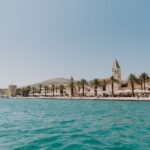
The tour starts at the Model of the historical core of the city of Split, then walks you toward the sea-side promenade known as the Riva. Even before you reach the palace walls, you’re standing in the right mood: this is where locals and visitors linger, sip coffee, and watch the day happen. It’s the easiest place in town to understand that Split isn’t a dead-history backdrop. It’s a real city.
From a practical angle, this first segment is a gift. You’re not sprinting right into complicated ruins. You’re warming up your legs and eyes, then your guide points out how the palace shape controls the whole layout of Old Town. If you’ve ever felt lost in historic centers, you’ll appreciate this early “map in your head” moment.
You can also read our reviews of more walking tours in Split

Diocletian’s Palace Isn’t a Museum: It’s a Neighborhood
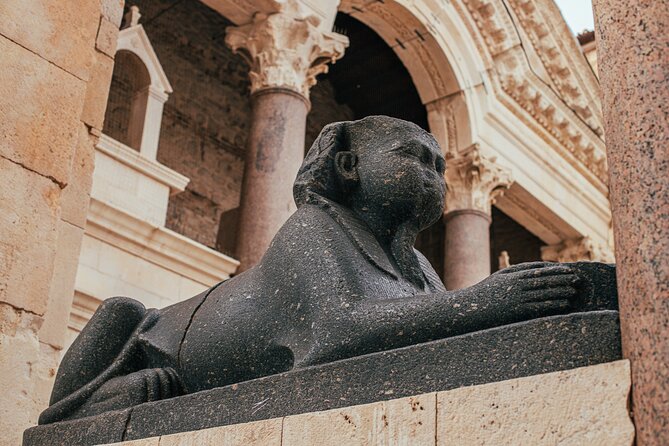
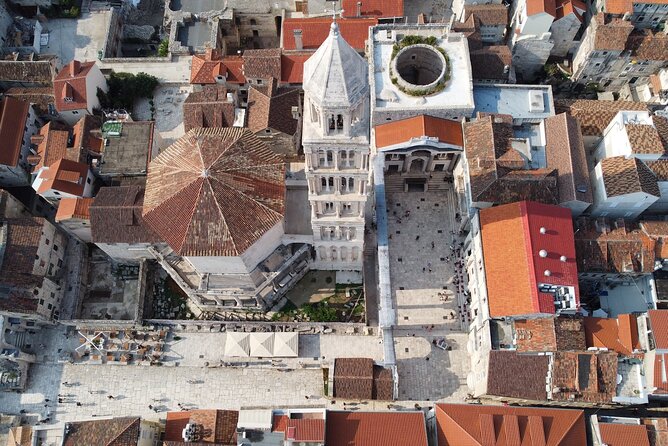
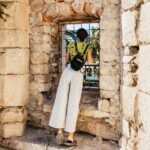
The main act begins at Diocletian’s Palace, built and occupied by Emperor Diocletian more than 1700 years ago. The key thing you learn (and you’ll feel it right away) is that it’s not treated like a classical museum. Inside the palace walls, people live among stores and houses. That means your photos look different than you might expect from other Roman sites: it’s stone plus doors, stone plus everyday errands.
I like that the tour frames the palace as something functional. When you see the bustle and the street-level reality, it’s easier to understand why ancient designs lasted—practical walls were reused, repurposed, and kept relevant.
Possible drawback: because you’re seeing the palace from the outside, you won’t get the full “museum wow” that comes with major interior reconstructions. But for getting oriented and understanding the big ideas fast, outside viewing is honestly the sweet spot.
South Gate + Cellars: Seeing the Scale Without Guesswork
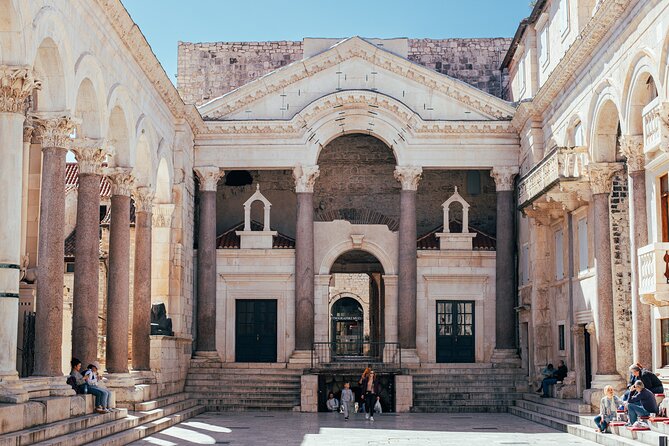
Next you head through the south gate into the cellars area. These weren’t built yesterday—again, more than 1700 years old—and they’re described as very well preserved. The value here is simple: cellars show scale. From above, you can underestimate how massive the palace complex really was. Down at cellar level, the structure feels weighty and real.
Even if your Roman knowledge is basic, this is where the tour starts clicking. Your guide can explain what you’re looking at in terms of design and use, not just dates. And because the pace is tight, you won’t feel stuck reading signs for ten minutes while others move on.
Peristyle and Jupiter to Christianity: One Square, Two Worlds
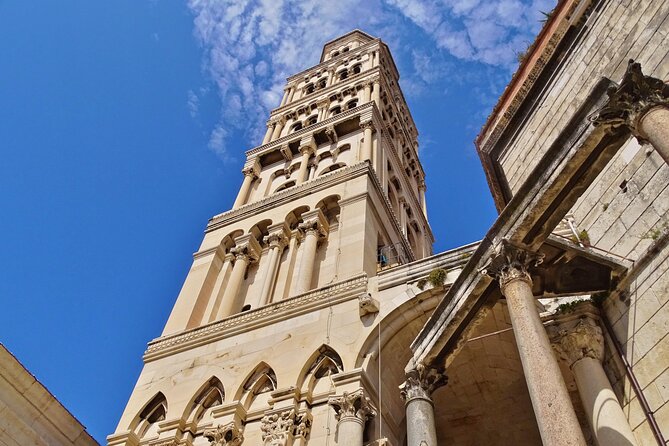
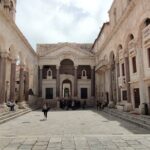
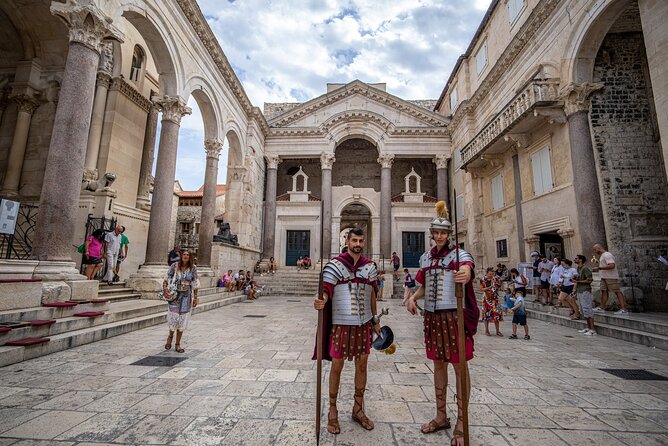
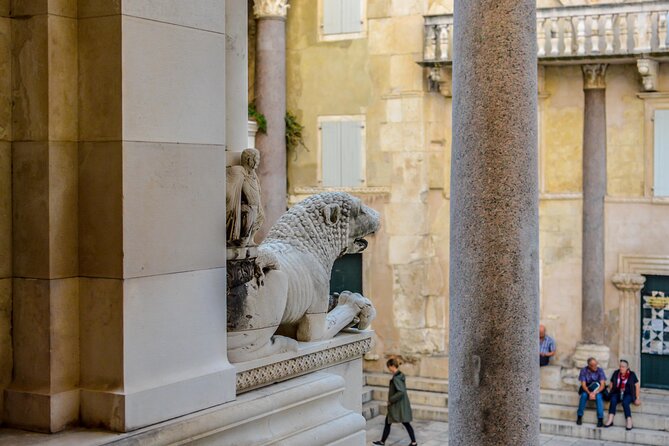
At the Peristyle, you get the sacred-meeting context. This courtyard space was used for important appearances in Diocletian’s time—his place to show himself to subjects and connect his authority with Jupiter. You’re basically getting the political-religious purpose of the space, not just a pretty courtyard photo.
Then the tour bridges to Christianity with nearby religious transformation points. The Cathedral of Saint Domnius (seen from the outside) was once the late emperor’s mausoleum. When Christianity spread, the emperor’s coffin and mortal remains disappeared, and the pagan mausoleum was repurposed into a cathedral. That kind of change is dramatic, but the tour keeps it approachable by tying it to what’s still visible today.
And don’t miss the Temple of Jupiter, now used as a baptistery. You’re looking from the outside, but it adds another layer: Roman sacred architecture didn’t just vanish—it often switched roles.
If you like your sightseeing to come with meaning—not just facts—you’ll enjoy this part.
Gates That Lead Somewhere: Markets, Squares, and a Trap Story
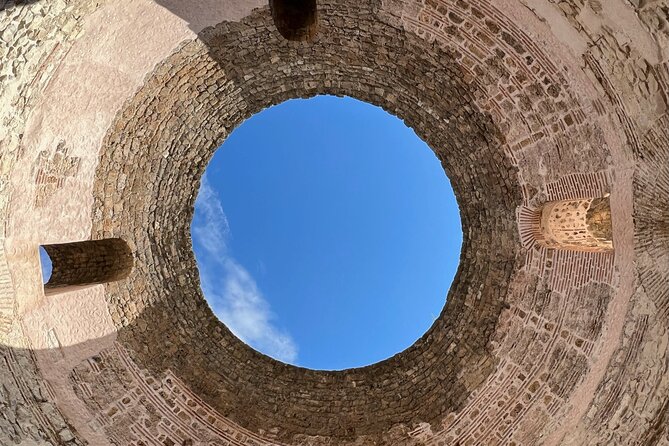
One of my favorite sections is the run of gates. Gates aren’t only architecture; they tell you where people moved and what power protected. Here, you’ll see how the palace edges connect to modern streets and daily commerce.
- The east gate, also referred to as the Silver Gate, was walled up several times and reopened in the 1940s. Today, the gate area leads into the market zone where local products are offered. That’s a great reminder: history doesn’t just sit there; it keeps rerouting life.
- The west gate area is described as a double-gate setup called the Propugnaculum. The space between the gates could trap enemies, who could then be hit from defenders using stones, arrows, and hot oil. It sounds brutal—because it was—but it also helps you understand why gates were designed like systems, not doors.
- Exiting toward the square Pjaca, you’re moved from fortress logic to civic space. In other words, you go from defense to public life.
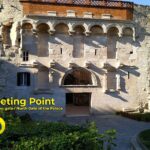
- The north gate, the Golden Gate, mattered most in Roman times, because it connected to the road toward Salona, the capital of the Roman province.
These stops work best when you pay attention to the layout. Your guide helps you connect what you’re seeing—gate geometry, adjacent squares, and flow—into an overall picture of how the palace functioned.
You can also read our reviews of more private tours in Split





Triclinium and the Private Chambers Feeling
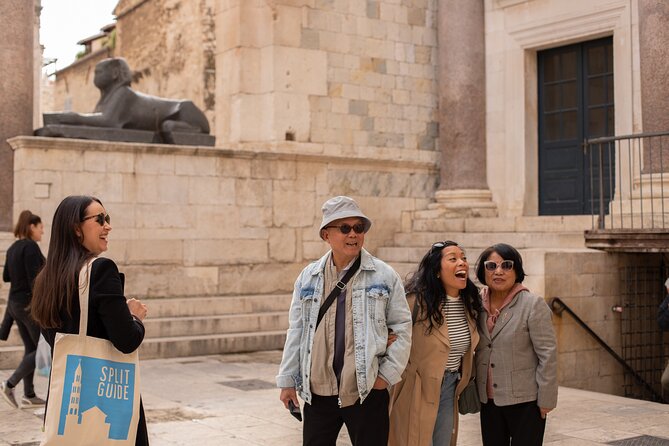
Now you shift from fortifications to personal power.
The Triklinij (Triclinium) is the dining room where Diocletian dined with guests. The tour points out that Mediterranean dishes were part of the food culture, with local wine and fish, plus honey. And the scale of an evening is explained: sometimes up to 20 different courses could be served. Whether you love food history or not, this stop makes rulers feel human. Dining is where status becomes routine, and the palace was built to host that kind of ritual.
You also visit the Vestibulum, the entrance area to Diocletian’s private chambers. Even without stepping inside a room, the point lands: this was a space that guided who entered, who waited, and who mattered.
Green Market Finish and the Riva Loop Back
On the east side of the palace, you’ll reach the Green Market, where fresh fruit, vegetables, and other traditional foods are sold daily. This is one of those sightseeing moments that doesn’t feel like a lecture. It’s just useful. If you’re hungry, planning a picnic, or want a snack with local flavors, you’ll know exactly where to look.
Then the tour brings you back along the palace walls toward the Riva, where locals and tourists enjoy the sun at cafes and restaurants. It’s a clean ending because it matches the beginning: you start with the city’s tempo, and you finish with it too. That makes it easier to transition into your own afternoon plans.
Price and Value: What You’re Paying For at $137.80
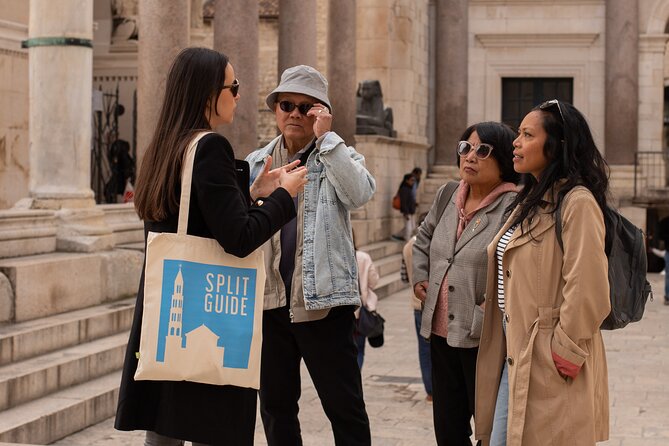
At $137.80 per person, this isn’t a budget “quick walk.” But it also isn’t overpriced if you look at what’s included and what’s intentionally not.
What you get:
- A private walking format designed for a small group (max 6 in the setup, with a cap noted as 10)
- A guide experience with practical recommendations for restaurants, bars, and leisure activities
- Customization—your guide can adapt to your needs if you ask ahead
- A mobile ticket
- English language service
What you don’t get:
- Paid interior access or paid museum entries
- Entrance fees, because sights are visited from the outside
So the “value” isn’t about saving you entry tickets—it’s about buying time, clarity, and flow. In places like Split, the fastest way to get value is to avoid wandering. A good guide helps you see the important things in the right order, and this tour is built to do exactly that in about 90 minutes.
Also, it’s commonly booked about 22 days in advance, which usually signals demand for the best time slots. If you want a particular day, booking earlier is smart.
Logistics That Matter: Meeting Point, Duration, and Walking Reality
The meeting point is the Model of the historical core of the city of Split on Obala Hrvatskog narodnog preporoda 23. The tour ends at Republic Square (Prokurative). That end location is useful because it’s central for onward plans—especially if you want to eat without retracing steps.
Duration is listed as about 1 hour 30 minutes. That’s a pace designed to keep your energy up while still covering a lot of key palace features and the markets.
You’ll also want to plan around weather. The experience notes that it requires good weather. In plain terms: if it’s raining hard, expect changes or a refund option tied to the weather.
On participation: most travelers can participate, and the tour can be adapted to special needs if you inform the provider in advance. Service animals are allowed too.
Who Should Book This Private Palace Highlights Tour
This is a great fit if:
- You want a high-impact Old Town start with a guide
- You prefer small groups and a more personal walking pace
- You’re curious how Roman power shifted into Christian use over centuries
- You want a practical tie-in to dining and nearby spots afterward
You might consider another type of tour if:
- You want to enter the major interiors and museums for full indoor viewing
- You’re traveling with very limited walking tolerance and can’t handle a 90-minute historic stroll
My take: this tour is built for people who want to understand Split quickly—then go explore on their own with better instincts.
Should You Book It?
If you’re visiting Split for a short time, I’d book this. The rating is 5 out of 5 with 35 reviews, and it’s recommended by 100% of those who left feedback. That’s rare. The big win is the guide-led clarity—especially in the way the palace, cathedral transformation, and dining-room detail all connect into one story.
Only skip it if you’re specifically chasing paid interior access. Otherwise, this is the kind of private walking tour that helps you stop thinking you’re just looking at walls. You’re actually learning how the palace shaped daily life, belief, and movement through the city.
FAQ
What’s the duration of the Split Diocletian Palace Highlights private walking tour?
It’s listed at about 1 hour 30 minutes.
How much does the tour cost?
The price is $137.80 per person.
Is this tour offered in English?
Yes, it’s offered in English.
Is it a private tour, and how large are the groups?
It’s designed for groups of maximum 6 participants, and the activity notes a maximum of 10 travelers.
Where does the tour start and end?
It starts at the Model of the historical core of the city of Split (Obala Hrvatskog narodnog preporoda 23) and ends at Republic Square (Prokurative).
Are there any entrance fees included?
No. The sights are visited from the outside, so entrance fees are not included.
What ticket type do I receive?
You get a mobile ticket.
What’s the cancellation policy?
Cancellation is free up to 24 hours in advance for a full refund.
Does the tour run in all weather?
It requires good weather. If it’s canceled due to poor weather, you’ll be offered a different date or a full refund.