REVIEW · SPLIT
Experience Split With Local Professional Historian – Private
Book on Viator →Operated by Pomalo tours · Bookable on Viator
Two hours in Split, and suddenly it makes sense. This private tour with a master’s-degree historian turns Diocletian’s Palace into a readable story, not a maze. I also love the built-in 3D reconstructions that help you visualize what you’re standing on.
You’ll get a clear route through the old city, from the Golden Gate to Pjaca, with lots of context at every stop. One thing to plan for: no admission tickets are included, so if you want to go inside any monuments beyond what you see on the walk, you’ll need to handle that separately.
In This Review
- Key highlights you should know
- How this private tour runs (and why it matters)
- Starting at Golden Gate: the Roman entrance that frames Split
- Gregory of Nin (Grgur Ninski) in 10 minutes of storytelling
- Palazzo di Diocleziano: seeing the palace as a living machine
- Peristyle and the cellars: where daily life becomes visible
- Jupiter’s Temple and St. Domnius: religion explained from street level
- Temple of Jupiter (outside)
- Cathedral of Saint Domnius (outside)
- Vestibulum and Riva Harbor: private space to public life
- Fruit Square and Pjaca: finishing at the city’s social center
- Fruit Square (Trg Brace Radic)
- Pjaca (People’s Square)
- Price, value, and what you get for $156.21
- Who this Split tour suits best
- Should you book Pomalo Tours in Split?
- FAQ
- FAQ
- How long is the private Split history tour?
- What language is the tour offered in?
- Is this a private tour?
- How many people are in the group?
- Where does the tour start and end?
- Are admission tickets included?
- What is the meeting point exactly for Golden Gate?
- Does the tour include a mobile ticket?
- What are the tour’s operating hours?
- What happens if the weather is bad?
Key highlights you should know
- Master’s-degree local historian: explanations are built for real understanding, not dates-only facts
- 3D reconstructions on display: you can picture parts of the palace that are hard to imagine today
- Diocletian’s Palace focus: Golden Gate, Peristyle, cellars, Triclinium, and key viewpoints
- Outside views of major religious buildings: Jupiter’s Temple and St. Domnius Cathedral are explained from where you stand
- Walk ends at Pjaca: you finish on the city’s main gathering square, ready to keep exploring
How this private tour runs (and why it matters)
This is a private walking experience, meant for just your group. The tour price is listed per group (up to 15 people), so the value changes based on how many of you split the cost. With a smaller group, you’re paying more per person. If you’re traveling with friends and can fill more of the group, the cost per person can drop a lot.
The tour runs about 2 hours and is offered in English. You’ll receive a mobile ticket, which makes it easier to show up and get started without digging for paperwork. Starting times are flexible, but you need to contact ahead to lock it in.
Two practical timing notes:
- The listed opening hours are Monday to Friday, 5:00 PM to 7:00 PM.
- The experience is marked as weather-dependent, so if conditions are poor, you’ll be offered a different date or a full refund.
You can also read our reviews of more private tours in Split


Starting at Golden Gate: the Roman entrance that frames Split
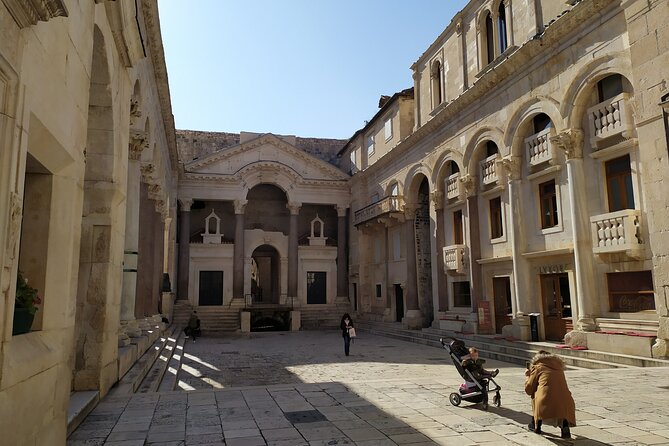
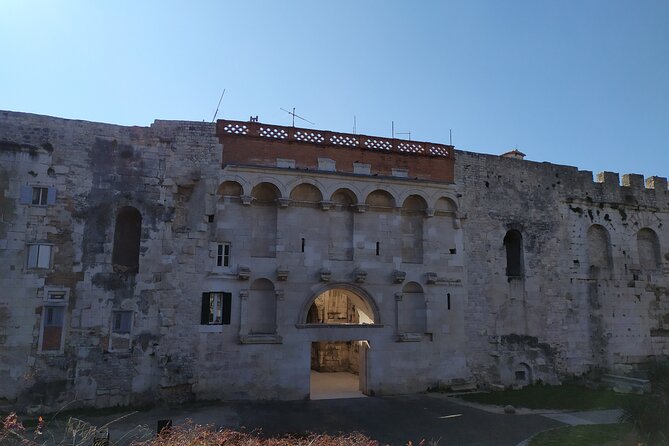
You meet at the Golden Gate (Dioklecijanova 7). Even though it’s called Golden, it’s stone and Roman—one of the northern entrances to Diocletian’s Palace. From here, you’re positioned for the best kind of first impression: you see the gate, then you understand why people built Split around it.
This start works well because the guide doesn’t just identify a landmark. You get the history behind it, plus how the gate connects to what’s just across the way—especially the Gregory of Nin area. That relationship matters because Split’s modern streets grow out of Roman planning. When you grasp that right away, every next stop feels less random.
You’ll spend about 15 minutes here, and since admission is listed as free for the stop, it’s a no-pressure opener. The main value is the framing: you’ll leave this first section knowing what to look for inside the palace walls.
Gregory of Nin (Grgur Ninski) in 10 minutes of storytelling
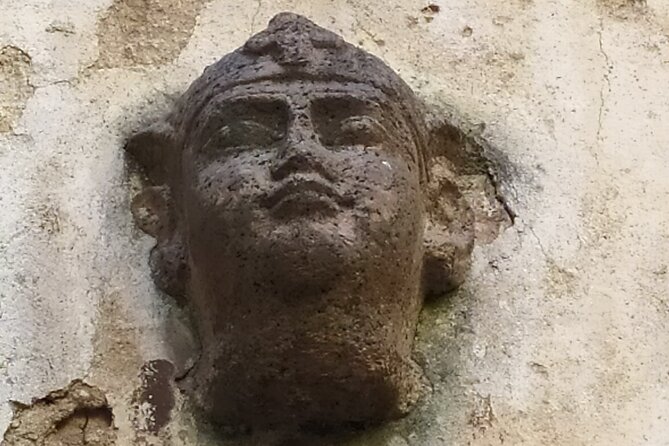
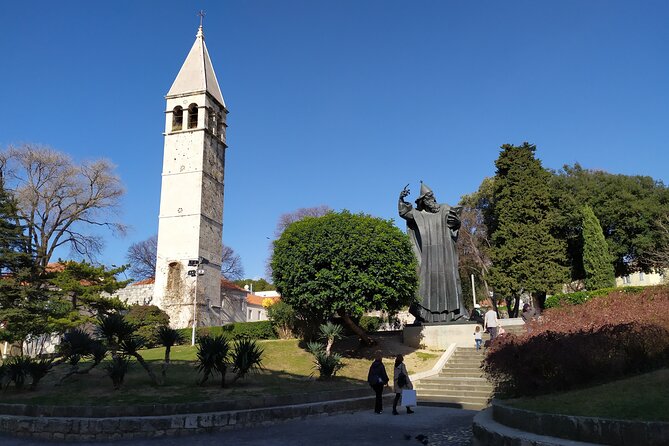
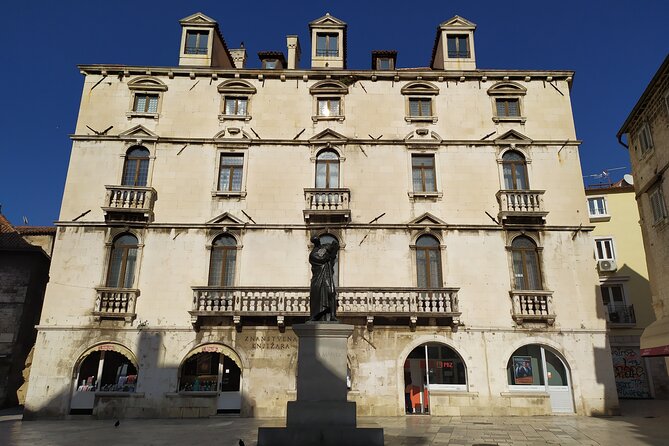
Next is the Grgur Ninski Statue. This is one of those “easy to miss, easy to misread” spots unless someone explains the why. Here, you’ll hear the story and facts tied to Gregory of Nin, plus what the monument is trying to communicate in the city landscape.
Even though the time is short (around 10 minutes), the explanation connects two different layers of Split: Roman roots and later cultural identity. If you’re the type who likes a quick hit of character before the bigger sights, this stop hits the mark.
You also get a better sense of how Split honors its figures in public space—so when you later reach squares like Pjaca, you’ll recognize the pattern.
Palazzo di Diocleziano: seeing the palace as a living machine
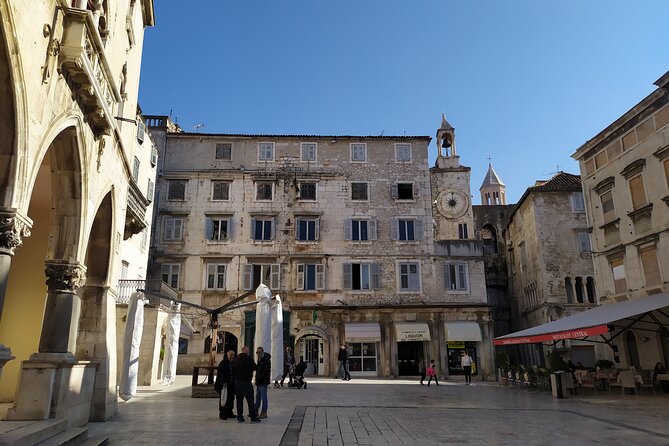
The main event starts at Palazzo di Diocleziano, the palace at the heart of Split. The tour uses this section to show you how the Romans built power into stone—and how the palace later became a medieval city with its own daily rhythm.
From the Golden Gate, you walk through or near the palace’s key parts, including:
- Peristyle
- Jupiter’s Temple (outside)
- Diocletian’s Cellars (central substructure)
- Triclinium
- Mausoleum / St. Domnius area (outside)
This is where the 3D reconstructions start to feel like more than a nice extra. A lot of the palace is hard to read at ground level because time changed the layout and you’re viewing it from angles that weren’t meant for tourists. The guide’s reconstructions and photo references help you piece together what once functioned here.
You also get a sense of transitions—how a Roman palace becomes a lived-in city. That theme runs through the whole tour, but it’s strongest here. You’ll understand the palace not just as a relic, but as a system that changed hands and purposes over centuries.
A note on pacing: this is about 20 minutes focused on the palace highlights. It’s enough time for context, but not so long that you’ll feel trapped in one spot. If you want “every stone, every detail,” you might eventually wish for a longer deep dive—but for a two-hour introduction, this hits a smart middle.
Peristyle and the cellars: where daily life becomes visible
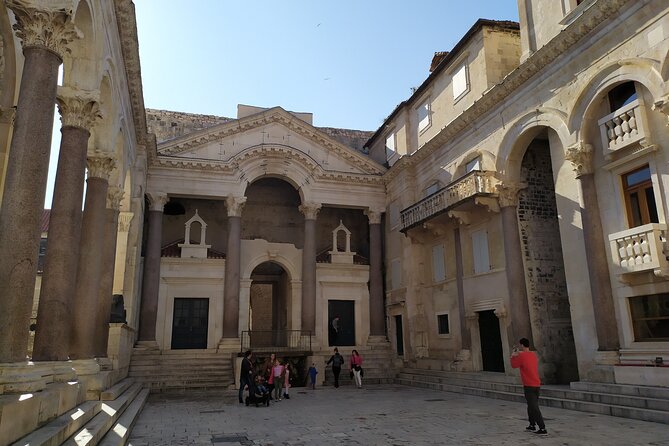
Then you reach the Peristyle, the central courtyard space. Here, you’re told what it did and why it mattered. The Peristyle worked as a connector—but also a divider—between the emperor’s world and everyone else. You start seeing how architecture controlled movement and social distance.
From this central position, you also get a practical gift: a better view of the entire palace layout. That makes the rest of the walk less “point and shoot sightseeing” and more “I get the plan.”
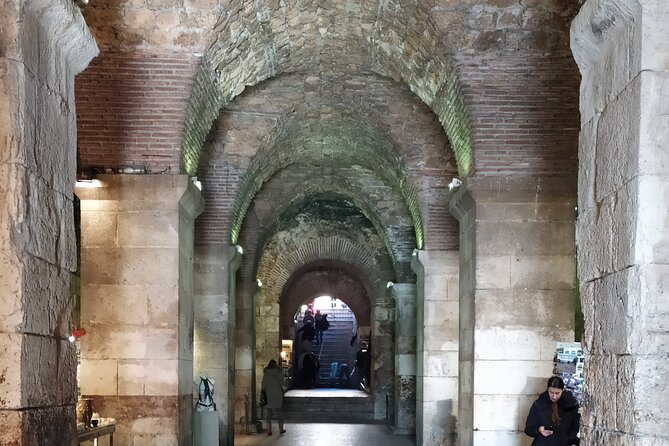
After that, you move into the cellars area, explained as the central substructure. You’ll hear about how the space was used across history and how that shaped the later life of Split. This is one of the tour sections that feels especially valuable if you don’t already know Roman building styles.
You’ll also check the Triclinium area, where the guide talks about Roman dining habits and how the emperor’s dining room was organized. Even if you’re not a Roman-history nut, the dining angle makes the palace feel human. Food beats theory. You’ll remember it.
This segment totals about 20 minutes, so you’re getting a lot of meaning packed into a short walk. If you prefer slower tours, mention it to the guide so pacing can be adjusted.



Jupiter’s Temple and St. Domnius: religion explained from street level
After the palace core, the tour shifts to major religious landmarks—explained mainly from outside viewpoints.
Temple of Jupiter (outside)
You’ll hear why Roman religion mattered so much and how Jupiter’s Temple fit into Roman residences. This is brief (about 10 minutes), but it gives you the big picture: temples weren’t side quests. They were part of how power and belief were staged in daily life.
Cathedral of Saint Domnius (outside)
Next is the Cathedral of St. Domnius. You’ll stand in front of it while the guide explains significant parts and what to pay attention to if you visit the interior later. The tour specifically warns you about what’s interesting inside so you’ll know what to look for on your own.
This approach is good value because it keeps the walk moving while still preparing you for a deeper follow-up visit. If you only have time for one cathedral inside Split, you’ll be better equipped to choose where to spend your time after this tour.
Vestibulum and Riva Harbor: private space to public life
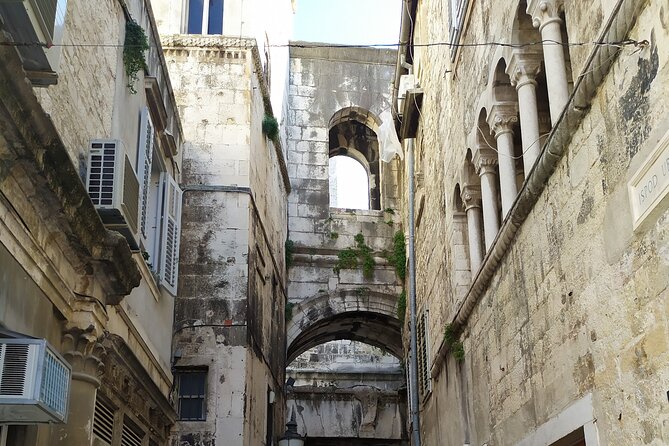
A nice curveball of this tour comes next: you look at the Vestibulum, the pre-entrance to Diocletian’s private chambers. The point isn’t just the name. The guide explains what it looked like and what function it served, tying it back to how the emperor’s world was arranged.
This is about 10 minutes, but it’s one of the better “small stop, big meaning” parts. It helps you understand how Roman architecture separated private and public life in a way that still feels relevant today.
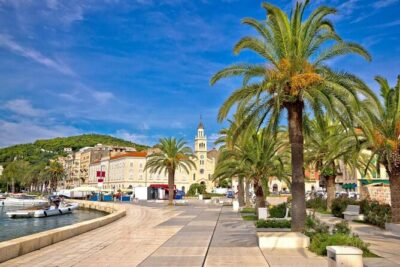
Then you head to Riva Harbor, Split’s main promenade. Here, the story changes from Roman elite spaces to the city’s living edge. You’ll hear how Riva developed over centuries and why locals treat it as central city space.
The time here is short (about 5 minutes), but it’s strategically placed. It gives your legs and brain a reset after palace density. It also helps you remember that Split’s story didn’t end with the Romans. The city kept growing outward.
Fruit Square and Pjaca: finishing at the city’s social center
The tour ends on People’s Square, known as Pjaca. You start with Fruit’s Square (Trg Brace Radic) first.
Fruit Square (Trg Brace Radic)
You’ll learn why the square is called Fruit Square and what important monument sits in the middle. The guide also explains the surrounding sights. Even with only about 10 minutes, this stop helps you read Split like a city, not just a museum.
Pjaca (People’s Square)
Pjaca is the medieval and modern beating heart of city happenings. The guide explains the square’s story and the meaning of nearby buildings, including the old City Hall area.
This final stop is about 10 minutes and ends near Narodni trg 16 (the tour ending point). Afterward, you’ll get advice on where to go next around the square—useful if you want to keep exploring without asking around and wasting time.
When you finish at Pjaca, you’re in the right spot. It’s practical for catching transport, and it’s a natural place to wander further under your own steam.
Price, value, and what you get for $156.21
The listed price is $156.21 per group (up to 15) for roughly 2 hours. That sounds simple, but value depends on your travel style.
Here’s the reality:
- If you’re a small group (two or three people), you’re paying for a high-touch private guide and specialized historical explanations.
- If you’re traveling with friends and can fill more of the group limit, the cost per person gets much more friendly.
- The included tools matter: you’re not just getting a walking lecture. You get 3D reconstruction visuals to help you understand what’s hard to see.
Also, this tour focuses on a very dense cluster of landmarks: Golden Gate, key palace areas, major religious viewpoints, and the city’s central squares. For most people, that coverage is a real efficiency win. You’re spending your time in the places that make Split’s layout click.
One more value angle: the guide has real academic background. The tour is led by a local professional historian with a master’s degree in history, which shows in how the explanations are structured and how they connect different eras.
Who this Split tour suits best
This experience is a strong fit if you:
- want a smart first look at Diocletian’s Palace without reading an encyclopedia first
- like history that explains cause and effect (how Roman design shaped later city life)
- appreciate visual help like 3D reconstructions when ruins feel confusing
It can also work for different mobility needs as long as you communicate in advance. In particular, the guide has shown the ability to adjust pacing and find places to sit when needed.
If you’re already a serious archaeology specialist and want “museum-level detail” at every corner, you might prefer a longer or more specialized tour. But for a 2-hour overview with clear meaning, this one does the job.
Should you book Pomalo Tours in Split?
I think this is a good booking when you want the best parts of Split’s story without spending your whole evening lost in the old town maze. The standout strengths are the academic historian, the 3D reconstructions, and the fact that the walk moves from Roman power to medieval city life to modern promenade in one coherent route.
Book it if:
- you can do the Monday–Friday, 5:00 PM–7:00 PM window
- you want English storytelling that helps you understand what you’re seeing
- you’re visiting Diocletian’s Palace and want it explained in plain, practical terms
Skip it (or consider pairing it with an entry-focused plan) if:
- you specifically want lots of inside admissions, since the tour doesn’t include admission tickets
- you need a faster pace or a more flexible daily schedule than the listed hours
FAQ
FAQ
How long is the private Split history tour?
The duration is listed as approximately 2 hours.
What language is the tour offered in?
It’s offered in English.
Is this a private tour?
Yes. It’s private, and only your group participates.
How many people are in the group?
The price is per group up to 15.
Where does the tour start and end?
It starts at Golden Gate, Dioklecijanova 7, 21000 Split, Croatia, and ends at Narodni trg 16, 21000 Split, generally on People’s Square (Pjaca).
Are admission tickets included?
No admission tickets are included. The tour description lists the stops as admission ticket free, but the experience itself does not include tickets.
What is the meeting point exactly for Golden Gate?
The meeting point is Golden Gate, Dioklecijanova 7, 21000 Split, Croatia.
Does the tour include a mobile ticket?
Yes, it includes a mobile ticket.
What are the tour’s operating hours?
The listed opening hours are Monday to Friday, 5:00 PM to 7:00 PM, for the date range shown.
What happens if the weather is bad?
The experience requires good weather. If it’s canceled due to poor weather, you’ll be offered a different date or a full refund.
If you tell me your travel dates and group size, I can help you judge whether this $156.21 per group price is a great fit or whether you’d be better with a different format.