REVIEW · TROGIR
Mostar and Kravica Waterfall Discovery Day Trip from Split or Trogir
Book on Viator →Operated by Tours in Croatia · Bookable on Viator
Mostar packs a lot into one day. From the riverfront views to the Ottoman-era bridge at Stari Most, this trip is built for first-timers who want the big hits fast. I also like that the drive is done in air-conditioned comfort, so the day doesn’t feel like one long slog.
You get two strong anchor moments: a guided walk in Mostar’s historic core, then time to cool off at Kravice Waterfalls. I like the mix of structured sightseeing plus free time for food and shopping, not just a forced march from stop to stop.
The main drawback is timing. Between border procedures and traffic, the free time in Mostar and especially at Kravice can feel a bit tight, so you’ll want to show up ready (and bring cash for the extra fees).
In This Review
- Key points before you go
- The early start from Split or Trogir is part of the bargain
- Počitelj’s fortress stop: short, but it sets the mood
- Mostar Old Bridge walk: Stari Most, Old Bazaar, and Ottoman details
- Your free time in Mostar: how to use ~2.5 hours well
- Kravice Waterfalls: swim time, crowds, and steep stairs
- What you should pay on top of the tour price (and why it matters)
- Transportation comfort and group size: what it feels like on the bus
- Who should book this day trip (and who might not love it)
- Should you book the Mostar and Kravice trip from Split or Trogir?
- FAQ
- What are the tour departure times from Split and Trogir?
- How long is the trip?
- Is the tour guided in English?
- What does the price include?
- What extra fees should I bring cash for?
- Do I need a passport?
- How much free time do I get in Mostar?
- Is swimming at Kravice allowed?
- What should I wear or bring for Kravice?
- Is this tour group size limited?
- Cancellation due to weather: what happens?
Key points before you go
- Mostar with a real local guide: a 1-hour walking tour that covers the bridge area, Old Bazaar, and standout Ottoman-era sights.
- Stari Most is the star: expect big river views and a lot of photo angles.
- Počitelj adds context: a quick fortress stop tied to endangered cultural heritage.
- Kravice is for swimming, but plan for stairs: decent footwear matters because the route back up is steep.
- Bring cash and small denominations: Kravica entry and border-related fees are paid in cash, and change can be annoying.
- It’s a long day: you’re out early from Split or Trogir, and the itinerary can shift with weather or road conditions.
The early start from Split or Trogir is part of the bargain
This tour leaves early, and that’s the deal. Departing from Split is around 7:00 am, and Trogir departures are around 6:15 am, so you’re already rolling while the coast is still quiet.
Most of the day is travel time plus three main stops. The drive takes you from Croatia into Bosnia and Herzegovina, and you’ll likely notice how the landscape, language, and everyday life shift as you cross the border.
One practical win: the transport is air-conditioned, which really helps on a full-day schedule. If the day runs warm, that cooling effect makes the long itinerary feel easier to handle.
Also, the pace is shaped by reality. Traffic and bad weather can change how long you stay at each place, and Kravice time can shrink if travel or border timing goes sideways.
You can also read our reviews of more tours and experiences in Trogir
Počitelj’s fortress stop: short, but it sets the mood
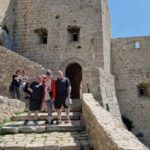
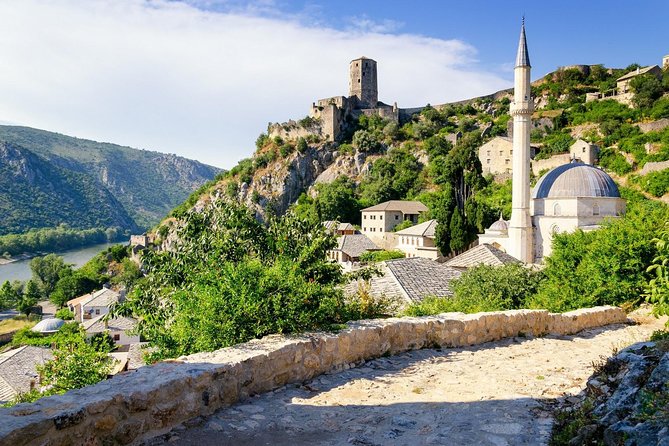
A lot of day trips skip the “in-between” history. This one adds a stop at Počitelj, a hillside town and fortress area, for about 30 minutes.
Počitelj has been placed on the World Monuments Watch list of endangered cultural heritage. In other words, this isn’t just a random photo pull-off. Even with limited time, it gives you useful context before you hit Mostar.
Think of Počitelj as your palate cleanser and your backstory. You’ll get a sense of how these Ottoman-era settlements were perched and protected—then Mostar’s more famous riverfront will make even more sense.
Mostar Old Bridge walk: Stari Most, Old Bazaar, and Ottoman details
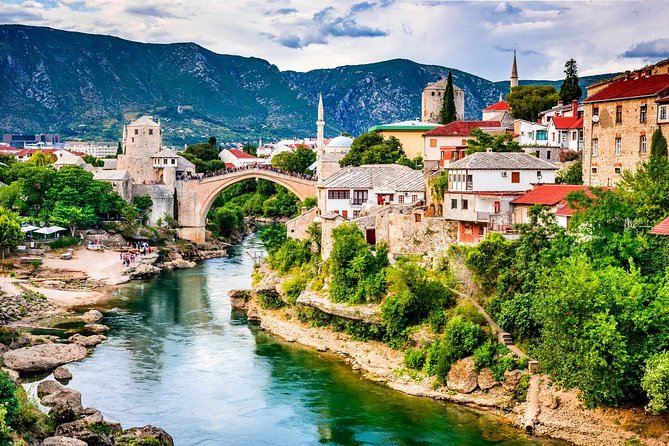
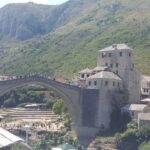
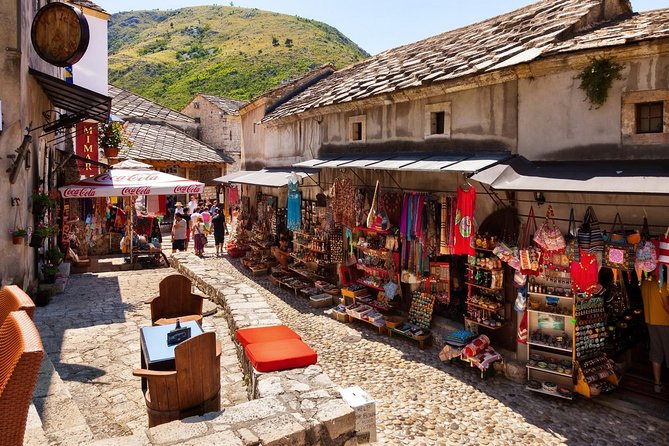
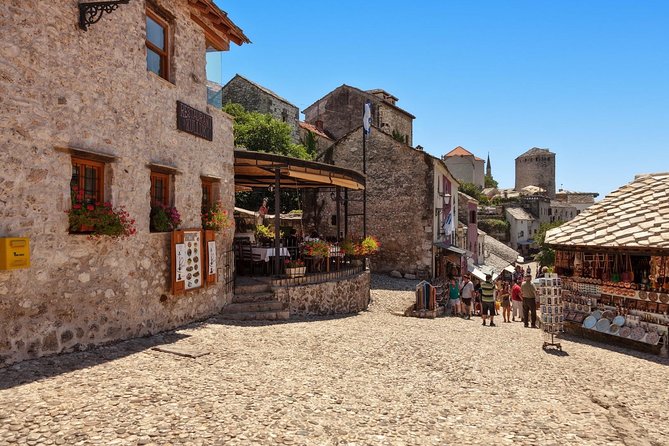
Mostar is the headline, and the tour is built around that. You’ll have a guided 1-hour walking tour focused on the most important sights, including Stari Most (the Old Bridge), the Old Bazaar area, and Ottoman-era highlights.
A good part of the value here is that you’re not just wandering. Your guide sets the scene and helps you connect what you’re seeing to what shaped the city—its Ottoman border identity and how that history still shows up in architecture and culture today.
Along the route, you should expect stops that include:
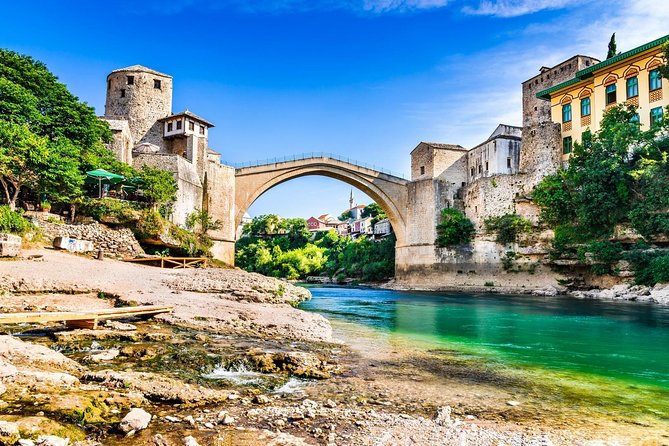
- Stari Most, with its steep arch over the river (the kind of view you’ll keep photographing).
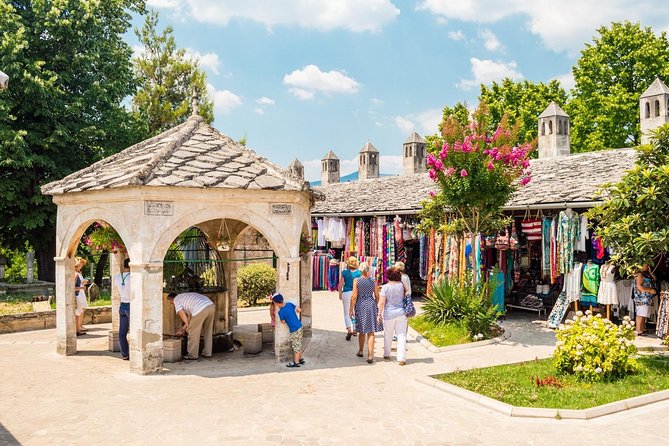
- The Old Bazaar area, where shopping and streets feel tied to the city’s traditional layout.
- Turkish house Biscevica kuca.
- A 17th-century mosque seen in the context of the city’s historic core.
In practice, this guided hour is where you’ll get your bearings fast. After that, you’re let loose to explore on your own.
And yes—Stari Most is the moment people travel for. Even if you’re not there for jumping, you’ll want to stand close enough to understand the scale and the river setting.
Your free time in Mostar: how to use ~2.5 hours well
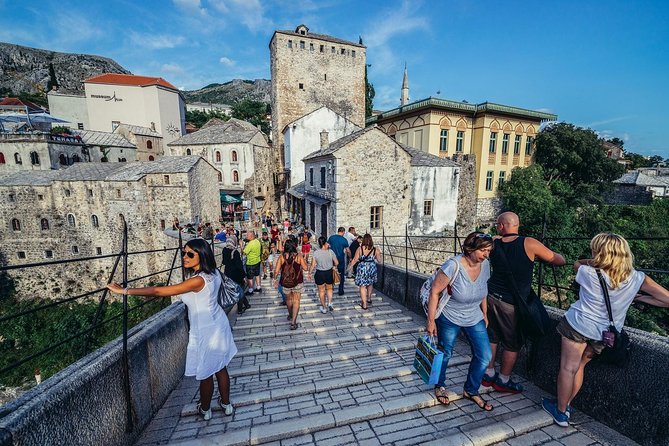
After the walk, you get a chunk of time on your own—about 2.5 hours in Mostar—so you can shop, stroll, and eat without feeling rushed every minute.
This is also where the trip can feel either perfect or tight, depending on your style. If you want a slow lunch and real browsing, you’ll need a game plan. If you’re happy with a targeted route—bridge, bazaar, a couple of streets—there’s enough time to enjoy it.
Food is an easy win. I’d plan to try cevapi (sausages served in bread) or burek (minced-meat pastry). It’s practical, filling, and it helps you stay in the local rhythm without turning lunch into a logistics problem.
Shopping can be fun, but be realistic. Mostar’s Old Town has plenty of tourist-friendly stalls, and the “best stuff” is usually what you notice quickly: small crafts, local treats, and simple souvenirs that don’t require a long hunt.
One money-saving detail: bring smaller euro bills. Some people find that change can get complicated, and having smaller denominations helps you avoid awkward delays.
If you’re the type who likes seeing daily life, Mostar delivers. You’ll also see the bridge area working as both a landmark and a performance stage, and that adds energy even if you just watch for a short moment.
Kravice Waterfalls: swim time, crowds, and steep stairs
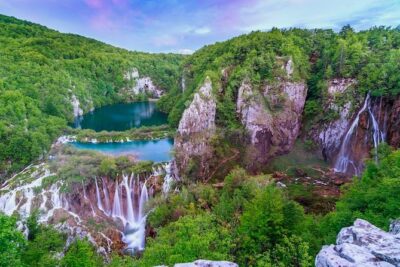
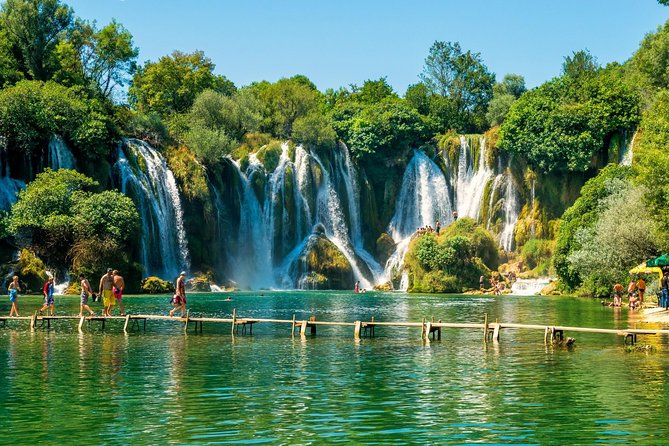
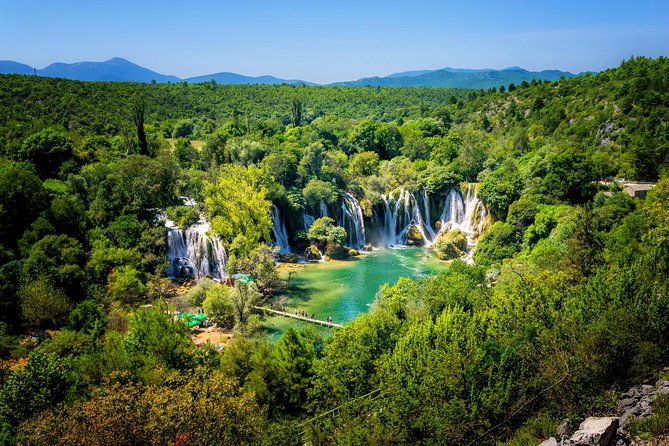
Then you head to Kravice Waterfalls, where the payoff is scenery plus the chance to cool off. The falls empty into a blue-green, forest-fringed lake, and there’s usually an optional swim.
Here’s what I think is important: you’re not going to a quiet, empty stretch of nature. This place can be busy, and at the bottom you’ll find kiosks and bars. You’ll likely hear music, see crowds, and find a “beach” vibe more than a lone wilderness moment.
If swimming is on your list, plan your footwear. The route down and—more importantly—the climb back up can be steep. Good shoes matter. I’d also strongly consider water shoes if you want comfort for getting in and out of the water.
Another practical tip: places around the falls can be cash only, so keep some euros ready.
Time at Kravice is often shorter than you wish. Even when you get scheduled time, you’ll feel the trade-off: the swim and photos are great, but you’ll need to finish up and make the return on time. On hot days, that refresh is worth it—just don’t expect a long, lazy afternoon.
What you should pay on top of the tour price (and why it matters)
The listed price is $84.69 per person, and it covers the big structure: the guided Mostar walk, the official English-speaking guide, and air-conditioned transport, plus road tolls and VAT.
But there are extra costs you should plan for in cash. You’ll need:
- €10 for the Kravica waterfall entrance ticket (paid in cash at check-in)
- €5 government fees (paid in cash at check-in)
- €5 border crossing fee (paid in cash at check-in)
So on the ground, you should be budgeting about €20 in cash per person on top of the tour price.
Why I’m stressing this? Because cash-only moments are when trips feel stressful. Having the right bills ready keeps you moving and prevents last-minute scrambling.
Also note the passport-related details: a valid passport is required and needs to be presented to office staff, and border crossing procedures can require stepping off the bus to present your passport. Build in patience for that part of the day.
Transportation comfort and group size: what it feels like on the bus
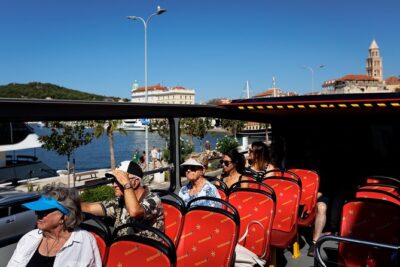
This tour runs with a maximum of 53 travelers, so you’re not in a tiny private bubble. Still, the bus ride is described as comfortable, and the day includes enough stops for basic needs—so you’re not stuck for hours without a chance to stretch.
The driver and guide partnership matters because they’re managing timing, border steps, and the handoff between the main guide and the local Mostar guide. In the real world, that coordination is what keeps a packed day from turning into chaos.
On the vehicle quality front, one safety-related concern appeared in feedback. The operator’s response emphasized that vehicles are regularly maintained and that any engine warning was handled by an experienced driver so the group could complete the tour safely. If vehicle maintenance is a big concern for you, it’s reasonable to ask about how they handle vehicle checks day-to-day.
Who should book this day trip (and who might not love it)
This trip is a great fit if you:
- want an efficient taste of Bosnia and Herzegovina without renting a car
- care about the Mostar sights and want help understanding what you’re seeing
- like having a guide for the “main story,” then freedom to eat and wander
It can feel less ideal if you:
- hate tight schedules or want very long free time in any one place
- want a slower, calmer waterfall moment with tons of swim time
- dislike steep walks—because the Kravice return is physical, even if you’re just going for a quick dip
Also, consider what you want from Mostar. The guided hour is focused and useful, but the free time can be just enough. If you’re hoping for deep exploring of side streets and museums, you’ll need to accept the trade-off of a day trip format.
Should you book the Mostar and Kravice trip from Split or Trogir?
I’d book it if your goal is a high-impact day: Stari Most, a guided Old Town walk, and a real chance to swim at Kravice. The value comes from the guide time in Mostar and the fact that you’re not dealing with border logistics on your own.
I wouldn’t book it if you want a relaxed itinerary with zero pressure. The whole point here is packing in the must-sees, and that means you’ll be watching the clock, especially at Kravice.
If you do book, go in prepared: bring cash for the on-site fees, carry your passport, wear shoes that handle steep paths, and plan your Mostar lunch route quickly after the guided walk. That’s how you turn a long day into a memorable one.
FAQ
What are the tour departure times from Split and Trogir?
Departure from Split is around 7:00 am from the Gray Line office. Departure from Trogir is around 6:15 am from the Gray Line office.
How long is the trip?
The experience runs about 12 hours in total (approx.), with travel time depending on traffic and conditions.
Is the tour guided in English?
Yes. You get an official English-speaking local tour guide for the Mostar walking tour.
What does the price include?
It includes the guided tour of Mostar, an official English-speaking tour guide, air-conditioned vehicle, and road tolls and VAT.
What extra fees should I bring cash for?
You’ll need cash for the Kravica waterfall entrance ticket (€10). You’ll also need to pay government fees (€5) and a border crossing fee (€5) in cash at check-in.
Do I need a passport?
Yes. A current valid passport is required on the day of travel and must be presented to office staff.
How much free time do I get in Mostar?
After the guided walk, you get free time in Mostar of about 2.5 hours to shop, stroll, and have lunch (own expense).
Is swimming at Kravice allowed?
Yes. Swimming is optional at Kravice Waterfalls, assuming time permits.
What should I wear or bring for Kravice?
Swimsuits and comfortable clothes are recommended, along with comfortable shoes. It’s also a good idea to bring footwear that works well on steep paths.
Is this tour group size limited?
Yes. The tour has a maximum of 53 travelers.
Cancellation due to weather: what happens?
This experience requires good weather. If it’s canceled due to poor weather, you’ll be offered a different date or a full refund.