REVIEW · SPLIT
Split Food Tour: Discover Split One Bite At A Time
Book on Viator →Operated by Split Food Tour · Bookable on Viator
Five tastes in four hours in old Split.
This tour is built around authentic local eateries (not a warehouse of samples) and a walking loop that ties the food to the stonework of Diocletian’s Palace. I like that it stays small, so your guide can actually point things out and keep the pace friendly.
You also get a real meal rhythm: charcuterie to dessert, plus a shot of local liquor, with water provided along the way. My favorite part is how the history walking doesn’t feel like a lecture; it’s the context that makes dishes make sense.
One drawback to consider: the tour is not suited for vegetarian or vegan diets, and the exact menu can shift with seasonality and availability. If you’re very picky about texture (for example, risotto style), you may want to be ready for Croatian standards, not your home-kitchen ones.
In This Review
- Five Things You’ll Notice Right Away
- Split Sign Meetup And A 4-Hour Game Plan
- Why Five Local Eateries Beats Market Sampling in Split
- Diocletian’s Palace Area: The Walk That Gives Context
- The Menu Stops: Prosciutto, Black Risotto, Pasticada, Burek, Gelato
- Stop 1: Charcuterie Board With Dalmatian Salty Flavor
- Stop 2: Black Risotto With Cuttlefish Ink
- Stop 3: Pasticada, Gnocchi, Peka Bread, Plus Rakija
- Stop 4: Burek, the Flaky Snack You’ll Want Again
- Stop 5: Gelato or Sorbet, and Lavender If Available
- Rakija, Portions, and Drinks: What You Actually Get
- Off-the-Beaten-Path Stops With Real Local Voices
- Price and Value: Is $145.12 Worth It?
- Dietary Needs: What You Can Expect and What to Plan For
- Who Should Book This (And Who Should Skip It)
- Should You Book Split Food Tour One Bite At A Time?
- FAQ
- How long is the Split food tour?
- How much does the tour cost?
- What language is the tour offered in?
- Where does the tour start and end?
- What’s included in the tastings?
- Is alcohol included, and is there an age limit?
- Is the tour suitable for vegetarians or vegans?
- Can the tour handle allergies or dietary restrictions?
- What’s the maximum group size?
- Do I need to book a separate history tour?
Five Things You’ll Notice Right Away
- Five stops, one continuous old-town route centered on Diocletian’s Palace
- Dalmatian specialties on purpose, like pasticada and black risotto with cuttlefish ink
- Small group size (max 12) for more attention at each table
- A shot of rakija plus water provided, not a BYO tasting roulette
- End-of-tour guidebook, with ideas to keep eating after the tour
Split Sign Meetup And A 4-Hour Game Plan
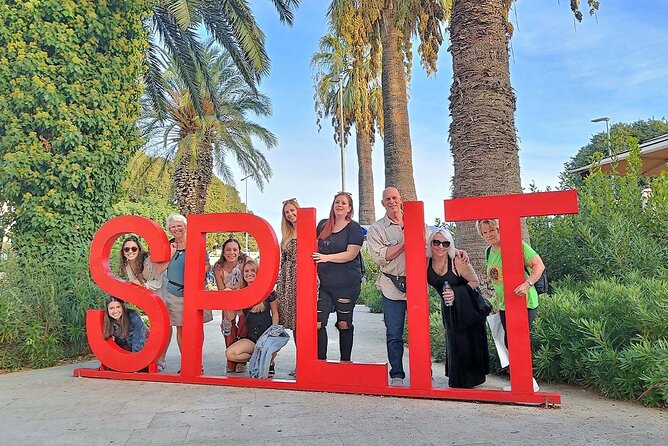
Meet at the Split sign in Grad, near the center of town. The tour returns to the same meeting point, so you’re not left navigating back through the old streets with a full stomach and a shopping bag.
Plan for about 4 hours, on foot. This is a walking-and-tasting format, so comfortable shoes matter. You’ll also want to pace yourself early, because the servings add up over five different places.
You can also read our reviews of more food & drink experiences in Split


Why Five Local Eateries Beats Market Sampling in Split
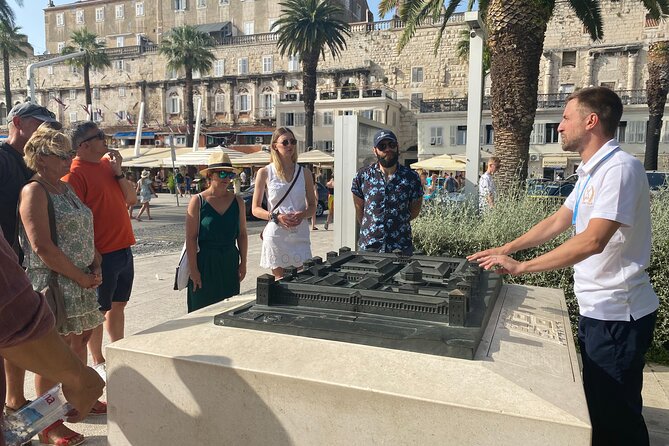
This isn’t the style where you wander past rows of stalls and grab tiny tastes while everyone talks over the noise. Instead, you visit five authentic establishments frequented by locals, and you eat through the meal stages like a proper lunch.
That format is what makes it feel efficient. You’re not burning time trying to pick restaurants. Your guide handles the “where” and the “what’s special here,” and you get a story hook for each dish.
Also, small-group size (up to 12) changes the experience. You’re able to ask questions, hear the explanations, and actually sit down for at least part of the tasting. Several guides are local licensed hosts, and their energy tends to shape the whole afternoon.
Diocletian’s Palace Area: The Walk That Gives Context
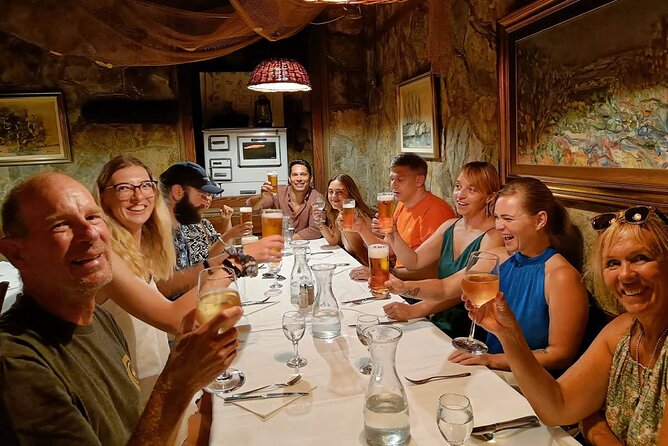
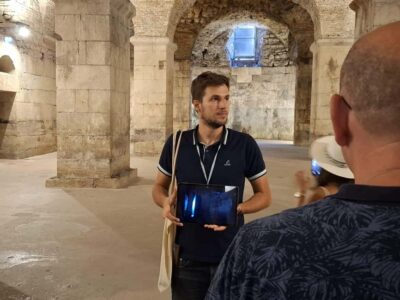
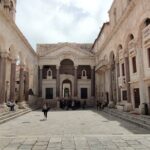
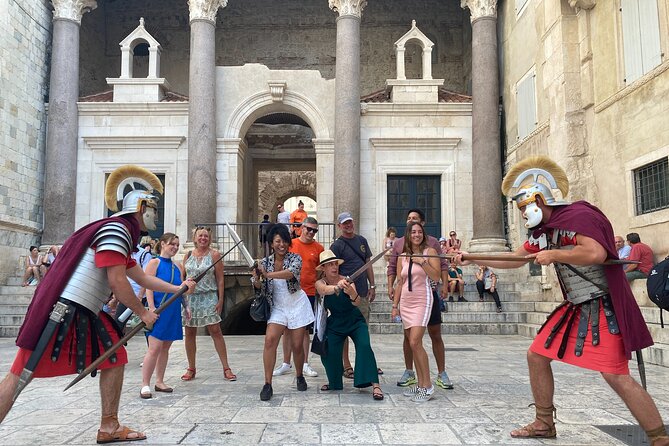
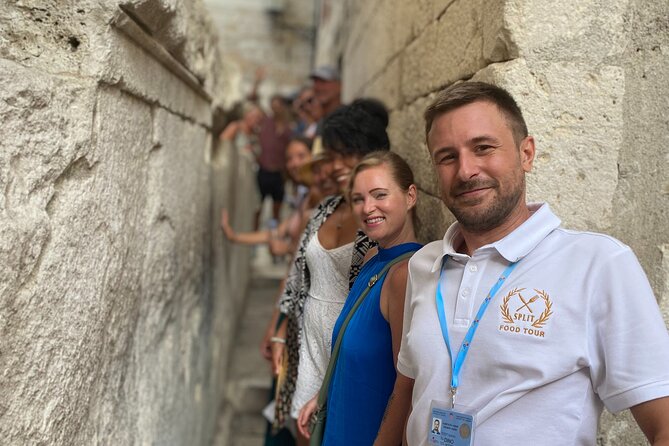
The route is tied to Diocletian’s Palace and the surrounding old-town landmarks (UNESCO World Heritage Site). You don’t just look at history—you learn what it was like to live around these walls, and how that background shows up in food habits.
Along the way, you get photo moments. Expect classic old-street angles, palace-area views, and the kind of street-level details that are hard to notice on your own unless someone points them out.
A helpful note: the history portion is meant to stand alone. If you recently did a major history tour, you might see some overlap. Still, it’s usually worth it because the history is used to explain the plates, not compete with your earlier itinerary.
The Menu Stops: Prosciutto, Black Risotto, Pasticada, Burek, Gelato
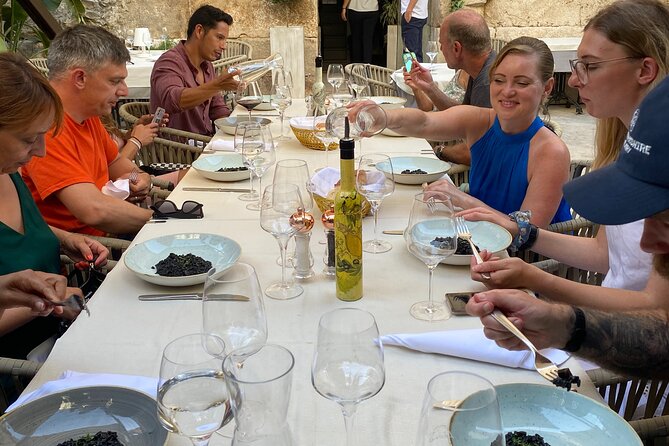
Here’s the tasting flow you can expect, with what each stop is doing for the bigger picture.
Stop 1: Charcuterie Board With Dalmatian Salty Flavor
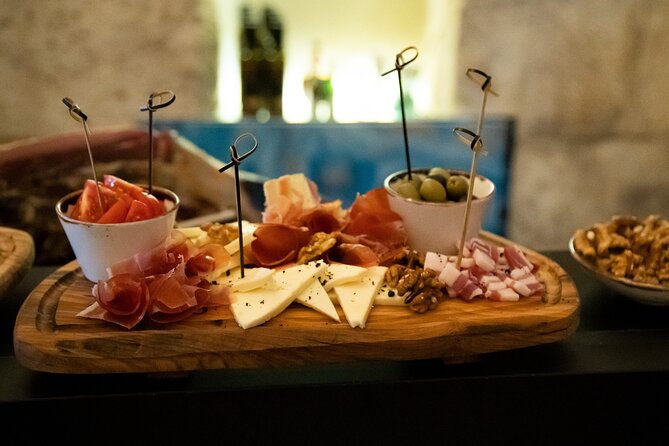
You start with a charcuterie board built from Dalmatian prosciutto and pancetta, paired with cheese, olives, and a selection of salts. It comes with home-made bread plus olive oil.
What I like about starting this way is that you immediately taste the “salt story” of the region. Croatia’s Adriatic climate helps shape cured meats and simple flavor building. The salts and olive oil also make it easier to understand why later dishes feel both bold and clean.
Watch for how the meats differ in salt level and texture. That first stop trains your palate for what comes next.
You can also read our reviews of more tours and experiences in Split




Stop 2: Black Risotto With Cuttlefish Ink
Next up is black risotto, made with Adriatic cuttlefish and cuttlefish ink, served with local bread and olive oil.
This is a stop where you should set expectations. Some people love the bold ink flavor right away; others need a moment to appreciate it. And risotto style matters: in this region, risotto can lean more on the al dente side than what some visitors expect.
If you’re sensitive to stronger seafood flavors, don’t panic. You’re not committing to a full entrée—this is a tasting, and the guide’s commentary can help you decide how to eat it.
Stop 3: Pasticada, Gnocchi, Peka Bread, Plus Rakija
Then comes the land-meets-sea feel of Dalmatian comfort food: pasticada (Dalmatian beef pot roast), served with home-made gnocchi and peka bread. You also get a shot of rakija (local liquor).
This is one of the best stops for understanding the “everyday special” side of Croatia. Pasticada has a slow-cooked comfort vibe, but it’s paired with bread and gnocchi in a way that feels practical, not fussy.
If you’re not used to rakija, it’s a small shot, but it can be intense. The good move is to sip water between bites and treat it as part of the tasting, not a finish-line challenge.
Stop 4: Burek, the Flaky Snack You’ll Want Again
For the snack stop, you get burek—thin, flaky dough—served with a filling you can choose from (or you’ll be guided based on what’s available).
Burek is one of those foods that travels well in your memory. It’s not just pastry; it’s a comfort grab that shows up across the Balkans, and it’s a smart contrast to the heavier meal stops.
If you tend to overdo dessert, this is also a good “reset” stop. It’s filling but lighter in feel than the meat course.
Stop 5: Gelato or Sorbet, and Lavender If Available
You end with gelato (or sorbet), with flavors based on what’s offered that day. The one to look for, if available, is lavender—a distinctly local-feeling choice.
This final stop is well placed. After five savory tastings, dessert helps close the loop. Also, gelato/sorbet tends to be a small, easy-to-share moment, which keeps the end of the tour relaxed rather than rushed.
Rakija, Portions, and Drinks: What You Actually Get
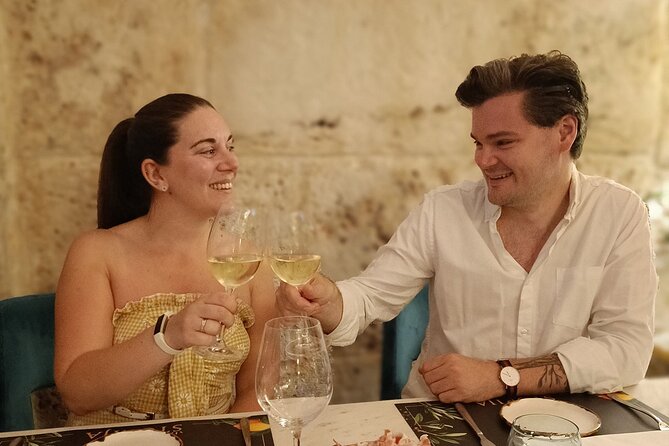
Here’s what’s clearly included: all food at five establishments, plus water throughout the tour, plus a shot of rakija. Minimum drinking age is 18, so if alcohol isn’t your thing, you’ll still be part of the tasting structure but should plan accordingly.
Food portions are designed so nobody leaves hungry. In practical terms, it feels like a real midday meal plus a dessert stop, not a few “cute bites” that only work as a teaser.
If you’re doing this early in your trip, you’ll also leave with a “taste map” of Split: you’ll know what flavors you can hunt down again on your own.
Off-the-Beaten-Path Stops With Real Local Voices
The biggest repeat praise is the guide. You may meet a host like Ivana, Dino, Marina, Tea, or Yvonne—names that come up again and again. The common thread is how they connect what you’re eating to where you are walking.
A good guide also helps you do the most useful tourist thing: interpret. You’ll hear why these places matter, what to watch for in the food, and how ingredients link back to Dalmatian life. That turns a meal into a story you can carry beyond Split.
Price and Value: Is $145.12 Worth It?
At $145.12 per person, this isn’t a cheap “snack tour.” But compare it to the cost of doing five separate restaurant meals in the Old Town. This experience bundles a lot:
- Five separate food stops with included tastings
- A licensed local guide with history + city walking
- Water included
- A rakija shot
- A take-home guidebook for the rest of your Split time
So the real value is convenience plus guidance. You’re paying for someone to choose the right places and keep you fed and informed without you spending your whole afternoon researching. If you’re short on time, that’s when the price tends to make the most sense.
If you’re on a tight budget, you’ll have to decide whether you’d rather buy more meals à la carte or put that money into one focused experience. I’d treat it as your “anchor lunch” in Split.
Dietary Needs: What You Can Expect and What to Plan For
This tour is not suited for vegetarian or vegan diets. If you need vegan options, you’ll likely have to look for a different format.
That said, the tour can accommodate most dietary restrictions and food allergies, including nut allergies, shellfish allergies, pescatarian preferences, and gluten-free diets. If you have restrictions, message after booking so the guide can plan substitutions and avoid surprises.
Also, menu items may vary due to seasonality and availability. If you’re traveling during a slower season, the guide might tweak flavors or availability, but the tour should still follow the overall five-stop structure.
Who Should Book This (And Who Should Skip It)
This is a strong pick if you want:
- Split food without guesswork
- History tied to real eating, especially around Diocletian’s Palace
- A small group afternoon that stays relaxed and paced
- Enough food to feel like you ate a proper lunch
Skip it if:
- You’re vegetarian or vegan
- You hate alcohol flavors and don’t want a rakija shot included in the structure
- You need a strictly “all drinks” or “market only” experience, because this is built around full tastings at real eateries
Should You Book Split Food Tour One Bite At A Time?
I’d book this if it’s your first real taste of Croatian cuisine and you want both food and context in one afternoon. The five-stop structure, water included, and the guidebook take-home make it more practical than many “wander and sample” tours.
Book with extra care if you have strict dietary needs (send details after booking) or if you’re sensitive to seafood ink flavors and risotto texture. Also, if you already did a heavy Diocletian’s Palace history tour, expect some overlap, even though the food angle keeps it worthwhile.
One last practical point: the experience requires good weather. If the tour gets rescheduled due to conditions, it’s usually the right call to go with the plan that works best for your trip window. Free cancellation is offered up to 24 hours in advance, so you’re not locked in too tightly.
FAQ
How long is the Split food tour?
It runs for about 4 hours.
How much does the tour cost?
The price is $145.12 per person.
What language is the tour offered in?
The tour is offered in English.
Where does the tour start and end?
It starts at the Split sign (21000), Grad, Split, Croatia and ends back at the same meeting point.
What’s included in the tastings?
You get food at 5 different establishments, including a charcuterie board, black risotto, pasticada with gnocchi, burek, and gelato or sorbet (items can vary by season). You also receive water throughout and a shot of rakija.
Is alcohol included, and is there an age limit?
Yes. A shot of rakija is included, and the minimum drinking age is 18.
Is the tour suitable for vegetarians or vegans?
No. The tour is not suitable for vegetarian or vegan diets.
Can the tour handle allergies or dietary restrictions?
Yes. It can accommodate most dietary restrictions and allergies, including nut allergies, shellfish allergies, pescatarians, and gluten-free diets, if you message after booking.
What’s the maximum group size?
The tour has a maximum of 12 travelers.
Do I need to book a separate history tour?
No. A history/sightseeing walking tour is included, so there’s no need to book another one.