REVIEW · SPLIT
YOUR BEST PRIVATE TOUR – amazing Split and Diocletian’s palace
Book on Viator →Operated by Private Tour Guides Split, Hvar, Dubrovnik - Olynta Phos · Bookable on Viator
Split’s ancient core feels personal fast. This private, morning-leaning walk is built around Diocletian’s Palace and the UNESCO-listed streets that grew out of it. I love how the guide doesn’t just point at stones; you get the why behind the maze, from Roman design to medieval reuse.
Two things stand out. First, the tour starts at Riva early enough to help you see the city before it gets jammed. Second, you spend real time inside the palace spaces, including the substructures where the story of Diocletian’s rise and retirement comes through in plain language. The private format also means the route can bend to your interests.
One possible drawback: you’re walking. Old Town Split can be hot and exposed, and this kind of tight schedule inside and around the palace means you’ll want water, sunscreen, and comfy shoes.
In This Review
- Key points to know before you go
- Why a private Diocletian’s Palace tour changes everything
- The Riva Harbor start: your fast orientation to Split
- Inside Diocletian’s Palace: gates, Peristyle, and the cathedral inside the walls
- The substructures through the Bronze Gate: where Diocletian’s life gets tangible
- Peristyle to Vestibulum: short stops that add up
- Chocolate and gates: the small stops that make the tour feel local
- The Split synagogue stop: a meaningful detour from the palace focus
- Finding value in a $124 private tour
- Who should book this tour (and who might prefer something else)
- What the guides do right, based on repeated praise
- Should you book this private Split morning walk?
- FAQ
- How long is the private tour?
- Is it really private?
- What is included in the price?
- Are entrance fees included?
- Where does the tour start, and can you pick me up?
- Does the itinerary change on Sundays?
- Is there free cancellation?
Key points to know before you go
- Early start advantage: you begin at Riva before the crowds thicken.
- Real time in the palace: you get both main areas and the preserved basements.
- A guide who connects layers: Roman emperor, medieval city life, and how it all ties together.
- Local flavor included: a short stop at Nadalina cokolada with sweet treats (closed Sundays).
- Mix of big monuments and street-level places: statue of Grgur Ninski, synagogue area, and major squares.
Why a private Diocletian’s Palace tour changes everything
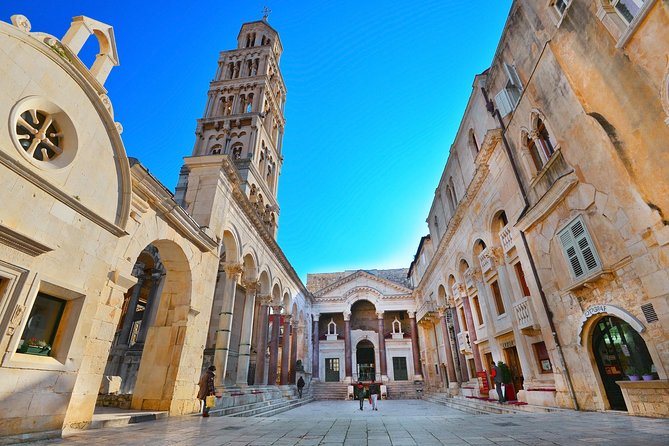
Split is famous for Diocletian’s Palace, but the tricky part is that the palace isn’t a museum you walk through once. It’s a working old city built right on top of Roman walls. A private guide matters because you’re not just moving from photo stop to photo stop. You’re learning how the place was redesigned over centuries, and that makes the streets feel logical.
This tour is also timed in a way that works for first-timers. Going in the morning helps your eyes adjust to the scale of the palace without getting stuck in the crush. With a private group, you can ask questions in the moment and adjust pacing if you want more time in one area.
Duration is around 1 hour 50 minutes to 2 hours 10 minutes. That’s long enough to see a lot, but short enough that you can still pair it with lunch or a longer afternoon exploring on your own.
You can also read our reviews of more private tours in Split


The Riva Harbor start: your fast orientation to Split
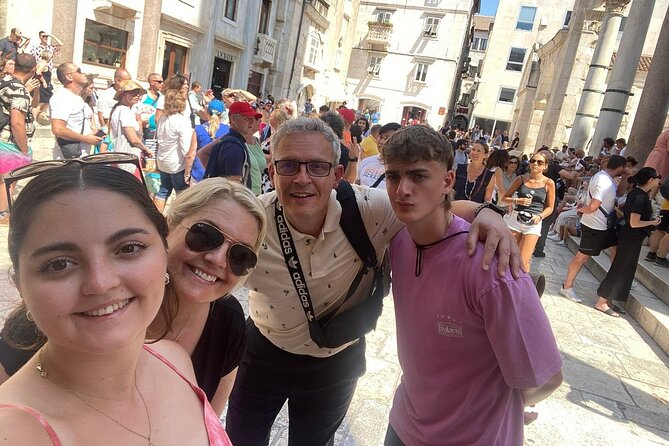
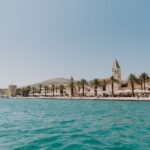
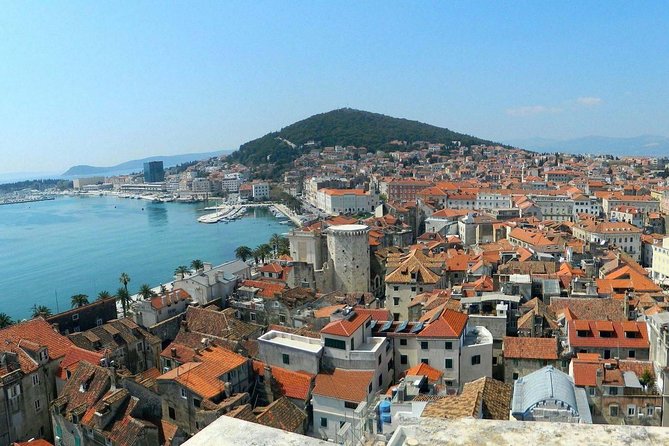
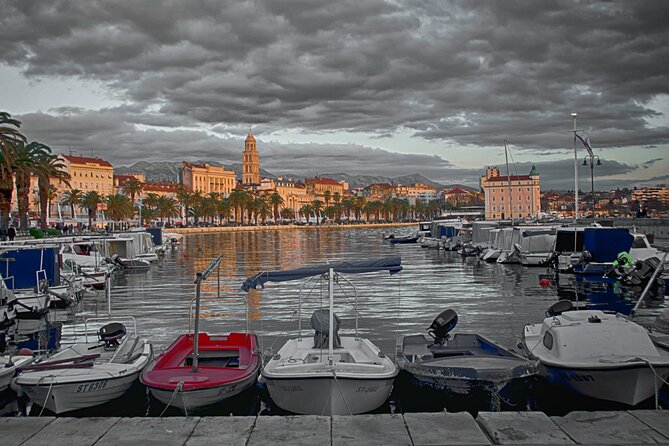
You meet at Luka Split on the Riva, Split’s waterfront promenade and, in local spirit, the city’s living room. This is a smart opening. Before you enter the palace walls, you get a quick geography lesson about Split and what you’ll be seeing.
Practically, the Riva start also helps with timing and meeting points. If you’re staying in Old Town, pickup may be possible (but only for accommodations in the Old Town area). If you’re arriving by cruise ship, you’ll be met at the port dock exit gate.
You also get a clear plan for the next moves: you’re heading toward Diocletian’s Palace through specific gates, and the guide frames what each gate and area means so you don’t feel like you’re wandering.
Inside Diocletian’s Palace: gates, Peristyle, and the cathedral inside the walls
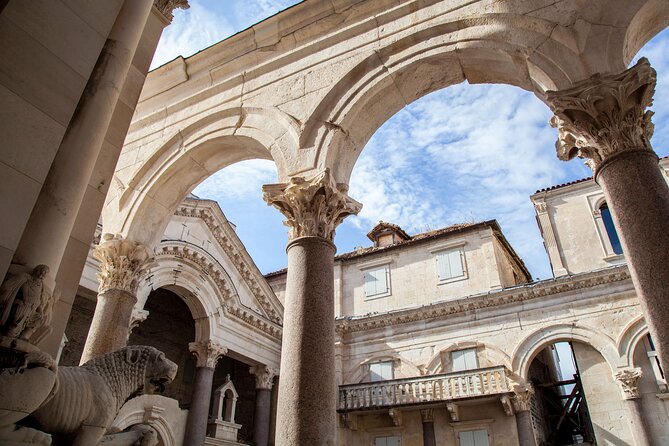
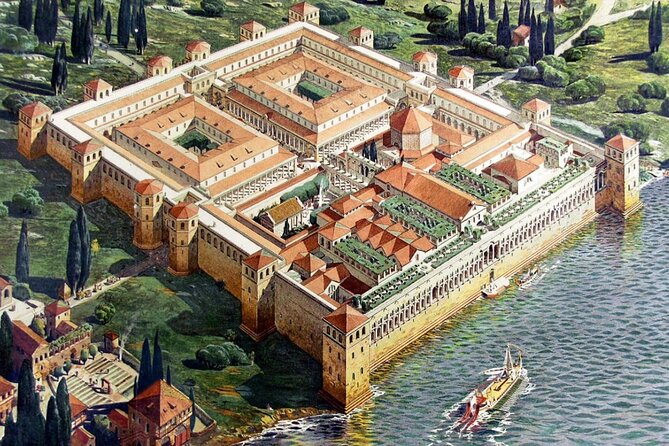
After a short intro on the Riva, the walk turns into real palace time. You enter through the Southern gate and spend 90+ minutes exploring the main areas of the complex.
This section is where the tour earns its name. Diocletian’s Palace is one of the best-preserved Roman monuments from the 4th century AD, and the guide helps you read it like a design. You learn the idea behind the layout and how a luxury retirement home for an emperor later became the medieval city of Split.
Two elements are especially worth your attention here:
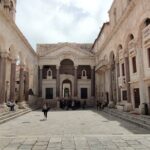
1) The Peristyle, the central square, is the palace’s heart. It’s surrounded by layers of architecture: Roman foundations, Egyptian-era references in style, and later medieval structures. The point isn’t memorizing everything. It’s noticing how the place kept changing roles.
2) The palace complex also includes the world’s oldest cathedral. Even if you’re not a cathedral expert, it’s a striking example of how long the site stayed important.
If you like architecture, this part will feel satisfying because you’re not only seeing big spaces—you’re understanding why they were shaped that way. If you prefer stories over details, you’ll still get plenty of narrative, especially as the guide ties the gates and streets to life back then.
The substructures through the Bronze Gate: where Diocletian’s life gets tangible
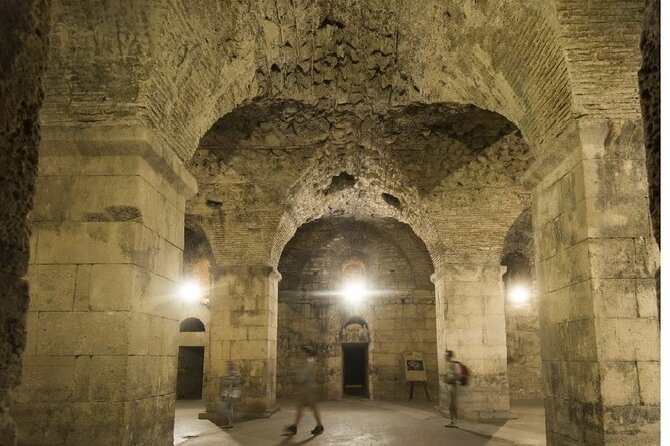
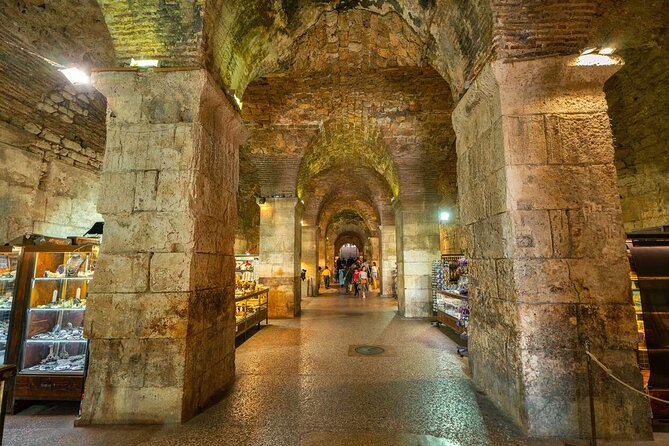
Next you go deeper, entering the palace via the Bronze gate to visit the Diocletian’s Palace substructures. This is the 1700-year-old basement world beneath the palace, and it’s the part that often surprises people who expected only open-air ruins.
Here, the guide explains how Diocletian became emperor, how he ruled, and why he later abdicated and retired. It’s history told through the physical setting: these are spaces that feel built for permanence, not for quick sightseeing.
You’ll also hear about construction choices, including precious stone from the island of Brač used for the palace. And you get the key turning point for Split’s growth: how Salona, the Roman capital town nearby, became crucial for the medieval city when invaders from the north destroyed it, leaving people to adapt the palace into a new urban home.
The substructures are also where pacing matters. This segment runs about 30 minutes. If you enjoy looking upward and spotting Roman engineering cues, take your time here. If you’re sensitive to enclosed spaces or low light, decide early how long you want to stay in the basements so you don’t feel rushed.
Peristyle to Vestibulum: short stops that add up
The walking route continues around the palace core with a few compact but meaningful stops.
- The Peristyle is about 15 minutes, giving you room to take in the geometry of the square and the surrounding styles.
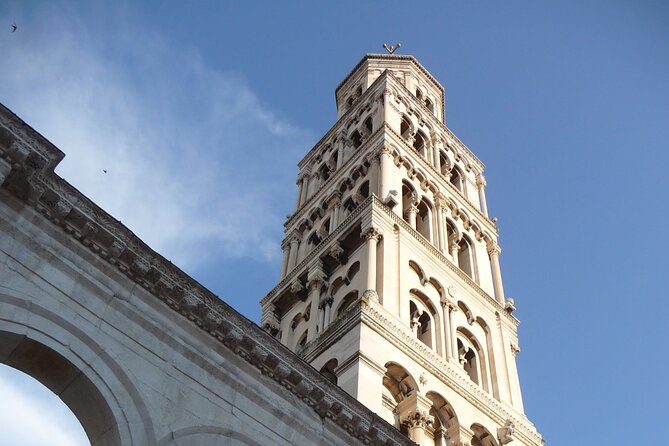
- The Vestibulum is a circular building that once served as Diocletian’s lounge, acting as the entrance to the emperor’s private chambers.
This is also where the tour can pick up extra local atmosphere. There can be an opportunity to enjoy Klapa singing (Dalmatian style) in the area. It’s not guaranteed in the way a ticketed show would be, but it’s a nice example of how everyday culture fits into ancient stone.
Then you head through the Eastern (Silver) Gate, which marks the start of the main Decumanus street. The guide explains how the main streets connect across the palace plan, and this helps you understand why the layout feels like a grid even when the streets today look like a maze.



Chocolate and gates: the small stops that make the tour feel local
At about the midway point, the tour includes a quick visit to Nadalina cokolada, a local chocolate producer. You get a couple of sweet treats with Mediterranean fruit and herbal flavors. It’s only around 7 minutes, but it breaks up the heavy history portion and gives you something concrete to take with you after the walk.
Important practical note: Nadalina is closed on Sundays, so the guide will have to skip that stop. If your visit falls on Sunday, ask in advance whether the timing can shift.
Other short stops keep the story anchored in recognizable Split icons:
- Grgur Ninski Statue, a big statue of the 10th-century Croatian archbishop. This is a quick hit that many people love because it’s a friendly landmark amid centuries of stone.
- The Golden Gate, the main entrance to the palace. You’ll get the explanation behind the Roman street logic, including Cardo and Decumanus, plus the connection to the road toward Salona.
- Narodni Trg and Fruit’s Square (Trg Brace Radic), two key medieval squares. You’ll see the City Hall area at Narodni Trg and the statue of Marko Marulić at Fruit’s Square. These stops work well if you’re the type who likes to orient yourself with major open spaces.
And then you finish at Prokurative, a square known for neo-Renaissance buildings and open-air events. Even with only about 3 minutes here, it gives you a taste of today’s Split rhythm.
The Split synagogue stop: a meaningful detour from the palace focus
One of the most thoughtful parts of the route is the time at the Split Synagogue, connected to the 16th-century Jewish ghetto area. The tour includes about 15 minutes here, which is enough to see the space and absorb the context without it feeling like a drive-by.
This is also where the guide’s tone matters. A good guide doesn’t treat it as a checklist stop. Instead, they connect it to the bigger theme of Split as layered city: Roman to medieval, Christian to Jewish community life, and all of it existing in the same tight geography.
You’ll also hear that this is the 3rd oldest operating synagogue in Europe. Even if you don’t know anything about European Jewish history, the age and continuity make the visit feel real.
Finding value in a $124 private tour
At $124.34 per person, this tour sits in the mid-range for private guiding in a top heritage destination. The price starts to make sense because you’re not paying for an hour of wandering. You’re paying for a licensed guide’s ability to explain how the same walls served different eras.
What’s included matters. You get the guide and custom organization, and you do get an included chocolate stop. The big tradeoff is that entrance fees are not included. You’ll still get a guided route that hits major areas, but you may need to budget additional money depending on what’s chargeable at the time.
You also get a structure that saves your energy. You’re only in Split’s Old Town walking zones, and the guide handles the gate-to-gate flow. At a short duration of roughly two hours, it’s a smart purchase when you want an expert orientation on day one.
I also like the fact that this is a private tour. Even if you’re traveling in a small group of four or six, you’re not competing with strangers for hearing the explanation. That turns the time into something closer to a conversation than a slideshow.
Who should book this tour (and who might prefer something else)
You’ll be happiest with this format if you:
- Want an expert walkthrough of Diocletian’s Palace without studying a guidebook for weeks.
- Like the idea of early timing and an efficient route that still feels personal.
- Prefer guided history told through place, not through long lectures.
You might think twice if:
- You hate walking in sun. The route is concentrated, but it still adds up fast.
- You’re only interested in outdoor sights and don’t want basement sections. The substructures are a big part of the tour, and they’re not the same as street-level views.
If you’re traveling with kids, this one can work because the route is short enough to keep attention. Children under 11 go free, based on the tour rules.
What the guides do right, based on repeated praise
This tour’s success often comes down to guide quality. Names like Matt, Stella, Mirjana, Gita, Milos, Peter, Lily, Boran, and Natasa show up repeatedly in positive feedback for clarity, pacing, and the ability to connect palace architecture to everyday life in Split.
In particular, the standout theme is explanation that helps you see what you’re looking at. One common mention is how guides clarify the layered development of Split on top of Diocletian’s Palace—Roman emperor, later medieval city, and why that transformation happened. Another is flexibility: guides tailor pace and interests so the tour doesn’t feel rigid.
There was also one low-star complaint about a tour ending early. The provider disputed it and said the guide attempted to continue while the guest refused to carry on. Your best practical takeaway is simple: if you want a full two-hour experience, communicate your expectations at the start, and speak up immediately if anything feels off.
Should you book this private Split morning walk?
Book it if you want a compact, high-impact way to understand Split’s most famous monument and the city that grew out of it. The Riva start, gate-to-gate flow, and time in the substructures make it a smarter choice than trying to wing it without context.
Skip it or look for an alternative if heat and walking would ruin your day, because this is very much an Old Town on-foot experience. Also, if you’re visiting on a Sunday, note the Nadalina cokolada stop may not happen.
If your goal is to leave Split knowing how the pieces fit—Roman planning, medieval survival, and today’s streets—this private tour is a strong bet.
FAQ
How long is the private tour?
It runs about 1 hour 50 minutes to 2 hours 10 minutes.
Is it really private?
Yes. It’s a private tour/activity, so only your group participates.
What is included in the price?
The guide service and custom tour organization are included. The tour also includes a short chocolate stop with sweet treats.
Are entrance fees included?
No. Entrance fees are not included.
Where does the tour start, and can you pick me up?
The start point is at Luka Split on the Riva area (Obala kneza Domagoja 7). Pickup is offered only if you’re staying in Old Town Split. If you’re on a cruise ship, pickup is at the port dock exit gate.
Does the itinerary change on Sundays?
Yes. The chocolate shop stop at Nadalina cokolada is closed on Sundays, so that part of the visit has to be skipped.
Is there free cancellation?
Yes. You can cancel up to 24 hours in advance for a full refund.