REVIEW · SPLIT
Food Tour in Split ( Small Group)
Book on GetYourGuide →Operated by Beautiful Day Travel Agency · Bookable on GetYourGuide
Tastes start before you even leave the square. This small-group Split food tour strings together real local stops: the Green Market, Diocletian’s Palace Peristyle, classic burek, the fish market, and a sweet family finish. You get short history lessons folded right into what’s on your plate, not lectured at you from a distance.
I especially love how it begins at the Green Market, where farmers from nearby villages sell homemade staples. I also like the way the guide connects food to place—through old-city landmarks, day-to-day habits by the sea, and the practical reasons locals keep coming back.
One thing to consider: some restaurants can be closed depending on the season, so you might see substitutions at certain stops while the tour still keeps the overall tasting plan.
In This Review
- Key things that make this food tour work
- The meeting point strategy: starting at St. Dominic and walking into Split
- Green Market tastings: where Split’s food habits start
- Peristyle inside Diocletian’s Palace: history that actually helps you eat
- Burek at a central eatery: what to watch for in the spiral
- Split Fish Market: coastal food culture in real time
- The family shop sweets finish: fried comfort and fritula
- Price and value: what $94 buys in 2.5 hours
- Timing and what to do before you go
- Who this tour is best for
- Should you book the Split small-group food tour?
- FAQ
- How long is the Food Tour in Split (Small Group)?
- What is the group size?
- What language is the guide?
- Is food included in the price?
- Where do you meet and where does the tour end?
- What foods will I taste on the tour?
- What happens if places are closed in your travel season?
Key things that make this food tour work
- Small group (max 10): easier questions and more time at each table
- Green Market as stop #1: you start with ingredients, not just ready-made food
- Peristyle inside Diocletian’s Palace: history sits right on the walking route
- Burek with both minced meat and cheese: a clear Split specialty, served hot
- Fish market stop: a firsthand look at coastal food culture
- Sweet finale with homemade fritula: you end on something truly local
The meeting point strategy: starting at St. Dominic and walking into Split
The tour’s first move is smart: you meet in front of St. Dominic Church, just across from the Silver Gates of Diocletian’s Palace. That puts you in the thick of the old town right away, with the palace walls and main lanes within arm’s reach. It also means you’re not warming up for the tour by wandering around wondering where you should go next.
Because it’s built for a 2.5-hour experience, the pacing keeps you moving but not sprinting. You do short stretches between bites, with explanations that fit the walking time. For me, this matters: food tours can turn into a blur, and you miss what makes each stop worth it. This one tries to keep the story attached to the taste.
Group size is capped at 10, so you avoid that long-train feeling where you’re always waiting for someone else. In the same way, guides like Deedee, Bruno, and Gita are praised for being friendly and for making the history and culture feel close, not academic.
You can also read our reviews of more food & drink experiences in Split
Green Market tastings: where Split’s food habits start
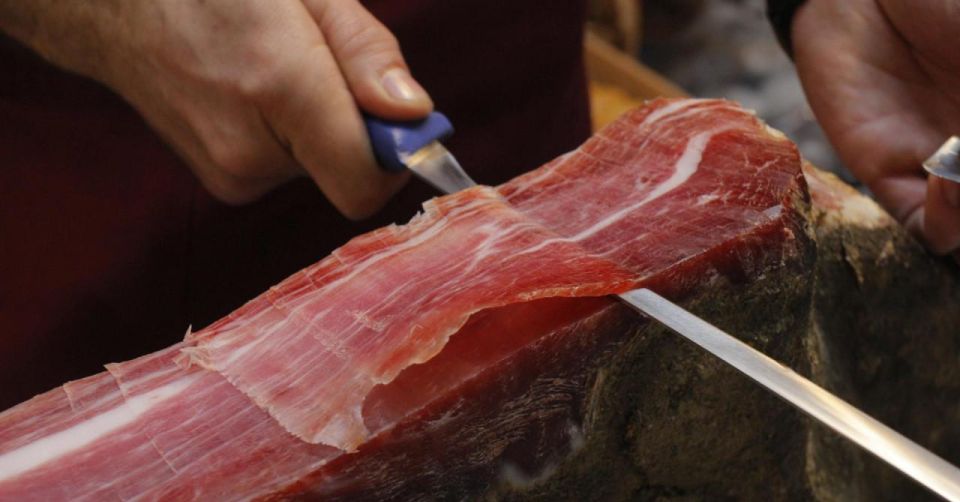
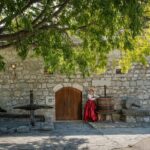
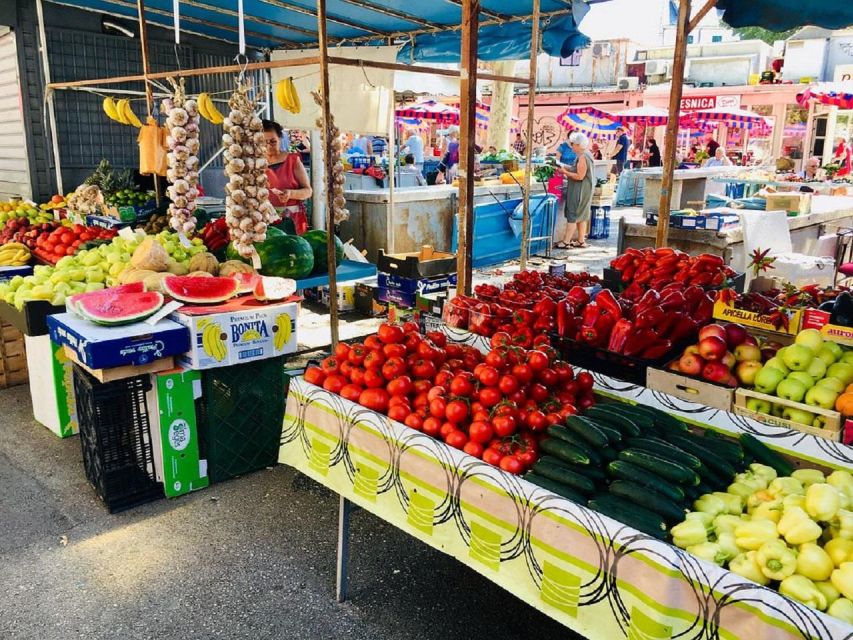
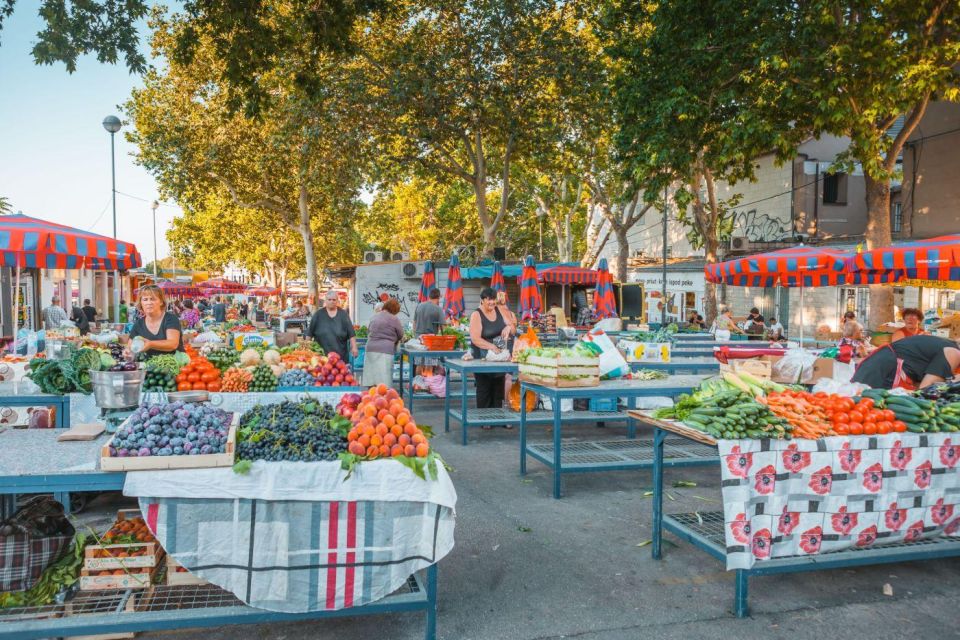
Your first big tasting is the Green Market in Split, with a dedicated 30-minute food market visit near the start of the walk. This is where you get the best kind of authenticity: producers selling what they make, with surrounding villages in the mix. You’re not just sampling. You’re seeing where the ingredients come from and what people buy for everyday meals.
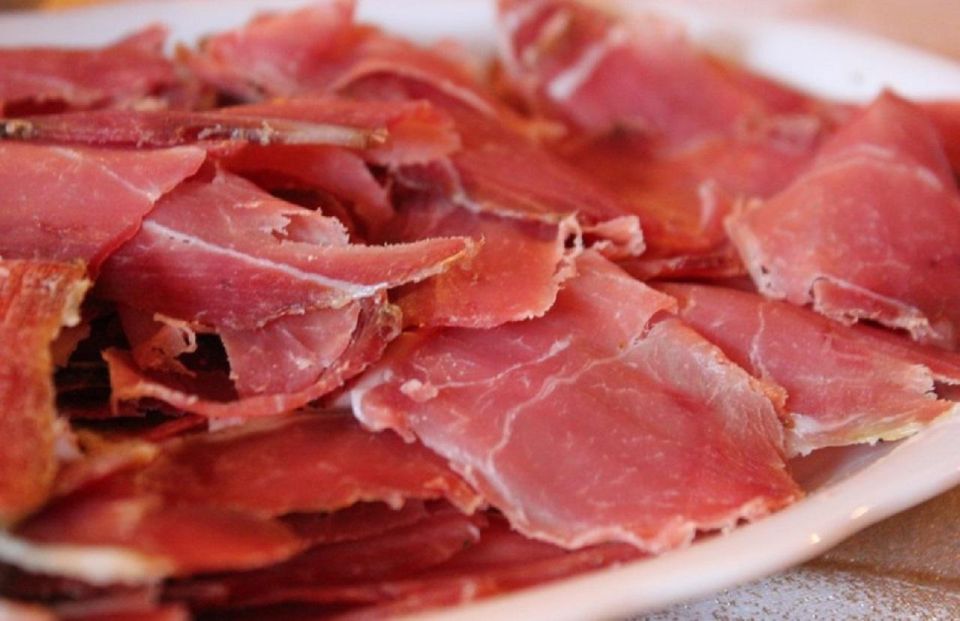
In terms of what you’ll try, expect traditional local foods such as prosciutto, cheese, and soparnik. These aren’t random “tour snacks.” They’re staples that show up across Dalmatia because they fit the region’s food reality—meat cured for flavor, dairy for richness, and dough-and-greens cooking that works well when ingredients are seasonal.
A practical note: market foods can taste better than what you’d recreate at home, because they’re eaten there, when they’re fresh and at their best. You’ll also pick up the idea that Split’s food culture isn’t one single style. It’s layered, influenced by traders and rulers over time, and still rooted in what local families produce.
Peristyle inside Diocletian’s Palace: history that actually helps you eat
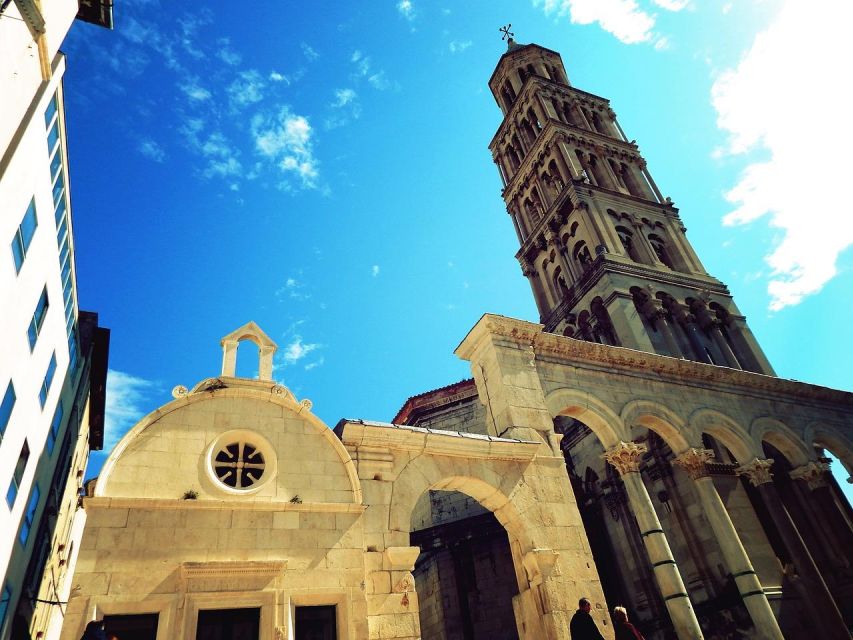
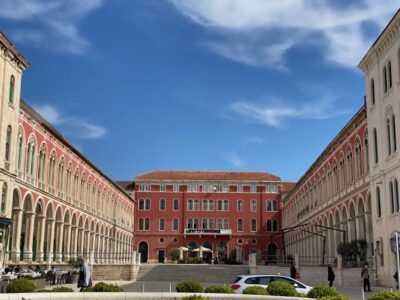
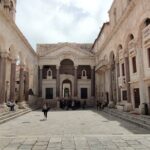
Right after the market, you pause at the Peristyle—the imperial square inside Diocletian’s Palace. This is more than a photo stop. The guide uses it as a “why this place tastes like this” moment.
Here’s what I like about this structure: it stops the usual problem where history feels separate from the meal. When you learn how the palace and city were arranged, you start to understand why certain kinds of food cultures survive in the exact neighborhoods where they started. The tour focuses on the story of Split as a living city, not a museum.
You also get a sense of scale. Peristyle helps you grasp that Split isn’t only an old-town backdrop for dinners—it’s been an urban hub for a long time. That context makes the later stops, like the fish market, land with more meaning. You’ll be able to connect food habits to daily movement through the city rather than treating each bite as a standalone event.
Burek at a central eatery: what to watch for in the spiral
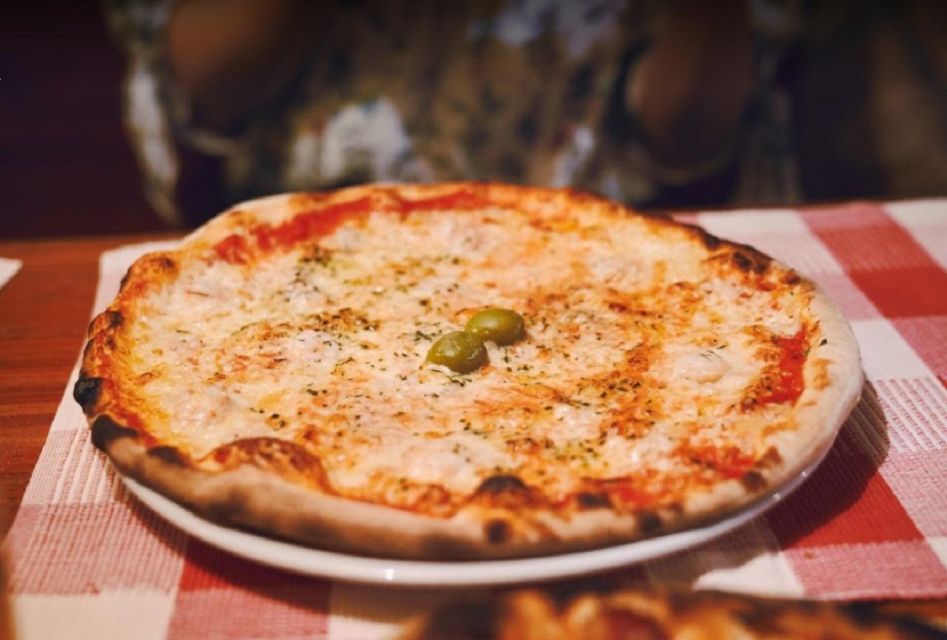
Next comes a rarer kind of stop: a local restaurant in the center of Split that has kept its authentic charm and that locals keep returning to. That matters, because it’s the difference between a place built for tourists and a place built for lunch.
You’ll have burek here—layers of filo pastry with savory filling, baked until hot and crisp. The tour includes both minced meat and cheese fillings. Even if you think you already know burek, this is worth doing in Split because you’re getting it from the kind of kitchen that serves it day after day.
When you eat it, pay attention to the texture: filo should be delicate and shattering, not soggy. The spiral shape is part of the baking logic too—airflow in the oven and even cooking across the layers. If you’re curious about technique, this stop gives you a simple way to “read” the pastry.
For dietary planning, keep it realistic: this tour includes meat and cheese options as part of the tastings. If you have strict dietary needs, check with the operator in advance so they can guide you toward the best-fitting choices.
Split Fish Market: coastal food culture in real time
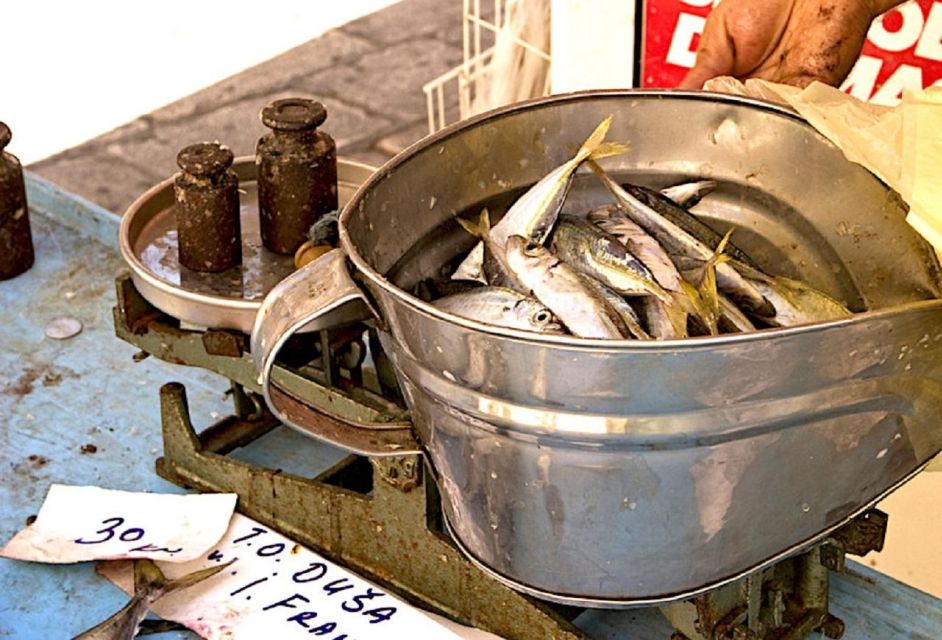
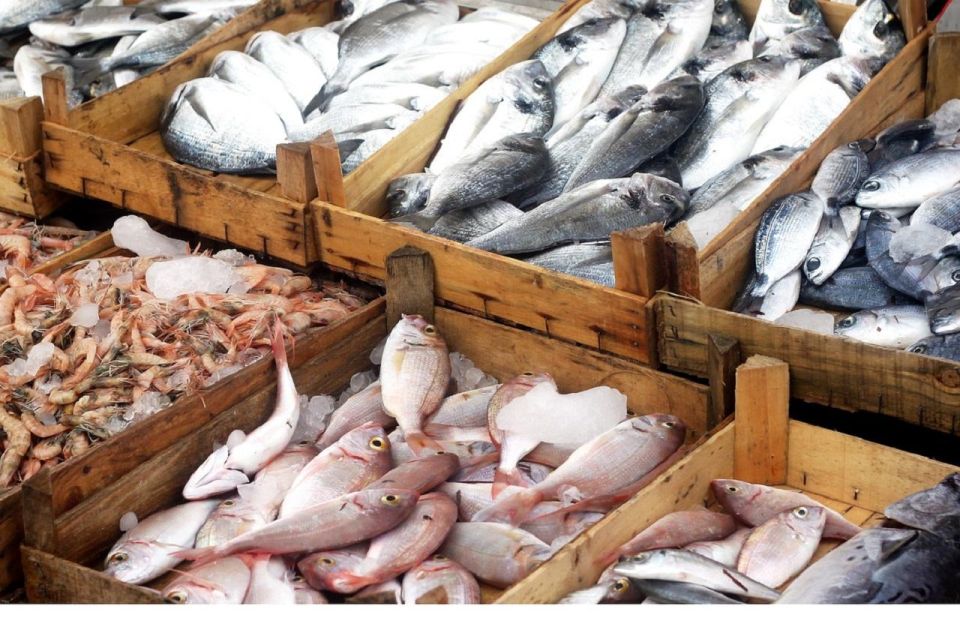
After the bakery-and-pastry moments, the pace shifts to the Split fish market. This is where you feel the Mediterranean atmosphere in a way no description can fully match. Even when you’re just standing with your guide, you’re surrounded by the daily rhythm of buyers, sellers, and the sheer fact that seafood here isn’t a “special occasion” ingredient—it’s part of routine life.
This stop also helps you connect the dots. Earlier you sampled cured meat and greens-based dishes; here you see how the sea shapes what people cook and eat. The guide explains local gastronomic habits and how different cultures influenced the overall offer in Split. It’s practical information, tied to what’s present in the market.
What I find useful for readers: fish markets teach you what locals look for—freshness, likely preparation, and how seafood fits into meals across the day. You don’t need to memorize everything. You just leave with a better sense of why certain ingredients show up repeatedly in Dalmatian cooking.
You can also read our reviews of more tours and experiences in Split

The family shop sweets finish: fried comfort and fritula
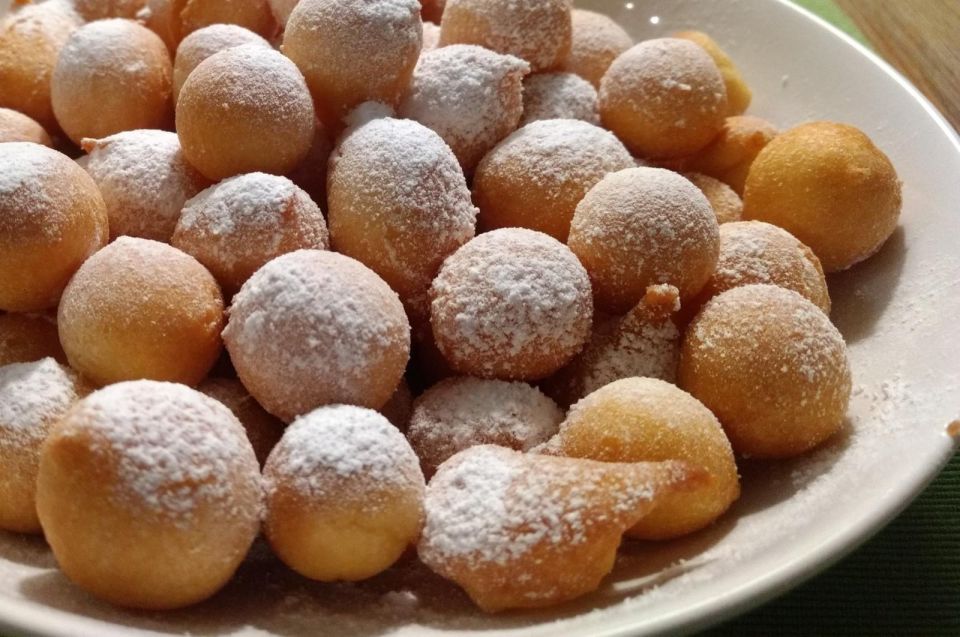
The tour ends at a family shop specializing in traditional local sweets, with homemade fritula as the highlight. If you only try one sweet on this kind of tour, fritula is a strong pick because it’s linked to local traditions rather than being a generic dessert.
This final stop does a lot of work for the overall experience. After savory tastings—market items, burek, and market bites—you get a sweet payoff that feels like it belongs to Split. It also slows the mood slightly, so you can finish without the same constant “next stop” energy.
Fritula also helps you remember the tour. Even if you forget the exact sequence of cheeses and cured meats, you’ll likely remember the taste and texture of the sweets—warm, fried, and comforting.
Price and value: what $94 buys in 2.5 hours
At $94 per person for a 2.5-hour small-group tour, the value mostly comes from three things:
1) Food is included. You’re not paying for a “light snack” approach. The tour includes all the tasting items across the market, restaurant, fish market stop, and sweet shop. That’s the biggest reason the total cost makes sense.
2) The guide adds context. A professional guide isn’t only pointing out where to eat. The tour uses landmarks like Peristyle and the fish market to explain how Split’s food culture formed. That turns tastings into understanding.
3) Small group means more attention. With a cap of 10 people, the experience stays personal. You’re more likely to ask questions and get answers that fit your interests, not just hear a rushed script.
In real travel math, the best “value” tours are the ones where you would otherwise spend money and time piecing together the same stops yourself. This one gives you a stitched route through iconic food locations—market, palace-area landmark, burek stop, fish market, and sweet family shop—so you don’t waste the day guessing where locals actually eat.
Timing and what to do before you go
Plan to show up ready to walk. You’ll move from one focused tasting area to the next inside the old city, so comfortable shoes help. Since the tour lasts 2.5 hours, you’ll likely finish feeling pleasantly full rather than painfully stuffed, especially because the tastings are portioned across multiple stops.
If you’re the type who likes to take notes for later meals, this is a good one. You’ll probably spot food items you want to look for again after the tour—like the market staples and the sweet shop specialties.
And because guides like Deedee and Bruno are often praised for being friendly and easy to spend time with, you’ll usually feel comfortable asking questions as you go. That makes a real difference when you’re trying to understand what you’re eating and why it’s part of Split life.
Who this tour is best for
This food tour is a great fit if you want more than a list of places to eat. You’ll like it most if you:
- Enjoy tasting traditional foods and not just modern menu items
- Want local history tied to what you eat, especially around Diocletian’s Palace
- Prefer small-group experiences where the guide can explain the details
- Like markets and food shops rather than only sitting-down restaurants
It may not be ideal if you need a fully meat-free menu throughout, since the included tastings feature items like prosciutto and burek with minced meat. It can still work if you communicate needs ahead of time, but the tour’s core selection leans traditional.
Should you book the Split small-group food tour?
I think you should book this tour if your priority is a high-touch, taste-and-story route through Split’s old town. The combination of a market start, the Peristyle context, a classic burek stop, a fish market visit, and a sweet family finish makes it feel like a real introduction to how the city eats—not a random snack crawl.
Skip it (or double-check details) if you’re expecting a menu where every stop guarantees the exact same style of food you already love. This one is about local tradition, so you’ll be sampling what locals actually eat as the city moves from market to palace to seafood to sweets.
If you’re in Split for a short time, it’s also a smart way to get your bearings fast. You leave with names of foods, a better sense of the neighborhoods, and a clearer idea of what to seek out for your next meal.
FAQ
How long is the Food Tour in Split (Small Group)?
The tour lasts about 2.5 hours.
What is the group size?
It’s a small group limited to 10 participants.
What language is the guide?
The live tour guide is available in English.
Is food included in the price?
Yes. All food you will taste during the tour is included.
Where do you meet and where does the tour end?
You meet in front of St. Dominic Church, across from the Silver Gates of Diocletian’s Palace. The activity ends back at the meeting point area, and it also lists the finish at Narodni trg.
What foods will I taste on the tour?
You’ll taste traditional items from the Green Market such as prosciutto, cheese, and soparnik, then burek (minced meat and cheese), along with fish market tastings, and the tour finishes with a sweet stop featuring homemade fritula.
What happens if places are closed in your travel season?
The tour includes multiple dining stops, but some restaurants can be closed depending on the season, so you may experience changes at certain places while still getting the tasting experience.