REVIEW · SPLIT
Split: Palace & Old Town Private Walking Tour-Entrance incl.
Book on GetYourGuide →Operated by Split Guide · Bookable on GetYourGuide
Roman ruins, just steps from gelato.
This private walking tour turns Split’s center into one smooth Roman-to-Christian story, starting right on the Riva promenade and moving deep into Diocletian’s Palace. I especially love that you get inside the palace cellars, not just the pretty courtyards, and I also love the balance of stops: Split Cathedral (Saint Domnius) plus Jupiter’s Temple, so you see how power and belief changed over time. The one possible drawback is that if church services or events block an interior visit, the program may shift a bit.
What makes this tour feel practical is the pacing and the included access. The tour has time for the big moments—then enough small details to make the whole place click, including the coffered ceiling at Jupiter’s Temple and the Roman layout that still shapes the old streets. The other consideration: some areas are partially not wheelchair accessible, though the tour can be adapted if you tell the operator in advance.
In This Review
- Key takeaways before you go
- Entering Diocletian’s Palace: More than postcard walls
- Meeting on the Riva and setting your route at the bronze model
- South Gate to the cellars: the power you don’t see on a quick stop
- Peristyle and the Peristyle steps: where Roman worship becomes theater
- Saint Domnius (Split Cathedral): a mausoleum turned worship center
- Jupiter’s Temple: the coffered ceiling moment
- Silver Gate, Triklinij, and the vestibule spaces
- Fruit Square and Narodni trg (Pjaca): Venetian palaces and the town’s heartbeat
- City Lodge/Loggia and the Golden Gate approach
- Gregory of Nin, fishmarket vibes, and Marmontova ulica
- Prokurative (Trg Republike): where you stop walking and start relaxing
- Private tour value: why $192 can make sense here
- What I think is the sweet spot for this tour
- Should you book this Split private walking tour?
- FAQ
- How long is the private walking tour of Split’s Palace and Old Town?
- What is included in the price?
- How big is the group?
- Where does the tour start?
- Where does the tour end?
- Which sights are included during the walk?
- Are the cathedral, baptistery, and cellars visited inside?
- What languages are available for the guide?
- What happens if sights are closed due to events or church services?
- Is the tour wheelchair accessible?
Key takeaways before you go
- Cellars included: you see the underground side of Diocletian’s Palace, which changes how you understand the site.
- Cathedral + baptistery entry: you’re not just looking from the outside at Saint Domnius.
- Jupiter’s Temple time: short, focused visit to the ancient sacred space and its coffered ceiling.
- Small private group: maximum 10 people, which usually means a calmer, more personal pace.
- Finish in Prokurative: you end with cafes and the old-town atmosphere right where you’ll want a drink.
Entering Diocletian’s Palace: More than postcard walls
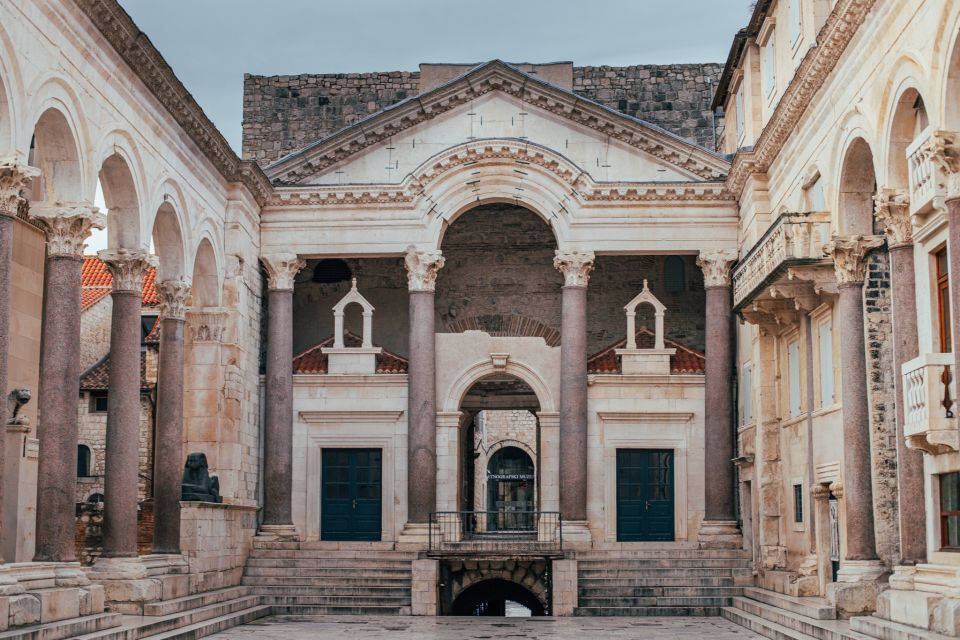
Diocletian’s Palace in Split isn’t a museum you shuffle through. It’s the skeleton of the city—streets, gates, and squares that still push you to walk the way ancient planners intended. The best part of this tour is that it doesn’t treat the palace like one stop. You move through it like a story: power underground, ritual at the top, and then the old town spilling out around you.
You’ll also appreciate the guide’s ability to connect landmarks. Roman sites can feel like a pile of stones if you only get one highlight per area. Here, the order makes sense: you start at the palace edge, step into the palace core, and keep following the logic until you’re back out in the public squares.
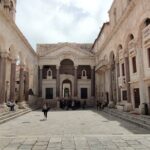
And yes, you’ll hear plenty about Diocletian’s image-making. At the Peristyle, Diocletian is presented as the son of Jupiter and worshipped by his subjects. It’s the kind of idea that sounds strange until you stand in the right space and see the symbolism come alive.
You can also read our reviews of more walking tours in Split

Meeting on the Riva and setting your route at the bronze model
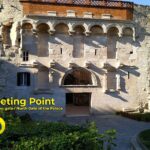
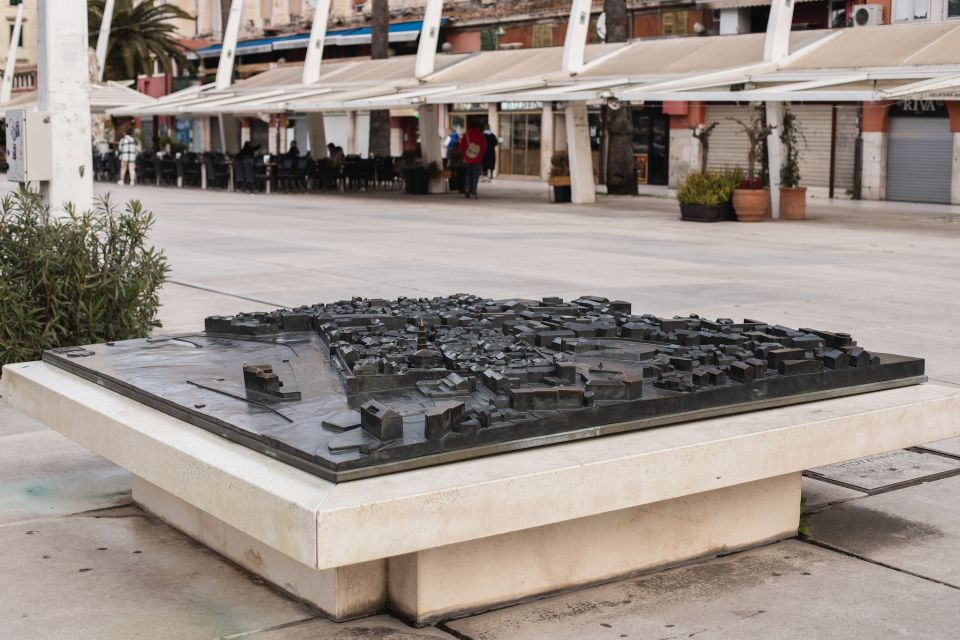
You begin on the Riva promenade, specifically at the bronze model of the city of Split. This is a smart move. Before you hit gates and passageways, you get a quick “map in your mind.” If you’re the type who likes to orient fast, this helps you understand where you’re headed and why those walls matter.
The meeting point can vary depending on the option booked, including another start connected to a public mock-up of Diocletian’s palace. Either way, your start is designed so you don’t spend the first 10 minutes playing find-the-door. You’ll head toward the south gate of the palace and into the next phase of the visit.
Practical note: the tour includes walking and some steps. It’s very doable for most visitors, but if you’re sensitive to stairs, it’s worth planning for a bit of uphill movement when you climb toward the Peristyle.
South Gate to the cellars: the power you don’t see on a quick stop
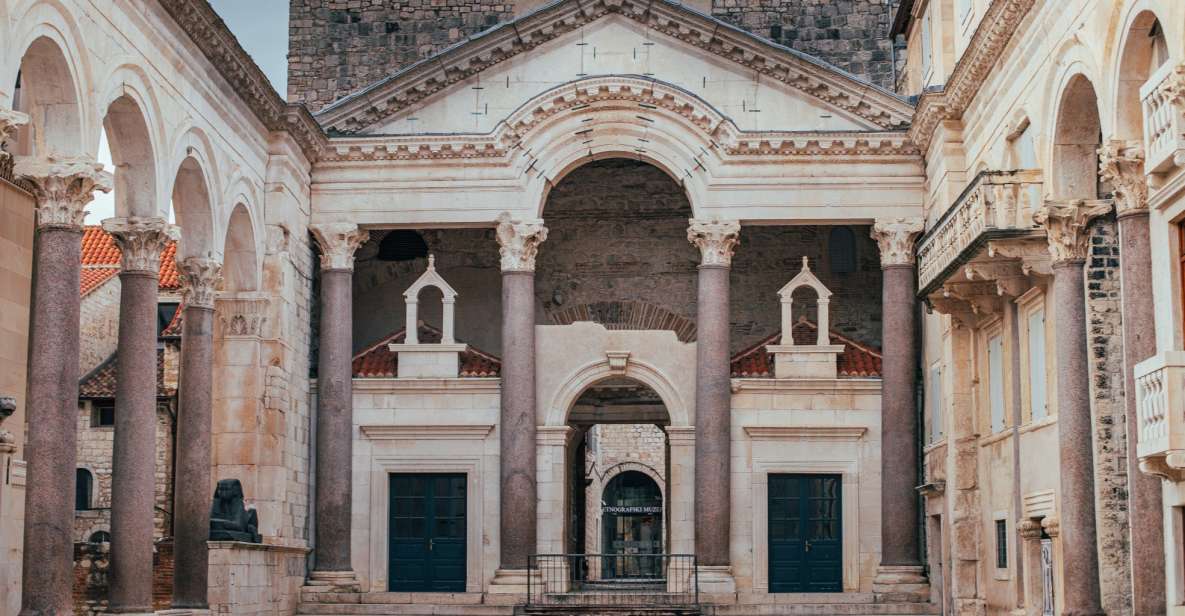
After you enter the palace area, the focus shifts to the palace cellars. This is one of the most valuable parts of the tour because it changes your sense of scale. From street level, Diocletian’s Palace looks monumental. Underground, you feel how practical it had to be—how the system of a ruler worked not just in ceremonies, but in storage, logistics, and controlled access.
Your visit here is guided and timed, so you’re not wandering around looking for the “right” corners. You get an impression of former splendor, but also the reality behind it: stone, structure, and the cool weight of subterranean space.
If you like historical places that actually make you picture daily operations, the cellars will land better than the usual “look and move on” approach.
Peristyle and the Peristyle steps: where Roman worship becomes theater
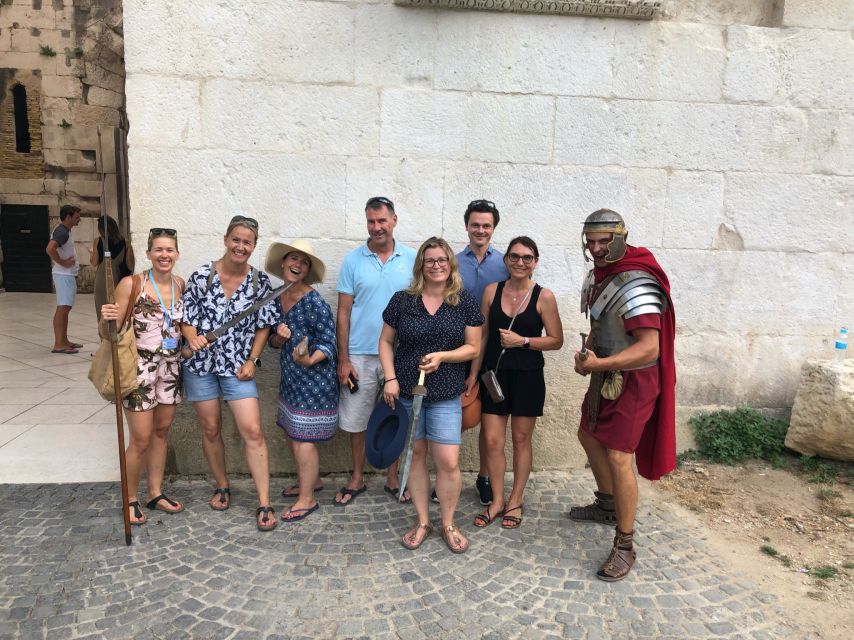
From the cellars, you climb some steps up to the Peristyle. This is where the palace stops feeling like architecture and starts feeling like a statement. The guide’s explanations connect the symbolism: Diocletian positioned himself as the son of Jupiter, and that idea was meant to shape how people saw him.
Even if you’re not a Roman-empire expert, the Peristyle tends to make sense quickly. It’s built to hold attention. You’re in the right open space to understand why this wasn’t just administration—it was performance.
Quick consideration: depending on light and crowd levels, you may want to keep your phone away for a few minutes and actually listen. This is one of those moments where understanding the why is better than collecting the perfect photo.
Saint Domnius (Split Cathedral): a mausoleum turned worship center
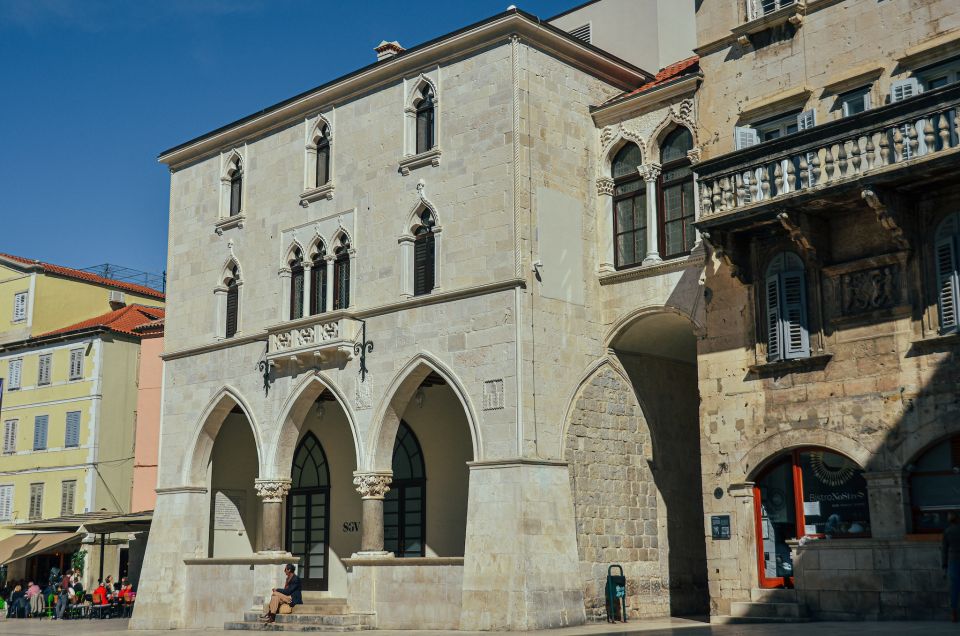
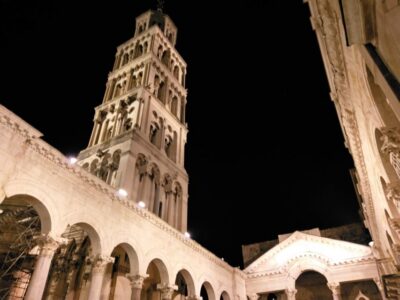
Next you’ll move into Split Cathedral, known as the Cathedral of Saint Domnius. This site carries a clear “before-and-after” story. In Diocletian’s time it was intended as the final resting place of the emperor. Later, during Christianization, it was transformed into a major place of worship.
That transformation is the whole point. You’re not just seeing a church; you’re seeing layers of meaning in the same footprint. The tour includes time to visit inside, and it also covers entrance to the baptistery. If for any reason an interior visit isn’t possible, you’ll receive a refund of the entrance fee for the affected areas.
So if you’re trying to get your money’s worth, this is key: you’re paying for access, not just explanations outside in the sun.
You can also read our reviews of more private tours in Split





Jupiter’s Temple: the coffered ceiling moment
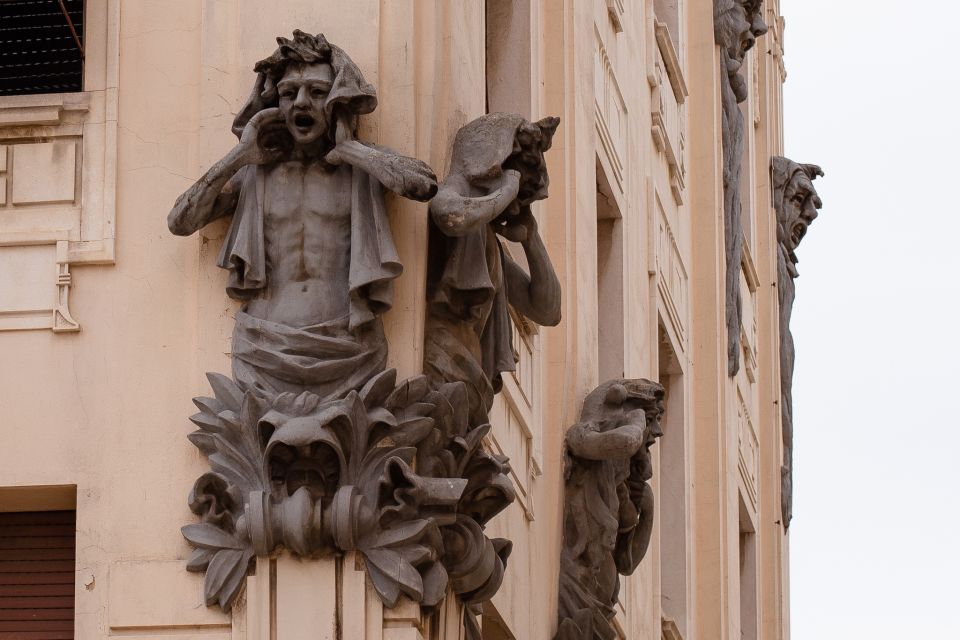
Then comes Jupiter’s Temple, an ancient sacred space inside the palace complex. The visit is brief but focused, and the highlight is the coffered ceiling. Cofered ceilings aren’t unique to one era, but in this context they feel like part of the message: even stone decoration is politics.
This stop is short (you’re not stuck for ages), which works well within a 2.5-hour tour. It keeps you moving while still giving you enough time to look up and notice what you’re seeing.
If you like architecture details—shapes, geometry, and how ceilings frame the room—this is one of the stops where the guide’s pointing matters.
Silver Gate, Triklinij, and the vestibule spaces
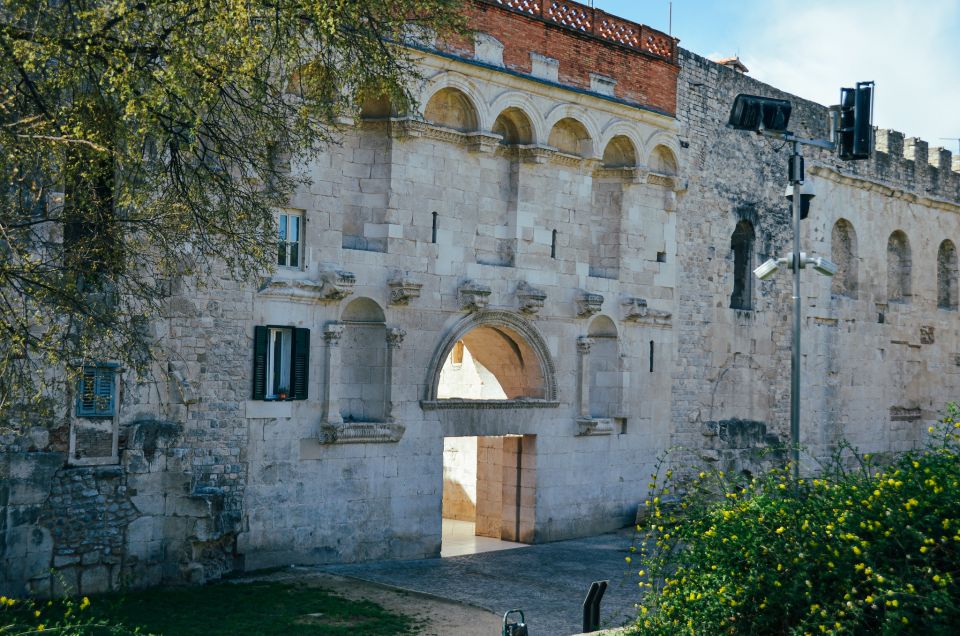
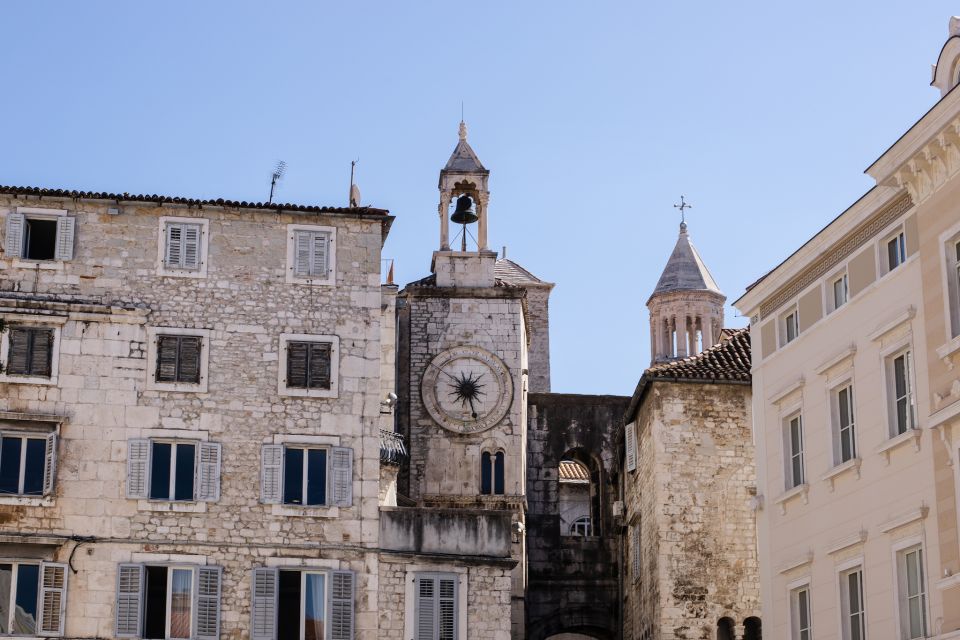
After Jupiter’s Temple, you’ll walk through additional key palace areas: the Silver Gate, Triklinij, and the Vestibul. These are the kinds of stops that help you understand the palace as a working compound rather than a single scenic courtyard.
The guide’s explanations help connect what you’re standing near with why it was important. Gates matter because they control movement. Courtyard areas matter because they stage daily life and authority. Even short segments like a Silver Gate guided moment can pay off if you pay attention to how the spaces connect.
A small practical tip: wear shoes that handle uneven stone. Split’s old core can be charming, but it’s not a flat promenade.
Fruit Square and Narodni trg (Pjaca): Venetian palaces and the town’s heartbeat
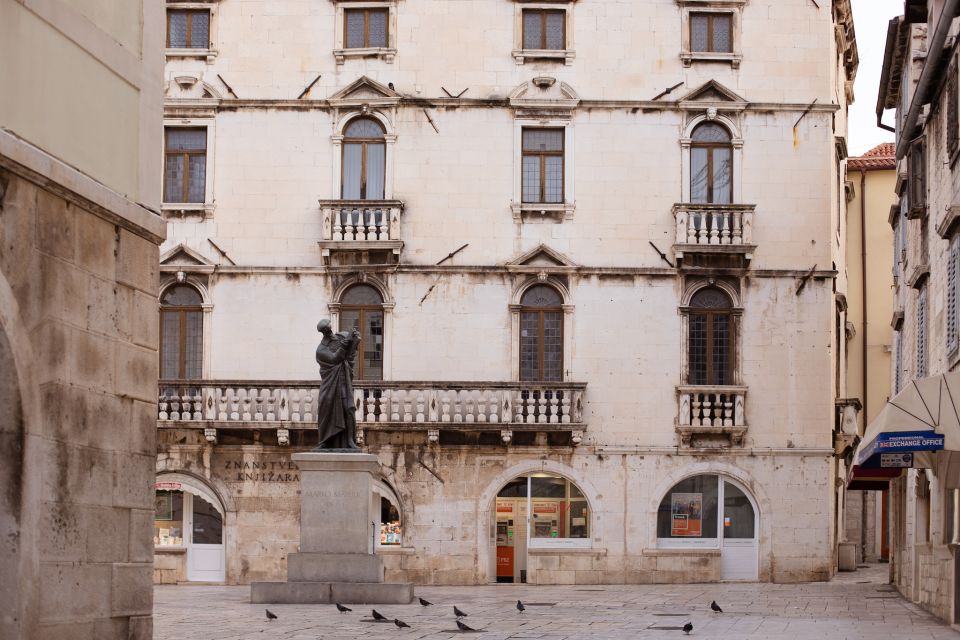
Now the tour shifts outward toward the old town’s public spaces. You’ll pass through Fruit Square, then head to Narodni trg, also known as Pjaca, which has been the heart of Split since the Middle Ages.
This is where the tour earns its “old town” promise. The Roman palace is dramatic, but life happens in squares. At Narodni trg, you’ll see the surrounding Venetian palaces and the feeling of an older civic center. It’s also home to the town hall, which makes this more than just a pretty backdrop.
If you’re trying to understand why Split feels like a living city and not a theme park, Narodni trg is a big clue. This is where locals and visitors mingle, and you can sense how centuries of power played out through public spaces.
City Lodge/Loggia and the Golden Gate approach
As the tour continues, you’ll visit the City Lodge / Loggia area and then move toward the Golden Gate. These stops help tie together the palace system and the street life that grew around it.
Gates and loggias are usually where architecture starts communicating with street-level reality. They’re transition zones—places where you feel the shift from inward palace spaces to outward city movement. Even if your time in each named area is brief, it’s enough to help you notice patterns when you walk on your own later.
Gregory of Nin, fishmarket vibes, and Marmontova ulica
Next the tour works in the human-scale Split you’ll want after the big empire stops: Gregory of Nin, the Split fishmarket area, and Marmontova ulica.
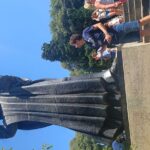
Gregory of Nin is a recognizable landmark and a good pause point, because it breaks the Roman-and-Church sequence and brings you back to a city of today. The fishmarket stop keeps things grounded in what old towns do best—feed people, trade goods, and keep a lively routine.
Marmontova ulica gives you the chance to connect how the palace streets and gates guide you toward the smaller old-town lanes. It’s a “walk-with-understanding” kind of segment, which is exactly what you want on a guided tour.
Prokurative (Trg Republike): where you stop walking and start relaxing
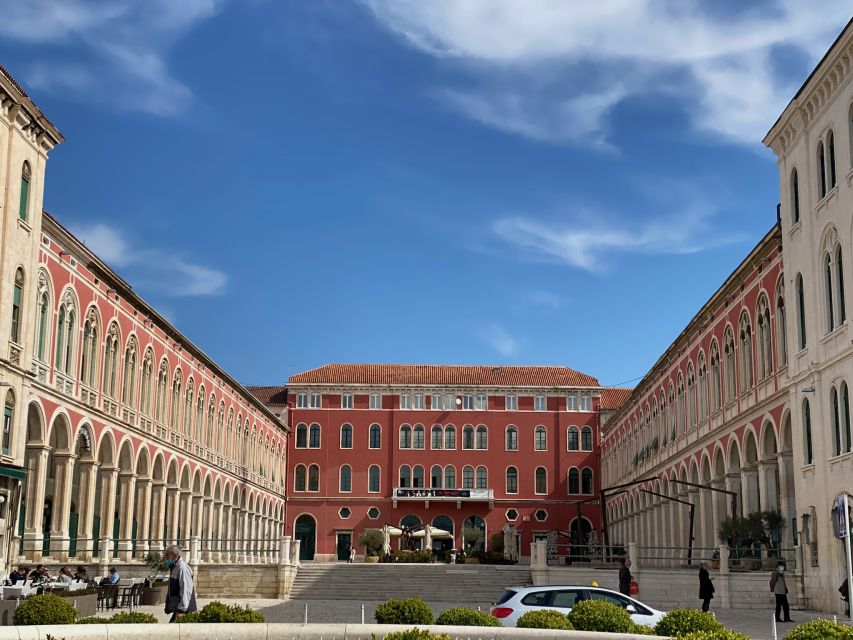
You finish at Trg Republike (Prokurative), a square reminiscent of St. Mark’s Square in Venice. It’s lined with cafes and restaurants, so it’s a natural landing spot after 2.5 hours of stone-and-stories.
This ending is more than convenience. After you’ve been inside the palace’s layers—Roman ceremony, Christian transformation, and architectural details—you want a social break. Prokurative gives you that. You can sit, watch the rhythm of the city, and decide what you want to do next without feeling rushed.
If you’re hungry, this is a great moment to choose a simple meal nearby. You’ll already know what direction everything sits in.
Private tour value: why $192 can make sense here
At $192 per person, this isn’t a cheap group tour. So the real question is value. Here’s where it earns its keep:
You’re paying for a private guide and a route designed to use time well. The tour includes entrances for the cathedral, the baptistery, and the palace cellars. For many visitors, those access fees plus “skip the ticket line” time saved are exactly what turn a frustrating self-guided day into a smooth, guided one.
It’s also a tour for a maximum of 10 participants, so you’re not stuck in a noisy crowd. In a place as layered as Diocletian’s Palace, that small-group size matters. You’ll hear the guide without yelling, and you can ask quick questions without losing momentum.
One more angle: this tour covers multiple major sites in 2.5 hours without turning the day into a sprint. If you’d otherwise spend your time piecing together cathedral hours, palace access, and which interiors are worth it, paying for the organized route can be money well spent.
What I think is the sweet spot for this tour
This works best if you want a guided “spine” for Split’s old core. If you only have half a day, you’ll see the palace key areas plus the cathedral and Jupiter’s Temple, then end in the squares where you’ll actually want to hang around.
It’s also a good choice if you enjoy architecture details and symbolism. The tour spends time on specific named places (like the Peristyle and Jupiter’s Temple ceiling) rather than just moving past walls.
If you prefer total spontaneity—wandering without structure—this may feel a bit “planned.” But if you’re the type who wants to come away with clear understanding and not just photos, it’s an easy match.
Should you book this Split private walking tour?
Yes, I’d book it if you want the highlights of Diocletian’s Palace plus the cathedral and Jupiter’s Temple, with entrances handled and a guide keeping your route logical. The best reason to choose it is the combination: Roman underground (cellars), Roman symbolism (Peristyle and Jupiter’s Temple), then Christian transformation at Saint Domnius, capped with a relaxing finish at Prokurative.
One last helpful clue: a guest specifically singled out the guide by name—Dinah Seh—as perfect. That kind of focused praise usually points to a tour that’s not just informative, but also well paced and easy to enjoy.
If you’re unsure, think about your priority list. If your top goal is maximum understanding of a compact area in limited time, this tour is a strong bet.
FAQ
How long is the private walking tour of Split’s Palace and Old Town?
The tour lasts about 2.5 hours, with starting times depending on availability.
What is included in the price?
Entrance fees for the cathedral, the baptistery, and the palace cellars are included. The tour also includes a live guide and skip-the-ticket-line access.
How big is the group?
It’s a private group designed for a maximum of 10 participants.
Where does the tour start?
You start on the Riva promenade, at a bronze model of the city of Split. Depending on the option you booked, the exact meeting point may vary (including a public mock-up location).
Where does the tour end?
The tour ends at Trg Republike (Prokurative).
Which sights are included during the walk?
The tour includes Diocletian’s Palace, Diocletian’s Cellars, the Cathedral of Saint Domnius, Jupiter’s Temple, and additional palace gates and areas, plus Narodni trg (Pjaca) and the Prokurative square at the end.
Are the cathedral, baptistery, and cellars visited inside?
They are included, but if an interior visit is not possible, you receive a refund of the entrance fee for any area that can’t be visited from inside.
What languages are available for the guide?
The live guide is available in English, French, and German.
What happens if sights are closed due to events or church services?
If some sights can’t be visited, the guide will slightly change the program to adapt to the situation.
Is the tour wheelchair accessible?
The site is partially not wheelchair accessible, but the tour can be adapted to special needs if you inform the operator in advance.