REVIEW · SPLIT
Split: Magical Evening Sightseeing Private Tour
Book on GetYourGuide →Operated by Marina Mariposa Travel · Bookable on GetYourGuide
Split’s evenings feel like a time machine. This 2-hour private walk turns that feeling into clear stops: I love how Diocletian’s Palace is introduced with just the right rhythm, and I love the guided approach to the Cathedral of St. Domnius and its Roman backstory. One thing to keep in mind: since it’s a late-day sightseeing window, some places may be closed inside, so you may get more exterior views than full access.
The standout here is the guide experience. You’re not stuck with a loud group shuffle, and you can set the pace to your interests. I also like that some guides, such as Zrinka, are noted for a smooth tempo and genuinely useful restaurant recommendations after the tour.
You’ll wind through old-town streets that feel very Mediterranean in summer evenings, then end in the right place for dinner. Wear comfortable shoes and know that stairs can be avoided if necessary, which helps a lot if your feet get tired.
In This Review
- Quick hits before you go
- Why an evening walk works so well in Split’s old town
- Price and value: what $129 gets you (and what it doesn’t)
- Meeting in the right spot: Diocletian’s Palace cellars
- Riva photo stop to set the mood
- Entering Diocletian’s Palace: cellars, peristyle, and Jupiter Temple
- St. Domnius (St. Duje) and the bell tower: Roman origins, medieval worship
- Golden Gate, People’s Square (Piazza), and Fruit Square: the layered city
- Golden Gate
- People’s Square (Piazza) and Venetian influence
- Fruit Square
- Ending in Riva: turn the last stop into dinner plans
- Private pacing, language options, and how accessible the route feels
- Who should book this tour (and who should consider another time)
- Should you book Split’s Magical Evening Sightseeing Private Tour?
- FAQ
- How long is the Split Magical Evening Sightseeing Private Tour?
- How much does the tour cost?
- Where do we meet the guide?
- What’s included in the price?
- Are entrance fees to Diocletian’s Palace and the Cathedral included?
- Will we be able to go inside the cathedral during the tour?
Quick hits before you go
- Diocletian’s Palace, spotlighted in a focused one-hour visit, including cellars and the climb up toward the peristyle
- St. Domnius (St. Duje) with the bell tower area, plus context on how it traces back to Diocletian’s mausoleum
- A classic Split route across different eras, from Roman power to medieval and Venetian-era influence
- Private pacing, so you move at your speed and don’t feel rushed or dragged
- End on Riva waterfront, where you can roll straight into restaurants and cafés
Why an evening walk works so well in Split’s old town
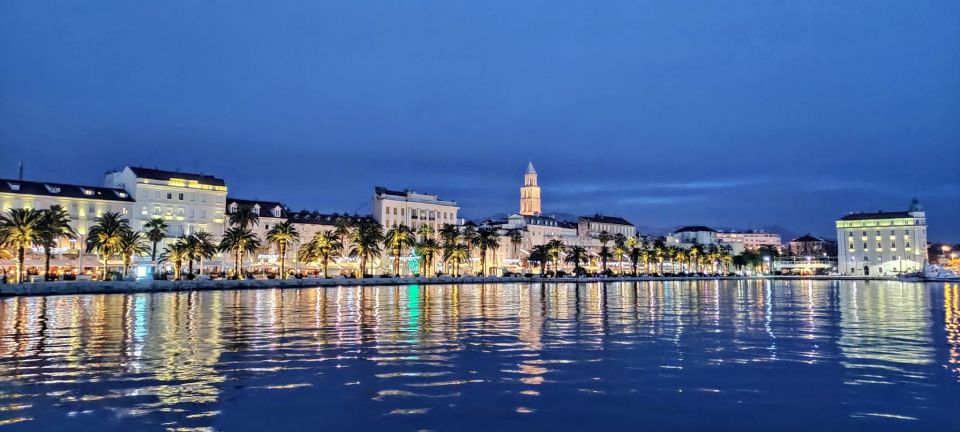
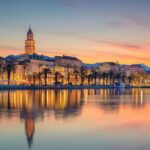
Split at night has a different mood than Split at noon. In summer, the streets near the old town feel like a living set: shutters open, shopkeepers are still around, and squares start to show their social side. You’re seeing the same UNESCO-era core, but in the light and atmosphere that people actually enjoy after work and dinner.
This tour leans into that timing on purpose. You’re not only chasing monuments; you’re walking through the day-to-night rhythm of Dalmatia’s main city. The result is that the places you see stop feeling like checkboxes and start feeling like parts of a real neighborhood—one that still hosts cultural life, shopping, and casual evening hangouts.
You’ll also appreciate the “private and short” part of the plan. Two hours is long enough to get meaning out of the highlights, but short enough that you’re not exhausted before you reach Riva.
You can also read our reviews of more private tours in Split


Price and value: what $129 gets you (and what it doesn’t)
The price is listed as $129 per group (up to 20 people) for a 2-hour private sightseeing tour. On paper, that sounds like it could be a group deal. In practice, you’re paying for a licensed guide and a route that’s structured around the city’s most important landmarks—Diocletian’s Palace, St. Domnius, and the key squares nearby.
Two important value notes:
First, the tour includes guiding time, not museum tickets. Entrance fees for Diocletian’s Palace and the Cathedral of St. Domnius are not included. That means you should think of this as an orientation and storytelling route. If you want full interior access, you may still pay separate entry fees later (or plan a different time slot).
Second, you’re not just getting a list of sights. The “private on your tempo” approach is where the money tends to make sense. If you pause for photos, want extra context, or prefer a slower stroll, the format is built for that.
If you’re traveling with a small group and want a clean overview without spending your whole day figuring out directions, this price can feel very fair. If you’re the type who insists on every interior being open and ticketed during the same visit, you’ll want to treat evenings as a “best effort” window.
Meeting in the right spot: Diocletian’s Palace cellars
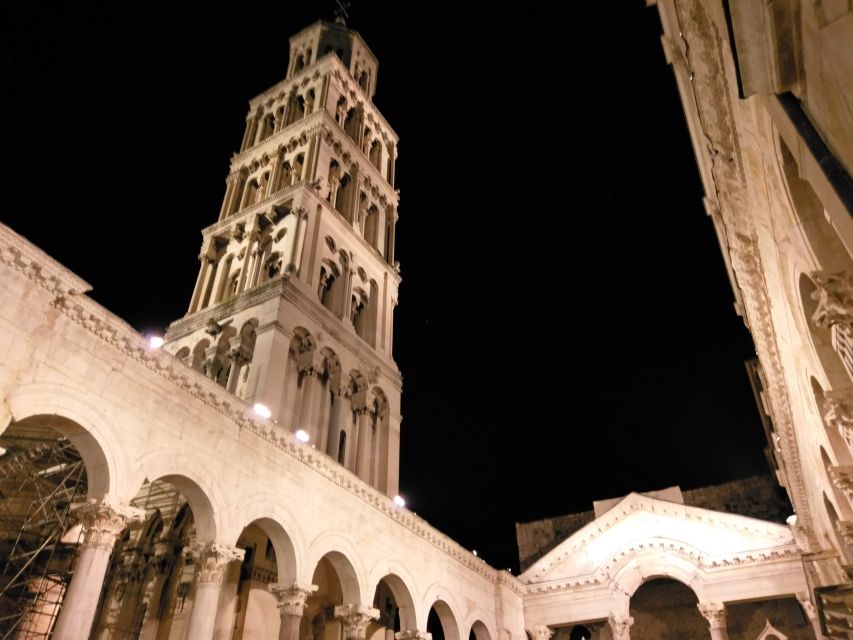
The meeting point is set in front of the entrance to the cellars of Diocletian’s Palace, at Obala Hrvatskog narodnog preporoda 23, 21000 Split. This is a smart choice because it anchors the whole tour in the palace complex right away.
You’ll also notice there’s a second nearby address used in the general starting location details (Obala Hrvatskog narodnog preporoda 15b). Don’t panic—just use the explicit meeting-point address by the palace cellars when you arrive.
Bring comfortable shoes. The route is walk-and-stop sightseeing, and old-town Split is not flat. The good news: stairs can be avoided if necessary, so if you need to keep it mostly step-free, tell the guide early.
Riva photo stop to set the mood
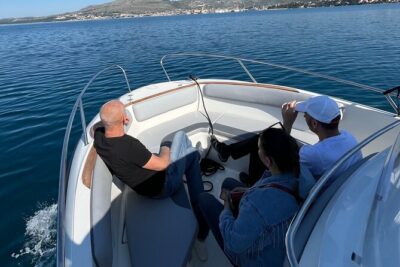
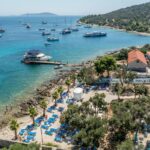
You start with a short stop around Riva, Split, with a photo moment and a guided introduction (about 15 minutes). Think of this as a warm-up. Riva is the classic waterfront spine of the city, and even if you already know it from postcards, it helps to see it first so the rest of the walk makes geographic sense.
This is also a good time to get oriented. The guide can set expectations about what you’ll see, how the old town is layered, and what to focus on when you reach the palace and squares.
Practical tip: if you’re visiting in peak summer, you may find it slightly easier to keep moving quickly from Riva toward the more shaded historic lanes.
Entering Diocletian’s Palace: cellars, peristyle, and Jupiter Temple
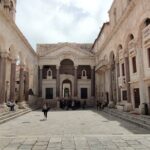
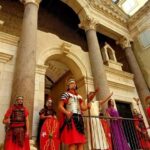
Your biggest “wow” block is the time in Diocletian’s Palace (about one hour, guided). The tour focuses on the most meaningful architectural pieces rather than trying to sprint through everything.
What you’ll experience in this structured sweep:
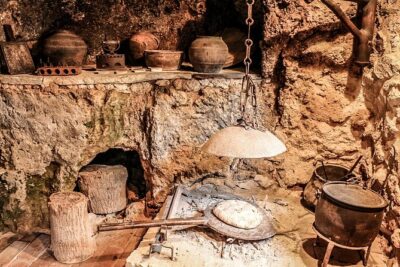
- You’ll see the well-preserved cellars, which are often overlooked when people only chase the main courtyards
- You’ll climb stairs toward the Peristyle
- You’ll reach the Jupiter Temple area as part of the palace story
Why this works: Diocletian’s Palace isn’t just a building. It’s a whole city-within-a-city concept, where power and daily life were mixed into one Roman plan. Cellars and levels matter because they show you the “underworld” infrastructure—storage, engineering, and the way the complex functioned.
In other words, the palace stops being a static ruin and starts feeling like a machine that supported imperial life. Even if Roman history isn’t your hobby, the guide’s pacing makes it understandable.
Mobility note: stairs exist here. The tour info says steps can be avoided if needed, so if you want an alternate route for the climb sections, you should coordinate that with your guide before you commit to any heavy stair segments.
You can also read our reviews of more evening experiences in Split





St. Domnius (St. Duje) and the bell tower: Roman origins, medieval worship
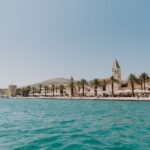
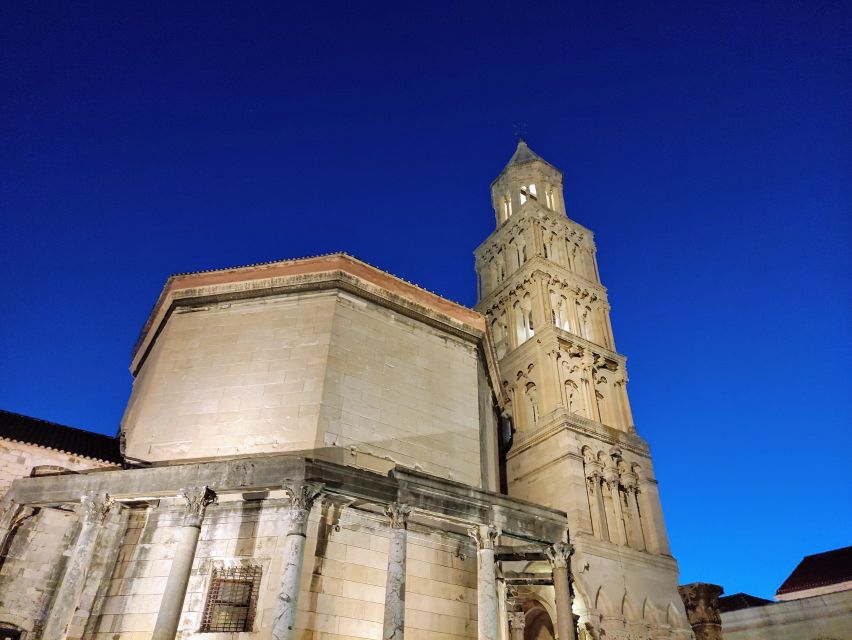
After the palace, you’ll move toward the Cathedral of St. Domnius with a photo stop (about 15 minutes). The tour frames this church in a specific way: it’s dedicated to Split’s patron saint (St. Duje), and it’s said to be among the oldest cathedrals in the world. You’ll also hear that the cathedral’s origin traces to Diocletian’s mausoleum.
That connection is the point. Standing here, you understand why Split feels like it never fully “switched off.” Roman imperial architecture didn’t vanish; it got repurposed into later sacred space. The bell tower area is a key landmark visually, even when interiors aren’t accessible.
One practical consideration: due to operating hours, the cathedral will likely be closed during the tour. So think of this segment as an exterior-focused orientation: you’ll get the important visual and historical clues, but don’t count on spending time inside.
Also: cathedral entrance fees are not included in the tour price. If you plan to add interior time, budget separately and consider doing it on a different part of your day when openings match your schedule.
Golden Gate, People’s Square (Piazza), and Fruit Square: the layered city
Next comes the old-town walk that connects the “big two” sights into a bigger story. You’ll have short stops—some photo-based, some guided—at:
- Golden Gate (about 15 minutes for a photo stop)
- People’s Square, also known as Piazza (with a guided stop)
- Fruit Square (with a photo stop and a short visit)
These aren’t random viewpoints. They show how Split evolved after the Roman era.
Golden Gate
Golden Gate is one of those structural Roman survivals that helps you see the city’s original defensive and ceremonial layout. Even if you don’t go into details, it gives you a reference point: you’re looking at the kind of monumental entrance that once mattered for movement and status.
People’s Square (Piazza) and Venetian influence
The tour specifically highlights that Piazza reflects the period of Venetian rule. That’s a key shift in tone. Venetian-era influence often shows up in the way squares function socially and commercially—more public life, more street-level activity, and a different relationship between buildings and people.
This is where a guide earns their fee. Without context, squares can feel like just another plaza. With context, you understand why the layout matters and how each era left a “signature” you can still read today.
Fruit Square
Fruit Square is shorter, but it’s the kind of local stop that makes the tour feel lived-in. It helps you connect the historic monuments with the everyday market vibe that still belongs in Split.
Ending in Riva: turn the last stop into dinner plans
You finish back at the meeting point area after the guided walk, with the tour also building toward the practical payoff: the waterfront scene at Riva. The itinerary description points out that once you’re done, you can continue the evening’s fun at restaurants and cafés along the waterfront.
This is a smart way to end. Instead of sending you off into the night with no plan, you’re placed near the city’s most convenient dining flow.
In fact, one of the most praised parts of this experience is how guides don’t just talk monuments—they also offer restaurant recommendations. If you care about good meals after the tour, this added guidance is often what makes the whole evening feel like it “paid off,” not just satisfied a sightseeing checklist.
Private pacing, language options, and how accessible the route feels
This is a private group tour with a licensed guide, offered in French, English, and Croatian. The language flexibility matters more than you might think. Old towns move fast, and good translation helps you understand what you’re looking at without playing guessing games.
The format is also built around your tempo. That’s useful because Split’s old town can be a little chaotic in summer—people, scooters, and sudden crowds around popular corners. A private guide can steer you toward smoother walking and decide how long to pause in each place.
Accessibility is included in the tour description: it’s wheelchair accessible, and steps can be avoided if necessary. That doesn’t mean the entire historic area is flat and perfect. But it does mean the tour is designed with options, not a one-size-fits-all assumption.
One more timing note: a late evening tour often shifts you toward exterior viewing. If you want interiors and climbing, consider how late you’re willing to be, and whether you’re okay with exterior-focused seeing if buildings are closed.
Who should book this tour (and who should consider another time)
This tour is a strong fit if:
- you want a first-time overview of Split’s main highlights without getting lost
- you like history but don’t want to spend the whole trip in tickets and queues
- you’re traveling with a group that benefits from flexible pacing
- you want a guided walk that ends near great evening food
It may be less ideal if:
- you’re planning your schedule around seeing lots of interiors during the tour window (cathedral and palace access may be restricted by opening hours)
- you dislike walking in old-town streets with uneven ground
- you need fully step-free access all the way through without exceptions (the tour says steps can be avoided, but you’ll still want to discuss your needs)
If you’re the kind of traveler who enjoys seeing how Roman, medieval, and Venetian layers show up street by street, this tour will feel like money well spent.
Should you book Split’s Magical Evening Sightseeing Private Tour?
If you’re coming to Split for a short stay, or you want a high-quality evening plan that blends monuments with real street atmosphere, I think this is a good book. The value comes from the mix of Diocletian’s Palace focus, a well-framed St. Domnius stop, and the pacing that keeps the night enjoyable instead of rushed.
I’d especially consider it if you want:
- a guided route that makes sense quickly
- restaurant guidance for after
- the option to avoid some steps if needed
The main reason to hesitate is simple: evening hours can mean closed interiors. So go in expecting a strong exterior-and-story experience at this time of day, and add separate ticket time if you want extra indoor access.
With a strong rating around 4.9 and consistently positive guide feedback like a great pace and practical restaurant picks, this tour looks like the kind of evening plan that turns into an easy win.
FAQ
How long is the Split Magical Evening Sightseeing Private Tour?
It lasts 2 hours.
How much does the tour cost?
The price is $129 per group (up to 20 people).
Where do we meet the guide?
Meet in front of the entrance to the cellars of Diocletian’s Palace, Obala Hrvatskog narodnog preporoda 23, 21000 Split.
What’s included in the price?
A licensed guide is included.
Are entrance fees to Diocletian’s Palace and the Cathedral included?
No. Entrance fees are not included for Diocletian’s Palace and the Cathedral of St. Domnius.
Will we be able to go inside the cathedral during the tour?
The tour notes that the cathedral will likely be closed during the tour due to operating hours, so expect exterior viewing during this time.