REVIEW · SPLIT
Split Quest Experience: Discover the City
Book on Viator →Operated by Questo · Bookable on Viator
A 90-minute city game with Roman plot twists. Split Quest Experience, a self-guided discovery route, turns the city into a chain of clues—using your phone for exact directions and stop-by-stop story moments. I like that it’s open-air and crowd-avoiding, and I also like the game format that keeps you moving without feeling like a lecture. One catch: you’re fully in app mode, so if you want a live guide talking in your ear, this is not that.
The route is built for wandering: you start at Sustipanski Park and work your way toward Diocletian’s Palace highlights, with breaks allowed because you can pause and continue whenever you want. Every stop is designed to be quick (about a minute or two of attention), but the time to actually look around is yours. The biggest consideration is simple—bring a charged phone and make sure you’ve downloaded the Questo app before you start.
At a price of $5.97 per person, this is the rare Split activity that tries to do two things at once: give you structure and still leave room for your own detours. If you’re comfortable following directions on-screen, you’ll get a lot of value for a short walk. If not, it can feel frustrating fast.
In This Review
- Key points to know before you go
- A phone-led mystery through Split’s Roman spine
- Sustipanski Park: sea views and your first clue
- Waterfront promenade to Matejuška: where Split feels lived-in
- Neretvanska ulica: the side-street shortcut to real town texture
- The Weird Fountain and Gregory of Nin: odd details that make you pay attention
- Marulić’s streets and statues: literature in stone
- Diocletian’s Palace area: from gates to the Vestibul
- Head on the wall and Jupiter’s Temple: the weird Roman stuff that sticks
- Price and value: $5.97 for a structured Split walk
- Logistics that matter: phone life, pace control, and meeting points
- Should you book Split Quest Experience: Discover the City?
- FAQ
- How long is the Split Quest Experience?
- Is this a guided tour with a live guide?
- Where does the experience start and end?
- How much does it cost?
- Do I need to download an app?
- What should I bring?
- Can I take breaks during the quest?
- Do the stops require paid admissions?
- What are the available hours?
- Is there free cancellation?
Key points to know before you go
- Self-guided with the Questo app: no live guide, and the phone provides the next directions.
- Sustipanski Park to Diocletian’s Palace: sea views first, Roman stone last.
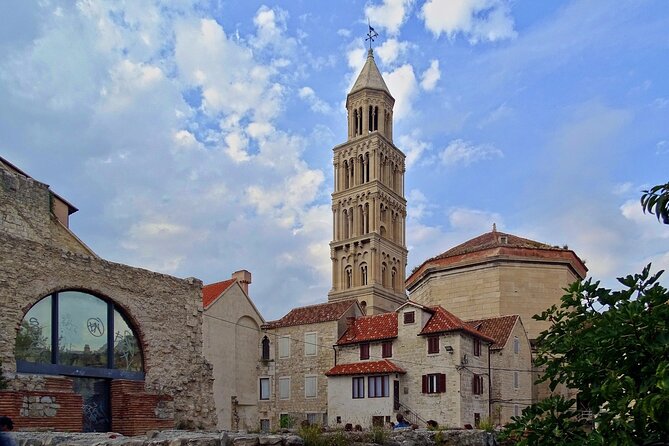
- 1700-year-old Split vibe, but in details: small alleys and quirky stops alongside big monuments.
- Quick visits, flexible time: each waypoint is short, but you can linger.
- Made for independent pacing: pause, take a break, then jump back into the quest.
- Inexpensive for what you cover: a low-cost route packed with major sights.
A phone-led mystery through Split’s Roman spine
Think of this as a history walk with a storyline layer. You download the Questo app using the email you used for your purchase, then follow prompts that guide you from one “clue” location to the next. The app gives exact directions on your phone, so you’re not constantly checking maps or wondering what street you’re on.
The duration lands around 1 hour 30 minutes to 2 hours, which is a perfect window for a morning stroll or a late afternoon unwind. It’s also private in the sense that only your group participates, even though you’re moving at your own pace. One of the best parts is the flexibility: you can start, stop, and continue whenever you want within the opening window.
This is open-air, and you’ll mainly be walking through streets and public spaces instead of sitting in crowds. That matters in Split, where the center can get busy—especially around the most famous Roman areas. Here, the structure helps you see more while you keep your distance from the chaos.
Just be honest with yourself about your phone comfort level. If you’re traveling with a dead battery, shaky data, or a fear of app instructions, plan differently. This experience runs on your device.
You can also read our reviews of more city tours in Split



Sustipanski Park: sea views and your first clue
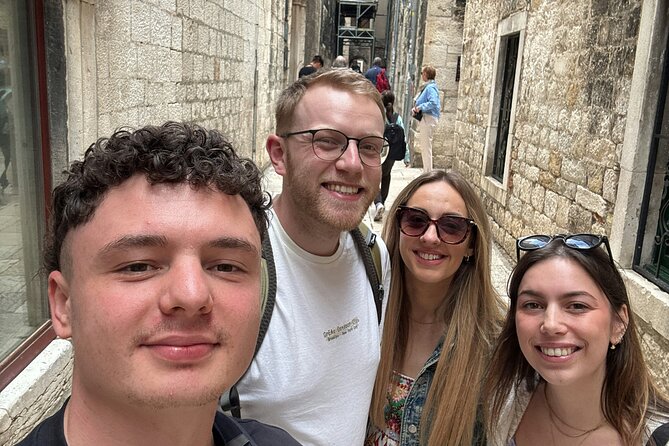
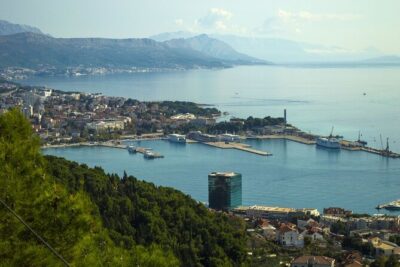
Your first waypoint sits at Sustipanski Park, a relaxing spot above the water with walking paths, greenery, and benches. It’s a smart opening because you get something you can feel right away: a view, a breeze, and a moment to orient yourself before the city compresses into stone monuments.
From a pacing standpoint, starting with a calmer park area sets you up for the rest of the quest. You begin the story without the pressure of rushing into the busiest streets. You’re also already close to the waterfront atmosphere that defines Split.
The app keeps the first stop brief, but you can stay as long as you like before moving on. This is a small detail that actually makes a big difference. It means you can arrive hungry for sights rather than rushing through them.
Waterfront promenade to Matejuška: where Split feels lived-in
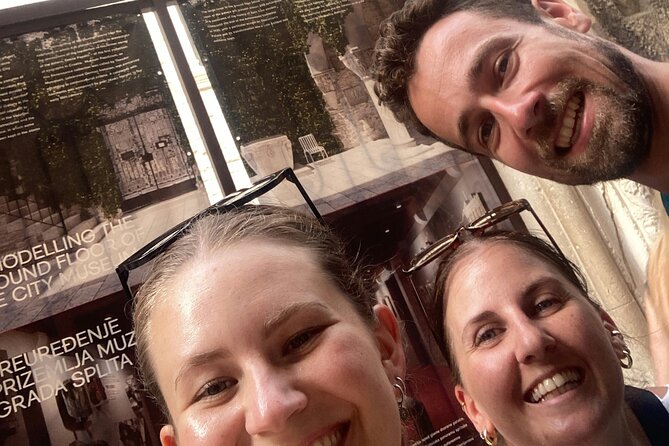
Next comes Obala kneza Branimira, the waterfront promenade. This is the kind of street you can walk with your eyes open: ships, sea light, local rhythm. The benefit of using the app here is that the waterfront becomes more than scenery. It becomes part of the story chain that keeps you moving in the right direction.
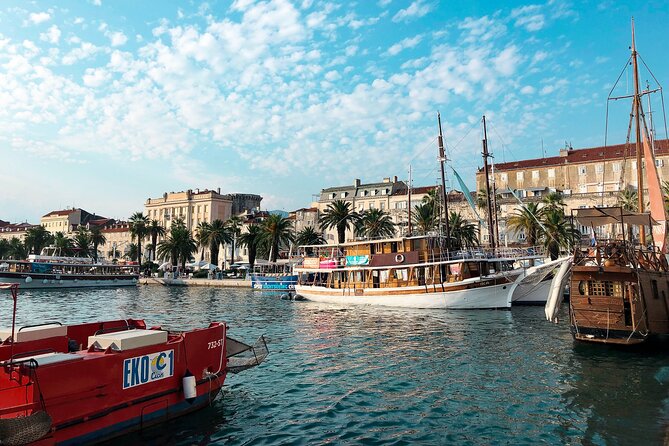
Then the quest shifts to Matejuška, a small fishing harbor and marina on the western side of the peninsula near the historic center. This stop is valuable because it’s not just “pretty water.” It’s more authentic-feeling: a working harbor texture that stands apart from the tourist-heavy stretches. If your goal is to see Split beyond the postcard zones, this is the kind of waypoint that helps.
Both of these areas work well for quick photo stops and slower breaths. You’ll likely find it easier to notice the city’s character here than later in Diocletian’s Palace where everything is compact and camera-heavy.
Neretvanska ulica: the side-street shortcut to real town texture
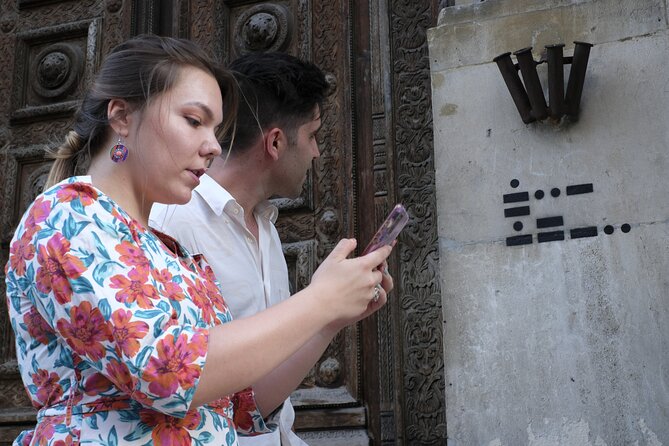
Neretvanska ulica is one of those Split streets that mixes residential buildings, shops, restaurants, and everyday city life. It’s an important “in-between” moment: you’re transitioning from waterfront space into the tighter, more monumental sections.
For me, this kind of street is where you start feeling the city’s pace. Instead of jumping directly from big landmark to big landmark, you get the human-scale blocks in between. That’s often where the best little surprises happen—signs, doors, storefront textures, and the rhythm of people moving through the neighborhood.
The app’s guidance keeps you from wandering in circles. And you still get freedom to slow down, step aside, and actually look at what’s around you.
The Weird Fountain and Gregory of Nin: odd details that make you pay attention
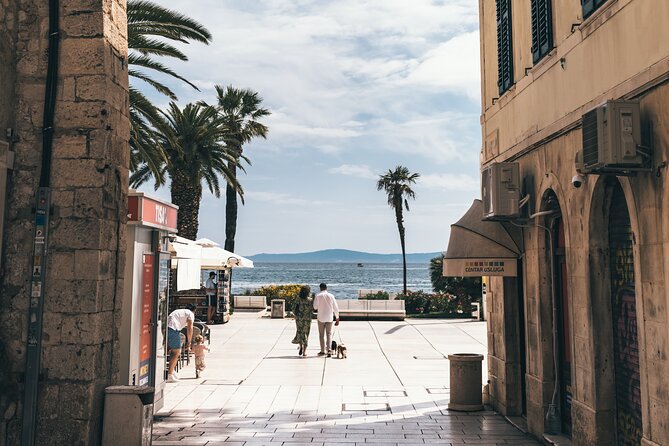
At Ul. kralja Tomislava 2, you’ll find the Weird Fountain, known locally as Prva voda. It’s exactly the sort of quirky landmark that can get overlooked if you’re only chasing the headline monuments. But in a quest format, it becomes a “must stop,” which is a smart way to build in fun.
Then comes the Gregory of Nin Statue. This is one of Split’s most recognizable figures, and it carries real history. The statue was created by Croatian sculptor Ivan Meštrović and erected in 1929. Even if you don’t know Meštrović’s work, the statue’s placement and prominence make it easy to understand why it’s a reference point for the city.
This section is where the quest becomes more than a walking game. It trains your attention. You start noticing that Split’s Roman layers aren’t only in ruins and walls. They also live in public art, civic pride, and small landmarks that feel distinctly local.





Marulić’s streets and statues: literature in stone

Next you move along Marulićeva ulica, named after Marko Marulić, a Renaissance poet and author from Split often called the father of Croatian literature. The point of this stop isn’t that you need a crash course. It’s that the street itself gives you a sense of what Split values—language, identity, and culture—right beside Roman heritage.
Then you reach the Marko Marulić Statue, another monument that reinforces the theme. It’s a pause from Roman stone, and that balance helps. If you only hit Diocletian’s Palace and nearby Roman stops, the city can feel like one big museum. Adding Marulić keeps Split feeling like a living town with layers beyond the Roman era.
This is a good moment to slow down. Read what you can on plaques if there are any, take a photo, and reset your legs before the palace area compresses the route.
Diocletian’s Palace area: from gates to the Vestibul
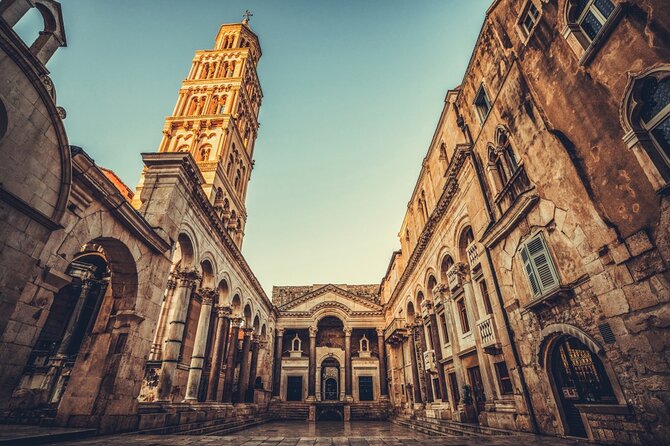
The quest’s heavy-hitter zone begins around Diocletian’s Palace. One of your waypoints is at Ul. Iza Vestibula 3, where you’ll encounter a mix of architectural styles including Roman, Hellenistic, and Byzantine elements. It’s also a practical stop: this is where you’ll understand why people call Diocletian’s Palace the backbone of Split’s old core.
From there you’ll head to the Silver Gate, also known as Porta Orientalis or Eastern Gate—one of the four main entrances to Diocletian’s Palace. Gates are great for the quest because they give you direction and drama. You’re not just walking; you’re passing thresholds that help you mentally map the place.
Then the route includes Papalićeva ulica, where you’ll find the Large Papalić Palace (Velika Papalićeva palača). It’s noted as an example of Baroque architecture dating to the 18th century, built for the Papalić family. This matters because it shows how Split kept building on top of its Roman foundation instead of freezing in time. If you like cities with continuous life, this waypoint scratches that itch.
Head on the wall and Jupiter’s Temple: the weird Roman stuff that sticks
The quest continues with Dominisova ulica, home to The Head on the Wall (Glava na Zidu). It’s one of those small-scale sculptures that can feel strange in the best way—fixed to a building wall, human in form, and easy to miss when you don’t have a reason to stop.
After that, you’ll reach Jupiter’s Temple (Hram Jupitera). It’s a Roman temple built in the 3rd century AD during the construction phase connected to Diocletian’s era. This is the “big Roman” moment—less quirky, more monumental—so it balances the Head on the Wall’s oddness with a structure that feels official and ancient.
Finally, there’s Vestibul, described as the ancient entrance hall of Diocletian’s Palace. This served as the central and grand entrance leading toward the emperor’s residential quarters. If you’ve ever felt confused by palace spaces that look like museums, this stop gives you a clearer mental picture: you’re standing near the kind of route people once used for real movement, not just viewing.
At this point, your quest has turned into a guided-feeling walk even though you’re self-guiding. The app story layer pushes you to notice transitions—gate to street, baroque to Roman, odd sculpture to temple stone.
Price and value: $5.97 for a structured Split walk
At $5.97 per person, this is priced low enough that it’s easier to treat as a fun way to move around than a major paid “attraction.” The value comes from coverage and time efficiency. In roughly two hours, you can hit a chain of landmarks that would otherwise be scattered across different parts of the center.
You also get group discounts and a mobile ticket. The practical benefit is that you’re not booking a reserved timed entry for one site. You’re using the city itself as the main “venue,” and that keeps it flexible.
The trade-off is obvious: there’s no live guide. You’re paying for a phone-led route and an app storyline, not expert narration in real time. If you want a person translating, interpreting, and adding context as you walk, you’ll likely feel underfed.
But if you enjoy figuring things out yourself—then checking what you need as you go—this is a great deal for Split.
Logistics that matter: phone life, pace control, and meeting points
This experience runs on the Questo app. After booking, you’ll get an email with instructions to download and play. Make sure you create the app account with the same email you used for purchase, then keep the app open while you walk.
Bring a charged phone. Seriously. This is self-guided, and the next steps come from your screen. Also, the walking is open-air, so don’t assume you can ignore weather. If it’s hot or windy, you’ll want that phone battery for navigation and your own comfort.
The route starts at Sustipanski Park (Sustipanski put, 21000 Split) and ends at Peristil near Peristil ul. The app gives you exact instructions to reach the final stop.
One more helpful tip: the experience recommends that each person buys their own ticket for the best experience, though multiple people can share a single phone. If your group includes one person who enjoys tech setup, you can make this work. If everyone hates apps, plan ahead or pick a different style of tour.
Should you book Split Quest Experience: Discover the City?
Book it if you want:
- A structured 1.5–2 hour way to explore Split’s older core without a guide controlling the pace.
- A route that mixes famous names with more “notice-me” details, like Prva voda, Glava na Zidu, and the Jupiter Temple.
- A low-cost activity that can reduce decision-making fatigue while you walk.
Skip it if:
- You expect a live guided tour with a person leading and explaining.
- You don’t want to rely on app directions and a smartphone during the whole walk.
If you match the first list, this can be a fun, efficient way to learn the city’s layout and get Roman-era anchors—without spending half a day in planning mode.
FAQ
How long is the Split Quest Experience?
It lasts about 1 hour 30 minutes to 2 hours.
Is this a guided tour with a live guide?
No. It’s a self-guided city exploration game using the Questo app.
Where does the experience start and end?
It starts at Sustipanski Park (Sustipanski put, 21000 Split) and ends at Peristil (Peristil ul., 21000 Split). You reach the final stop by following directions in the app.
How much does it cost?
The price is $5.97 per person.
Do I need to download an app?
Yes. After booking, you’ll receive instructions to download and play the game in the Questo app. You should have downloaded the app and set up an account before you start.
What should I bring?
A charged phone is the big one, since the app provides directions and guidance.
Can I take breaks during the quest?
Yes. The experience is designed to let you start, take a break, and continue at your own pace.
Do the stops require paid admissions?
The listed stops show admission ticket Free.
What are the available hours?
The experience is open Monday through Sunday, 8:00 AM to 6:00 PM (within the stated overall service dates).
Is there free cancellation?
Yes. You can cancel for a full refund if you cancel up to 24 hours in advance of the experience start time.