REVIEW · TROGIR
Trogir 1,5-Hour Small Group City Tour
Book on Viator →Operated by South Tours Croatia · Bookable on Viator
Trogir history fits nicely in 90 minutes. This small-group walking tour ties together the town’s most important sights with a local guide who explains what you’re actually looking at. I especially liked the local tips that make the streets feel navigable and the value of getting a guided history sweep without paying extra for the main stops.
One thing to consider: it’s a moderate walking experience. If you want to linger for long photo breaks in every corner, this plan moves a bit faster than you might.
In This Review
- Key Things to Know Before You Go
- Why Trogir Works So Well in a Short Tour
- Start Smart: Getting Oriented at South Tours Croatia
- Stop One: Saint Lawrence’s Cathedral and the Art-Style Mashup
- Stop Two: Central Square and the City-Museum Feeling
- Stop Three: Kula Karmelengo (Kamerlengo) and Venetian Rule
- How the Guide Turns Sights Into Real Understanding
- Timing and Pace: What 1.5 Hours Really Feels Like
- Price Value: What $60.21 Buys You in Trogir
- Practical Tips That Make This Tour Easier
- Should You Book This Trogir 1.5-Hour Small Group City Tour?
- FAQ
- How long is the Trogir 1.5-hour small group city tour?
- Is the tour offered in English?
- How much does the tour cost?
- What’s included in the price?
- Are entrance tickets included for the stops?
- Are food and drinks included?
- Where does the tour start and end?
- Is there a lot of walking?
- What is the cancellation policy?
Key Things to Know Before You Go
- Small group pace: capped at a maximum of 50 travelers, so you’re not lost in a crowd.
- English guide: the tour is offered in English, which makes the history easier to follow.
- Smart selection of stops: Saint Lawrence’s Cathedral, Central Square, and Kula Karmelengo (Kamerlengo).
- Free access at the stops: the key listed stops are marked admission ticket free.
- Venetian-era connections: Kamerlengo Fortress is tied to Venetian rule and the city treasurer naming story.
- Multiple departures: you can choose a time that fits your day in Trogir.
Why Trogir Works So Well in a Short Tour
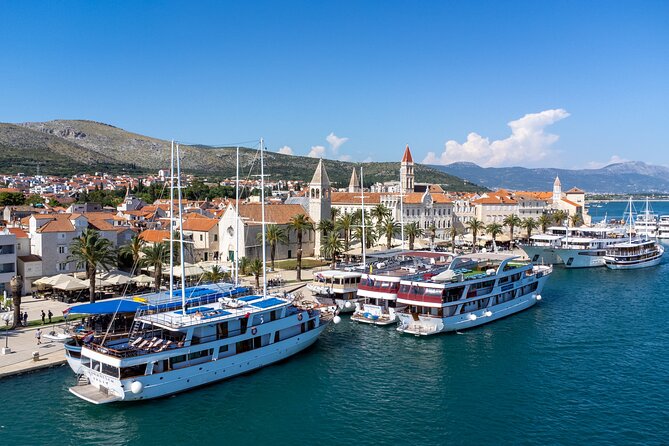
Trogir is one of those places where walking gives you answers fast. The streets are compact, the architecture is readable, and the town keeps showing you layers—medieval, Gothic, Renaissance, Baroque, and Venetian influence—without needing a full-day commitment.
That’s why this 1.5-hour format makes sense. You don’t just see three points on a map. You get a guided thread that connects them: sacred space, public square, and then the fortification that speaks to power and defense. By the time you finish, you understand the shape of the old town and what to look for next when you wander on your own.
Another practical win is the structure. The tour starts and ends back at the South Tours Croatia meeting point, which lowers the stress level. You’re not scrambling to figure out where you’ll end up later, and you can plan the rest of your afternoon with more confidence. And because the tour is in English with a local guide, you’ll spend more time understanding and less time guessing.
You can also read our reviews of more city tours in Trogir


Start Smart: Getting Oriented at South Tours Croatia
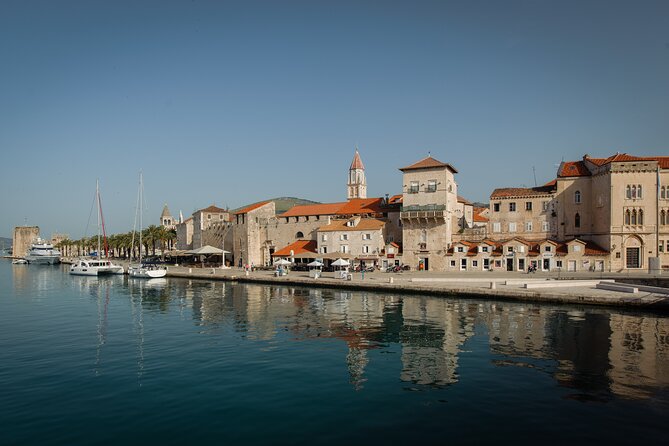
Your day begins at the South Tours Croatia – Travel Agency on Ul. Hrvatskih mučenika 28, 21220, Trogir. This is a good setup because you can treat the tour like a walking map lesson. If Trogir is your first stop in town, you’ll get your bearings quickly—streets, sightlines, and how the old center is arranged.
The tour also uses a mobile ticket, so you don’t need to hunt for printed paperwork. That matters in old towns where phones become your real-time guide, and it helps keep the meet-up process smoother.
Plan to arrive a few minutes early so you’re not stuck after a coffee deciding where the group is gathering. Dress in smart casual clothing and focus on comfort for your feet; the walking is called moderate, and the old stone surfaces can be unforgiving if you’re in the wrong shoes.
Stop One: Saint Lawrence’s Cathedral and the Art-Style Mashup
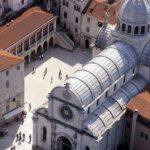
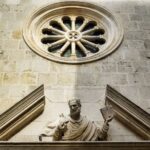
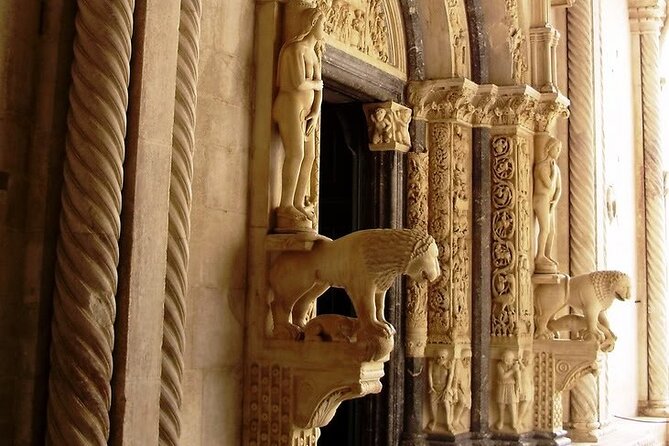
Saint Lawrence’s Cathedral is the kind of stop that rewards attention. Even if you’re not a “church architecture” person, this place can pull you in because the guide’s explanation helps you notice the layers.
The cathedral’s church area connects to medieval belief and gathering—this wasn’t just decorative space. It was the social and spiritual center for people in earlier centuries. What’s fascinating is that the building houses works of art where different styles overlap. You’ll encounter influences described as Romanticism, Gothics, Renaissance, and Baroque mingling under one roof.
Here’s the useful way to approach it: don’t try to memorize everything. Instead, pick one or two details the guide points out—an element of style, a piece of art, a feature that signals a time period. Once you learn how to read one feature, you’ll start spotting the rest on your own.
The listed stop time is short, but it’s enough to get oriented. The best move is to slow down once inside and let the guide do the heavy lifting of interpretation. If you rush, you’ll miss the real value: the story behind what you’re seeing.
Stop Two: Central Square and the City-Museum Feeling
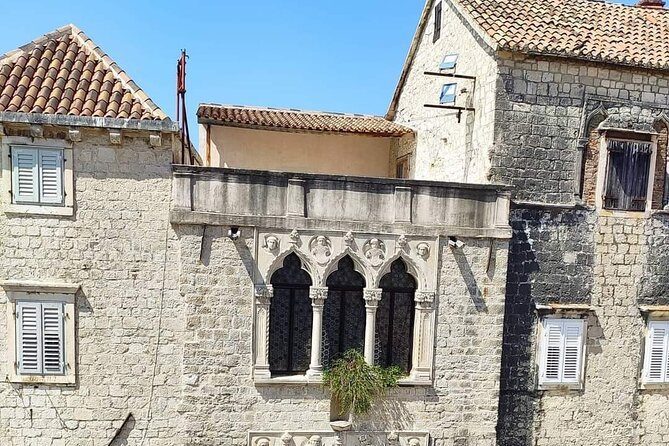
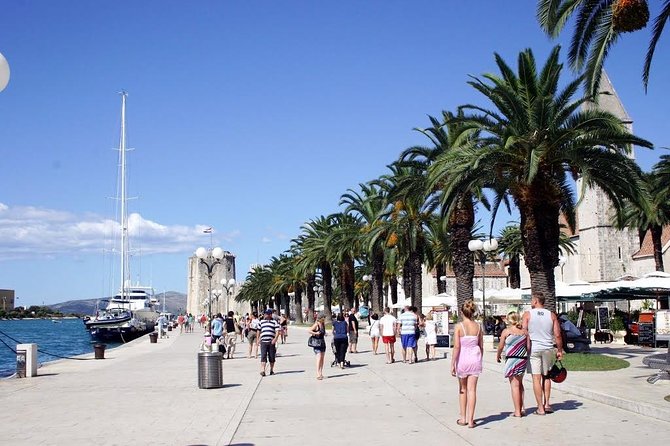
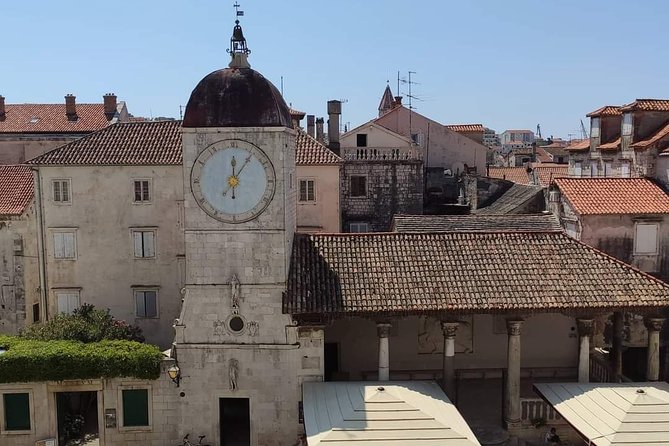
Central Square is where the tour becomes more than history trivia. This is a public space, meant for movement and daily life, and that’s why it hits differently after the cathedral. You feel the transition from sacred gathering to civic rhythm.
Trogir is sometimes described as a city-museum because the architecture stays intact and authentic. In Central Square, you get a clear sense of why that nickname fits. Instead of modern clutter taking over, you see older structures that still frame the space and shape how you experience the town.
This stop also works for photos, but go beyond the postcard angle. Stand in one place long enough to understand what defines the square: street lines, building edges, and how views open and close. A square isn’t just a place to stand. It’s a set of sight rules, and that’s what the guide helps you notice.
The stop is about 20 minutes, which gives you time for a calm reset. If your legs start to feel it, this is where you can catch your breath without falling behind. It’s also a good chance to ask quick questions—like what to prioritize if you return later for a longer self-guided walk.
Stop Three: Kula Karmelengo (Kamerlengo) and Venetian Rule
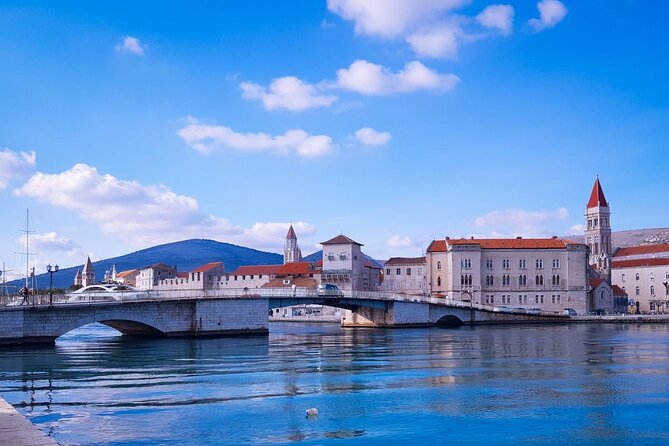
Then you finish with Kula Karmelengo—also linked to the name Kamerlengo Fortress in how people refer to it. This is where the tour turns more outward-facing. You’re no longer just reading art styles or absorbing square layout. You’re looking at fortification and power.
The details here are specific, and they matter. The fortress got its name from the city treasurer. And during Venetian rule, it developed a recognisable image tied to how the Venetians organized control and defense.
What I like about this stop is how it makes you understand the town’s relationship to the wider region. A fortress isn’t only a building. It’s a statement about what mattered: guarding trade routes, protecting the city, and managing influence. When your guide connects those dots, you start seeing the stone as evidence, not just scenery.
The visit time is about 10 minutes. That’s brief on purpose, but it’s enough to get the main meaning: why it exists and why its story matters to Trogir’s identity. After this, you’ll likely look back at the surrounding streets differently. The town starts to feel like it has a logic, not random charm.




How the Guide Turns Sights Into Real Understanding
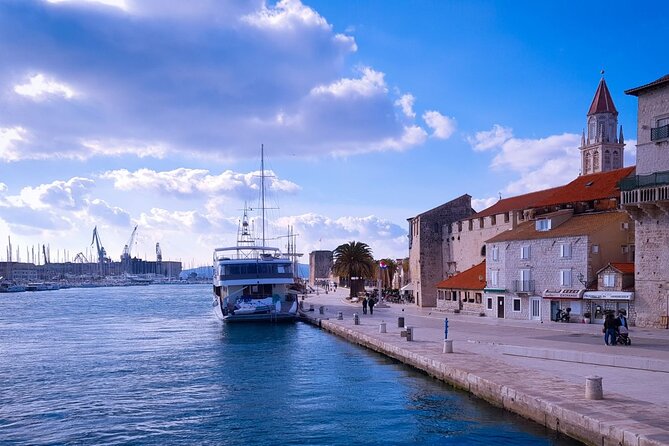
A lot of walking tours list places. This one helps you read them. The guide focuses on the “why” behind the stops—how styles and roles overlap across centuries.
That’s the biggest value you’ll feel on the ground. If you only wanted location names, you could do it from an app. But when someone explains, for example, how Saint Lawrence’s Cathedral brings together multiple art styles, the building becomes easier to interpret. When the guide explains why the fortress name connects to the city treasurer and how the Venetian era shaped the fortress image, you understand what you’re seeing without guesswork.
You also get local insight that helps you move through the old town after the tour ends. That’s important in Trogir because the streets are charming but can be confusing if you’re trying to figure everything out alone.
And the small-group size helps. Even with a maximum of 50 travelers, you should still be able to hear the guide and move as a unit. If you’re the type who hates being squeezed behind bigger groups, this format is friendlier than the big-bus style of sightseeing.
Timing and Pace: What 1.5 Hours Really Feels Like
This tour runs for about 1 hour 30 minutes. That time includes the walking between three key stops, plus a short visit window at each. So yes, you’ll move through the main sights without spending your whole day doing one thing.
Expect the experience to feel like a focused circuit:
- Cathedral stop with art/style context
- Central square for public-space orientation
- Fortress stop with power and Venetian-era meaning
Because the walking is moderate, you’ll want to keep energy in mind. Bring a bottle of water if it’s warm. Wear comfortable shoes. If you tend to tire quickly on cobblestones, consider pacing yourself during transitions between stops.
Also, plan your meal strategy. Food and drinks aren’t included, so this is not a meal-tour. If you’re touring during a long day, eat beforehand or plan a snack right after. Your feet will thank you.
Price Value: What $60.21 Buys You in Trogir
At $60.21 per person, you’re paying for a guided interpretation session in a compact historic center. The included items are clear: taxes, fees, and handling charges, plus a local guide.
The value gets better because the main listed stops are marked admission ticket free. That means your money isn’t going to multiple paid entrances during a short schedule. You’re mostly paying for the guide and the time-saving structure, not for ticketing logistics.
The “not included” piece is refreshment. Food and drinks aren’t part of the price, so budget for a drink or snack on your own. If you already have a plan for lunch or you can grab something nearby after, this tour remains a very reasonable way to get the meaning behind Trogir quickly.
I’d call it a good deal if you want:
- an efficient orientation to Trogir’s old town
- clear explanation at the three most important stops
- a walking experience that fits into a tighter travel schedule
It’s also smart if you’re not interested in spending hours reading walls yourself. You’ll still get time to look around, but you won’t be left entirely on your own.
Practical Tips That Make This Tour Easier
A few small things make the difference between a tour that feels smooth and one that feels like a sprint.
- Wear smart casual clothing and comfortable walking shoes. Stone streets can be slow and slightly uneven.
- Bring water, especially in warmer months. The tour does not include food or drinks.
- If you like taking photos, plan to do it while the guide is talking, not only during the last minute. That way, you capture the moment and the context.
- Use the tour as a springboard. After you leave Kamerlengo, you’ll likely want to roam the streets on your own with a better sense of what you’re looking at.
Also, since it’s near public transportation, it’s easy to connect this with other plans around Trogir. If you’re moving in and out of town by transit, this tour won’t feel like an isolated dead end.
Should You Book This Trogir 1.5-Hour Small Group City Tour?
Book it if you want an efficient, guided way to understand Trogir. This is a strong choice for first-time visitors who want the main story: cathedral art styles, the civic feel of Central Square, and the meaning behind Kula Karmelengo and Venetian influence. The short length is exactly what makes it practical.
Skip it or pair it with more time on your own if you know you like long, slow visits. Ten minutes at a fortress and a short cathedral stop won’t satisfy everyone who wants deep, unhurried exploration. But for most people who want clarity and context fast, this tour hits the sweet spot.
FAQ
How long is the Trogir 1.5-hour small group city tour?
The tour lasts about 1 hour 30 minutes.
Is the tour offered in English?
Yes, the tour is offered in English.
How much does the tour cost?
The price is $60.21 per person.
What’s included in the price?
The price includes all taxes, fees, and handling charges, plus a local guide.
Are entrance tickets included for the stops?
The listed stops are marked as admission ticket free, and the tour includes the local guide (no separate paid entry is indicated for these stops).
Are food and drinks included?
No. Food and drinks are not included.
Where does the tour start and end?
It starts at South Tours Croatia – Travel Agency, Ul. Hrvatskih mučenika 28, 21220, Trogir, Croatia, and ends back at the same meeting point.
Is there a lot of walking?
The tour involves a moderate amount of walking, and it may be more comfortable with good shoes.
What is the cancellation policy?
You can cancel for a full refund up to 24 hours in advance of the experience start time. If you cancel less than 24 hours before, the amount paid is not refunded.