REVIEW · SPLIT
Trogir & Split – Private tour of two UNESCO cities
Book on Viator →Operated by TEMPER TRAVEL · Bookable on Viator
Two UNESCO cities, one smooth schedule. Trogir and Split feel connected in a way that makes you want to keep walking. You’ll start with Trogir’s historic center and then shift to Split’s Diocletian-era streets, piazzas, and seaside promenade with an English-speaking licensed guide.
I especially love the chance to see Saint Lawrence’s Cathedral from the inside, not just from the curb. I also like the way Split’s Riva Harbor area feels like a real public living room, with everyday city life woven into the ancient setting.
One possible drawback: this is a 5-hour walking-focused experience, so you’ll want comfortable shoes and a steady pace. If you’re hoping for lots of long stops or frequent sitting breaks, you may find the timing a bit tight.
In This Review
- Key highlights at a glance
- Two UNESCO cities in one 5-hour plan
- Trogir’s medieval streets, cathedral inside visit, and the Golden Gate
- Cathedral time isn’t an afterthought
- Split’s Diocletian’s Palace: the “living organism” feeling
- Split squares and the Riva: where locals actually hang out
- What you’re really paying for (and why it can be worth it)
- Logistics that make the day easier than it sounds
- Practical tips for enjoying Trogir and Split comfortably
- Should you book this Trogir & Split private tour?
- FAQ
- What time does the tour start, and how long is it?
- Is pickup included?
- Is the tour private?
- What’s included in the price besides the guide?
- Are entrance fees included for everything?
- Do I need to use a physical ticket?
- What happens if the weather is bad?
Key highlights at a glance
- A private format with pickup and an English-speaking licensed guide, so the day moves at your pace
- St. Lawrence’s Cathedral ticket included so you get interior time in Trogir
- Diocletian’s Palace highlights like the Peristyle and palace gates focus on what to look for
- Split’s public squares and the Riva help you understand how people use the historic spaces today
- Coffee and/or tea included, a small but real comfort during the walk
- Good weather matters, since the experience is designed for outdoor wandering
Two UNESCO cities in one 5-hour plan
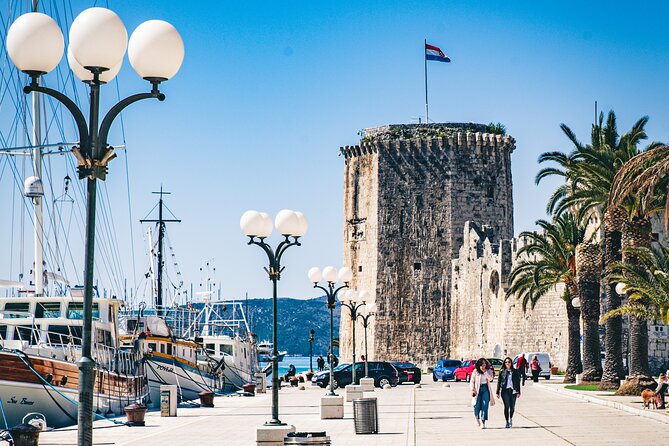
This tour works because it compresses the best of two UNESCO-listed places without making you feel lost. You’re picked up at an agreed location and transferred by private car in an air-conditioned vehicle, which takes the edge off Croatia’s heat and sun. Then it’s mostly on foot, with your guide keeping the story clear as you move from Trogir’s tight streets to Split’s iconic palace complex.
The duration is about 5 hours, which is short enough to stay energetic but long enough to get beyond the typical “photo-only” version of UNESCO sightseeing. You’ll see the major visual anchors in each city—cathedral, gates, palace spaces, and the waterfront—while still getting enough context to understand how the places evolved.
You can also read our reviews of more private tours in Split


Trogir’s medieval streets, cathedral inside visit, and the Golden Gate
Trogir’s historic center is where the tour really grabs your attention. The town’s character comes from continuity: you’re walking a place that has held on to its urban shape across a very long timeline. Expect narrow lanes, stone architecture close to your face, and viewpoints that show how compact the whole area is.
A highlight is Saint Lawrence’s Cathedral, where you don’t just look at the outside. You’ll go inside for a focused visit, and that interior stop is included in the price. This is the kind of time that makes the tour feel more than a drive-by—cathedrals are designed for experience, not quick glances.
From there, you’ll head toward the city’s Golden Gate, a key moment for understanding Trogir’s old power and design. Your guide points you to how the entrance aligns with Diocletian’s era legacy in the broader region, and you’ll also notice the statue of Croatian bishop Grgur overlooking the gates. Even if you’re not a “statue person,” the location matters—it’s a visual cue that helps you connect the symbolism to the spot you’re standing in.
And yes, there’s a fun local legend tied to Trogir’s streets: people say a Greek god of happy moments wanders around. It’s one of those bits of folklore that can turn a simple walk into something playful. If you like to look for details while you stroll, this story gives you an excuse to slow down just enough to notice the charm around you.
Cathedral time isn’t an afterthought
What I like about the way this tour handles Trogir is that the cathedral stop is included, and it’s not treated like a quick checkbox. An inside visit gives you a chance to read the building as an experience: scale, light, and decoration all land differently once you’re inside.
If you’re visiting during peak hours, the outside photos can blur together fast. The interior time is what breaks that rhythm and gives you something distinct from the street views. It’s also a good moment to reset your feet, since a cathedral visit naturally shifts you from outdoor walking to slower observation.
Split’s Diocletian’s Palace: the “living organism” feeling
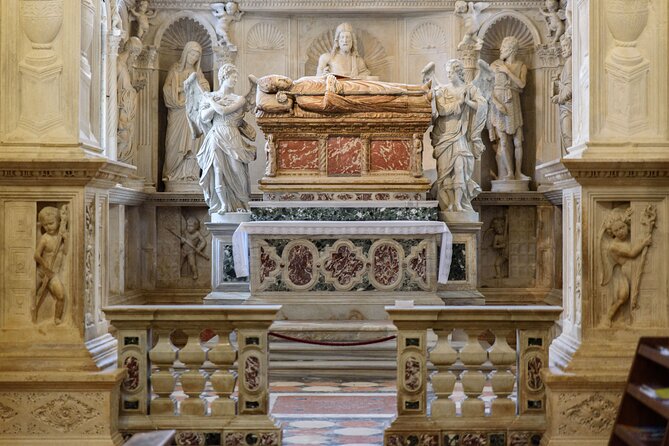
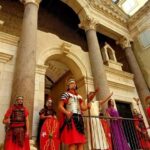
Once you reach Split, the focus becomes Diocletian’s Palace, described as a living structure—part ancient monument, part practical neighborhood. Even without technical background, you can feel what that means as you move through the palace spaces: the layout was built for power and control, but the city now uses it for daily life.
Your guide helps you get your bearings fast. You’ll stroll through palace streets and piazzas, and you’ll get the kind of explanation that makes the walls look less mysterious. This is where the tour earns its keep: you learn what to look for while you’re still standing in the right spot, instead of trying to reconstruct the story later from memory.
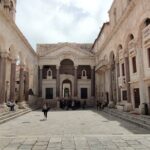
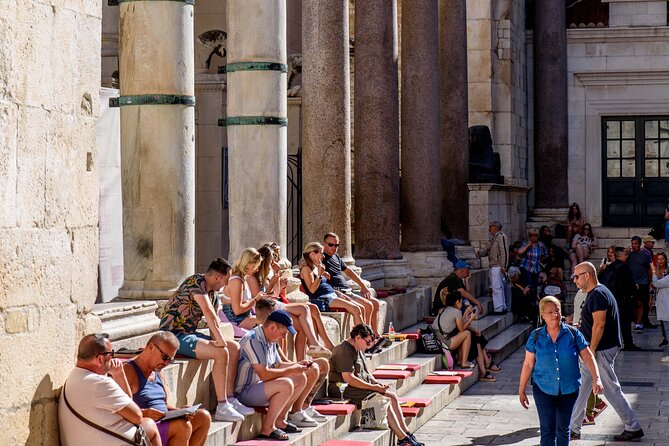
A major stop is the Peristyle, called the geographical and spiritual center of the palace. Your time here is designed for noticing. The square-like space pulls your attention outward, and it’s one of those areas that can feel monumental even when you’re just standing still for a moment.
Split squares and the Riva: where locals actually hang out
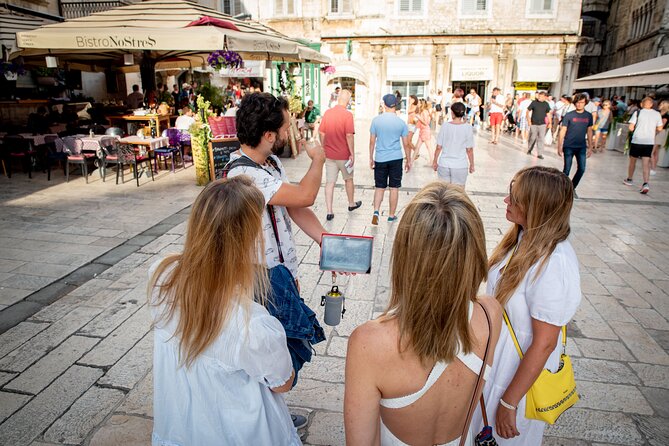
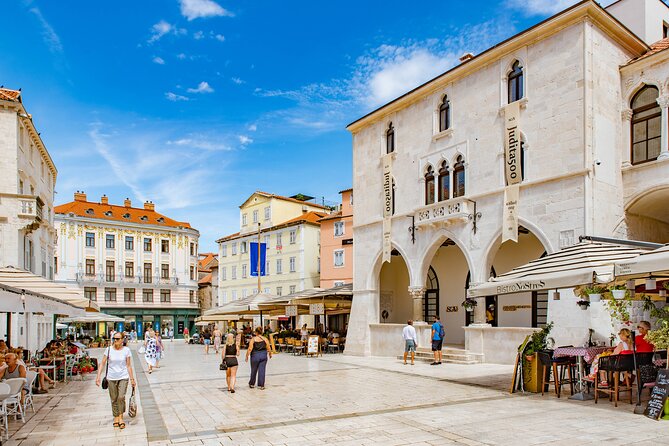
After the palace core, the tour moves into the public spaces that make Split feel like a real city. Narodni Trg is described as a central stage of everyday life where people rest, meet, and discuss—especially football. That sounds like small talk, but it’s actually a useful framing. You’ll understand the squares as social rooms, not just historic backdrops.
Next comes Prokurative, an area compared to Venice’s St. Mark’s Square in layout and openness, with a view toward the harbor. This helps you see the relationship between architecture and city movement: where people gather, where they can look out, and how the sightlines shape what a square feels like.
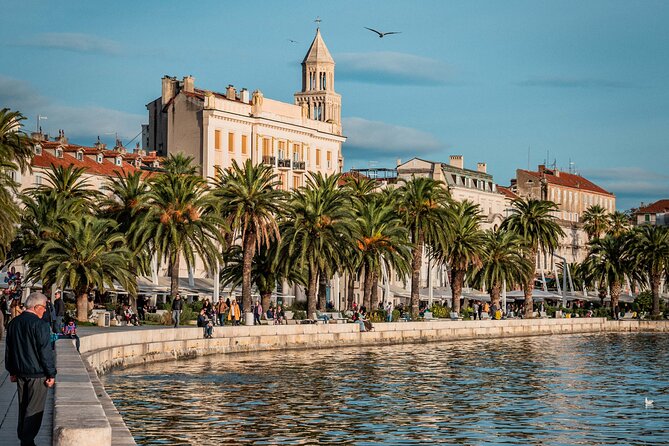
Then you finish at Riva Harbor, Split’s most important promenade—the city’s living room in plain language. The value here is atmosphere: once you’ve been looking at ancient stone, the harbor puts you back into the present. You’ll get a sense of how the sea-front connects old and modern Split, not just as a view but as a daily routine.



What you’re really paying for (and why it can be worth it)
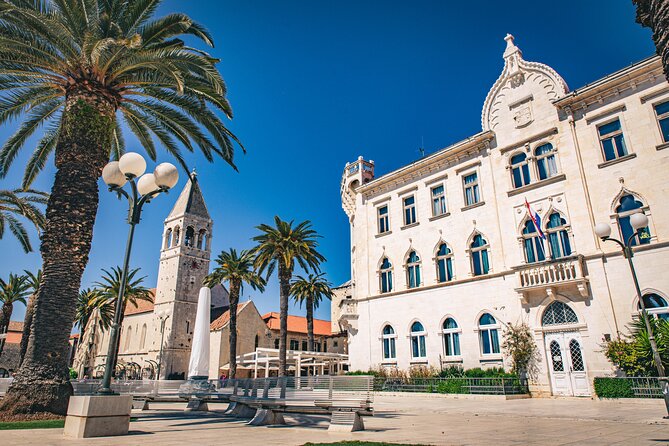
At $161.10 per person, this isn’t a budget “hop-on/hop-off” option. But private tours have a different cost logic: you’re paying for the combination of pickup, private transport, an English-speaking licensed guide, and a paid entrance where it counts.
Here’s what you actually get included:
- Pickup at your agreed location
- Private transportation in an air-conditioned vehicle with a professional driver
- English-speaking licensed guide
- Entrance fee to Saint Lawrence’s Cathedral in Trogir
- Coffee and/or tea
That entrance ticket matters because it’s one of the stops that’s hard to replicate on your own without planning. And the guide factor matters because the day includes multiple landmarks that can feel disconnected if you’re just reading a sign.
If you’re traveling with someone who wants a guided explanation, this price can feel more fair because you’re buying time and clarity. If you’re the type who loves independent wandering with no structure, you might compare the cost to what you’d spend on transport plus guided help—or skip the cathedral interior if you’re determined to keep it low-cost.
Logistics that make the day easier than it sounds
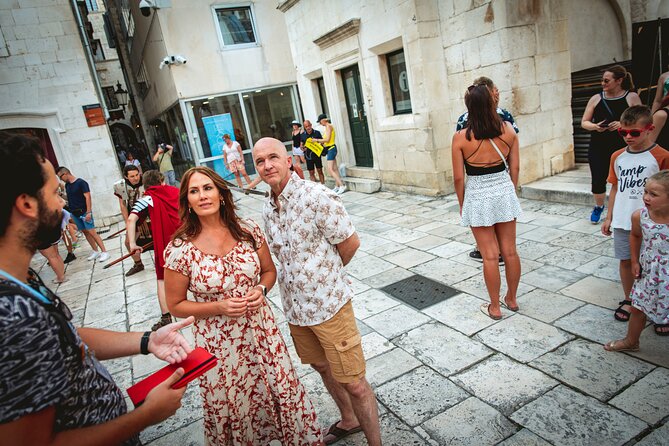
This tour is designed as a single, continuous day, starting at 9:00 am. That early start is practical: you’ll get into the historic areas while the streets feel more manageable and before the day warms up too aggressively.
It’s also listed as private, meaning only your group participates. That changes the experience. You’re not stuck waiting for a large group to filter through tight streets, and your guide can slow down when questions come up.
A small but helpful detail: you’ll use a mobile ticket. That reduces last-minute hassle and helps you keep moving with the schedule.
And based on feedback from people who took a similar version of this day, the guide experience is a key strength. In one case, the guide was Boško, and the driver was Pablo, with praise specifically for how informed the guide was and how safe the driver felt. That combination—clear explanations plus careful driving—usually makes long walking days feel less stressful.
Practical tips for enjoying Trogir and Split comfortably
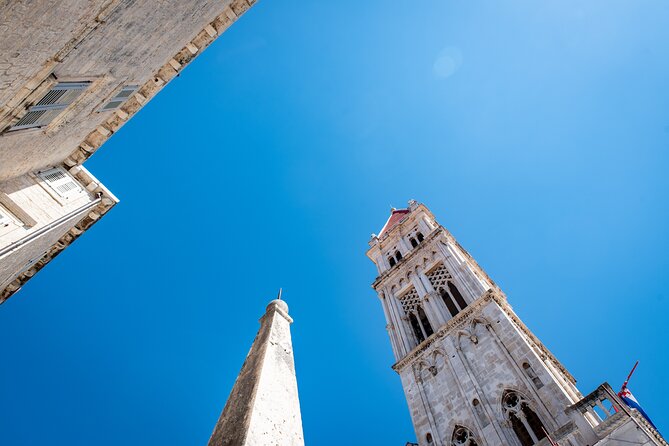
Wear comfortable walking shoes. This is a walking-and-looking itinerary, and historic city centers don’t reward slick shoes or sandals with zero support. Bring water, even though coffee/tea is included—your energy level will depend on how steady the pace feels to you.
Plan for a photo-heavy day, but don’t treat every stop like a camera sprint. When your guide points out something specific—like what to notice in the Peristyle or why the Golden Gate matters—it’s worth staying put for an extra minute. That’s usually where the tour clicks.
Finally, think about weather. The experience requires good weather, and if it’s canceled due to poor conditions you’ll be offered a different date or a full refund. So if you’re traveling in a week where rain is common, keep a little flexibility in your plans.
Should you book this Trogir & Split private tour?
Book it if you want an efficient, guided way to connect Trogir’s UNESCO streets with Split’s Diocletian’s Palace and the waterfront promenade. I’d especially recommend it if you care about understanding what you’re seeing—cathedral interior time and the Peristyle stops make it more meaningful than a quick sightseeing loop.
Skip it (or at least think twice) if you prefer long free time in one city over a focused “see the highlights of both” approach. With about 5 hours and multiple concentrated stops, you’ll be moving. For people who enjoy structure, it’s a great fit; for people who want to drift, it can feel a bit scheduled.
If your priority is getting value from included entry, private transport, and a guide who can explain landmarks on the spot, this tour is a strong choice.
FAQ
What time does the tour start, and how long is it?
The tour starts at 9:00 am and lasts about 5 hours.
Is pickup included?
Yes. Pickup at the agreed location is included.
Is the tour private?
Yes. It’s a private tour/activity, so only your group participates.
What’s included in the price besides the guide?
You get private transportation with a professional driver in a modern, air-conditioned vehicle, an English-speaking licensed guide, entrance to Saint Lawrence’s Cathedral in Trogir, and coffee and/or tea.
Are entrance fees included for everything?
Only the entrance to Saint Lawrence’s Cathedral in Trogir is listed as included. Other personal purchases or expenses are not included.
Do I need to use a physical ticket?
No. This experience offers a mobile ticket.
What happens if the weather is bad?
The tour requires good weather. If it’s canceled due to poor weather, you’ll be offered a different date or a full refund.