REVIEW · SPLIT
Private Walks & Storytelling – the best small group tour in Split
Book on Viator →Operated by Walking tours with The Storyteller Croatia · Bookable on Viator
Split has a way of slowing you down. This private small-group walk through Split is built around local stories and the real feel of the city, not a rushed photo sprint.
I especially like two things: you get a licensed guide who tells stories with context, and the route mixes big-ticket Roman sites with the everyday places locals talk about. One thing to consider: it’s a walking tour through historic stone, so comfortable shoes matter, and you’ll want good weather for the full experience.
In This Review
- Why This Split Walk Feels Different from the Usual Old-Town Shuffle
- Key Points You’ll Feel on the Walk
- Price and Value for a Private Group in Split
- Starting at Brass Gate (Porta Aenea): Getting Oriented Fast
- Stop 1: Riva Harbor and the Palace Streets, Where Life Sets the Tempo
- Stop 2: Diocletian Palace Substructures—Walking Under the City
- Stop 3: The Peristyle (Imperial Square) and the Stories Behind the Walls
- Stop 4: Cathedral of Saint Domnius—Small Scale, Big Meaning
- Stop 5: Temple of Jupiter—From Emperor’s Link to Baptistery
- Stop 6: Let Me Pass (Pusti me da prodjem) Street—The Narrow Street You’ll Remember
- Stop 7: Narodni Trg—Where the Old Town Starts Growing Westward
- Stop 8: Nadalina Chocolate and the Small Art of Food Stories
- Stop 9: The Golden Gate (Porta Aurea)—Roman Strategy in Stone
- Stop 10: Grgur Ninski Statue—A Wish, Four Centuries of Walls, and a Real Ending
- What the Guide Style Means for Your Actual Day in Split
- Timing, Weather, and Walking Comfort
- Who Should Book This Tour
- Should You Book Private Walks & Storytelling in Split?
- FAQ
- What’s the group size for this Split walking tour?
- How long does the tour take?
- What language is the tour offered in?
- Where do we start the tour?
- Where does the tour end?
- Do I get a mobile ticket?
- Are entrance tickets included?
- Is the tour suitable for most people?
- Is the tour weather dependent?
- Can I cancel for free?
Why This Split Walk Feels Different from the Usual Old-Town Shuffle
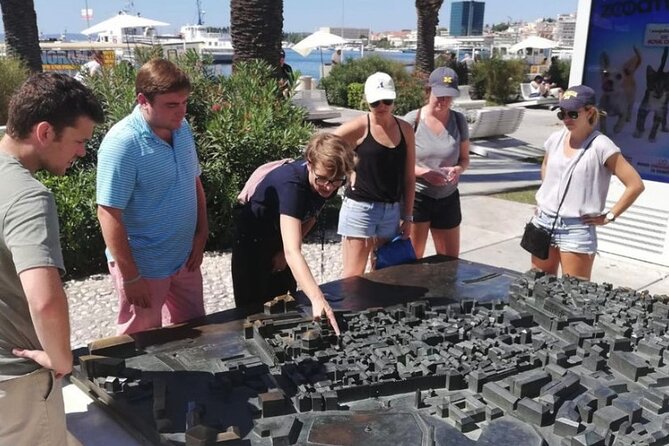
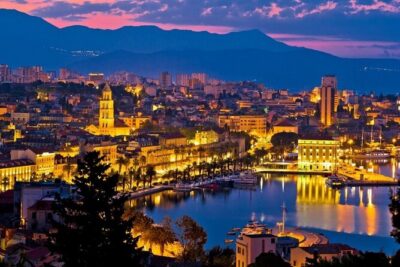
Split can look like one long highlight—then you blink and you miss why it matters. This is why I like this tour: it starts with the city’s living front porch, the Riva Harbor, then leads you into Diocletian’s Palace like you’re stepping into layers of time.
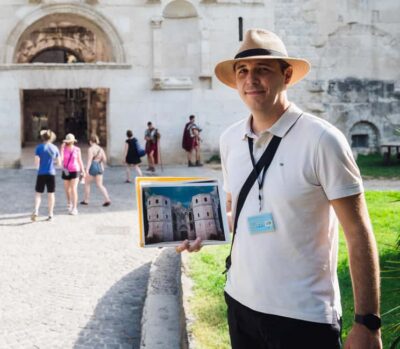
The guide—often highlighted by name as Mirjana—brings stories in a way that’s easy to remember. You’ll also hear how Split people think in small, simple phrases, including pomalo (take it easy), which fits the pace of the walk and the mood of the streets.
Key Points You’ll Feel on the Walk
- Small group, private feel: Maximum 10 people keeps the conversation personal.
- Local licensed storytelling: You’re learning with a history interpreter, not just reciting facts.
- Roman-to-modern route: You see how everyday life coexists with Diocletian’s Palace.
- A taste stop built in: You’ll reach a chocolate stop with locally flavored samples.
- Flexible ending: You can adjust where the tour finishes to match your plans.
You can also read our reviews of more private tours in Split


Price and Value for a Private Group in Split

The price is $238.34 per group for up to 10 people. That’s important: you’re not paying per person to get the guide’s attention, so the value improves fast if you’re traveling with friends or family.
If you’re a solo traveler, the price still makes sense when you care more about context than ticking off landmarks. Think of it as paying for a guided, story-led orientation to Split—so your next days make more sense and feel more connected.
Starting at Brass Gate (Porta Aenea): Getting Oriented Fast
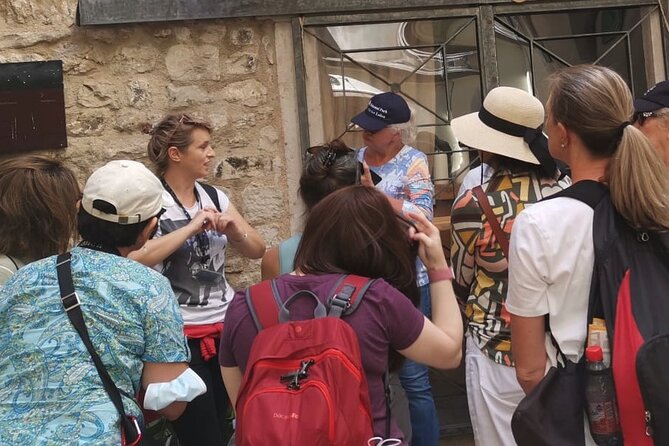
You meet at the Brass Gate, also called Porta Aenea, at Obala Hrvatskog narodnog preporoda 22. From here, you’re positioned to understand Split’s layout quickly, because the tour begins where the city’s daily rhythm is most visible.
This first stretch matters because it sets the tone. Split’s history isn’t trapped behind ropes—it’s right there where people sit, drink coffee, talk, and watch the sea.
Stop 1: Riva Harbor and the Palace Streets, Where Life Sets the Tempo

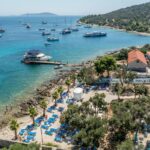
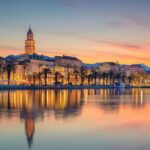
Riva Harbor is where you learn the real Split mood: slow, social, and comfortable. The walk moves from the waterfront into the old town and toward Diocletian’s Palace, and the guide connects the Roman walls to the way people live around them today.
This is one of my favorite parts of the route because it’s not just architecture. You’ll hear stories about everyday details—like how laundry can stretch between centuries—so you understand that the Palace is not a museum shell. It’s a neighborhood.
A practical bonus: there’s a stop for a bite during this section. The exact food isn’t spelled out, but the idea is clear—you’re not expected to power-walk on empty. Also, an admission ticket is included at this stop, so you get a little more than scenery here.
Stop 2: Diocletian Palace Substructures—Walking Under the City
Next you step below the city into the substructures of Diocletian’s Palace. This is where Split’s story gets physical: down here, time feels close, and you can picture the work and movement that shaped the stones.
The entry for this stop is free. I like that because it makes the pacing feel generous—like you’re getting a payoff without feeling nickel-and-dimed before you even reach the big open spaces.
One caution: going under old stone can mean uneven ground and cooler air. If you’re the type who gets cold quickly, bring a light layer.



Stop 3: The Peristyle (Imperial Square) and the Stories Behind the Walls
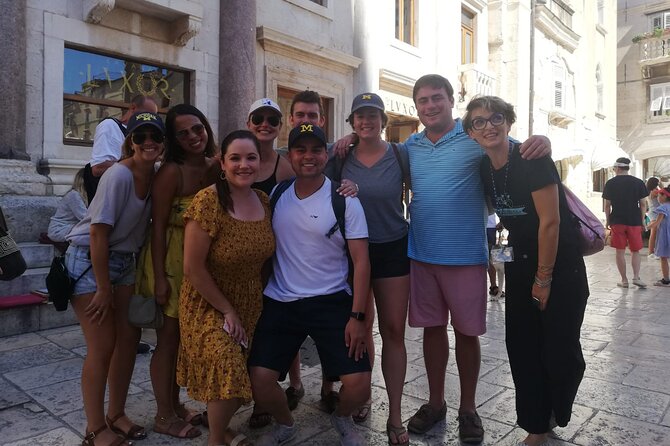
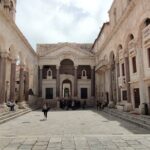
Then you emerge into the open space of the imperial square, the Peristyle. This is the dramatic “wow” moment in the route, but the guide keeps it grounded with stories about what happened behind the city walls.
This stop is tied to the idea of traditional and modern Split and the slow way of life—again, pomalo. You don’t just look at the space; you learn how the story of the place changed as the city’s needs changed.
An admission ticket is included at this stop. That matters because it turns a pretty square into a planned experience.
Stop 4: Cathedral of Saint Domnius—Small Scale, Big Meaning
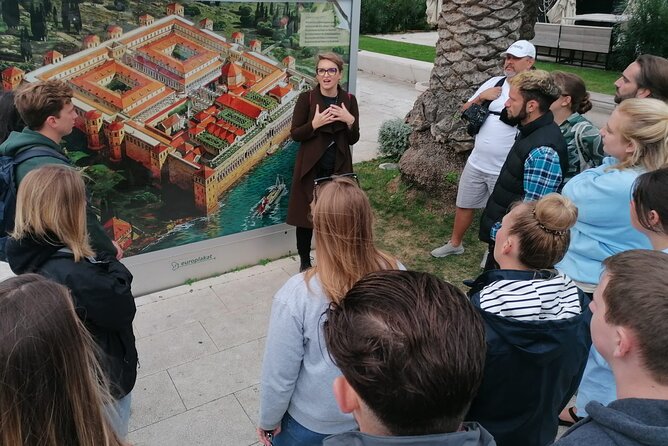
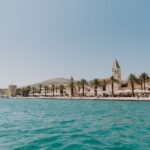
At the Peristyle, the tall bell tower is hard to miss. The cathedral of Saint Domnius sits protected behind it, and it’s described as one of the smallest and oldest cathedrals in the world.
Here’s the trade-off: admission is not included for this stop. If you want to go inside, plan to pay separately.
This is still worth it even from the outside, because the guide’s storytelling helps you understand why this area remained important through different eras. Religious and civic power tend to overlap in old cities, and Split is no exception.
Stop 5: Temple of Jupiter—From Emperor’s Link to Baptistery
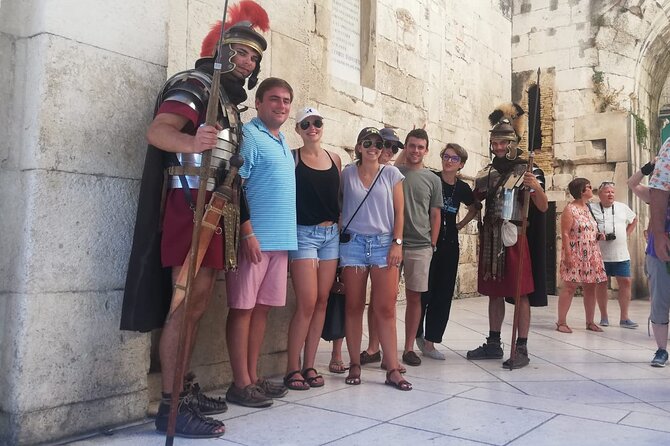
You then head back through the substructures area toward the Temple of Jupiter. The guide explains the temple’s location in relation to Diocletian and the Roman sky-and-thunder god, Jupiter.
During the Middle Ages, the Temple was converted into a baptistery dedicated to St. John the Baptist. That kind of transformation is exactly why this tour works: it shows how layers of belief can stack in the same space.
Admission for the Temple of Jupiter stop is not included. If you’re eager to see inside, treat this as a heads-up rather than a surprise.
Stop 6: Let Me Pass (Pusti me da prodjem) Street—The Narrow Street You’ll Remember
Between the ancient temple area and a later medieval building, you’ll pass through Let Me Pass Street, locally known as Pusti me da prodjem. People locally believe it’s the narrowest street in town.
This stop is short—just a couple minutes—but it’s the kind of detail I enjoy on walking tours. It’s also a good reset for your legs before you head into the more open city squares.
Entry here is free, so you’re basically paying with curiosity, not tickets.
Stop 7: Narodni Trg—Where the Old Town Starts Growing Westward
Once the old walls couldn’t contain the city, Split began growing westward. Narodni trg is part of that story: the “new old town,” where influences from north and south show up in the stone and street plans.
This is where the tour widens your lens. You stop seeing Split only as a Roman survival story and start seeing it as a living city that kept expanding and adapting.
No admission is listed for this stop, which keeps your budget predictable.
Stop 8: Nadalina Chocolate and the Small Art of Food Stories
Every good city needs at least one stop that makes you pause and smell the moment. Here, you reach Nadalina chocolate, one of the guide’s favorites.
You get locally flavored chocolate samples, and you’ll hear food production stories along the way. It’s a smart change of pace because it connects culture to something you can taste, not just something you can read in a sign.
Admission is included at this stop. That’s a nice win, since it keeps the “what do I actually get out of this” feeling strong.
Stop 9: The Golden Gate (Porta Aurea)—Roman Strategy in Stone
Next comes the Golden Gate, one of four main Roman gates into Diocletian’s Palace. You’ll hear how its position relates to the road north toward Salona, described as the Roman capital of the province of Dalmatia and Diocletian’s birthplace.
This stop focuses on antique military strategy and hidden nearby buildings. Even if you’re not a history buff, the gate helps you understand how the Palace was designed to control movement.
Entry is free for this stop, so you can enjoy it without thinking about costs.
Stop 10: Grgur Ninski Statue—A Wish, Four Centuries of Walls, and a Real Ending
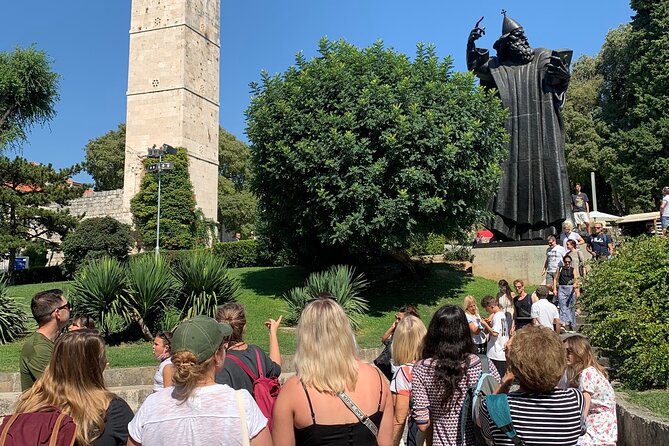
The tour wraps near the statue of Grgur Ninski, in front of antique walls described as dating to the 4th century. Around you, you get a mix of antique stone, 20th-century art, and modern city life—and you’re reminded how Split doesn’t freeze time.
There’s also a local tradition at the end: you’ll be guided to respect it and make a wish. Admission is included for the final stop, so the wrap-up feels like a complete punctuation mark, not just “thanks for coming.”
One practical perk: the tour can end wherever you like. Tell the guide at the start what you want—because the end point is listed as Ul. Stari pazar 9, but the operator says you can adjust it.
What the Guide Style Means for Your Actual Day in Split
This is not a lecture-style tour. The best guides here shape the walk into an easy conversation, and the reviews highlight that same quality—Mirjana is repeatedly praised for being responsive and tailoring the experience so different age groups stay engaged.
That tailoring matters if you have teens, adults, or a mixed crew. You won’t feel stuck listening to one tone for an hour and a half.
It also means you’re likely to leave with practical recommendations: where to eat, what to do next, and where to get coffee. One review even notes support when there was pick-up confusion, plus help with luggage arrangements, which tells me the guide treats the experience like service, not a fixed script.
Timing, Weather, and Walking Comfort
The tour runs about 1 hour to 1 hour 40 minutes. That’s a great range: long enough to feel meaningful, short enough to keep the rest of the day flexible.
The operator notes it requires good weather. Old stone and outdoor steps are part of the deal, so if rain is in the forecast, be ready with proper footwear and a light rain layer.
Also: this is a walk through the Palace complex and old streets. Expect cobblestones and some uneven surfaces. If you’re traveling in sandals, switch your plans unless you like suffering for culture.
Who Should Book This Tour
This works best if you want more than a scenic highlights loop. Book it if you care about the story behind what you’re seeing—how Roman structures became part of daily life, and how older meanings shifted over time.
It’s also a smart pick if you like a guided plan but still want flexibility, since you can influence where the tour ends. And if you’re traveling in a group of up to 10, the pricing gets especially practical.
Should You Book Private Walks & Storytelling in Split?
Yes—if you want your first day in Split to feel like you’re in on the city’s secrets. This tour blends the big landmarks of Diocletian’s Palace with smaller details that make Split feel human, including the slow pomalo pace and the chocolate stop that keeps it fun.
Skip it only if you prefer self-guided wandering with zero structure. If you don’t care about context and just want photos, you might feel like the guided pacing is too intentional. But if you want to leave with understanding and stories you can actually carry into the rest of your trip, this is a strong choice.
FAQ
What’s the group size for this Split walking tour?
The tour is limited to a maximum of 10 travelers per group, creating a small-group, more personal experience.
How long does the tour take?
It lasts approximately 1 hour to 1 hour 40 minutes.
What language is the tour offered in?
The tour is offered in English.
Where do we start the tour?
The meeting point is Brass Gate (Porta Aenea), Obala Hrvatskog narodnog preporoda 22, 21000 Split, Croatia.
Where does the tour end?
The listed end point is Ul. Stari pazar 9, 21000 Split, Croatia. The tour can end wherever you like if you tell the guide at the beginning.
Do I get a mobile ticket?
Yes, the experience includes a mobile ticket.
Are entrance tickets included?
Some stops include admission tickets, while others do not. For example, tickets are included at stops like Riva Harbor, the Peristyle, Nadalina chocolate, and Grgur Ninski Statue, while the Cathedral of Saint Domnius and the Temple of Jupiter are listed as admission not included.
Is the tour suitable for most people?
The tour notes that most travelers can participate.
Is the tour weather dependent?
Yes, it requires good weather. If canceled due to poor weather, you’ll be offered a different date or a full refund.
Can I cancel for free?
Yes. You can cancel up to 24 hours in advance for a full refund.