REVIEW · SPLIT
Private Split Walking tour with a Photo session
Book on Viator →Operated by Costumed Tours · Bookable on Viator
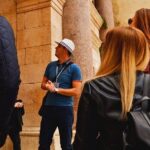
Split clicks when you slow-walk its ruins. This private walking tour pairs standout city highlights with a photo session led by lifestyle photographer Ivan Gudić, so you get both stories and images. I love the easy, low-stress pacing, and I also love how the guide makes the Roman layers feel clear. One thing to plan for: the Saint Domnius cathedral complex has an extra fee.
You start at a simple, easy-to-find spot on the Riva, so you waste less time hunting and more time looking. The walk is designed for your pace, and once the ~2.5 hours finish, the rest of the day is yours.
I also liked the way guides stay reachable and helpful in practice. In past bookings, people noted quick communication via WhatsApp and English that’s straightforward to follow.
In This Review
- Key things to know before you go
- A private 2.5-hour walk that won’t steal your whole day
- Starting on the Riva: Split’s waterfront living room
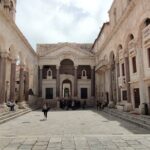
- Diocletian’s Palace: walking Roman geometry that still holds up
- Vestibulum: when history also sounds like music
- Saint Domnius and the cathedral complex: where the timeline layers meet
- Grgur Ninski: the statue outside the Golden Gate
- Pjaca (People’s Square) and Fruit’s Square: the city between monuments
- Prokurative Republic Square: Split’s Venetian echo
- Photo session with Ivan Gudić: get lifestyle shots without a forced photoshoot vibe
- Price and logistics: what you’re paying for, and how to avoid surprises
- Should you book this Split private photo walk?
- FAQ
- How long is the private Split walking tour with a photo session?
- Is the tour private?
- Is the tour offered in English?
- Where does the tour meet?
- Do I need tickets for the stops?
- What’s the extra fee for Saint Domnius?
- Who is the photographer?
- Does the tour include a mobile ticket?
- What happens if weather is bad?
- What if plans change last minute?
Key things to know before you go
- Riva promenade sets the tone: it’s the year-round local gathering space, not just a waterfront photo line.
- Diocletian’s Palace is explained in walkable chunks: you learn the layout without getting stuck in a lecture.
- Vestibulum is about sound as much as sight: great acoustics make a cappella tradition feel real.
- Saint Domnius has a small add-on cost: budget 25 KN for the cathedral complex.
- The Grgur Ninski statue comes with a story you’ll remember: including the big-toe wish tradition.
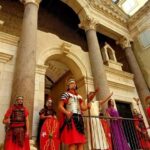
- Photos feel integrated, not awkward: you get a lifestyle session with a pro, and some bookings include extra Roman-style posing.
A private 2.5-hour walk that won’t steal your whole day
This is the kind of tour that makes sense in Split because you’re not trying to cram everything in. You’re out for about 2 hours 30 minutes, then you’re done. That matters here. Split is one of those cities where your best hours often come after you’ve learned the basics—when you can wander without getting lost or distracted.
Because it’s private, you also control the rhythm. If you want an extra minute at a doorway or you want to pause for a better angle over the water, you can. If you’re the type who likes photos first and facts second, that’s usually easier in a private format than in a larger group.
You’ll also get a professional photographer involved. The included lifestyle photographer is Ivan Gudić, so this isn’t just a standard sightseeing walk where you take your own pictures at random. It’s geared toward getting images that match what you’re seeing.
The other practical win: many parts of the route have no paid entry. The cathedral complex does have a fee (details below), but a lot of the major “Roman Split” moments are either free to view or don’t require extra tickets.
You can also read our reviews of more walking tours in Split
Starting on the Riva: Split’s waterfront living room
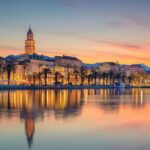
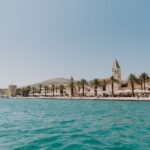
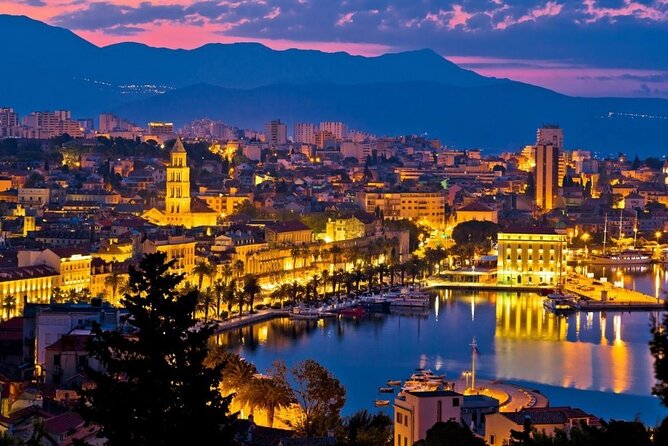
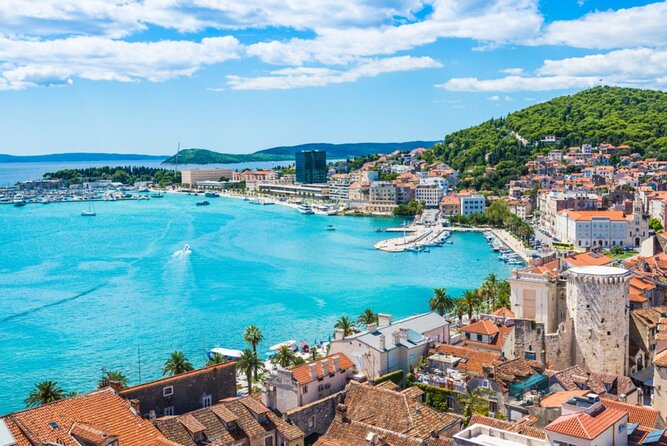
Most people treat the Riva like a backdrop. This tour treats it like the main stage. You begin on the Riva promenade, described as the most important public space in Split—locals use it like a living room for events across the year.
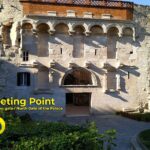
You’ll find your starting point near a bronze model of the city of Split at the very beginning of the promenade. That small detail helps you orient fast, especially if you’re arriving by cruise and you’re not sure where everything sits.
The promenade’s size is part of the charm: it’s about 250 meters long and 55 meters wide, with coffee stops and restaurants lining the waterfront. Even if you don’t buy anything right away, you get a feel for why this place works. It’s open, social, and built for lingering.
What I like about starting here is the pacing. You get the sea air and the city energy first, then you walk into the Roman core with your bearings set. It’s the opposite of starting inside the palace and spending the first 10 minutes trying to learn where you are.
Practical note: the Riva can be busy, especially around event times. If you want photos without crowds, plan to be ready at the start time, not 30 minutes later.
Diocletian’s Palace: walking Roman geometry that still holds up
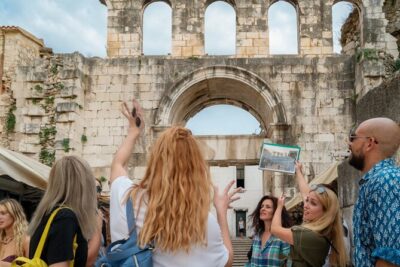
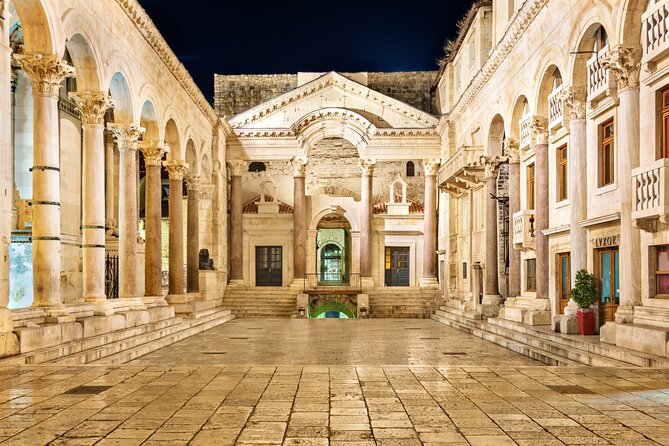
Then you step into the Diocletian’s Palace, one of the best-preserved Roman architecture sites in the world. What makes this portion valuable on a walking tour is that the palace isn’t just described—it’s structured for viewing while you move.
You’ll get the big-picture layout: the imperial palace is a rectangle of roughly 215 by 180 meters, anchored by four large towers at the corners. Doors exist on each side, and smaller towers run along the walls. The tour also frames the palace as a hybrid: part luxury summer residence, part military camp (castrum).
That “two-in-one” idea helps a lot. It explains why the space can feel both monumental and strangely livable. You’re not just looking at old walls. You’re seeing how power and everyday function fit inside one plan.
The palace is also a free stop on the tour. That’s a real value point. You get major sights without a ticket feeling like you’re paying for access every 20 minutes.
A downside to expect with any palace day: it’s a huge footprint, so your time can feel tighter if you wander off-script. The advantage here is that the tour times your visits for short, focused stops—long enough to learn and look, not so long that you lose the thread.
Vestibulum: when history also sounds like music

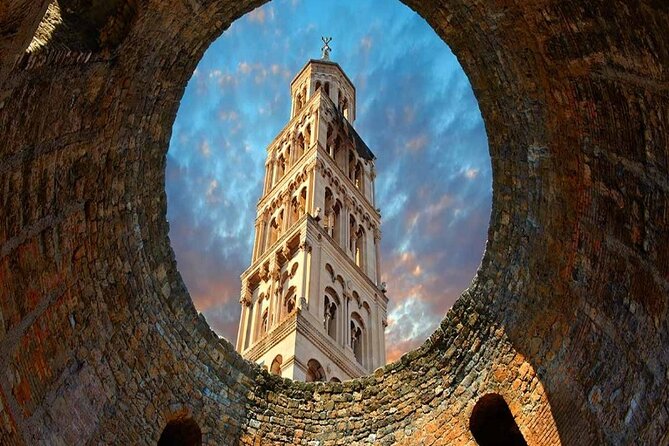
Next you reach the Vestibulum of Diocletian’s Palace. From outside, the plan looks rectangular, but inside it turns circular. That shift matters because the space is described as leaving a monumental impression even today.
Inside, you’ll notice details that make it feel less like ruins and more like a functioning room from another era: semicircular niches with statues, and a large cupola with colorful mosaic. The tour notes that Marko Marulić recorded this kind of look in his 16th-century manuscript—so you get a useful bridge between ancient space and later local memory.
Then comes one of the more interesting practical bits: the Vestibulum is known for outstanding acoustics. The tour uses that to bring in how people sing traditional Dalmatian a cappella songs there. Even if you’re not a music person, this is one of those experiences where you understand why a place was built the way it was. Sound behaves differently in that shape and surface.
This is also a short stop—about 10 minutes—so it’s efficient. You’ll want to pay attention to the feel of the space in those few minutes, not just skim for photos.
Tip for your photos: aim for angles that show the curve, not only the ceiling. A curved interior reads as “Roman planning” better than a flat postcard shot.
Saint Domnius and the cathedral complex: where the timeline layers meet

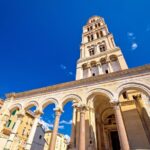
At Cathedral of Saint Domnius, the tour ties the story into a long timeline. The cathedral site sits within Diocletian’s older Roman structure—the Mausoleum—so you get pagan, Christian medieval, and modern heritage in one area.
This is where you’ll understand why Split feels layered instead of frozen in time. The mausoleum becomes a cathedral in the 7th century, and the tour highlights that the cathedral today is mainly a place of liturgy. It also points you to the connection with local tradition, like the St Domnius day processions.
There’s also a specific art detail worth looking for: the cathedral gates are carved in walnut by Andrija Buvina from Split.
Here’s the money part. The cathedral complex has an admission fee of 25 Croatian kuna (listed as about 3.5 euros) covering access that includes the Temple of Jupiter and the Crypt of St. Lucy. So even if everything else on your route is free, this is the one paid stop to budget for.
The cathedral is about 15 minutes on the tour schedule, which is realistic. It’s not meant to turn into a long museum visit. If you’re the type who likes more time in religious spaces, you can always extend your visit after the tour.
What I consider a plus: in a short visit, you still get the key idea—this isn’t a random church stop. It’s where Split’s Roman-to-Christian transition is visible.
You can also read our reviews of more private tours in Split


Grgur Ninski: the statue outside the Golden Gate
Outside the palace, you stop at the Grgur Ninski statue, near one of the palace’s principal gates. This stop is short but it lands.
The tour explains Gregory of Nin as a medieval bishop who pushed back against the Catholic Church in Rome and supported using the Croatian language in services instead of Latin. That story changes how the statue feels. It’s not just a photo point. It’s a statement about identity and access—people could understand what was being said.
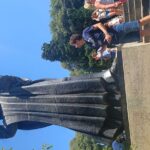
This particular statue is by renowned Croatian sculptor Ivan Meštrović from 1929, marking a thousand years since Gregory defended Croatian culture. There’s even a local tradition included: rubbing the big toe is said to grant your wish.
You’ll typically see tourists do the toe touch automatically. The value here is that the tour gives it meaning, so the gesture turns into a small cultural action instead of a random ritual.
This is a free stop and lasts around 10 minutes, so it doesn’t slow the day.
Pjaca (People’s Square) and Fruit’s Square: the city between monuments

After the Roman core, the walk shifts into real city squares. These stops matter because they show you how Split lives now, not just how it looked centuries ago.
First comes Narodni Trg, also known as Pjaca. The tour points out that it used to be called St. Lawrence’s Square and that it became the first inhabited area outside the palace wall. Pjaca is described as the center of city life for centuries—especially since it’s surrounded by important buildings, including the Gothic Old Town Hall building, now used as an exhibition center.
Even if you don’t go inside anything, this stop helps you see the city’s layout: squares aren’t decoration here; they’re where people gather, trade, celebrate, and wait for friends.
Next you walk to Fruit’s Square (Trg Brace Radic), which is smaller but packed with recognizable landmarks. You’ll see the octagonal Venetian tower, a leftover from a 15th-century fortress. Opposite it stands the Milesi family palace with a Baroque facade that’s described as one of the best examples of that style in Dalmatia. And in front is a monument to Marko Marulić, with the tour attributing multiple Marulić monuments to Ivan Meštrović.
What I like about these squares is that they give you a natural place to slow down. If you want a snack or a coffee, this is the moment. You can also decide which direction you’ll explore later.
These stops are free on the tour and each lasts about 10 to 15 minutes.
Prokurative Republic Square: Split’s Venetian echo
The final major stop is Prokurative, officially tied to Republic Square. The tour notes that it resembles Venice’s St Mark’s Square, which makes sense once you see the colonnade effect from the surrounding neo-Renaissance buildings.
This area is named for the arches on the buildings around the square. The Prokurativa building is linked to Antonio Bajamonti, a major city mayor who started the project in the mid-19th century, aiming to show Split supported Italian tradition. There are reliefs above the windows and a colonnade style that matches that Venetian influence. The tour also mentions that Bajamonti commissioned a theatre that later burned down.
Even if you don’t care about 19th-century politics, the practical point is that Prokurative is an excellent place to understand why locals like this city. It’s a cultural event stage with bars and restaurants nearby, so it’s both scenic and social.
Again, it’s a quick stop—about 10 minutes—and it’s free to view on the route.
Photo session with Ivan Gudić: get lifestyle shots without a forced photoshoot vibe
This tour’s differentiator is the included photo session with pro lifestyle photographer Ivan Gudić. In practice, that can make a huge difference. You’re not just capturing monuments; you’re getting images that show you with the city behind you, in a way that feels intentional.
The tour format helps because you’re already in the best places. You don’t have to “schedule photos” as a separate activity. The guide and photographer work with the route so you’re standing in the right spots when the light and angles make sense.
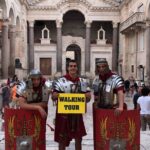
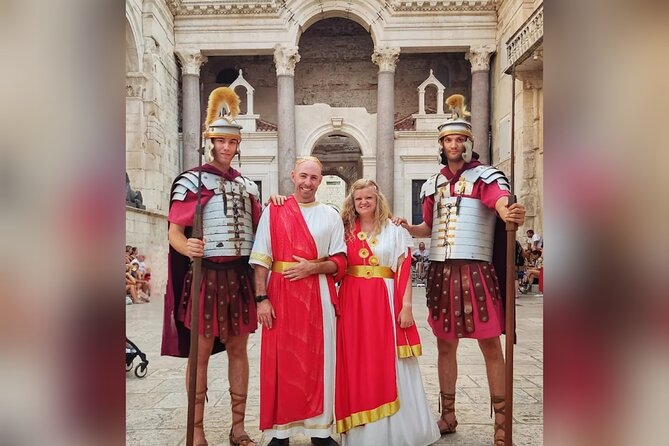
One extra detail worth noting from real experiences: some bookings end with playful Roman-style posing in outfits that fit the story themes. If that’s available on your date, it can be an unexpectedly fun way to tie together Diocletian’s legacy with your photos. Even if you skip any costume-style moment, you still get a real professional shoot anchored to the city’s landmarks.
Practical tips so you get the best results:
- Bring your camera-ready look (comfortable, but plan for photos).
- Don’t wait until the last minute if you want specific shots; ask early while you’re still near easy-to-frame backdrops.
- If you care about toe-rub tradition at Grgur Ninski, do it when the photographer is ready so the shot matches the moment.
Price and logistics: what you’re paying for, and how to avoid surprises
At $300.73 per person, this is not a budget walk. So you should be clear on what you’re buying.
You’re paying for three things that usually cost extra when booked separately:
- A private guide walk through the core sights of Split
- A pro lifestyle photographer session
- A route that mixes major monuments with local squares, so your photos and your understanding match
You also get efficient timing. With a 2.5-hour cap, you’re unlikely to lose an entire afternoon stuck in a long group program. If you’re staying in Split for more than a day, that value compounds.
Your main cost to keep in mind is the Saint Domnius cathedral complex fee of 25 KN, which also covers access to the Temple of Jupiter and the Crypt of St. Lucy. Everything else on the route is listed as free for the stops where tickets apply.
One more real-world consideration: no-show problems are rare, but one past booking reported a failure to meet at the start point due to a confirmation issue. I’d handle that by doing two small things: confirm your booking details before travel day, and keep your provider contact info handy in case anything needs to be corrected fast.
Weather matters too; the experience requires good weather, and if conditions are poor it should be rescheduled or refunded.
Should you book this Split private photo walk?
Book it if you want Split in a tight package with a real guide plus professional photos. I’d especially recommend it if you care about Roman landmarks but also want the city squares that make Split feel like a place you could live in. It’s also a strong pick for couples and small groups who want personal pacing without feeling rushed.
Skip it (or at least consider another option) if you want a long, slow museum-style day. This tour is built for motion and clarity, not deep standalone time in every building.
If you’re the kind of traveler who likes to get your bearings quickly, then spend the rest of the day roaming on your own, this fits that style well. For many people, the best part is the pairing: Roman sites get explained, and your photos don’t feel like an afterthought.
FAQ
How long is the private Split walking tour with a photo session?
It’s about 2 hours 30 minutes.
Is the tour private?
Yes. It’s private, and only your group participates.
Is the tour offered in English?
Yes, it’s offered in English.
Where does the tour meet?
The meeting point is Obala Hrvatskog narodnog preporoda, 21000, Split, Croatia.
Do I need tickets for the stops?
Many stops are listed as free on the tour route. The Saint Domnius cathedral complex has an extra fee of 25 KN.
What’s the extra fee for Saint Domnius?
The cost is 25 Croatian kuna, and it includes the Temple of Jupiter and the Crypt of St. Lucy.
Who is the photographer?
The private professional lifestyle photographer is Ivan Gudić.
Does the tour include a mobile ticket?
Yes, the tour includes a mobile ticket.
What happens if weather is bad?
The experience requires good weather. If it’s canceled due to poor weather, you’ll be offered a different date or a full refund.
What if plans change last minute?
You can cancel for a full refund up to 24 hours before the experience’s start time. If you cancel less than 24 hours before, you won’t receive a refund.