REVIEW · SPLIT
Split: 1.5-Hour Walking Tour and Diocletian’s Palace
Book on GetYourGuide →Operated by www.south-tours.com · Bookable on GetYourGuide
Split feels like Roman stones with real life. This guided walk in Split takes you through Diocletian’s Palace cellars, the palace maze, and the cathedral that Rome left behind, all tied together with local storytelling and quick hits of architecture from different centuries. It is designed to be short enough that you stay energized, but packed enough that you leave with your bearings.
I love how the tour makes the palace feel human, not museum-dry. You get to mix Roman remains with everyday Split life, then connect it to modern streets like Fruit Square and the Riva promenade.
A second thing I love: seeing the Cathedral of Saint Domnius (built from an Imperial Roman mausoleum). You also get that Peristyle moment with the black granite Egyptian sphinx, which is exactly the kind of odd detail that sticks in your head.
One possible drawback: it is a walking tour through old streets, so it is not a great match if you have mobility limits. Wear comfortable shoes, and expect some tight turns and uneven steps.
In This Review
- Key highlights you will actually feel
- Why This Split Walk Fits Perfectly Into a Tight Schedule
- Golden Gate to the Riva: The Route That Helps You Navigate Split
- Entering Diocletian’s Palace Through the Gates and Main Spaces
- Roman Cellars: The Part Most People Forget to Look For
- Peristil and the Black Granite Egyptian Sphinx
- St. Domnius Cathedral: Oldest Catholic Cathedral in the World
- The Architecture Mashup: Roman Through the 20th Century
- Tips to Make the Walk Feel Effortless (Not Exhausting)
- Price and Value: Is $41 Worth It for What You Get?
- What Makes the Guides the Real Secret Sauce
- Who Should Book This Split Palace Walk
- Should You Book This Tour?
- FAQ
- How long is the walking tour?
- Where does the tour start?
- What major sites are included?
- Are entrance fees included?
- What languages is the guide available in?
- Is this tour suitable for people with mobility impairments?
- Can I cancel for a refund?
- Can I reserve without paying right away?
Key highlights you will actually feel
- Roman cellars under Diocletian’s Palace: you do not just look at ruins, you walk the routes that used to matter.
- Peristyle and the black granite Egyptian sphinx: a rare survival that anchors the Roman story.
- Cathedral of Saint Domnius: you see the oldest Catholic cathedral in the world and the Roman structure underneath.
- Old town route logic: from Golden Gate to Fruit Square to the Riva, you learn the city’s flow fast.
- Guides who tell stories, not just dates: expect anecdotes tied to Split locals and pop-culture stops like Game of Thrones spots.
Why This Split Walk Fits Perfectly Into a Tight Schedule
Split can overwhelm you fast. You arrive, see Diocletian’s Palace from every angle, and then wonder how to turn all that stone into a clear mental map.
That is where this tour shines. In about 90 minutes to 2 hours, you get a guided path through the most important parts of the old town without getting stuck in one place. It is paced for attention, not endurance, and the route is built around logical checkpoints: gates, squares, the waterfront, then the palace core.
I also like that it has a clear payoff every few minutes. You go from street life to gates, from gates to palace spaces, then into a major religious site. When a tour has that rhythm, you spend less time confused and more time noticing.
You can also read our reviews of more walking tours in Split
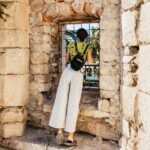
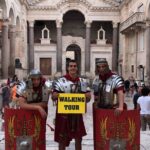

Golden Gate to the Riva: The Route That Helps You Navigate Split
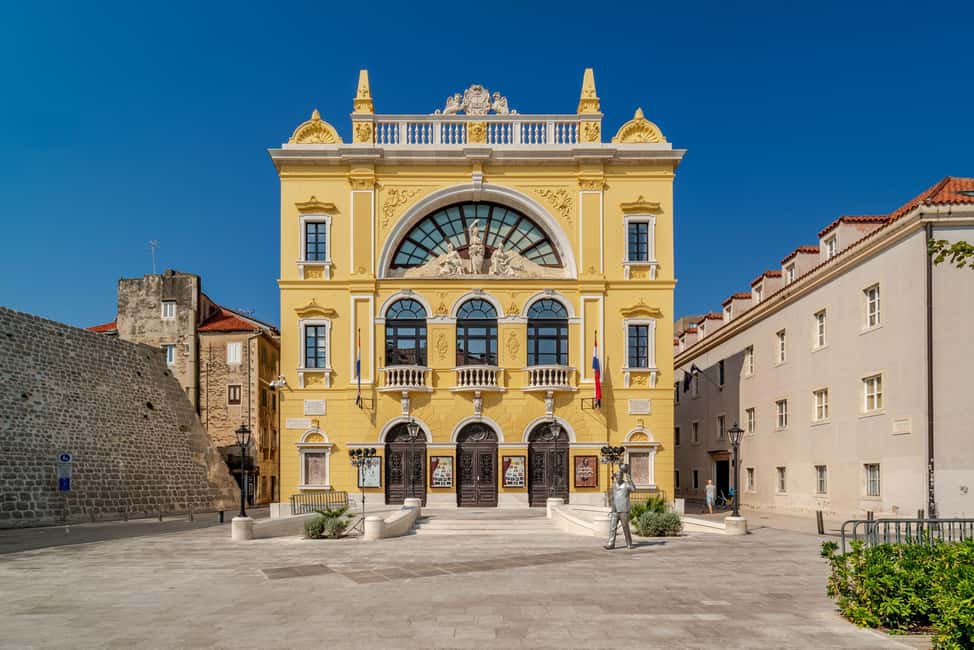
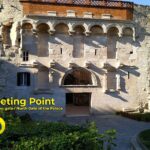
The tour starts at one of two options, depending on what you book: South Tours Travel Agency or Golden Gate in Split. Either way, you begin in the historic zone where the city’s layout makes sense only after you walk it once with a guide.
Early stops help you get oriented fast. You will pass Golden Gate, then likely make a stop tied to the Game of Thrones Museum area, before walking through People’s Square and on toward Fruit Square (Voćni Trg). These are not random photo stops. They are the public spaces that connect the palace to the daily rhythms outside it.
At Fruit Square, you will hear the context behind what used to happen there. Knowing it as the old fruit market makes the space more than a stop on a scavenger hunt. The square becomes a clue: this palace was not an isolated world. People ate, traded, worked, and moved through it.
Then you head toward the Riva waterfront. This is where you get panoramic views of Marjan Hill from the promenade, which breaks the stone-on-stone intensity. It also sets you up for the palace portion next, because it reminds you Split is coastal and lived-in, not frozen in Roman time.
Entering Diocletian’s Palace Through the Gates and Main Spaces
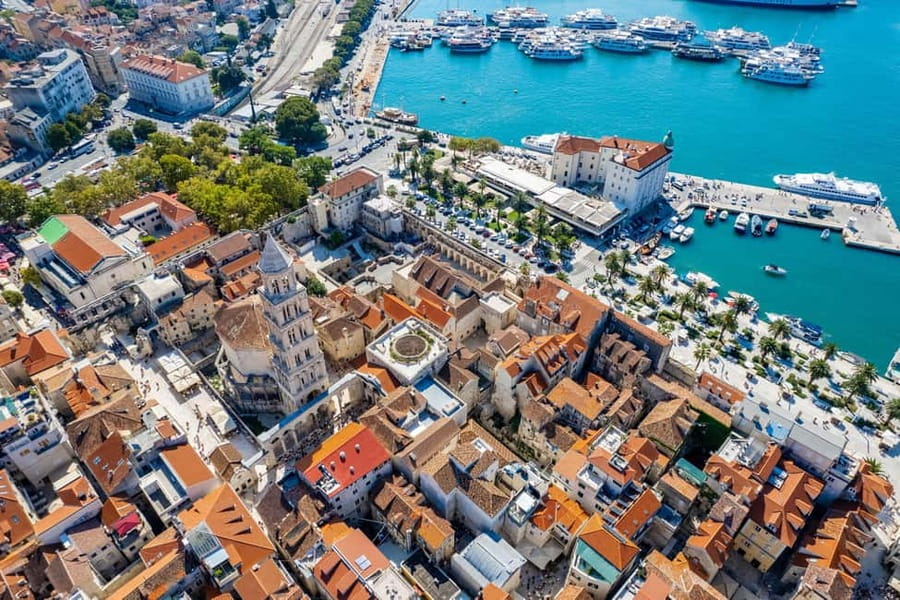
Once you reach Diocletian’s Palace, the tour shifts gears from old town streets to palace geography. You will walk the palace grounds from the South Gate area toward the cellars and the main palace square, then move through major internal points like the Peristil.
Think of the gates as navigation tools. The South Gate to cellars route explains how people likely moved and stored goods. Seeing North Gate and West Gate also helps you understand the palace as a designed machine, not just a big pile of ancient buildings.
The palace is famous because it was built for the Roman Emperor Diocletian at the turn of the 4th century AD. What makes it special today is that it kept getting built on, used, and adapted. You will see architectural layers that span the Roman period and later development, including buildings from the 20th century. That mix is one of the reasons Split feels so real.
You also get a guided pace that helps you interpret details while you are still standing in front of them. A guide can point out why certain spaces feel cooler, darker, wider, or more practical. Without that, you might just walk through and miss the logic.
Roman Cellars: The Part Most People Forget to Look For
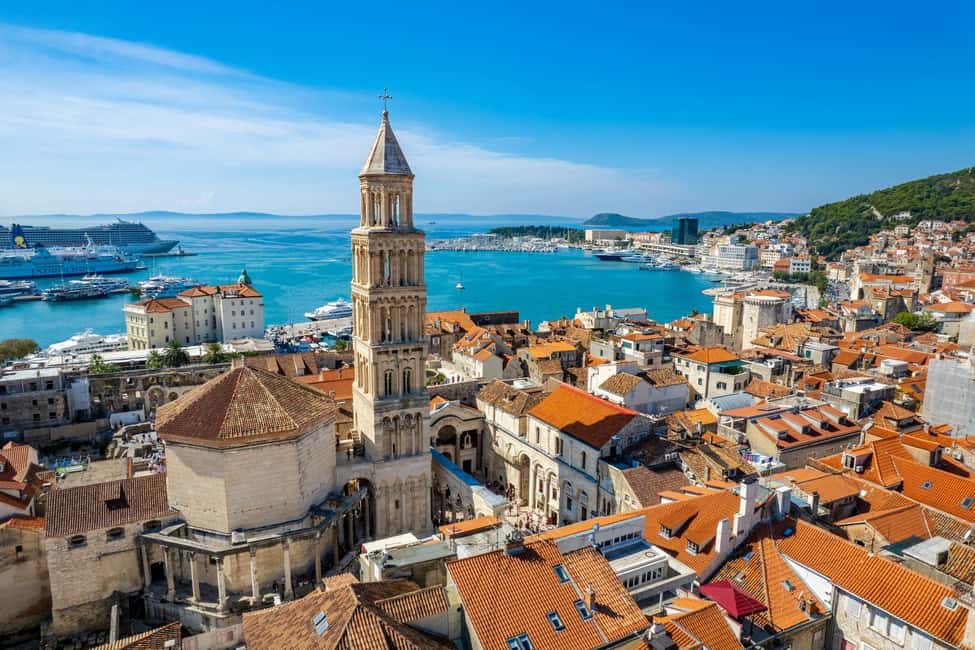
The standout for many first-timers is the stop in the palace cellars. It is one thing to stand inside Diocletian’s Palace. It is another to go down into the Roman-era storage and underground spaces.
These cellars help you understand daily life in a fortress-palace. Ancient palaces needed systems: space for supplies, protection, and movement. When you connect that to what you see above, it makes the ruins feel purposeful rather than purely dramatic.
This is also a good place for a guide’s storytelling to matter. Strong guides often turn cold stone into a story about how a place like this functioned. Expect explanations that connect the palace layout to the city around it—especially how Split’s old town grew inside and around Roman structure.
Keep in mind the basics: you are going down and then back up. Plan for a little time on uneven surfaces and steps. If you are someone who hates slow walking, this is still manageable because the tour is structured to keep transitions moving.
Peristil and the Black Granite Egyptian Sphinx
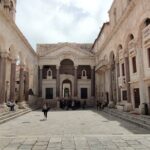
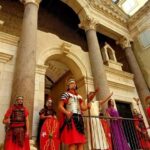
The Peristil is the palace’s heart space, and this tour makes sure you do not just glance at it. You will get a guided look at the Peristil area, which includes a famous oddity: a black granite Egyptian sphinx described as the last remaining Egyptian sphinx.
That detail matters more than it sounds. It shows how Rome collected symbols and artworks from far away, then displayed them in a place meant to impress. When you see it in context—within the palace geometry—the story gets clearer.
The Peristil stop is also where the architecture shift becomes obvious. You will notice not just Roman elements, but also later layers that grew over time. In other words, you are seeing how one powerful era got reused by later generations.
This is one of the stops where you will benefit most from paying attention to your guide. If you just take pictures, you might miss the meaning behind what you are looking at.




St. Domnius Cathedral: Oldest Catholic Cathedral in the World
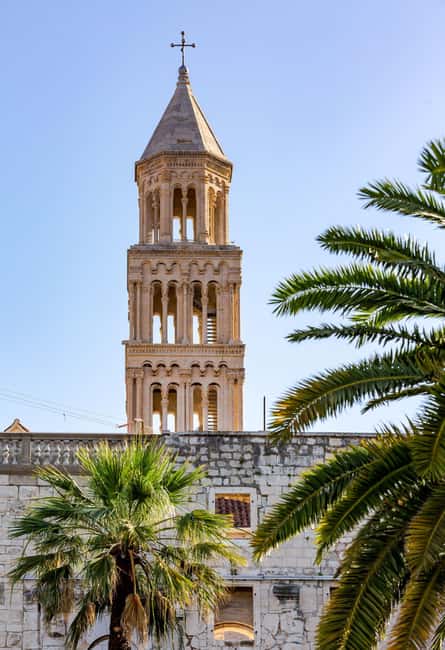
Next comes the Cathedral of Saint Domnius, formed from an Imperial Roman mausoleum. This is a jaw-dropping mix: Roman structure under Christian worship space, all in one place.
Why it is worth your time is simple. You are not just looking at an old church. You are looking at a structure that was adapted—built once, repurposed, and still standing as a working religious site area today.
The tour also includes a guided look inside the cathedral area. That guidance helps you connect what you see now to what the site originally was. You leave with the feeling that you understood more than the postcard version of Split.
The cathedral is also an anchor stop for the whole route. It is one of the last big “anchor points” that turns the palace walk into a coherent story about continuity: empire becomes city, becomes faith space, becomes local landmark.
The Architecture Mashup: Roman Through the 20th Century
One of the tour’s best promises is not just Roman coverage—it is a mix of architectural styles from different eras. You will walk through the maze and notice how old and newer buildings share the same landscape.
This is one of the reasons Split is so memorable. Most cities have historic sites that feel fenced off. Here, history is stitched into the daily street fabric. You can see it in how the palace connects to squares, how gates face toward public paths, and how later buildings show up among older structure.
A guide’s job is to point out the timeline cues without turning the walk into a lecture. If your guide is on form, you will start spotting the centuries yourself just by noticing materials, shapes, and how spaces were modified.
And yes, some guides add extra context that pops in modern references. For example, some tours include mention of Game of Thrones filming spots as part of the storytelling. Even if you only know the show casually, these links help you visualize what the camera likely loved about this setting.
Tips to Make the Walk Feel Effortless (Not Exhausting)
This is a walking tour, so the comfort details matter. Start with comfortable shoes. The old town is not designed for smooth strolling, and you will be on your feet for the full 90 minutes to 2 hours.
Second, bring water if it is a warm day. The tour is short, but Split sun can still drain you. A guide may also help you with timing advice, including whether certain start times feel cooler or less crowded.
Third, listen for the route logic. Gates and squares are not only sightseeing points; they help you build a map. If you stay engaged at the beginning, you will find it easier to explore the rest of Split afterward, because your brain learns how the streets connect.
Finally, if you are trying to fit this into a day with other sights, treat it as your foundation tour. After you do this walk, you can choose what to see longer with more confidence.
Price and Value: Is $41 Worth It for What You Get?
At $41 per person, the value comes from focus and access. You are not paying for a long bus transfer or a half-day museum ticket marathon. You are paying for a live guide time block that threads together multiple high-impact sites in a compact route.
Included in the price is the guide for 1.5 to 2 hours. Not included are entrance fees and food and beverages, so budget separately if you plan to enter paid sites or stop for a meal right afterward.
What makes it feel worth it is the mix:
- Roman palace spaces that most self-guided walks do not explain well
- Cellars that connect the above-ground palace to storage and function
- A major cathedral site tied to Roman origins
- A route that helps you orient yourself quickly in Split old town
If you love history but also hate getting lost, this format hits a sweet spot. And if you are more of a casual sightseer, the architectural variety keeps things interesting.
What Makes the Guides the Real Secret Sauce

The tour’s quality often comes down to the guide. In the past, guides like Sandra, Anna, Ivan, Jelena, and Ana have stood out for being professional, warm, and willing to share short stories that make places feel alive.
Some guides also add practical tips beyond the script. You might receive suggestions for where to eat authentic food and what to avoid, or you might get pointers for viewpoints around Split like the Marjan Hill area. These extras help your day after the tour, not just the tour itself.
One reason people love this tour format is the guide-led balance of facts and personality. It is enough to understand Diocletian’s world, and enough to feel how Split works now.
Who Should Book This Split Palace Walk
This tour fits best if you want a quick, guided framework for Split’s most famous historic core. You will enjoy it if you like Roman sites, enjoy architecture variety, and want a route that helps you navigate without spending hours studying maps.
It is also a solid choice if you are traveling with limited time. The duration is short enough to slot into a morning or afternoon, and the route avoids overcommitting.
It is not the best pick if you have mobility impairments. The tour involves walking through historic areas and includes sites that likely involve steps and uneven surfaces. The safest move is to choose an alternative that is specifically designed for limited mobility.
Should You Book This Tour?
I think you should book this tour if you want the fastest way to understand Diocletian’s Palace and its biggest neighbors—cellars, Peristil, and Saint Domnius—while also learning how Split’s streets connect. The $41 price makes sense because you are buying a guide’s ability to link the sites into one story.
Skip it if you prefer self-guided wandering and you are happy reading on your own without a narrative thread. Also skip if walking is a problem for you, because this is built as an on-foot old town route.
If you fit those two checks, this is one of the more efficient ways to turn Split’s top sights into something you remember, not just something you photographed.
FAQ
How long is the walking tour?
It runs about 90 minutes to 2 hours.
Where does the tour start?
The meeting point can vary based on the option booked. Common starts include South Tours Travel Agency or Golden Gate, Split.
What major sites are included?
You will visit Diocletian’s Palace (including the cellars), the Peristil, and the Cathedral of Saint Domnius. The route also includes stops around old town squares and the Riva waterfront.
Are entrance fees included?
No. Entrance fees are not included.
What languages is the guide available in?
The tour guide leads in English and Spanish.
Is this tour suitable for people with mobility impairments?
No. It is not recommended for people with limited mobility and is not suitable for people with mobility impairments.
Can I cancel for a refund?
Yes. Free cancellation is available up to 24 hours in advance for a full refund.
Can I reserve without paying right away?
Yes. The option is Reserve now & pay later, so you can book your spot and pay nothing today.