REVIEW · SPLIT
Split: Cultural Walking Tour with Anthropologist Guide
Book on GetYourGuide →Operated by Context Culture · Bookable on GetYourGuide
Old stones, modern arguments.
That’s the feel of this Split walking tour led by cultural anthropologist Marin, where each stop connects architecture to the politics, religion, identity, and even sexuality that shape Croatia today. I like that it’s built for intellectually curious people, not history-buffs only, and I also like the “no gloves on” approach to contested topics, without turning it into a cold lecture.
The one possible drawback: if you want a classic sightseeing tour with strictly neutral stories, this one spends a lot of time on controversies and what locals argue about, so you may find it a bit more intense than expected.
In This Review
- Key Highlights Worth Your Time
- Why Split Looks Different When You Hear the Controversies
- Meeting Point in a Big Park: Start Where Locals Hang Out
- Golden Gate to Peristil: How Identity Shows Up in City Entrances
- Diocletian’s Cellars: The City’s Foundation Under Social Pressure
- People’s Square: When Public Space Becomes a Political Stage
- Židovski Prolaz and the Stories You Don’t See on a Standard Map
- Fruit Square and Riva: Economics and Everyday Life in the Same Breath
- Republic Square: Where the Big Themes Land in One Place
- Trumbićeva obala Finish: Turn a Walk into Understanding
- Price and Value: Why $33 Can Actually Make Your Trip Better
- Who This Tour Is For (and Who Might Want a Lighter Option)
- What You’ll Do, Step by Step (So You Can Plan Your Day)
- Quick Practical Tips Before You Go
- Should You Book This Split Anthropologist Walking Tour?
- FAQ
- How long is the Split Cultural Walking Tour?
- What is the price per person?
- Is the tour guided in English?
- Where do I meet the guide?
- Where does the tour end?
- What’s included in the ticket price?
- Are there any extra costs during the tour?
- Is the tour wheelchair accessible?
- What’s the cancellation policy?
- Is there a reserve now and pay later option?
Key Highlights Worth Your Time
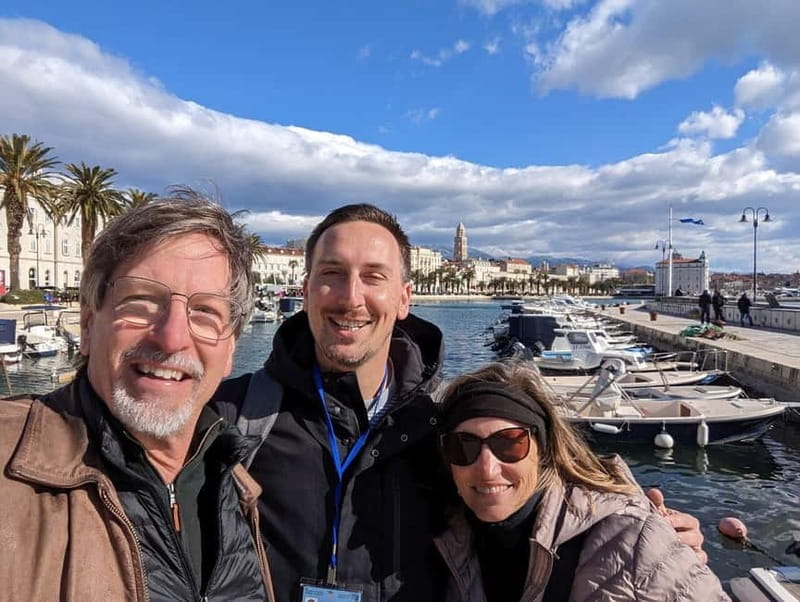
- Marin’s anthropologist angle ties monuments to identity, demographics, and everyday power struggles
- Contested history, openly discussed instead of smoothed over with polite museum labels
- Main Split center sights included, so you still get your bearings fast
- Audio-visual material for each topic helps you follow the themes as you walk
- Fast pacing by design: short guided segments plus a quick pass along the waterfront
- English live guide and wheelchair accessibility make it easier to join than you’d think
Why Split Looks Different When You Hear the Controversies
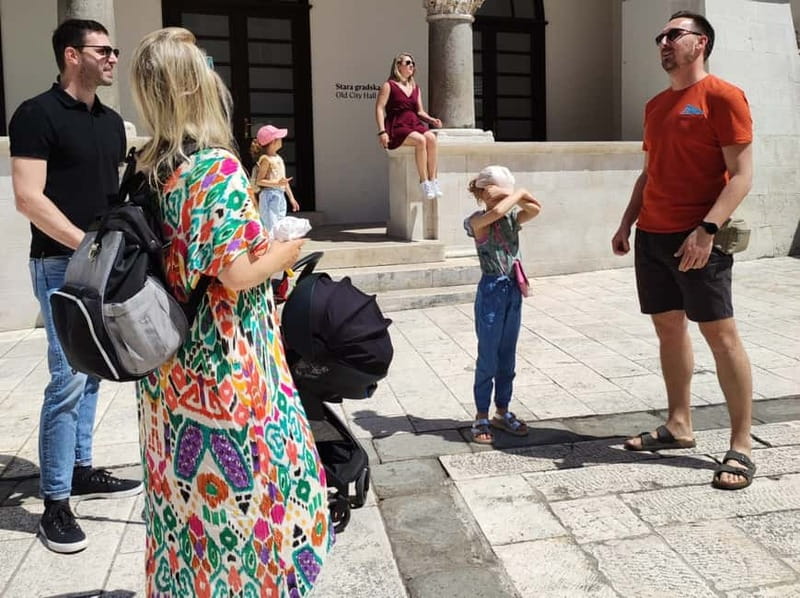
Split can feel like a postcard if you only chase the old walls. This tour nudges you to notice the arguments hiding behind the stone: who gets to define history, how religion and politics overlap, and why identity in Croatia can be complicated in public and personal life.
I love the way the tour links past and present through places you already recognize (Golden Gate, Peristil, the center squares). You’re not just getting trivia; you’re learning how people make sense of their world, and why some stories become easy to repeat while others stay politically awkward.
The best part is the guide’s comfort with complexity. Marin doesn’t skip the tangled stuff. He frames it so you can understand why debates matter, not just that they exist.
You can also read our reviews of more walking tours in Split

Meeting Point in a Big Park: Start Where Locals Hang Out
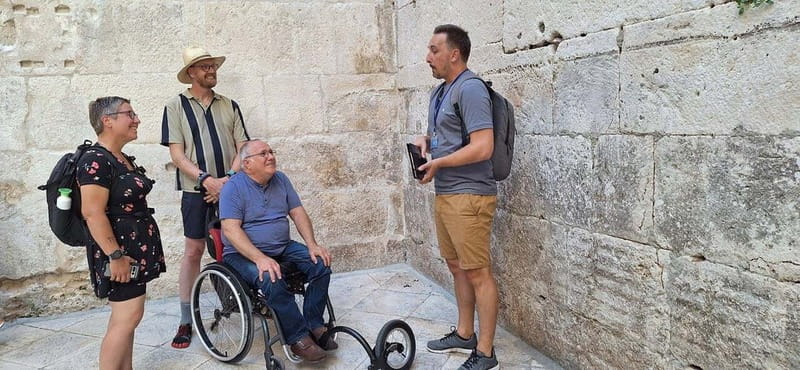
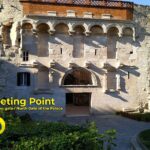
You meet at Ul. kralja Tomislava 12 in a big park. The instructions are clear: find the fountain in the middle of the park, and that’s where you’ll line up with your group.
This matters more than you might expect. Starting in an open space helps you settle before the center gets crowded and loud, and you get a moment to gather your thoughts before the tour starts using architecture as evidence.
Also, you’ll be in walking mode for about 2 hours, so showing up ready to move (comfortable shoes help) is the smart play.
Golden Gate to Peristil: How Identity Shows Up in City Entrances
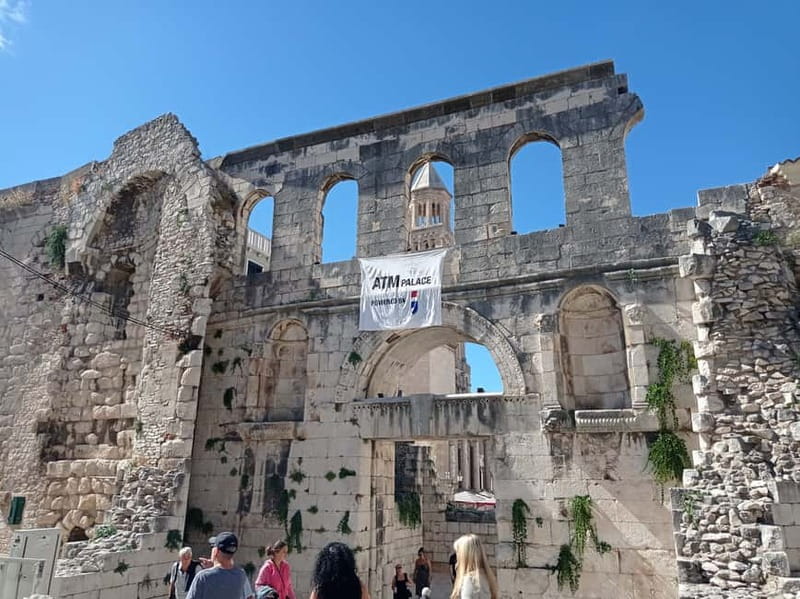
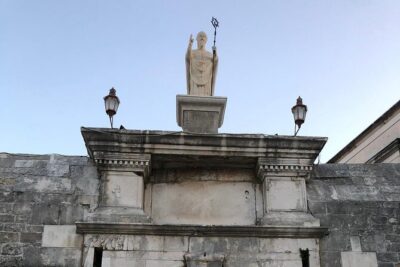
First stop is the Golden Gate, where you get about 15 minutes of guided context. Even if you’ve seen lots of gates, this one is used as a teaching tool: think of it as a hinge between eras, where meanings can shift depending on who tells the story.
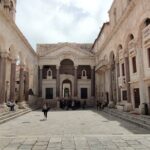
Then you head to Peristil for another 15 minutes. This is where the tour’s style becomes obvious. Instead of treating the square like a photo spot, the guide uses it to explain how the space has hosted different social realities over time. You’ll hear about how locals read history and how those readings influence contemporary choices.
One thing I like: it’s not technical in a textbook way. The goal feels like understanding what the arguments are about and why people care, even if you’re not a scholar.
Diocletian’s Cellars: The City’s Foundation Under Social Pressure
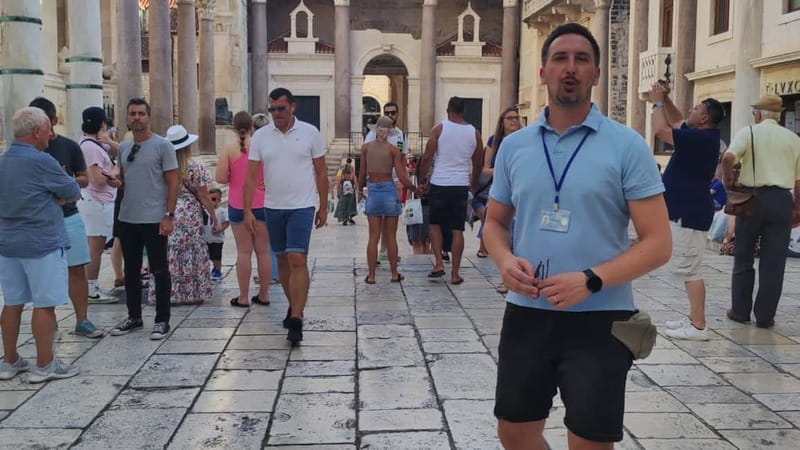
From the center squares, the tour shifts down into Diocletian’s Cellars for about 10 minutes. This is a short stop, but the payoff is how the guide uses the setting to frame bigger themes.
You can think of this moment as a reminder: old spaces are never neutral. They’re claimed, reinterpreted, and turned into symbols. In Split, that symbolism is tied to how people talk about Croatian history, who belongs in which narrative, and how economic realities can shape what gets spotlighted.
This is also where the tour’s audio-visual material can help. Instead of you trying to hold everything in your head while you look around, the added media supports the topic being discussed as you move.
People’s Square: When Public Space Becomes a Political Stage
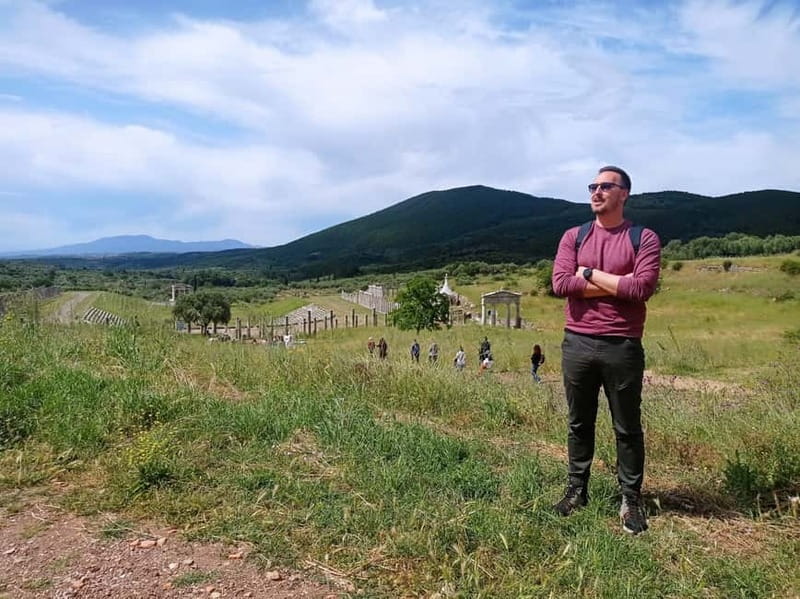
Next you’ll walk to People’s Square for around 15 minutes of guidance. Squares are where politics goes from abstract to visible, and this tour treats the space like a living social document.
Here’s the basic idea you’ll take away: social movements and public power don’t appear out of nowhere. They attach themselves to places where people meet, argue, celebrate, and remember. The tour connects those patterns to how modern Croatia developed.
If you like your history tied to real humans and real conflicts, this stop is likely to click fast.
You can also read our reviews of more guided tours in Split




Židovski Prolaz and the Stories You Don’t See on a Standard Map
The tour then moves into Židovski prolaz for about 10 minutes. This is one of those tight, special-feeling passages where the city seems layered rather than linear.
In this corridor-type setting, the guide can make a stronger point about identity and demographics: history isn’t just something that happened once. It changes with who lives nearby, who leaves, and who gets to describe the past.
It’s also a good example of how this tour avoids the “straight line” story. Instead of moving from ancient to modern like a timeline, it shows how multiple histories can exist at once—sometimes comfortably, sometimes not.
Fruit Square and Riva: Economics and Everyday Life in the Same Breath
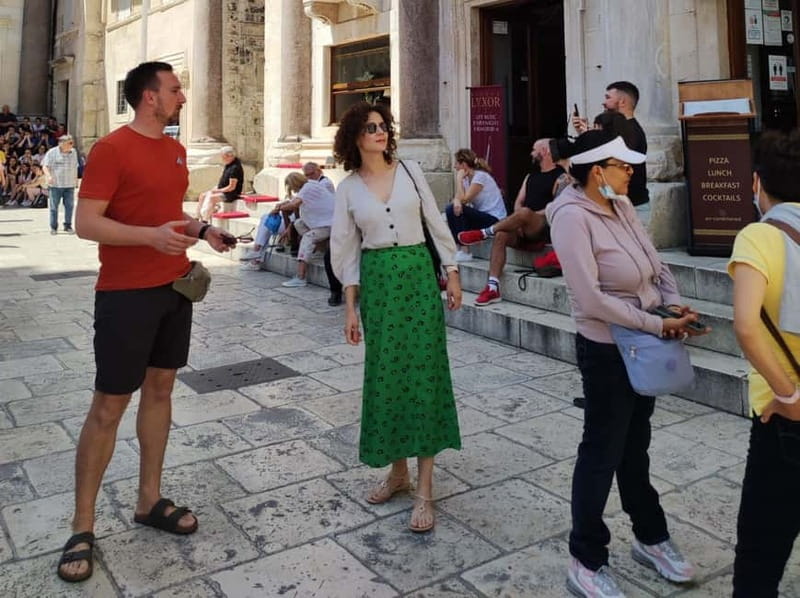
At Fruit Square, you’ll get about 15 minutes. The name might sound like a simple market reference, but the tour uses it to talk about economics and how daily needs shape politics and public identity.
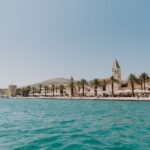
Then there’s a quicker segment at Riva, where you’ll just pass by for about 5 minutes. Even with the short timing, it’s not filler. The waterfront area is a useful contrast point: you see the social energy of Split, while the guide connects it to what the city’s changes mean socially.
If you’re the type who wants your tour to feel like you’re learning how the city actually works, this pair of stops helps.
Republic Square: Where the Big Themes Land in One Place

The tour heads to Republic Square for around 15 minutes of guided explanation. This is one of the spots where you can feel the tour’s “with no gloves on” approach most clearly.
You’ll connect architecture and urban planning to modern political ideas—things like identity building, religion in public life, and how geopolitics affects what a country emphasizes at home. The guide’s job here is to help you see the square not as a backdrop, but as a stage.
I also like that this tour connects the dots between categories you might keep separate. It links politics, religion, history, and the economy into one line of reasoning. That’s what makes it feel different from the standard monument parade.
Trumbićeva obala Finish: Turn a Walk into Understanding
You finish around Trumbićeva obala. Even though you’re ending the formal tour, you’ll likely leave with the habit of looking at Split like an argument: Who benefits from this story? Whose memory gets treated as official? What gets softened because it’s uncomfortable?
That’s the real souvenir. Not just facts, but a framework for interpreting what you see next—whether you’re reading a plaque, talking to someone in a café, or noticing how neighborhoods feel different.
And since it’s a central-city route, you’ll also be positioned well to keep exploring afterward without feeling lost.
Price and Value: Why $33 Can Actually Make Your Trip Better
At $33 per person for about 2 hours, this tour is priced like a mid-range cultural experience—but it offers something you don’t always get for that money: an anthropologist-led explanation of contested history and contemporary taboos, plus audio-visual material tied to the topics.
Here’s the practical value: Split’s main sights are popular, but the deeper context behind them often requires either background reading or a willingness to ask bigger questions. This tour gives you a guided way to do that while you’re standing in the exact places where the themes become visible.
Also, there are no extra costs mentioned, which helps you avoid the usual add-ons that quietly inflate the real price.
Who This Tour Is For (and Who Might Want a Lighter Option)
This is built for you if you:
- want history with friction—the kind that includes controversies, not just dates
- enjoy conversations about identity, politics, religion, and society
- like a guide who connects the architecture to how people think and argue
It may not be ideal if you:
- want only straightforward sightseeing and photo stops
- get uncomfortable with discussion-heavy tours that treat culture as political and personal
One more note from the tour’s style: it’s described as not technical, and it’s positioned for people 15 and up in terms of follow-along comfort. If that sounds like you, you’ll likely fit right in.
What You’ll Do, Step by Step (So You Can Plan Your Day)
Here’s the flow you can expect in real time:
- Start in the park at Ul. kralja Tomislava 12, near the fountain in the middle
- Golden Gate (15 min) for an opening context on contested meanings
- Peristil (15 min) to connect the square to how history lives today
- Diocletian’s Cellars (10 min) for context tied to foundations and symbols
- People’s Square (15 min) for the public-space logic of politics and society
- Židovski prolaz (10 min) to focus on identity and demographics in a tighter urban space
- Fruit Square (15 min) with economics and everyday life in the theme mix
- Riva (pass by ~5 min) as a quick social-and-visual contrast point
- Republic Square (15 min) to land the big threads in one place
- Finish at Trumbićeva obala
If you’re deciding whether to stack this with other plans, the walking load stays manageable because the guide breaks time into short, guided segments.
Quick Practical Tips Before You Go
- Bring comfortable shoes. Even though stops are short, the total is still a real walk.
- Expect discussion. This isn’t a whisper tour of monuments. It’s a guided conversation about society.
- If the weather turns, you might find the guide allows time for interpretation and adjusts pacing—one past guest noted accommodations for rain and time for interpretation for a deaf participant. It’s worth being flexible and kind if the schedule shifts.
Should You Book This Split Anthropologist Walking Tour?
Yes—if you want Split to make sense beyond Instagram. This tour is a strong choice for first-day context, because it mixes the major center landmarks with a framework for understanding why Croatia’s modern identity is shaped by debates over history, politics, religion, economics, and demographics.
Book it if you like your sightseeing slightly spicy. And if you’re the type who would rather understand the why behind the what, Marin’s approach is exactly the sort of guidance that changes how you notice the city afterward.
FAQ
How long is the Split Cultural Walking Tour?
The tour duration is 2 hours.
What is the price per person?
The price is $33 per person.
Is the tour guided in English?
Yes, the live tour guide speaks English.
Where do I meet the guide?
Meet at Ul. kralja Tomislava 12, 21000 Split, Croatia, in a big park next to the fountain located in the middle of the park.
Where does the tour end?
The activity finishes at Trumbićeva obala, and the activity description also indicates it ends back at the meeting point.
What’s included in the ticket price?
The tour includes additional audio-visual material for each topic covered.
Are there any extra costs during the tour?
No extra costs are listed.
Is the tour wheelchair accessible?
Yes, it is wheelchair accessible.
What’s the cancellation policy?
Free cancellation is available up to 24 hours in advance for a full refund.
Is there a reserve now and pay later option?
Yes. You can reserve now and pay later, keeping travel plans flexible.