REVIEW · SPLIT
Split Private Walking Tour for Families with kids from 5-17 years
Book on Viator →Operated by Split Guide · Bookable on Viator
Diocletian’s Palace turns history into a game. This private walking tour for families with kids ages 5-17 keeps young attention moving through tasks, puzzle-style challenges, and a chocolate tasting built around what you’re seeing. You also get a real guide like Dana, who can make the pace work for little ones while adults still learn. The main thing to plan for: it’s still a walking tour, and it needs good weather, so bring layers and expect outdoor time.
I love that the whole experience runs as a private group (up to 6 people) and stays human-sized. Over about 2.5 hours, you’ll cover the palace core, several gates and ceremonial spots, and a refreshing stop at the harbor—then head back to where you started on Obala Hrvatskog narodnog preporoda 23. If you’re traveling with a mix of ages, this kind of structure usually helps everyone feel included.
In This Review
- Key reasons families pick this Split tour
- A family-friendly way to experience Split’s biggest star
- Timing and logistics: what 2.5 hours really means with kids
- Stop-by-stop: what you’ll see and why it works for ages 5–17
- 1) Diocletian’s Palace: the main event and the brains-behind-it
- 2) Riva Harbor: a quick sea reset
- 3) Diocletian Palace Substructures: scale you can actually feel
- 4) Cathedral of Saint Domnius: the story connection people remember
- 5) The Peristyle: a “spot the patterns” stop for powers-and-processions
- 6) Eastern (Silver) Gate: entrances that explain how the palace functioned
- 7) Triklinij: eating habits made into a story stop
- 8) Vestibulum of Diocletian’s Palace: the acoustic moment
- 9) Temple of Jupiter: from temple to baptistery
- 10) Kraj Sv. Ivana 1: the tiny-street challenge
- 11) Narodni Trg: clock spotting in Pjaca
- 12) Bajamontijeva ulica: a narrow street with symbols to find
- 13) The Golden Gate: gates-with-a-purpose
- The chocolate tasting payoff (and why it matters)
- Price and value: what $358.87 per group gets you
- Who should book this family Diocletian tour
- Quick practical tips to make it smooth
- Should you book this tour?
- FAQ
- How long is the Split Private Walking Tour for Families?
- What is the group size?
- What does the tour cost?
- What language is the tour offered in?
- Where do we meet, and where does the tour end?
- Is admission included anywhere?
- What’s included in the tour package?
- Is soda or pop included?
- Is the tour only for families with children?
- What happens if the weather is bad?
Key reasons families pick this Split tour
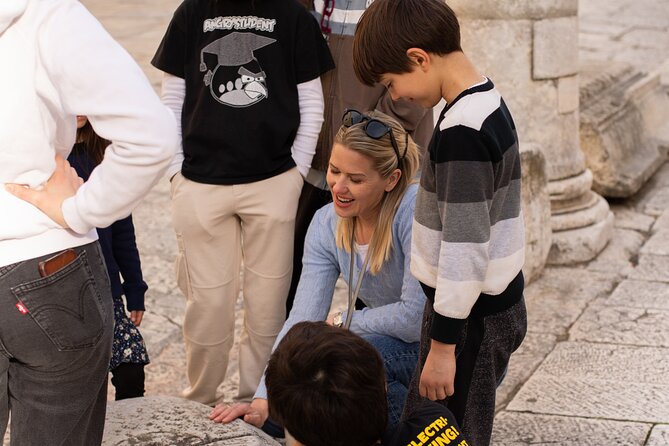
- Private group up to 6: easier pacing and questions for both kids and adults
- Diocletian’s Palace with admission included for the main stop
- Chocolate tasting included to reward curiosity
- Kid-friendly structure with short site stops and active prompts
- Quick breaks like the 10-minute Riva Harbor seafront view
- You skip the guesswork with an English guide and a mobile ticket
A family-friendly way to experience Split’s biggest star
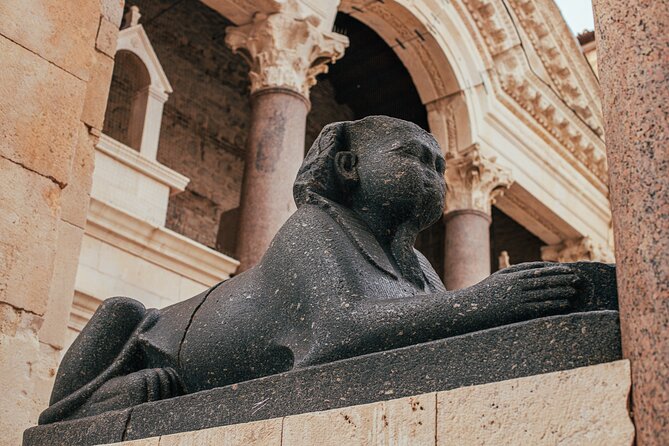
Split can feel like a lot for kids. There are big stone buildings, serious-looking statues, and long stretches where you might worry the attention span is about to wander.
This tour tackles that problem by turning the palace area into something you do, not just something you look at. Instead of standing still and hearing a long lecture, you’re prompted to complete challenges as you move through key spaces tied to Diocletian’s world—then you get a sweet payoff with chocolate tasting. That combo matters: kids remember actions and rewards more than facts read off a sign.
For adults, the payoff is that you still get the real landmarks: palace gates, ceremonial squares, and the cathedral connection to Diocletian’s legacy. You end up with an understandable map of the palace rather than scattered photos.
One more practical win: the tour is offered in English and runs as a private experience, so your guide can adjust how fast you move or how much explanation you want—especially helpful with mixed ages like 5 and 17 in the same family.
You can also read our reviews of more walking tours in Split
Timing and logistics: what 2.5 hours really means with kids
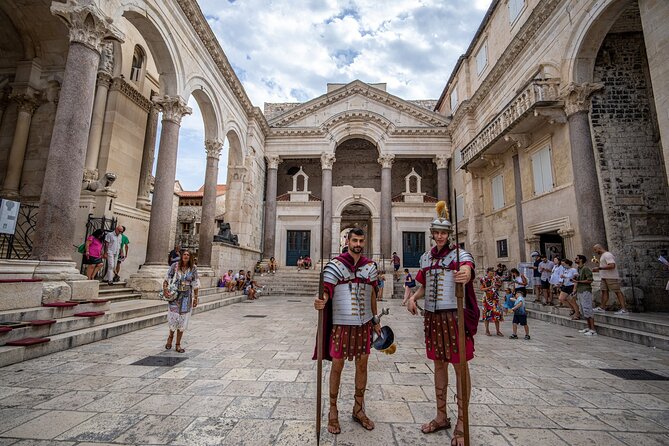
The total time is about 2 hours 30 minutes, and the itinerary is built from short segments—roughly a full hour at the palace, then a series of smaller, focused stops (many around 5–10 minutes). That pacing is smart for families because you avoid the most common problem: adults start drifting into lecture mode, and kids start counting minutes.
It also helps you plan the rest of your day. You get the most important Diocletian’s Palace context without needing to lose an entire half-day, and you end back at the meeting point, so you’re not hunting transit or trying to line up your next activity while everyone is tired.
The meeting point is Obala Hrvatskog narodnog preporoda 23, Split, and you’ll return there at the end. You’ll use a mobile ticket, which makes last-minute logistics easier when you’re juggling kids, stroller decisions, and snack stops.
Stop-by-stop: what you’ll see and why it works for ages 5–17
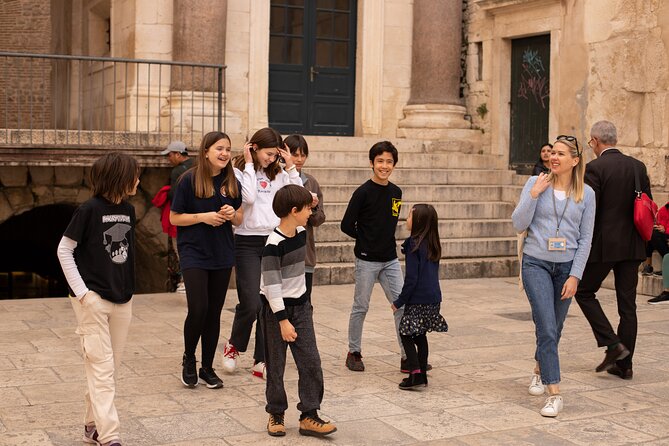
Below is the tour flow, with the angle I think matters for families. The goal here is not just where you go—it’s how each place supports the tour’s game-like approach.
1) Diocletian’s Palace: the main event and the brains-behind-it
This is the core of the tour, at about 1 hour, and admission is included here. You’re not just walking through walls—you’re guided back to the Roman era to understand how Emperor Diocletian and the people of Split lived about 1700 years ago.
What makes it family-friendly is the structure: you’ll do tasks, piece together puzzle-style elements, and hunt for sweet specialties tied to Split. That treasure-hunt format gives kids a job. Meanwhile, parents get a clearer sense of the palace layout and what the spaces were for.
Why this stop is valuable: if you only do “photo stops” in the palace, it can feel like a maze. A guided, question-led walk helps you connect the dots, so later when you’re wandering on your own, you recognize what you’re looking at.
2) Riva Harbor: a quick sea reset
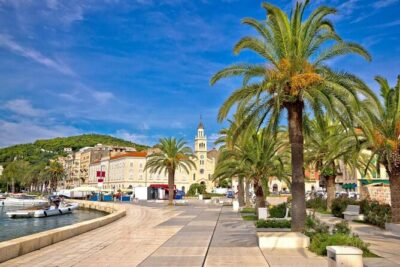
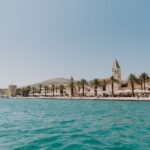
After the palace intensity, you get a 10-minute seafront break at Riva Harbor. The point isn’t to turn it into a long beach visit—it’s to change the scene, let the air hit, and give kids a mental reset.
This is where the tour uses a smart pacing trick: you go from tight history spaces to open sea views in front of you, with palm trees and that breezy waterfront feeling. Even if you’ve never been to Split before, this short stop helps you understand why people fall for the city.
You can also read our reviews of more private tours in Split





3) Diocletian Palace Substructures: scale you can actually feel
Next, you visit the palace substructures for about 10 minutes. These are the cellars—impressive because they show how large and elaborately built the palace really was.
For kids, underground spaces can be a hit, but it depends on comfort level. If your child likes exploring, this is a great moment to keep them engaged with size and details. If they don’t like enclosed areas, this stop is still short enough to manage.
4) Cathedral of Saint Domnius: the story connection people remember
You then step into the Cathedral of Saint Domnius for around 5 minutes. The guide brings up the fact that the cathedral’s center once held Diocletian’s coffin—his imperial mausoleum—then continues with the idea that the cathedral still houses an important saint.
Why this works: it takes a place most families rush through and gives it a clear storyline. Kids can grasp the basic narrative—who was buried here, and why it matters—without needing a deep background in Roman politics.
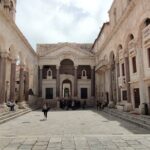
5) The Peristyle: a “spot the patterns” stop for powers-and-processions
About 10 minutes here at the Peristyle of Diocletian’s Palace. The tour frames it as the main square: where Diocletian would show himself and people would bow down, and where the ceremonial heart of the palace would have lived.
You’re guided to look around and answer questions like how many columns you see. That kind of visual prompt keeps attention without requiring reading.
This is also one of the few places where an extra cost may appear later: the peristyle admission ticket is not included. So if you’re traveling with kids, it’s worth knowing in advance that you might need to handle an additional entry step depending on how the tour timing is managed.
6) Eastern (Silver) Gate: entrances that explain how the palace functioned
Next is the Eastern (Silver) Gate for about 5 minutes. The focus is practical and architectural—this is the entrance from the east to the imperial palace, with references to double gates, and it ties back to the first main street running east to west.
For families, gates are a great topic because they’re obvious landmarks. Kids often enjoy imagining movement and rules: where would people enter, where would they go, and why would the palace be designed like this?
7) Triklinij: eating habits made into a story stop
At Triklinij, you get about 10 minutes with the story of eating habits during Diocletian’s time. You’ll imagine the feasts that happened in this space centuries ago.
This stop is clever because it’s about a universal human thing: food. Even if your kid doesn’t care about Roman dining history, they can care about the idea of a big meal and what it means about daily life.
8) Vestibulum of Diocletian’s Palace: the acoustic moment
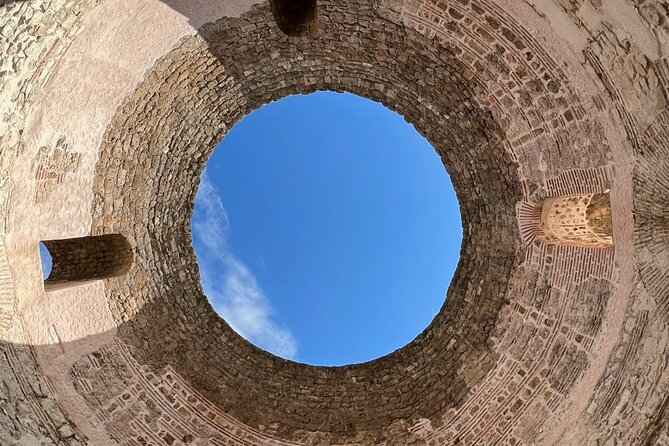
For about 5 minutes, you enter the Vestibulum of Diocletian’s Palace, described as an unusual open corridor that’s very acoustic. The guide prompts you to use your voice to test the space.
This is the kind of “learning with a physical trick” that works for kids. It’s quick, it creates a laugh, and it anchors a memory.
9) Temple of Jupiter: from temple to baptistery
Next is the Temple of Jupiter, about 10 minutes, now functioning as a baptistery. The tour explains that the temple once existed as a temple and today has a different religious use.
This is a good “how buildings change” lesson. It helps kids understand that a single structure can carry multiple meanings across time, even if the surface looks old.
10) Kraj Sv. Ivana 1: the tiny-street challenge
This is a fun, short 5-minute stop at Kraj Sv. Ivana 1. You can measure the width of the smallest street in town as part of a quick task.
It sounds silly on paper, but measuring games keep kids engaged because they’re doing something, not waiting. It’s also a neat way to notice the city’s scale and how cramped old streets can be.
11) Narodni Trg: clock spotting in Pjaca
At Narodni Trg you get about 5 minutes. The tour points out the view of Pjaca, with buildings in different architectural styles, and asks you to check the time on a unique 24-digit clock.
This is a practical stop for families: it teaches you how to look around at details. Kids love the novelty of numbers, and adults like having a reason to focus instead of drifting toward the next photo.
12) Bajamontijeva ulica: a narrow street with symbols to find
You then walk about 5 minutes on Bajamontijeva ulica. The tour frames it as a section once connected to the army and notes change with the arrival of Italians. You’re guided to find an Italy symbol and continue to a fountain with another task.
This stop is valuable because it connects empire, army space, and later cultural shifts without turning into a textbook. The “find the symbol” format keeps kids focused.
13) The Golden Gate: gates-with-a-purpose
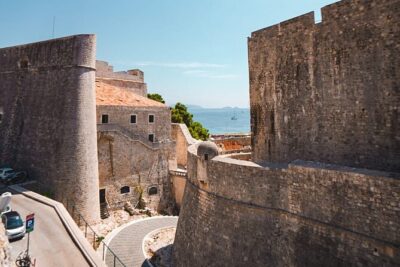
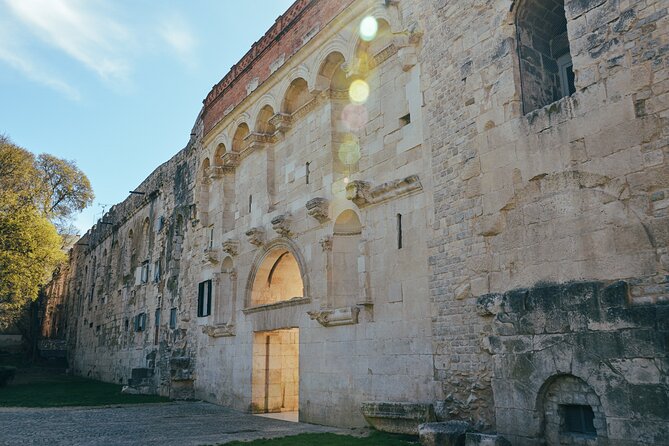
The final stop is the Golden Gate for about 10 minutes. You’ll look at the construction and hear the story of the double gate in Diocletian’s palace.
For the last stretch, gates work well because they’re visually strong and easy to compare to earlier entrances. Kids also tend to like ends and wrap-ups—this lets the tour land on a memorable final landmark.
The chocolate tasting payoff (and why it matters)
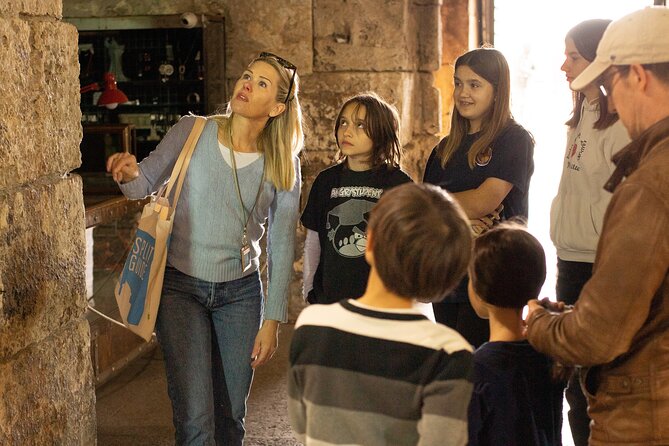
The tour includes snacks with chocolate tasting. That’s not just a random add-on. In a family tour, rewards matter because they keep kids participating even when the subject is complicated.
In one of the standout family experiences, Dana made the tour especially fun for a very young child, and it ended with gelato afterward. Even if you’re not planning an automatic gelato detour, the point is clear: when the guide builds in sweetness at the right moments, the whole learning process feels lighter.
One note: soda/pop is not included, so if your family likes a fizzy drink, plan for that separately.
Price and value: what $358.87 per group gets you
The price is $358.87 per group (up to 6) for about 2.5 hours, offered in English. That number can look high if you’re traveling as just two adults. But for families, the math often shifts.
If you’re a party of 4–6, you’re essentially buying a private, kid-tuned experience with a guide who can adjust pacing. You also get admission included for the main palace stop and chocolate tasting as part of the package. That’s better than paying separately for guided time plus trying to manage kids through a heavy site on your own.
The experience also has a strong track record: 5 out of 5 rating across 20 reviews, with 100% recommendation. For a family-focused tour, that kind of consistency is a real signal that the guide approach works.
Who should book this family Diocletian tour
This fits best if you:
- have kids in the 5–17 range and you want them involved, not sidelined
- want a private walking tour so your family can set the pace
- prefer learning through games and tasks rather than long explanations
- want a main-hit tour of Diocletian’s Palace without turning the day into a full marathon
It may be less ideal if your group wants long, slow museum-style time, or if you’re dealing with weather uncertainty. The tour requires good weather, so on gray days you may need to adapt plans.
Quick practical tips to make it smooth
- Wear shoes that can handle a walking route around old stone and busy streets.
- Plan a little extra time for kids to use the bathroom before the start, since you’re moving continuously.
- Since soda/pop isn’t included but chocolate tasting is, decide what your kids will want to drink in advance.
- If you want to avoid surprises, remember that the Peristyle stop lists admission as not included.
Should you book this tour?
If your priority is a kid-in-the-car kind of day—something that keeps children engaged while still giving adults a solid grasp of Diocletian’s Palace—this is a strong choice. The pacing is family-realistic, the format is active, and the included chocolate tasting and palace admission add real value.
I’d book it when you’re arriving in Split and you want your bearings fast, especially if your kids are old enough to enjoy measuring street width, finding symbols, and playing with sound in the vestibule. If you’re traveling with very little patience for walking or you’re unsure about weather, it’s the one factor to watch.
If your family likes hands-on learning and quick stops with clear story beats, this tour is the kind that makes the palace feel understandable instead of overwhelming.
FAQ
How long is the Split Private Walking Tour for Families?
It runs for about 2 hours 30 minutes (approx.).
What is the group size?
It’s a private tour for your group, up to 6 people.
What does the tour cost?
The price is $358.87 per group.
What language is the tour offered in?
The tour is offered in English.
Where do we meet, and where does the tour end?
You meet at Obala Hrvatskog narodnog preporoda 23, 21000 Split, Croatia, and the tour ends back at the same meeting point.
Is admission included anywhere?
Yes. Admission ticket is included for Diocletian’s Palace (stop 1). Some other stops are listed as free, and the Peristyle of Diocletian’s Palace lists admission as not included.
What’s included in the tour package?
Snacks are included, including a chocolate tasting.
Is soda or pop included?
No, soda/pop is not included.
Is the tour only for families with children?
Yes, it’s described as a Split Private Walking Tour for Families with kids ages 5–17.
What happens if the weather is bad?
The experience requires good weather. If it’s canceled due to poor weather, you’ll be offered a different date or a full refund.