REVIEW · SPLIT
Split: Private Walking Tour with Diocletian’s Palace
Book on GetYourGuide →Operated by www.splitwalkingtour.com · Bookable on GetYourGuide
Split’s Roman maze feels personal. This private walking tour lets you move through Diocletian’s Palace in a focused way, with a guide who connects the ruins to the streets you’re actually standing on. I like that it’s truly private and personalized, so you can linger when something catches your eye and skim when you don’t. You’ll also get a clear storyline through the heart of old Split, from palace basements up to the Cathedral of Saint Domnius.
My other big reason to love this tour is the way it handles the “history of Split” question without turning it into homework. You’ll see landmarks like the Golden Gate, Diocletian’s Cellars, and Peristil, then your guide ties it all together with local details and smart context. I also appreciated hearing how guides like Slavko and Antonia keep the experience tight and question-friendly, even when you ask for extra explanation.
One thing to consider: this is a walking tour with uneven historic surfaces, so it’s not suitable for wheelchair users. Wear comfortable shoes, plan for sun, and expect to walk.
In This Review
- Key highlights worth your attention
- Why Diocletian’s Palace still runs the show in Split
- Golden Gate: starting at the North Gate and getting your mental map
- The quick Game of Thrones Museum stop (and why it works)
- Squares and the Riva Harbor: reading medieval city life in motion
- Diocletian’s Cellars: the palace under your feet
- Peristil and St Duje: where the story shifts from Rome to Christianity
- Vestibul and the return to Golden Gate
- Time and pacing: 90 minutes to 5 hours means you control the depth
- Price and value: $117 per group up to 2 people
- Who should book this private Split palace walk
- Should you book it
- FAQ
- Where do I meet my guide?
- How long is the tour?
- Is this a private tour?
- Which languages are available?
- What are the main sights on the route?
- What should I bring for the walk?
- Is the tour suitable for wheelchair users?
- How much does it cost?
- Is there free cancellation?
- Is reserve and pay later available?
Key highlights worth your attention
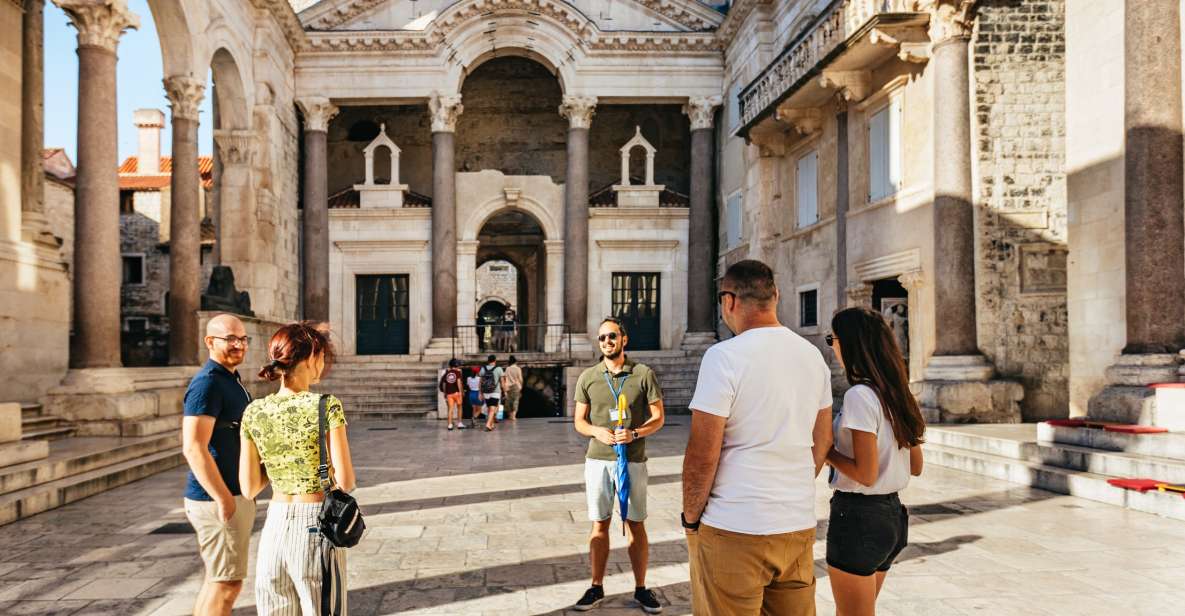
- Golden Gate start: you begin at the North Gate of Diocletian Palace and get oriented fast.
- Diocletian’s Cellars and Peristil: you’ll cover the palace spaces people usually rush past.
- Cathedral of Saint Domnius (St Duje): built in the 5th century on the site where Diocletian was interred in 311 AD.
- Small stop at the Game of Thrones Museum: a quick hit of modern pop culture tied to the city’s story.
- A guide who adjusts to you: guides such as Vinka, Slavko, and Antonia are praised for personal tips and pacing.
Why Diocletian’s Palace still runs the show in Split
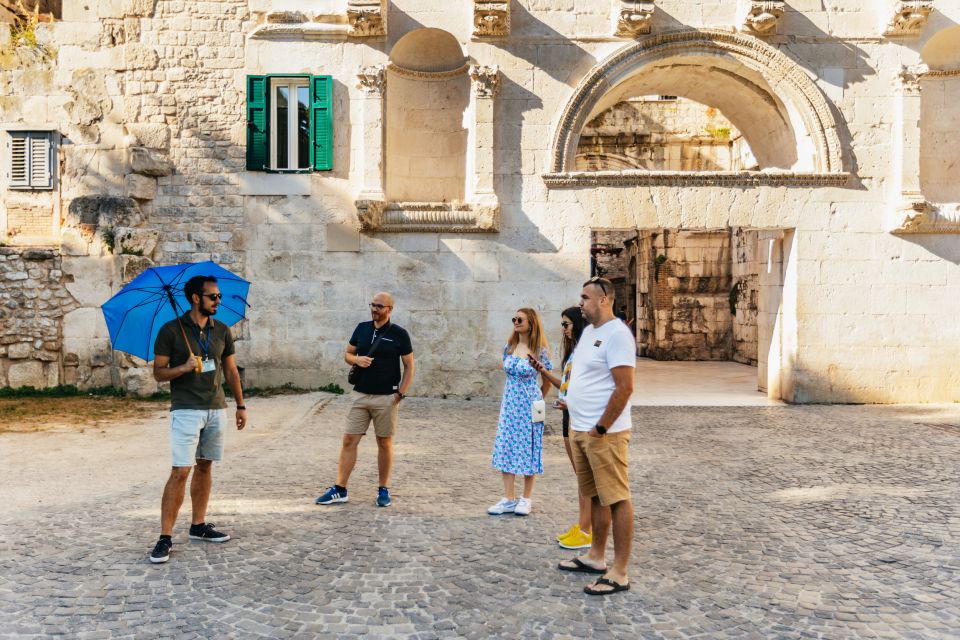
Split can feel like one of those places where the past leaks right into the present. The walls, arches, and courtyards aren’t museum props. They’re part of everyday streets, shops, and doorways. That’s why starting here matters: Diocletian’s Palace is the reason the city looks the way it does, with Roman remains scattered around newer eras.
On this tour, you don’t just see “a palace.” You move through it in layers: palace basements, central open spaces, and the major religious landmark built later. That sequencing helps your brain build a map. You’ll also learn why certain spots are famous locally, like the Cathedral of Saint Domnius—known as St Duje—which has deep ties to early Christian history.
If you like walking tours that stay understandable, this one has an advantage: the private format makes it easier for your guide to keep the story focused. You can ask what you want, and you’re not competing with a packed group.
You can also read our reviews of more walking tours in Split

Golden Gate: starting at the North Gate and getting your mental map
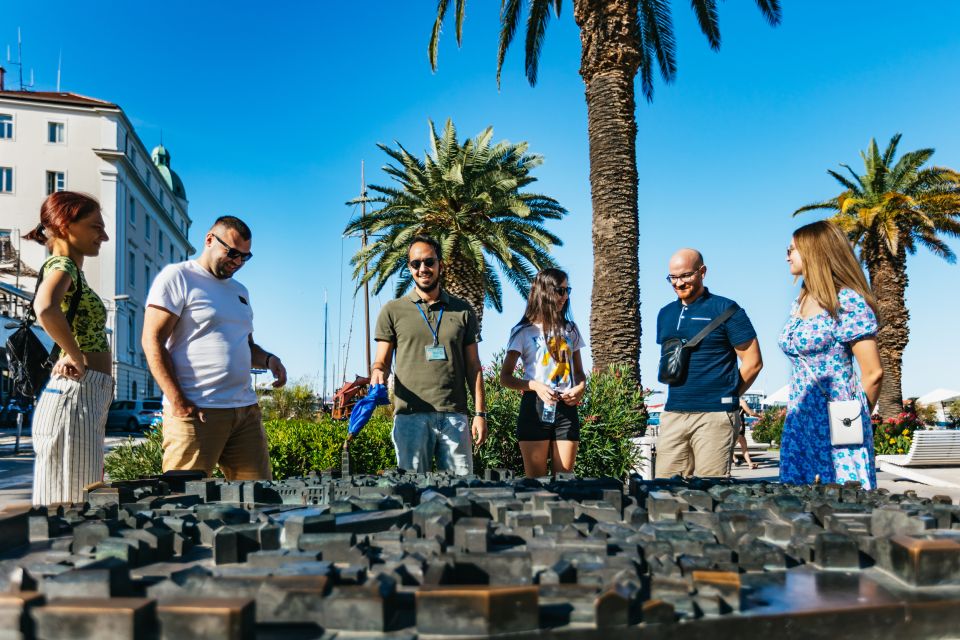
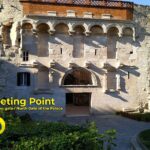
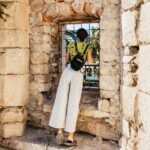
Your tour begins at Golden Gate (North Gate of Diocletian Palace). This is a practical choice. The Golden Gate sits right where you can step into the palace story without getting lost in side streets immediately. You’ll look for a guide with a blue umbrella, which is helpful in a place full of people and stone.
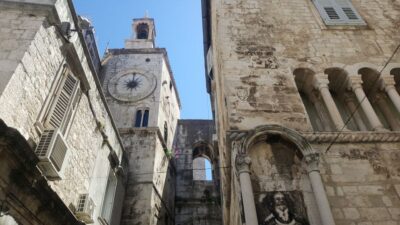
You start with a short orientation walk around the Golden Gate area, around 10 minutes. It’s enough time to understand what you’re looking at: the gate is tied to medieval Split as well as the Roman foundation beneath it. You’ll also hear about the tower-clock that has kept time in Split since the 15th century, and the Golden Gate’s place in the city’s long timeline.
From there, you’ll be able to recognize what’s “Roman leftover” versus what belongs to later medieval and Renaissance life. That makes the rest of the walk much more satisfying, because you’re not guessing.
The quick Game of Thrones Museum stop (and why it works)
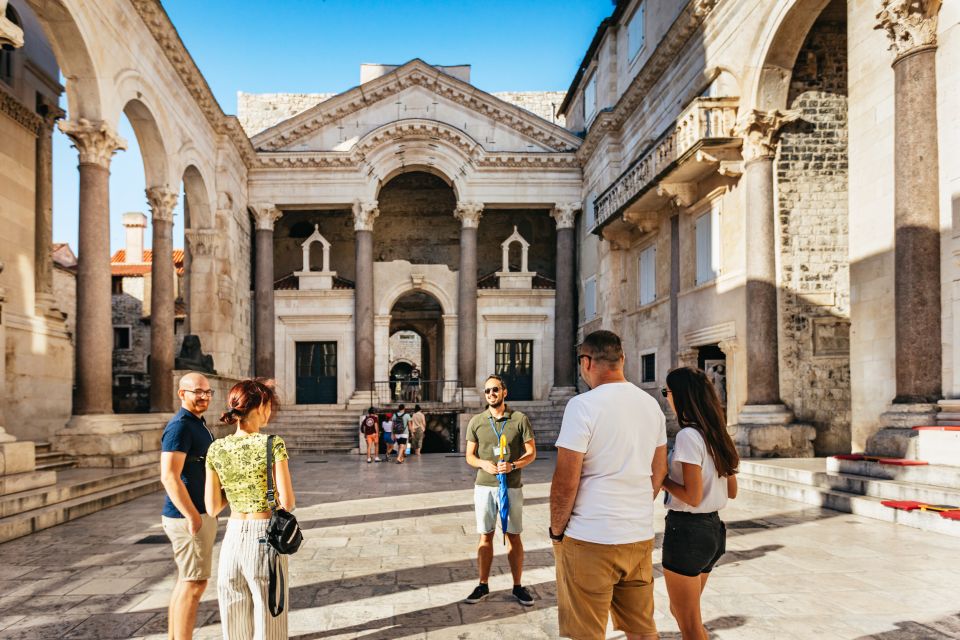
The itinerary includes a brief stop at the Game of Thrones Museum for about 5 minutes. On paper, it can sound like an optional add-on. In practice, I like using small pop-culture stops as a bridge. Even if you’re not a hardcore fan, it gives your guide a chance to connect modern attention back to the city that captured it.
Because the stop is short, it doesn’t derail your main goal. You’re not losing time you’d rather spend with real stone and real architecture. Instead, it’s like a marker saying: Split has been putting on a show for centuries, and people keep noticing.
If your goal is pure architecture, you can treat this as a quick “context moment” and move on. Your guide will keep the focus on the bigger story of the palace and surrounding districts.
Squares and the Riva Harbor: reading medieval city life in motion
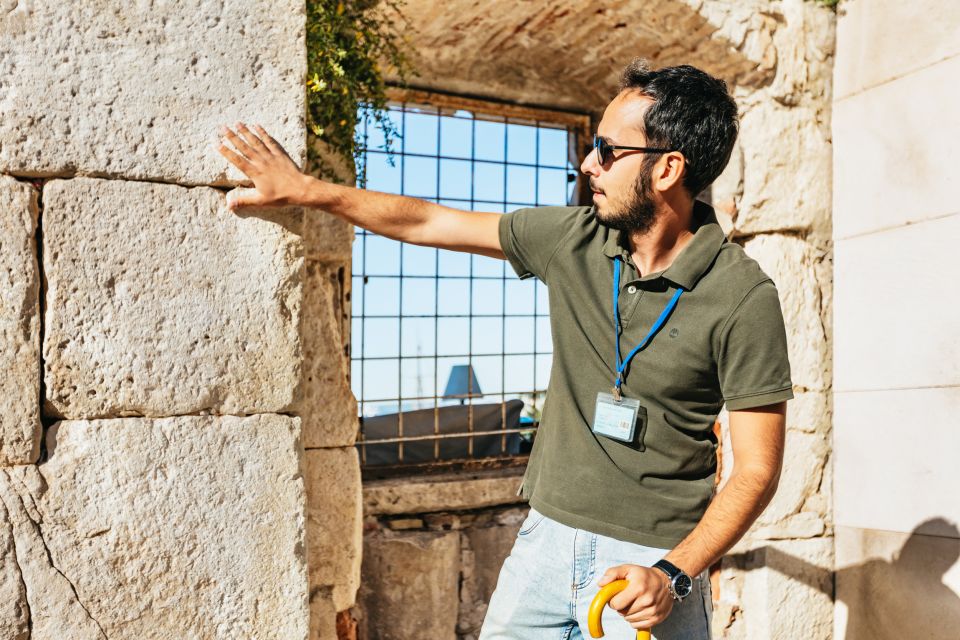
Next you’ll walk through several key civic spaces: People’s Square, Fruit Square, and the area around Riva by the harbor. Each stop is guided and usually around 10 minutes, which is a good pace for city squares. Too short and you only skim. Too long and you start to feel like you’re watching crowds without learning anything.
People’s Square is where you see how Split organized community life. Fruit Square brings you back to the practical rhythm of trade and daily needs. And then Riva adds atmosphere: this is the promenade over the harbor, the kind of place where you can look out while your guide explains how the city’s layout shaped movement and gathering.
You’ll also get references to the Fish Market, often described as a focal point of life in Split, and you’ll pass things tied to how local governance and neighborhood life took shape over centuries.
Here’s the value: by the time you reach the palace interiors, you’re not just staring at architecture. You’re understanding why these buildings and openings mattered for real people.
Diocletian’s Cellars: the palace under your feet
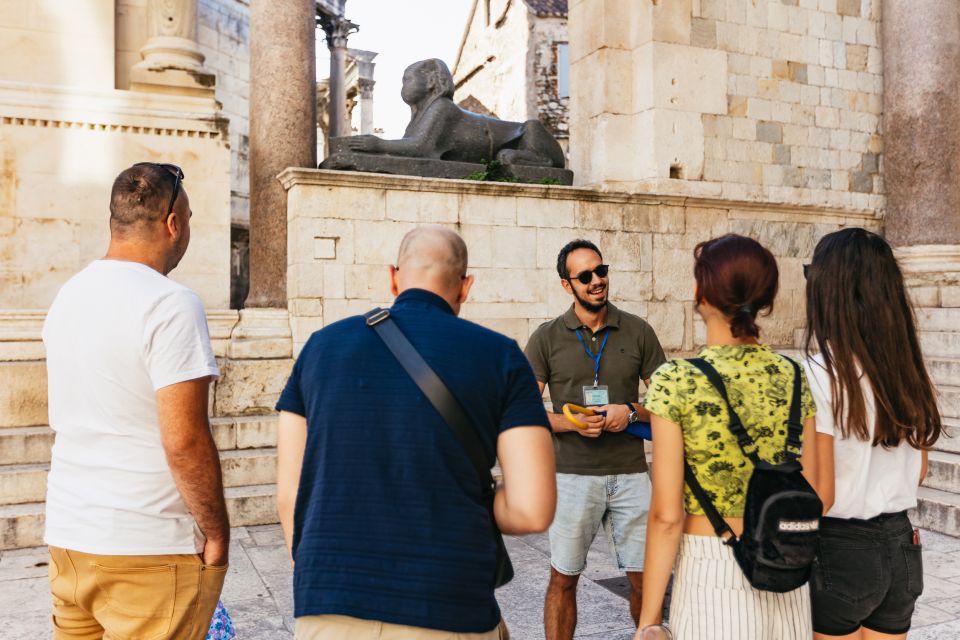
One of the best moments on this tour is the visit to Diocletian’s Cellars (about 15 minutes). It’s the kind of stop that changes your perspective. The palace doesn’t only live on the surface. Under it, you feel how the Roman design supported power, storage, and control.
Cellars are also a good “reality check” after the sunlit squares. Your attention shifts to structure: thick walls, stonework, and the sense of scale. Even without a long history lecture, the space itself communicates Roman authority. Your guide will help you read what you’re seeing instead of just naming it.
A private guide makes this part smoother. If you want photos, you’ll get space. If you have questions about how basements connected to daily palace life, you won’t feel rushed.
Practical tip: cellars can feel cooler than the street, but the surfaces may still be uneven. Your comfortable shoes will pay off here.
You can also read our reviews of more private tours in Split






Peristil and St Duje: where the story shifts from Rome to Christianity

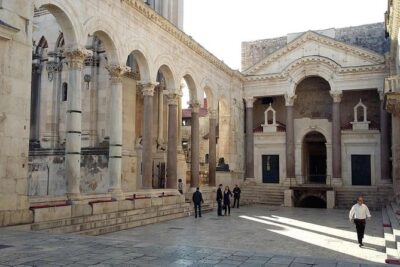
After the cellars, you’ll head to Peristil (around 10 minutes). Peristil is the open heart of the palace complex, and it helps you visualize how the palace functioned as a complete world. Think of it as the transition point: you’ve been underground and through city spaces, and now you’re back to a structured central courtyard.
Then comes the major highlight: Cathedral of Saint Domnius (about 10 minutes), locally known as St Duje. This matters because it’s one of the best-preserved ancient Roman buildings still standing. The cathedral was built in the 5th century on the site where Diocletian was interred in 311 AD, tied to the end of his reign as the last famous persecutor of Christians.
That detail is why this stop lands. Your guide isn’t just pointing at architecture. They’re explaining a hinge in European history: the Roman world that built the palace gradually gives way to Christian structures layered over the same sacred space.
If you like clear explanations and solid local storytelling, this is where you’ll feel it most. Guides such as Antonia are specifically praised for answering questions with care, even when it takes a little extra time.
Vestibul and the return to Golden Gate
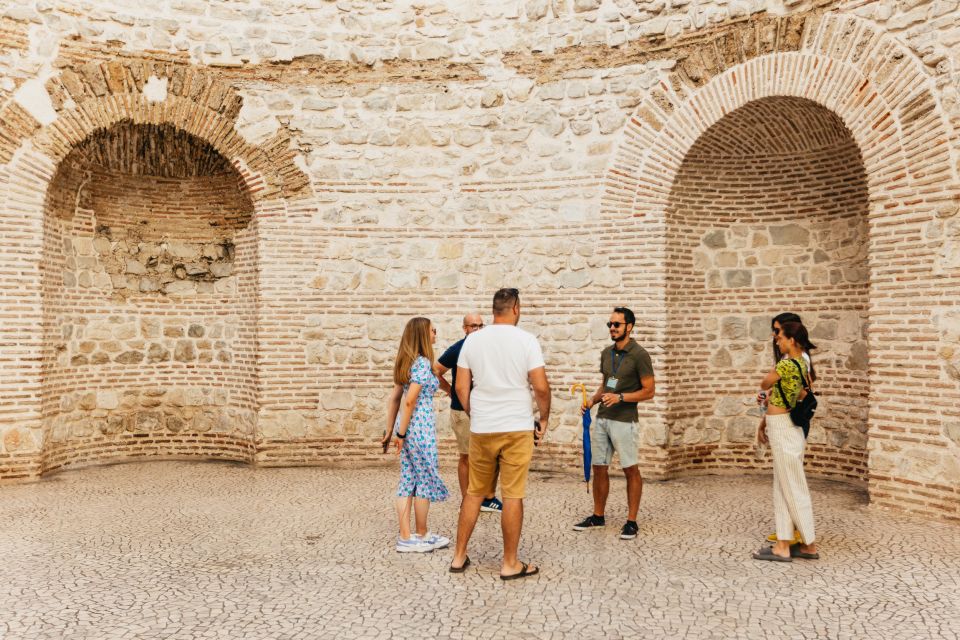
The tour includes the Vestibul (about 10 minutes) as another palace-related space that helps you finish the puzzle. Even if some of these areas look similar at first glance, the guided interpretation makes them feel distinct. This is where your guide’s job becomes visible: they help you see patterns in the stone and layout so it stops being random “Roman stuff.”
You’ll then return to Golden Gate to wrap up the walk.
Why this ending works: you exit back to the same landmark where you started. That closes the loop. You can look around once more and feel your bearings click into place.
Time and pacing: 90 minutes to 5 hours means you control the depth
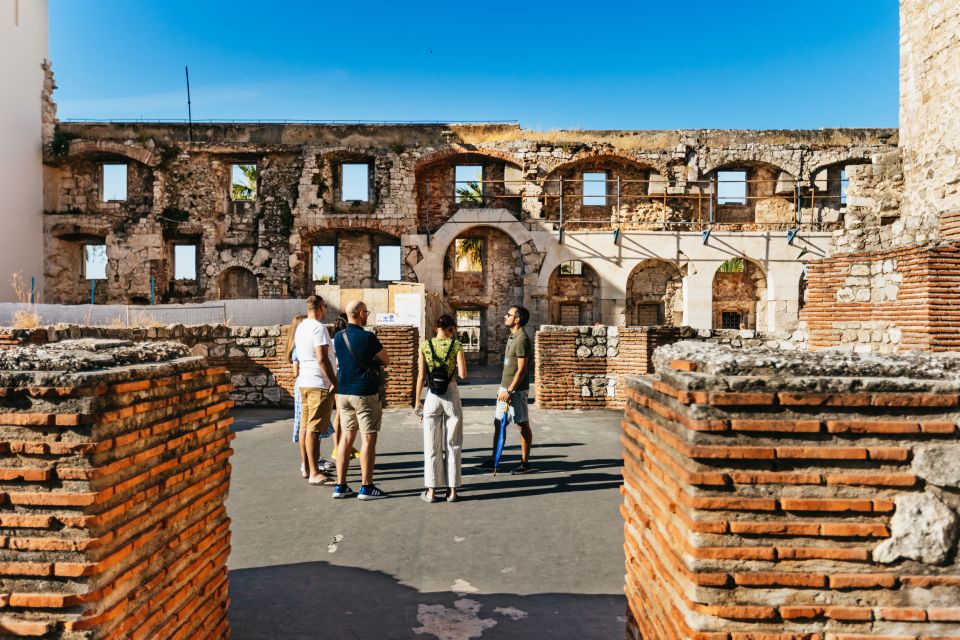
The tour duration ranges from 90 minutes up to 5 hours, depending on starting time and how you want to shape your day. In a private tour, that range isn’t fluff. It’s what allows the guide to adjust between a quick highlights run and a slower, more detailed exploration.
If you’re short on time, go for the tighter window and keep the pace moving. You’ll still hit the core palace features like Diocletian’s Cellars, Peristil, and St Duje.
If you’re traveling with teens, you can also go slower. One review highlighted a guide who made the material accessible for adolescents, which tells you the storytelling style can flex. And if you love asking questions, more time gives your guide room to slow down and explain without rushing you.
Either way, this is a walking tour. Plan for comfortable shoes, sun protection, and breaks if you need them. Your guide can usually match the tempo, but you should still listen to your body.
Price and value: $117 per group up to 2 people
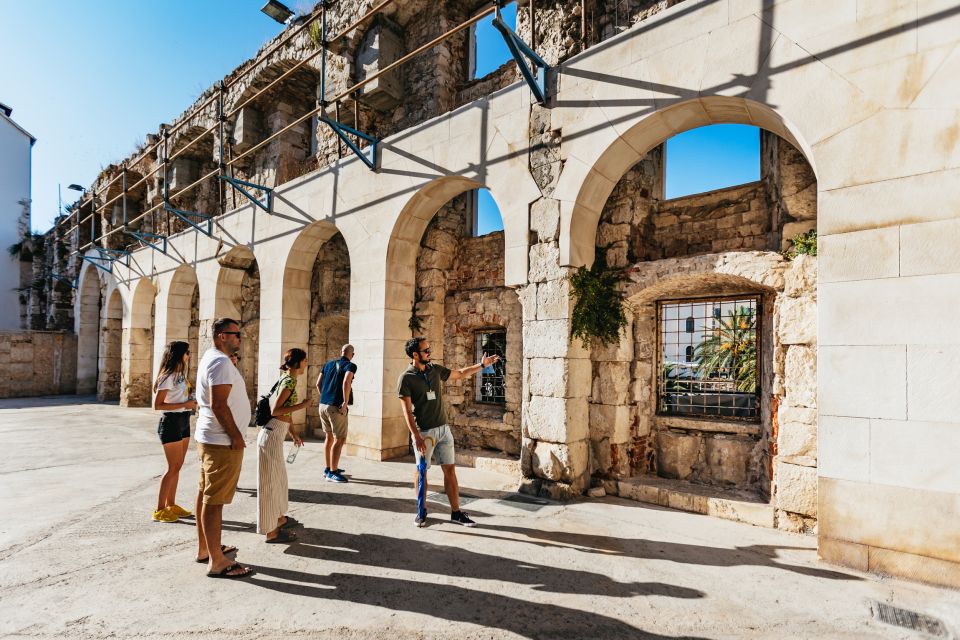
The price is $117 per group up to 2. That puts this in the “private tour, not just a quick add-on” category.
Here’s the real value math. You’re paying for:
- a professional local guide
- a private route instead of joining large groups
- time spent in specific palace spaces and key historic points
Compared to splitting a fixed guide fee across a big group, private tours can feel expensive at first glance. But if it’s just you and one other person, the cost per person can land closer to what you’d pay for a smaller-group experience. And you gain the ability to move at your tempo.
Also, the guide-led format matters in Split. Many historic buildings look similar until someone explains what you’re looking at. In places like the cathedral and palace structures, a good guide turns confusion into understanding fast.
If you’re traveling as a couple or as a parent-child duo, this price can feel reasonable because you’re not paying for empty seats. You’re paying for attention.
Who should book this private Split palace walk
I’d book this if you want:
- a private guide who can tailor the pacing to your interests
- the core architecture of Diocletian’s Palace without feeling rushed
- a history storyline that stays readable and connected to real places
It’s also a smart option if you dislike the pressure of big-group tours. Reviews mention guides avoiding huge tour groups, which is exactly the kind of comfort factor that matters in a tight historic center.
It’s not the best fit if you need wheelchair access. The tour is clearly described as not suitable for wheelchair users, and old-town surfaces are typically the limiting factor.
Families should also consider it. The tour is framed as enjoyable for the whole family, with a guide who can customize the itinerary for different interests.
Should you book it
If your goal is to understand Split through Diocletian’s Palace and the key stops around it, I think this is a strong choice. You get the “big anchors” like Diocletian’s Cellars and St Duje, plus the city context through squares and the harbor. And because it’s private, you’re not locked into someone else’s pace.
Book it if you want an experience with real guidance, not just sightseeing. Skip it only if you hate walking, need full accessibility, or want a completely free-form day with no structure at all.
FAQ
Where do I meet my guide?
You meet at Golden Gate (North Gate of Diocletian Palace) in Split. Look for your guide with a blue umbrella.
How long is the tour?
The tour duration ranges from 90 minutes up to 5 hours.
Is this a private tour?
Yes. It’s listed as a private sightseeing tour with a private group.
Which languages are available?
The live guide is available in English, German, Spanish, and French.
What are the main sights on the route?
You’ll cover the Golden Gate area, a stop at the Game of Thrones Museum, People’s Square, Fruit Square, Riva, Diocletian’s Cellars, Peristil, the Cathedral of Saint Domnius (St Duje), and the Vestibul.
What should I bring for the walk?
Bring comfortable shoes, sunglasses, and a sun hat.
Is the tour suitable for wheelchair users?
No. The tour is not suitable for wheelchair users.
How much does it cost?
It’s $117 per group up to 2.
Is there free cancellation?
Yes. You can cancel up to 24 hours in advance for a full refund.
Is reserve and pay later available?
Yes. You can reserve now and pay later.