REVIEW · SPLIT
Trogir Old Town Walking Tour
Book on GetYourGuide →Operated by www.splitwalkingtour.com · Bookable on GetYourGuide
Trogir’s Old Town tells stories on every corner. This guided walk helps you connect 2300 years of change, from the Roman settlement of Tragurium to the medieval streets you still see today, all while you’re moving at an easy pace through the old core. You meet at the North Gate (look for the blue umbrella), and the tour ends with time to ask anything you’re curious about. One heads-up: this is a walking tour, and it’s not set up for wheelchair users.
What I really like is how personal the guidance feels—Ivan (the local guide name that comes up again and again) doesn’t just list dates. He’s described as enthusiastic, smart, funny, and warm, and he even tries to pause in shaded spots when you stop to talk. If you enjoy getting your bearings and understanding what you’re looking at, you’ll likely find the stops—like the Cathedral of St. Lawrence and the city square—much easier to appreciate on your own afterward.
In This Review
- Key highlights you’ll feel fast
- Meeting at the North Gate and walking at a human pace
- Roman Tragurium to medieval Trogir: what 2300 years looks like in real life
- St. Lawrence Cathedral and the city square stop you’ll remember
- The promenade: old stones meet sea-air in everyday Trogir
- Market stories and hidden corners worth slowing down for
- How long it really takes (and who should choose it)
- Price and value: why $23 is more than a bargain
- Should you book the Trogir Old Town Walking Tour?
- FAQ
- Where is the meeting point for the tour?
- How long is the Trogir Old Town walking tour?
- Is the tour available in English?
- What will I see during the walk?
- Is food or drinks included?
- Does the tour focus on history?
- Who should avoid this tour?
- Can I change my plans if I booked?
Key highlights you’ll feel fast
- Roman to medieval context: you connect Tragurium to the medieval city while you walk the actual streets
- St. Lawrence Cathedral stop: a major landmark explained in plain, visual terms
- Market-story moment: you hear about local life through a real market storyline
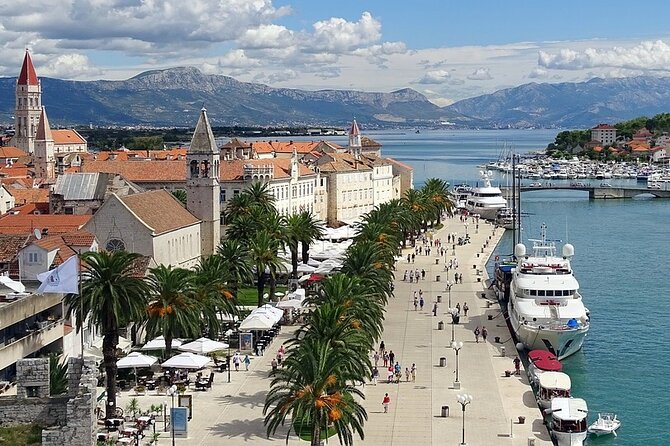
- Promenade walk: old stones meet sea-air as you move toward everyday Trogir
- Q&A at the end: ask your questions about the city and Croatia while your guide is still there
- Ivan’s style: approachable, encouraging questions, and practical about shade during pauses
Meeting at the North Gate and walking at a human pace
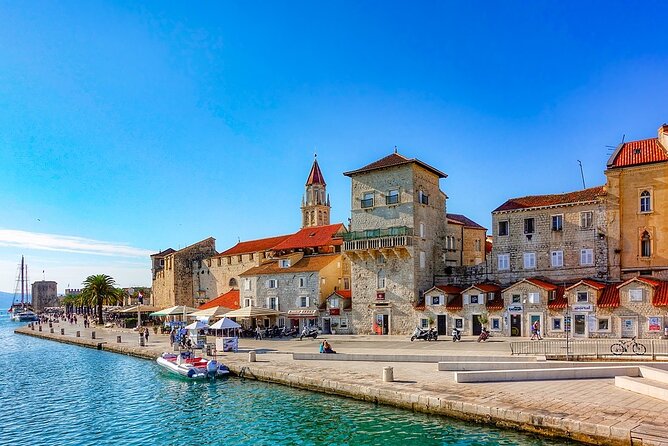
You’ll start at the North Gate of Trogir’s Old Town, and the guide will be easy to spot if you look for the blue umbrella. From there, expect about a 60-minute walk focused on the old area, plus extra time for stops and questions. The total duration is listed as 1–4 hours depending on the start time and how the group moves.
Because it’s a guided walking route, the tour works best when you come ready to wander a bit and ask questions. If you’ve ever stood in a historic place thinking, I know this is important, but why—this format gives you the “why” as you go.
You’ll be with a live English-speaking guide. That matters in Croatia, where you’ll often get better value from your time if the story is explained clearly rather than you relying on signs alone.
You can also read our reviews of more walking tours in Split


Roman Tragurium to medieval Trogir: what 2300 years looks like in real life
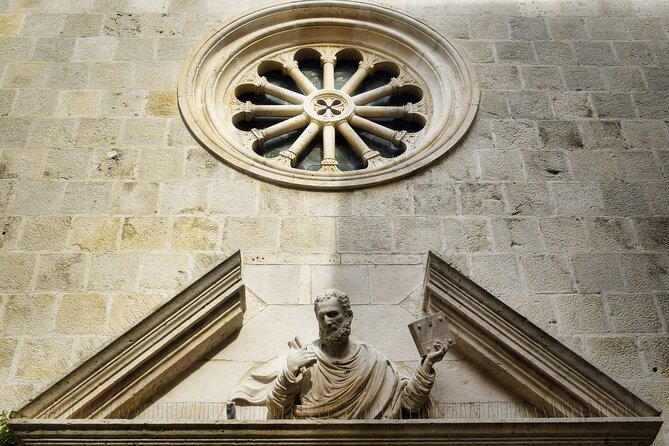
The headline here is time travel, but it’s time travel with footsteps. You’re not just hearing big claims about history; you’re connecting the Roman settlement of Tragurium with the medieval-era city that shaped Trogir’s old core.
As you walk, the big idea is this: the stones aren’t random. Streets, landmarks, and the way parts of the town are laid out all grew in layers. A guided approach helps you notice what’s Roman versus what reflects later building—so you can stand in the same place and recognize the different chapters.
This is also a good choice if your travel style is practical. Instead of “museum hours,” you get meaning built through movement: stop, look, listen, then keep walking and confirm it with what you see.
St. Lawrence Cathedral and the city square stop you’ll remember
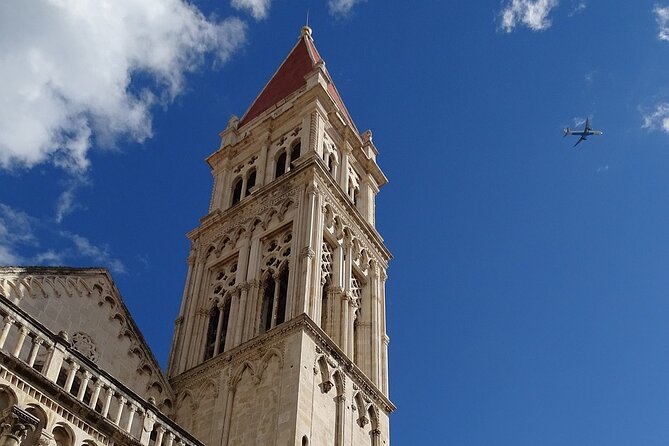
One of the main highlights is the Cathedral of St. Lawrence. Even if you only see it from key angles during the walk, a guided explanation gives you a framework for what you’re looking at and why it mattered. You’ll also move through the city square, where the tour shifts from architecture to atmosphere.
City squares are where a historic town reveals its everyday rhythm—places to meet, pause, and watch life go by. With a guide, you’re less likely to treat these spots as “just a photo stop.” Instead, you’ll understand what kinds of life the square served and why it still feels like a center.
If you love landmarks but hate long waits, this stop is a good compromise. It’s included in a structured walk, so you’re not left searching around the old town trying to pick the “right” cathedral viewpoints.
The promenade: old stones meet sea-air in everyday Trogir
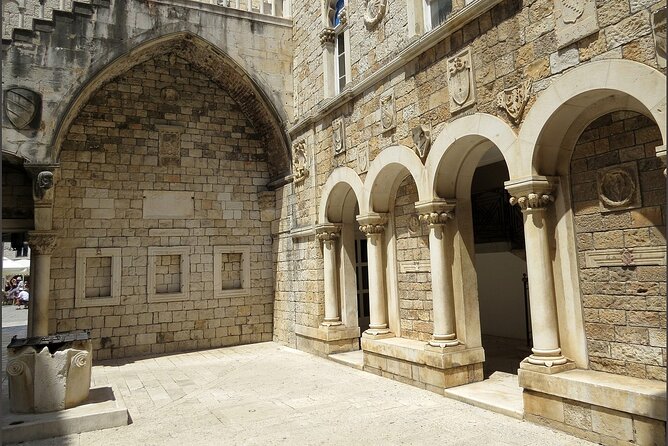
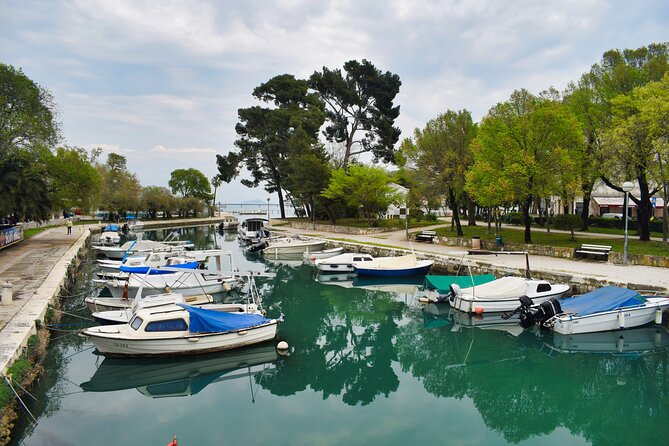
After you’ve taken in the core landmarks, you’ll also walk along the promenade. This is where the tour broadens from “historic buildings” to a more lived-in sense of Trogir—how the old town sits alongside modern daily life.
The promenade section is valuable because it changes your pace and your perspective. From there, you can better sense the town’s setting in Dalmatia and how the coast shapes the feel of the city.
It’s also a great moment for photos, but more importantly, it’s a chance to reset mentally. After you’ve been hearing about centuries, a quieter stretch along the water makes the story stick without wearing you out.
Market stories and hidden corners worth slowing down for
One of the more fun parts is the story tied to a local market. You’ll hear a cool narrative about what the market represents and how people live in and around Trogir. Even if you’re not buying anything, this kind of context helps you interpret what you’re seeing if you circle back later.
The tour also nudges you toward hidden corners—small lanes and less-obvious spots where the old town feels more intimate. This is one of those “guided wandering” advantages: you get shown where to look, then you can repeat the experience on your own once you’re oriented.
And you’ll have time to ask questions at the end. That matters because historic towns are full of little mysteries: why a shape is the way it is, what a specific detail means, or how Croatia’s regions connect to places like Trogir. When you’ve got a live guide for it, you’ll get clearer answers than you would from a quick photo-and-go routine.



How long it really takes (and who should choose it)
The listing gives a broad duration range of 1–4 hours, but the walk through the old core is about 60 minutes. In practice, plan for a comfortable outing rather than a rushed sprint—there are stops, explanations, and time for questions.
This tour is a good fit if you’re:
- In Trogir for a partial day and want the highlights
- A first-time visitor who wants context fast
- Interested in history, but prefer walking explanations over long lectures
It’s not suitable for wheelchair users, so if mobility is a concern, you’ll want to consider other options that match your pace and surface needs.
Practical tip: wear shoes you can walk in for an hour plus breaks. Old towns are uneven, and even a “short” tour can feel longer if your feet hurt before the best parts.
Price and value: why $23 is more than a bargain
At about $23 per person, this tour sits in the affordable category for guided sightseeing in Croatia. The value isn’t just the price; it’s what you get for the time: a live English guide, a structured route through major sights, and a chance to ask questions at the end.
What’s included is substantial for the length:
- Local guided explanations and storytelling
- Time-focused walking through the old town remains
- A promenade component
- Context for local way of life, not just monuments
- A guided journey through Roman and medieval eras
What’s not included is also simple: food and drinks are on you. That can actually be good, because you can pick what fits your appetite and budget rather than being locked into a group plan. If you want to turn this into a longer day, you can easily add lunch after the tour using what you learned about the market and local life.
I also like that the tour includes the “ask anything” finish. That’s where your money often turns into real travel value. Questions get answered right when they pop into your mind, instead of waiting until you’re back in your hotel with no one to ask.
Should you book the Trogir Old Town Walking Tour?
If you want an efficient, story-driven introduction to Trogir’s old core, I’d book it. The mix of Cathedral of St. Lawrence, the city square, Roman-to-medieval context, and the promenade makes it more than a quick highlight reel. Add in Ivan’s style—enthusiastic, approachable, and willing to encourage questions—and you’ve got a guide-led experience that helps you understand the place, not just pass through it.
Skip it only if you strongly dislike walking for an hour on uneven historic streets, or if you’re expecting a food-focused tour with tastings built in. Otherwise, this is a great way to get oriented fast and enjoy the old town with your eyes turned the right direction.
FAQ
Where is the meeting point for the tour?
The meeting point is the North Gate of Trogir Old Town. Look for the blue umbrella.
How long is the Trogir Old Town walking tour?
The tour duration is listed as 1–4 hours, with about 60 minutes of walking through the old town.
Is the tour available in English?
Yes. The live tour guide offers English.
What will I see during the walk?
You’ll see the Cathedral of St. Lawrence, a city square, parts of the old town remains, and you’ll also walk along the promenade.
Is food or drinks included?
No. Food and drinks are not included.
Does the tour focus on history?
Yes. You’ll explore about 2300 years of Trogir, from the Roman settlement of Tragurium to the medieval city.
Who should avoid this tour?
It is not suitable for wheelchair users.
Can I change my plans if I booked?
You can cancel up to 24 hours in advance for a full refund, and you can reserve and pay later.