REVIEW · SPLIT
Private Walking Tour in Split Old Town (ENG, FRA, ITA, ESP)
Book on Viator →Operated by Sanja - Tour Guide in Split · Bookable on Viator
Split’s Old Town rewards you fast.
This private walk gives you a big-picture overview of the city’s Roman core and later layers of Venice, France, and the Austro-Hungarian world, explained by Sanja. Two things I really like: you get a licensed local guide with a Master’s degree, and the route is paced to keep you oriented without turning it into a marathon of stone.
One thing to weigh: the best interior stop comes with an extra entrance fee. The Diocletian Palace Substructures visit costs €10 per person and isn’t included, so budget for that if you want inside access.
Logistics are simple: it starts at 9:00 am at Obala Hrvatskog narodnog preporoda 22, returns there, and lasts about 1 hour 45 minutes. The tour uses a mobile ticket, it’s private for your group (up to 15 people), and it runs in English based on the tour details.
In This Review
- Key Points You’ll Actually Care About
- Where the Tour Starts: Riva Promenade Views and a Clean Mental Map
- Walking Diocletian’s Palace Properly (Not Just Peeking)
- Substructures Interior Visit: The Best-Preserved Part Worth the €10
- Saint Domnius and the Emperor’s Burial Link
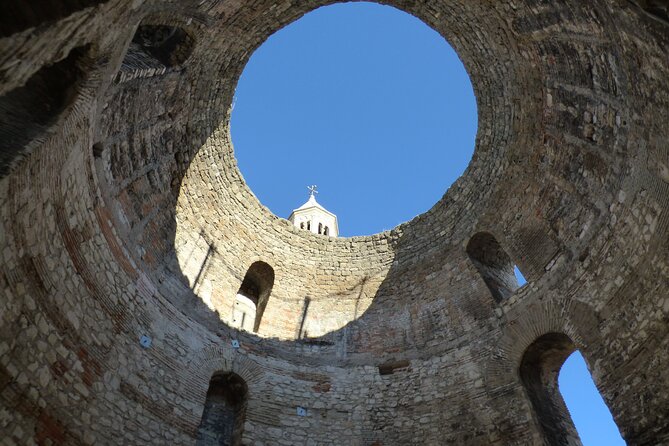
- Triklinij and Vestibulum: Dining Hall and the Acoustics Moment
- Peristyle to the Sphinx View: The Palace’s Main Square Energy
- Roman God Stops: Jupiter Temple, Golden Gate, and Reading Fortifications
- Icons of Split’s Old Town: Grgur Ninski to the Medieval Squares
- Fish Market Timing and Marmontova Ulica’s French Rule
- Prokurative and Final Stops: Austro-Hungarian Split in One Square
- Price and Value for a Private Group Up to 15
- Who This Tour Fits Best (and Who Might Want Another Style)
- Should You Book This Split Old Town Tour?
- FAQ
- What is the duration of the private walking tour?
- How much does the tour cost?
- Where do we meet, and where does the tour end?
- What time does the tour start?
- Is this tour private or shared?
- What’s included in the price?
- Are any entrance fees required?
- Is the tour offered in English?
- Do I need a physical ticket?
- What if the weather is bad?
- What is the cancellation policy?
Key Points You’ll Actually Care About
Private pace with a Master’s-level guide so you understand what you’re seeing, not just where it is.
Diocletian’s Palace mapped end-to-end, with free stops plus one high-value interior add-on.
Hands-on architecture interpretation, from substructures to the Peristyle and Mausoleum views.
Sound and story in one place, including the possibility of traditional Dalmatian singing in summer.
Old Town layers in one route, Roman, medieval Venetian influence, then French and Austro-Hungarian marks.
Easy logistics near the center, meeting at Riva/Obala area and ending back where you started.
Where the Tour Starts: Riva Promenade Views and a Clean Mental Map
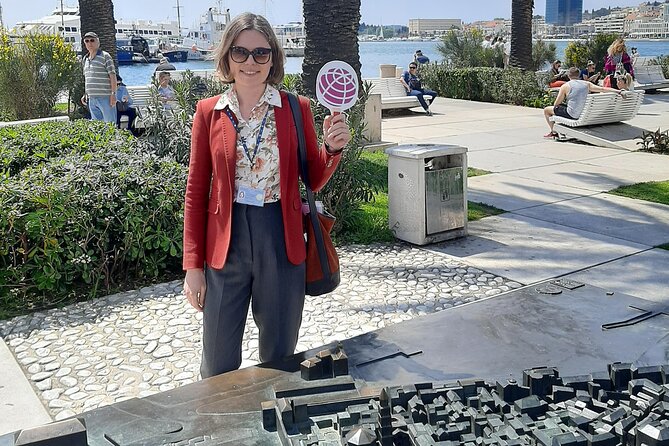
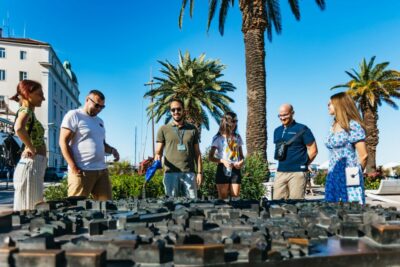
You begin on the Riva promenade area, which is exactly where you want to be if you’re trying to understand Split’s “jigsaw puzzle” layout. From here, you get a wide view of the Roman palace mass, the medieval town around it, and the direction of Marjan hill/park. It’s the kind of first glance that helps you stop feeling lost within five minutes.
This also matters because your tour ends back at the same meeting point. When a walk loops neatly like that, it’s easier to plan a drink, lunch, or a second wander right after—without backtracking across the Old Town streets in a confused fog.
You’ll spend only a short time here, but that short time is the difference between seeing monuments as disconnected photos and understanding them as a system.
You can also read our reviews of more walking tours in Split

Walking Diocletian’s Palace Properly (Not Just Peeking)
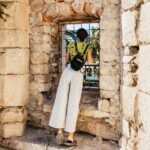
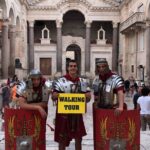
The main part of your tour is Diocletian’s Palace, an area of about 9 acres. You’ll walk through it in detail and see how a Roman structure is still used today—because in Split, old isn’t a museum word. The palace is living space, which changes how you read everything around you.
Expect a guided path that focuses on function and design: where power sat, how spaces were organized, and why certain rooms matter more than others. The tour doesn’t just point; it explains what the architecture was built to do.
This is also a smart way to visit because Diocletian’s Palace can be visually overwhelming. When you’re dropped inside without context, you tend to stick to the obvious corridors. With a private guide, you get a route that helps you connect the dots.
Substructures Interior Visit: The Best-Preserved Part Worth the €10
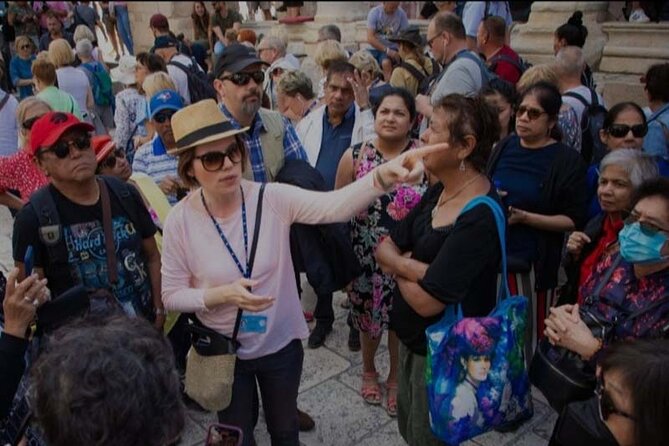
The single most important “paid” stop is the Diocletian Palace Substructures internal visit. These are described as the best preserved part of the palace, and they’re also the most valuable for understanding how the palace was constructed and what it was meant for.
This is where you should slow down mentally. Substructures are often harder to “feel” from the outside, but inside you can understand the logic of the building—its engineering, its layout, and its purpose within the imperial complex. If you only did free sights, you’d miss the portion that turns Roman architecture from vague impressive to actually understandable.
Cost note: this entrance fee is €10.00 per person and not included. If you’re thinking about value, this is the one add-on that most directly matches the tour’s promise of “understanding,” not just sightseeing.
Saint Domnius and the Emperor’s Burial Link
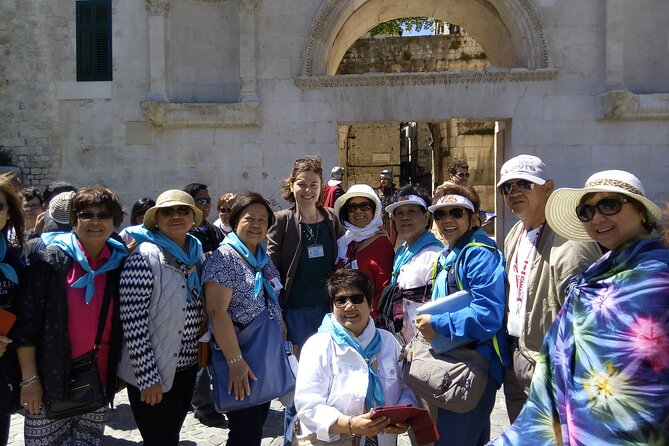
After the substructures, you’ll see the Cathedral of Saint Domnius from the outside. This stop is short, but it’s powerful because it’s both a Roman Catholic cathedral and an emperor’s burial site, connected to the mausoleum idea.
Even from outside, the story matters: you’re standing near a point where a political center became a religious one. That transformation is a big thread across the whole tour—Roman power, repurposed over time, with later culture layered on top.
If you like symbolism and continuity, this is one of those quick stops that lands.
Triklinij and Vestibulum: Dining Hall and the Acoustics Moment
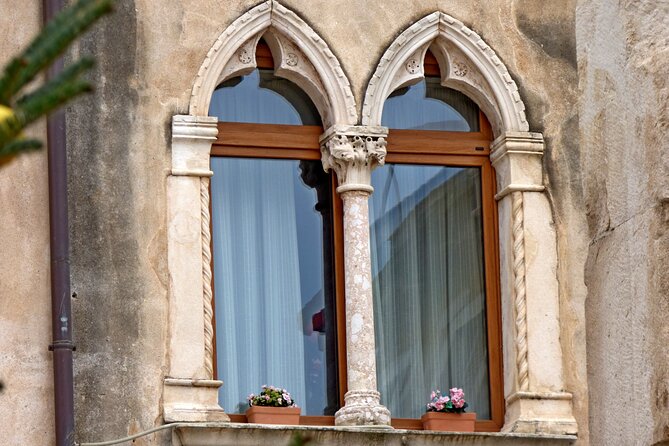
Two more palace-linked stops sit close together and help you understand daily imperial life:
- Triklinij: the former emperor’s apartment dining hall complex area. Think meals, hosting, status, and the social theater of power.
- Vestibulum of Diocletian’s Palace: the emperor’s chambers area where acoustics can play a role. During summer months, it’s possible to listen to traditional Dalmatian singing here because the space offers great acoustics.
That singing possibility is the kind of detail that makes a tour feel current rather than like a worksheet. Even if it doesn’t happen during your timing, the guide’s point about acoustics gives you a new way to notice the room.
These stops are brief, but they turn the palace from “cool ruins” into “designed human spaces.”
You can also read our reviews of more private tours in Split





Peristyle to the Sphinx View: The Palace’s Main Square Energy
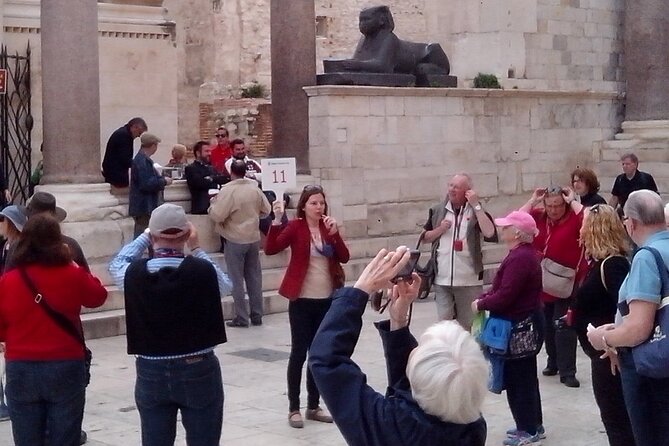
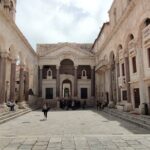
Next you visit the Peristyle of Diocletian’s Palace, the imperial square. This is one of the places where you can genuinely sense the scale of the palace and why it worked as a center of authority.
What I like here is the combination of views and objects:
- You admire the view toward the emperor’s mausoleum, which today appears as the Cathedral with belltower.
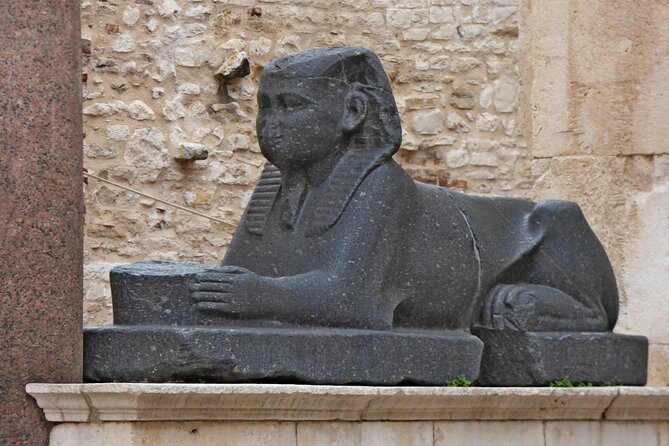
- You’ll also see an original Egyptian sphinx.
That mix of local Roman space and imported symbolism is a reminder that the empire was connected and cosmopolitan. It also makes the photo stop more interesting because it’s not just a pretty courtyard; it’s a deliberate visual language.
Roman God Stops: Jupiter Temple, Golden Gate, and Reading Fortifications

Then you’ll shift into classic Roman “you’re walking through the map” moments:
- Temple of Jupiter (external): you’ll see where the main Roman god Jupiter was worshipped.
- Golden Gate: you’ll pass through the main gate of the Roman palace and get a full view of the fortifications from the outside.
The Golden Gate segment is especially helpful for orientation. It helps you understand where the walls sit relative to the Old Town streets, so later when you wander on your own, the shapes make more sense.
If your brain likes structure, these are satisfying stops.
Icons of Split’s Old Town: Grgur Ninski to the Medieval Squares
Split has plenty of famous landmarks, but the best part of this tour is how it uses icons to explain shifts in time.
You’ll see:
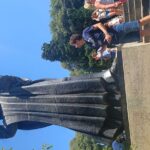
- Grgur Ninski Statue: the iconic giant figure that’s become a symbol of Split.
- Narodni Trg: the main square of medieval Split, and you’ll discuss its importance.
- Old Town Hall on Pjaca square: from the Republic of Venice era.
- Fruit’s Square (Trg Brace Radic): including a gigantic tower that was once part of medieval fortifications, plus stories about noble families tied to that period.
- Marko Marulic Sculpture: the statue of a well-known writer on Fruit square.
What makes these stops valuable is the way they’re connected. You don’t just hear names; you understand what they represent socially—trade, governance, defense, and identity.
Fish Market Timing and Marmontova Ulica’s French Rule
Two later route sections keep the pace moving but still add major context.
First, Split Fish Market: the plan is to pass by or visit it, but it’s noted as open only in the morning. If your visit is in the morning (it starts at 9:00 am), you may be able to see the market activity. If not, you’ll still get the historical location context, since the fish market has been at the same location since the 19th century.
Then you walk along Marmontova Ulica, tied to the time Split was under French rule in the 19th century. Even if you don’t think about empires when you travel, this kind of street-level marker helps you see why buildings and layouts feel different as the centuries change.
Prokurative and Final Stops: Austro-Hungarian Split in One Square
You finish up by visiting Prokurative, a famous square from the time Split was part of the Austrian-Hungarian monarchy in the 19th century. This stop rounds out the timeline in a practical way: you see how political control shows up not just in monuments, but in public spaces.
After that, the tour ends back at the same starting point, so you can continue exploring the Old Town without needing to figure out transport or a complicated return plan.
Price and Value for a Private Group Up to 15
At $156.19 per group (up to 15 people), the big value is the format: a true private walking tour. For a small group, that price can work out like a great deal compared with per-person ticket pricing—especially because the majority of stops have free entry.
What you should budget for: the Diocletian Palace Substructures entrance fee of €10 per person. That cost is separate, but it’s also the part that’s most tied to “understanding construction and architecture.” If you’re the kind of visitor who wants to know how things were built—not just what they look like—that interior access earns its place.
Also, the guide being licensed and holding a Master’s degree isn’t a marketing decoration. On a route like this, the difference between average narration and strong interpretation shows up fast.
One more small note: you’re walking around mostly outdoor spaces and short internal exposure only where the tour takes you. Comfortable shoes matter more than you’d think, since you’ll be in “stop, look up, listen, walk again” mode for about 1 hour 45 minutes.
Who This Tour Fits Best (and Who Might Want Another Style)
This tour is a strong match if you want:
- A quick start that turns Split into something you can navigate
- A guided explanation of Roman architecture and later layers
- A private format where the guide can adjust pace for your group
- English narration with a licensed local guide (Sanja)
It may be less ideal if you want a long, museum-style visit with lots of time for wandering without direction. This is structured, and it’s designed to cover key points efficiently.
And because the experience is described as requiring good weather, you’ll want to plan with flexible expectations if rain or storms roll in.
Should You Book This Split Old Town Tour?
Yes—if your goal is to understand Split quickly. This is one of those tours where the value comes from sequence: Roman palace spaces, then cathedral symbolism, then medieval squares, then 19th-century power shifts. You leave with a mental map, not just a list of sights.
Book it particularly if:
- You like architecture and want function explained, not just names
- You’re visiting for a short time and need orientation
- You’re traveling with a group that benefits from a private guide
Consider skipping or downsizing the paid portion only if you’re strictly trying to minimize entrances. But if you do one interior element, make it the Substructures.
FAQ
What is the duration of the private walking tour?
The tour lasts about 1 hour 45 minutes.
How much does the tour cost?
It costs $156.19 per group, up to 15 people.
Where do we meet, and where does the tour end?
You meet at Obala Hrvatskog narodnog preporoda 22, 21000 Split, Croatia, and the tour ends back at the meeting point.
What time does the tour start?
The start time listed is 9:00 am.
Is this tour private or shared?
It’s private. Only your group participates.
What’s included in the price?
A professional licensed local guide with a Master’s degree, a private tour format, and commission/tax are included.
Are any entrance fees required?
Most stops do not require admission. The Diocletian Palace Substructures has an entrance fee of €10.00 per person, which is not included.
Is the tour offered in English?
The tour details specify English.
Do I need a physical ticket?
You’ll receive a mobile ticket.
What if the weather is bad?
The experience requires good weather. If it’s canceled due to poor weather, you’ll be offered a different date or a full refund.
What is the cancellation policy?
This experience is non-refundable and cannot be changed for any reason.