REVIEW · SPLIT
Split: Diocletian’s Palace Private walking tour
Book on GetYourGuide →Operated by Split Guide · Bookable on GetYourGuide
A Roman palace with daily life running through it. Diocletian’s Palace still feels like a living neighborhood, not a closed museum, and that alone makes this tour worth your time. I especially like the way the Peristyle and Diocletian’s Jupiter connection are explained, and I also love how you walk from gate to cathedral to private entry points without getting lost in the stones. One thing to keep in mind: some stops can be affected by events or church services, so the route may shift.
If you want history with a personal pace, this is built for that. The tour is private in practice, with a maximum group size of 10, so you get more back-and-forth instead of hearing the guide talk at you from afar. The main drawback is that parts of the palace are only partly wheelchair accessible, though the tour can be adapted if you let the operator know ahead of time.
In This Review
- Key things you’ll notice on this walk
- Starting at the bronze model near Riva promenade
- Walking the palace walls still used by locals
- The Peristyle: Jupiter’s son in the palace core
- Split Cathedral: when a pagan mausoleum becomes a church
- The Vestibule: the grand entrance to Diocletian’s private chambers
- North Gate and Porta Aurea: the most important city gate
- Inside the former guard corridor: Church of St. Martin
- How private pacing helps you understand the layout
- What you need to know before you go
- Price and value: what $135 per person buys you
- Who should book this tour
- Should you book Split’s Diocletian’s Palace private tour?
- FAQ
- Where does the tour start?
- What is the group size limit?
- How much does it cost?
- What are the main highlights on the tour?
- Does the tour end back at the start location?
- What languages are available?
- Can all sights always be visited?
- Is the site wheelchair accessible?
- Can I reserve and pay later?
Key things you’ll notice on this walk
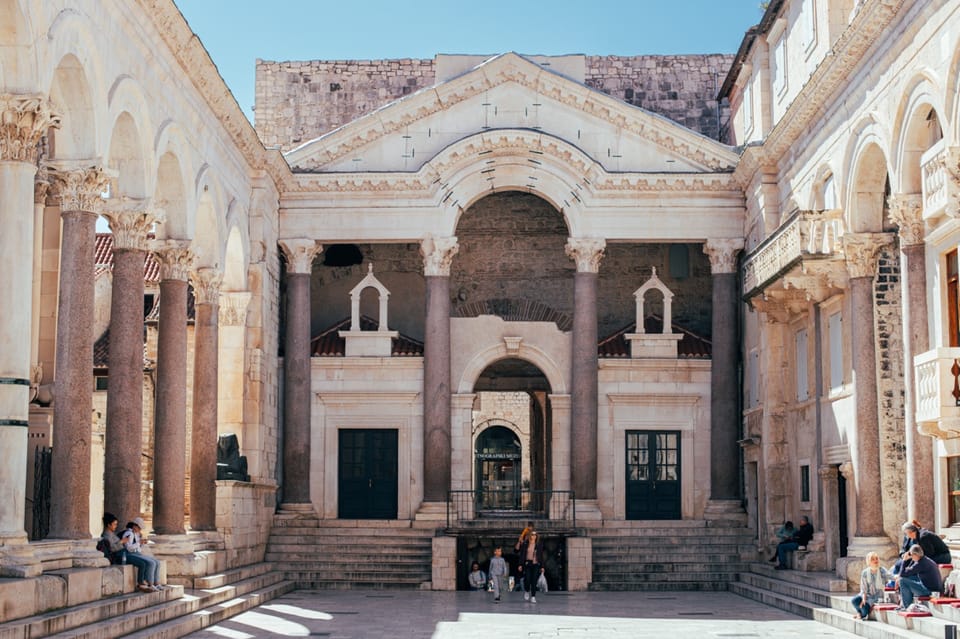
- Peristyle: where Diocletian was worshipped as Jupiter’s son
- Split Cathedral: once a pagan mausoleum, later transformed into a cathedral
- Vestibule: the grand entrance to Diocletian’s private chambers
- North Gate (Golden Gate / Porta Aurea): the most important Roman city entrance
- Church of St. Martin: the small church tucked inside the former guard corridor
Starting at the bronze model near Riva promenade
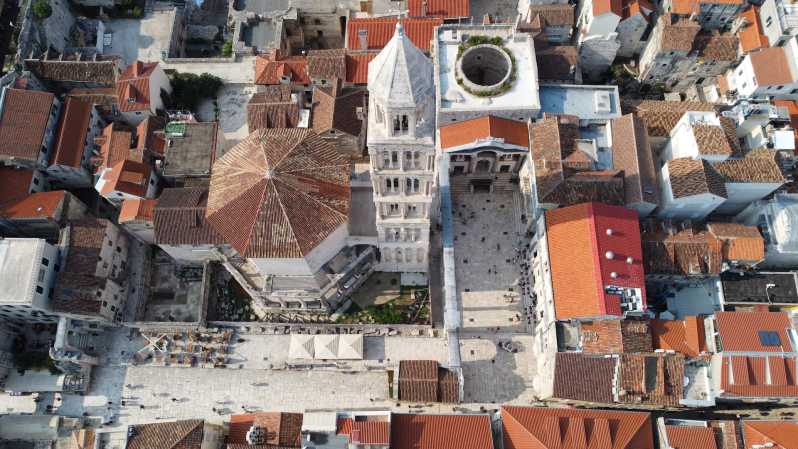
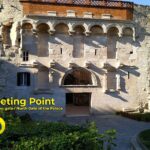
You begin at the eastern end of the promenade Riva, by the bronze model of the city of Split. It’s a smart start point because it helps you orient yourself before you step into the maze of palace walls. You’re also not fighting for attention in a giant crowd, since this is designed as a small-group private walking tour.
From there, you’ll move through the palace as a real place with real people around it. That matters because Diocletian’s Palace isn’t just preserved architecture—it’s still lived in by locals. So while you’re looking at Roman-era spaces, you’re also watching how everyday Split life overlaps with ancient walls.
And since the tour ends back at the same meeting point, you don’t finish thinking about logistics. You finish with your bearings better than when you started, which is a big deal in a city center that can feel confusing fast.
You can also read our reviews of more walking tours in Split

Walking the palace walls still used by locals
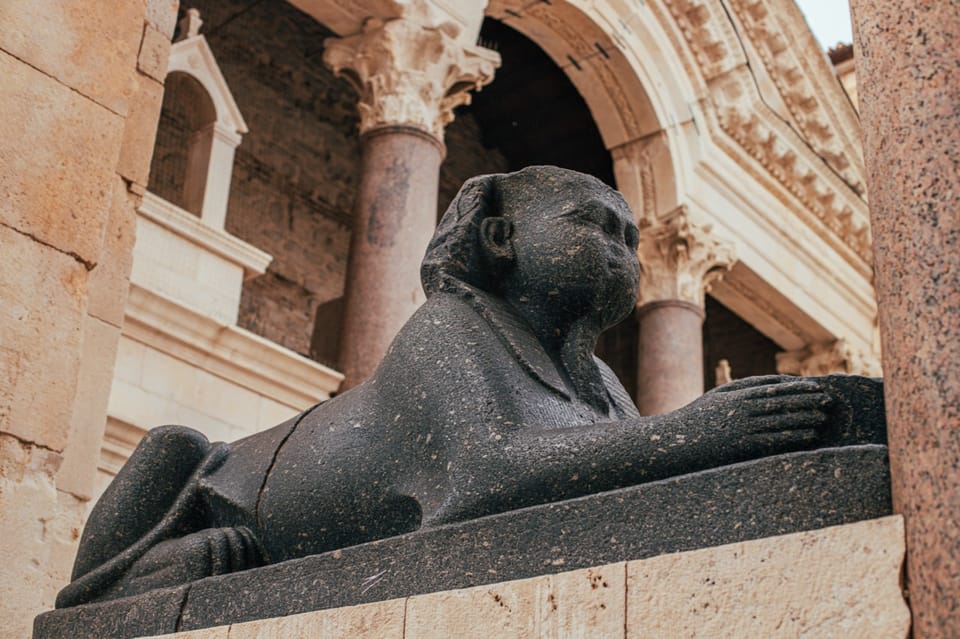
This is one of those rare tours where the setting does work for you. A palace built and inhabited by Roman Emperor Diocletian is already a standout sight, but the fact that the structure is still home to people of Split makes it more than a photo stop. You’ll feel the contrast between what the spaces were for and what they’re used for now.
I like that this framing is part of the tour from the start. You’re not treated like an outside observer in a closed exhibit; you’re learning how the palace connects to present-day streets. That gives the architecture a human scale.
It also changes how you experience the place. Instead of only looking upward at stone, you’re looking around, noticing doorways, entries, and thresholds. Those details become easier to interpret once you know what they were meant to do in Diocletian’s time.
The Peristyle: Jupiter’s son in the palace core
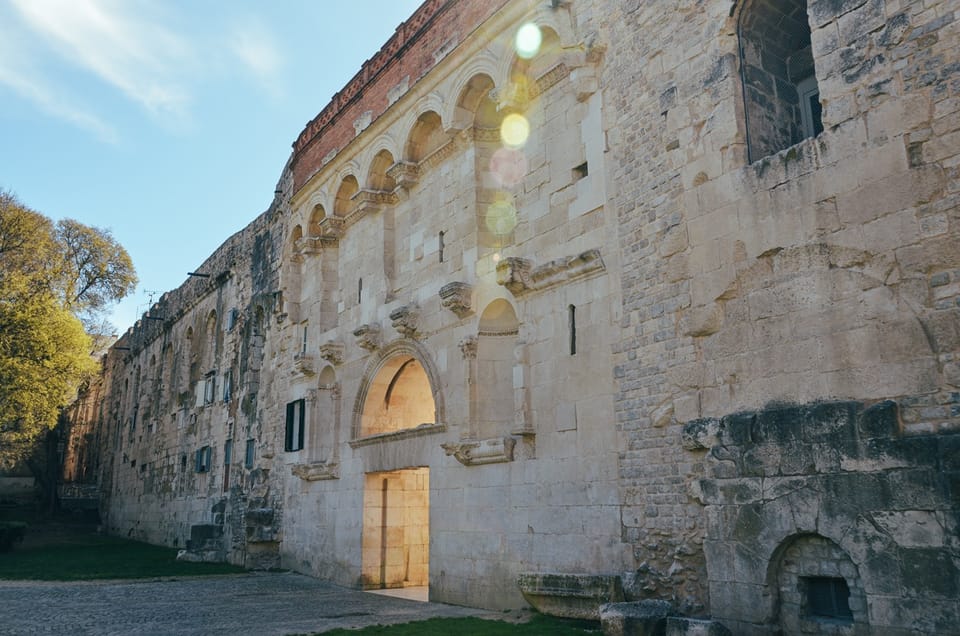
The Peristyle is the kind of stop that makes the tour feel like time travel. This was an important meeting place during Diocletian’s era, and it’s specifically where Diocletian was worshipped as Jupiter’s son. In other words, this wasn’t only a decorative courtyard. It was a stage for belief and power.
As you stand there, you get a clearer sense of how a palace could function like a political and spiritual center at the same time. The guide’s job here is to help you connect the physical space to what was happening inside it. That connection is what turns a pretty courtyard into something you remember.
If you’re the type who likes your history tied to real places, this is a highlight. You’ll leave with a better understanding of why the Peristyle matters, not just that it exists.
Split Cathedral: when a pagan mausoleum becomes a church
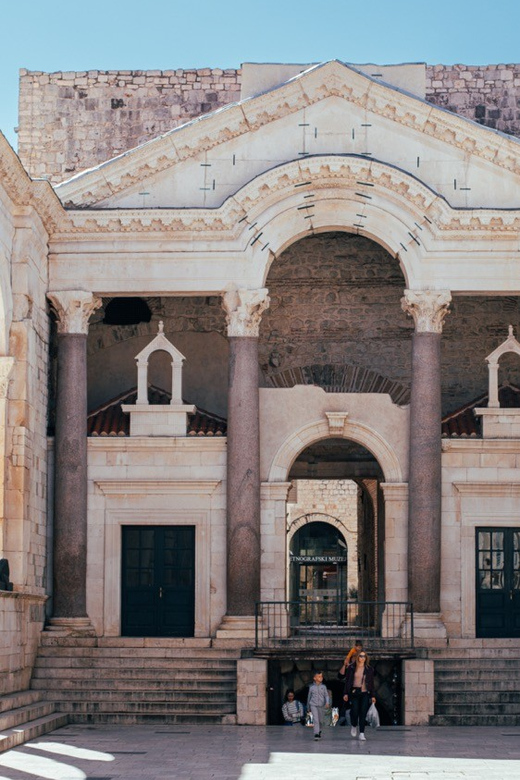
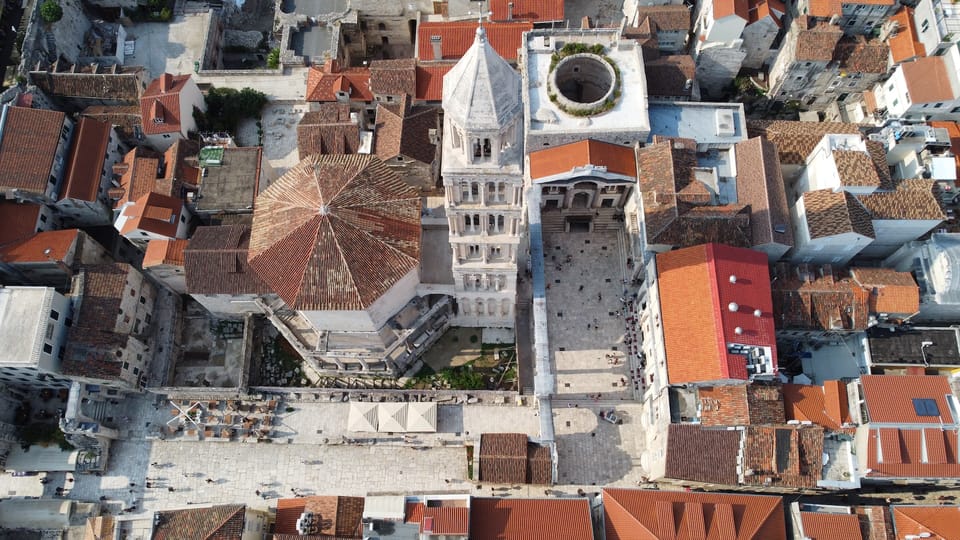
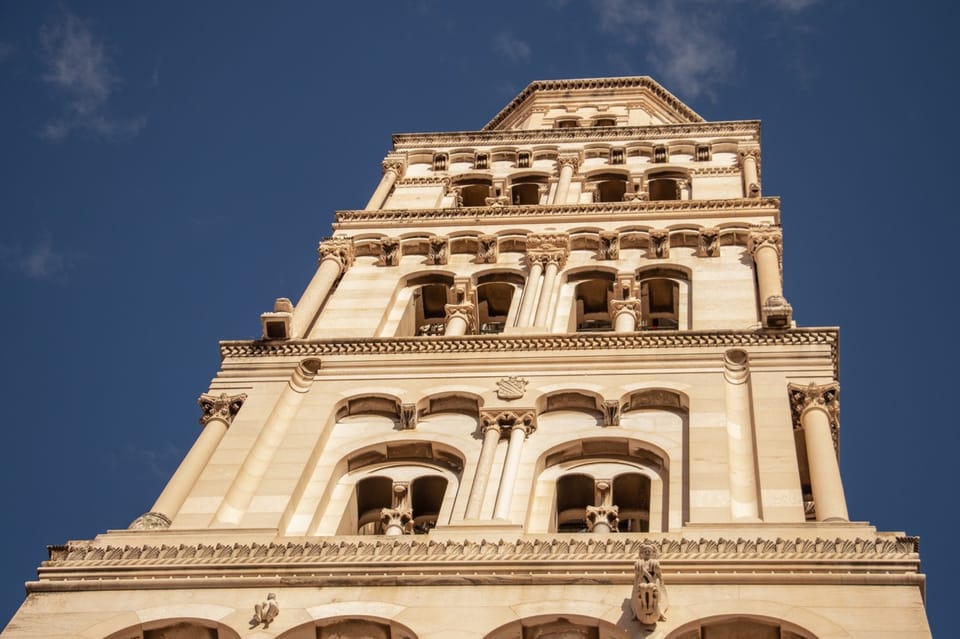
Next comes one of the most important transformations in the complex: the story of Split Cathedral. This cathedral started as the mausoleum of Emperor Diocletian. Later, with Christianization, the remains vanished, and the structure became a cathedral.
That shift is dramatic on paper, but it lands differently when you’re standing in the space. You can feel the layers: an imperial resting place that eventually became a Christian religious building. The tour approach helps you notice what that change means, instead of treating the cathedral as a separate attraction you stumble onto.
The cathedral stop is valuable because it explains the logic behind the building’s identity. You’re not just admiring exterior features. You’re learning why the cathedral looks like it does, given its origin and its later role.
The Vestibule: the grand entrance to Diocletian’s private chambers
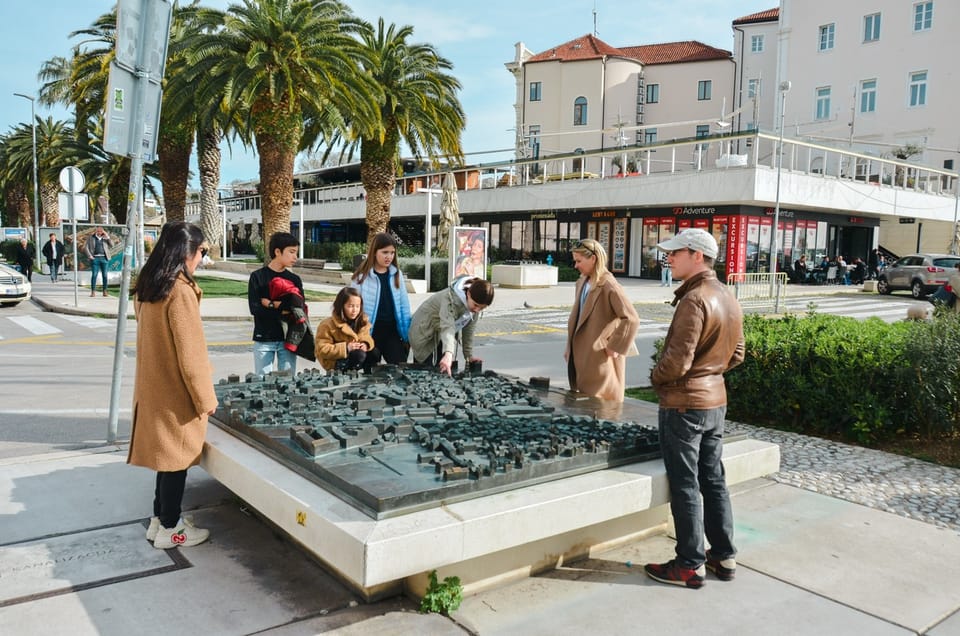
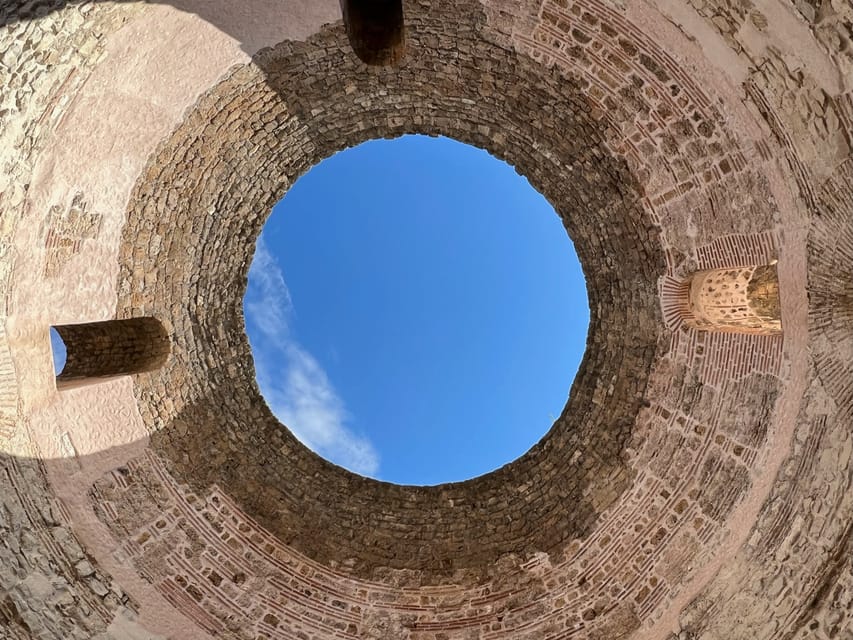
Now you get to the parts of the palace that feel more intimate and controlled: the Vestibule, described as the grand entrance to Diocletian’s private chambers. This is the gateway designed to welcome dignitaries from all over the world.
That detail is the key. It’s not just an architectural feature—it’s a social filter. The Vestibule represents how access to the emperor worked, and that makes the space feel purposeful as you walk through it.
This stop also helps the tour avoid becoming only a sequence of big landmarks. You’re moving from the public or semi-public spaces into areas tied to private authority and controlled entry. That makes the tour feel like a guided walk through roles and ranks, not only through stone.
You can also read our reviews of more private tours in Split





North Gate and Porta Aurea: the most important city gate
The North Gate is next, and it’s treated as the most important city gate during the Roman era. You’ll also hear it referred to as the Golden Gate or Porta Aurea. The guide helps you understand why a gate like this would matter so much—not just as a passage, but as a statement of civic importance.
I like that the tour frames the gate with both architectural and cultural significance. That prevents the common problem where you see a gate, take a photo, and move on without understanding what made it special.
As you focus on the gate’s identity as Porta Aurea, you’ll likely start noticing how gates function in a palace setting: where people enter, how visibility works, and how the city organizes movement. Even if you’re not a stone-nerd, the explanation makes the space feel readable.
Inside the former guard corridor: Church of St. Martin
One of my favorite kinds of tour stops is the small one with the best story, and this is exactly that. Inside the former guard corridor stands the city’s smallest church, the Church of St. Martin.
This is a useful contrast point after the big, symbolic importance of North Gate. You go from a major threshold that mattered in the Roman era to a tucked-in sacred space connected to the gate area. The result feels like you’re seeing the palace as it actually lived day-to-day: security, movement, worship.
It’s also a reminder that palace architecture can hide surprises. This stop gives you a different angle on the same complex, without requiring you to hunt for it on your own.
How private pacing helps you understand the layout
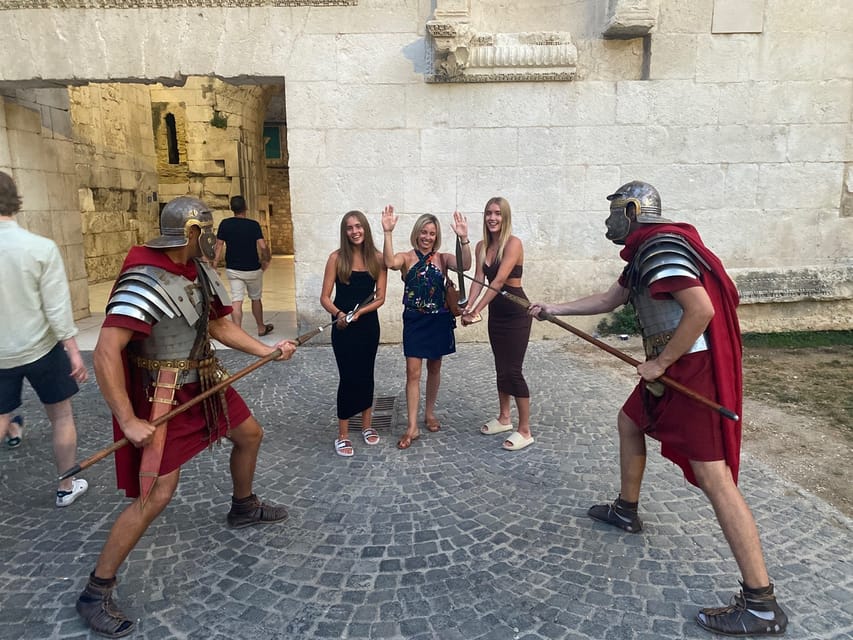
In a place like Split, it’s easy to focus on isolated sights and miss the “map in your head.” This tour design is meant to prevent that. With a maximum group of 10, you can actually hear explanations and ask follow-ups without shouting over strangers.
The feedback people share about the experience often points to the same outcome: getting your bearings fast and seeing key highlights in a logical order. That’s exactly what you want when you only have a limited window in the city center.
It also helps that the tour connects each stop to the next. Peristyle leads into imperial-religious meaning. Cathedral adds the big religious shift. Vestibule clarifies private access. North Gate and Porta Aurea ground everything in movement and city importance. Then St. Martin adds a final human-sized surprise.
If you’re someone who likes to return to a site later with more context, this is the kind of tour that sets you up for that.
What you need to know before you go
A practical note: some sights may not be visited due to events or church services. When that happens, the program is slightly changed. So if this is one of your only days in Split, I’d plan to be flexible and treat the tour as a guided overview with smart substitutions.
Also, the site is only partially wheelchair accessible. If you need adaptations, tell the operator in advance so the tour can be adjusted to your needs.
The tour runs in multiple languages, including French, German, and English. If you’re traveling with someone who prefers a specific language, it’s worth confirming when you book.
Price and value: what $135 per person buys you
At $135 per person, this is not the cheapest way to see Diocletian’s Palace. But it is priced like what you’re actually buying: a guided, private walking tour focused on specific high-value stops.
Here’s where the value comes from:
- Smaller group size (max 10) means you get more time with the guide.
- Targeted stops cover the palace core and the biggest “identity” stories: Jupiter worship, the cathedral transformation, private entry, and the main gate.
- Real-world navigation matters. The meeting point is clear, and the tour ends back where you started, so you aren’t trying to self-orient through a crowded city center.
If you enjoy learning as you walk—especially when the architecture has multiple layers and names—this price can feel reasonable fast. If you’re the type who prefers browsing alone with a guidebook, you might feel you could do it cheaper on your own. But if you want context and order, the guided structure is the point.
Who should book this tour
This tour fits best if:
- You’re visiting Split for the first time and want a fast, accurate sense of the palace layout.
- You like your Roman history explained in plain language tied to real spaces.
- You want a small-group pace, not a long day spent trying to hear a guide over other people.
It also works well if you’re the kind of person who can’t resist a story behind a building. The Peristyle’s Jupiter-s son angle, the cathedral’s mausoleum-to-church path, and Porta Aurea’s importance all give you “why it matters” answers, not only dates and labels.
If you’re mostly in Split for beaches or nightlife and you only want quick photos, you might not get full value. But if you want to leave with understanding, this tour is set up for that.
Should you book Split’s Diocletian’s Palace private tour?
I’d book it if you want your time in Split to feel efficient and meaningful. The tour hits the palace highlights that change how you read the complex: worship space (Peristyle), the religious transformation (Split Cathedral), private-access storytelling (Vestibule), and city power through the North Gate/Porta Aurea. Then it closes with the Church of St. Martin inside the former guard corridor—small scale, memorable context.
I’d think twice only if you hate guided walking, or if you know your schedule can’t handle possible sight changes due to events or church services. Otherwise, this is a practical way to see a major monument without turning it into a confusing self-guided scavenger hunt.
FAQ
Where does the tour start?
The tour starts at the bronze model of the city of Split at the eastern end of the promenade Riva.
What is the group size limit?
The tour is designed for a group of maximum 10 participants.
How much does it cost?
It costs $135 per person.
What are the main highlights on the tour?
The tour focuses on the Peristyle, Split Cathedral, the Vestibule, the North Gate (Golden Gate/Porta Aurea), and the Church of St. Martin inside the former guard corridor.
Does the tour end back at the start location?
Yes, the activity ends back at the meeting point.
What languages are available?
The tour is available in French, German, and English.
Can all sights always be visited?
Some sights cannot be visited due to events or church services, and the program may be slightly changed in that case.
Is the site wheelchair accessible?
The site is partially not wheelchair accessible, but the tour can be adapted to special needs if you inform the operator in advance.
Can I reserve and pay later?
Yes, there is a reserve & pay later option, so you can book your spot and pay nothing today.