REVIEW · SPLIT
Split Palace & Old Town -Private walking tour- Entrance included
Book on Viator →Operated by Split Guide · Bookable on Viator
Roman walls still run the show in Split. This private walking tour links Diocletian’s Palace with the Old Town so you can read the city like a map, not a mystery. I like that the most important palace stops come with entrance fees included, so you spend your time looking instead of buying.
What makes it feel truly worth it is the human factor. Guides like Dana and Jana bring the place to life in clear, step-by-step chunks, and the tour can be adapted to your needs in advance.
One consideration: if there’s a church service or an event, you may not enter every interior listed, and the plan can shift slightly.
In This Review
- Key highlights you’ll actually feel during the walk
- Split Palace & Old Town: why this 2.5-hour private walk works
- Starting at Split’s Riva promenade, with context before the stones
- Diocletian’s Palace interiors: included entry where it matters
- St. Domnius Cathedral (Diocletian’s mausoleum turned cathedral)
- Temple of Jupiter: the baptistery with an architectural influence
- The palace basement and cellars: scale you can finally picture
- From sacred space to private access: Peristyle and Vestibulum
- Golden Gate and the gates that led somewhere
- Walking out into Old Split: squares, markets, and the French-era street
- Pjaca (People’s Square) and Venetian-era influence
- Voćni trg and Marko Marulić
- Split Fish Market and the sulfur-bath neighbor
- Marmontova ulica: a Napoleon-era shopping street
- Ending at Procurative: a Venice-style square to rest in
- Guide impact: Dana and Jana, plus how private guiding changes your day
- Price and value: what $203.95 covers (and why that matters)
- Practical tips for a smooth tour day
- Should you book Split Palace & Old Town?
- FAQ
- FAQ
- How long is the Split Palace & Old Town private walking tour?
- Is this tour private or will I share it with others?
- What language is the tour offered in?
- Are entrance fees included?
- What if a site can’t be visited due to events or church services?
- Where do we meet and where does the tour end?
- Do I need to bring a printed ticket?
- Is the tour okay for travelers with special needs?
- What is the cancellation policy and what happens if the weather is bad?
Key highlights you’ll actually feel during the walk
- Included palace entrances at major indoor stops, so you don’t lose time at ticket counters
- Diocletian’s Cellars plus the Cathedral area, built over 1,700 years ago and still very well preserved
- Temple of Jupiter as a baptistery, with a ceiling design that influenced later architects in Dalmatia
- Old Town squares in a logical flow, from the palace gates out to Pjaca and Voćni trg
- Fish market bonus lesson, where sulfur odor is said to keep flies away
- Private pacing for your group only, with the option to adjust for special needs
Split Palace & Old Town: why this 2.5-hour private walk works
Split can overwhelm you fast. There are gates, arches, alleys, and churches stacked on top of Roman stone, and it’s easy to lose the thread. This tour keeps it simple: you move from the promenade into Diocletian’s Palace, then walk out into the Old Town squares you’ll see anyway.
The duration is about 2 hours 30 minutes, and it’s set up as a focused circuit. With private guiding, you’re not dragged along or waiting for a big group to catch up. Since the tour is offered in English and uses a mobile ticket, you can keep things low-stress from the start.
There’s also a practical advantage to how the route is structured. You’re not just taking photos of famous spots. You’re moving through the palace spaces in the order they make sense, so the city layout clicks in your head.
You can also read our reviews of more walking tours in Split

Starting at Split’s Riva promenade, with context before the stones
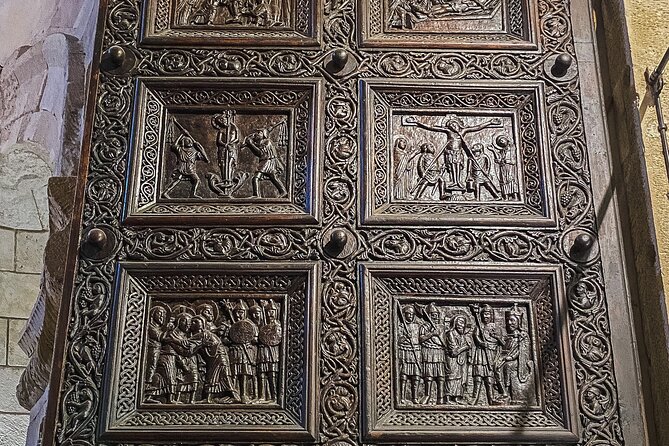
You begin at the Riva, Split’s lively waterfront promenade. It’s a good warm-up. You get quick city orientation before you step into the heavier Roman world, and that helps you understand what you’re about to walk through.
At the start, your guide sets expectations for how you’ll see the palace complex, plus what to watch for as you go. Even if you’ve seen a few photos of Diocletian’s Palace, you’ll likely notice details you didn’t know to look for once you’re standing there.
Tip: wear comfortable shoes. This is walking time, not sitting time, and the Old Town streets can be a bit uneven.
Diocletian’s Palace interiors: included entry where it matters

The biggest payoff is how much of Diocletian’s Palace you get to experience beyond the exterior walls. After the initial orientation, you move into the palace complex and focus on the spaces that explain the system behind the stone.
You’ll look at the palace complex, including (when open and when there’s no worship or event blocking entry) the basement area, the Cathedral interior, and the Temple of Jupiter. Entrance fees for these three are included, which is a quiet value win. You won’t lose momentum trying to figure out access and tickets on your own.
St. Domnius Cathedral (Diocletian’s mausoleum turned cathedral)
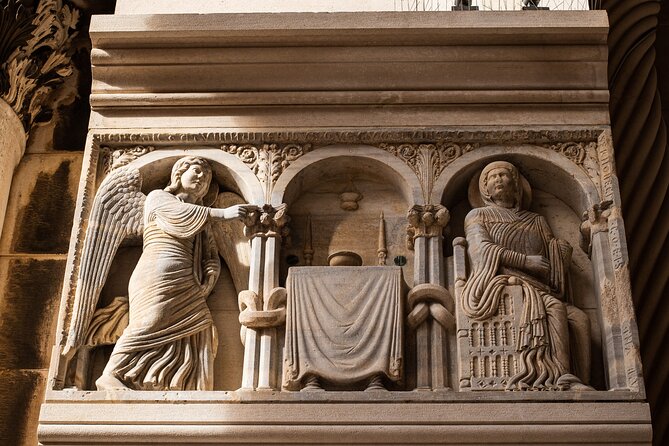
One of the best pieces of context you’ll get here is the change in purpose over time. This cathedral area used to function as the mausoleum of the late Emperor Diocletian. Later, as Christianity spread, the coffin and remains disappeared and the pagan mausoleum became a Christian cathedral.
Even if you’re not chasing theology, you’ll feel the layered timeline. You’re watching a single structure shift roles across centuries, and your guide helps connect what you see with why it looks the way it does.
Temple of Jupiter: the baptistery with an architectural influence
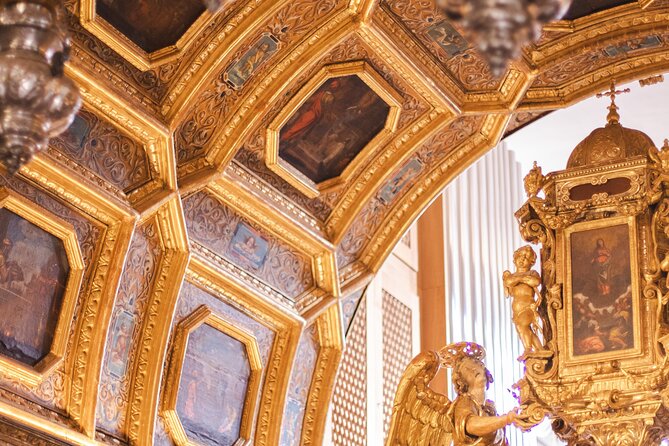
Next is the Temple of Jupiter, now used as a baptistery. The ceiling design is the star: it has a casket ceiling, and your guide points out how this style influenced Renaissance architects in Dalmatia.
That detail matters because it connects Roman design to later local building traditions. You start seeing the region’s architecture as part of one long conversation, not random leftovers.
You can also read our reviews of more private tours in Split





The palace basement and cellars: scale you can finally picture
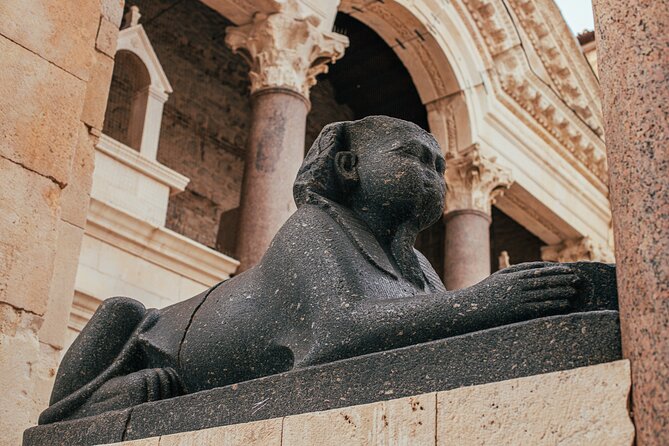
After the palace interiors, you head toward the South Gate and into the cellars. This is where “wow” tends to happen. The cellars are built more than 1700 years ago and are described as very well preserved, and standing inside them helps you grasp the real dimensions of the palace.
It’s one thing to see walls. It’s another to stand where the palace’s inner life would have operated. Your guide’s explanation helps you connect the spaces you’ve been looking at with how the palace would have felt as a functioning complex, not just a museum set.
If you like history, you’ll appreciate the logic. If you prefer art or architecture, you’ll appreciate the shapes and scale. Either way, cellars tend to be the moment the tour stops being abstract.
From sacred space to private access: Peristyle and Vestibulum
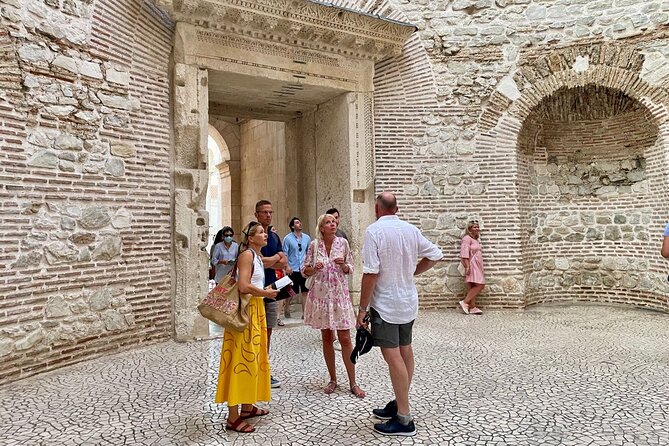
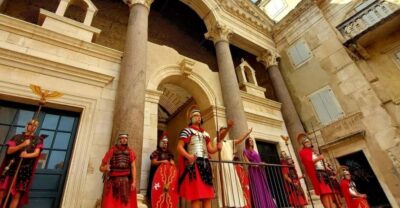
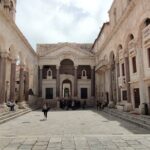
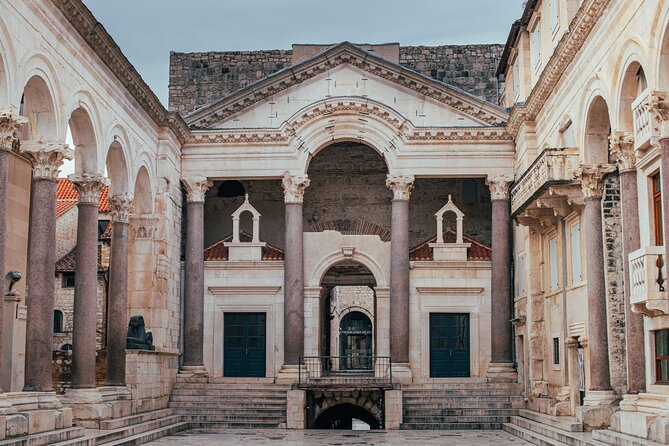
The walk then brings you to the Peristyle, described as the sacral meeting place in Diocletian’s time. Here, Diocletian presented himself to his subjects and was worshipped as the son of Jupiter. Even if you’re not familiar with Roman religious rituals, your guide frames what this space was for.
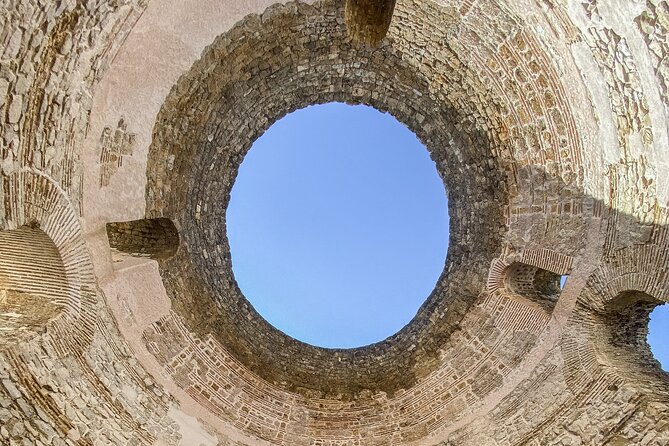
Then you move to the Vestibulum, the entrance area to Diocletian’s private chambers. This is the kind of stop that quietly matters, because it helps you understand that the palace wasn’t one uniform public site. There were transitions—shared or public-facing spaces, then more controlled private areas.
If you get the explanation, you’ll start noticing the palace layout as a sequence of zones, not just scattered landmarks.
Golden Gate and the gates that led somewhere
The tour includes the Golden Gate, the North Gate of the palace in Roman times. This gate was especially important because it connected to the road leading to Salona, the capital of the Roman province.
That’s a helpful mental shift. You’re not just looking at gates as architecture. You’re seeing them as infrastructure—routes for movement, trade, and administration. It also makes the later move into Old Town feel natural, since this palace wasn’t sealed off from the world.
Walking out into Old Split: squares, markets, and the French-era street
Once you leave the palace core through the North Gate, the tour continues along the palace walls toward the Old Town center. You reach Narodni Trg and continue toward the former fruit market, Voćni Trg. This part of the city developed west of the palace since the Middle Ages, and your guide helps you picture the growth as an expansion outward from the Roman core.
Pjaca (People’s Square) and Venetian-era influence
At Pjaca, the city’s Medieval center still feels central today. You’ll see old Venetian palaces and an old city hall in neo-Gothic style. It’s a nice reminder that Split kept changing long after the Romans.
Voćni trg and Marko Marulić
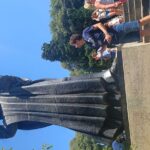
At Voćni trg (Fruit’s Square today), there’s a monument to Marko Marulić, noted as one of Split’s important Renaissance authors. It’s the kind of detail that turns a square from scenery into a place with names attached.
Split Fish Market and the sulfur-bath neighbor
You’ll also pass through the Split Fish Market area, where your guide adds a cool, practical detail: the smell of sulfur is the reason there are said to be no flies there. Next door, you’ll find the sulfur baths, and the guide notes that Diocletian himself knew sulfur baths could provide relief from rheumatism and other diseases.
Even if you don’t stop for a bath, it’s a strong “local logic” moment. The market area comes with a reason for how it feels and smells.
Marmontova ulica: a Napoleon-era shopping street
From there, you head to Marmontova ulica, a busy shopping street and pedestrian zone in the old town. This street was built by the French under Napoleon’s rule at the beginning of the 19th century. It’s a reminder that Split’s city fabric reflects different empires, not just one.
Ending at Procurative: a Venice-style square to rest in
The tour ends at Prokurative, a square that’s reminiscent of St. Mark’s Square in Venice. It’s a good finish point because you can slow down after the walking and take in the café rhythm.
If you want a simple follow-on plan, this ending location is convenient. You’re right where it makes sense to pause, grab a drink, and decide what you want to see next at your own pace.
Guide impact: Dana and Jana, plus how private guiding changes your day
The tour’s strongest ingredient is the guide. Dana is singled out for being absolutely amazing and for making Diocletian’s Palace (and beyond) feel easy to understand. Jana is praised for knowing the history and for helping with options after the tour, including directions.
That kind of guidance is what you pay for in a private format. It’s not just explanations inside the palace. It’s also practical help after you leave the gates: what to do next, how to get there, and what’s worth your time based on your interests.
Also, private guiding means your pace can match your group. If you want more time to look at details, you can ask. If you’re more focused on the main story beats, you can keep moving.
Price and value: what $203.95 covers (and why that matters)
At $203.95 per person, this isn’t the cheapest thing you can do in Split. But you’re also paying for private time and included entries at several key interior sites.
The tour includes entrance fees for stops inside Diocletian’s Palace—basement access plus the Cathedral interior area and the Temple of Jupiter. Those are the kinds of places where timing matters, and where last-minute ticketing can eat into sightseeing time.
So the value question becomes this: do you want your time spent walking and learning, or do you want to spend time figuring out access on your own? For most people visiting Split for a short stay, paying for included entry is a smart trade.
And because the tour is private, you’re not paying for empty seats or waiting for a larger group to shuffle around.
Practical tips for a smooth tour day
This experience runs best with good weather. If the weather is poor, you’ll be offered a different date or a full refund. That’s a big deal for a walking-focused itinerary.
Your guide may also adjust the program if worship or events prevent certain visits. That doesn’t mean the tour turns into nothing. It means you should go in expecting a plan that can shift slightly while staying centered on Diocletian’s Palace and Old Town.
Other small practical notes:
- You’ll have a mobile ticket, so plan to have your phone charged.
- Service animals are allowed.
- The meeting and ending points are both in central areas, and the route is near public transportation.
- Most people can participate, and the tour can be adapted to special needs if you inform them in advance.
Should you book Split Palace & Old Town?
If you want to understand Diocletian’s Palace without getting lost in Roman staircases, this is a solid choice. I’d book it if you value included entrances, clear guide storytelling, and a route that moves from Riva into the palace and out through Old Town squares.
I’d think twice if you’re chasing a slow, lounging day. This is a walking tour designed to cover a lot in about 2.5 hours. Also, if you’re extremely schedule-sensitive about exact interiors, keep in mind that church services or events can affect which spaces you enter.
If you’re the kind of traveler who likes your sightseeing tied to meaning—what each space was for, and why it changed—this tour is a good fit.
FAQ
FAQ
How long is the Split Palace & Old Town private walking tour?
It runs about 2 hours 30 minutes (approx.).
Is this tour private or will I share it with others?
It’s private. Only your group participates.
What language is the tour offered in?
The tour is offered in English.
Are entrance fees included?
Entrance fees are included for key Diocletian’s Palace attractions such as the basement area, the cathedral interior area, and the Temple of Jupiter. The plan also includes entry at Diocletian’s cellars and other listed stops as specified.
What if a site can’t be visited due to events or church services?
Some sights may not be accessible in certain moments due to worship or events. In that case, the tour may change the program slightly.
Where do we meet and where does the tour end?
You start at the Model of the historical core of the city of Split, Obala Hrvatskog narodnog preporoda 23, Split. The tour ends at Republic Square Prokurative, 21000 Split.
Do I need to bring a printed ticket?
No. You receive a mobile ticket.
Is the tour okay for travelers with special needs?
The tour can be adapted to special needs if you inform the provider in advance.
What is the cancellation policy and what happens if the weather is bad?
You can cancel for free up to 24 hours before the experience start time for a full refund. The experience requires good weather, and if it’s canceled due to poor weather, you’ll be offered a different date or a full refund.