REVIEW · SPLIT
Split; Private Morning Walking Tour in Split
Book on GetYourGuide →Operated by Kaius · Bookable on GetYourGuide
Split has a talent for telling stories. This private morning walk is a smart way to take them in without the crush, with a licensed guide threading history through real streets. I like the stress-free pace and the chance to see the 4th-century core up close, including Diocletian’s cellars and key squares. The only drawback: this tour is intentionally compact, so you won’t have hours to wander off on your own.
You’ll also get the kind of context that makes the old stones feel usable today—what was built for power, and what locals use now. Expect you to pause for photos, small guided moments in important spots, and then a proper stroll that lets the city feel like it’s still breathing. One thing to consider: bring a water bottle and plan to keep moving for about two hours.
In This Review
- Key highlights you’ll actually notice
- Morning in Split: why this 2-hour walk feels like the right dose
- Start at the Model of Split: get your bearings in minutes
- Diocletian’s Palace streets: 1700-year-old walls, human-scale walking
- Down in Diocletian’s Cellars: where the palace gets believable
- Cathedral of St. Domnius (Sveti Duje): mausoleum to cathedral
- Peristil and Golden Gate: the palace geometry you’ll remember
- The “secret stop”: quiet minutes that break the big-monument pattern
- People’s Square and local rhythm: shopping without feeling lost
- Riva promenade: let the city breathe (without the noise war)
- Break time at the Maketa grada Splita: reset without losing momentum
- Split Green Market (Pazar): local products from Dalmatian soil
- What the licensed guide adds (and why it feels personal)
- Price and value: $129 per group up to 10 for a private morning
- Who should book this private morning walk
- Should you book the Split private morning walking tour?
- FAQ
- How long is the Split private morning walking tour?
- Where does the tour start?
- Is this a private group tour?
- What languages are the live guides available in?
- What’s included in the price?
- What should I bring?
- Which major sights do we visit?
- Is free cancellation available?
- Is there a way to book without paying right away?
Key highlights you’ll actually notice

- Diocletian’s Palace substructures and preserved cellars, explained so they make sense fast
- St. Domnius (Sveti Duje) Cathedral, built over the mausoleum of Diocletian
- Peristil and key gates, so you see both the grand layout and the everyday flow
- A local stop at Split’s Green Market (Pazar), where Dalmatian soil products are traded
- Riva promenade walk, timed for a calmer morning mood
- A “secret stop”, added for atmosphere and a quieter angle on the old town
Morning in Split: why this 2-hour walk feels like the right dose
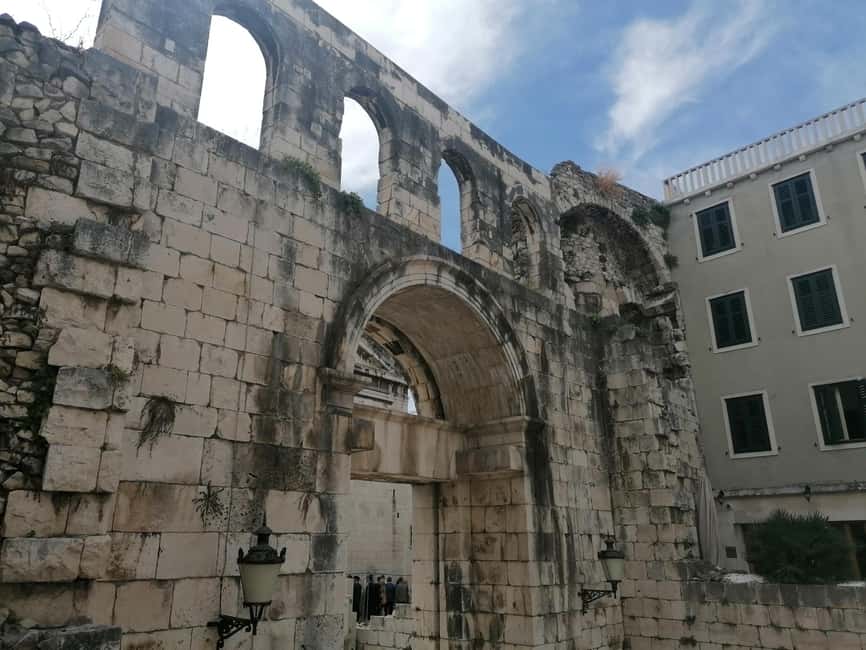
Split’s old town can be an obstacle course later in the day: too many people, too much noise, and not enough time to understand what you’re seeing. This experience is designed for the opposite. You’re out early, moving at a human pace, and getting just enough guided info to turn sightseeing into comprehension.
Two hours also means you can pair it with the rest of your day without rushing. You’ll finish with a clear mental map of where things are, so later you can choose your own pace for lunch, beaches, and evening plans.
You can also read our reviews of more walking tours in Split
Start at the Model of Split: get your bearings in minutes
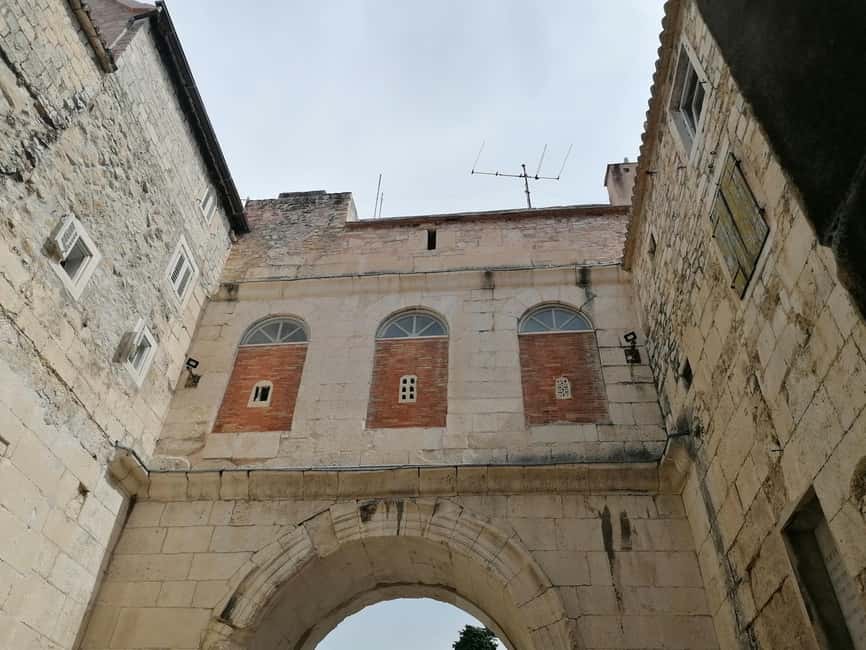
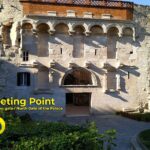
You meet at the Model of the historical core of the city of Split. It sounds simple, but it’s a very practical move. The old town’s streets twist, overlap, and reuse older spaces—once you understand the layout, everything you see becomes easier to follow.
This is where the guide’s job really starts: translating the “what am I looking at?” question into “I get why it’s here.” That matters because you’re about to walk through a palace complex and religious sites that sit on layers of time, not a clean, newly-built grid.
You also get a break later tied to the same model area, so the walking never feels like nonstop trudging.
Diocletian’s Palace streets: 1700-year-old walls, human-scale walking
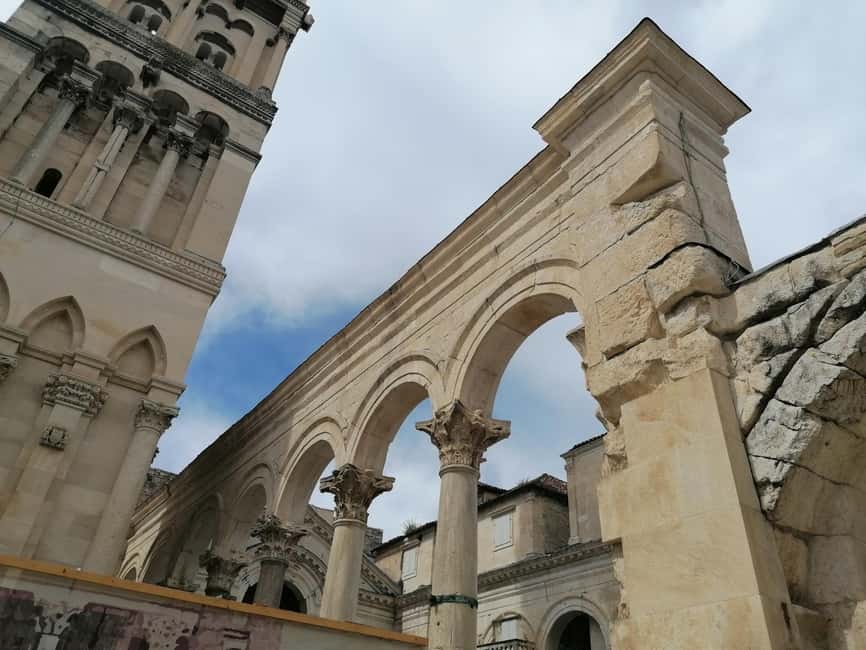
The first big site is Diocletian’s Palace, with a short photo stop and a guided look at parts of the complex. What I love about this is the scale. You’re not standing behind ropes trying to imagine what it used to be. You’re walking through the bones of a city built around a ruler—then realizing it became a living neighborhood.
The palace began at the turn of the 4th century for Emperor Diocletian. That’s the headline. The real value is hearing how the palace was structured and how people interacted with it once it stopped being only a residence. When you’re walking through doorways, passages, and corridors that still feel built for movement, the history sticks.
And since you’re on a private group format, you can ask quick questions instead of waiting your turn in a crowd. That turns the walk from “I saw it” into “I understand it.”
Down in Diocletian’s Cellars: where the palace gets believable
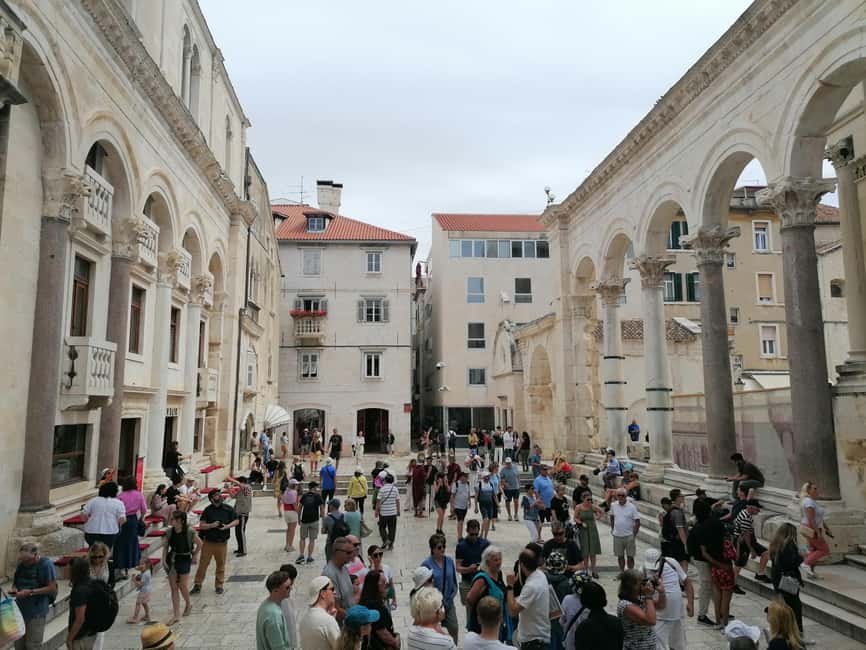
Next comes one of the strongest parts: Diocletian’s Cellars. You’ll get a guided look rather than just a quick glance, so you understand what these spaces were for and why they matter in the palace’s overall layout.
Cellars can sound like “just storage,” but they’re more than that here. They’re part of the palace’s internal infrastructure—spaces that help you grasp how the complex worked day to day. Standing in these older substructures also changes how you picture the whole palace. From street level, everything can look like an intact monument. Down below, you see the engineering logic that made the monument function.
A small practical note: if you’re sensitive to cooler or damp stone spaces, plan accordingly. Even then, it’s worth it.
Cathedral of St. Domnius (Sveti Duje): mausoleum to cathedral

Then you move to Cathedral of St. Domnius (Sveti Duje). This is where the tour shifts from imperial architecture into religious significance, without losing the thread.
The cathedral was originally the mausoleum of Emperor Diocletian. That single fact turns your whole perspective: the building didn’t get replaced just because regimes changed. Instead, it was re-used and transformed. That’s one of the reasons Split feels so layered; it doesn’t treat the past like a museum label.
The guided time here is short, but well targeted. You’ll see what to notice, then you can look again with a more informed eye.
You can also read our reviews of more private tours in Split




Peristil and Golden Gate: the palace geometry you’ll remember
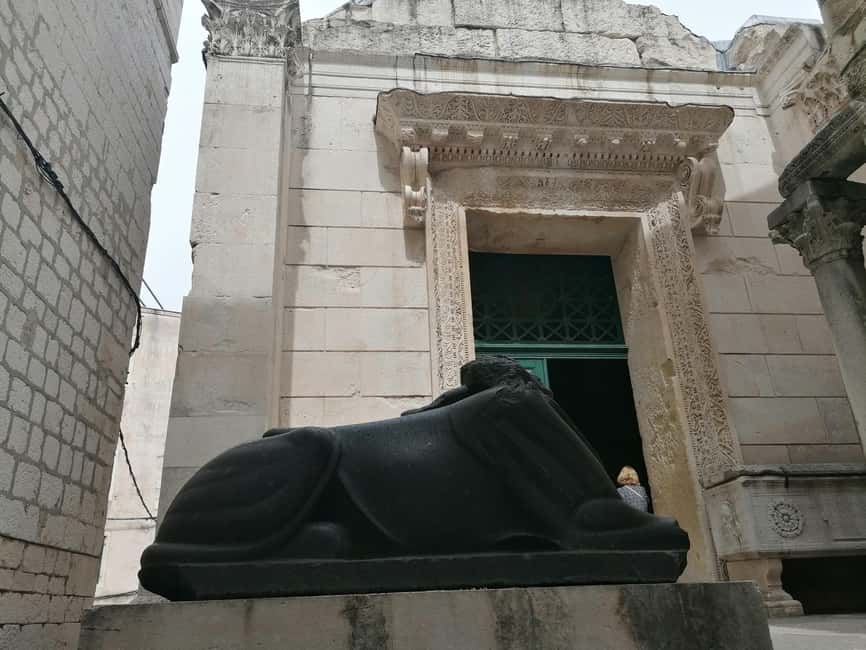
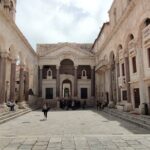
After the cathedral, you’ll spend time at Peristil, with a visit that’s long enough to take in the space rather than just pass through. Peristil is where the palace layout becomes visible as a courtyard-like centerpiece. It’s one of those places that makes you stop walking and just look, because the proportions and positioning explain the rest.
Then you’ll hit the Golden Gate with a photo stop. Even if you’ve seen postcard versions before, the benefit on this tour is timing and context. You understand what gate means in a palace city—what it controlled, how movement was organized, and why the visual details mattered.
The tradeoff is that photo stops are exactly that: time for your best shots, then forward. If you love lingering in photos, just remember this is built for coverage, not marathon wandering.
The “secret stop”: quiet minutes that break the big-monument pattern
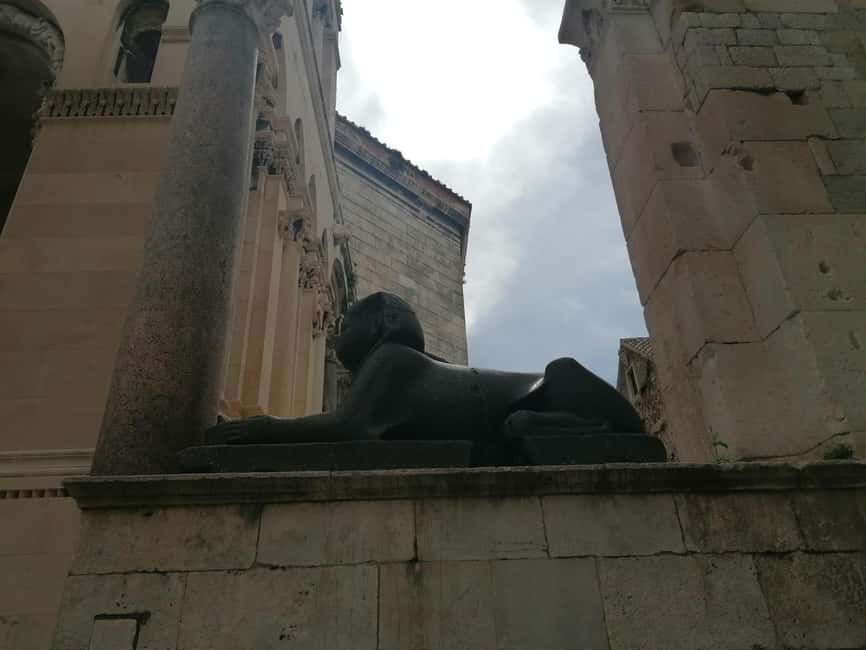
There’s also a secret stop with about twenty minutes set aside. Since details aren’t laid out in advance, you should think of it as a palate cleanser: a quieter corner, an atmospheric angle, or a small moment that gives the walk variety.
That’s a good design choice. After palace walls, cathedrals, and big squares, a different kind of stop helps the whole day feel human and not like a checklist.
People’s Square and local rhythm: shopping without feeling lost

Next up is People’s Square, with time that mixes sightseeing and shopping. This is where the tour moves from “grand story” to “daily life.” People’s Square is the kind of place where you can grab a snack later, browse small shops, or just watch the rhythm of the city.
Since you’re with a guide, you’re not stuck guessing what’s worth your time. You get a sense of what to look for and how the old town’s activity works—especially useful if you’re planning to come back later for nightlife.
If you’re shopping, keep it practical: short purchases now, deeper browsing later.
Riva promenade: let the city breathe (without the noise war)
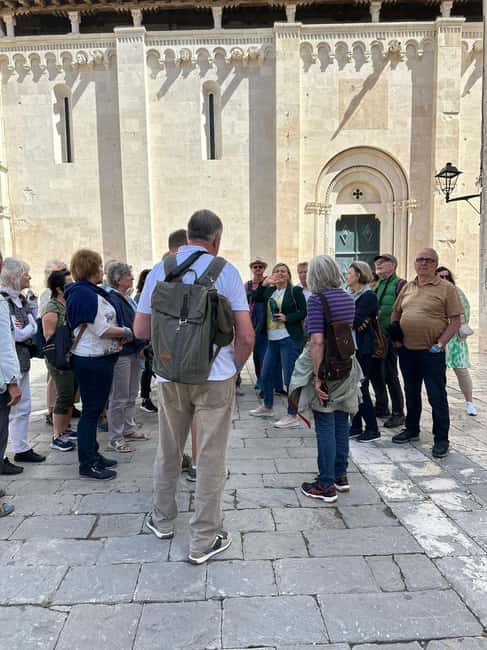
The walk ends with time on Riva, the famous promenade. This is where the “city breathing” idea actually works. At a calmer morning hour, Riva feels less like a stage and more like a living edge—boats, reflections, and a steady stream of locals and visitors.
You’ll get a photo stop here. Again, it’s not built for a long sit-down lunch or a beach detour. It’s built to finish the tour with a sense of place, so you can decide what your afternoon should be.
Break time at the Maketa grada Splita: reset without losing momentum
There’s also a break time at the Maketa grada Splita. This is a smart inclusion because walking through Split’s old town can get tiring faster than you expect. The break keeps the pace comfortable so you stay engaged, not just “endure the distance.”
Use the break to refill water, check your next plans, and look back at your mental map. By this point, you’ll probably notice how the squares and palace streets link together.
Split Green Market (Pazar): local products from Dalmatian soil
One of the most local parts of the tour is Split Green Market (Pazar). The whole point is that it’s where locals buy and sell products native to Dalmatian soil.
This stop is valuable because it adds texture. Palaces and cathedrals tell you what the city was. The market tells you what it is. You’ll get to see real stalls, real trading, and the kind of everyday energy that doesn’t exist in history books.
Even if you don’t buy much, you’ll leave with a better instinct for where to eat and what flavors to look for later. If you do buy something small, it’s an easy way to make the morning feel like it belonged to you, not just to the schedule.
What the licensed guide adds (and why it feels personal)
A lot of walking tours throw facts at you. This one focuses on connection: past and present, history and culture, and how the old stones relate to what you’ll experience right after.
The guide is licensed and can run live in German or English. In practice, that shows up as clearer explanations in key moments—especially around Diocletian’s Palace, where the palace’s layers can get confusing without a guide to connect the dots.
From the tour style, I also like that it’s built for questions. You’re not stuck watching someone talk past you while everyone else waits. It’s the kind of tour where you walk away feeling like you had a conversation with the city.
Price and value: $129 per group up to 10 for a private morning
At $129 per group (up to 10 people) for about 2 hours, this can be a good value if you’re traveling as a couple, small family, or a group of friends who want control of the pace. The private format matters in Split because the old town rewards small pauses and quick clarifications.
Compared with per-person public tours, the economics improve if you can split the group cost. Even for a solo traveler, private can be worth it if you care more about understanding and less about “collecting” landmarks.
If you’re only in Split for a short time and you want a fast, calm orientation plus the core highlights, this pricing fits the job it’s trying to do.
Who should book this private morning walk
This tour is a strong match if:
- You want the old town highlights without late-day crowd stress
- You like your history explained in plain language, not a lecture
- You care about local life, so the market stop matters to you
- You’re traveling with a small group and want a flexible, private experience
It may not be ideal if you prefer long, slow self-guided wandering. This is coverage with context, not a free-for-all day.
Should you book the Split private morning walking tour?
I’d book it if you want a calm start, a clear understanding of Diocletian’s world, and a finish that still feels like Split—not just a list of sights. The best reason is balance: you get big-ticket landmarks (Palace, cellars, cathedral) plus street-level life (People’s Square and Pazar) in a short, manageable window.
If you’re okay moving through sights efficiently and you’ll appreciate a guide who ties things together, this is one of the more sensible ways to see Split’s core early.
FAQ
How long is the Split private morning walking tour?
It lasts 2 hours.
Where does the tour start?
The meeting point is the Model of the historical core of the city of Split.
Is this a private group tour?
Yes, it’s a private group, with price set per group up to 10 people.
What languages are the live guides available in?
The guide offers live commentary in German and English.
What’s included in the price?
A licensed tour guide is included.
What should I bring?
Bring water.
Which major sights do we visit?
You’ll see Diocletian’s Palace, Diocletian’s Cellars, the Cathedral of St. Domnius (Sveti Duje), Peristil, Golden Gate, People’s Square, the Riva promenade, and Split Green Market (Pazar).
Is free cancellation available?
Yes, you can cancel up to 24 hours in advance for a full refund.
Is there a way to book without paying right away?
Yes, you can reserve now and pay later.