REVIEW · SPLIT
Top-Rated Split Game of Thrones and History City Walk – Dracarys!
Book on Viator →Bookable on Viator
Split turns into Seven Kingdoms fast. This walk strings Game of Thrones filming moments to real Roman landmarks inside Diocletian’s Palace, plus a Museum of Meereen stop that fans love. Guide Marko has a gift for making the stories line up with where you’re standing, and you’ll also get scene clips shown on a device during key parts of the route.
I also like that the tour is timed like a good story: short stops outdoors, then darker “substructures” drama, then museum time, then a calm wrap at Riva Harbor with local food and beach ideas. One thing to consider: you’ll move through multiple palace spaces and museum interiors in a fairly tight window, so it’s not a sit-and-stare tour, and the palace substructures are dark.
In This Review
- Key highlights before you walk
- Where Roman Split meets Meereen
- Starting at the Golden Gate and the Palace “mousetrap”
- Peristyle and St. Domnius: the square that still matters
- Vestibulum drama: Unsullied clips and Dalmatian singing
- Jupiter’s Temple and the headless sphinx at the entrance
- The Palace Substructures: where the dragons and secrets live
- Game of Thrones Museum: stepping into Meereen
- Iron Throne photo and the fan-shop souvenir moment
- City Museum of Split: blood messages and rebellion tension
- Ending at Riva Harbor with real-life next steps
- Price and value: $42.36 for a tight, high-payoff route
- What kind of traveler should book Dracarys
- Should you book this Split walk and museum combo?
- FAQ
- How long is the tour?
- What does the tour cost?
- Is the tour in English?
- Do I need to buy paper tickets?
- Where do I meet and where does it end?
- Are there admission tickets included?
- What’s the group size limit?
- Is confirmation sent after I book?
- Can I cancel for a full refund?
- Is it suitable for people with mobility needs?
Key highlights before you walk

- Golden Gate into the Palace with the famous “human mousetrap” double-door mechanism
- Peristyle + St. Domnius set around Diocletian’s mausoleum, with a 3,500-year-old sphinx riddle
- Unsullied battles and live Dalmatian singing in the Vestibulum
- Temple of Jupiter turned baptistery guarding a 3,500-year-old headless sphinx
- Daenerys and the dragon-chains story in the Palace Substructures
- Meereen at the Game of Thrones Museum plus a quick Iron Throne photo and fan-shop souvenir
Where Roman Split meets Meereen
This tour is built for people who want two things at once: the reality of Split’s Roman old town and the pop-culture magic of Game of Thrones. The trick is the pacing. You don’t just get a list of sights; you walk from one “scene location” feeling to the next, with history and show elements braided together so you start seeing the palace as a living set.
If you’re a hardcore fan, the “Dracarys” theme gives you clear moments to look for. If you’re more history-first, you still get a strong Roman core: Diocletian’s Palace is the star, and the show references act like bright captions that help you understand what you’re looking at.
Group size is capped at 50, and you’ll be in and out of indoor spaces, so it tends to feel social rather than claustrophobic. And yes, English is the stated language, so you can follow along without mental gymnastics.
You can also read our reviews of more walking tours in Split
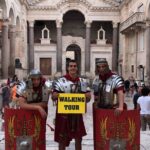

Starting at the Golden Gate and the Palace “mousetrap”
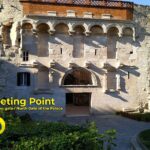
You meet at the Golden Gate (Dioklecijanova 7). This is the main entrance into Diocletian’s Palace, and it’s a smart starting point because it frames the whole area: you enter through a Roman threshold that feels built for control and movement.
Here’s what makes it fun: you get the “human mousetrap” story tied to the built-in double doors. The idea is that the architecture itself could trap movement. It’s not just spooky trivia; it helps you visualize how power worked in a walled imperial space.
Practical tip: if you’re photographing, the Golden Gate area has enough structure to compose well without you constantly chasing people around. It’s a solid moment to reset your phone camera before the palace interior becomes a maze of arches and stone.
Peristyle and St. Domnius: the square that still matters
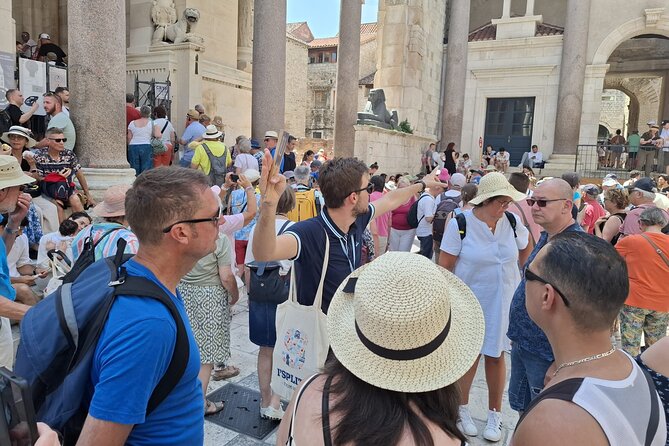
Next comes the Peristyle, the palace’s main square. This is the heart of Diocletian’s world—also where Diocletian’s mausoleum is now the Cathedral of St. Domnius. Even if you don’t care about cathedrals, you should care about the symbolism: a Roman ruler’s tomb became a long-lasting spiritual center.
Then you’re guided toward the sphinx moment—specifically a 3,500-year-old sphinx posed with a riddle. That’s a very “Split” kind of detail: centuries layered together, so you’re not just learning dates. You’re learning how the city reused objects and meanings over time.
What I like for you here: this stop helps you stop treating the palace like a backdrop. You’ll understand it as a place where the show’s politics (who controls space, who commands movement) actually maps well onto real Roman design.
Vestibulum drama: Unsullied clips and Dalmatian singing
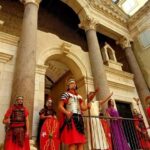
The tour moves into the Vestibulum of Diocletian’s Palace, where the vibe shifts. You watch a video connection to the show—Unsullied battling the Sons of the Harpy—so you can match the drama to the architectural setting. For fans, this is the “wait, that’s where it happens” moment.
Then you get something you won’t see on a typical GOT-themed walk: an a cappella group singing Dalmatian songs live. That live element matters. It takes the tour out of screens-and-lectures territory and turns it into something you hear with your own ears.
If you’re wondering what to bring mentally: come ready to pay attention to transitions. This is where the tour earns its blend. You’re not just hunting scenes; you’re watching how storytelling and sound can change how a space feels.
Possible drawback: live singing can vary by timing and the group’s flow. If you need absolute quiet for concentration, plan your expectations for a more performance-style moment.
Jupiter’s Temple and the headless sphinx at the entrance
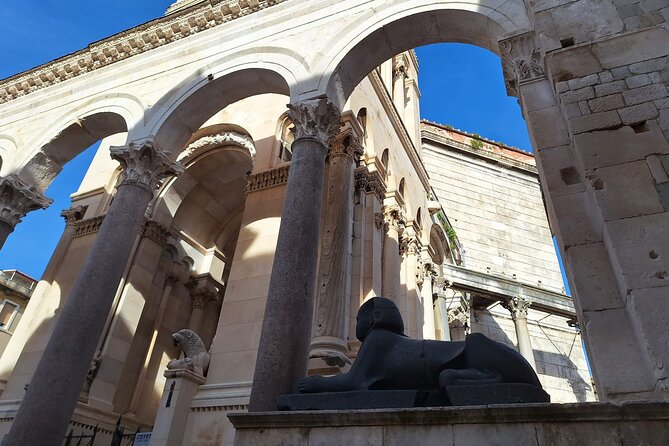
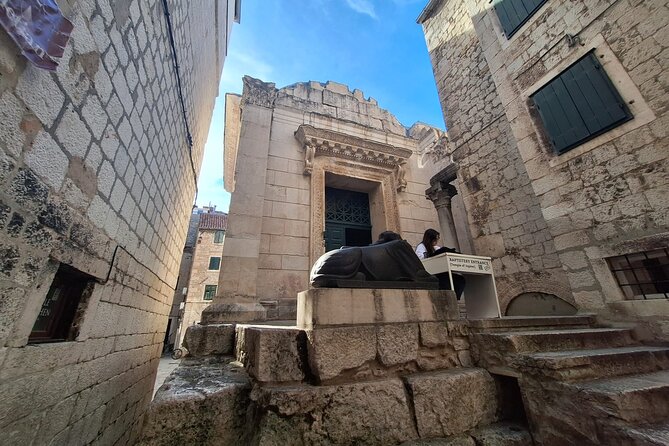
At the Temple of Jupiter stop, the Roman story continues—because the temple is now the baptistery of St. John. It’s a classic conversion story: one sacred function changes hands, but the stone remains.
At the entrance, you’re told about a 3,500-year-old headless sphinx. This is one of those “how is that still here” details that makes Split feel like a puzzle that’s been solved over and over again.
Why this stop works: it’s short, but it’s visual. You’ll spend about 5 minutes here, and you can use it to do something practical: refocus your attention. After the heavier show reference moment, the temple/baptistery stop gives you a grounded landmark that you can remember even if you forget some scene-specific beats.
You can also read our reviews of more city tours in Split





The Palace Substructures: where the dragons and secrets live
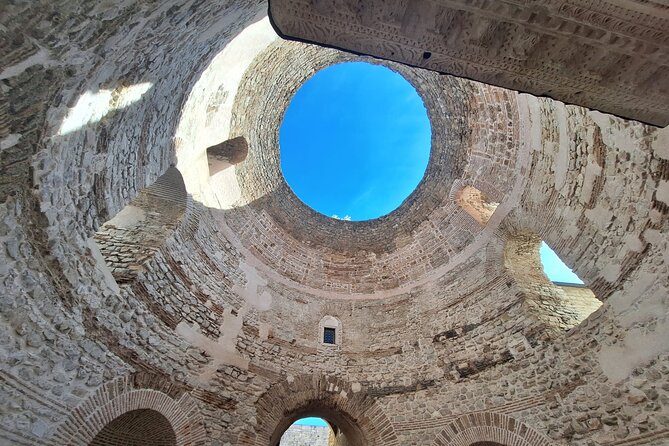
This is the biggest storyline shift: Diocletian Palace Substructures. You move into the darker part of the palace and hear the Daenerys/dragons narrative—dragons chained, control slipping away—plus the rebellion tension tied to slaves hiding and plotting.
It’s also where the tour is most atmospheric. The substructures are where you feel the “old world” weight of the place. That matters because the show’s most intense themes—power, captivity, escape—fit the environment better than they do in bright street scenes.
You’ll also get your included admission here. Other stops are free-entry, while this one is included, which is a quiet value win. You’re paying once for the space that actually feels like a ticketed “experience,” not just a standing-photo tour.
One consideration: if you’re sensitive to dark, narrow, or echo-heavy spaces, this is the part to mentally prepare for. The tour does its best to keep things moving, but you’re entering real underground rooms.
Game of Thrones Museum: stepping into Meereen
After the substructures, the Game of Thrones Museum turns the “scene matching” idea into a full-on set visit. The focus here is Meereen: you’ll see authentic props, costumes, life-size figures, weapons, city dioramas, and set elements.
This stop is ideal for fans who want something more than storytelling. You’ll get physical details—textures, shapes, display setups—that help you understand how production design turns a fictional city into something you can point at.
Even if you’re not a superfan, there’s value in treating this like a “production museum.” It teaches you how the show’s world was built, which makes later rewatching more fun because you notice details you used to miss.
How long you’ll spend depends on the flow of the day, but plan for a meaningful chunk. This isn’t a quick hallway. It’s a “look closer” stop.
Iron Throne photo and the fan-shop souvenir moment

Then you swing by the Game of Thrones fan shop. The highlight is a free photo opportunity on the Iron Throne, plus the option to grab an original souvenir tied to Essos, Meereen, and Split.
This is a good “release valve” stop. After museums and dungeon storytelling, you get something light and memorable that doesn’t demand brain power.
Practical note: if you’re traveling with kids, this is usually a crowd-pleaser. It’s also a nice moment to do a quick gear check—phones charged, water sip, and then you head toward the last story beats.
City Museum of Split: blood messages and rebellion tension
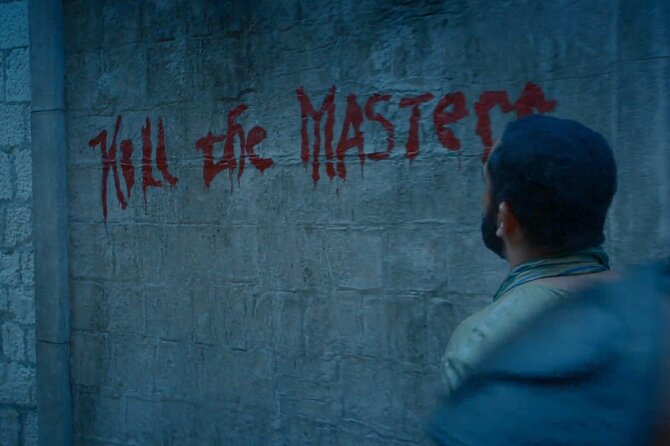
Next is the City Museum of Split, where the narrative shifts from palace drama into city-level unrest. You’ll hear the story of Meereen no longer being safe for slave masters, with dangerous messages in blood appearing on the walls, and a master facing the consequences of rebellion.
It’s a clever way to keep the GOT theme moving while also letting you step back into local museum territory. Split has always been a city of layered eras; this stop uses that same idea to keep themes consistent: power structures, social conflict, and who gets punished when things change.
This is also a relatively short stop (about 10 minutes), which keeps the pace steady. You don’t have to be a collector of museum facts to enjoy it.
Ending at Riva Harbor with real-life next steps
You finish at Riva Harbor, right by the sea promenade. This part is more than a walk to the exit. You get instructions on what to see next around Split and Dalmatia, plus guidance on where to eat and which beach to visit.
That closing tip is one of the most practical parts of any tour. It’s where you turn “I saw cool things” into “now I know what to do for the rest of my day.”
If you’re short on time in Split, this ending location helps you plan intelligently: you’re already near the seafront, so you can transition from sightseeing mode to a low-cost local rhythm—stroll, snack, and pick a beach.
If you can choose your departure time, an evening tour can feel cooler and less crowded, which makes the outdoor sea walk at the end more enjoyable.
Price and value: $42.36 for a tight, high-payoff route
At $42.36 per person for about 1 hour 40 minutes, you’re paying for a lot of “story density.” You’re not just paying for a guide; you’re paying for:
- guided access and explanation across multiple key Diocletian Palace spots
- a show-linked video/scene matching component
- included entry for the substructures
- a structured museum arc (Game of Thrones Museum, plus the City Museum stop)
- and a final orientation wrap at Riva Harbor
It’s also important that most early stops are free-entry, while the ticketed component that matters most (substructures) is included. That balance keeps the experience from feeling like you’re constantly paying more for doors and corners.
Compared with buying separate attractions one by one, the value is strongest if you like both themes. If you only care about one side—pure Roman architecture or only the show props—you might feel the other side is extra. But if you enjoy the blend, this price is easy to justify.
What kind of traveler should book Dracarys
This tour is a strong fit for:
- Game of Thrones fans who want filming locations and show-linked explanations tied to actual places
- people who like history but don’t want a lecture-only approach
- mixed groups (for example, one person who loves GOT and one who prefers Roman facts)
- families who want a fun route with a clear payoff photo on the Iron Throne
It’s also been tailored to walking needs, since guides can adjust for people with disabilities and keep things manageable. Service animals are allowed, and the tour is near public transportation, which makes it easier to slot into your day.
Who might skip it:
- anyone who hates video components or live singing might find those moments distracting
- people who strongly dislike dark underground spaces should think twice about the substructures stop
Should you book this Split walk and museum combo?
If you want a Split experience that’s both real and entertaining, I’d book it. The biggest reason is the design: it takes Diocletian’s Palace seriously, then uses GOT scenes as a helpful layer so you remember what you’re looking at.
I’d skip it only if you’re sure you want either pure Roman sightseeing or only an art/museum visit with no scene matching. Otherwise, this is a one-ticket way to connect palace architecture, classic artifacts, and Meereen-themed pop-culture inside one smooth route.
FAQ
How long is the tour?
It runs for about 1 hour 40 minutes (approx.).
What does the tour cost?
The price is $42.36 per person.
Is the tour in English?
Yes. The experience is offered in English.
Do I need to buy paper tickets?
No. You’ll receive a mobile ticket.
Where do I meet and where does it end?
You start at the Golden Gate on Dioklecijanova 7 in Split. You end at Split Riva by the sea promenade on Obala Hrvatskog narodnog preporoda 23.
Are there admission tickets included?
Most stops are listed with admission ticket free. The Diocletian Palace Substructures stop has admission included.
What’s the group size limit?
The tour has a maximum of 50 travelers.
Is confirmation sent after I book?
Yes. You’ll receive confirmation at the time of booking.
Can I cancel for a full refund?
Yes. You can cancel up to 24 hours in advance for a full refund.
Is it suitable for people with mobility needs?
The experience says most travelers can participate, and service animals are allowed. Some guides can tailor the tour for walking disabilities, so it’s worth booking if you need pacing adjustments.