REVIEW · SPLIT
History & Cultural Walking Tour of Split and Diocletian’s Palace
Book on Viator →Operated by Ancient Tours · Bookable on Viator
Diocletian’s Palace makes Split click fast. This 90-minute walking tour guides you through UNESCO-listed Split and the palace complex, with stops at the Peristyle, Golden Gate, and Riva Harbor so you can understand what you’re seeing. I like that it turns big monuments into clear, human stories in a tight time window.
Two things I really like: the small group size (max 15) keeps the pace comfortable and the questions coming, and the guide style can be lively as they share context on what’s under your feet and around the corners. Names I’ve heard tied to standout tours include Darko, Ivana, and Ante, and the experience can include traditional Dalmatian klapa singing when you reach the palace vestibule.
One consideration: this isn’t recommended if you have trouble with high steps. You’ll be moving through historic stone areas, so comfortable shoes and a steady stride matter.
In This Review
- Key points
- Why Diocletian’s Palace is the easiest way to understand Split
- Peristyle start: your orientation shortcut
- From vestibule to substructures: how the palace worked
- Golden Gate, Gregory of Nin, and the story Split tells
- Riva Harbor and Fruit’s Square: promenades and literature
- Synagogue stop and what to expect on entry
- How the guide style and small group make it worth it
- Price, timing, and who should book this Split walk
- Should you book this Split history walk?
- FAQ
- How long is the History & Cultural Walking Tour of Split and Diocletian’s Palace?
- What language is the tour offered in?
- Where is the meeting point for the tour?
- Is admission included for all stops?
- Will we see the substructures museum?
- Is this tour suitable if I have issues with high steps?
- Can I cancel and get a full refund?
Key points
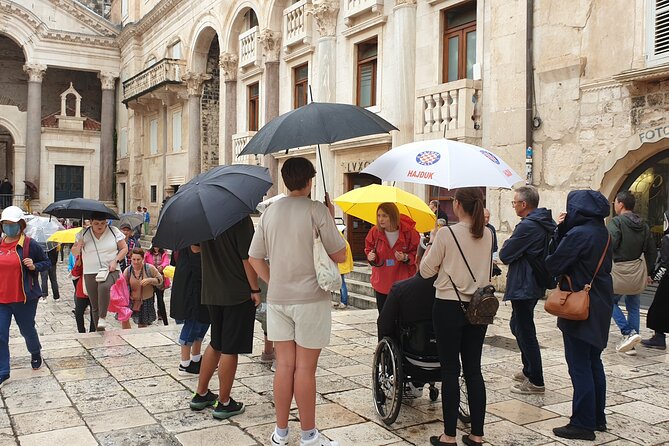
- Small-group pace (max 15) means you’re not just following a crowd.
- Diocletian’s palace core first: Peristyle gives you the layout you need for everything else.
- Golden Gate + Gregory of Nin connects architecture to Croatian language and identity.
- Riva Harbor + bronze palace model helps you picture how the palace shaped the waterfront.
- Fruit’s Square and Marko Marulić add a literature angle to the walk.
- Split Synagogue is a pass-by, and any ticket needs to be handled separately.
Why Diocletian’s Palace is the easiest way to understand Split
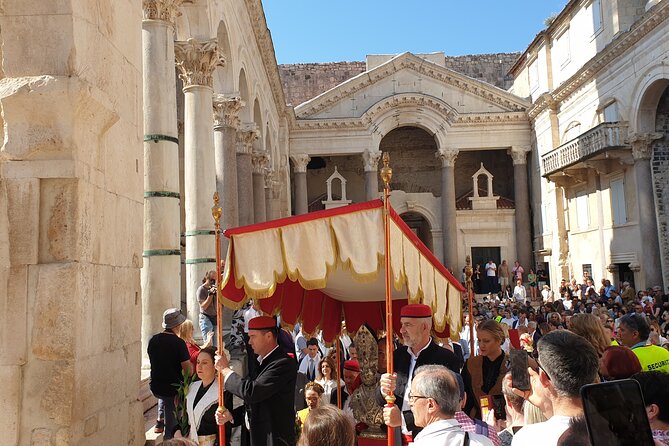
Split is one of those places where the city feels like it grew out of a single idea. That idea is Diocletian’s Palace, a massive complex that still shapes streets, sightlines, and even how people move through town. This tour leans into that reality. You don’t just look at isolated landmarks; you learn how they connect.
The best part is that you get a practical mental map quickly. The walk focuses on the palace center and the streets that radiate from it, so by the end you’re better prepared to explore on your own. Even if you only have a day or two, this helps you avoid the common first-day problem: seeing beautiful sights without knowing why they matter.
And it stays comfortably short. At about 1 hour 30 minutes, you get meaningful context without draining your energy. It’s a great fit for your first night, when you want background so the city feels readable the next morning.
You can also read our reviews of more walking tours in Split

Peristyle start: your orientation shortcut
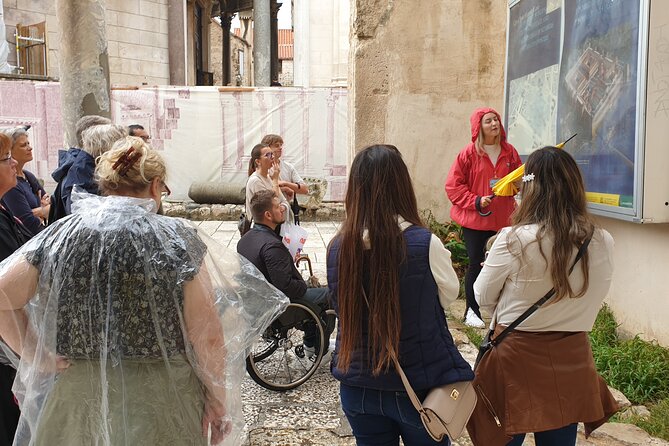
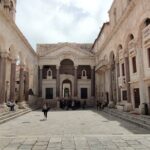
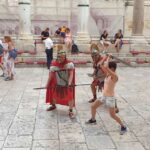
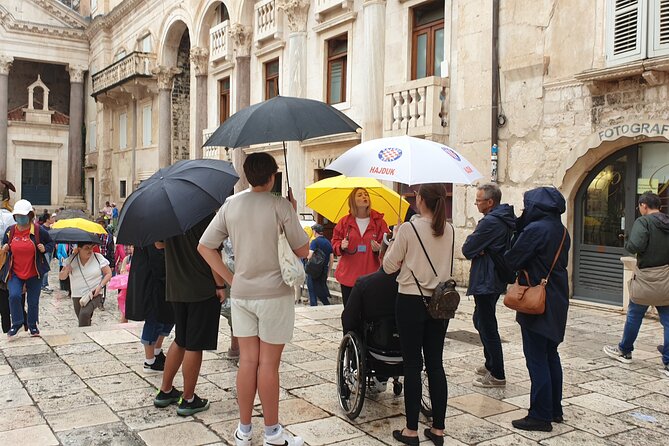
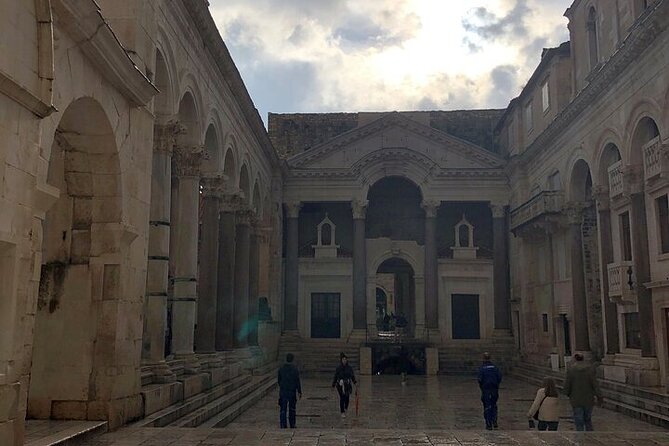
You meet at the Peristil ulica area near the palace, and the tour opens at the Peristyle—effectively the palace’s central square. This is smart planning. The Peristyle is the hub from which you can reach almost everything else in the complex. When your guide frames it as the layout center, the palace stops feeling like a confusing warren of stone and corridors.
From this square, you can start linking what you see with what you learn. The Peristyle sets the logic: where movement would have happened, how the space was organized, and why later Split grew around it instead of replacing it. If you’re the type who likes to understand what you’re looking at before you take photos, this starting point will feel like money well spent.
You’ll also notice the timing: the stop here is about 15 minutes, long enough to absorb the key ideas without dragging. Many walking tours rush this kind of orientation. This one doesn’t.
From vestibule to substructures: how the palace worked
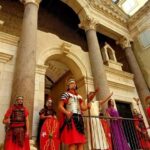
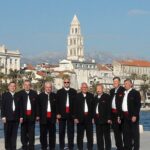
After you’ve got the layout in your head, you move into the palace’s vestibule area—called the vestibulum of Diocletian’s Palace. This stop is brief (around 5 minutes), but it’s designed for texture. You learn about the vestibule’s purpose in the palace story, and you might also catch traditional Dalmatian singing during this portion.
That matters more than it sounds. Diocletian’s Palace isn’t only stone and dates. The best guide moments are the ones that connect past and present. If singing happens, it gives you a living reminder that the region’s culture still hangs around these architectural forms.
Next comes the Diocletian Palace substructures. This is where you start thinking in layers. These lower areas connect to how the palace was built and how it functioned, then how that function changed over the centuries as the palace became part of ordinary city life. The tour spends about 10 minutes here.
There’s also an important boundary: you won’t visit the museum section of the substructures during the tour, though you can visit it on your own afterward. If you’re a museum-first person, you might feel the time constraint. But if what you want is the big picture—how the structure and its spaces relate—that’s exactly what this stop gives you.
Golden Gate, Gregory of Nin, and the story Split tells
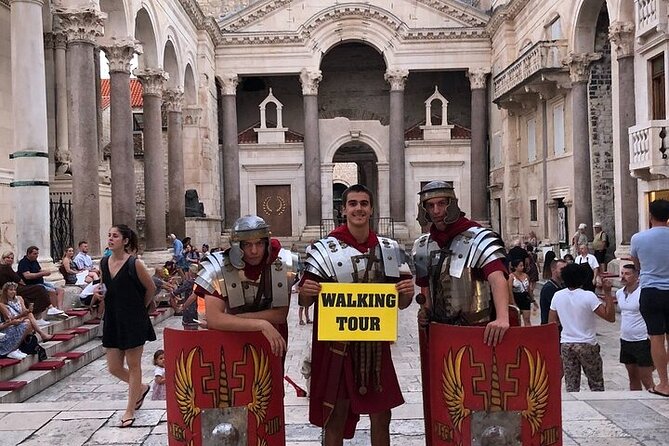
The Golden Gate is the palace’s main entrance, and it’s one of those places where you instantly understand why people still talk about it. You get about 10 minutes here, and the focus isn’t only the gate itself. Your guide connects it to the wider palace meaning.
You’ll also see the statue of Gregory of Nin, and this is where the tour becomes more than architecture. Gregory of Nin is tied to Croatian history and language, so the guide’s explanation helps you understand why this figure shows up so often in cultural references. It’s a reminder that public monuments aren’t random decorations; they point to identity and memory.
This stop is a good example of how the walking format works. If you were just wandering, you might notice the statue and keep moving. With a guide, you pause long enough to understand what the symbol represents. Then you’re better equipped to spot the next layers of meaning as you walk.
Riva Harbor and Fruit’s Square: promenades and literature
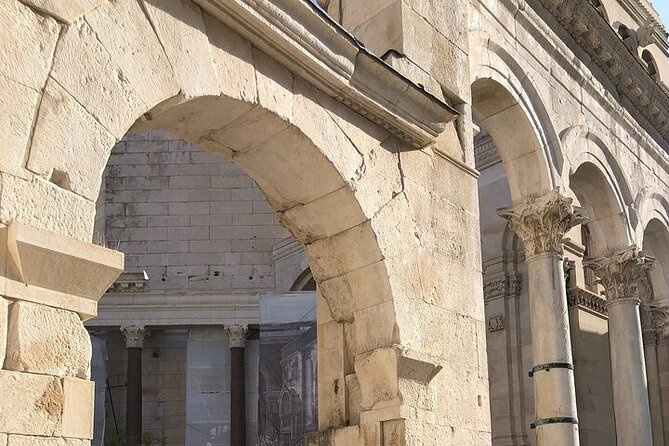
Once you step out of the palace center, the tour follows the way Split itself flows. Riva Harbor (Riva promenade area) is next, with about 15 minutes devoted to it. You’ll see a bronze model of Diocletian’s Palace, which is one of those small details that can instantly clarify everything you learned earlier. When you’re staring at a compact map-sized model, the palace complex starts to make sense in a way that standing in the streets sometimes can’t.
This stop also frames the waterfront as history, not just scenery. The guide explains the story of Split’s Riva promenade, helping you connect the modern promenade with the palace’s influence on the city’s shape.
Then you’ll head to Fruit’s Square (Trg Brace Radic) for around 10 minutes. Here, you’ll learn about a 15th-century Venetian citadel and the importance of Marko Marulić, described as the father of Croatian literature. This is a different angle than the palace stops. It broadens the walk from emperor-focused architecture into cultural heritage—how cities shape thought, language, and writing.
If you’re trying to understand Croatia beyond one era, Fruit’s Square helps. The walk gently changes gears: from Roman imperial power to later European influences and the birth of Croatian literary identity.
You can also read our reviews of more historical tours in Split

Synagogue stop and what to expect on entry
The final listed stop is the Split Synagogue, where you’ll pass by the 16th-century building. This part is about 10 minutes, and the tour notes that admission ticket for this portion is not included.
That doesn’t mean you’re left hanging. It means you’ll likely get context from the outside and a brief pointer to its place in Split’s Jewish story, without requiring you to pay extra for entry unless you choose to go in. The key practical move for you is simple: if synagogue interior access matters to you, plan to handle that separately.
This last segment is also a reminder that Split’s story isn’t only Diocletian and later Christian figures. It’s a layered port city, and the tour gives you a quick, respectful glance at another part of the local historical picture.
How the guide style and small group make it worth it
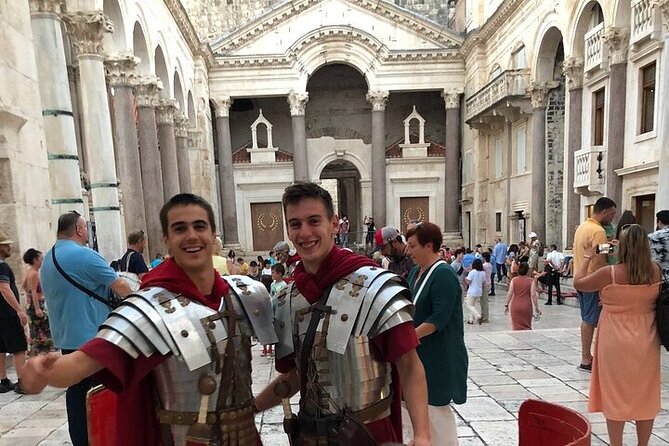
This tour caps at 15 travelers, which changes the feel immediately. When a guide can actually hear you and answer in real time, the tour stops being a script. It becomes a conversation—often with helpful Q&A that makes the information stick.
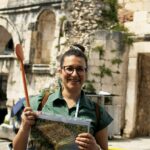
That’s the kind of detail you see reflected in guide performance. Guides including Darko, Ivana, and Ante are described as engaging and personal, with strong English and a knack for keeping attention. The addition of humor also matters in a history walk. It breaks the heaviness and makes complex periods easier to follow.
You’ll also notice how the pacing supports retention. Stops are short but not rushed: Peristyle 15 minutes, vestibule 5, substructures 10, Golden Gate 10, Riva Harbor 15, Fruit’s Square 10, and then the synagogue pass-by 10. In total, it lands around that 1 hour 30 minutes mark.
And because the tour ends back at the meeting point, you’re not stuck at some far corner of town. You can hop into dinner plans, or continue walking without thinking too hard about logistics.
Price, timing, and who should book this Split walk
The price is $22.98 per person, and for what you get, it’s a very reasonable value—especially if you treat it as orientation. You’re paying for guided context across multiple high-impact stops, most of which are free to access during the tour.
Admission is marked as free for the palace stops and the public-facing areas you visit. The synagogue portion isn’t included. Also, the substructures museum portion isn’t visited as part of the tour. So if you’re hoping for a ticketed deep museum experience, you’ll need to add that separately.
Still, for most people, that trade-off is a good one. A short guided overview of the palace complex often beats trying to figure it out solo through signage. If you’re the type who likes to understand before you wander, this is the kind of “first-night” history that makes the rest of your trip more enjoyable.
This tour is also a strong choice if:
- You want a small-group introduction to Split’s layout.
- You like stories that connect buildings to culture and language.
- You want a short plan that doesn’t swallow your whole day.
It’s not the best match if you have trouble with high steps, since the palace and old-city areas involve climbing and uneven historic spaces.
Should you book this Split history walk?
Yes—if you want to start your Split visit with clarity. This tour is built around the palace center, then carries you outward to the waterfront and public squares, so you leave with a working mental map and a better sense of what to look for next.
Book it if you:
- Have limited time and want the biggest historical payoff per minute.
- Prefer a guide who keeps it engaging, with Q&A and culture notes.
- Like to connect monuments to real stories, including Gregory of Nin and Marko Marulić.
Skip it (or choose a different option) if you strongly need step-free routes or if you want the substructures museum and synagogue interiors as part of a single guided ticket.
FAQ
How long is the History & Cultural Walking Tour of Split and Diocletian’s Palace?
It lasts about 1 hour 30 minutes.
What language is the tour offered in?
The tour is offered in English.
Where is the meeting point for the tour?
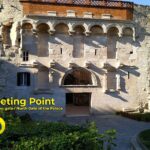
The tour meets at Peristil ulica (Peristil ul.), 21000, Split, Croatia.
Is admission included for all stops?
Most stops listed are free during the tour. The Split Synagogue admission is not included.
Will we see the substructures museum?
No. The tour goes through the substructures area but does not include the museum portion.
Is this tour suitable if I have issues with high steps?
It’s not recommended for travelers who have issues with high steps.
Can I cancel and get a full refund?
Yes. You can cancel for a full refund up to 24 hours before the experience’s start time. Free cancellation is available, and changes within 24 hours aren’t accepted.