REVIEW · SPLIT
“Not Today” – Game of Thrones and History of Split Private Guided Walking Tour
Book on Viator →Operated by Viktoria - Tourist Guide · Bookable on Viator
GoT fans and Roman ruins mix well here. You’ll walk Split’s Old Town with Viktoria, a licensed guide who’s also a serious Game of Thrones fan, hitting filming spots and key historic corners in a smooth 1.5–2 hour loop. Two highlights I really liked: the chance to sit on a real throne connected to the show’s world, and the way the Diocletian Palace substructures (the Roman basements) connect directly to the Meereen storyline.
One thing to plan for: the Diocletian Palace substructures have an extra €8 per person entrance fee that isn’t included, so you’ll want a little cash or card ready. And because it’s a walking tour, comfortable shoes matter, especially if the weather turns.
In This Review
- Key things I’d prioritize on this tour
- Two storylines in one walk: GoT scenes and Split’s Roman core
- Starting at the Model of Split and easing into Riva Harbor stories
- Diocletian Palace substructures: where Meereen’s look makes sense
- Vestibulum, the mausoleum, and the Peristyle: power and religion in plain sight
- Vestibulum of Diocletian’s Palace
- Cathedral of Saint Domnius (originally Diocletian’s mausoleum)
- The Peristyle of Diocletian’s Palace
- Street-level filming vibes: skipping the museum but still seeing the scenes
- Grgur Ninski and the Golden Gate: the Roman entrances you’ll remember
- Grgur Ninski Statue (Ivan Meštrović)
- The Golden Gate
- The Game of Thrones fan stop and the real throne moment
- Price and value: what $93.52 per person gets you
- How to get the most out of Viktoria’s storytelling
- Who this tour fits best (and who should think twice)
- Should you book Not Today in Split?
- FAQ
- What is the duration of the tour?
- How much does the tour cost?
- Is this tour private?
- Where does the tour start?
- Are entrance fees included?
- What is the main meeting point area?
- What kind of ticket do I get?
- Is there a weather condition for the experience?
- Can I cancel for a full refund?
Key things I’d prioritize on this tour
- Private, licensed guide: only your group, led by Viktoria
- Game of Thrones filming locations: real streets used for on-screen scenes
- Diocletian Palace basements (Meereen setting): the most show-like part of the walk
- A real throne moment: you get to sit, not just pose with photos
- Roman Split landmarks in short stops: quick hits that still make sense
Two storylines in one walk: GoT scenes and Split’s Roman core
This tour works because it doesn’t treat Game of Thrones as a gimmick. You’re not just hunting for cosplay photo ops. You’re walking through Split’s historic bones and learning why certain places were perfect for filming—stone, shadows, entrances, and that heavy Roman sense of authority.
I like the format because it stays practical. You don’t have to be a hardcore historian to follow along, and you don’t have to be a superfan to enjoy the references. A tour like this works best when the guide can translate both worlds at once, and that’s exactly the sweet spot with Viktoria.
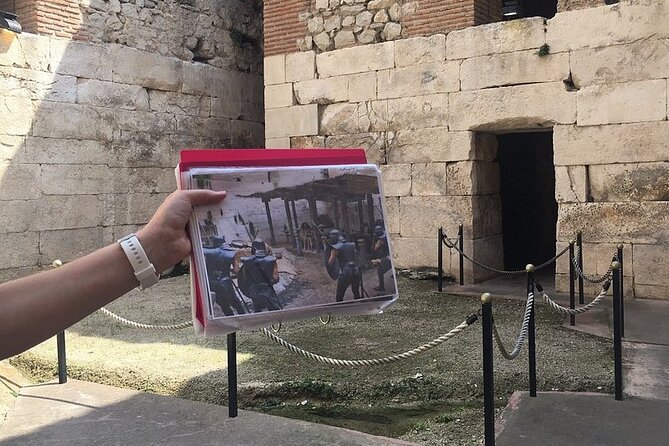
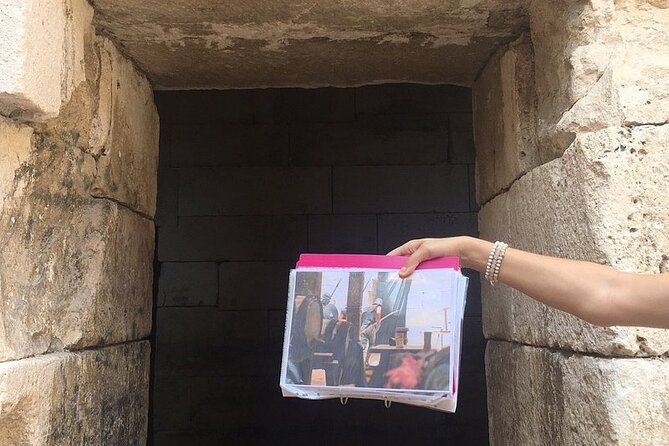
You’ll also feel the “fan energy” in a grounded way. One review mentioned a photo book that helped connect the exact scenes to what you were standing next to, and that matches what you’ll need most: clear visual cues so the locations click fast. It’s the difference between seeing a wall and understanding why the camera loved it.
You can also read our reviews of more walking tours in Split
Starting at the Model of Split and easing into Riva Harbor stories
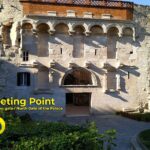
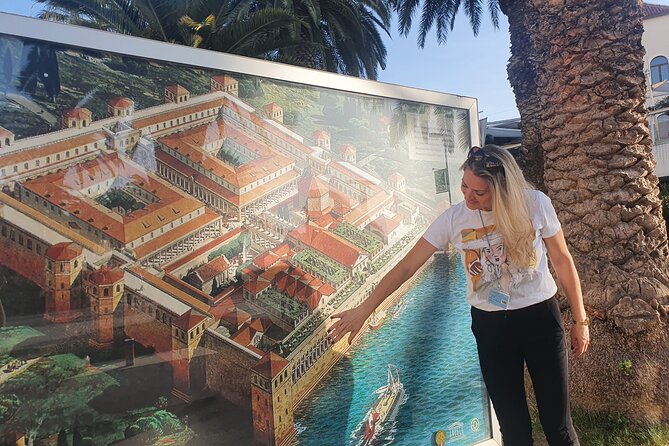
Your tour meets near the historical core of Split, at the Model of the historical core of the city of Split (Obala Hrvatskog narodnog preporoda 23). From there, you begin at Riva Harbor, which is a smart opener. It gets you oriented and puts you in the right mood before you start moving into the palace complex.
That first stretch is where Viktoria ties Croatia and Split into the show’s larger production story, so the rest of the walk has context. It’s also a good moment to ask quick questions—if you want more about the filming, the Roman architecture, or both, this is when you’ll get the clearest answers without rushing.
If you’re traveling with kids or you’re coming straight from a ferry or bus, this kind of start helps. You ease in, then you move into the denser, more concentrated sights once your legs warm up.
Diocletian Palace substructures: where Meereen’s look makes sense
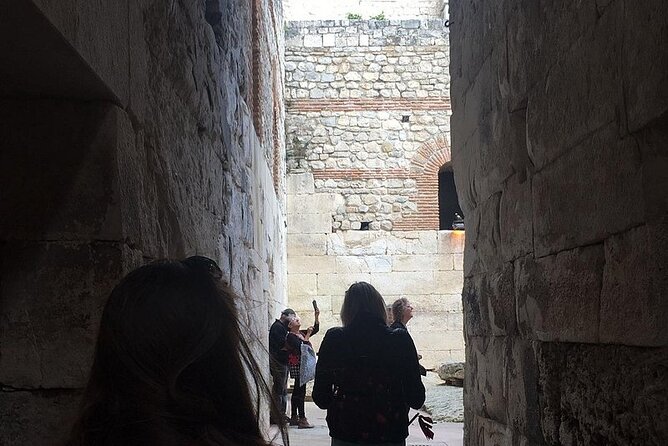
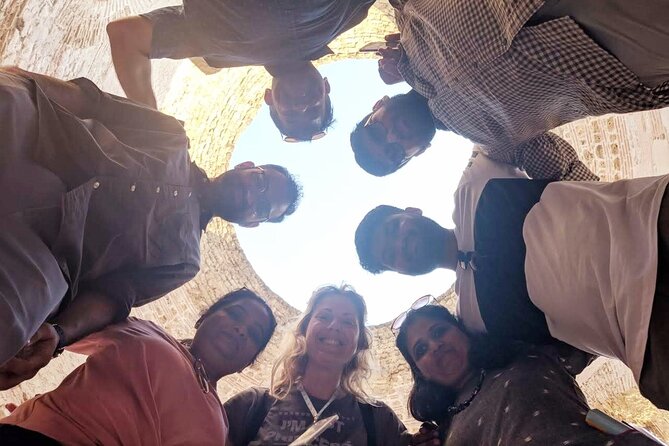
The biggest “wow” factor on this tour is the time in the Diocletian Palace substructures—the Roman basements that were used as filming locations for the show’s Meereen setting. This is where the stones feel like they have a past you can actually stand in.
Here’s the practical bit: this stop requires an entrance ticket you pay on site (listed as €8 per person). The duration is about 45 minutes, so it’s not a quick peek. You’re there long enough for the guide to explain what you’re seeing and how the production used the space.
Why I think this matters: you don’t just hear about Meereen as a concept. You see how real architecture shapes a scene. Roman substructures have a specific vibe—thick walls, low spaces, and a kind of natural drama from the way light falls. That’s exactly what a TV set designer would love.
Possible drawback: if you’re hoping for zero extra payments, plan ahead for this €8 entry. It’s not huge, but it’s also not included, so don’t let it surprise you right at the palace doors.
Vestibulum, the mausoleum, and the Peristyle: power and religion in plain sight
After the basements, the route keeps moving through key palace elements that help you understand how Diocletian’s world worked. These stops are short, but they’re chosen well.
Vestibulum of Diocletian’s Palace
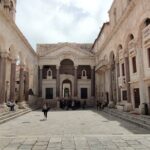
You’ll see the Vestibulum, described as an entrance area tied to the emperor’s apartments in Roman times. Even if you don’t know your Latin, you’ll grasp the layout: this is where a person would move from public space toward private power. It’s the kind of detail that makes history feel real instead of random.
You can also read our reviews of more guided tours in Split




Cathedral of Saint Domnius (originally Diocletian’s mausoleum)
Then you reach Cathedral of Saint Domnius, which was originally built as Emperor Diocletian’s mausoleum. This is one of those places where the past stays visible even after centuries of change. The building tells you the Romans weren’t just constructing buildings—they were setting up meaning that lasted.
A note on pacing: this is a brief stop, about the time you can take in the key idea without getting exhausted. If you want longer time here, you can always return later on your own, but for a combined GoT + history tour, this cadence works.
The Peristyle of Diocletian’s Palace
Finally, you’ll spend time at the Peristyle, the open square inside the palace. It was tied to religious worship of Diocletian, and the setting helps you picture formal gatherings. It also helps you connect what you saw underground with what happened above—where private authority met public space.
This stop is mostly about atmosphere and clarity. If you’ve ever felt like Game of Thrones has too many locations, this part is the opposite: it makes the setting logic easier to follow.
Street-level filming vibes: skipping the museum but still seeing the scenes
Not every Game of Thrones filming spot is inside a paid attraction. Some of the best ones are simply on the street.
At the City Museum of Split, you don’t go inside. Instead, the focus is on how filming worked outside the museum—because scenes were shot on the street nearby. You get a look that’s relevant to the show without turning the tour into a “museum day” with extra tickets and lines.
This is a smart decision if you want variety in a limited time window. You’re not stuck reading labels. You’re standing where the camera stood.
Grgur Ninski and the Golden Gate: the Roman entrances you’ll remember

Two short exterior stops do a lot of work: Grgur Ninski Statue and the Golden Gate.
Grgur Ninski Statue (Ivan Meštrović)
The Grgur Ninski statue is a landmark in Split, made by sculptor Ivan Meštrović. This stop is brief (around 5 minutes), but it helps you “label” the Old Town. It gives you an easy reference point for returning later or for mapping your own walking routes.
Also, a landmark like this is exactly what you want after the Roman-heavy palace sections. It resets your eyes and your brain. You move from emperor-scale stone to a famous piece you can spot from a distance.
The Golden Gate
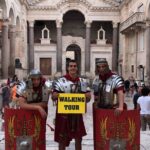
Then you reach the Golden Gate, which was the main entrance to the palace in Roman times. This is a great close to the palace story because gateways are about control—who enters, who leaves, and how space directs movement.
Even on a fast tour, the Golden Gate tends to be memorable. It’s the kind of place where your photos look better than expected because the architecture frames you.
The Game of Thrones fan stop and the real throne moment
Near the end, the tour includes a visit to the Game of Thrones Split Fan Shop. It’s a short stop, around 5 minutes, so don’t expect to shop for an hour. Think of it as a quick reset into modern fan culture after all that Roman stone.
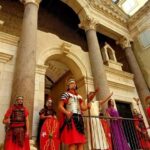
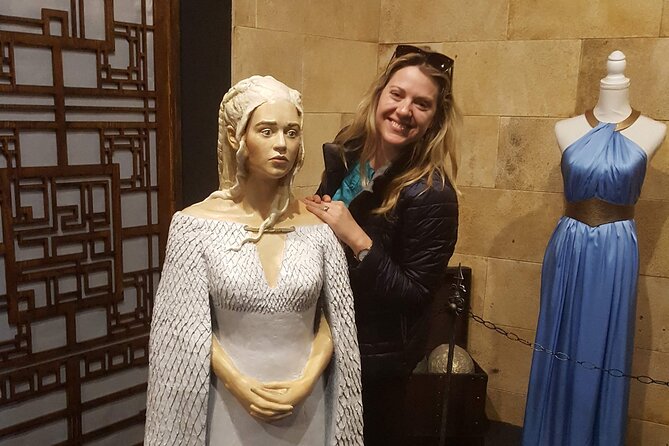
And then there’s the part you’ll be glad you saved your energy for: a chance to sit on a real throne. That’s one of those experiences that’s fun even if you’re not a superfan—because it’s physical. It’s not just “look at a replica.” It’s a moment that turns the show’s fantasy into something you can actually do.
If you’re traveling with friends, this is a great photo moment. If you’re traveling solo, it’s still a solid memory-maker—something you’ll remember when the rest of the tour starts blending together.
Price and value: what $93.52 per person gets you

At $93.52 per person, this isn’t the cheapest way to walk Split. But it makes sense if you compare it to what you get: a private, licensed tour guide focused on two themes—Game of Thrones and Split’s Roman-era core—using real locations.
You’re paying for three big things:
- Human translation: the guide connects what you see to what it means on screen and in history.
- Time efficiency: you hit multiple key sites in roughly 1.5–2 hours without wandering.
- Access to the right angle: certain stops only work when you understand why the camera or Romans cared.
The extra cost to factor in is the Diocletian Palace substructures entrance fee (€8 per person). That still keeps the overall spend fairly reasonable, especially because the tour is otherwise mostly outside or free entry areas.
One more value point: reviews highlighted how much guide storytelling helps the scenes “click.” That’s not something you get from a generic self-guided audio walk.
How to get the most out of Viktoria’s storytelling
This tour is at its best when you participate. Here are a few ways to make that happen.
First, ask for the scene-to-stone connection early. If you’re using a phone camera, start by taking one photo of the spot the guide points out, then listen for what matches it on screen. The guide’s photo book (mentioned in feedback you can probably expect to see as part of the teaching style) helps a lot, but your listening matters too.
Second, wear shoes that handle uneven stone. The palace area and Old Town lanes aren’t built for slick soles. It’s not a rugged hike, but it is steady walking.
Third, if you’re a Game of Thrones fan, decide what you want most:
- filming locations and set logic, or
- Roman context and how the empire shaped the city, or
- both equally.
Viktoria’s strongest role is blending them. Telling her your preference keeps the pacing feeling personal.
Who this tour fits best (and who should think twice)
I’d say this tour is ideal if you want:
- Game of Thrones filming locations in Split, with explanations that make sense
- Roman/Diocletian-era sights in an organized route
- a guide who’s both a licensed local expert and a dedicated fan
- a fun, memorable “do something” moment via the throne
It might be less satisfying if you:
- only care about general sightseeing and don’t want show references at all
- want a slow, museum-heavy day with long indoor stops (this route is mostly exterior and short segments)
- are trying to avoid any paid entrances whatsoever, because the substructures ticket is separate
Should you book Not Today in Split?
If you’re a Game of Thrones fan, I think this is an easy yes—because it connects the show to the place in a way that helps you picture scenes instantly. Even if you’re not a superfan, you’ll likely appreciate the Roman context around Diocletian’s Palace. The combo is what makes the tour feel worth your time: it’s both entertaining and legible.
Book it if you want an organized walk with a strong guide and a clear payoff at the locations that matter. Skip it if you’d rather spend the day completely unstructured or you hate paying small extra entrance fees.
FAQ
What is the duration of the tour?
The tour runs about 1 hour 30 minutes to 2 hours.
How much does the tour cost?
The price is $93.52 per person.
Is this tour private?
Yes. It’s a private tour/activity, so only your group participates.
Where does the tour start?
It starts at the Model of the historical core of the city of Split (Obala Hrvatskog narodnog preporoda 23, Split).
Are entrance fees included?
Diocletian Palace substructures entrance fee is not included. It’s listed as €8.00 per person paid upon entrance.
What is the main meeting point area?
Your meeting point is at the Model of the historical core of the city of Split, and the tour ends back at the meeting point.
What kind of ticket do I get?
The tour uses a mobile ticket.
Is there a weather condition for the experience?
Yes. The experience requires good weather, and if it’s canceled due to poor weather, you’ll be offered a different date or a full refund.
Can I cancel for a full refund?
Yes. Free cancellation is available up to 24 hours in advance for a full refund.