REVIEW · SPLIT
Private History Split Walking Tour in Italian – Small group
Book on Viator →Operated by Ancient Tours · Bookable on Viator
Diocletian’s Palace, explained in Italian. This 1 hour 30 minute small-group history walk in Split focuses on the palace highlights you actually want to see, with guide storytelling that connects stone, power, and everyday life inside the walls (Diocletian’s Palace and the Peristyle are the big anchors).
I like two things right away: you get a clear route that makes the palace feel navigable, and you learn the story of how Diocletian went from nobody to the most powerful man in the world.
One heads-up: the walk is inside an old stone complex, so it’s not recommended if you have issues with high steps.
In This Review
- Key Points at a Glance
- What You’re Getting in Split: a Palace Walk That Connects the Dots
- Starting at Peristyle: Your Shortcut to Understanding the Palace
- Vestibulum and the Chance of Dalmatian Singing
- Diocletian’s Substructures: How the Palace Worked Over Time
- Golden Gate and Gregory of Nin: Where the Palace Meets Identity
- Riva Harbor and the Bronze Model: Seeing Split’s Roman Past in Plain Sight
- Fruit’s Square (Trg Brace Radic): Venetian Layers and Marko Marulić
- Split Synagogue: A Quick Pass That Still Matters
- Price and Value: Does $69.39 Make Sense?
- Who Should Book This Italian Walking Tour in Split?
- Should You Book It or Pick Another Option?
- FAQ
- How long is the Private History Split Walking Tour in Italian?
- Is this tour private or shared?
- What language is the tour in?
- Do I need to buy tickets for the stops inside Diocletian’s Palace?
- Does the tour include the museum part of the Diocletian Palace substructures?
- Is the Split Synagogue included in the tour?
- Will I receive a mobile ticket?
- Where does the tour start?
- Is the tour suitable if I have problems with high steps?
Key Points at a Glance
- A tight 90-minute loop: Peristyle, Vestibulum, substructures, Golden Gate, then out toward Riva
- Italian narration you can follow easily, with guides like Maria and Doris noted for clear speaking and good preparation
- Architecture with purpose: you learn what spaces were for, not just what they look like
- Golden Gate + Gregory of Nin gets tied to local identity and even language
- Riva Harbor and Fruit’s Square add city context beyond the Roman walls
- Good value at $69.39, with free admission tickets at most stops and a mobile ticket
What You’re Getting in Split: a Palace Walk That Connects the Dots
Split can feel like a maze at first, mostly because Diocletian’s Palace is no museum-style set. It’s lived-in city structure. This tour helps you get your bearings fast by starting in the palace’s central square and then guiding you outward through the places that shape daily movement.
This isn’t a long, drawn-out tour. At about 1 hour 30 minutes, it’s sized for a first visit—especially if you want to see the core of the palace without spending your whole day indoors on a timeline. The guide is described as well educated and generally well liked, and you’ll notice the difference in how the stops are explained rather than just recited.
And yes, the story moves beyond marble and dates. The tour frames Diocletian’s rise to power as a real arc, so when you’re standing at the palace entrances or in circulation spaces, it feels connected to the person behind the building.
You can also read our reviews of more walking tours in Split

Starting at Peristyle: Your Shortcut to Understanding the Palace
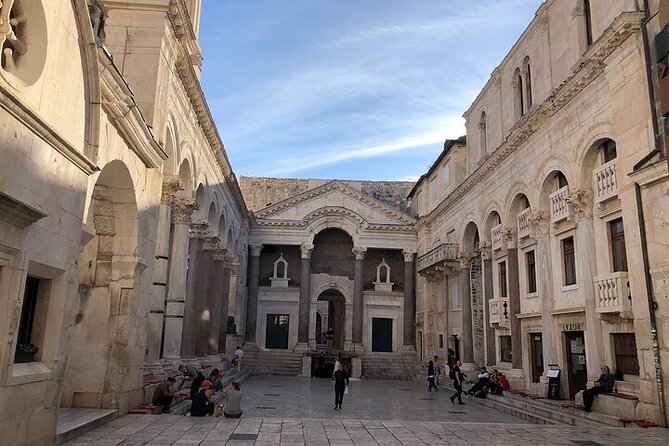
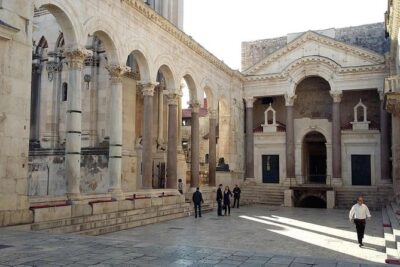
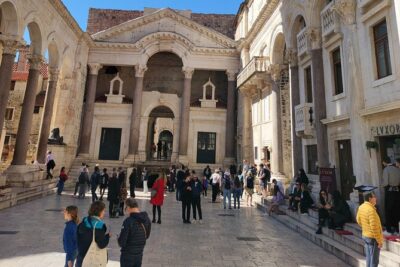
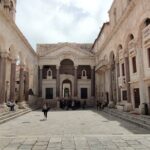
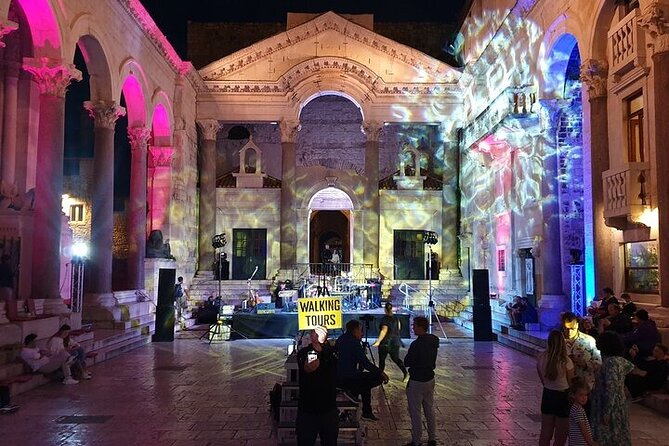
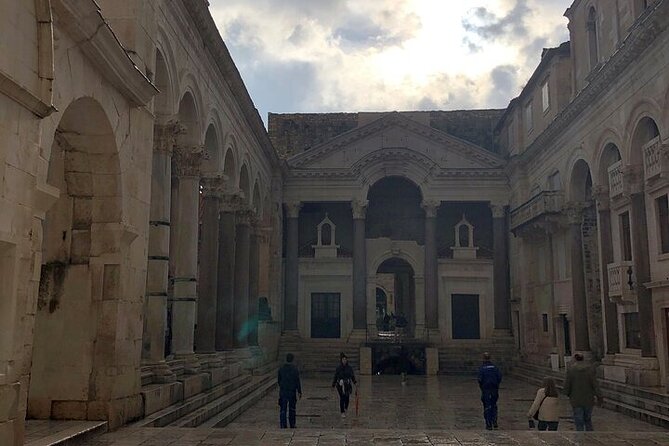
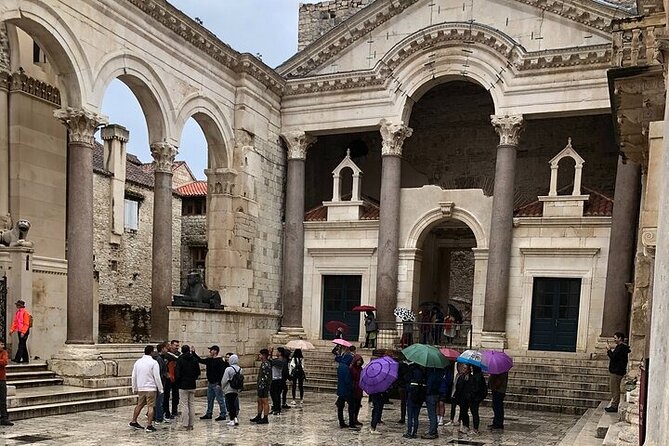
You begin at the Peristyle, the palace’s central square. This is a smart start because it gives you the palace map in real space. From here, you can reach many other key spots, so the guide can orient you with confidence.
What I like about the Peristyle stop is how it sets the tone. Even if your Roman knowledge is shaky, you can still follow the logic: power concentrates at the center, and everything else radiates outward. You’ll also be in a position where photos make sense, rather than looking back and forth trying to remember what you just saw.
Practical note: this stop is around 15 minutes, and admission is free with the ticket. It’s also a good moment to pause and notice how people move through the space today—because the palace is still functioning as a city.
Vestibulum and the Chance of Dalmatian Singing
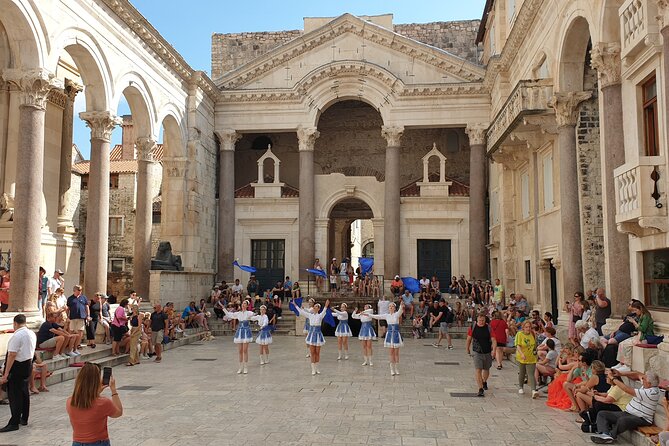
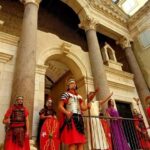
Next is the Vestibulum, where the guide focuses on the emperor Diocletian space and its background. This stop is shorter—about 5 minutes—but the point is clarity: you’re learning what you’re looking at and why this entry/transition mattered.
The tour description also notes you might hear traditional Dalmatian singing. That’s not something you can count on like a museum label, but it’s the kind of small cultural moment that can make the stone feel less remote. Even if you don’t catch it, the stop still works as a quick “hold on, what is this room?” moment.
Because it’s a short segment, this is best enjoyed by keeping your attention on the guide’s explanations rather than trying to memorize every detail. If you do that, the next parts land much better.
Diocletian’s Substructures: How the Palace Worked Over Time
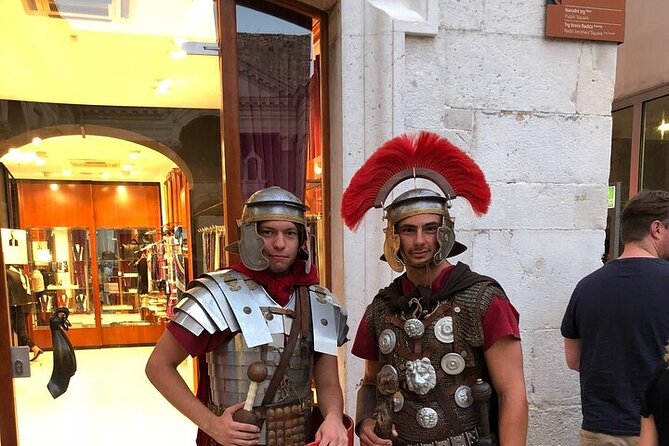
Then you head into the substructures. This is one of the most useful stops for first-timers because it shifts you from imperial symbolism to practical function: how the palace was built and what these spaces did across changing eras.
The tour notes that you’ll walk through the substructures for about 10 minutes, learning about their construction and function over the ages. Importantly, you won’t visit the museum part during this tour. That sounds like a limitation on paper, but it’s actually a strategy: it keeps the walking flow and time focused on the main story.
Possible drawback: if you were hoping for a full, museum-style indoor visit, you might want to plan a separate visit afterward to the museum portion. The upside is that you leave knowing exactly why those spaces exist, which makes a later museum visit feel less like random rooms.
Golden Gate and Gregory of Nin: Where the Palace Meets Identity
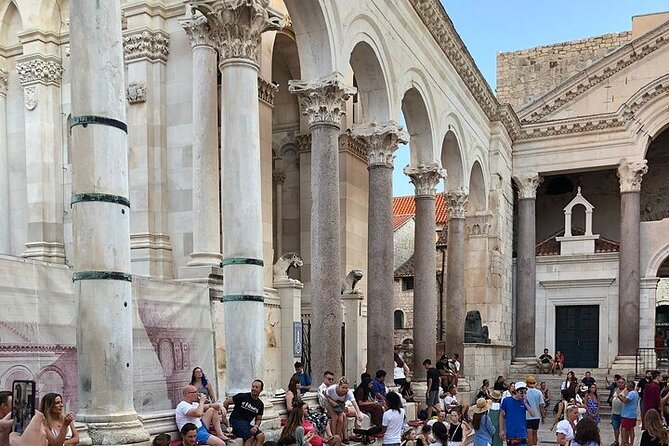
The tour’s next big hit is the Golden Gate, the main entrance into Diocletian’s Palace. Expect about 10 minutes here, with a lot of meaning packed into the view.
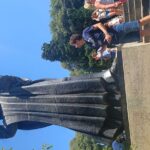
This stop isn’t just about seeing a gate. The guide shows the statue of Gregory of Nin and explains his importance to local history and language. That connection matters because it helps you understand why certain monuments survive, why they’re defended, and why they show up in local pride. You stop seeing the palace as only Roman-era architecture and start seeing it as a framework that later culture keeps using.
You’ll also get stories that tie the architecture to what happened later in Split. If you like your tours with personality—some humor, some drama, and a narrative thread—this is typically where it feels most alive.
You can also read our reviews of more private tours in Split





Riva Harbor and the Bronze Model: Seeing Split’s Roman Past in Plain Sight
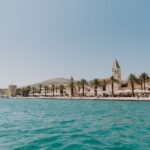
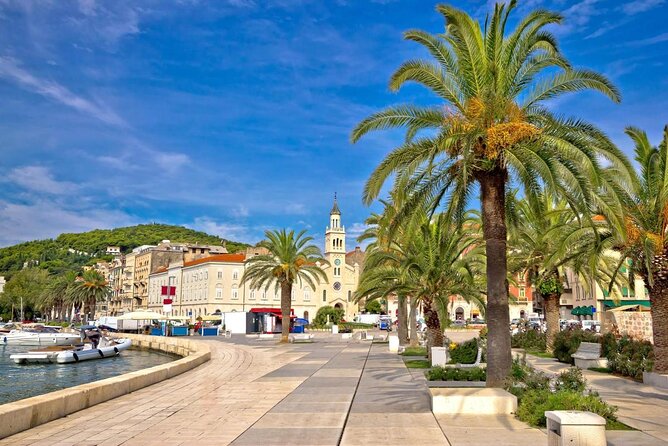
After the palace core, the tour moves toward the Riva Harbor area for about 15 minutes. This is a smart pivot, because it shows you how the palace’s presence shaped the shoreline city.
Here’s what to look for: the tour includes a view of a bronze model of Diocletian’s Palace. That model works like a visual reset. When you’ve been walking through the palace streets and transitions, the model helps you pull the pieces together without guessing.
You’ll also learn about the history of the Riva promenade, which is one of Split’s most recognizable stretches today. The value of this stop is that it connects your Roman walk to modern life outside the walls—so you can imagine how Split kept evolving instead of freezing in ancient time.
Practical consideration: you’re transitioning from palace stones to the open-air promenade area. If the weather turns, this segment can still be enjoyable because you can keep moving and refocus on views and explanation.
Fruit’s Square (Trg Brace Radic): Venetian Layers and Marko Marulić
Next comes Fruit’s Square, also known as Trg Brace Radic, with about 10 minutes on the clock. This stop adds a different layer to the Split story: the Venetian period and the cultural figures who shaped Croatian literary identity.
Two key points are highlighted:
- You’ll learn about a 15th-century Venetian citadel connected to this area.
- You’ll hear about Marko Marulić, described as the father of Croatian literature.
This part of the tour is great if you like learning that history isn’t only about rulers. It’s also about ideas that outlast buildings. The square gives you a place to stand, look around, and understand why a city’s culture is tied to where people gathered.
If you’re visiting with an eye for literature or language history, this stop is a real win. Even if you’re not, it helps you round out the palace-focused narrative.
Split Synagogue: A Quick Pass That Still Matters
The final historical stop is a pass-by of the Split Synagogue, described as 16th-century, focusing on the Jewish people in the city. This is about 10 minutes, and the listing is clear that the synagogue admission ticket is not included.
What this means in practice: you get the context and the significance of the site, but you shouldn’t expect a full inside visit unless you arrange it separately. For some people, that’s ideal: you leave with understanding without turning the tour into a longer commitment.
Possible drawback: if you hoped for a stop-to-stop pacing with every location fully entered, you might feel the synagogue segment is lighter. I think it’s still worth it because it prevents the classic “only Romans, only palaces” problem in Split. It widens the story in a short but respectful way.
Price and Value: Does $69.39 Make Sense?
At $69.39 per person for about 1 hour 30 minutes, the value hinges on two things: how tight the route is and how much you actually learn at each stop.
Here’s the practical deal:
- It’s a private tour/activity where only your group participates, so you’re not sharing the narrative with random strangers.
- You get a mobile ticket.
- Admission tickets are listed as free for most stops (Peristyle, Vestibulum, substructures, Golden Gate, Riva Harbor, and Fruit’s Square).
- The synagogue admission is not included.
That last part matters. You may spend a little extra if you want to go inside the synagogue. But the trade is that the tour stays focused and doesn’t stall while you hunt for entrances or sit through lengthy museum-only segments.
If you’re choosing between a “see the highlights” tour and a “learn the story” tour, this one leans toward the second. Your money is paying for interpretation: why Diocletian’s power shaped the city plan, and how later Split identity layers onto Roman structure.
One more timing note: the experience runs daily during the listed hours (9:00 AM to 8:00 PM), so you can usually fit it into a flexible day plan. If bad weather shows up, the guide’s job is to keep the story moving through the spaces you’re standing in.
Who Should Book This Italian Walking Tour in Split?
This tour is a strong match if you want:
- An Italian-language guide and you prefer history told through a narrative, not just signage
- A small-group pace that’s easy to follow
- A focused route through Diocletian’s Palace plus a couple city stops (Riva and Fruit’s Square) for context
It’s also a good fit for your first visit to Split. You’ll get enough structure to understand the palace layout and enough cultural context to plan what to do next on your own.
Skip it (or at least think carefully) if:
- You have trouble with high steps or uneven historic surfaces
- You need an itinerary that fully enters every site, since the synagogue is a pass-by and the substructures museum portion is not visited
Should You Book It or Pick Another Option?
I’d book this tour if you want Diocletian’s Palace explained in a way that makes the rest of Split feel logical. The best reason is the pacing: it’s long enough to matter, short enough to not drain your day, and it hits the highest-impact places like the Peristyle and Golden Gate without turning into a marathon.
If you’re the type who enjoys guides who tell stories—like Maria or Doris, noted for preparation and strong Italian—this is likely to feel worth it. You’ll leave with a mental map and a real sense of how power and later culture shaped what you see today.
If you’re mostly after pure relaxation or you’re sensitive to stairs and old stone, you might choose a different format in Split. But for most people doing their first or second day in town, this one is a smart way to spend 90 minutes.
FAQ
How long is the Private History Split Walking Tour in Italian?
It lasts about 1 hour 30 minutes.
Is this tour private or shared?
It’s private—only your group will participate.
What language is the tour in?
The tour is in Italian.
Do I need to buy tickets for the stops inside Diocletian’s Palace?
For several stops, admission tickets are listed as free. The Split Synagogue admission ticket is not included.
Does the tour include the museum part of the Diocletian Palace substructures?
No. The tour goes through the substructures, but it does not visit the museum part. You can visit it after the tour.
Is the Split Synagogue included in the tour?
You pass by the 16th-century Split Synagogue and learn about the Jewish history in Split, but admission is not included.
Will I receive a mobile ticket?
Yes, there is a mobile ticket.
Where does the tour start?
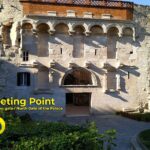
The meeting point is Peristil ulica (Peristil ul.), 21000, Split, Croatia.
Is the tour suitable if I have problems with high steps?
It’s most likely fine for most travelers, but it is not recommended for travelers who have issues with high steps.