REVIEW · SPLIT
Split & Diocletian Palace Historical Walking Tour
Book on Viator →Operated by Ancient Tours · Bookable on Viator
Ancient Split starts with one perfect square. This walking tour is all about Diocletian’s Palace as a living, breathing maze: you get the orientation first, then you walk through the palace’s working spaces, waterfront edge, and iconic entrances. Two things I really like are the option for a small group (max 5) and the up-close photo opportunities that come from focusing on the palace’s key architectural spots rather than a rushed bus-style stop list. One thing to keep in mind: you’ll cover the major highlights, but a couple named sights are not included in the tour admission (so plan for small extra costs if you want everything).
You’ll also appreciate that the route is short enough to stay enjoyable, about 1 hour 30 minutes. It runs in English, with morning and afternoon options for flexibility, and the meeting point is right where you want to be to begin mapping out Old Town.
In This Review
- Key Points at a Glance
- Walking Into Diocletian’s Palace: The Peristyle Start You’ll Thank Yourself For
- A Palace Built to Work: Substructures Without the Museum Detour
- South Wall Views and the Riva Harbor Story
- Fruit Square and the Venetian Layer Over Roman Bones
- The Last Roman Temple Moment Inside the Palace Walls
- Vestibulum of Diocletian’s Palace: Personal Quarters With a Human Touch
- Triklinij: The Dining Hall and Walkway That Explain the Palace Life
- Moving Past the 15th-Century Venetian Palace Museum Spot
- Mausoleum Cathedral to the North Gate Statue: From Diocletian to Croatian Language
- Golden Gate and the Gregory of Nin Angle (Ticket Not Included)
- Riva Harbor Redux: Bronze Model + Promenade History
- Price and Value: Does $156.17 Make Sense?
- Group Size, Language, and Pacing: When Small Helps (and When It Doesn’t)
- Best for Whom: Architecture Lovers, Orientation Seekers, and Photo Planners
- Should You Book This Split & Diocletian Palace Walking Tour?
- FAQ
- How long is the Split & Diocletian Palace Historical Walking Tour?
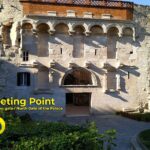
- Where does the tour start?
- What languages is the tour offered in?
- Is there a small group option?
- What kind of tickets are included?
- Does the tour include the substructures museum?
- Are mobile tickets provided?
- Is free cancellation available?
- Is public transportation nearby?
- Are service animals allowed?
Key Points at a Glance
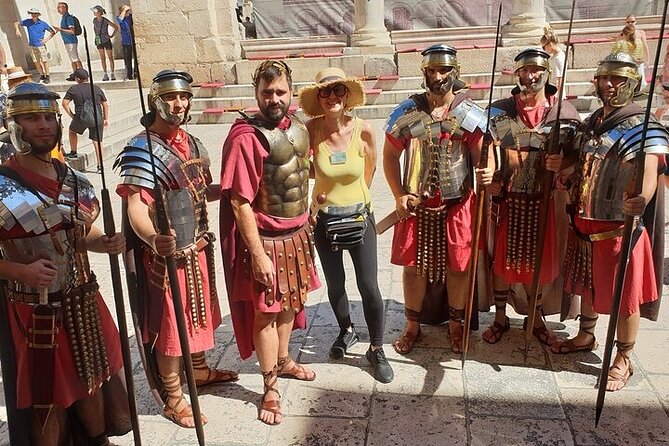
- Small-group option (max 5): great if you like questions and closer guide attention.
- Strong orientation: you start in the palace’s central hub and build your understanding as you walk.
- Free entry at many stops: several major areas are ticket-free on this route, keeping the experience good value.
- You’ll see more than buildings: the guide connects walls, gates, and waterways to how the palace functioned over time.
- A couple add-on admissions: the Golden Gate and a later Riva Harbor model stop aren’t included, so budget a bit.
- Photo-friendly route: lots of “stand here and shoot” angles of the palace exterior and key interiors.
Walking Into Diocletian’s Palace: The Peristyle Start You’ll Thank Yourself For
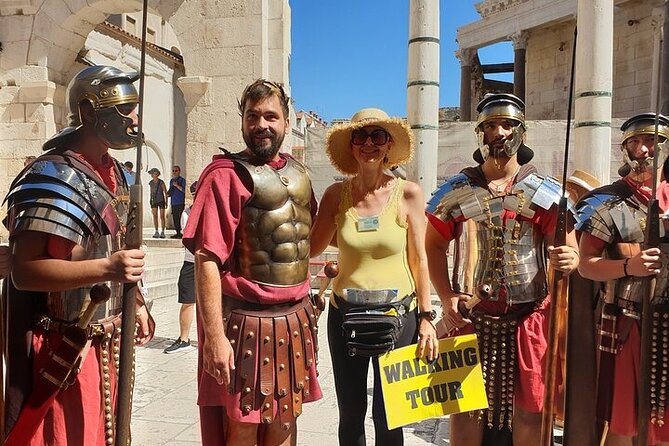
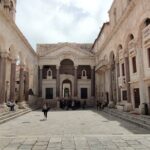
Your tour begins at Peristil ulica (right by the palace’s main square). From the start, the guide sets you up with the one thing Split visitors often miss: a clean mental map. The first stop is the Peristyle, the palace’s central square. Think of it as the palace’s navigation center. Once you understand this layout, every alley and doorway you see later makes more sense.
What I like about starting here is how it changes your whole walk. You’re not just looking at stone. You’re learning what connects what—how you can move from the central hub to the palace’s other zones. And because the Peristyle is a real focal point in Split’s daily life, you can also frame photos in context instead of shooting random walls.
This is also a good time to get your bearings if you’ve just arrived and your brain is still catching up to the street plan.
You can also read our reviews of more walking tours in Split
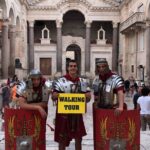

A Palace Built to Work: Substructures Without the Museum Detour
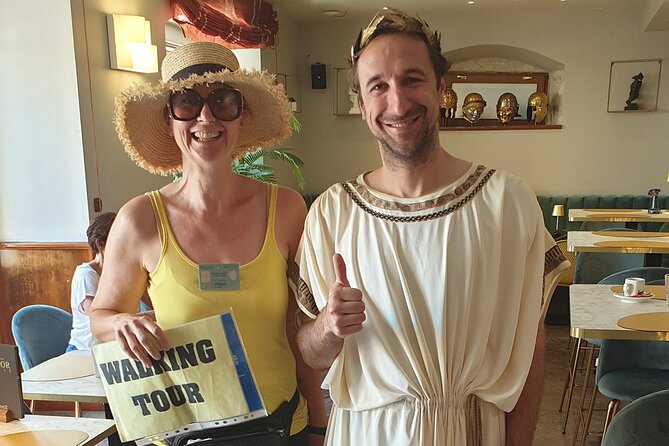
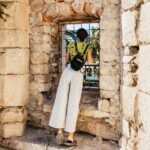
Next you head to the Diocletian Palace substructures—the central hallway and the foundation story that most casual visits skip. This is where you learn how the palace was constructed and what those spaces were for as the centuries changed their role.
Here’s the practical bit: the tour does not include the museum part of the substructures. You’ll get the core information and pass through the substructures area on the main route, and you can visit the museum portion afterward if you want the deeper dive.
Why this works: you still get the “how it was built” understanding without losing half your trip to indoor ticket lines. If you’re the type who enjoys architecture and how places were engineered, this stop is a major payoff. And if you prefer outdoor walking, it stays manageable.
South Wall Views and the Riva Harbor Story
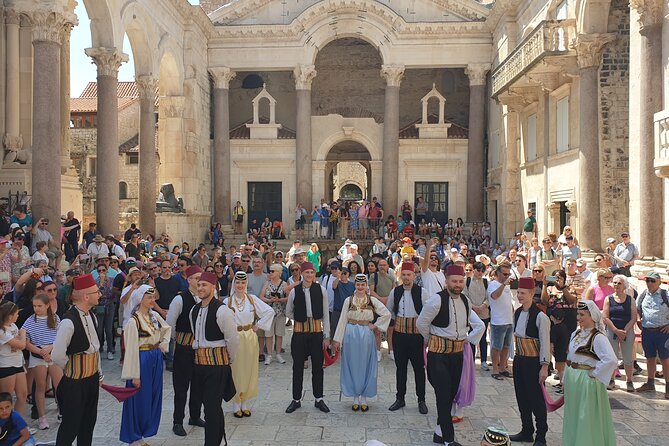
Then you shift from palace stone to Split’s waterfront energy. The Riva Harbor stop is designed to help you see the relationship between the city’s seafront and the palace’s south wall.
This matters because the palace isn’t isolated. It’s built right up against the sea, and that changes how you interpret the whole complex. The guide’s explanation helps you notice features you might otherwise overlook—where the palace meets the city’s everyday waterfront life.
Even if you’re planning a separate stroll along Riva later, this is a smart timing choice. You’ll look at the promenade differently once you understand what you’re standing beside.
Fruit Square and the Venetian Layer Over Roman Bones
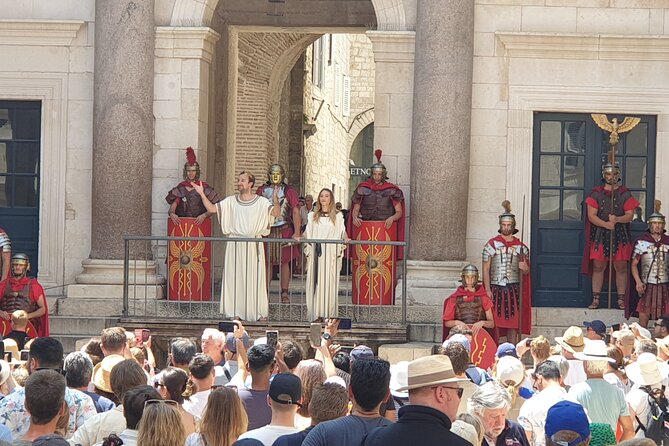
A quick hop brings you to Fruit’s Square (Trg Brace Radic), a spot that helps you see how Split kept building on itself. Here you’ll learn about the area as part of an old Venetian citadel and see the sculpture of Marko Marulić.
This stop is short, but it’s one of those “small dose of context” moments that keeps the palace from feeling like a museum set. Split isn’t stuck in one era. It’s a stack of eras, and the architecture reflects that layering.
If you like cities that grew over time instead of being preserved as-is, this kind of stop makes the tour feel more like the real place you’re visiting.
The Last Roman Temple Moment Inside the Palace Walls
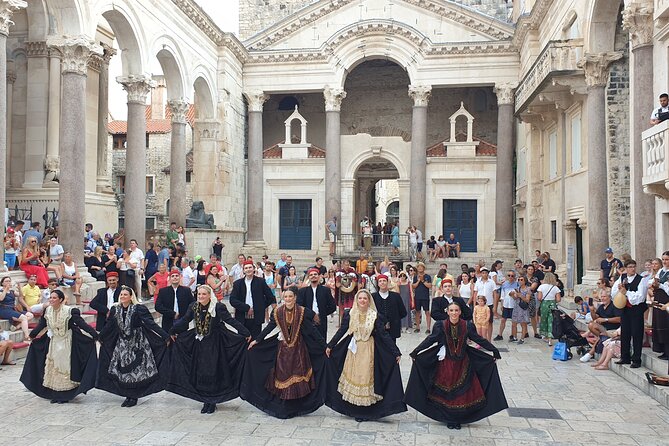
At one point you’ll get to the last remaining ancient Roman temple in the palace. This is one of those stops that sounds simple, but it changes your sense of what Diocletian was building.
Even if Roman sites don’t automatically grab you, seeing a temple element that survived while the palace transformed around it gives you a clearer picture of why this complex mattered. It’s also a good photo moment because the contrast—ancient sacred space inside a later fortress-like palace—shows up immediately in the eye.
If you’re walking with a camera phone, be patient here. The angle you want often needs you to step back a few feet and catch the surrounding stonework.
You can also read our reviews of more historical tours in Split



Vestibulum of Diocletian’s Palace: Personal Quarters With a Human Touch
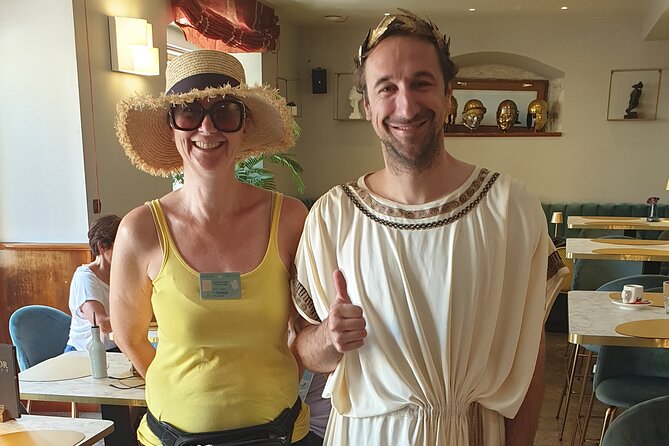
Now you move into the palace’s more personal spaces, starting with the Vestibulum of Diocletian’s Palace. This is the entrance hall to Diocletian’s personal quarters. The guide connects you to what the vestibule represents and how it fit into the ruler’s world.
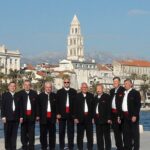
One detail I find especially charming is that you might hear traditional Dalmatian singing here. It’s not guaranteed based on the information you’re given, but the possibility makes the stop feel more alive than a typical “look and move on” interior moment.
Even if no singing happens during your timing, this stop usually lands well because entrance halls and thresholds are where you feel how power was staged: who entered, how they were processed, and what visitors experienced first.
Triklinij: The Dining Hall and Walkway That Explain the Palace Life
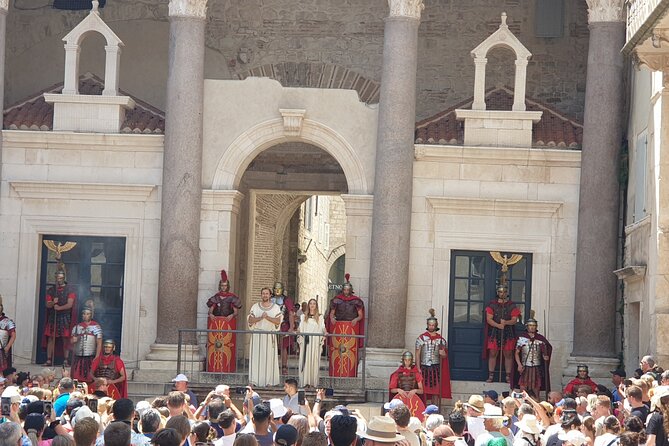
The next mini-stop is Triklinij, which includes remains and a partial reconstruction of Diocletian’s personal walkway and dining hall.
This is the kind of spot that helps you picture daily life. Instead of just walls and gates, you start imagining meals, movement, and the rhythm of the ruler’s domestic spaces. Even if you don’t know much Roman culture, the layout and reconstruction make it intuitive.
It’s also a great moment for quick photos because you can often capture the setting without needing a long indoor break. Short stop, high clarity.
Moving Past the 15th-Century Venetian Palace Museum Spot
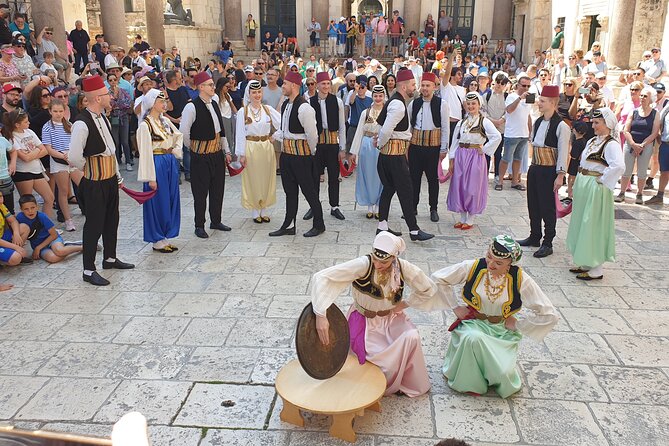
You’ll also pass a 15th-century Venetian palace that is now the City museum. Even though the tour doesn’t position this as the core museum visit, it’s worth noting because the palace story in Split isn’t purely Roman.
Venetians shaped a lot of Dalmatian coastal life. Seeing a later palace presence inside the same world as Diocletian’s walls is a reminder that Split kept reinventing itself, not just preserving the old.
If museums are your thing, you might want to plan extra time elsewhere in the city on another day. This tour keeps momentum and gives you a sense of direction.
Mausoleum Cathedral to the North Gate Statue: From Diocletian to Croatian Language
The tour then takes you to the cathedral in the mausoleum of emperor Diocletian. This is one of Split’s most important transformations: a mausoleum turned into a place of worship. It’s not just a building change. It’s a statement about how later generations reused space and meaning.
From there, you’ll spend time at Grgur Ninski’s statue, made by Meštrović, located in front of the north gate. This stop connects the palace era to modern identity. The guide shares why Gregory of Nin matters in Croatian language history, and it’s a powerful pairing with the palace setting.
If you’re learning your way around Split, standing near a major gate and tying it to a national story makes the city feel personal, not academic.
Golden Gate and the Gregory of Nin Angle (Ticket Not Included)
One of the tour’s signature moments is the Golden Gate, the main entrance to Diocletian’s Palace. You’ll learn about its significance and see the statue of Gregory of Nin again from the gate perspective.
Here’s the practical catch: admission isn’t included for this stop. That means the guide can position you for the story and the views, but you may need an extra ticket if you want full access to everything associated with that area.
Even so, the storytelling here is usually what makes it memorable. Gates are not decorative in this part of the world. They’re about control, movement, and who belongs inside.
Tip for you: if you care about maximizing sights without surprises, check beforehand what you’ll be able to see at no extra cost versus where paid admission starts.
Riva Harbor Redux: Bronze Model + Promenade History
The walk ends with another look at Riva Harbor, this time with a focus on a bronze model of Diocletian’s Palace. This is a smart final touch because it helps you “lock in” what you walked through.
You’ll also learn about the history of Split’s Riva promenade, which is one of the city’s favorite places to wander. The bronze model is the type of detail that makes you pause, point, and suddenly understand how the palace footprint fits the modern city.
This stop also carries an admission detail: the bronze model area is not included in the tour ticket. If you love visual explanations, consider treating this as a planned add-on rather than a surprise.
And yes, the timing usually works well for photos because you’re back near the waterfront area where light can be forgiving.
Price and Value: Does $156.17 Make Sense?
At $156.17 per person for about 90 minutes, this isn’t the cheapest way to explore Split. But the value is in what you’re not doing: you’re not guessing your way through a huge complex, and you’re not spending time figuring out what connects to what.
A few value signals I’d look for:
- Free entry at many major stops, which keeps you from constantly paying your way deeper.
- An educated guide who connects architecture to how the palace functioned and how it evolved.
- The option for a small group (max 5), which is often the difference between a tour you enjoy and a tour you just tolerate.
If you’re the kind of visitor who likes to understand a place instead of only collecting photos, the price usually feels fair. If you’re already comfortable navigating the palace independently and you mainly want a highlight visual walk, you might decide to self-guide. But the whole point here is interpretation—and the route is built to support that.
Group Size, Language, and Pacing: When Small Helps (and When It Doesn’t)
You can choose between a small group tour (max of 5) and a regular option (up to 20). The cap matters because this is a tight, historical environment. In a larger group, people can block each other at key angles. In a small group, you’re more likely to hear the guide clearly and get answers to your questions.
The tour runs in English and you’ll receive confirmation at booking and a mobile ticket. It also works for many visitors because the tour is short and you’re moving location to location, not spending all day inside.
One practical word: the tour experience depends a lot on guide volume and group positioning. Some travelers have had issues with guides not speaking loudly enough, so if you choose this, show up a few minutes early, stand where you can hear, and don’t be shy about asking the guide to repeat if you miss a key detail.
Best for Whom: Architecture Lovers, Orientation Seekers, and Photo Planners
This is a good fit if:
- You want a fast orientation to Split’s most famous site.
- You like walking with a guide who explains how spaces were used (not only what they look like).
- You’re booking limited time and want a route that hits several key palace areas.
- You enjoy learning why modern Split has certain landmarks in certain places—like the gates and language-linked stories.
It may be less ideal if:
- You want a full museum day. This route avoids the museum part of the substructures, and paid admission is part of a couple stops.
- You dislike walking in tight historical streets where you’ll share space with other people.
If you do have museum time in your schedule, consider treating this tour as your map and context piece, then add museum stops on your own afterward.
Should You Book This Split & Diocletian Palace Walking Tour?
I’d book it if you want to understand Diocletian’s Palace without losing your afternoon to guesswork. The starting point at the Peristyle helps you learn the layout fast, and the sequence of substructures, waterfront, private quarters, and major gates creates a story you can actually remember. The small group option is the cherry on top.
Before you book, decide two things:
- Are you okay with a couple paid extras (like the Golden Gate admission and the bronze model area)?
- Do you want a guided route that prioritizes interpretation over museum immersion?
If yes to both, this tour is a strong way to get oriented and enjoy Split’s most important landmark with less frustration and more understanding.
FAQ
How long is the Split & Diocletian Palace Historical Walking Tour?
It lasts about 1 hour 30 minutes.
Where does the tour start?
The meeting point is at Peristil ulica, 21000 Split, Croatia.
What languages is the tour offered in?
The tour is offered in English.
Is there a small group option?
Yes. You can choose a Small group Tour (max of 5) or a regular tour (max of 20).
What kind of tickets are included?
Many stops are marked Admission Ticket Free, but some areas are not included (for example, the Golden Gate and the bronze model stop).
Does the tour include the substructures museum?
No. The route goes through the substructures area for the main information, but it won’t visit the museum part. You can visit that portion after the tour.
Are mobile tickets provided?
Yes. A mobile ticket is included.
Is free cancellation available?
Yes. You can cancel for a full refund if you cancel at least 24 hours before the experience starts.
Is public transportation nearby?
Yes, it is listed as near public transportation.
Are service animals allowed?
Yes, service animals are allowed.