REVIEW · SPLIT
Split: History Walking Tour of the Old Town
Book on GetYourGuide →Operated by HI-story HiSTORY · Bookable on GetYourGuide
Split’s stones have better stories than you’d think. This Old Town history walk threads together Roman power, medieval streets, and a real sense of how people lived here—ending on the palm-lined Riva. In a tight 90 minutes, you get major sights without doing mental gymnastics.
I especially like how much you learn from a licensed guide who actually explains what you’re seeing, not just dates and names. I also like the tonal shift from bright plazas to the Diocletian’s Cellars, where the palace feels dark and pressurized, with Game of Thrones references woven into the experience. One consideration: it’s still an outdoor walking tour, so plan for sun and heat and bring what you need to stay comfortable.
In This Review
- Key things to know before you go
- Split’s Old Town in 90 Minutes: The Fast Way to Get Oriented
- Starting at Golden Gate: Setting the Tone Before You Enter the Palace
- Peristyle and Mausoleum: Roman Power You Can Still Sense
- Temple of Jupiter and the Vestibule: When Stone Becomes a Story
- Pjaca and Fruit Square: The Old Town Outside the Palace Bubble
- Diocletian’s Cellars: The Coolest Story Stop (Even in Summer)
- Ending on the Riva: Turning History Into a Real Day Plan
- Price and Value: What $41 Buys You Here
- What to Bring for a Comfortable Walk Through Split
- Which Guides You Might Get, and What That Means for the Experience
- Who Should Book This Tour (and Who Might Skip It)
- Should You Book Split’s History Walking Tour of the Old Town?
- FAQ
- How long is the Split Old Town history walking tour?
- What’s the meeting point?
- Is pickup available?
- What sites will I see?
- What languages are offered?
- Is there a private group option?
- What should I bring?
- How much does it cost?
- Can I cancel for a refund?
- Where does the tour end?
Key things to know before you go
- Golden Gate to the palace core: you start right where the story begins and move through the most recognizable monuments
- Roman set pieces you can actually understand: Peristyle, Mausoleum, Temple of Jupiter, and the Vestibule explained in plain language
- Diocletian’s Cellars in cooler, darker contrast: palace archaeology with dramatic mood and strong storytelling
- Game of Thrones tie-ins that fit the setting: dragons’ chains and other show moments used as a fun way to remember the locations
- You finish on the Riva promenade: built-in time to breathe and get practical ideas for the rest of your day
- Small but memorable group energy: guides use questions, riddles, and jokes, and time can feel like it flies by
Split’s Old Town in 90 Minutes: The Fast Way to Get Oriented
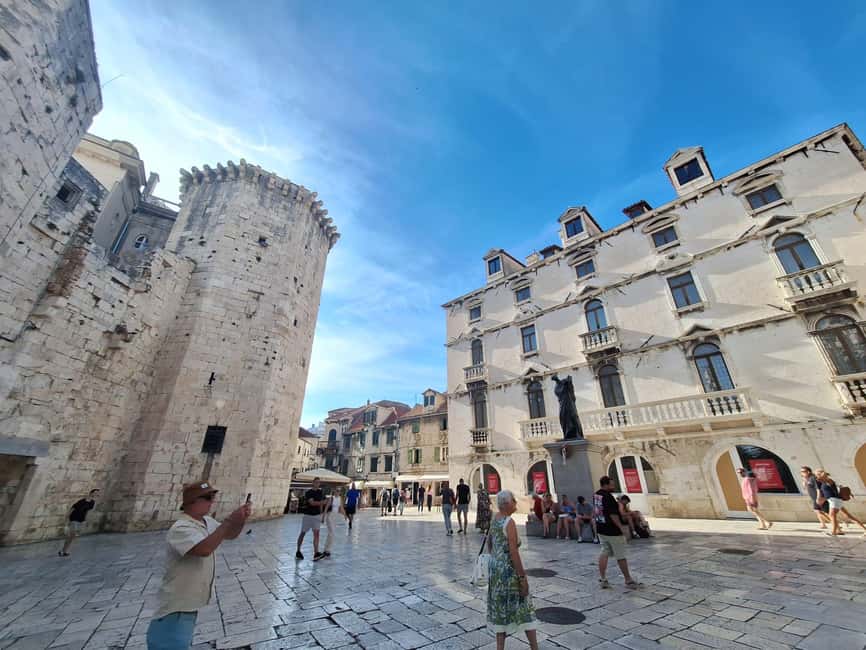
If you’ve ever wandered Split solo and felt like you were reading the city in fragments, this is the shortcut. You walk through the central layers of the city—Roman palace structure, old town streets, and the seafront promenade—so your brain stops treating it like a random pile of historic buildings.
At 90 minutes, it’s long enough to cover the big landmarks and short enough that you’re not finished before the day really starts. You’ll end right on the Riva, where it’s natural to keep exploring, grab a snack, or plan an island day while the history still feels fresh.
This tour is also a good value check. At about $41 per person, you’re paying for a licensed guide’s interpretation, the pacing through the palace complex, and the practical guidance you usually only get from someone local.
You can also read our reviews of more walking tours in Split
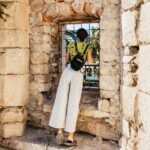
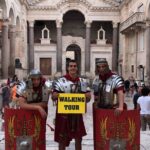

Starting at Golden Gate: Setting the Tone Before You Enter the Palace
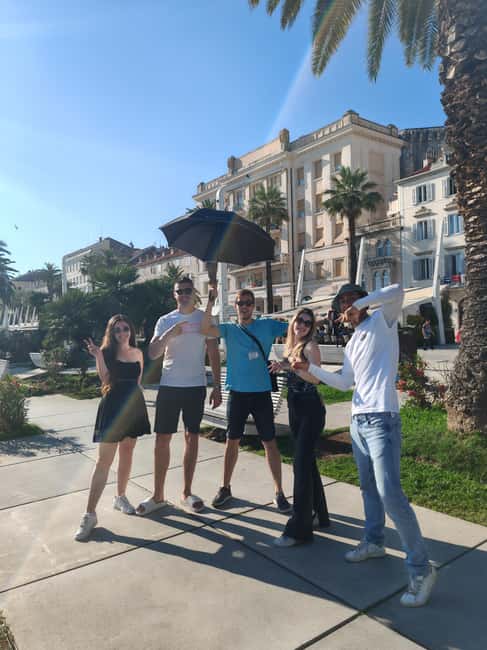
You begin near Golden Gate, one of the main entrances that helps you understand Split as a fortress-city complex, not just a pretty waterfront town. Your guide typically starts with orientation—what you’re looking at, why it mattered, and how this part of town connects to the broader history of the region.
From there, you move toward nearby public green space (Đardin Park) and then deeper into the palace core. This matters because the palace layout can feel confusing if you’re walking it cold. The guide’s job is to give you a mental map as you go.
If you’re the type who likes to ask why things are where they are, you’ll like this pacing. Several guides have a habit of making the walk interactive with questions and riddles, which can turn “another stop” into something you remember later.
Peristyle and Mausoleum: Roman Power You Can Still Sense
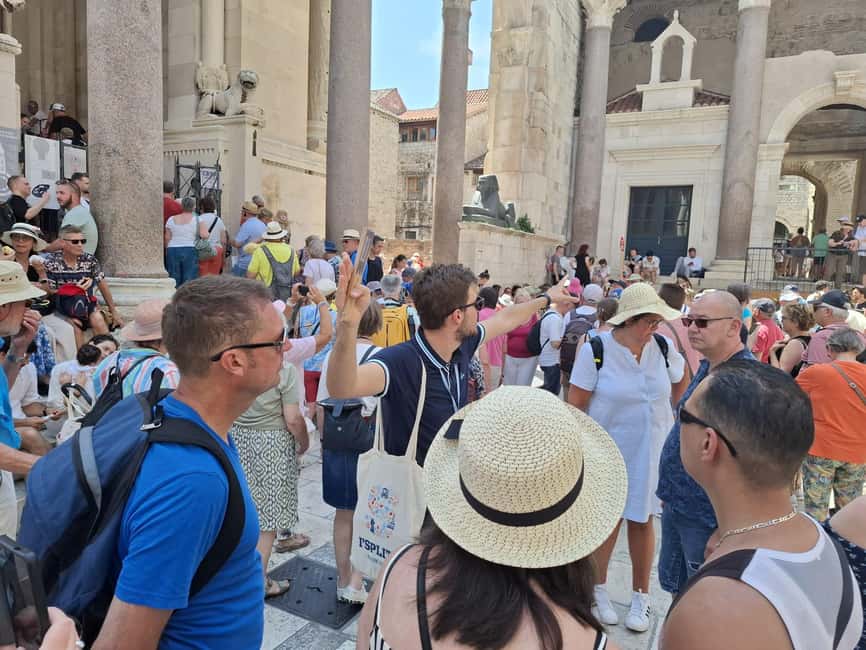
The walk hits the Peristyle, a central space that reads like the living heart of Diocletian’s palace. It’s not just a courtyard vibe. It’s a stage built for authority, movement, and control—so once you understand the function of the space, the shapes and openings start making sense.
Right after that, you’ll see the Mausoleum. In a place like Split, the mausoleum isn’t just a monument behind a barrier. It’s a reminder that rulers wanted their presence to stay visible and meaningful long after their reigns ended.
Your guide helps you connect architectural details to the people behind them. You’ll also get context on Emperor Diocletian, including stories and interpretations that explain why his legacy shaped what you see today.
One practical perk: you’ll learn what to focus on visually, so you’re not just collecting photos. You’ll know what each stop is doing in the larger palace plan.
Temple of Jupiter and the Vestibule: When Stone Becomes a Story
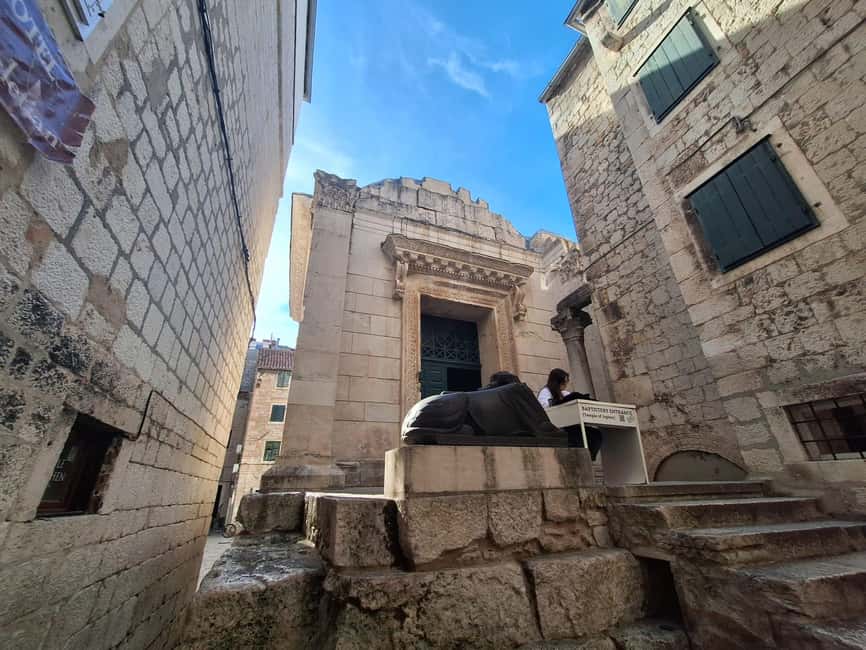
Next comes Jupiter’s Temple, a highlight for a reason. The setting gives you a dramatic sense of the palace scale, and the guide typically explains how power and religion overlapped in Roman design.
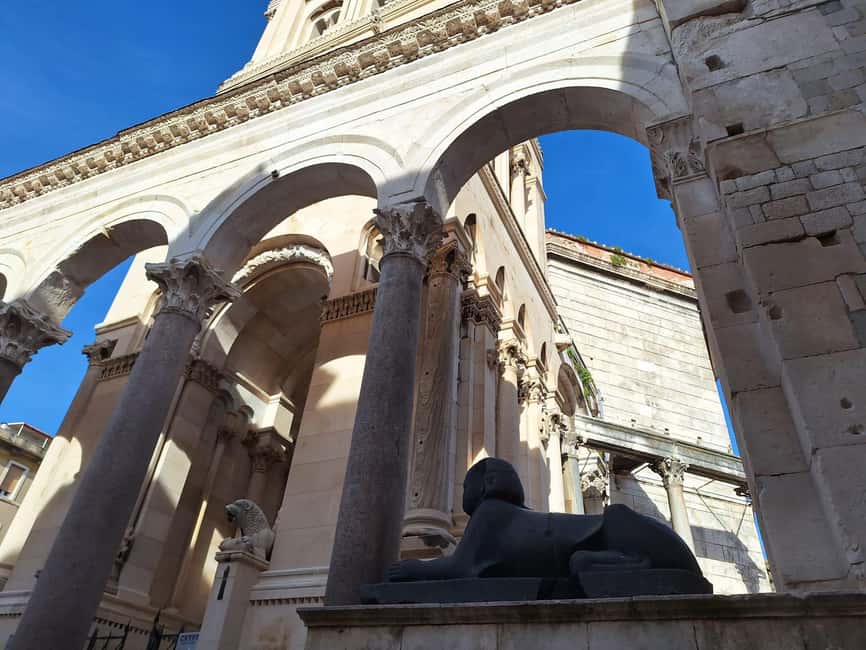
You’ll also learn about the temple entrance details, including a headless Sphinx that guards the way in. Even if you’re not a mythology person, the guide’s explanation turns it from random stonework into an actual clue about how the site was experienced.
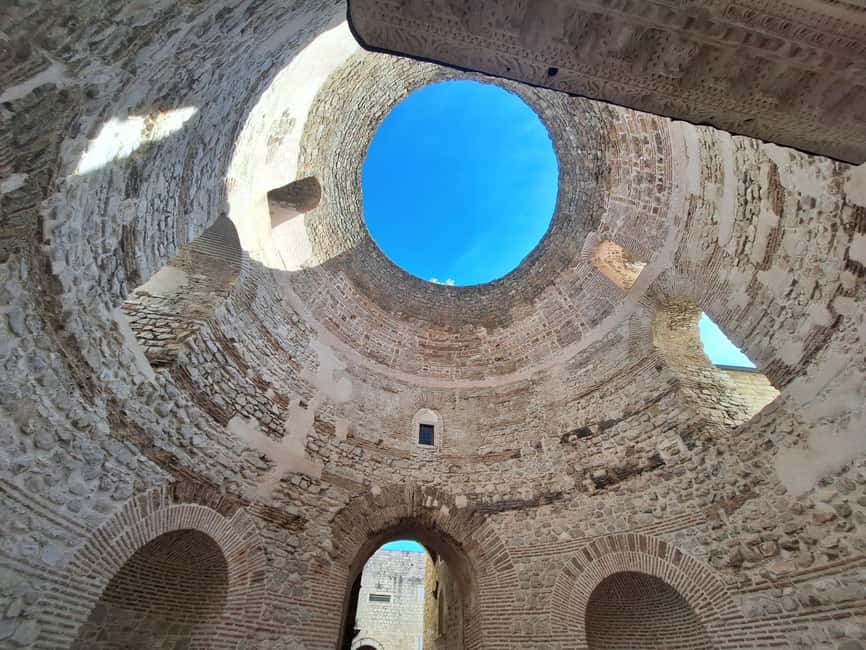
After that, you pass through the Vestibule. This is the kind of stop that’s easy to rush past if you’re sightseeing alone, because it looks like a passage. With commentary, it becomes part of the story of movement and ritual—how people entered important zones and what that communicated.
Expect quick, focused segments here. The tour is 90 minutes total, so you get enough time to look closely without losing the thread.
Pjaca and Fruit Square: The Old Town Outside the Palace Bubble
Not all the meaning is inside the palace walls. You’ll also spend time around Pjaca (People’s Square) and Fruit Square (Voćni trg), where the city’s daily life layers sit closer to the surface.
This is one of the best parts for me because it’s where history turns from architecture into behavior. Your guide ties the monumental buildings to the lived reality of Split’s people—market rhythms, public space use, and the reasons certain areas stayed important.
You’ll also pick up some local texture here. The tour includes insight into local food and habits, plus where to find Dalmatian specialties. That’s the kind of practical information you can’t get from a guidebook, and it helps you keep your day moving instead of stopping every two minutes to search your phone.
You can also read our reviews of more historical tours in Split


Diocletian’s Cellars: The Coolest Story Stop (Even in Summer)
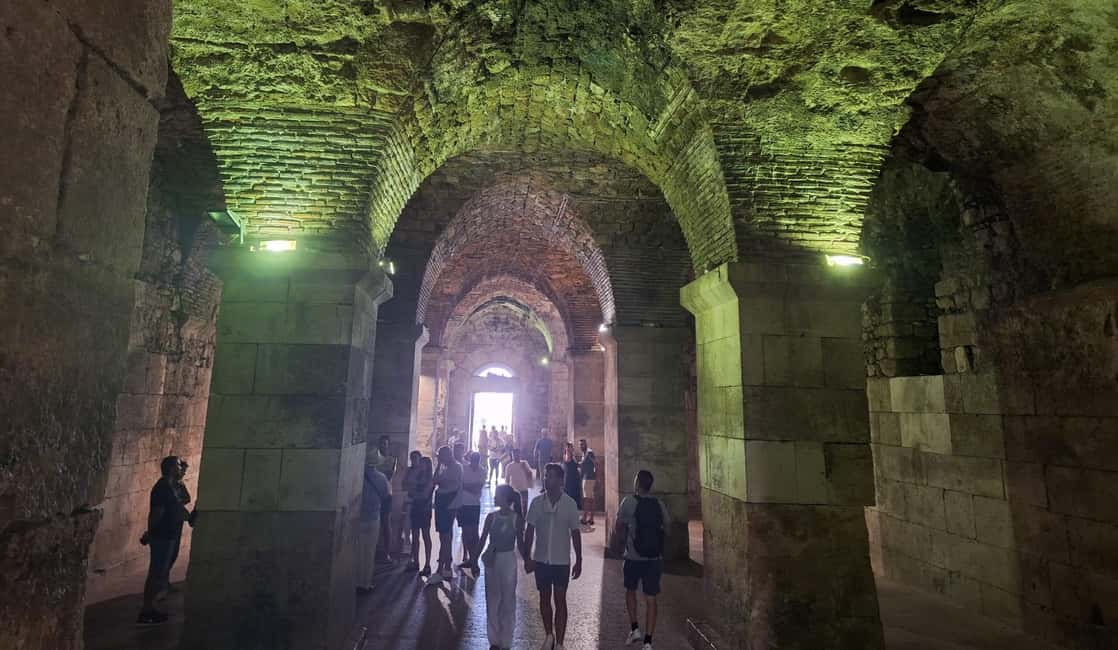
Then you reach the Diocletian’s Cellars, and the whole mood changes. The space is darker and more enclosed than the sunlit palace areas you’ve been seeing, which makes it a memorable contrast.
Guides lead you through the cellars with clear explanations, and this is where the tour’s creativity really shows. You’ll hear Game of Thrones references tied to where filming ideas were placed—like the moment when dragons were chained—used as a way to help you map the space faster. The point isn’t to pretend this is show trivia. It’s to give the locations a pop-culture anchor so you remember the geography.
Some guides also bring up other dramatic show comparisons, like battles or character analogies connected to palace and cellar imagery. Even if you’re not deep into the series, the guide uses these moments to make the architecture feel less academic and more human.
A practical bonus from past tours: one guide has highlighted a fresh-water source delivered via a very old aqueduct, pointing out how clever Roman infrastructure could still have real impact in daily life. If your guide includes it, it’s the kind of detail that makes the city feel alive rather than frozen in time.
Ending on the Riva: Turning History Into a Real Day Plan
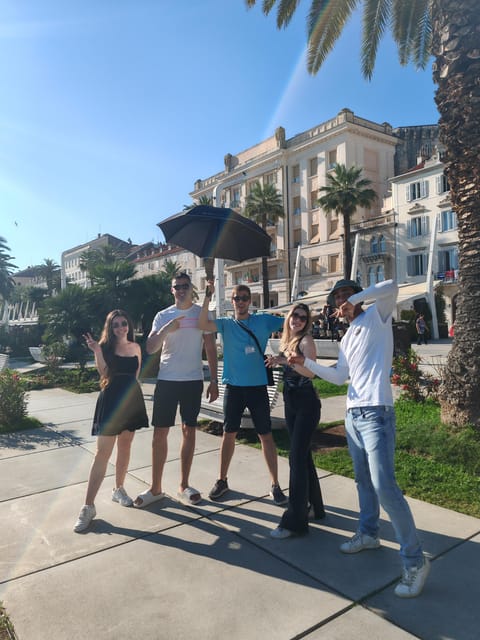
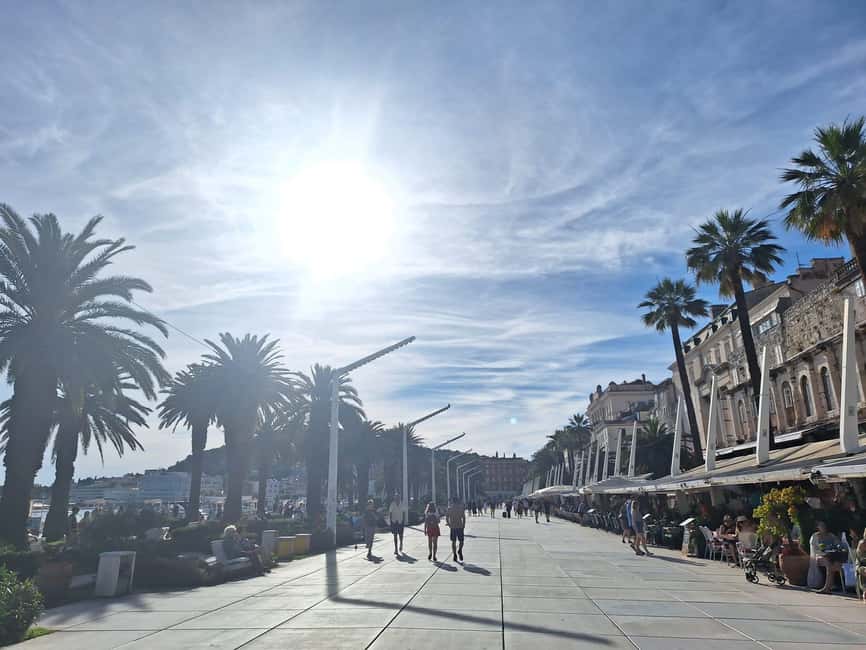
When you finish at the Riva, it feels like exhale time. The promenade is lined with tall palm trees, and you’re placed right where you can choose your next move without backtracking.
This is also where the guide’s local thinking helps. You’ll get recommendations for how to spend the rest of your day and which islands to consider. You’ll also get tips on where locals eat and what Dalmatian specialties are worth seeking out.
This matters because Split is the kind of place where your best day can depend on choices you make around midday. Doing history first sets you up to explore afterward with context, not just without a plan.
Depending on the option, you may have two drop-off points, including the model area of the city’s historical core and the Riva itself. Either way, you end in a position where continuing is easy.
Price and Value: What $41 Buys You Here

At $41 per person for 90 minutes, this isn’t a throwaway add-on. You’re paying for three things that add real value.
First, you’re buying interpretation of major sites—Golden Gate, Peristyle, Mausoleum, Jupiter’s Temple, Vestibule, and the Cellars—so you don’t waste time figuring out what you’re looking at. Second, you’re paying for a local licensed guide who knows how to keep the story coherent while you move through a crowded historic area. Third, the tour gives you practical takeaways: food guidance, local habits, and a short plan for the hours after the walk.
In my view, that combination is what turns the price from “reasonable” into “good decision.” You’re not just seeing buildings. You’re leaving with clarity, and that usually saves time later.
Also, if you want flexibility, you can book with free cancellation up to 24 hours ahead and use reserve now, pay later options. That’s helpful if your schedule might shift as your trip evolves.
What to Bring for a Comfortable Walk Through Split
This kind of tour makes small comfort issues big. You’ll be walking through old streets and palace areas, so comfortable shoes are non-negotiable.
Bring a hat and sunscreen, especially if you’re in Split during peak sun. And don’t forget water. The tour includes a mix of outdoor exposure and indoor/cellar shade, but you still need to be able to comfortably cover the whole route.
If you get heat-sensitive, choose a time of day when you’ll be least cooked. You can’t control the weather, but you can control your effort level by showing up prepared.
Which Guides You Might Get, and What That Means for the Experience
This is a guided tour with live instruction in English and Spanish, and the vibe can vary depending on the guide’s style. Past guides have leaned into humor, riddles, and questions, which turns the palace and cellars into a kind of mini class that doesn’t feel like a lecture.
I’ve seen mention of guides like Nina, Maya, Marc, and Marko. Some guides show up with extra visual materials such as photos and maps, which is a big help if you like to connect the dots after the tour ends.
You might also notice the guide’s crowd management approach. One guide has been praised for managing crowds and even helping avoid lines, plus finding shaded spots to keep the group comfortable. That kind of know-how is part of the value you’re paying for.
Who Should Book This Tour (and Who Might Skip It)
This tour is ideal if you want a smart introduction to Split’s Old Town and palace core without spending hours piecing it together yourself. It’s also great for people who like hands-on storytelling—question prompts, riddles, and jokes make the Roman sites feel less distant.
It’s especially good if you’re pairing history with a short stay. Because the tour ends at the Riva, you can pivot quickly into a beach break, a waterfront meal, or an island plan.
You might skip it if you prefer to wander slowly with no structure, or if you already know Diocletian’s palace layout very well and only need a refresher. For everyone else, the guide’s map-making is the main reason to do it.
Should You Book Split’s History Walking Tour of the Old Town?
Yes, if you want the easiest path to seeing the big Roman landmarks in Split with context you can actually use. It’s a strong value move because you get clear explanations, practical food and island guidance, and a finish at the Riva where your day can keep flowing.
Book it if you’ll appreciate a lively guide and you want the cellars to feel dramatic instead of just dark hallways. Skip it if your ideal day is slow self-guided browsing and you don’t care about interpretation.
If you have one short day in Split, this is one of the most efficient ways to turn a list of sights into a coherent story.
FAQ
How long is the Split Old Town history walking tour?
The tour lasts 90 minutes.
What’s the meeting point?
The meeting point may vary depending on the option you book.
Is pickup available?
Pickup is optional. You can provide your hotel name and street, or write if you’re traveling by cruise.
What sites will I see?
You’ll see Golden Gate, Peristyle, Mausoleum, Temple of Jupiter, Vestibule, Diocletian’s Cellars, plus stops around Pjaca (People’s Square) and Fruit Square, and you end at the Riva.
What languages are offered?
The live guide offers English and Spanish.
Is there a private group option?
Yes. A private group is available.
What should I bring?
Bring comfortable shoes, a hat, sunscreen, and water.
How much does it cost?
The price is $41 per person.
Can I cancel for a refund?
Yes. You can cancel up to 24 hours in advance for a full refund.
Where does the tour end?
The tour ends at the Riva seafront promenade with tall palm trees, with drop-off options that may also include a model of the city’s historical core.