REVIEW · SPLIT
Split: Old Town & Diocletian’s Palace Earlybird Walking Tour
Book on GetYourGuide →Operated by popular tours · Bookable on GetYourGuide
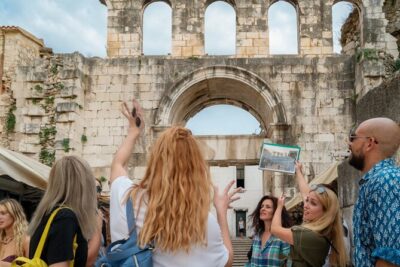
Beat the crowds in Split’s ancient heart. This early-morning walking tour is a simple way to get oriented fast, then focus on the Roman core of town at Diocletian’s Palace, before heat and day-trippers show up. You’ll spend about 70 minutes on foot with an English guide, weaving through old streets and big palace spaces that still shape modern Split.
I especially like the calm start. One review called it quiet and cool for a July visit, and that matters here because Split can heat up quickly once the day gets going. I also love the stop list: Peristyle Square plus the Underground Cellars, the Temple of St. Jupiter, and the Cathedral of St. Duje turn the palace from a photo-op into a place with function and meaning.
One thing to keep in mind is time. With only 70 minutes, you may feel the tour spends less time inside the palace itself than you want, and a couple of people wanted more palace time rather than extra general pointers for Split.
In This Review
- Key things to know before you go
- Why this earlybird Split walk feels different than a daytime tour
- Meeting at Split Port: find the big red sign, then your guide
- The core plan: 70 minutes from Old Town into Diocletian’s Palace
- Old Town streets and squares: how you get your bearings fast
- Peristyle Square: the palace stop that makes everything click
- Underground cellars: a cooler, quieter slice of the palace story
- Temple of St. Jupiter and St. Duje Cathedral: why the palace still matters
- The guide effect: Duje’s humor and local perspective
- Price and value: is $29 worth it for 70 minutes?
- Things that can feel frustrating: short palace time and possible last-minute issues
- Who should book this Split Old Town & Palace walking tour?
- Should you book the Earlybird walking tour?
- FAQ
- FAQ
- How long is the Earlybird walking tour in Split?
- What does the tour include?
- Where do I meet the guide for the Split Old Town & Diocletian’s Palace tour?
- Is hotel pickup and drop-off included?
- Which language is the tour offered in?
- What stops will the tour cover inside Diocletian’s Palace?
- Can I pay later or cancel if my plans change?
Key things to know before you go

- Early start from Split Port helps you see the palace streets with fewer people around
- Peristyle Square is the kind of stop that instantly shows why the palace mattered
- Underground cellars give you a different view than the main courtyards
- Temple of St. Jupiter and Cathedral of St. Duje connect Roman rule to today’s Split
- Duje’s storytelling is a major plus, with humor and real local involvement
- $29 for a guided, walking-only tour is good value for a short, focused visit
Why this earlybird Split walk feels different than a daytime tour

Split’s headline sight is Diocletian’s Palace. The issue is that almost everyone wants the same photos at the same times. This tour solves the problem with a simple idea: start early, when the palace lanes still feel like a morning town instead of a theme park.
I like that the tour is short at about 70 minutes. That makes it an easy fit even if you’re only in Split for a day, and it also helps you avoid that slow-burn fatigue that comes when you’re stuck waiting for groups to catch up. Earlybirds tend to feel more like a guided stroll than a nonstop sprint, especially when you’re not fighting the afternoon crowd flow.
There’s also a practical comfort factor. One review specifically noted it was cool and quiet in July. You can feel the difference when streets are less packed and you can actually hear what your guide is pointing out.
You can also read our reviews of more walking tours in Split


Meeting at Split Port: find the big red sign, then your guide
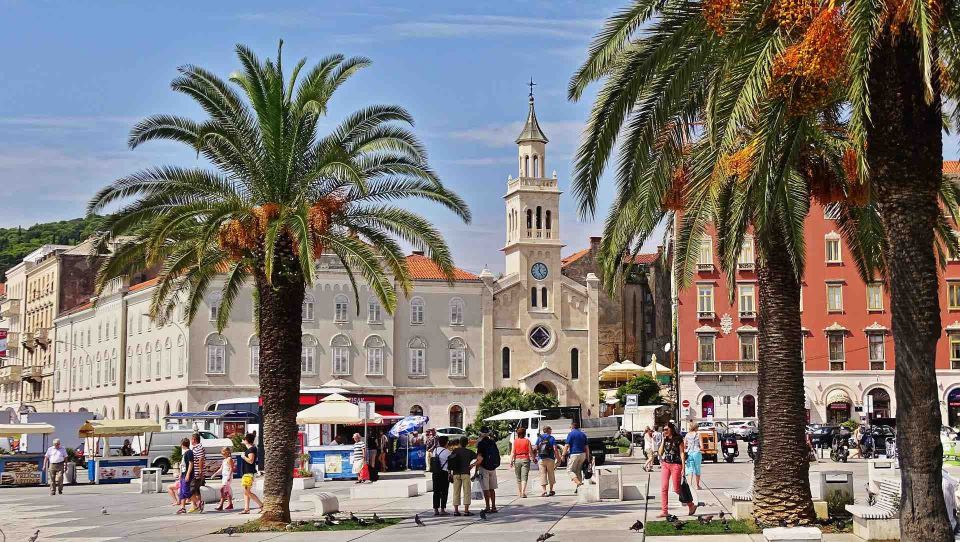
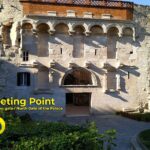
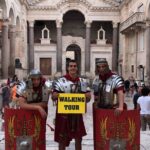
This tour meets at the Split Port at Trg Braće Radić. Your guide waits in front of the big red SPLIT sign and holds a My Special Tour sign. It ends back at the same meeting point, so you’re not dealing with another hop across town afterward.
That start point is useful because it puts you at the edge of the area where most visitors want to be anyway: the Old Town / palace zone. You’re not losing time commuting, which is a big deal for a 70-minute experience.
Language is English, so you can expect the explanations to stay straightforward and not depend on translation tech or mixed groups.
The core plan: 70 minutes from Old Town into Diocletian’s Palace
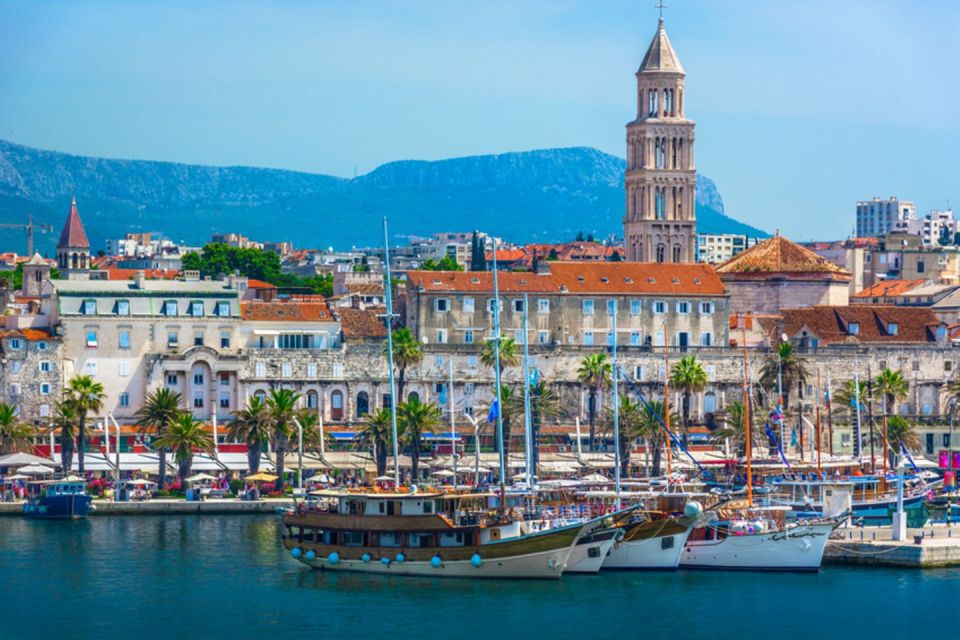
The flow is simple: you walk through the Old Town’s “special part” of Split and then move into the palace’s spaces. You’re not touring museums on a schedule. Instead, you’re moving through spaces that were designed for power, storage, worship, and daily movement—then you watch those same spaces get used in modern ways.
You’ll also get a clear framework for what you’re seeing. The tour is described as taking you back to the Roman Empire, and you can feel that as soon as you hit the palace geometry and the way the corridors open into grand squares.
Because it’s only 70 minutes, your guide has to pick the most informative stops. That’s a good thing for value and focus. It’s also why it may not feel like a “slow, study-every-corner” palace tour.
Old Town streets and squares: how you get your bearings fast

Before the palace fully takes over, you’ll cover the old lanes and open squares that define central Split. Even if you’ve seen Diocletian’s Palace on postcards, the real payoff comes from understanding how the palace acts like a frame around the rest of the Old Town.
I like these early orientation segments because they reduce the mental load later. Once you see where the palace entrances and main spaces sit, you stop feeling lost when you wander on your own afterward.
You’ll also pick up context that helps you connect the dots between Roman-era structures and the living city around them. The tour explicitly ties the palace to a World Heritage site, and that framing makes it easier to notice details without turning the walk into a homework assignment.
Peristyle Square: the palace stop that makes everything click
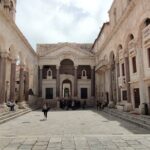
Peristyle Square is one of those locations where the guide can point at a few key elements and suddenly the whole place makes sense. It’s open space, surrounded by architectural structure, and it functions like a hub for movement and sightlines.
This is the kind of stop where a good guide changes your experience. One reviewer praised the guide as funny and extremely passionate about his home, and that type of energy lands hardest at the big “anchor” sights like Peristyle Square. If you’re the type of person who learns best when someone connects facts to what you’re actually looking at, you’ll likely enjoy this part.
The reason this square matters isn’t just visual drama. It’s also practical for understanding how the palace was organized—public-facing space, controlled movement, and the kind of design power-holders expected.




Underground cellars: a cooler, quieter slice of the palace story
The tour includes the underground cellars, and that’s a smart choice because it changes your perspective. The main spaces can be loud and crowded, but the cellars shift you into the idea of storage, control, and hidden infrastructure—part of what keeps a palace functional, not just impressive.
Even if you don’t get a deep architectural lecture, just knowing what these spaces likely served makes the whole palace feel more real. It stops being only about emperors and becomes about systems: how people moved, what was kept where, and why certain layouts were built below ground.
This is also where the early start can help. When you’re not surrounded by a wall of tourists, underground areas tend to feel calmer and easier to understand on the spot.
Temple of St. Jupiter and St. Duje Cathedral: why the palace still matters
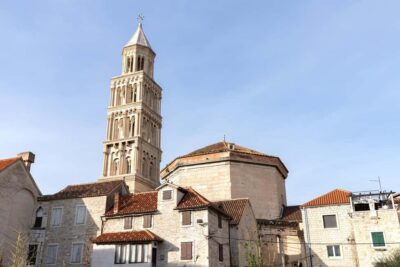
Two stops carry strong symbolism: the Temple of St. Jupiter and the Cathedral of St. Duje. Together, they help you see how Roman structures didn’t simply vanish. They were repurposed, reinterpreted, and kept in the fabric of the city.
That matters because Split isn’t a dead ruin. It’s an active place. When the tour reaches these religious sites, you’re not just viewing old stones—you’re watching the continuity between ancient authority and later community life.
If you’re curious about how old empires transform into new identities, these are useful stops. The cathedral stop also connects to the personal tone of the guide in the best way: the city isn’t presented like a textbook. It’s presented like home.
The guide effect: Duje’s humor and local perspective

The standout detail from the reviews is the guide, Duje. Multiple comments describe him as exceptionally engaging—full of humor, deeply invested in the city, and able to make the story feel personal. One review even mentioned he was involved in local politics, which gives you a clue about his perspective: this isn’t a script read from a clipboard.
I also like that his style seems to combine academic-level detail with jokes and warmth. That’s a rare mix. You don’t need to be a history buff to get something here, because the guide is clearly good at pointing out what to notice and why it matters in the exact moment you’re standing there.
At $29, the guide’s quality is the main part of what you’re buying. If you click with his style, the tour probably feels like value plus, not just value.
Price and value: is $29 worth it for 70 minutes?
For $29 per person, you’re paying for a walking tour plus the guide. No hotel pickup is included, so you’re responsible for getting to the meeting point at Split Port.
Is it expensive? Not really, especially when you consider what a guided walk typically offers: context and timing. Without a guide, you can still wander the palace zone, but it’s easy to miss what you’re looking at or to read the space as random walls and alleys. With the guide, you get a structured path through key palace features—Peristyle Square, underground cellars, Temple of St. Jupiter, and the Cathedral of St. Duje—in about 70 minutes.
That short duration is part of the value equation. You’re not committing half a day, and you’re not paying for long transport legs you don’t need. If you’re in Split briefly, this format can be the best use of your time.
Things that can feel frustrating: short palace time and possible last-minute issues
I’m going to be straight: a couple of things could disappoint you.
First, with limited time, some people expected more time in the palace itself and less general Split tips. If your main goal is a slow, in-depth palace walkthrough, you might prefer a longer tour or a more palace-focused schedule.
Second, there are rare negative mentions about operational hiccups, including a no-show and a late cancellation due to not enough people in the group. That doesn’t mean it’s common, but it’s worth acknowledging because early tours depend on smooth coordination.
If you like spontaneity, the tour offers reserve and pay later, and cancellations can be handled up to 24 hours in advance for a full refund. That gives you some breathing room if your plans shift.
Who should book this Split Old Town & Palace walking tour?
This tour is a great match if you want:
- A short morning plan that helps you understand Diocletian’s Palace quickly
- A guide-led route through key palace stops like Peristyle Square and the Cathedral of St. Duje
- A better chance at quiet photos and calmer streets, especially in summer
It might be less ideal if you want:
- A long, deep palace immersion where you linger in each area for as long as you want
- A tour that feels mostly focused on architecture with minimal commentary or “orientation” type stops
Should you book the Earlybird walking tour?
I’d book it if you’re prioritizing efficiency and early-day calm. The early start is a real quality-of-life upgrade, and the stop mix hits the big palace concepts without turning your morning into a marathon. Add in Duje’s humor and local passion, and it becomes the kind of guided walk that makes Split feel legible fast.
If you’re very particular about spending maximum time inside the palace itself, compare your expectations to the 70-minute format. Think of this as a guided orientation plus highlights pass, not a slow deep-dive.
FAQ
FAQ
How long is the Earlybird walking tour in Split?
The tour lasts about 70 minutes.
What does the tour include?
It includes a walking tour and a guide.
Where do I meet the guide for the Split Old Town & Diocletian’s Palace tour?
Meet your guide at Split Port, Trg Braće Radić, in front of the big red SPLIT sign. Your guide will be holding a My Special Tour sign.
Is hotel pickup and drop-off included?
No, hotel pickup and drop-off are not included.
Which language is the tour offered in?
The tour is offered in English.
What stops will the tour cover inside Diocletian’s Palace?
You’ll see Peristyle Square, underground cellars, the Temple of St. Jupiter, the Cathedral of St. Duje, and more.
Can I pay later or cancel if my plans change?
Yes. It offers reserve & pay later, and you can cancel up to 24 hours in advance for a full refund.