REVIEW · SPLIT
Experience Split History Walking Tour With Local Historian
Book on GetYourGuide →Operated by Pomalo · Bookable on GetYourGuide
Start at Rome’s gate, not a museum entrance. In two hours, you trace how Diocletian’s Palace became the living heart of Split, using the Golden Gate as your portal and finishing near Narodni trg. You also get medieval squares, Roman-religious landmarks, and a handful of smaller, off-the-main-path details that make the whole place feel personal.
I love that this tour is guided by a local professional historian with a master’s degree. I also like the use of a display book with 3D reconstruction images, which helps you picture what you’re standing on, even when so much has changed.
One thing to plan for: it is still a walking route inside and around the palace, so bring comfortable shoes and plan for sun or heat.
In This Review
- Key things I’d circle before you go
- The Golden Gate: where Rome starts telling its story
- Inside Diocletian’s Palace: Peristil, major temples, and daily-life context
- Saint Domnius and the palace’s religious pivot
- Riva and the Roman-to-medieval connection you can actually feel
- Fruit Square and People’s Square: medieval corners with a modern pulse
- The secret stops: narrow streets, a lost sphinx head, and a secret garden
- Price and value: $37 for a historian, 3D recon, and small-group access
- Who should book this Split history walk (and who should reconsider)
- Should you book this Split History Walking Tour with a local historian?
- FAQ
- Where does the tour start?
- How long is the Split history walking tour?
- How much does it cost?
- What’s included in the tour?
- Is food or drink included?
- What language is the tour offered in?
- Is the tour suitable for wheelchair users?
Key things I’d circle before you go
- Small group size (max 12): it stays conversational, with time for questions and follow-ups.
- UNESCO Diocletian’s Palace focus: you don’t just look; you learn how the palace worked.
- Peristil + Jupiter’s Temple: big, memorable stops with clear explanations of what you see.
- Two medieval squares: Fruit Square and People’s Square give you a different era of Split.
- Secret spots: narrow churches/streets, a lost sphinx head, and a secret garden are part of the walk.
- See, Hear and Feel approach: 3D reconstructions and story-led stops make the site easier to grasp.
The Golden Gate: where Rome starts telling its story
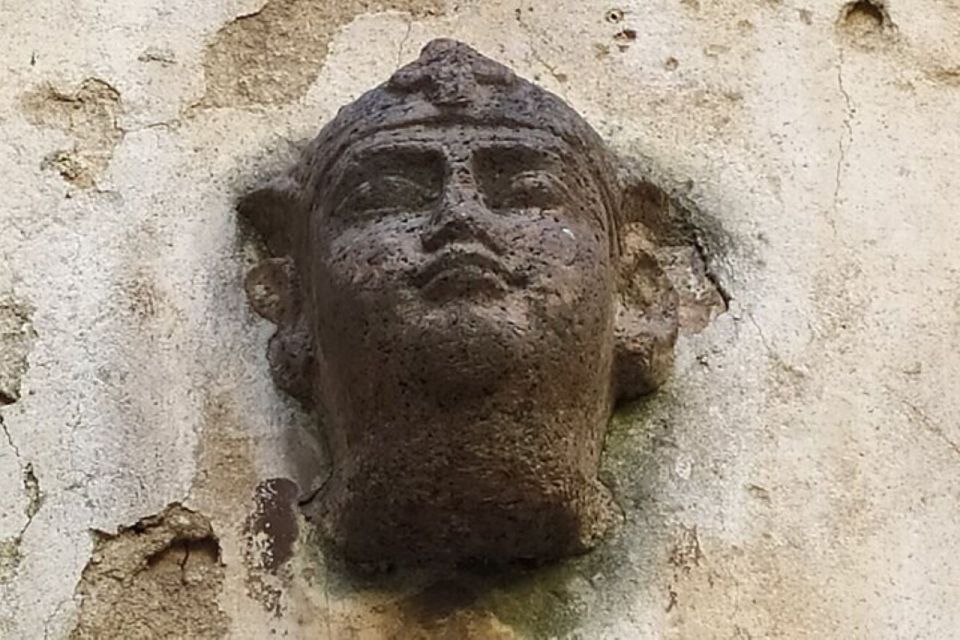
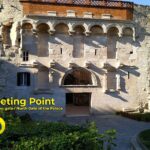
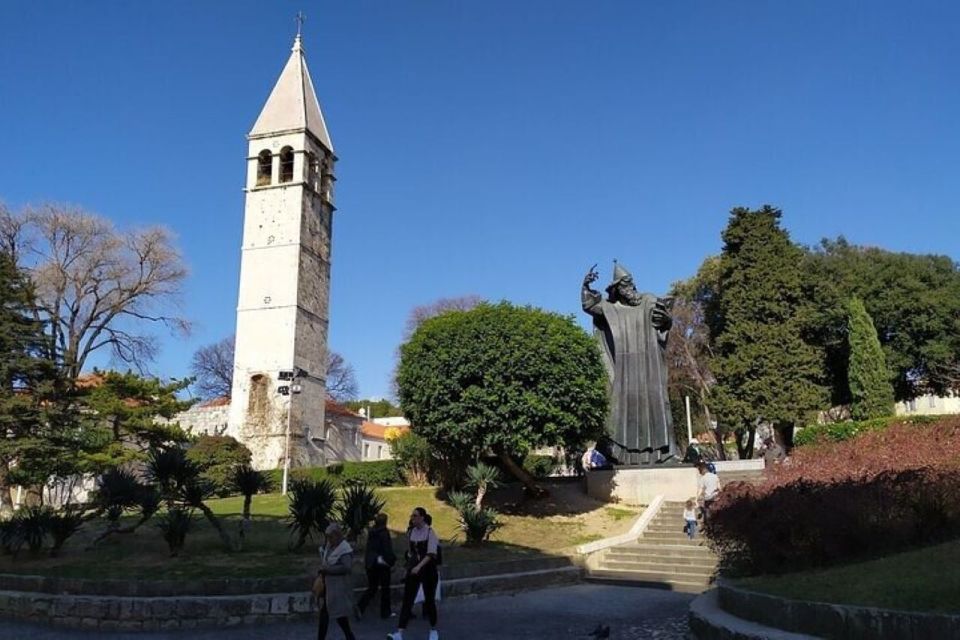
Your tour starts at the Golden Gate, the northern entrance to Diocletian’s Palace. It’s an excellent choice because the guide can orient you fast: what this gate was for, why it mattered, and what it symbolized for power and arrival in Roman times. You also get the immediate visual anchor of the Gregory of Nin statue nearby, so the modern silhouette of Split and its Roman skeleton are both in view from the first minutes.
From here, the experience is less about “facts on a sign” and more about moving through a place while someone connects the dots. The guide sets up the palace before you enter—name, purpose, importance—and that makes every later stop click into place.
If you get the timing right, this first segment is also a great way to beat the overwhelm. Split’s center can feel layered and busy, but starting at a single, meaningful entrance gives your brain something to hold onto.
You can also read our reviews of more walking tours in Split

Inside Diocletian’s Palace: Peristil, major temples, and daily-life context
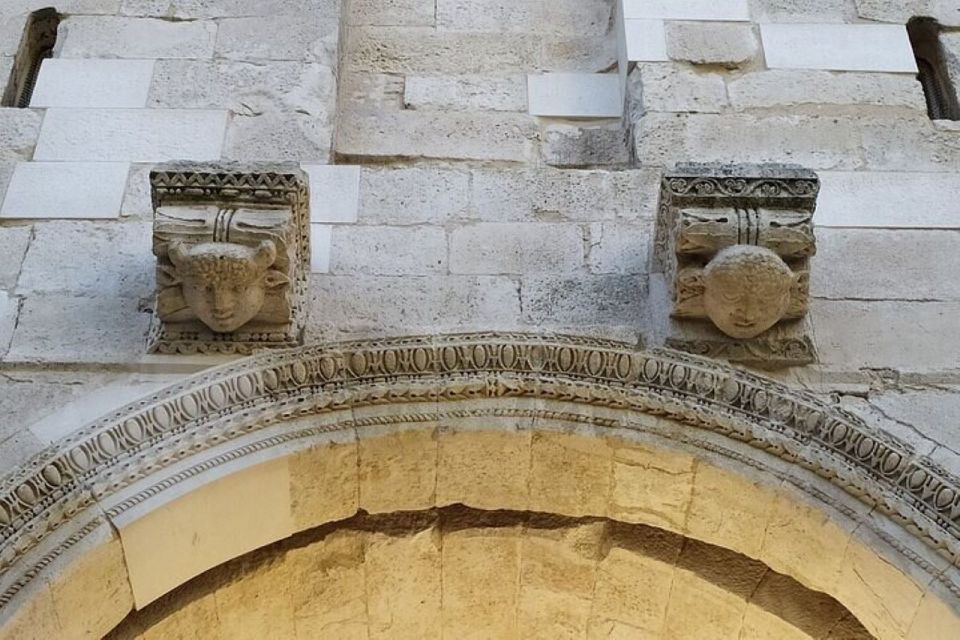
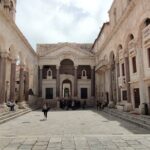
Once you step into the palace complex, the tour shifts from orientation to understanding. You’ll spend time around the Peristil, the main palace square, where the monumental surroundings help you grasp how public life would have worked within the walls. The guide’s job is to translate architecture into rhythm: where movement mattered, what spaces were used for, and why the scale feels so purposeful even today.
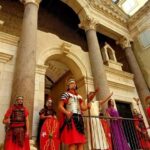
You also get stop-by-stop attention on key Roman structures and their stories. Jupiter’s Temple is one example: you’ll learn what you’re looking at and why it fit the palace’s role as both a home and a symbol of authority. The guide doesn’t treat these places like isolated ruins; instead, you hear how they relate to each other inside the larger layout of the palace.
What I really like here is the balance of big and small. Yes, you get the headline features. But you also get everyday-life framing—how Roman foundations shaped what came after, and how Split’s residents kept using and reshaping these spaces over centuries.
Saint Domnius and the palace’s religious pivot
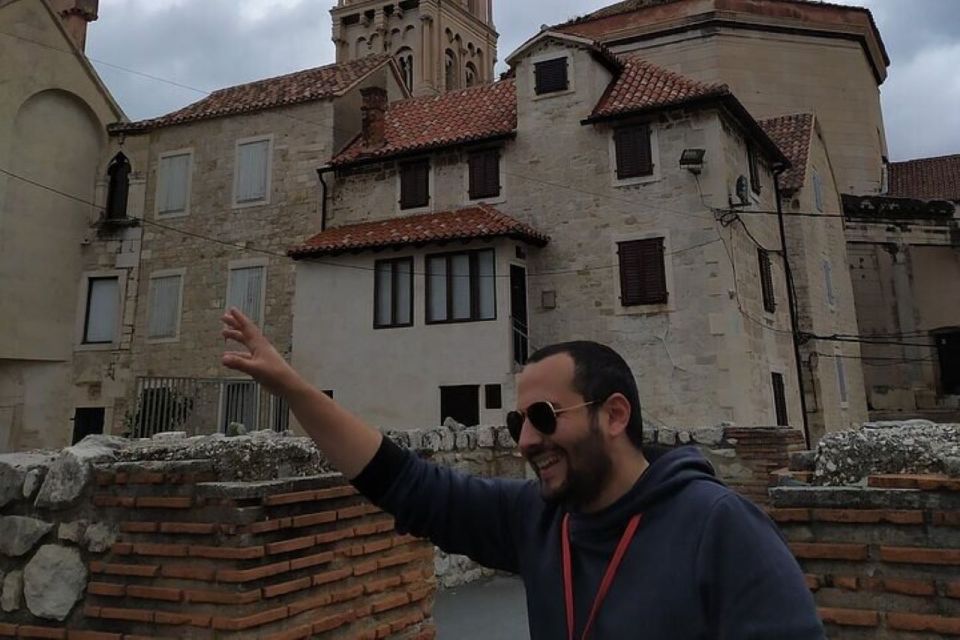
A major highlight is the Cathedral of Saint Domnius (the former mausoleum-cum-cathedral area). This is where the story of Split shifts from emperor to community. You’re standing in a space that moved from one kind of meaning to another, and the guide explains how that transformation affected how people lived with the building.
The tour then continues into the Vestibule and Diocletian’s Cellars (the central substructures/cellars). This is one of those sections that can be easy to skip on your own—people see a doorway, snap a photo, and keep walking. On the tour, those spaces get context, so the cellars stop feeling like “just basements” and start feeling like part of how the palace functioned.
This sequence also matters because it gives your visit a sensible arc: public authority, religious adaptation, then the practical underworld of the palace that made the whole place work. When you understand that flow, the palace stops being a collection of stones and becomes a coherent system.
Riva and the Roman-to-medieval connection you can actually feel
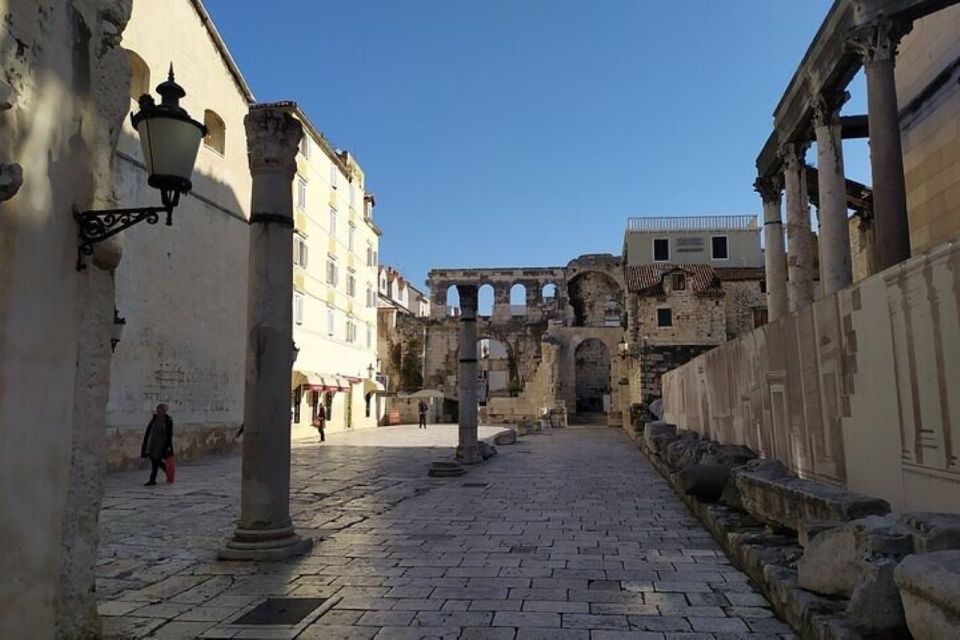
After the palace stops, you’ll walk toward the Riva promenade. This is a smart shift in pacing: it turns from heavy storytelling around ancient structures to the modern connection point where locals and visitors gather. The guide explains how the Roman and Medieval periods of Split connect here, and you start seeing the city not just as ruins, but as lived space.
The tour’s style is described as See, Hear and Feel, and the Riva segment is a good example of what that means in practice. You don’t only learn where things are; you learn how to read the city while you’re there. The guide brings in everyday topics—local life, community rhythms, and how people treat heritage as part of normal days, not as distant museum material.
If you’re short on time in Split, this kind of practical framing is the difference between “I saw the palace” and “I understand how Split works.”
Fruit Square and People’s Square: medieval corners with a modern pulse
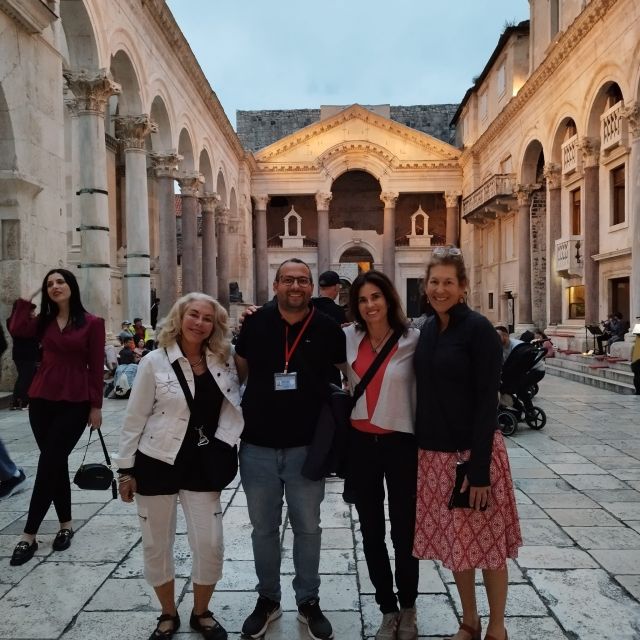
Later, you’ll step into two medieval squares: Fruit Square and People’s Square. These stops help you broaden the tour beyond the Roman era. The guide points out what the squares hide in their architecture and long-running life—how they’ve hosted activity for centuries and how that legacy still shapes what you experience now.
Fruit Square and People’s Square are especially useful if your brain keeps trying to reduce Split to one era. Here, you’re reminded that the city grew and reorganized over time, with street life and civic gatherings adapting around older foundations. You start noticing details you’d otherwise miss—layout choices, sightlines, and how buildings guide movement across open space.
This is also a nice emotional change. Even with a history-focused guide, squares let you look up and breathe. You finish these parts feeling like you’ve seen multiple layers of the city’s identity, not just one highlight.
You can also read our reviews of more historical tours in Split

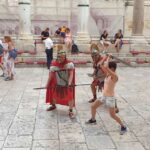
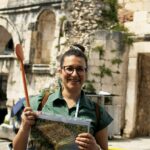
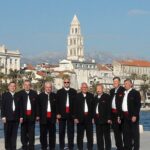
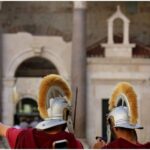
The secret stops: narrow streets, a lost sphinx head, and a secret garden
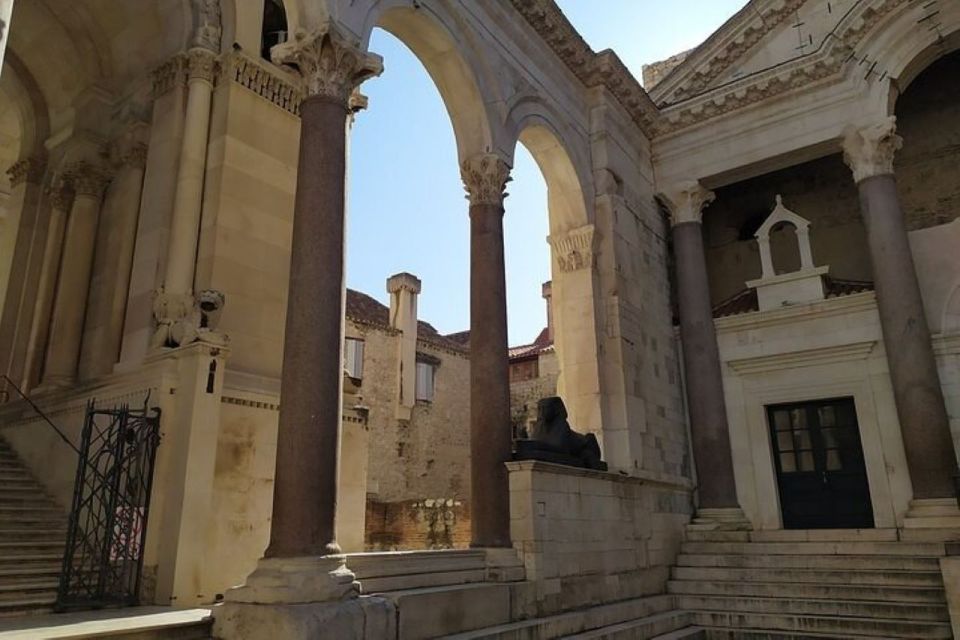
The most fun part for many people is the section reserved for the lesser-known spots. These aren’t huge set-piece monuments. They’re small, specific encounters—exactly the kind of things that make a walking tour feel worth it instead of repetitive.
Expect the guide to point out details such as the narrowest church and narrowest street, plus mentions like the lost sphinx head and a secret garden. Even though you’re only at each spot briefly, the tour approach treats them like meaningful clues. The guide ties each detail back to the broader history of how the palace and the surrounding city evolved.
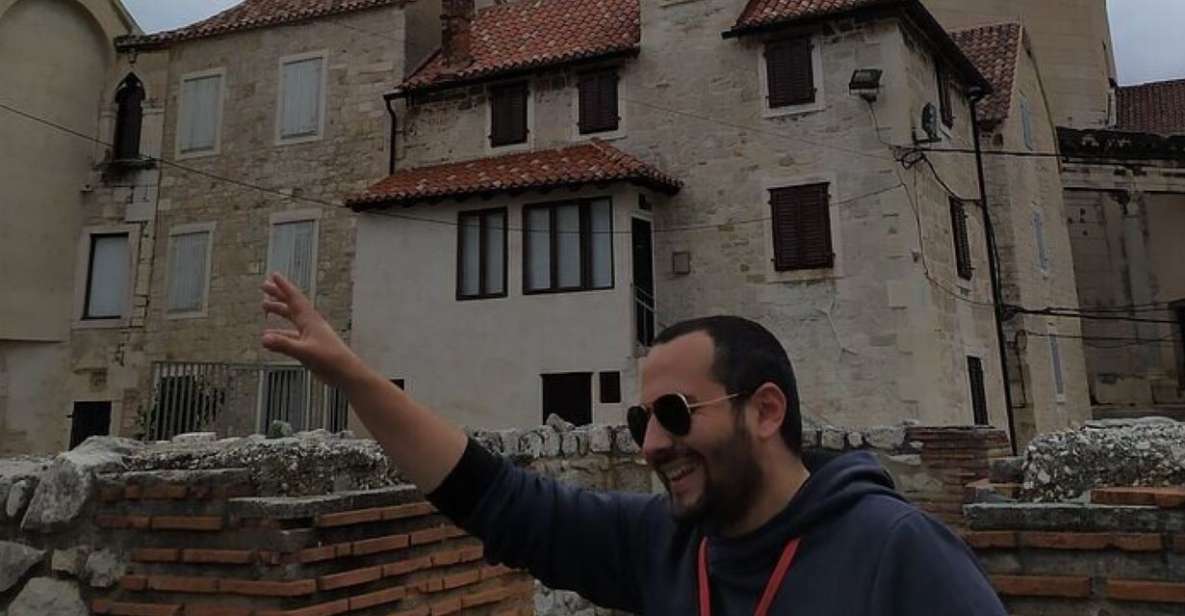
This is also where the guide’s human touch matters. In the feedback, one name shows up again and again: Boris. People describe his explanations as clear and his attitude as generous—open to questions and willing to point out what to look for next. That kind of guiding style makes the short stops land harder, because you’re learning how to see, not just where to stand.
Price and value: $37 for a historian, 3D recon, and small-group access
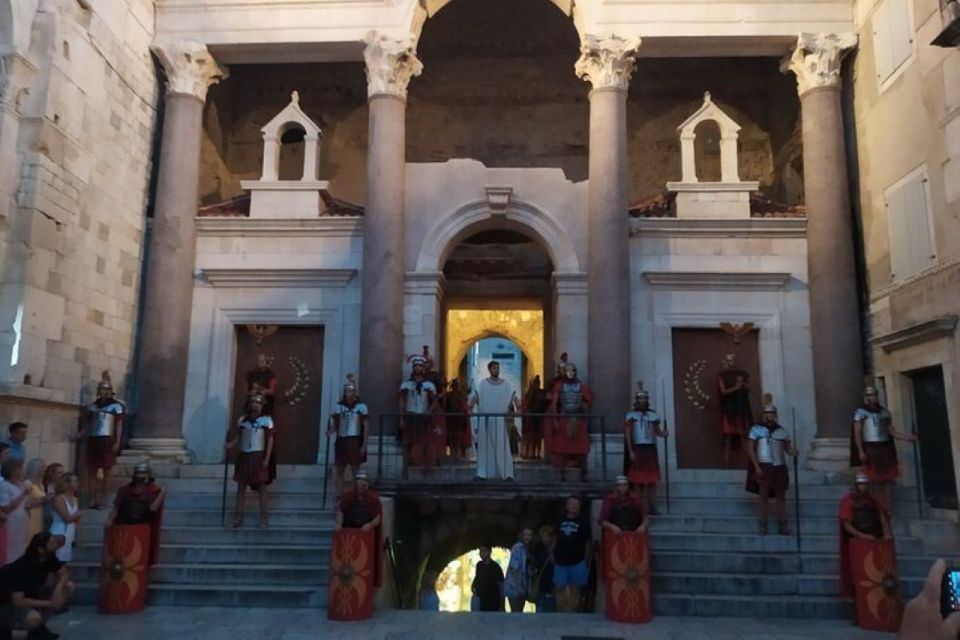
At $37 per person for about two hours, this tour sits in the sweet spot for Split. You’re not just paying for a walk around famous ruins; you’re paying for interpretation. The tour includes a local professional guide with a master’s degree in history, plus 3D reconstruction images and pictures in a display book.
That 3D material is a real value add. When you’re inside a palace that’s been reused for centuries, it’s easy to misread what you’re looking at. Visual reconstructions help you connect present-day shapes to earlier versions, so your time isn’t wasted trying to guess.
Skip-the-ticket-line is also part of the value math. Anything that reduces friction helps you spend more of your limited time on the fun parts: Peristil, cellars, and the squares that round out the story.
Finally, the max group size of 12 matters more than people think. Smaller groups keep the pace calm and make Q&A practical rather than rushed.
Who should book this Split history walk (and who should reconsider)
This tour is best if you want history with structure. You’ll like it if you enjoy palace layouts, architecture with explanations, and learning how Rome, religion, and medieval civic life connect in one city center.
It’s also a good fit if you want a guided route without feeling trapped. The pace is described as easy in feedback, and the stops feel designed to keep your attention on what’s in front of you. If you ask questions, you’ll likely get straight answers rather than canned lecture tones.
Two practical considerations:
- Comfortable shoes are a must, because it’s a walking route with multiple interior and exterior segments.
- It is not suitable for people with mobility impairments or wheelchair users, since the tour route isn’t built for that kind of access.
No food or drinks are included, so plan to handle snacks on your own before or after. The guide may share helpful suggestions for where to eat nearby, but that’s extra, not included.
Should you book this Split History Walking Tour with a local historian?
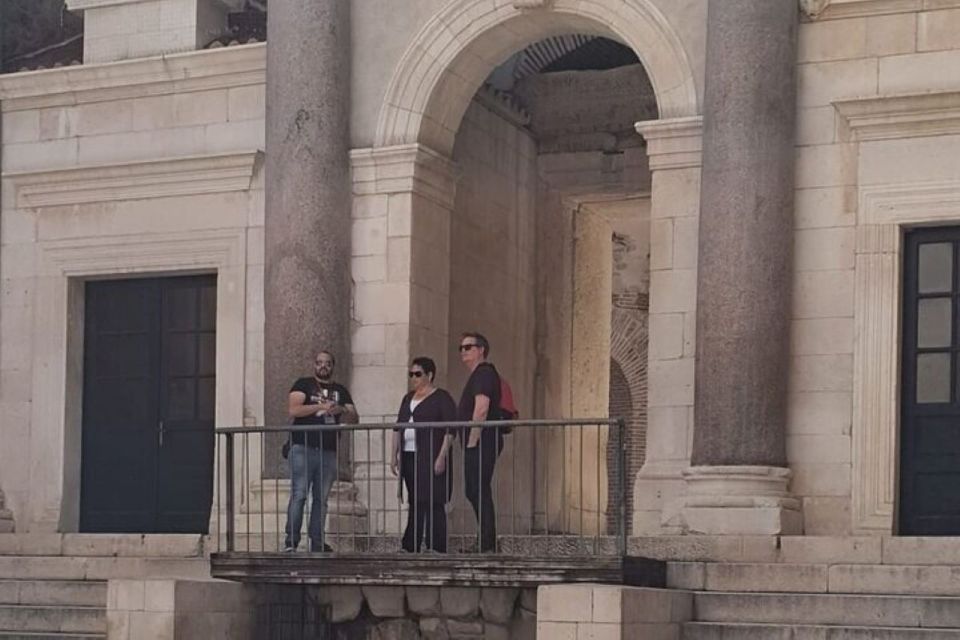
If you have limited time in Split and you want your visit to the palace to make sense, I think this is an excellent choice. The combination of Diocletian’s Palace highlights, the medieval squares, and the short secret-corner stops gives you more than just a greatest-hits loop. Add the small group size and the 3D reconstruction visuals, and you get better value than many longer tours that spread attention too thin.
Book it if you like guided storytelling with real context—especially if you tend to miss details when you wander on your own. Skip it only if walking distance is a problem for you, or if you’re looking for a purely relaxed, unstructured stroll with no historical framing at all.
FAQ
Where does the tour start?
The meeting point is at the Golden Gate, the northern gate of Diocletian’s Palace, opposite the eight-meter statue of Gregory of Nin.
How long is the Split history walking tour?
It lasts about 2 hours.
How much does it cost?
The price is $37 per person.
What’s included in the tour?
Included features are a local professional guide with a master’s degree in history and 3D reconstruction images and pictures.
Is food or drink included?
No. Food and drinks are not included.
What language is the tour offered in?
The tour is available in English and Croatian.
Is the tour suitable for wheelchair users?
No. It is not suitable for people with mobility impairments or wheelchair users.